
Your wildly multifarious home!
Stargazer's World


An Interview with Kevin Montijo: A Puerto Rican Artist, Gamer, and Self-Professed Nerd!
Social media is often criticized for the problems it causes for society, and there are certainly many valid concerns. BUT it also has many positive aspects: it has allowed me to meet so many amazing people. Case in point, the subject of today’s interview.
Last week, I was working at a tradeshow, and late in the day, one of the visitors to the booth was this very friendly young gentleman. He engaged with us about the products we were showcasing, and we ended up talking about him being an artist, his love for board games, and the fact that he’s a TTRPG gamer. I told him I’m a gamer too and asked, “Does he know about Puerto Rico Role Players?”
Turns out, I’ve known Kevin in the digital world for almost 10 years! He’s been a participant in Puerto Rico Role Players for years, and we even exchanged messages on Facebook back in early 2017! The last thing I expected was meeting him in person at a trade show. I love the magic of the online gaming community, which allows me to meet people like Kevin. It always makes me happy to meet fellow geeks in the wild!
Having made the connection and already knowing his art form through following him online, I reached out to him to see if he would participate in this series of interviews. He graciously agreed, and he is the subject of today’s post. Without further ado, here we go.
Introduce yourself! Who are you and what do you create?
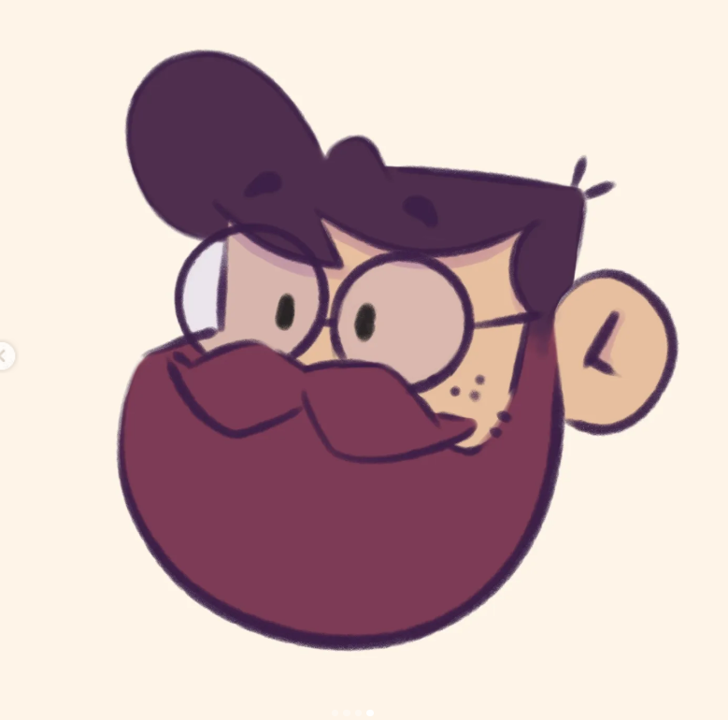
Hello, world! I’m Kevin M., Professor Montijo, or nerdygeekyart (depending on who you ask). I’m a Government Financial Analyst by day, an Accounting and Auditing Professor by night, but in my free time, I make art.
How would you describe your art or creative endeavor?
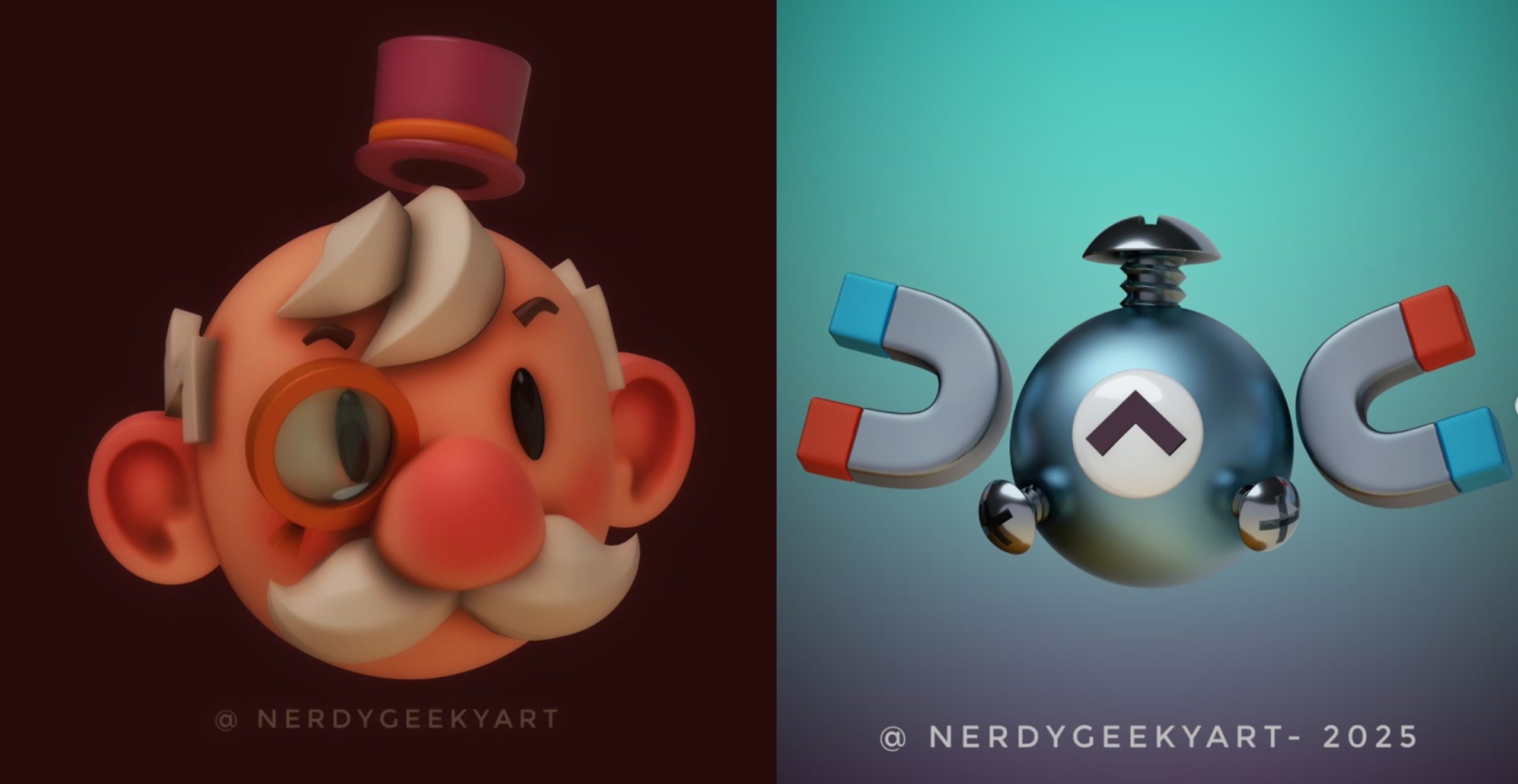
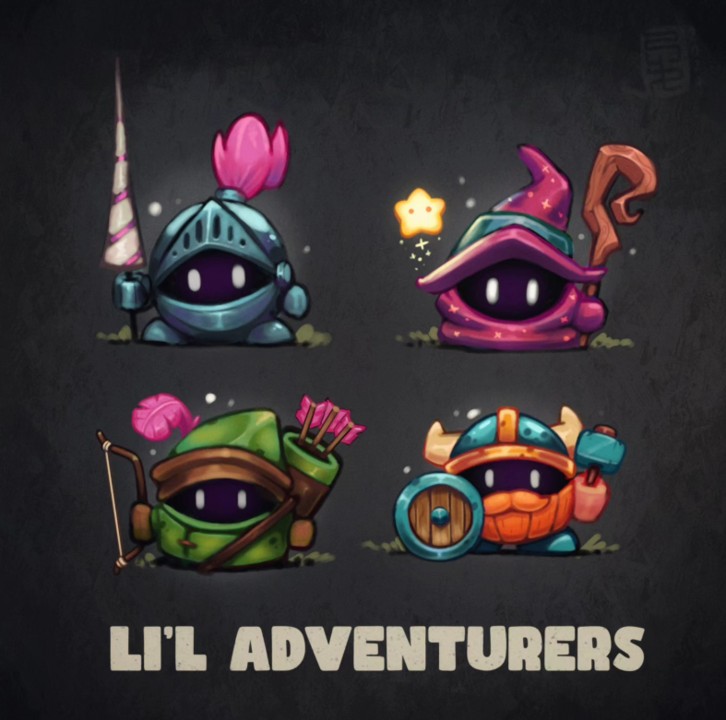
I would describe my art as colorful, miscellaneous, and delightfully nerdy. On my art pages, you’ll find everything from simple doodles to full illustrations of the things I know and love, as well as professional work I’ve been hired for. Even though my art is more of a personal passion, I’ve been hired for professional projects, such as illustrating and designing art for a physical card game and serving as an Art Director for a PC game available on Steam.
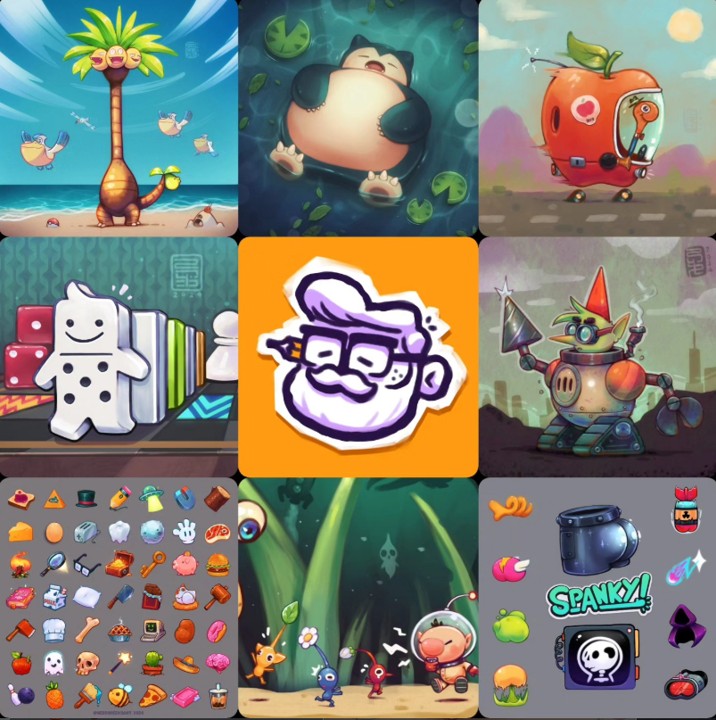
Aside from regular illustrations, you’ll also find game assets, concept art, 3D models/renders, clay sculptures, dungeon maps, and a plethora of art pieces made either digitally or using any number of mixed media—from pen and ink, to alcohol markers, to watercolors, to whatever I can find in my art bins.
How did you discover TTRPGs?
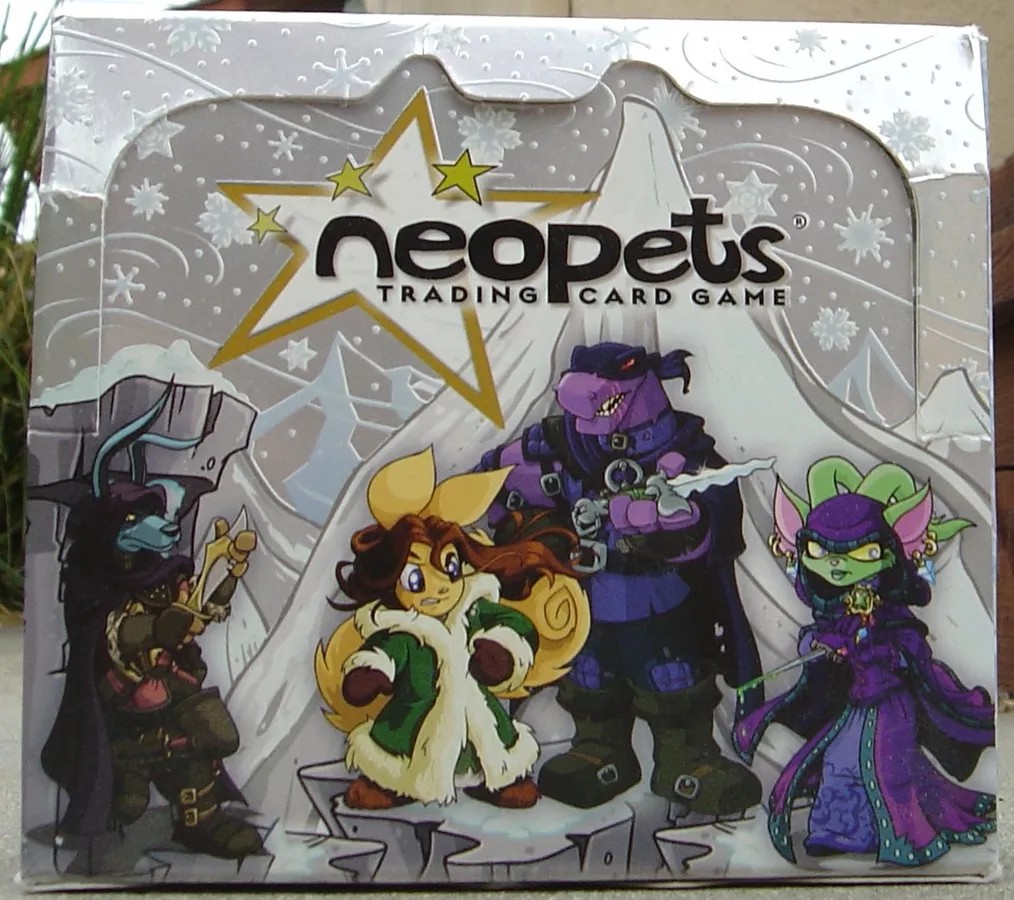
Like many people my age, I grew up playing or collecting cards from various TCGs like Pokémon, Yu-Gi-Oh, and even the Neopets TCG (Yes, I still have access to my Neopets account). Those were, in essence, my gateway drug to the delightfully nerdy activities one could play on the school floor or any available table (other than Tazos/POGs, of course). I was always a fan of classic board games, starting with Monopoly, my great aunt’s favorite, and other classics like Cluedo, Battleship, Operation, etc.
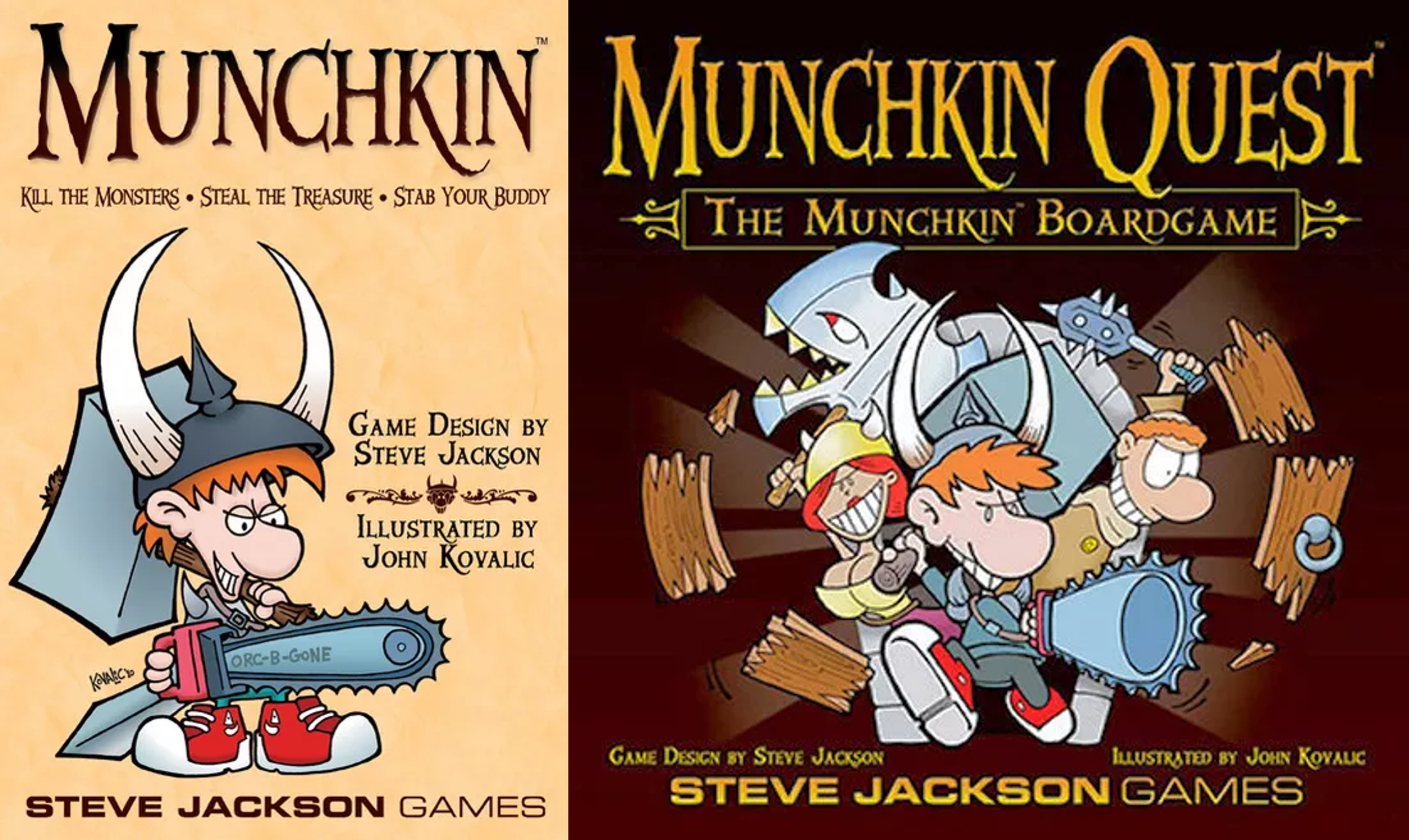
I think an absolutely pivotal moment in my love for tabletop games was when I got my hands on the first edition of a little game called Munchkin. When I brought that compact box to school, my
classmates and I had a blast every single time we played. Each game was entertaining and chaotic, and we often challenged ourselves to draw our characters with all the gear and loot they had amassed throughout their journey to level 10. That led me to eventually getting a more advanced version of the game called Munchkin Quest, in which you actually generated a randomized dungeon as you explored, each room filled with crazy effects, a plethora of wacky monsters to slay, and that oh so coveted loot. I still recall one particularly intense game with my best friend at the time, where, against all odds, we managed to beat the final boss, a level 20 plutonium dragon with a mix of gear, random loot, potions, and sheer luck. Now my collection of tabletop games has grown significantly, nearly reaching 300 different titles and counting.
As for TTRPGs, it’s difficult to pinpoint an exact manner of discovery. I remember visiting a small local comic convention when I was very young, purchasing some comics, collectible figures, and a few other things, when something suddenly caught my eye: a box full of dice of varying shapes and colors. That plethora of polyhedra and platonic solids called out to me like a siren to an unsuspecting sailor. As I rummaged through the box, I ended up picking out a red d20 with blue speckled paint from a now-discontinued Chessex set. That newly acquired icosahedron made me want to research what all those dice were used for. Dungeons & Dragons was, of course, at the epicenter of my search, along with a string of other TTRPGs. Unfortunately, I didn’t know a single soul who played, so I had to push most of that research to the back of my mind for the time being.
Fast forward a couple of years, and I started to learn about the Pathfinder TTRPG. For some reason, the more I learned about it, the more I got into it, and eventually decided to buy one of their starter sets. I became absolutely obsessed with it, reading every bit of material and eventually purchasing the core rulebooks and some adventure modules. That being said, I still knew nobody who played. I went to a small, Christian private school with very few students (my class was made up of just 12), and I didn’t have a personal internet connection during my time at school, so meeting people online was not really an option. For some reason, I longed to play the game so much that it never occurred to me that I could try my hand at being a Dungeon Master/Game Master and teach the game to my small circle of friends. Eventually, as I moved on to college, I managed to get a personal internet connection, make friends who shared my interests, and begin playing a few TTRPGs. The rest is history.
Do you actively play TTRPGs? What are you playing?
The TTRPG I play most actively is D&D, either online or with small groups in sporadic bursts. I’m currently not involved in any active sessions, but I look forward to my next adventure!
What do you want to play next?
There are a few TTRPGs or settings that I own the core material for and would love to try out, but I haven’t had the chance yet. These are mainly, but not limited to:
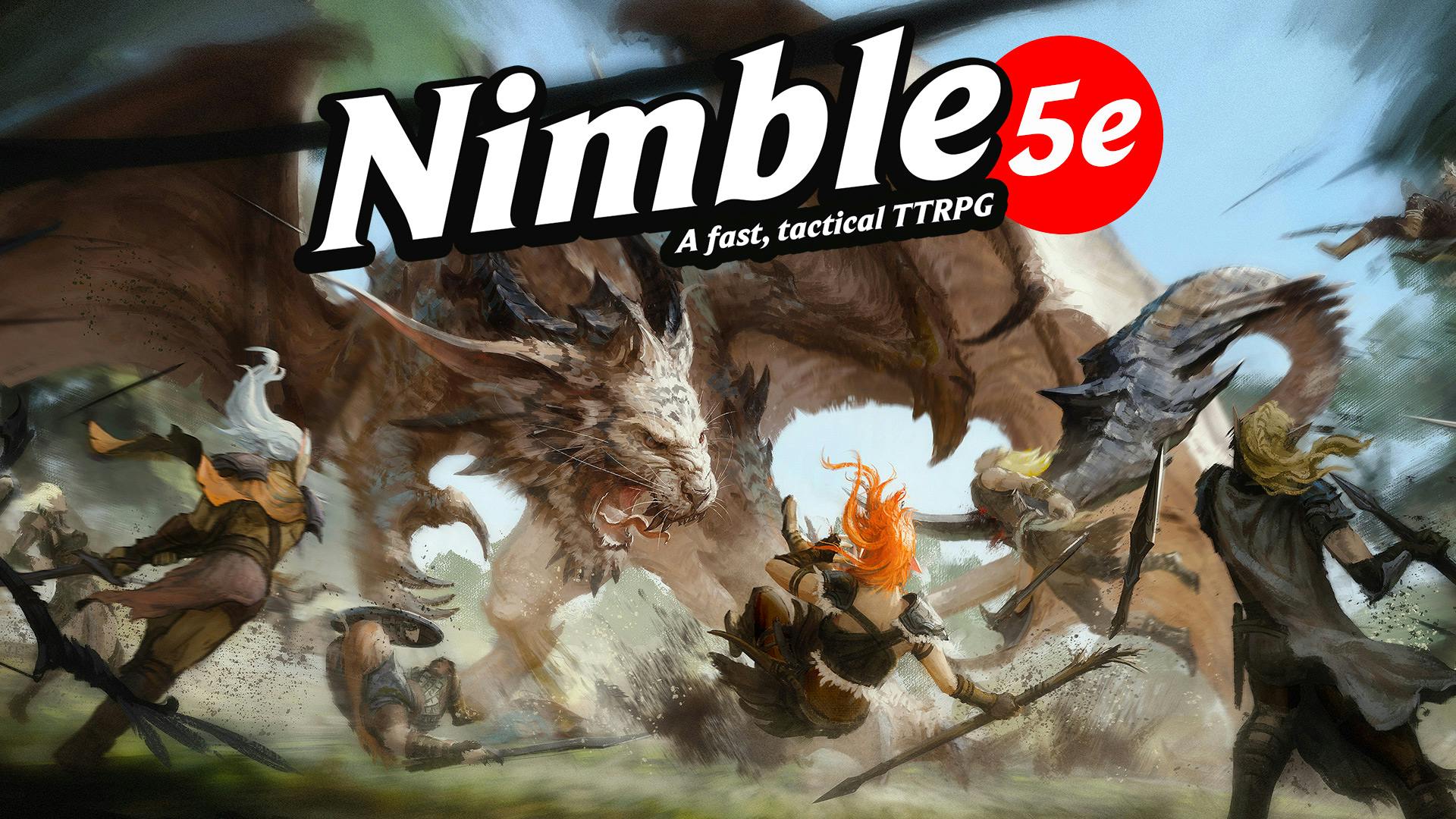
- Nimble: A fast and tactical TTRPG.
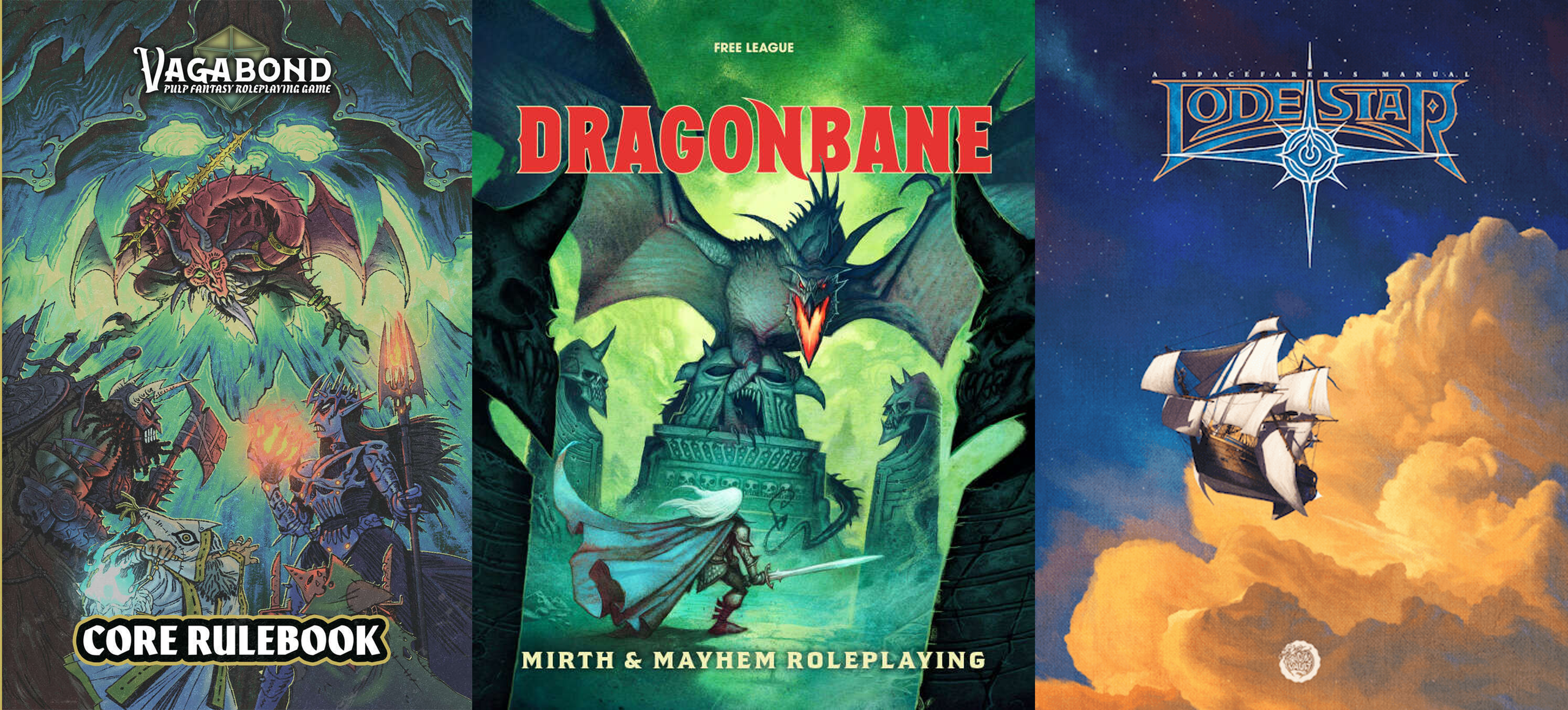
- Vagabond: A pulp fantasy TTRPG.
- Dragonbane: A classic fantasy TTRPG.
- Lodestar: A D&D 5e setting based around space-fantasy, heavily influenced by Treasure Planet.
What projects are available, and what are you working on next?
I’m currently working on improving my 3D modeling and rendering skills with Nomad Sculpt and Blender to bring all my fantastical and nerdy 2D ideas to the third dimension with some hopefully exciting applications in the near future.
Where can people find your work?
I’m most active on Instagram and TikTok, both under @nerdygeekyart ! There you’ll find my art, some peeks into my life, and time-lapses of some of my work. Don’t be afraid to pop by and say hi! And, if you like what you see, feel free to follow!
Any closing thoughts?
I would say to all my nerds, geeks, and dweebs out there: the one thing that will lead you to do the things you enjoy most and meet amazing people who share your interests and passions is to be your wonderful self unapologetically. Don’t be afraid to geek out over the things you love. Be kind. Be understanding. Be open-minded and, again, be yourself. Do that, and everything else will follow.
Cheers!
Your friendly neighborhood nerd
Thank you very much, Kevin! See you all next week for the next interview, dear reader.
Categories: Tabletop Gaming Blogs
The GM Who Lost His Voice: Living with Myasthenia Gravis
I posted about this earlier this week on social media. June, in addition to Pride, is Myasthenia Gravis (MG) Awareness Month. I’ll get to what MG is in a moment, but let’s get a confession out of the way first: I have myasthenia gravis. I was diagnosed a little over four years ago, though I exhibited symptoms as far back as six years ago.
Allow me to share some information I am paraphrasing from the MG Foundation of America.
What is it? MG is a rare neuromuscular, autoimmune disorder that causes extreme fatigue and profound muscle weakness. Impulses from the brain travel down nerves but are blocked by antibodies before they reach the muscle. The body is essentially attacking itself and stopping normal muscle function.

You might be wondering what this has to do with role-playing games. Bear with me; I’ll get to it. I’ve decided to talk about this publicly to raise awareness and add my two cents to the conversation about the disorder, but let’s get back to the explanations for a second.
First documented by a physician in Oxford, England, in 1672, MG can impact a person’s ability to see, swallow, smile, walk, breathe, or engage in everyday activities. Everyone’s disease presents a little differently—that’s why myasthenia is known as a “snowflake disease.” (I AM a snowflake, I knew it! Unique and special, I mean.)
For me, the worst symptoms were losing my voice, slurring my words, and simply not being able to speak properly. Those of you who know me in real life saw me a couple of years ago when I was significantly weaker, experiencing serious difficulty speaking and swallowing.
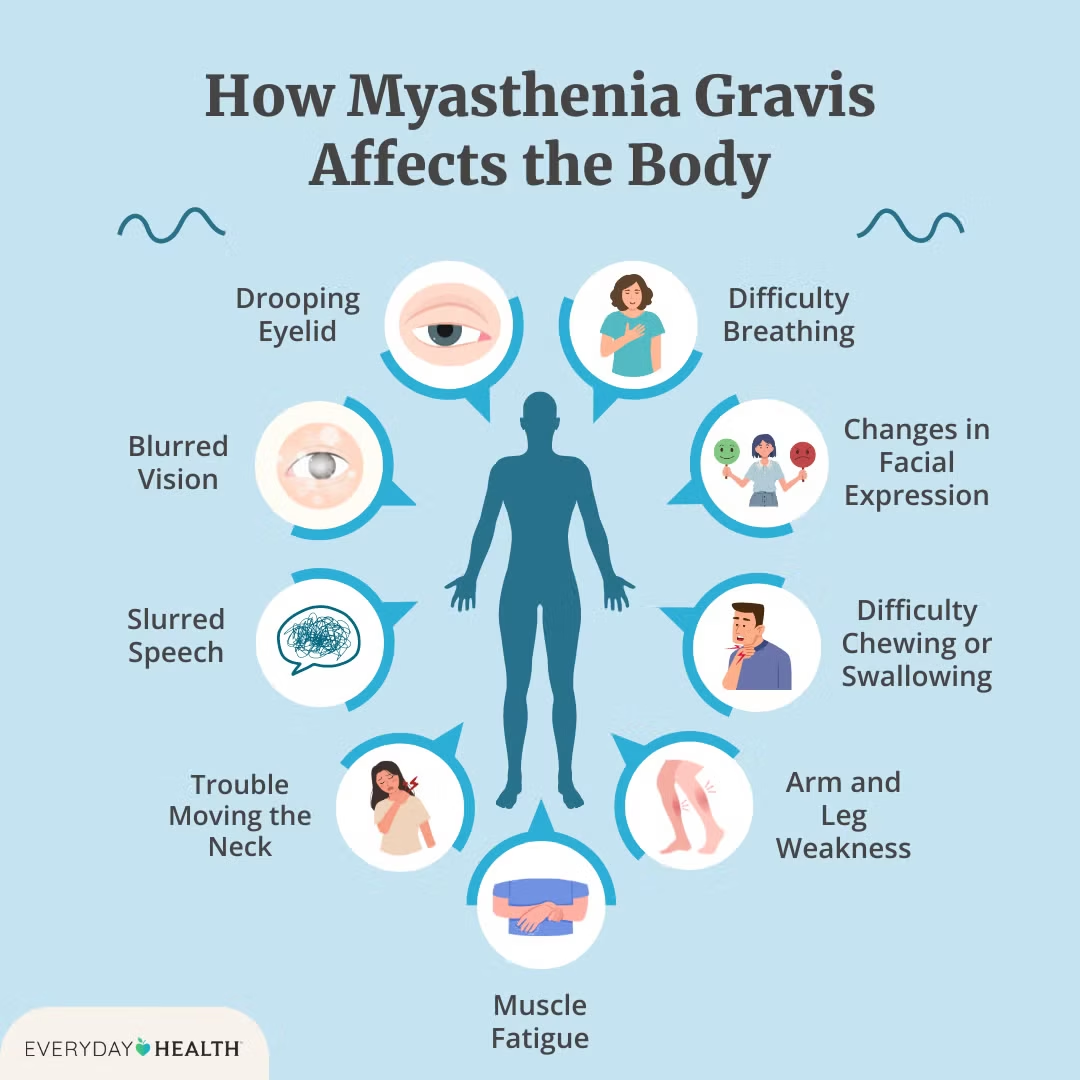
To my family and friends, this is no secret. Many acquaintances know as well. If we’ve run into each other over the last four years, I’ve probably talked about this face-to-face, and I have always tried to share information about MG with people I meet. Still, I’ve been reluctant to discuss it or publish anything on social media for fear of being vulnerable. One often worries about how others will react, how revelations like this might affect employment opportunities, or how people will treat you. But in the spirit of the month and all it celebrates, I’ve decided to share my diagnosis and how I’ve dealt with it.
So, how is myasthenia gravis treated, and what is the prognosis? There is currently no cure, but there are treatments to manage the symptoms. For most individuals, myasthenia gravis is a manageable chronic condition. The outlook for most people with MG is positive, as current treatment options are often highly effective. While existing treatments do not cure the disease, most patients experience improved muscle strength, and some even achieve remission.
What else should you know about Myasthenia Gravis?
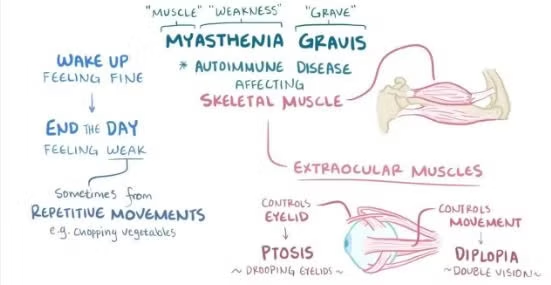
I have been incredibly fortunate to have great doctors who identified the right medications and treatments. Having the insurance to access these treatments has greatly reduced my symptoms and made them manageable. I am in better physical shape now than I was four years ago, and I hope to continue to manage my condition effectively.
But this was not the case four years ago. MG is hard to diagnose, and some people spend years without proper answers. I was experiencing symptoms for two full years before I was correctly diagnosed, and by then, I was having trouble speaking and swallowing. It was incredibly taxing and frustrating for me as someone whose voice is a vital tool for my line of work. It was scary. It affected my ability to communicate properly with loved ones. It also impacted my favorite hobby: tabletop role-playing games.
What does a Game Master do when he cannot speak?
With all the other complications in life, not being able to play a game may seem like the least of my concerns. But as I’ve said often, gaming is part of my mental health routine. It is a creative endeavor I enjoy outside my other responsibilities. It is something that connects me with my dear friends. We are part of each other’s support group, and the time we spend together is something we value and treasure.
Having to consider giving that up was just another source of stress during an already difficult time.
The reality was that I needed to rest; speaking for hours often left me exhausted. At the same time, I did not want to give this up. I wanted to cling to this vestige of normalcy in the midst of chaos.
This wasn’t easy for my players. My voice was hoarse, broken, and sometimes slurred. I would speak with great difficulty. Often, I would use text-to-speech software when I could not speak properly. Some people would not put up with this, but my players are first and foremost my friends—guys like Carlos, Fernan, both Josés (Bellavista and Garcia), Lao, and Oscar—they knew how important our weekly gatherings were. They knew how much it meant to me, and they kept showing up. They supported me despite the limitations, and we played on.
These guys have been my gaming support group through this process, thank you!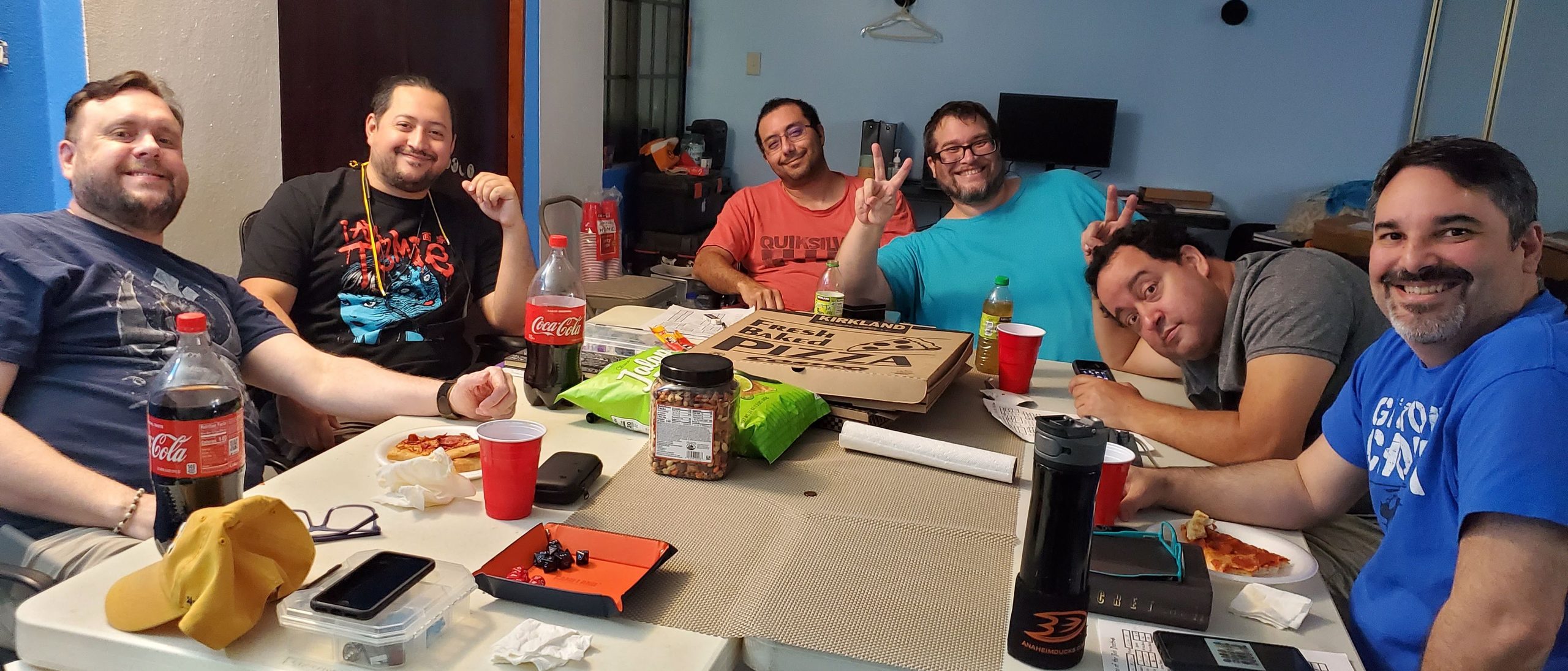
That meant the world to me. It helped me deal with my sadness and my frustration. Their love was a vital part of the support my friends and family showed me during those difficult times.
I am doing much better right now. The medications I take help me manage the symptoms. I know the signs, rest regularly, listen to my body’s cycles, and manage my condition. I hope that this improvement continues in the long term. I am incredibly grateful for the love and support everyone around me shows me every single day. Gaming has truly given me a circle of friends who are like family—a gift that continually enriches my life.
Now, I hope to use the spaces I have online to share my story, build knowledge about myasthenia gravis, return the kindness shown to me, and, hopefully, raise awareness of this relatively rare condition. Knowledge is power! Hopefully, further research will find a cure for MG.
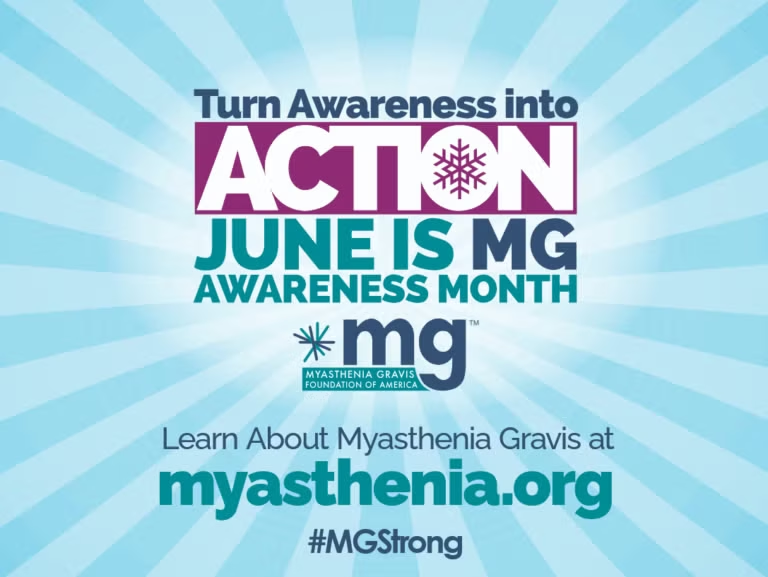
While I’ve gotten to know other MG patients, I have not met other gamers with MG. I wonder whether there are more of us in gaming spaces and whether we can organize to support each other and the larger MG community. If you are a patient, even if you do not wish to share your diagnosis publicly, please feel free to contact me.
If you want to learn more, here are some useful links:
What is MG: https://myasthenia.org/understanding-mg/what-is-myasthenia-gravis/
The Myasthenia Gravis Foundation of America: https://myasthenia.org/
Donate to the Myasthenia Gravis Foundation of America: https://myasthenia.givevirtuous.org/donate/donation-form
Global Genes: https://globalgenes.org/disorder/myasthenia-gravis/
European Myasthenia Gravis Association: https://eumga.eu/
Thank you for reading!
Some of the images I used in this post are from the Myasthenia Gravis Foundation of America website, and this post: Back to Doing What I Love: My Myasthenia Gravis Story By Kathalina Nguyen: which you can read here: https://myasthenia.org/blog/2024/08/08/back-to-doing-what-i-love-my-myasthenia-gravis-story/
Categories: Tabletop Gaming Blogs
Happy Pride: Rolling Initiative for Inclusion
Happy Pride! June is a month to celebrate the LGBTQ+ community. Especially in the times we live in, when kindness, respect, and inclusion seem to be under constant attack, we all must come together and fight back. Kindness is punk, and silence is capitulation!
I want to do my part as an ally because too many of my friends, loved ones, and fellow gamers are members of the LGBTQ+ community. While we all dream of a day when who you are and who you love are non-issues and universally respected, we are not quite there yet. Love is love!
To celebrate, I’m sharing a list of ten perfect games to bring to the table this month. You can check out the full CBR article here:
https://www.cbr.com/lgbtq-ttrpgs-to-play-with-friends-pride-month
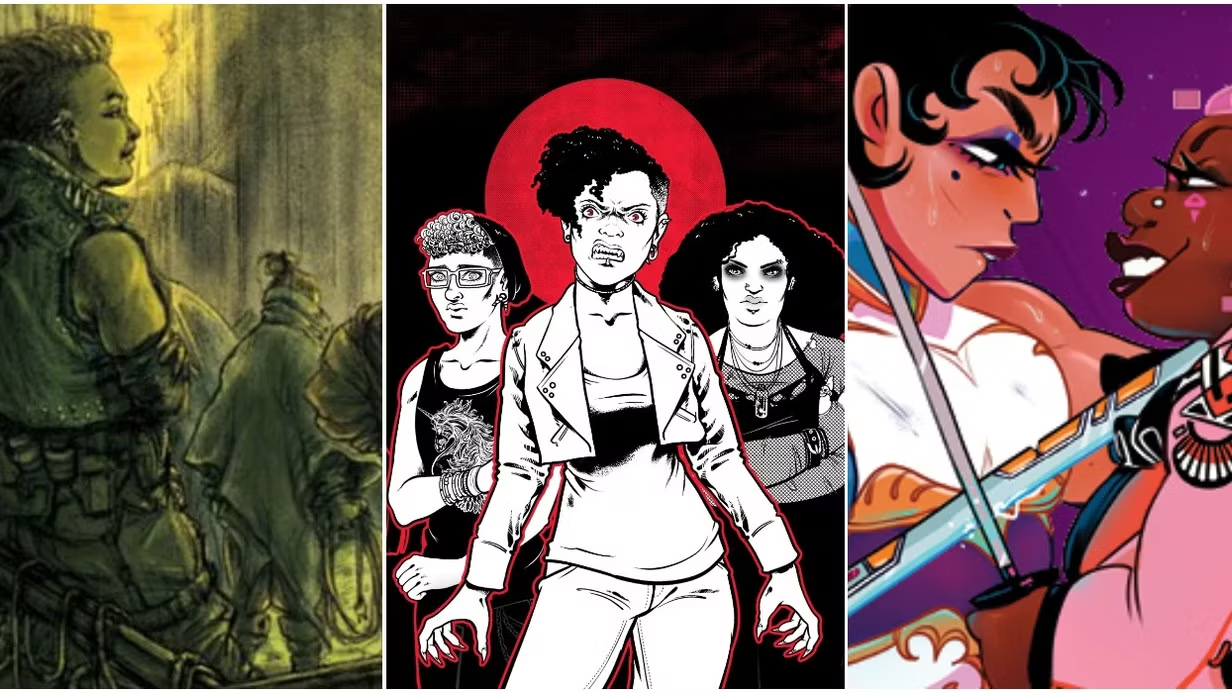
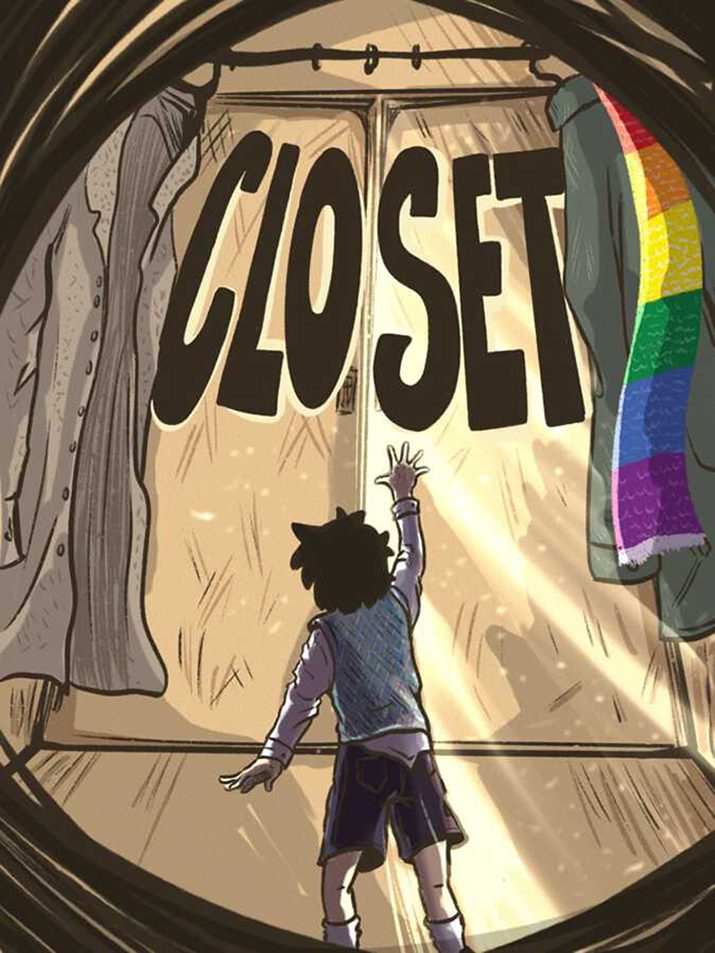
And on a more personal note, I want to recommend Closet, a game by Paco García of GMS Magazine. I had the chance to back his crowdfunding campaign, and honestly, I absolutely love it. I think it’s an excellent tool to help us step into other people’s shoes and empathize a lot more with the struggles the LGBTQ+ community faces daily. You can find it on DriveThruRPG here:
https://www.drivethrurpg.com/en/product/528214/closet
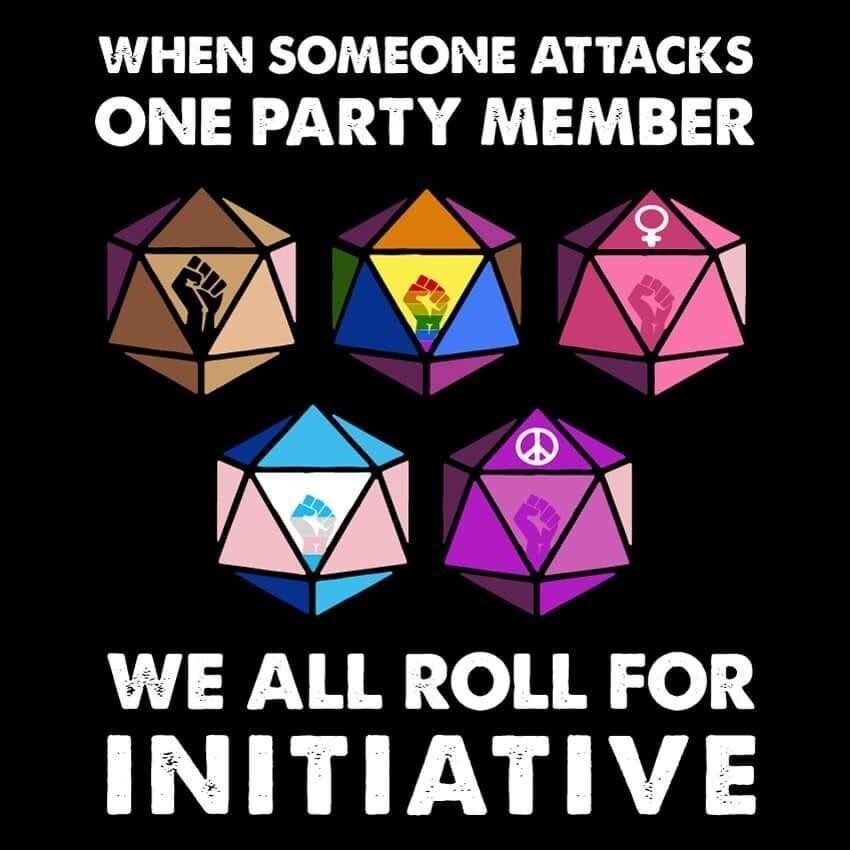
When someone attacks a party member, we all roll initiative!
Categories: Tabletop Gaming Blogs
An Interview with Angel Miranda: Puerto Rican Game Designer and YouTuber
Like last Sunday’s post, today’s feature focuses on someone I met through the Puerto Rico Role Players community. Angel and I have crossed paths in a couple of different fields; since we both work in the education sector, albeit in very different roles, we’ve always had plenty of ground to cover.
He is a longtime gamer who, much like my own compulsive homebrewing habits, absolutely loves tinkering with systems and creating his own rulesets. Let me share my interview with him so you can get to know him and his work a little better.
Introduce yourself! Who are you and what do you create?
I’m Angel Miranda, better known as Enyol. I’m a full-time teacher and part-time TTRPG designer.
How would you describe your creative endeavor?
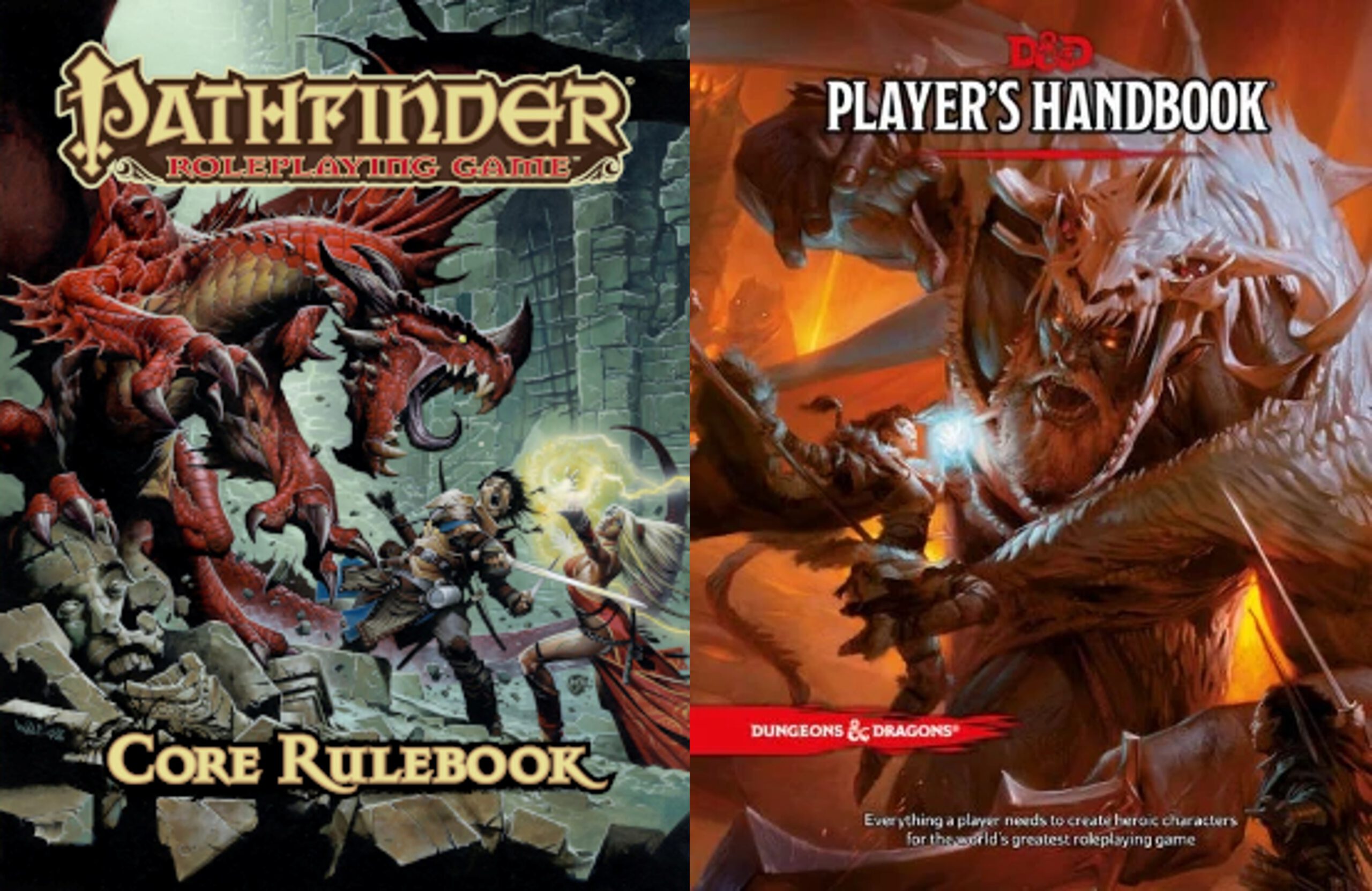
I design all sorts of things for different TTRPGs. I’ve designed 4 different game systems and published one. I’ve designed monsters, classes, and rules for Pathfinder 1e and D&D 5e; most of these have been self-published.
How did you discover TTRPGs?
I discovered TTRPGs in college, when I saw a group of people playing at a table. I was immediately interested in it. I’ve been playing and running games since 2006.
Do you actively play TTRPG? What are you playing?
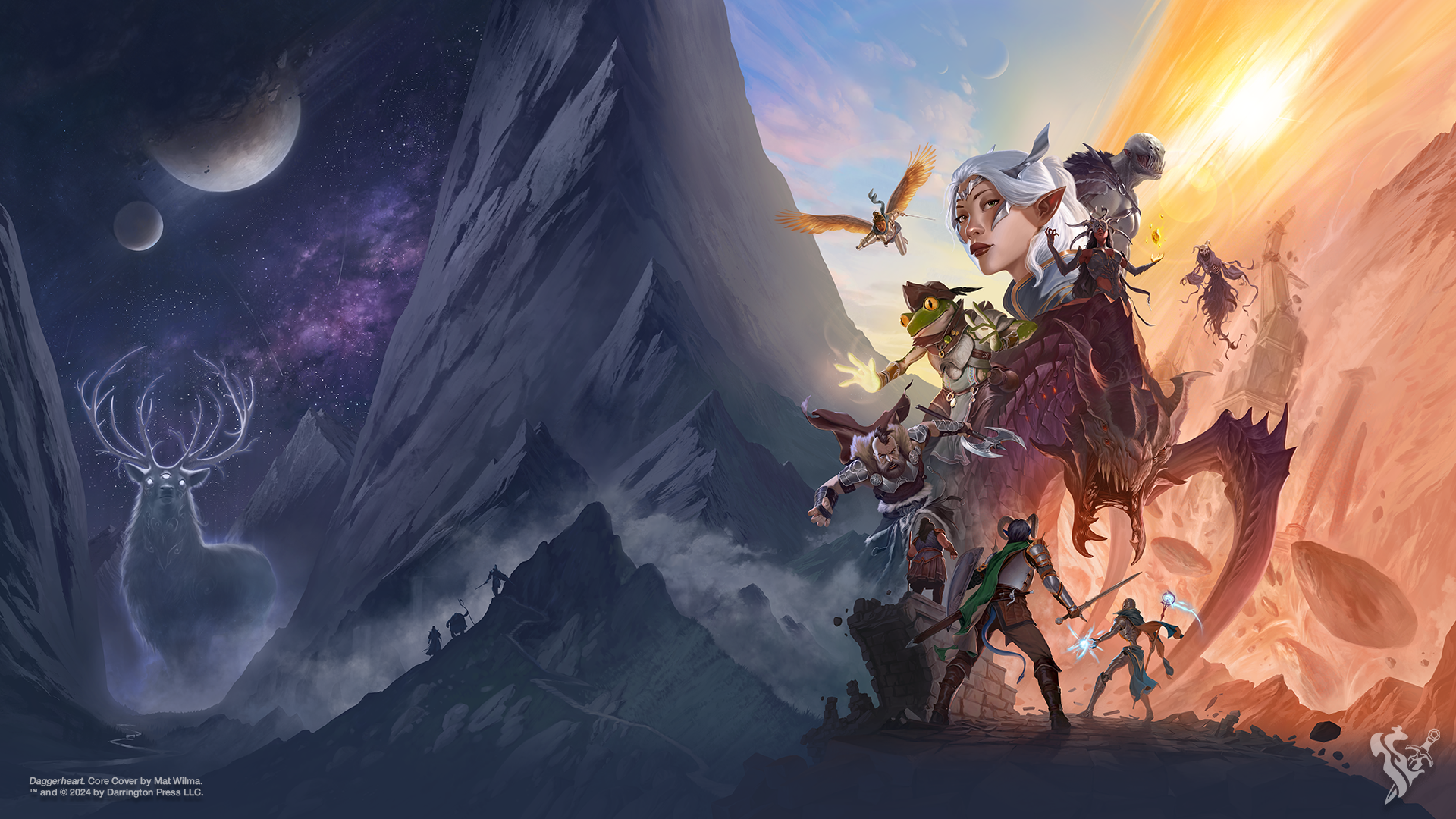
I’m actively playing at the moment. I’m running a Paradigm Odyssey campaign (a system of my design and my baby), and I’m a player in a Daggerheart campaign and in a D&D 5e Campaign.
What do you want to play next?
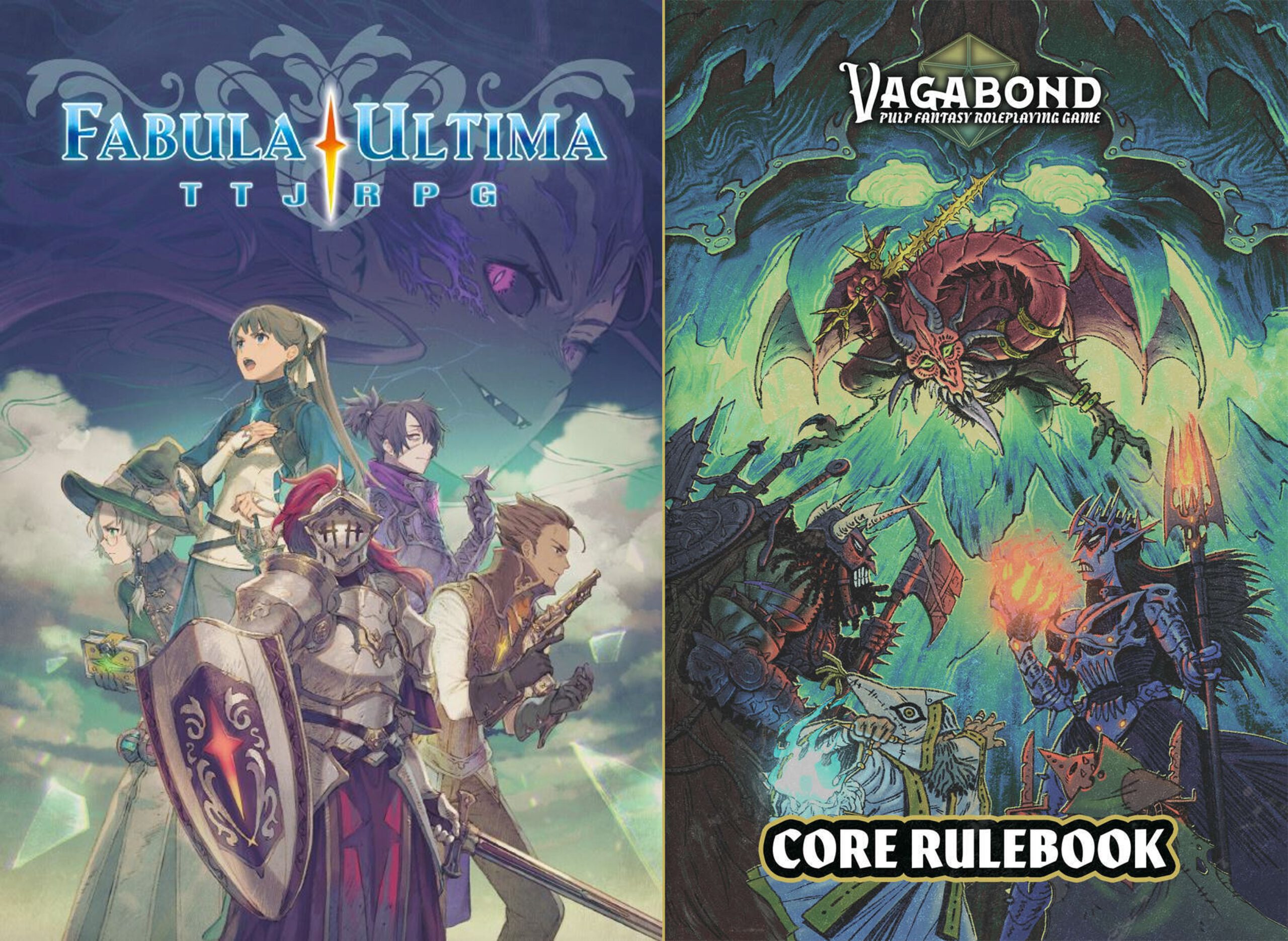
Next, I’d like to keep playing and polishing my Paradigm Odyssey system with friends and strangers, and I’d love to test out Fabula Ultima and Vagabond.
What projects are available, and what are you working on next?
I’m currently working on a Spanish-language TTRPG YouTube channel for my local audience, and I’m always looking to take Paradigm Odyssey to different stores across the island.
Where can people get your project?
People can find me on YouTube at: Roleplayers de Boriken and on Instagram at @Paradigm.Odyssey.
Any closing thoughts? Final commentary: Remember rule #1, always have fun
Thank you, Angel, for sharing your time and your creations with us. You can check Angel’s DriveThruRPG page here: https://www.drivethrurpg.com/en/publisher/31128/enyol
Categories: Tabletop Gaming Blogs
Who Are the Five Writers Who Made You? And five more! (Expanded Edition)
I saw this list format posted by Angus Abranson on Facebook, and I originally thought I’d be able to complete it easily. It ended up taking a bit more thought than I expected.
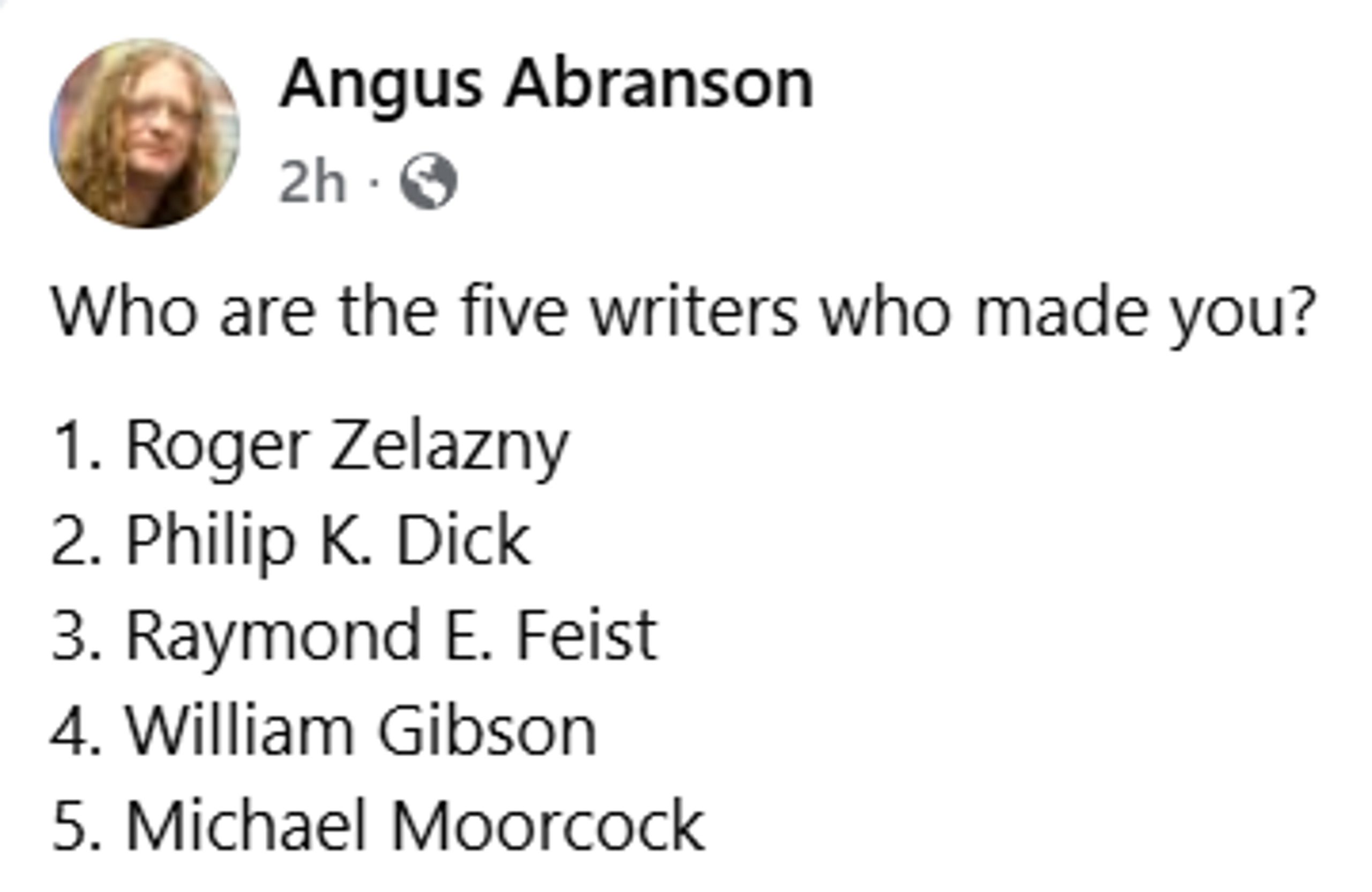
Despite my deep love for TTRPGs, fantasy, and sci-fi, my cultural reference points differ from those of many in my generation. Growing up in Puerto Rico, I had early exposure to Puerto Rican authors and literature in Spanish. When I eventually started reading the classics of the fantasy and sci-fi genres, my literary tastes shifted and expanded.
Here is my list of the top five writers who made me, in no particular order; these five are all equally influential. I know you’re traditionally not supposed to explain your choices on these lists, but I realize not all my friends may know every name here, so I’m adding some notes and links.
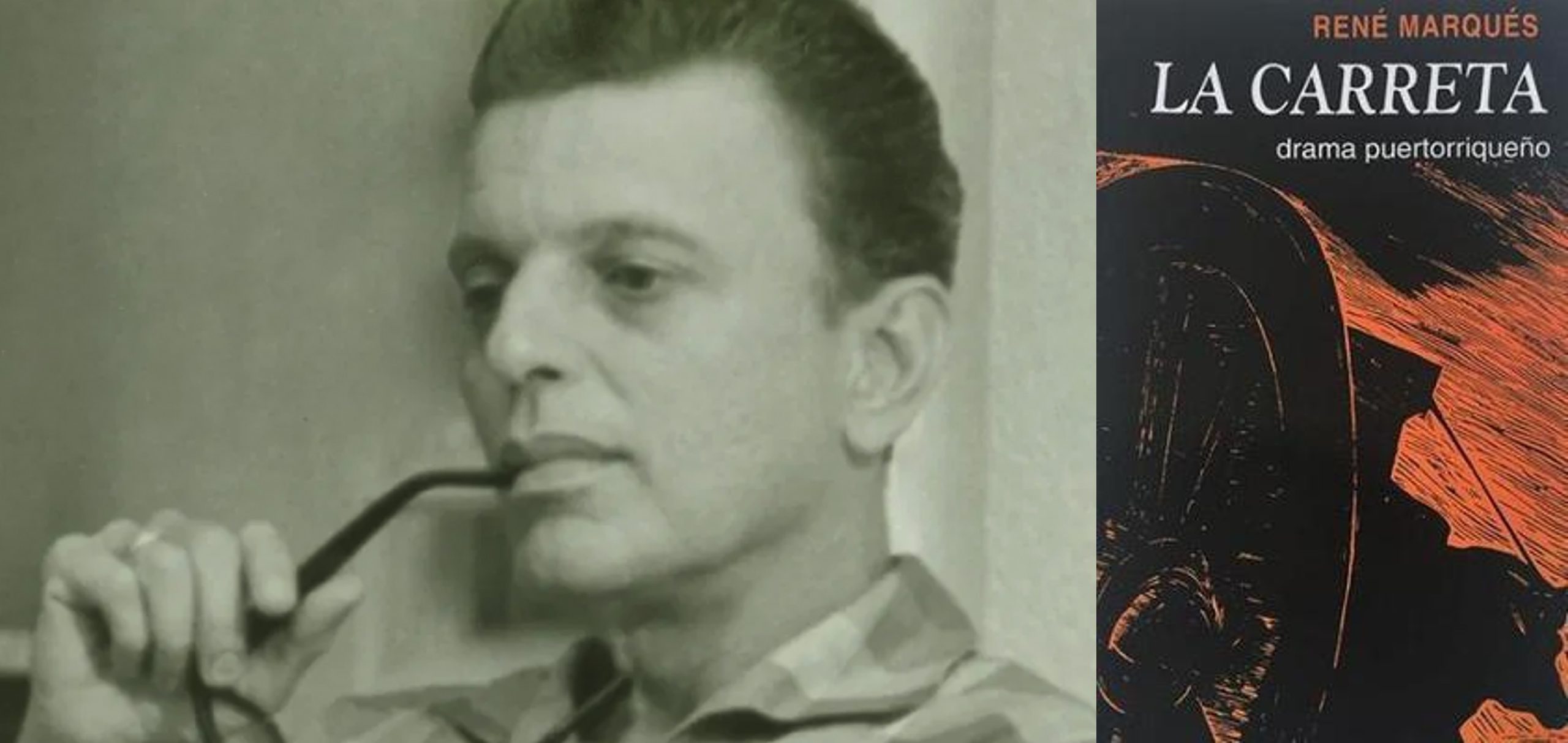
1. René Marqués: A Puerto Rican writer best known for his plays and short stories. I greatly enjoy his corpus. https://en.wikipedia.org/wiki/Ren%C3%A9_Marqu%C3%A9s
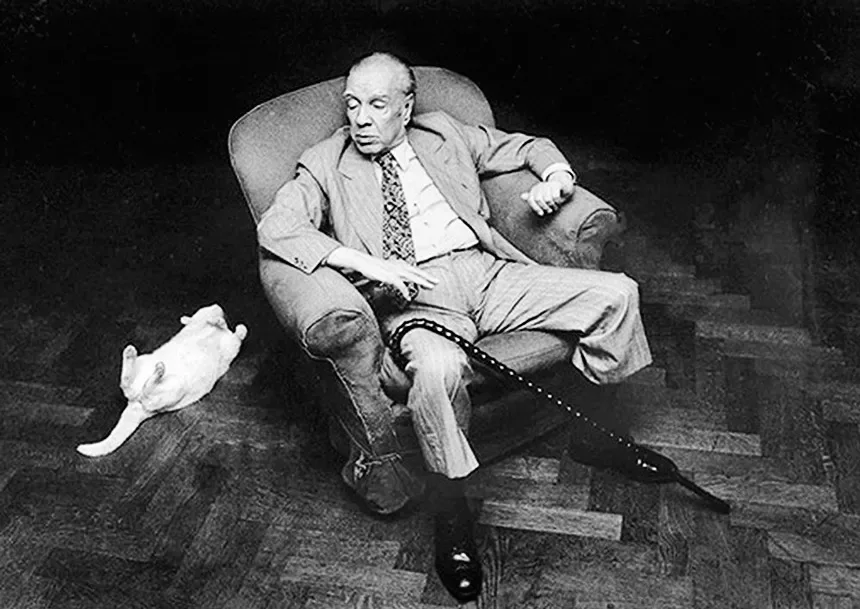
2. Jorge Luis Borges: The brilliant Argentinian short story writer and poet, who also translated major authors into Spanish. I find myself returning to re-read his short stories periodically. https://en.wikipedia.org/wiki/Jorge_Luis_Borges
3. Douglas Adams: His work really needs no introduction. The Hitchhiker’s Guide to the Galaxy fundamentally changed my taste in literature, but his entire bibliography remains among my favorite and most influential reads. https://en.wikipedia.org/wiki/Douglas_Adams

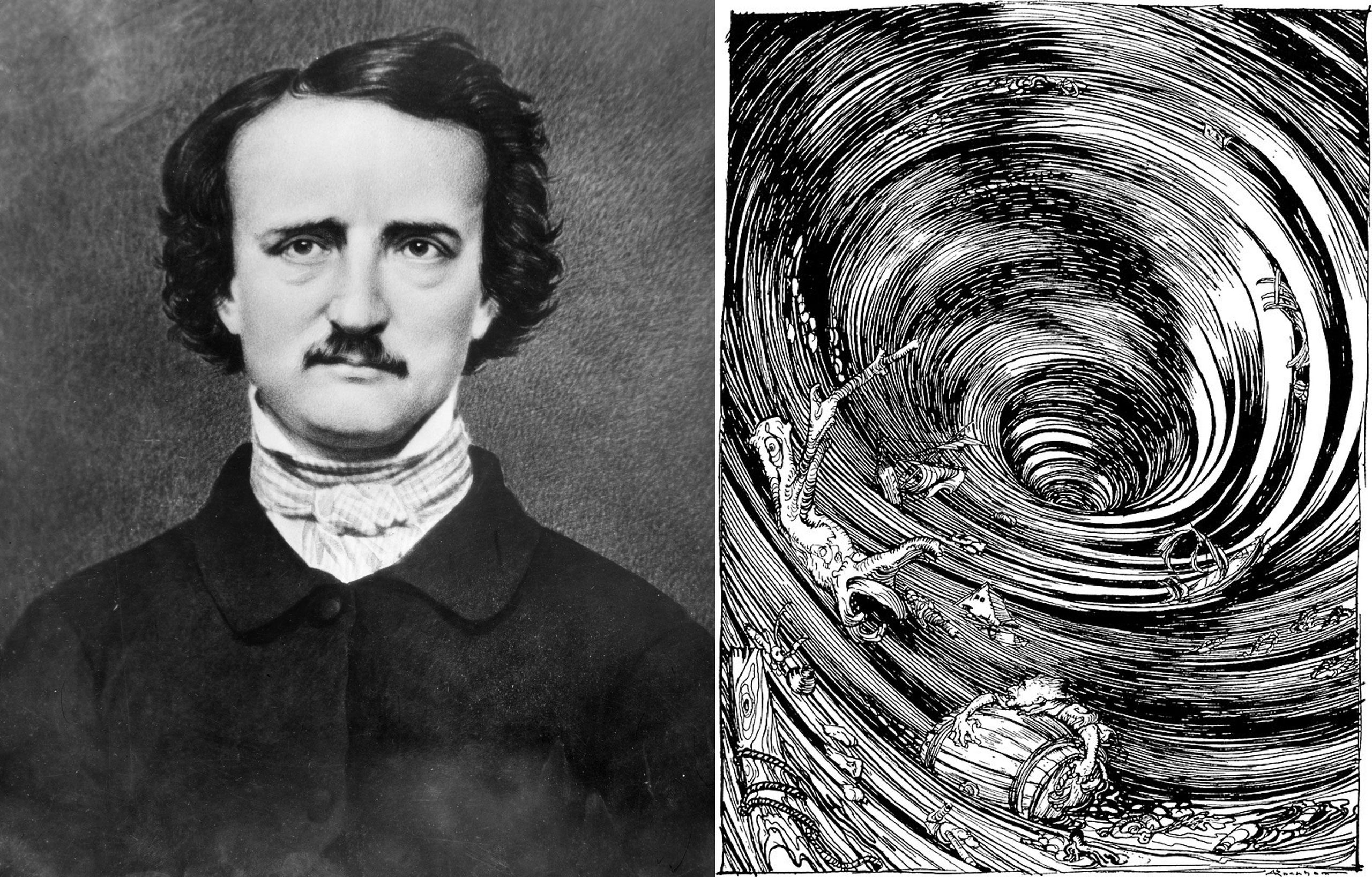
4. Edgar Allan Poe: I first read A Descent into the Maelström in a literature anthology in 8th grade, and it was a genuinely life-changing moment for me as a reader. His body of work continues to influence my writing and Gamemastering. https://en.wikipedia.org/wiki/Edgar_Allan_Poe
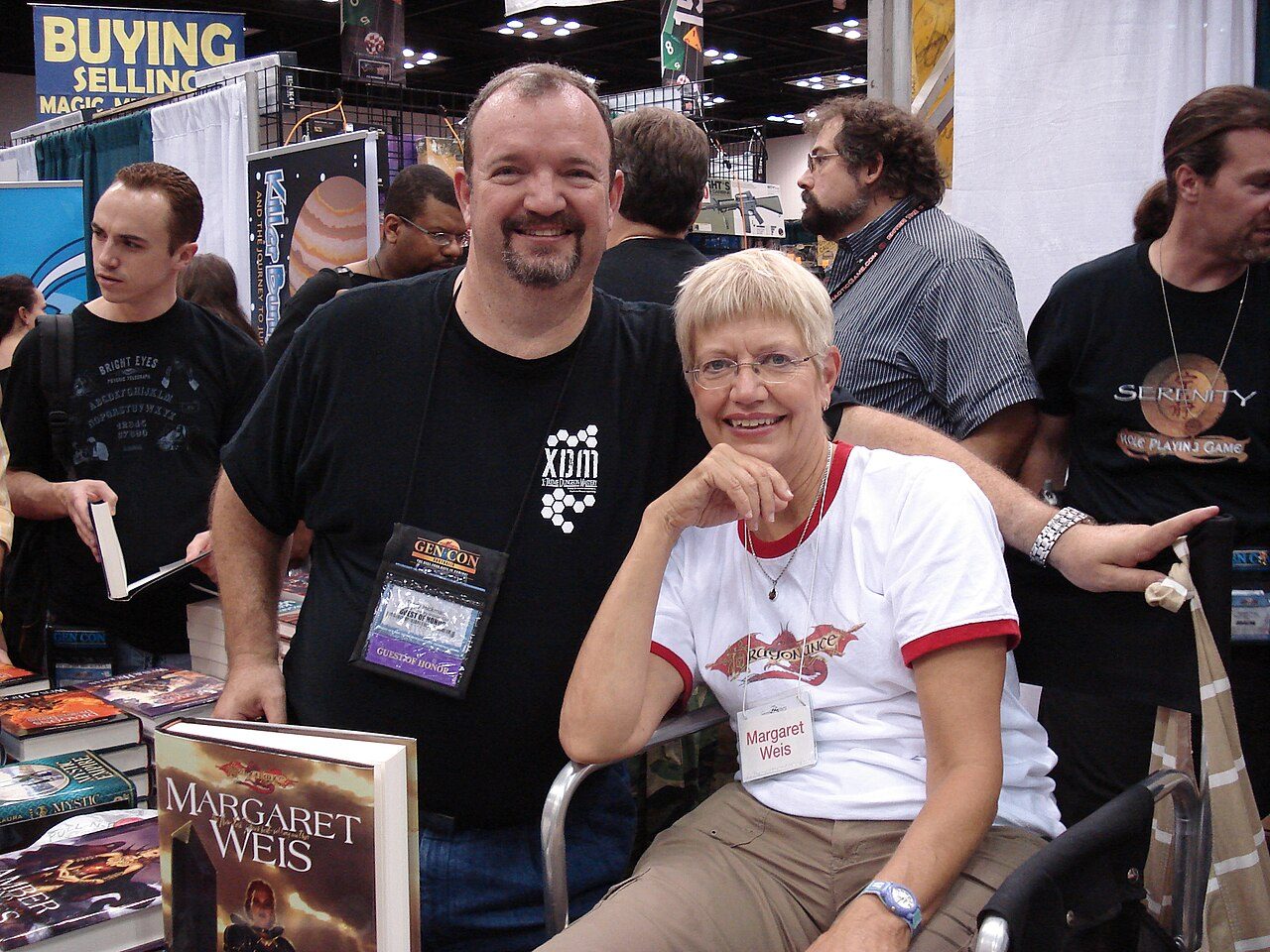
5. Margaret Weis & Tracy Hickman: Yes, this is cheating! I know it is two authors, but their truly influential work is decidedly what they create together. Their world-building defined exactly what fantasy was for me. https://en.wikipedia.org/wiki/Margaret_Weis https://en.wikipedia.org/wiki/Tracy_Hickman
The Five Runners-Up
And here are the runners-up. These authors are no less important than the previous five. When I sat down and considered who influenced me the most, the previous five (well, six, really!) just happened to come out on top. And yes, I know I promised five runners-up, but I am listing six here because I cannot leave any of them out!
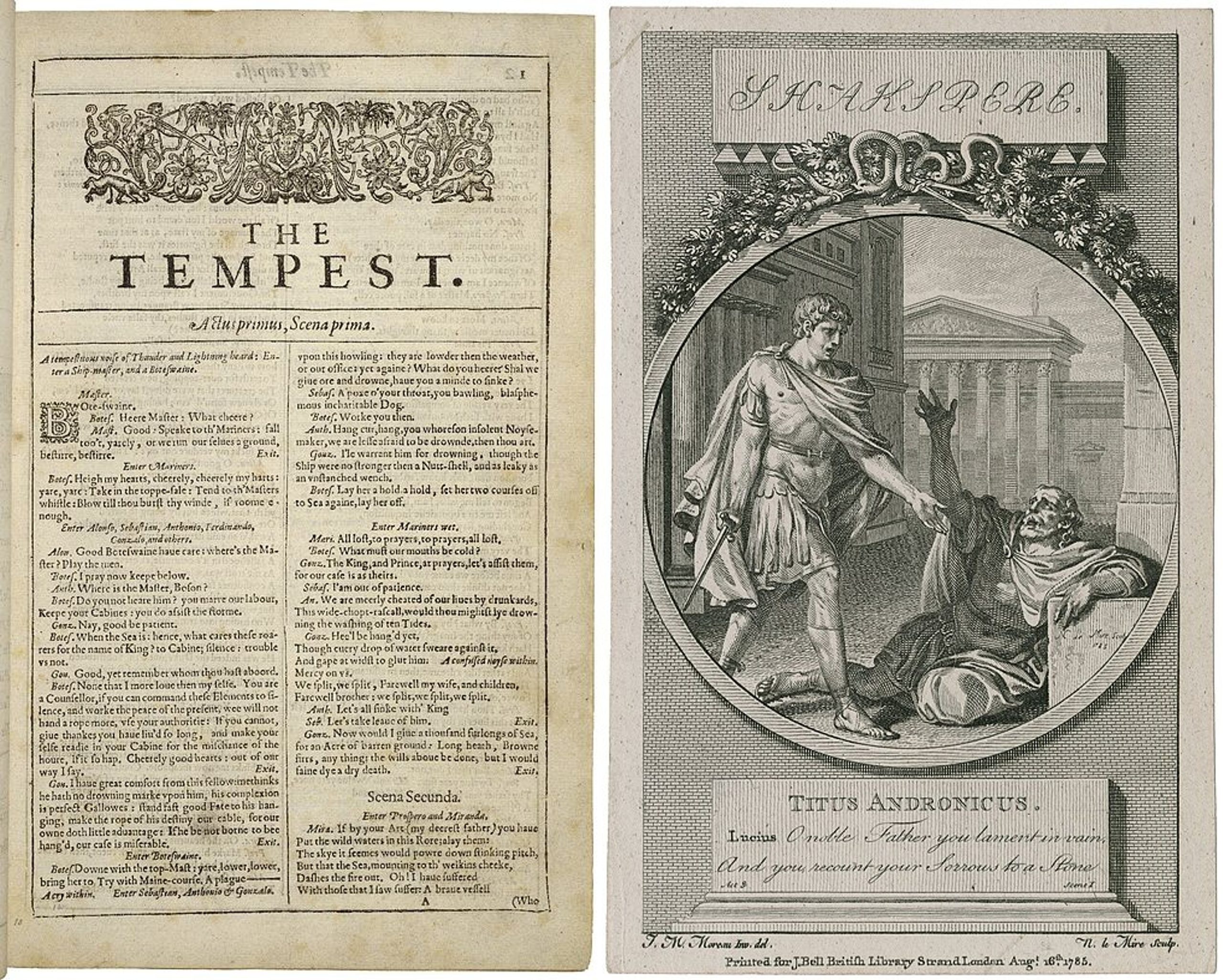
William Shakespeare: The Bard! Any list like this is built partly on his work and its massive influence on world literature. From the first time I read Julius Caesar in 10th grade, through all the plays I read during my undergraduate and graduate studies, his impact on me is undeniable. No general Wikipedia link needed here, but I will link to my two personal favorite plays: The Tempest: https://shakespeare.mit.edu/tempest/full.html Titus Andronicus: https://shakespeare.mit.edu/titus/full.html
Enrique Laguerre: Another Puerto Rican author who greatly influenced me. His entire corpus is worth your time, but his novel La Llamarada is my ultimate comfort book. It is one I return to periodically for a re-read, much like another book further down this list. https://en.wikipedia.org/wiki/Enrique_Laguerre

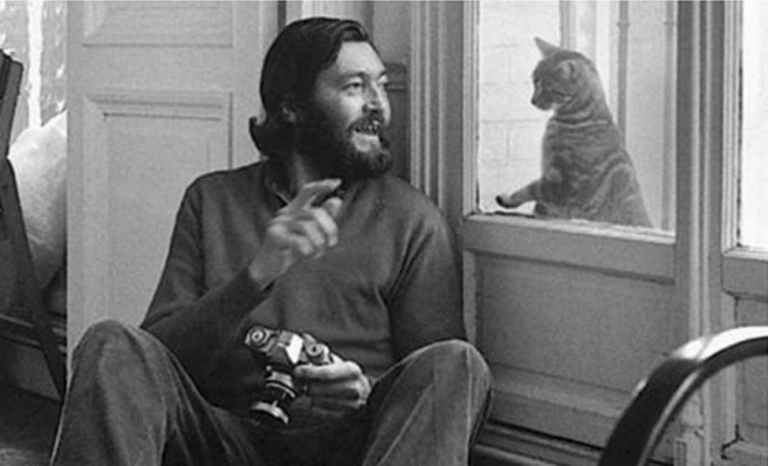
Julio Cortázar: Another Argentine genius. His novels and short stories were incredibly influential to my understanding of narrative, even though I discovered him a bit later in life. https://en.wikipedia.org/wiki/Julio_Cort%C3%A1zar
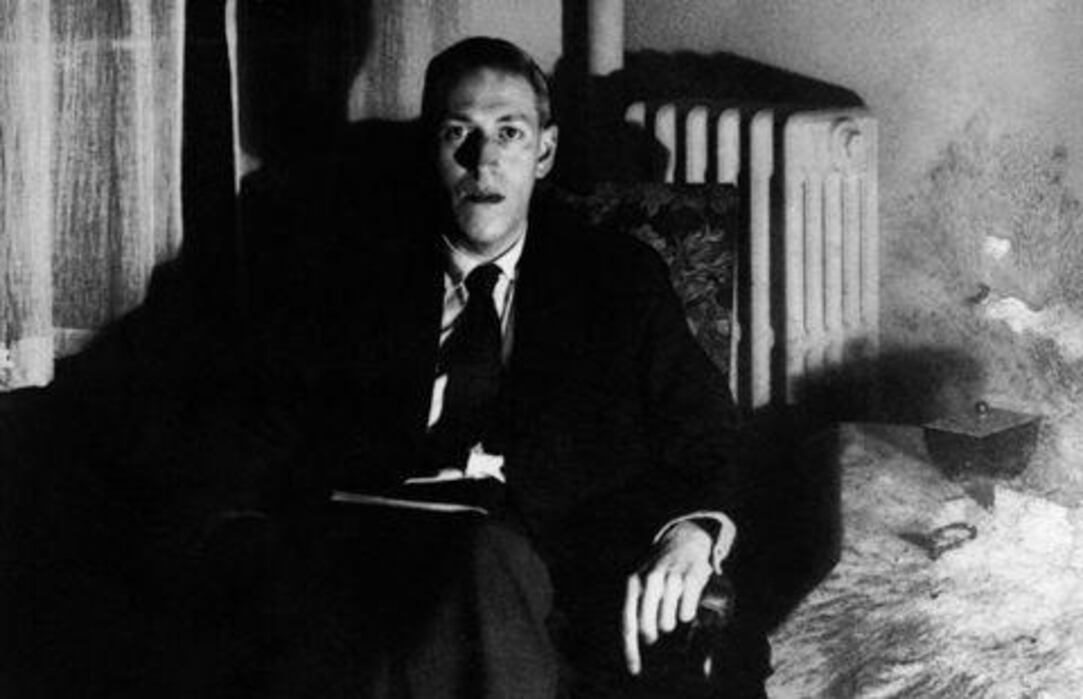
H.P. Lovecraft: I originally started reading his work because of the Call of Cthulhu TTRPG, and his writing was hugely influential to me as a reader, writer, and storyteller. I’ve re-read his stories numerous times. As I learned more about who he actually was, his racism and bigotry rightfully made me reconsider his works. Still, his literary influence on the genre is undeniable, and reading him opened the door to other authors and genres I wouldn’t have known otherwise. https://the-artifice.com/lovecraft-racism/
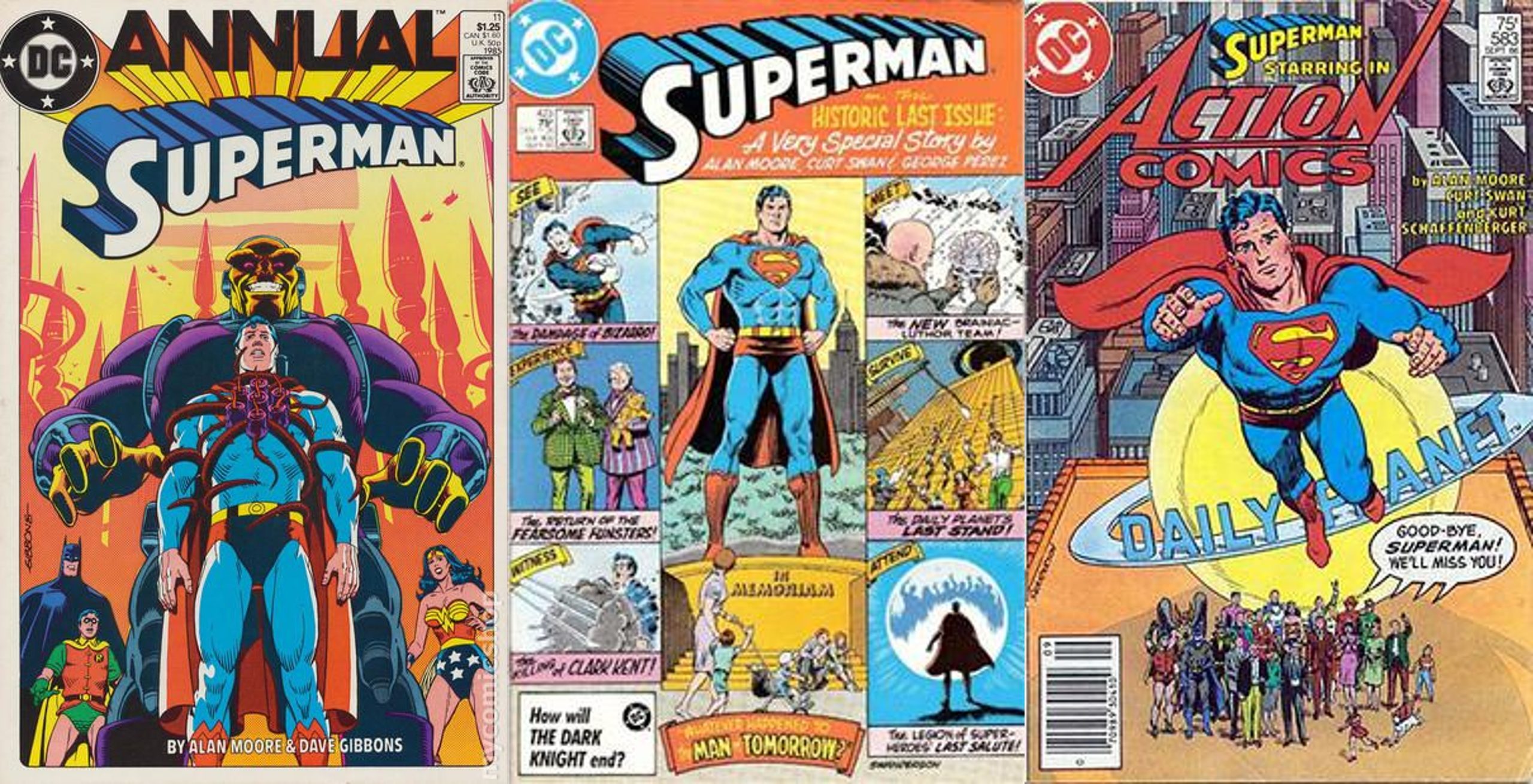
Alan Moore: I loved Moore’s work before I even knew who he was. For the Man Who Has Everything (Superman Annual #11, 1985), Mogo Doesn’t Socialize (Green Lantern #188, 1985), and Whatever Happened to the Man of Tomorrow? (Superman #423 and Action Comics #583, 1986) These were all comics that touched me deeply and showed me the true possibilities of the medium. I later discovered his monumental works like Watchmen, V for Vendetta, Marvelman, and From Hell. The man has written my favorite comics, period. https://en.wikipedia.org/wiki/For_the_Man_Who_Has_Everything https://en.wikipedia.org/wiki/Superman:_Whatever_Happened_to_the_Man_of_Tomorrow%3F https://dc.fandom.com/wiki/Green_Lantern_Vol_2_188
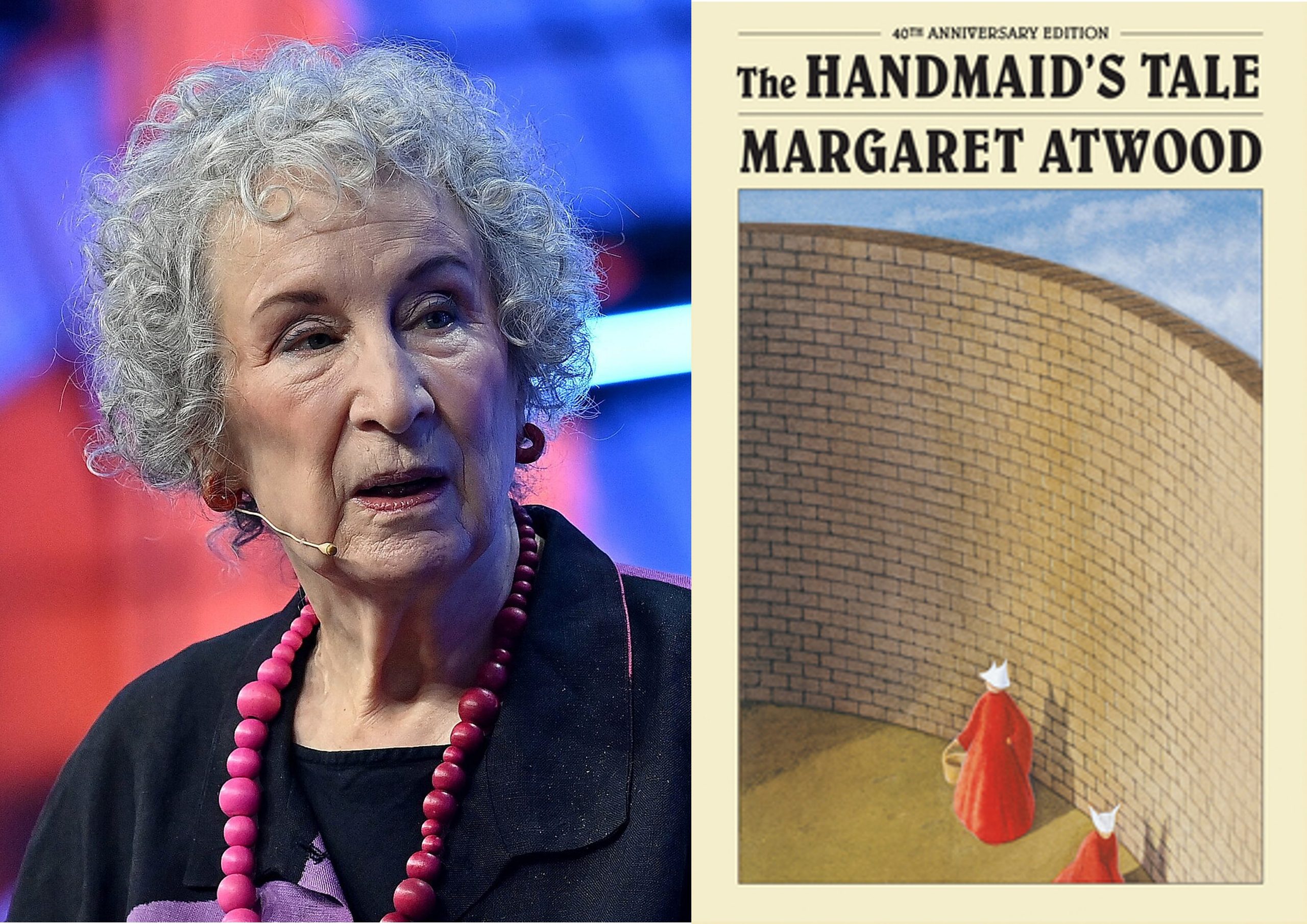
Margaret Atwood: Of everyone on this list, she is the one I read most recently, but she has influenced me the most as an adult. The Handmaid’s Tale is my most re-read book. It has affected me more profoundly than anything else I’ve read in recent years and led me to explore her impressive, extensive output. Atwood is an author we should all read. https://en.wikipedia.org/wiki/Margaret_Atwood https://en.wikipedia.org/wiki/The_Handmaid%27s_Tale
Categories: Tabletop Gaming Blogs
An Interview with Enrique Velez – A Puerto Rican Game Designer
I’m thrilled about today’s interview. I’ve known the subject almost as long as the Puerto Rico Role Players group has existed. I’m sure we had many friends in common before that, and I’m sure we had crossed paths, but he is someone who came to the Geeknics, with whom I stayed in contact online, and with whom I have become friends thanks to gaming.
And I always love that his presence at Geeknics was a family affair, his wife, their kids. I remember running a game at a Geeknic (can’t remember which one) where he and his children played. Seeing Enrique and talking to him is always a pleasure. Getting a copy of his zine last February was a thrill. I love seeing Puerto Rican creators and game designers share their creations with the gaming community.
Here is the interview.
Introduce yourself! Who are you and what do you create?
Hey, I’m Enrique Vélez. I like games and like to tinker with game mechanics. Maybe one day I’ll be an accomplished game designer!
How would you describe your art or creative endeavor?
30% daydreaming, 30% brainstorming, 40% neglecting my day job.
Like most game designers, I started with some house rules for my campaign, then reverse-engineered the core rules of my favorite game at the time, and so on. For some time, I was building up to what would be a “Fantasy Heartbreaker,” but I’ve tempered my expectations and am currently aiming to publish a few zines and then see where that takes me.
How did you discover TTRPGs?
In my early 20s, I learned a lot about TTRPGs from internet forums. Back then, there were no VTTs, but we played a few sessions of D&D and West End Games’ Star Wars over IRC.
I didn’t have an opportunity to play in person until my early 30s.
Do you actively play TTRPG? What are you playing?
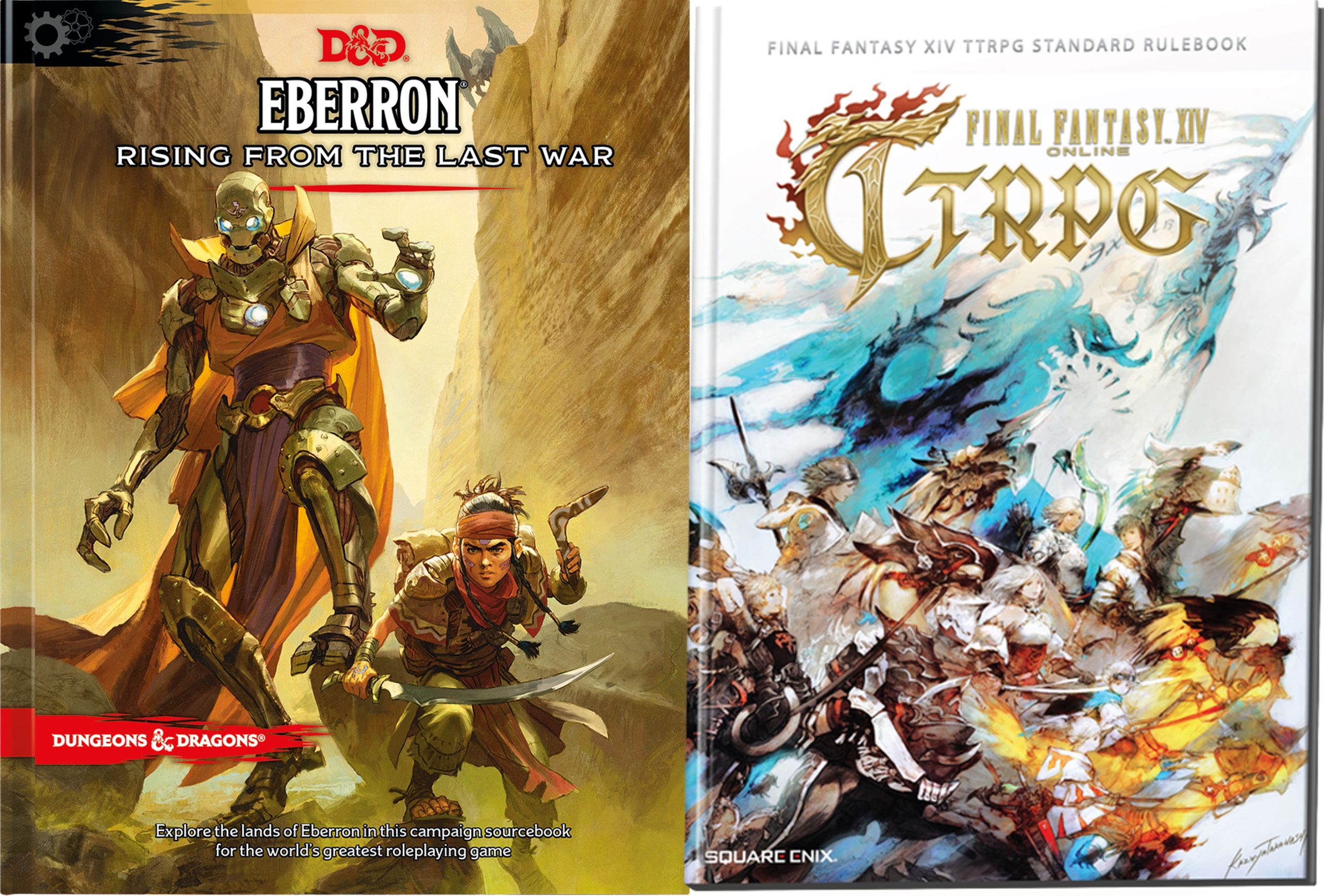
I’m currently playing an Eberron campaign on D&D 5.5. I recently started a Final Fantasy XIV TTRPG game, but scheduling it is going to be super tricky. Fingers crossed!
What do you want to play next?
I really want to GM some Daggerheart! I’m definitely going to, once the current D&D campaign is canceled, we all know those never actually end.
Playing Daggerheart at Titan Games with Brightcandle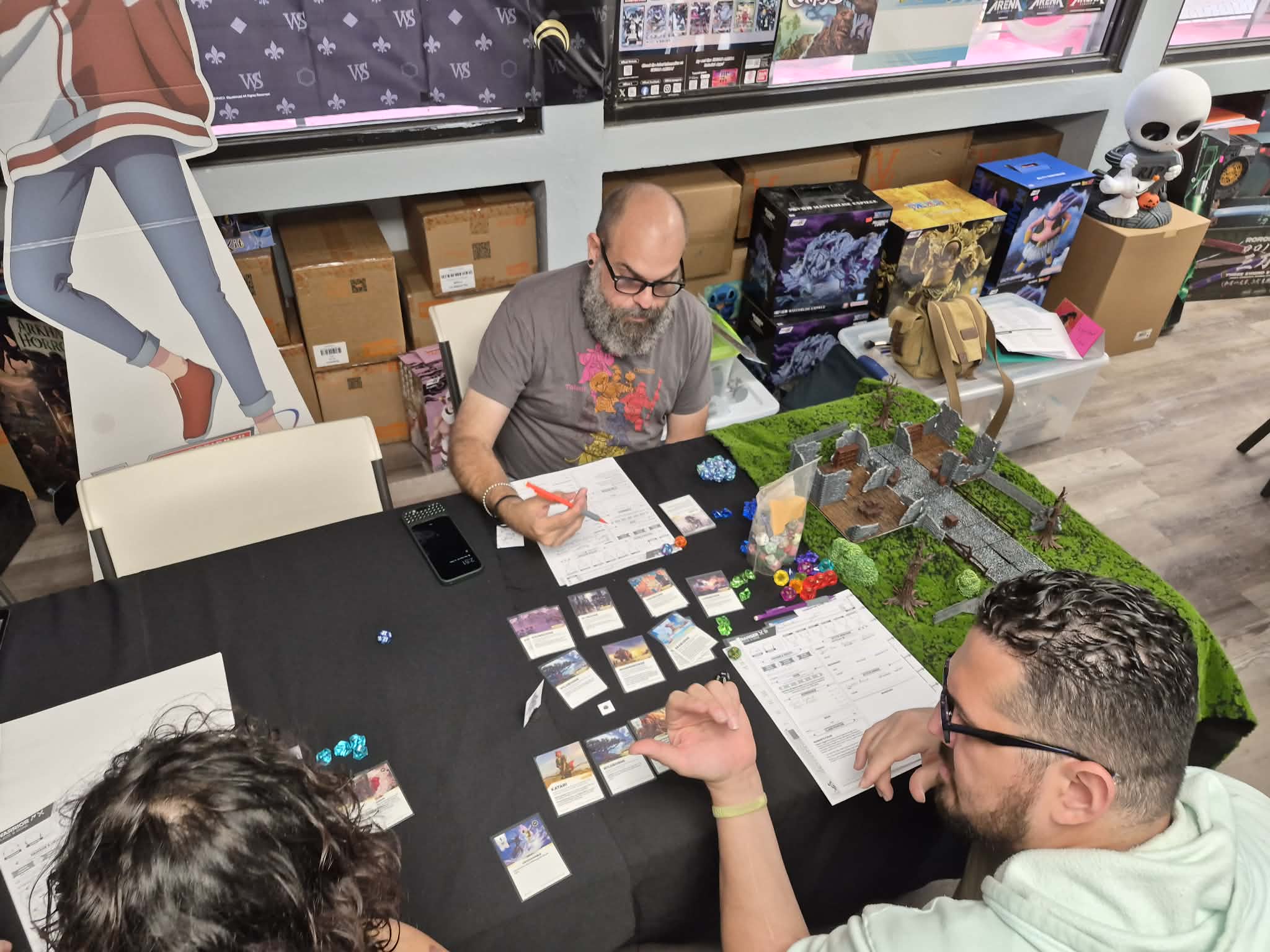
What projects are available, and what are you working on next?
I published Escalations & Commitments: a 5e-compatible TTRPG, 2nd Edition, by Enrique Vélez almost two years ago. A silly game about being stuck with D&D. It’s free to download on Itch! A quick read too, probably shorter than this blog post!
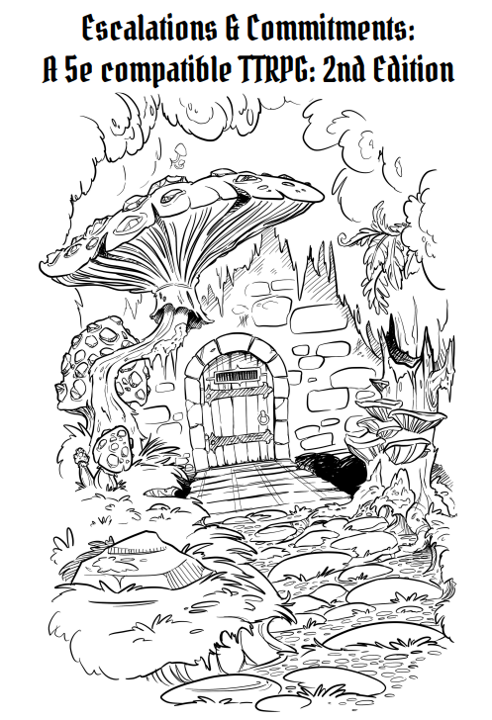
I wrote that game in a day using ideas I had been working on for years, basically as a way to get some ideas and frustrations off my chest.
I’m currently working on RadioPunk 20XX. It’s cyberpunk, but less edgy, with an intuitive and tactile dice pool system I made from scratch.

Right now, I could really use some feedback on the manuscript before I move on to playtesting. Stargazer’s World readers interested in lending a hand can reach out through Discord or Bluesky.
Where can people get your project?
Any closing thoughts?
Ask your game designer friend about their game. You’ll make their day.
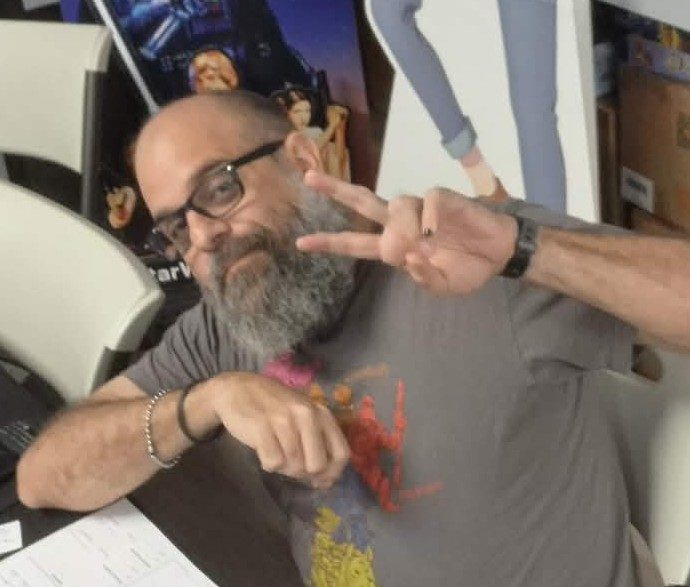
Thank you, Enrique! So that you know, I am not a poser. Let me share some pictures of the zine he mentioned above.
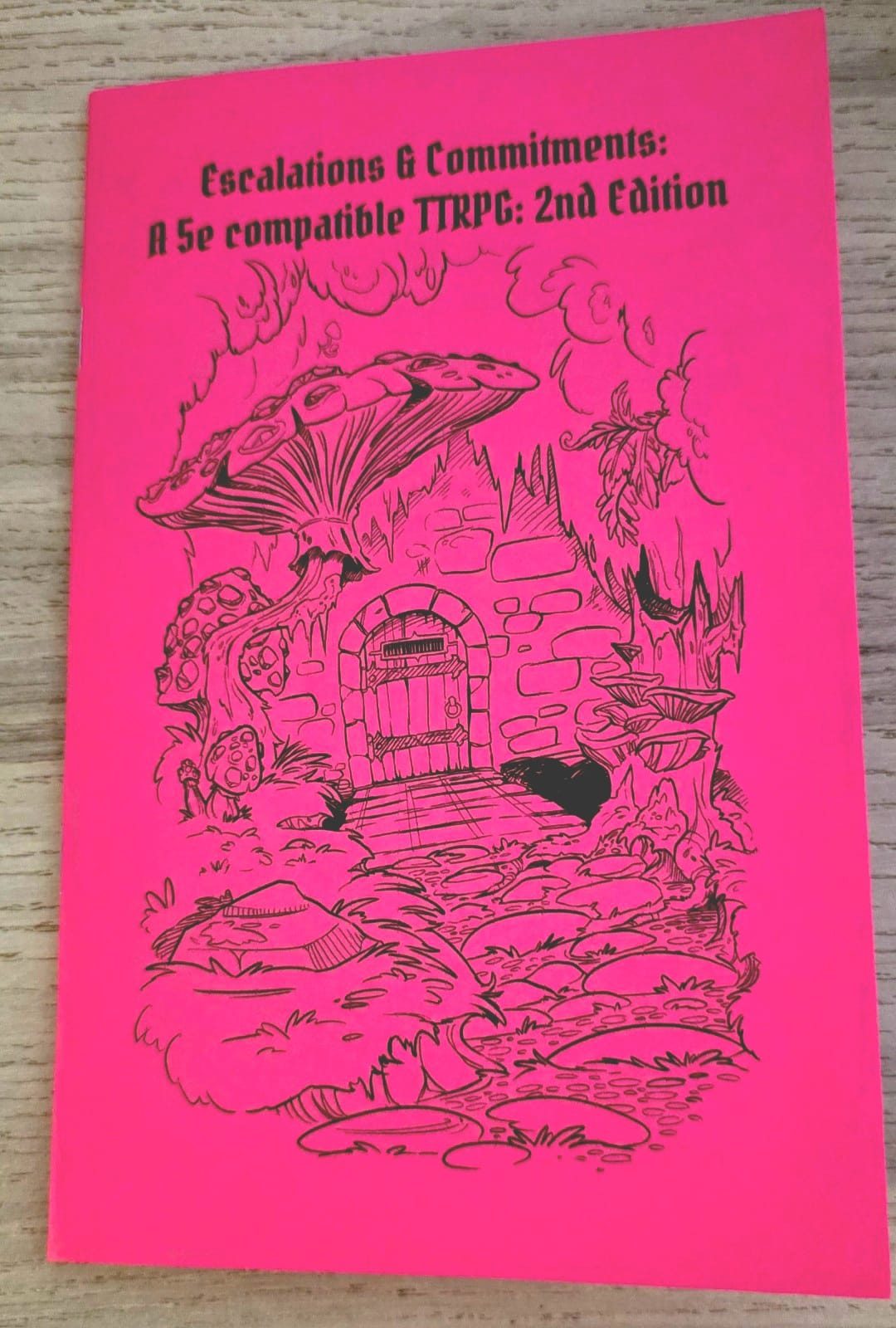
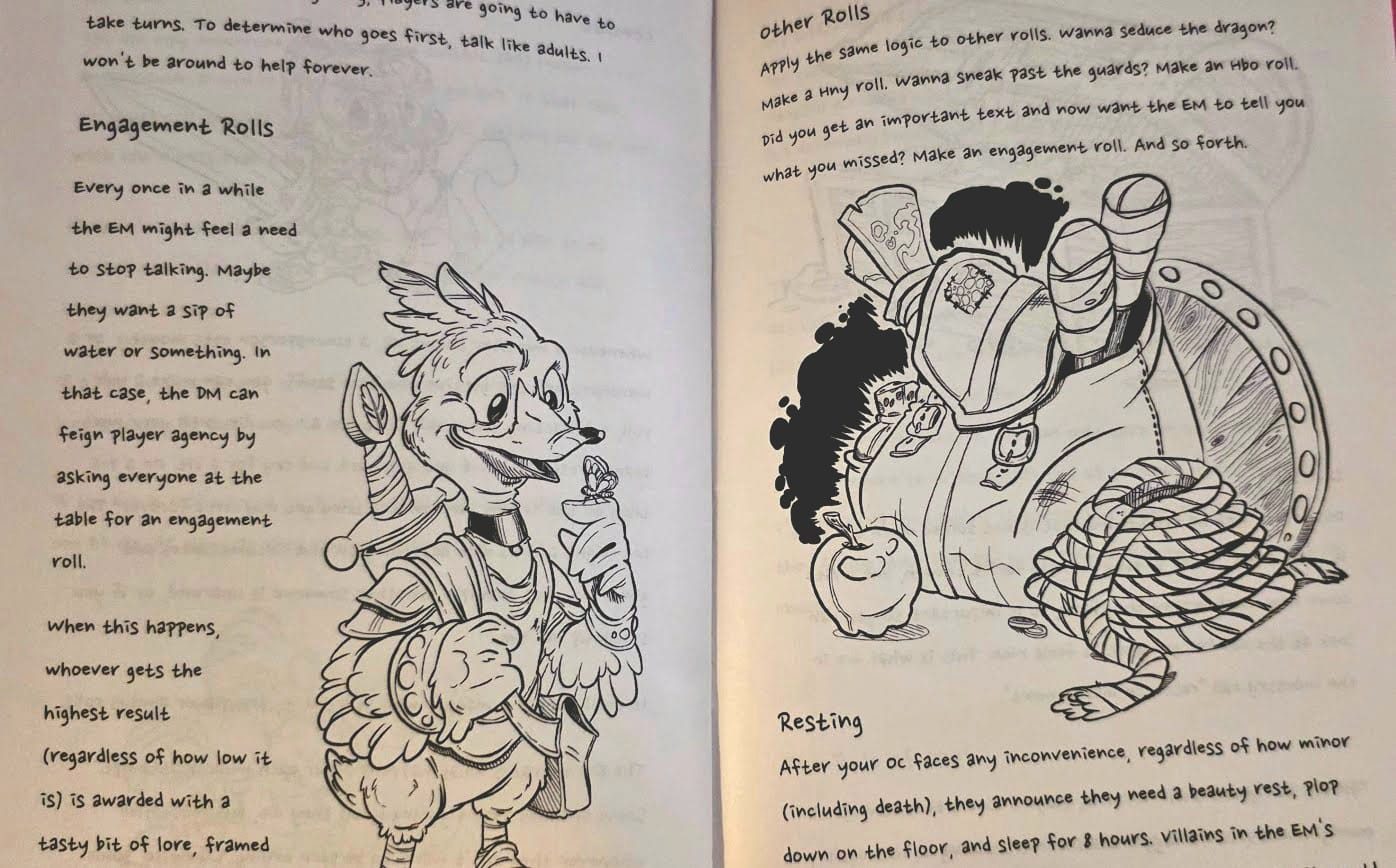
And I have the signed copy, and no, I’m not posting it on eBay.

Last but definitely not least, let me thank Miguel Velez (Brightcandle), another dear friend, amazing person, and a great GM who is actively supporting the local gaming community, doing demo games and spreading the love of TTRPGS, including his participation yesterday May 23rd, 2026, where he was one of the GMs for Titan Games Daggerheart one-year-anniversary event, where he was one of the GMs. His pictures of Enrique are the ones I used in this post. Thank you for the pictures and the work you do, Miguel.
Categories: Tabletop Gaming Blogs
About Me: Tabletop RPG
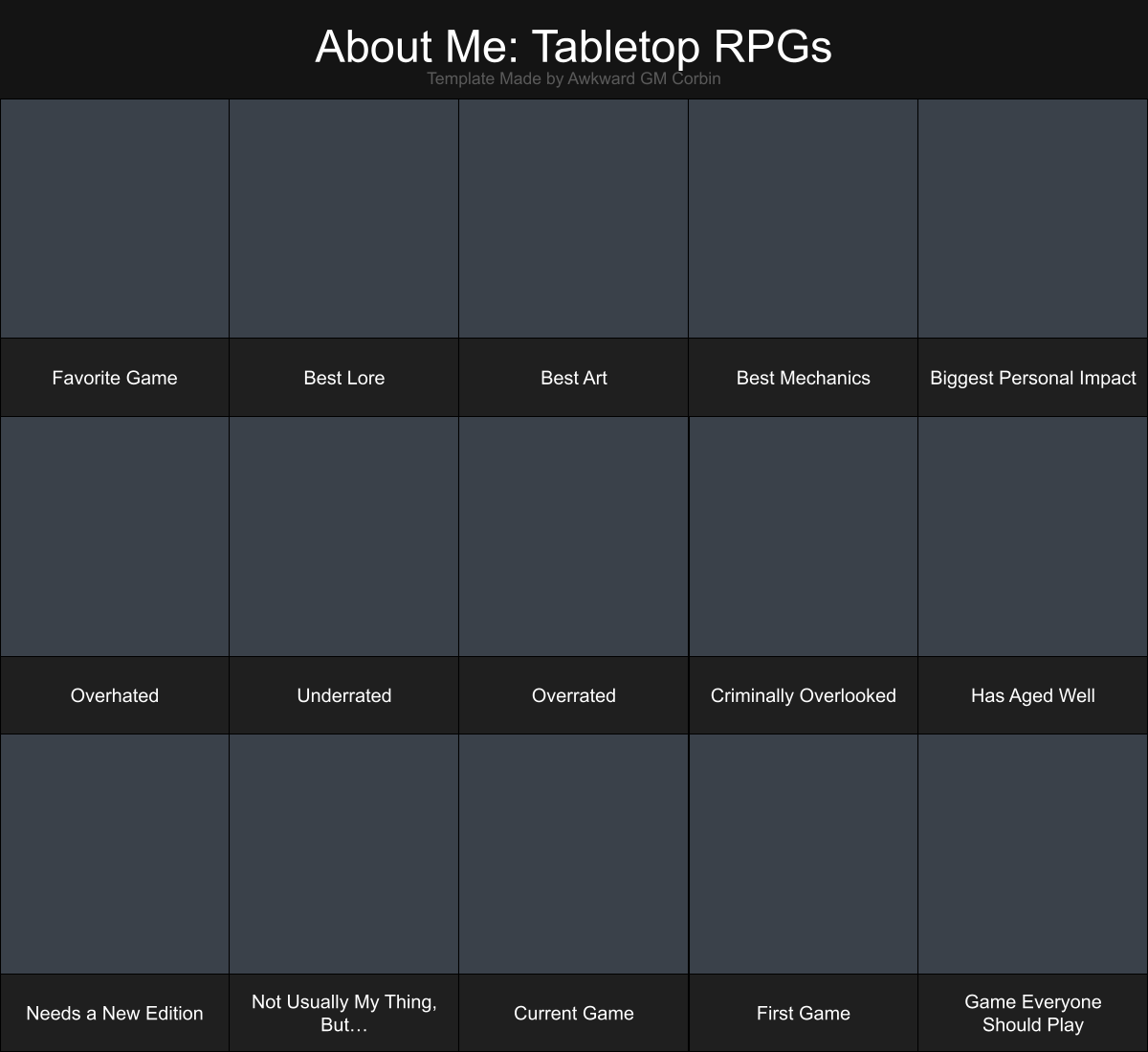
An admission, dear readers: I had no idea who Awkward GM Corbin was until I started writing this post. Now I’ve discovered his YouTube Channel and know exactly who created the “About Me: Tabletop” template that inspired today’s entry. It really goes to show my age that I had no idea these were so popular in online fandoms! I might have seen a few floating around online spaces, but the trend didn’t truly catch my attention until Angel (aka Enyol) posted his About Me Tabletop RPG in the Puerto Rico Role Players Facebook group.
While searching online, I saw that the original Awkward GM post was made on Reddit about 20 days ago. You can get the template here.
The idea of completing the template challenged me, and I honestly thought I’d be done with it in no time. That was not the case. A few categories were easy to fill out, but others took real time, and I went back and forth on several of my responses. Surprisingly, only one answer is repeated!
I was originally going to just post the image and be done with it. But you know me: I can’t help but add details and explanations. If you just want the quick visual, here is the image on its own. Feel free to comment away here on the blog or on my socials—I’d be happy to engage!
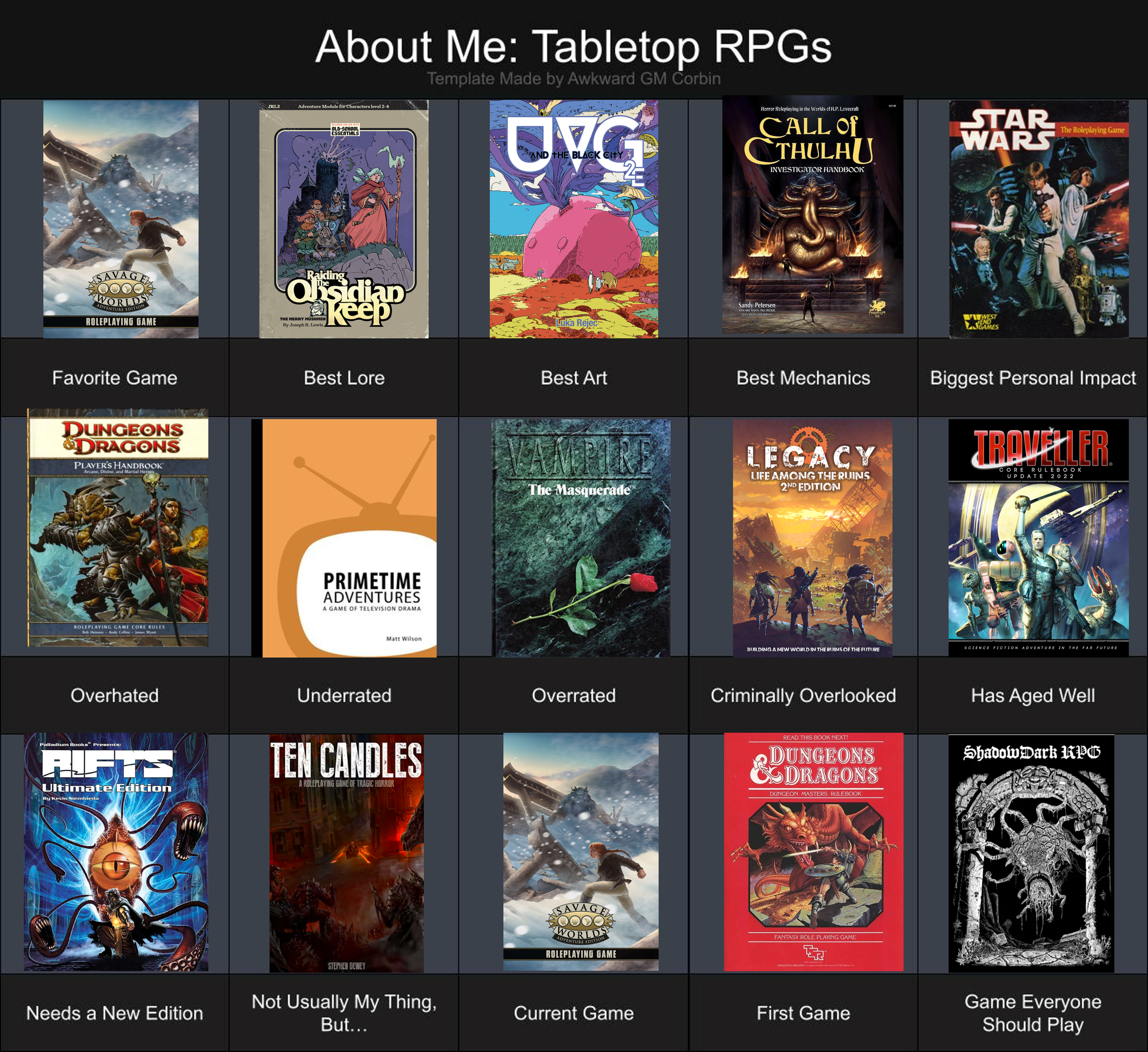
However, if you want the deep dive into my choices, read on.
First, a quick caveat. These are my current thoughts as of late May 2026. Some of these might have been different in the past, or they may evolve in the future. It might be obvious, but I’ll say it anyway: these are MY opinions, not the opinions of Michael (aka the titular Stargazer) or any of the other blog contributors. You may disagree with some of my takes. Good! Leave a comment, fill out your own “About Me: Tabletop RPG” form, and share it with us. I’d love to have that conversation.
Now that the housekeeping is out of the way, on to the categories!
Favorite Game: Savage Worlds
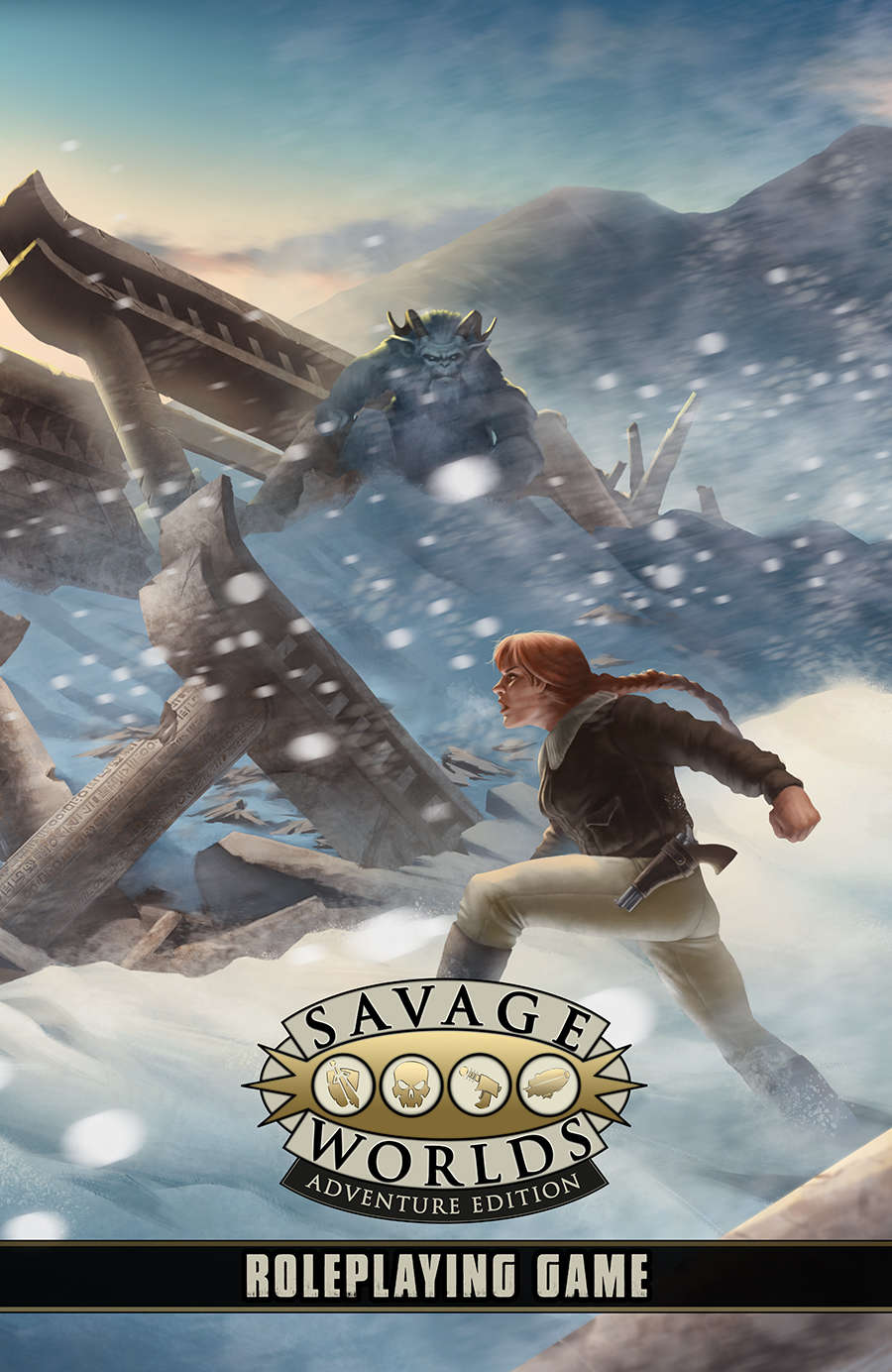
I recently posted about my two current favorite games on the blog, so this should be no surprise. The real challenge was picking which ONE to put in the top spot. This may just be a matter of what I’m currently planning and running, but it feels right.
Best Lore: Raiding the Obsidian Keep
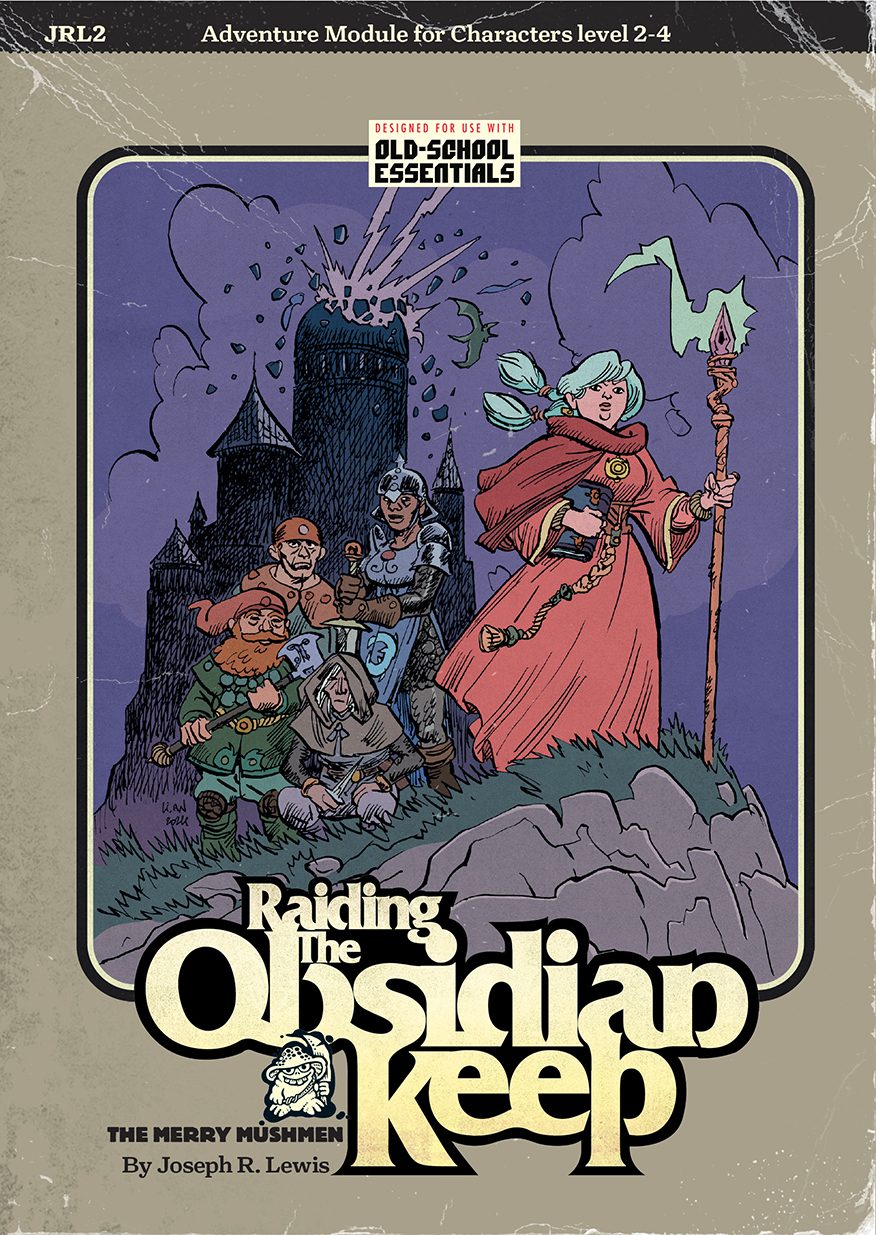
There is a lot of fantastic lore content in TTRPGs. A LOT. Picking just one is incredibly hard. Do I go with the wonderfully convoluted and bizarre Torg? The setting I’m currently playing, Fading Suns? The brilliant Ravenloft: Masque of the Red Death? The Whispering Vault? I ultimately went with Raiding the Obsidian Keep by Joseph R. Lewis.
Why? It is an incredibly succinct adventure with a highly imaginative story and setting, packed full of great details. It features engaging lore, a self-contained OSR structure, and clocks in at 72 marvelously illustrated pages in the Merry Mushmen edition (with an even shorter version, The Obsidian Keep, which is D&D 5e-compatible and self-published by Mr. Lewis). Of all the content I’ve read recently, this was just the most imaginative old-school adventure I’ve seen, and I simply could not put it down. I am usually not a big fan of pre-written adventures, but this one had it all.
- Runners-up: Fading Suns, The Whispering Vault, and Ravenloft: Masque of the Red Death
Best Art: UVG 2E: Ultraviolet Grasslands and the Black City
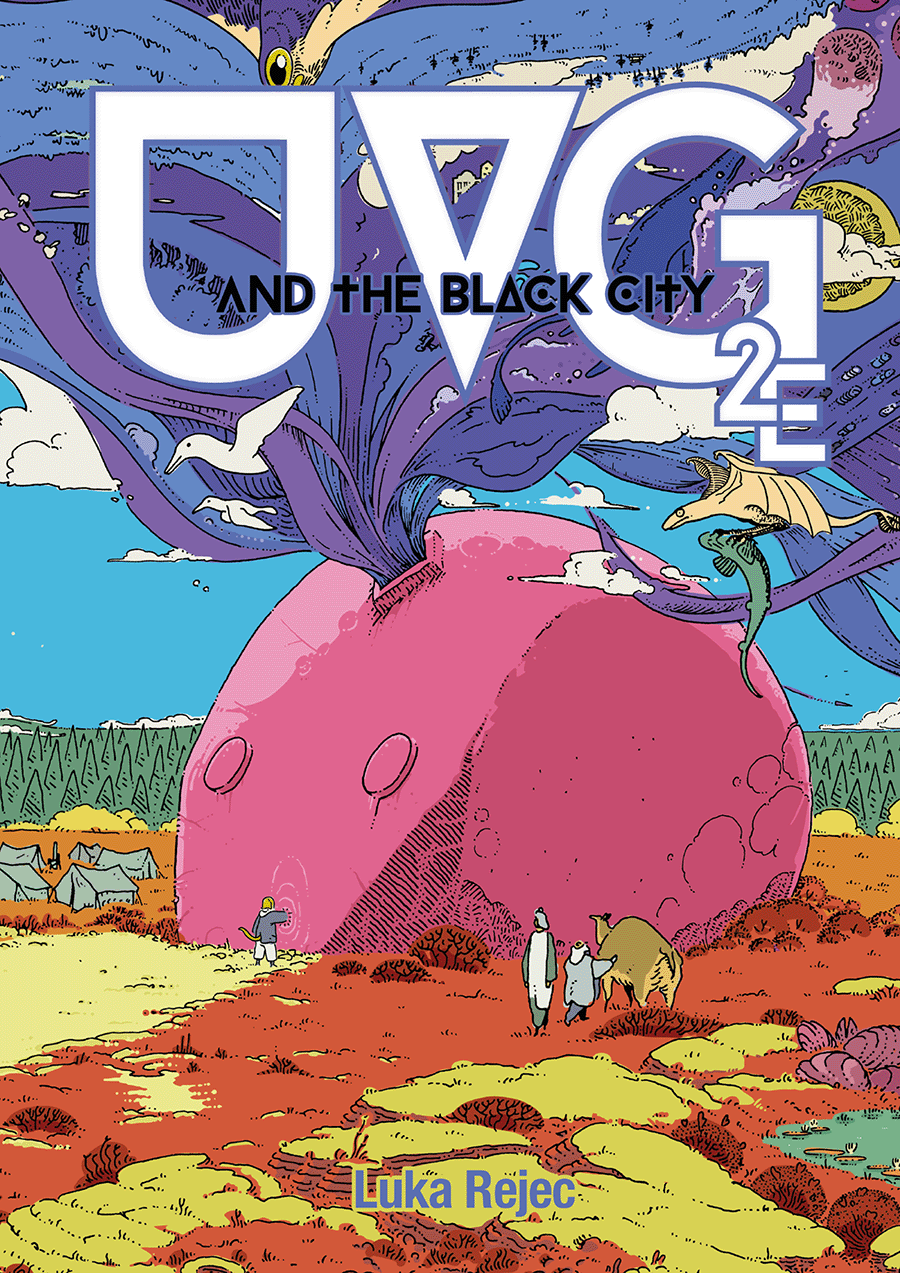
This book is a work of art. It is a brilliant combination of rules and visuals that seamlessly tells a cohesive story. This pick might surprise some of my friends, as the art style isn’t what they typically think of as my favorite, but the book as a whole achieves something truly incredible.
- Runners-up: Symbaroum, Vaesen, Coriolis, and Dragonbane (all by Free League Publishing)
Best Mechanics: Call of Cthulhu
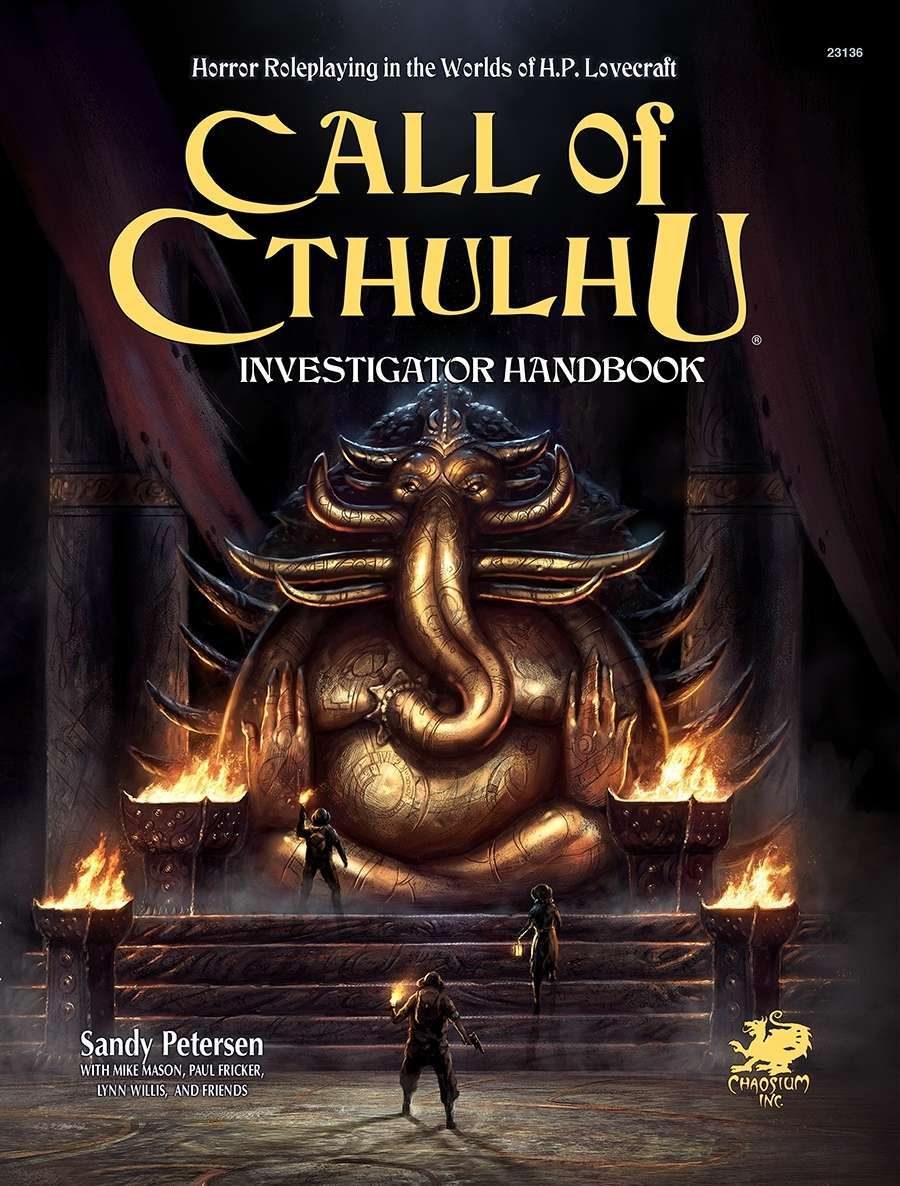
“But wait!” you’re saying. “Why not your favorite game?” Because I approached this category looking for the game where the mechanics perfectly mesh with the specific tone it is trying to achieve. Call of Cthulhu is an absolute masterclass in combining rules with genre. The Sanity rules and the skill system are all so seamless in bringing the feeling of Mythos to the table. It’s a classic for a reason.
- Runner-up: All variations of the d20 system. Yes, it is overdone, and no, it is not the perfect mechanical representation of varying skills or degrees of success. Regardless, it is a core mechanic common to millions of players, incredibly easy to understand, and acts as the lingua franca of TTRPGs. It is hard to beat that chassis.
Biggest Personal Impact: Star Wars: The Roleplaying Game
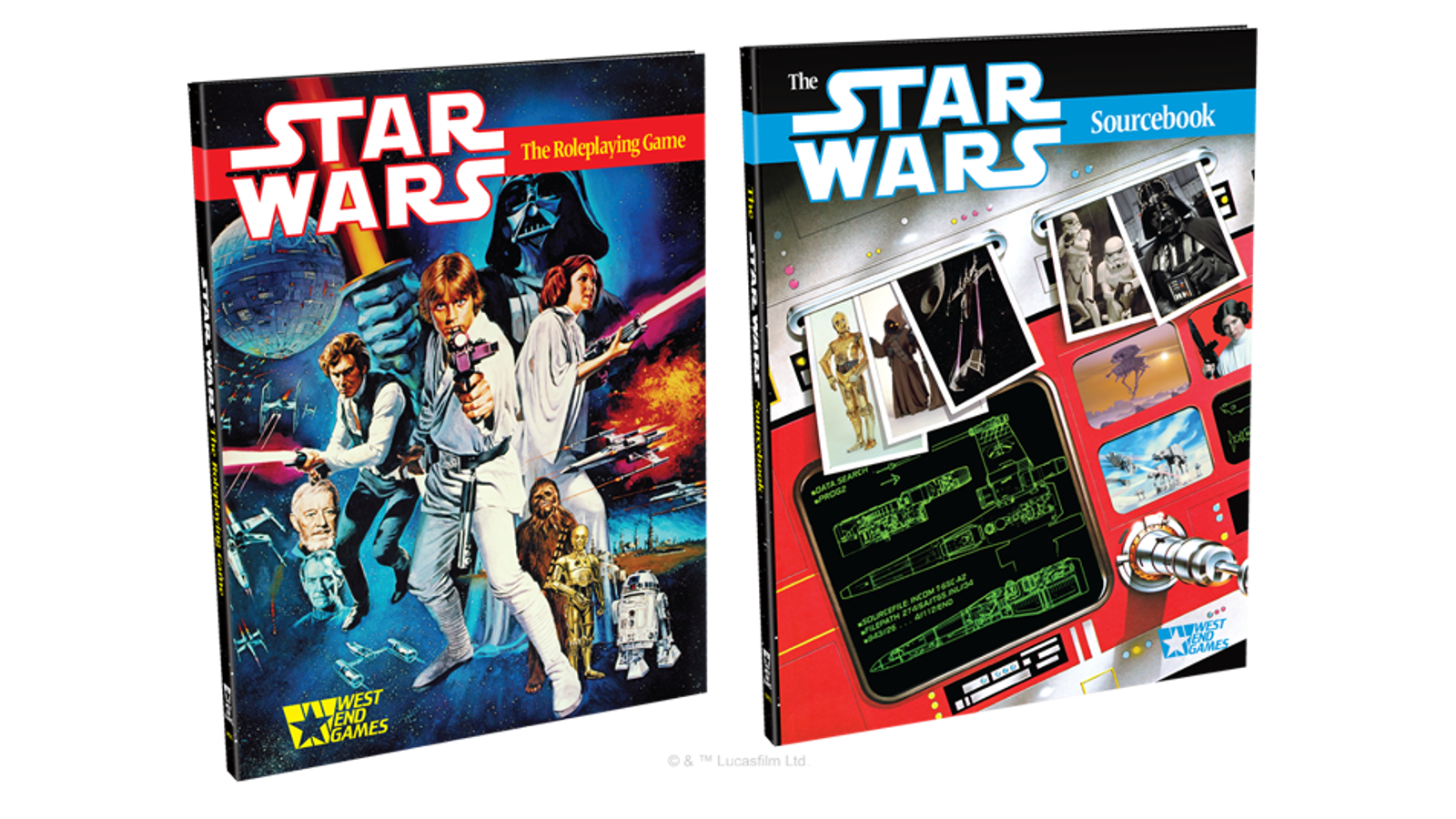
I am talking about the classic D6 version from West End Games. The dice pool system was entirely new to me as a young gamer. I had played other TTRPGs, but this was the first one that truly captured the cinematic feel of the movies. It pushed me to play in entirely new ways; for example, it was the first place I read about using cut-aways (jumping to action the characters aren’t even participating in) as a dramatic narrative tool. This game fundamentally changed how I run games at table.
- Runner-up: The Black Hack. It offers simple, succinct, player-facing combat. It is also where I first encountered the genius concept of the usage die.
Overhated: D&D 4th Edition
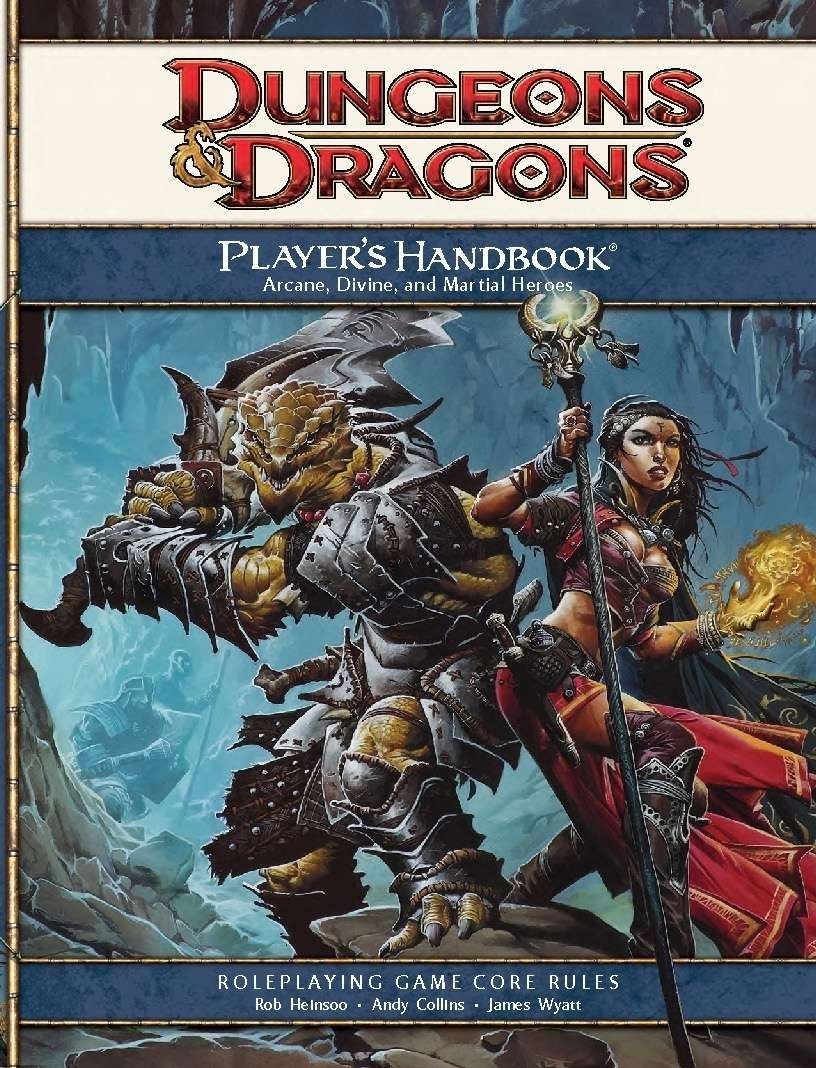
I was entirely guilty of this! I was so excited when this edition came out, but ultimately disappointed when we sat down to play it. Looking back, I think it got far too much flak. It is a very tight, highly functional application of rules. With just a few tweaks, it would have been a system I’d happily keep using, but it unfortunately became the whipping boy of D&D editions. Truthfully, 5e borrows heavily from it—it just reworded and reworked the presentation.
- Runner-up: None. This was one of the easiest picks on the list for me.
Underrated: Prime Time Adventures
A TTRPG designed specifically to run games in the structural vein of a TV show? What’s not to like! In a society where television shows range from influential art forms to daily escapist entertainment, I am genuinely surprised this game isn’t wildly popular. Almost everyone inherently understands the pacing and structure of a TV episode, making this incredibly easy to learn.
- Runner-up: The original Alternity. Doomed to come out right as TSR was being sold to WotC, this game had massive potential and an interesting dice mechanic that elegantly handled degrees of failure. It has its fans, but I am amazed there isn’t a massive retro-clone for it yet.
Overrated: Vampire: The Masquerade
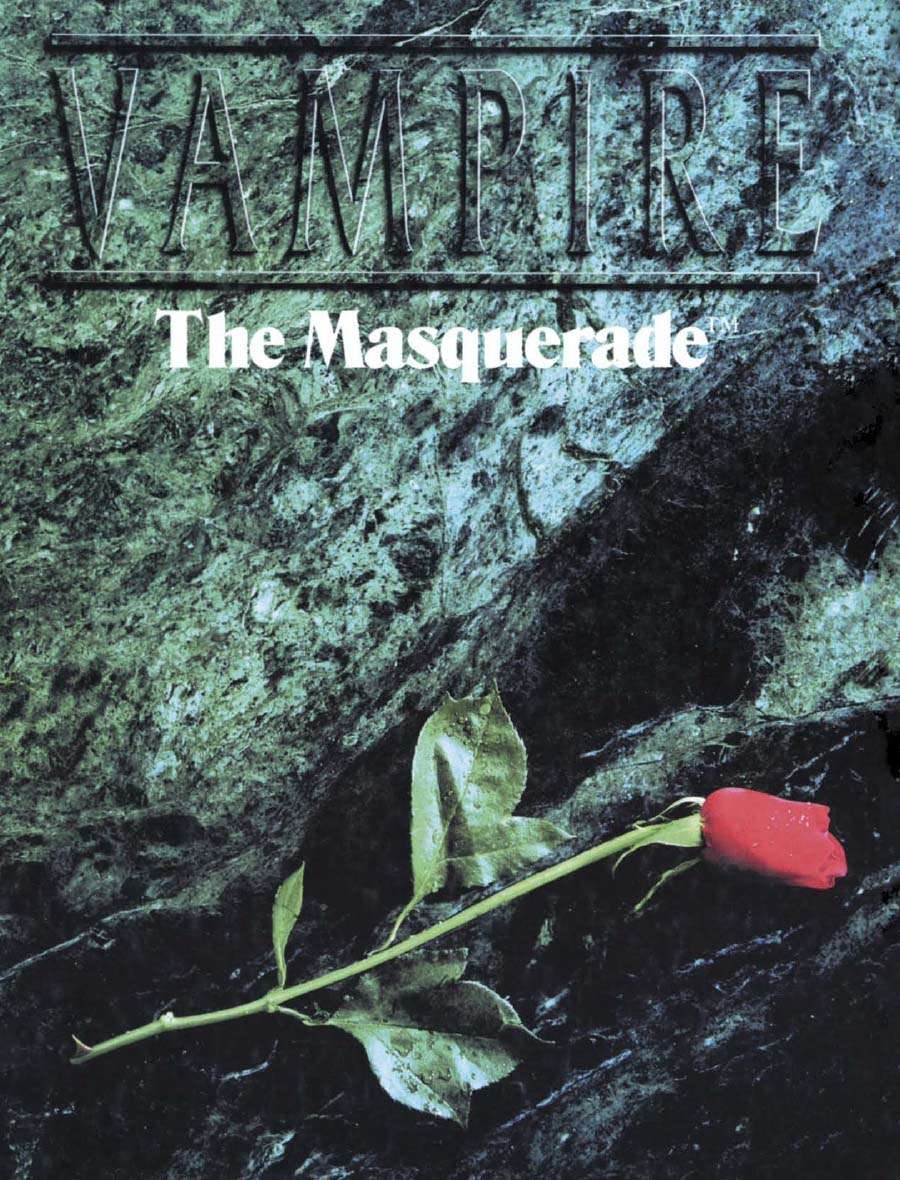
This is probably my most controversial take! This game was all the rage in the 90s while I was in college. It has an undeniably interesting setting, and while I’m not a super fan of the rules, you don’t really play it for the mechanics. It absolutely brought a massive wave of new gamers into the hobby, and I certainly own my fair share of World of Darkness books. However, it is often talked about as the absolute pinnacle of gaming, and for me, that’s just a bit too much. It was a good game, but way overrated in my book.
- Runner-up: Mörk Borg! This is my category for controversy, clearly. I really like the ruleset and the wave of creativity it has inspired in the indie scene—I am a huge fan of Pirate Borg, for instance. But when I ordered Mörk Borg, I saw it as a beautiful, punk-metal artifact. It is a profound piece of art and a distinct mood, but ultimately, it’s just not a game I would run at my table using that book.
Criminally Overlooked: Legacy: Life Among the Ruins
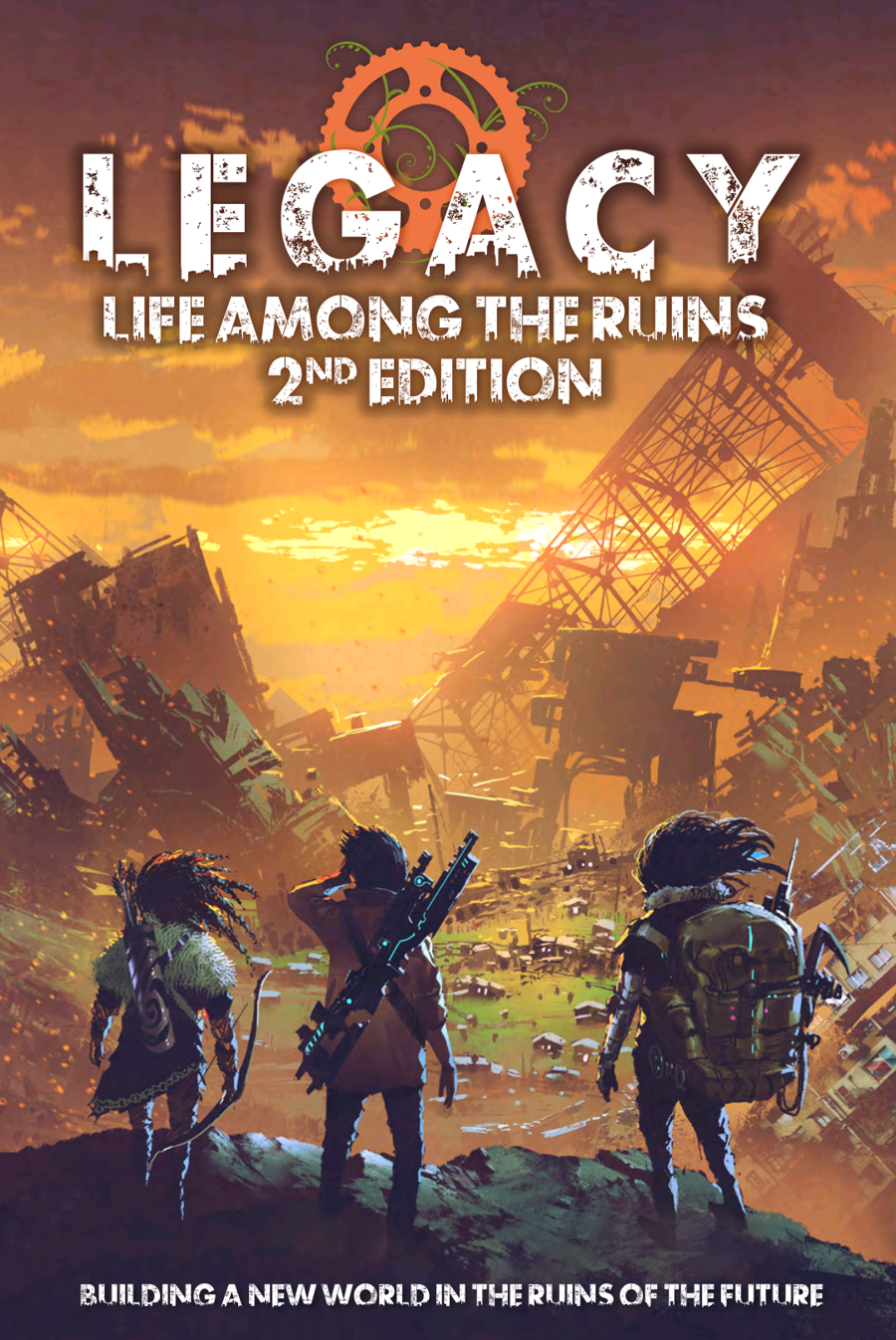
This was my introduction to Powered by the Apocalypse games, and it caused a paradigm shift for me. It offers powerful tools for players and GMs, as well as richly realized worlds. I honestly thought this game was going to explode in popularity. More people need to be playing this.
- Runner-up: Psi*Run. This is my favorite simple indie game, ideal for a quick one-shot. I’ve raved about it before, and I highly recommend checking it out.
Has Aged Well: Traveller
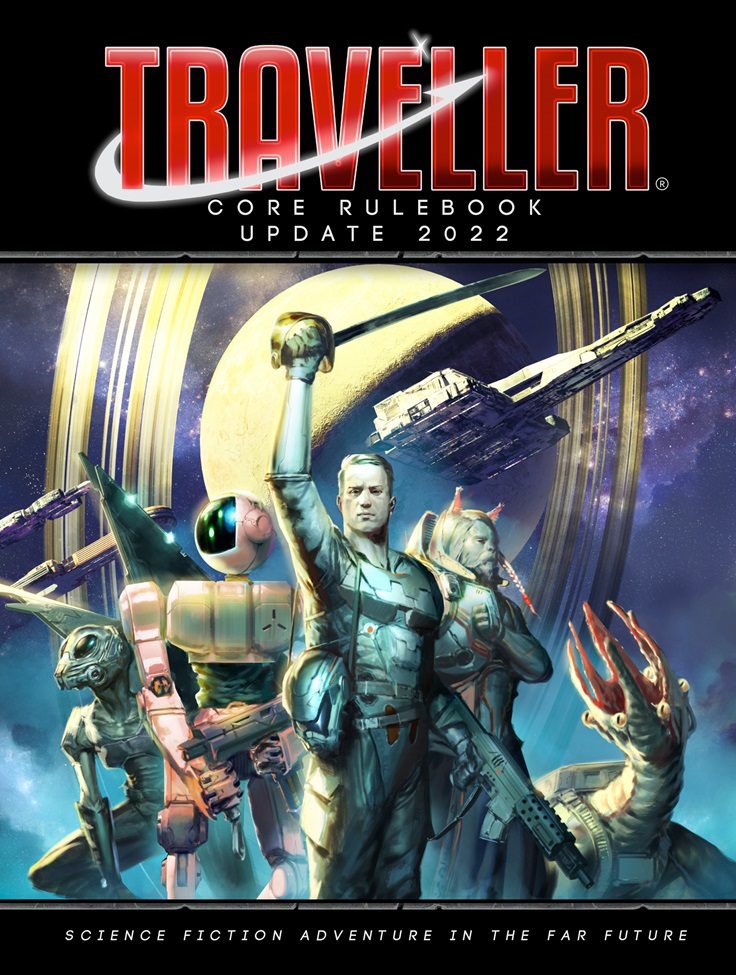
The venerable sci-fi original. Traveller has had so many iterations, editions, and adaptations over the decades. Yet it continues to thrive, from the official Mongoose 2nd Edition to older rule sets, all the way to Traveller5. I am a massive fan and am so happy to see it continuing to find an audience.
- Runner-up: Dungeons & Dragons. From the new 5.5 edition to the endless sea of retro-clones and hacks, the granddaddy of TTRPGs is still doing the heavy lifting of introducing new generations to the hobby.
Needs a New Edition: Rifts
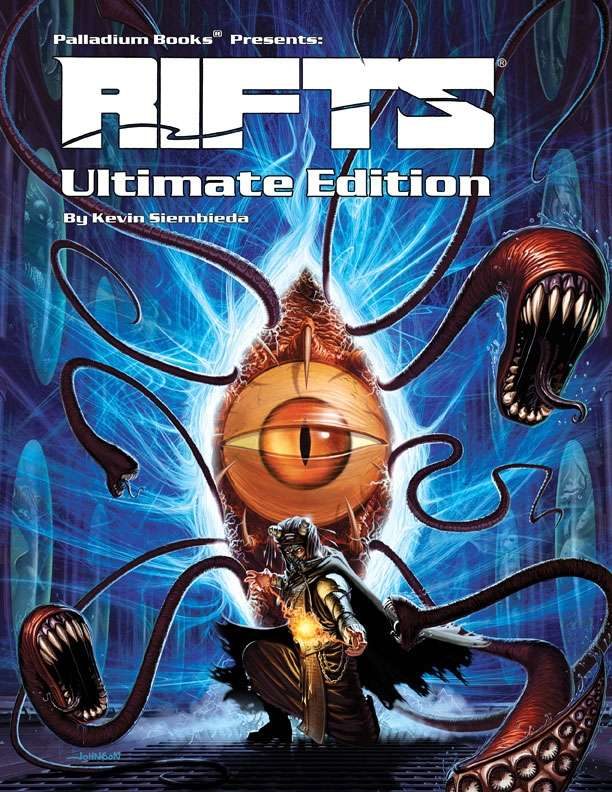
Yes, we have Savage Rifts (which is great!), but I would love to see a true, ground-up modern take on the original Palladium system. I’m talking about a complete system overhaul, modernization of the mechanics, and books with a clean, contemporary layout. I was a huge fan of the system back in high school, and I’d love to see what a modern design team could do with it today.
- Runner-up: The Whispering Vault. I want a sleek, modern take on this game’s mythology so badly.
Not Usually My Thing, But…: Ten Candles
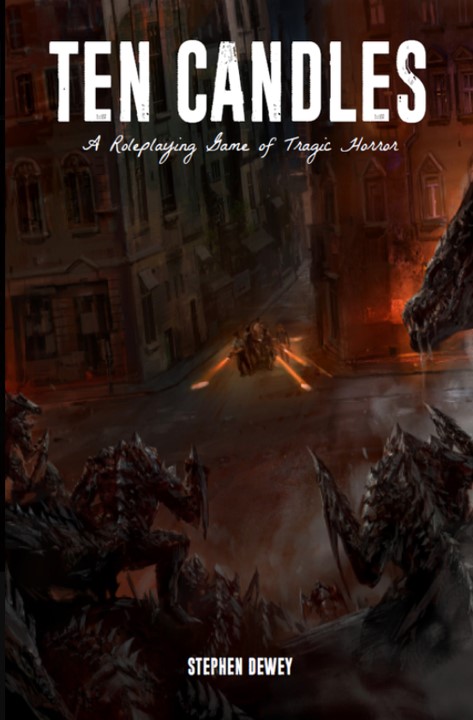
Highly experimental indie games aren’t usually in my wheelhouse, but my friend José Garcia (aka SushiBacon) is always bringing fantastic new ideas to my gaming experience. I loved playing this and would love to run it myself sometime.
- Runner-up: Alice is Missing. I haven’t played it yet, but I’ve read through it, and I am champing at the bit to get it to the table.
Current Game: Savage Worlds
We’ve been playing it consistently for three years now, and I fully expect to be playing it for the remainder of 2026. It is my favorite game, after all!
What Am I Playing Next: Not Sure! Most likely a Savage Worlds superhero campaign, or perhaps diving into Worlds Without Number. I also really want to give TinyD6 a try!
First Game: D&D (Mentzer Red Box)
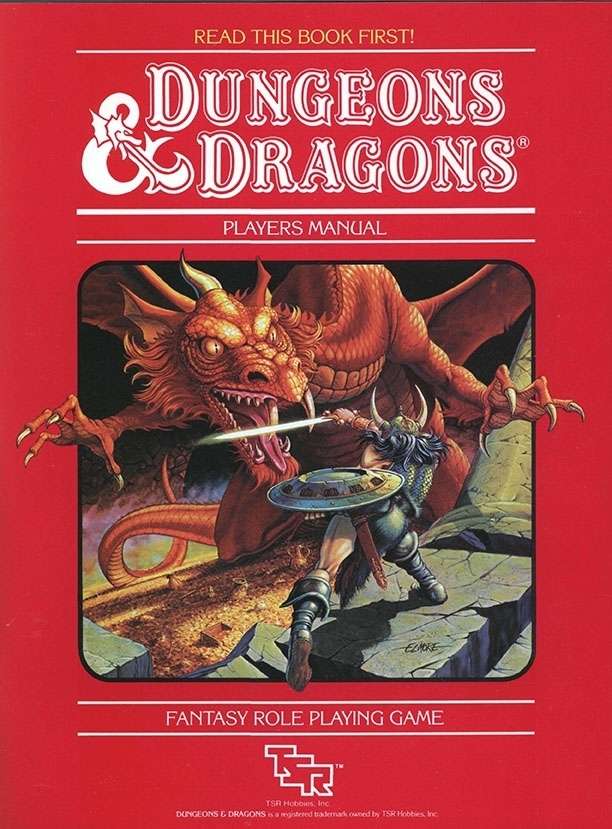
Just a simple, historical fact. This was easily the fastest category for me to complete.
Game Everyone Should Play: Shadowdark
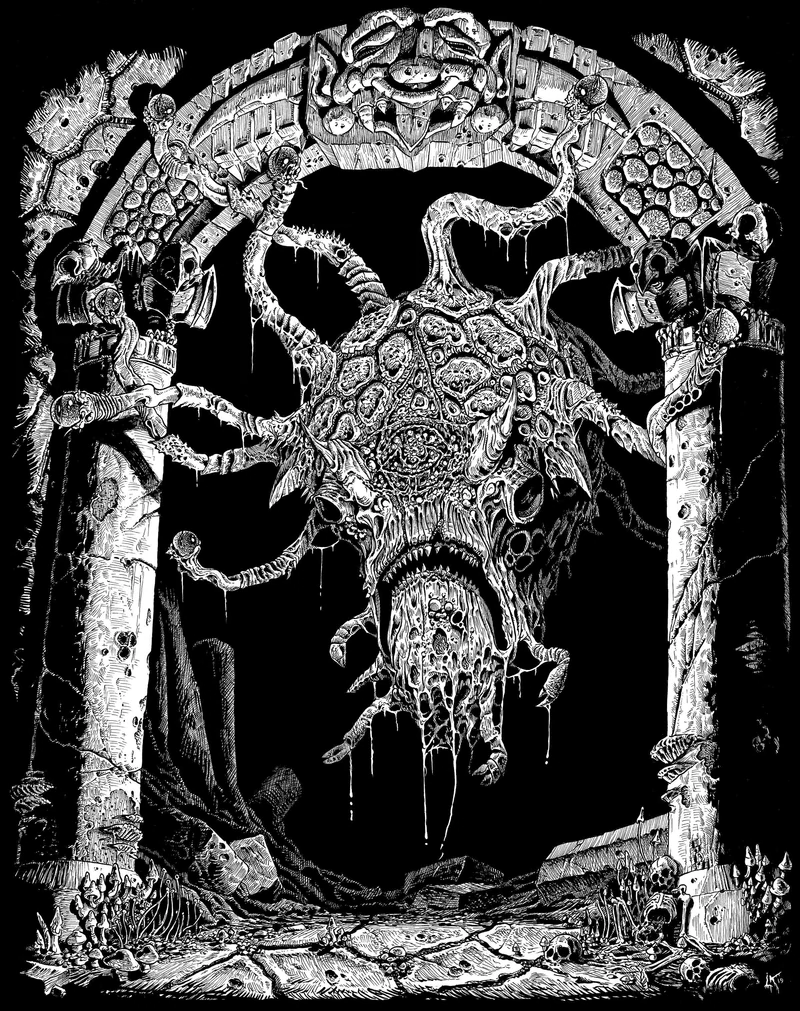
Why? Because it emulates the hobby’s origins so perfectly while applying modern sensibilities and streamlined rules. It encapsulates the dungeon-crawling roots of tabletop gaming while using common, modern mechanics in an instantly understandable way. For players who have only ever experienced D&D 5e, it can be a massive eye-opener, showing them entirely new (and old) ways to play. It teaches the pure joy of early D&D without the mechanical clunkiness. It is incredibly fun, and I think every gamer should give it a try at least once.
So, what does your “About Me: Tabletop RPG” look like? I want to see it!
Categories: Tabletop Gaming Blogs
An Interview with Carbo_Creates, Puerto Rican artist and game designer
An Interview with Carbo_Creates, Puerto Rican Artist and Game Designer
Happy Sunday, dear reader! We are back for another interview with a Boricua creator. Today’s subject is someone I’ve had the pleasure of knowing through the active Puerto Rican TTRPG online community. He is a true gaming polymath—designing content, creating art, and even producing gaming-related music. I genuinely hope to sit down and play a game with him someday.
Let’s get right to the interview!
Introduce yourself! Who are you and what do you create?
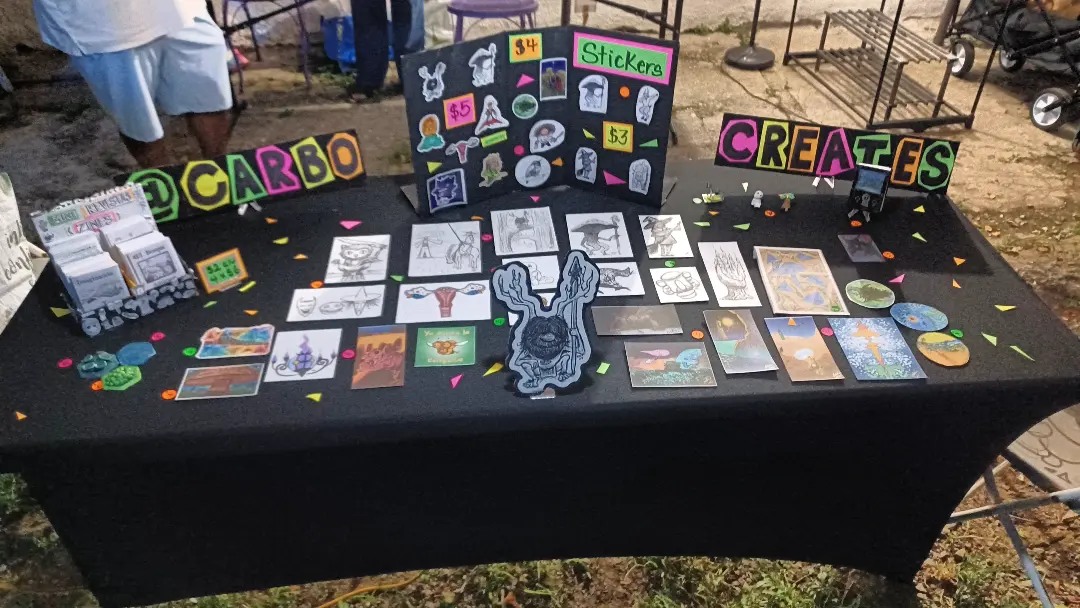
Hello there! My name is Eddie, also known as Carbo_Creates on social media. I create all sorts of things. I draw (characters, maps, places, etc.), write adventure modules and mini-zines, make dungeon tiles, and create sculptures (in clay and cold porcelain). I also design tattoo pieces.
How would you describe your art or creative endeavor?
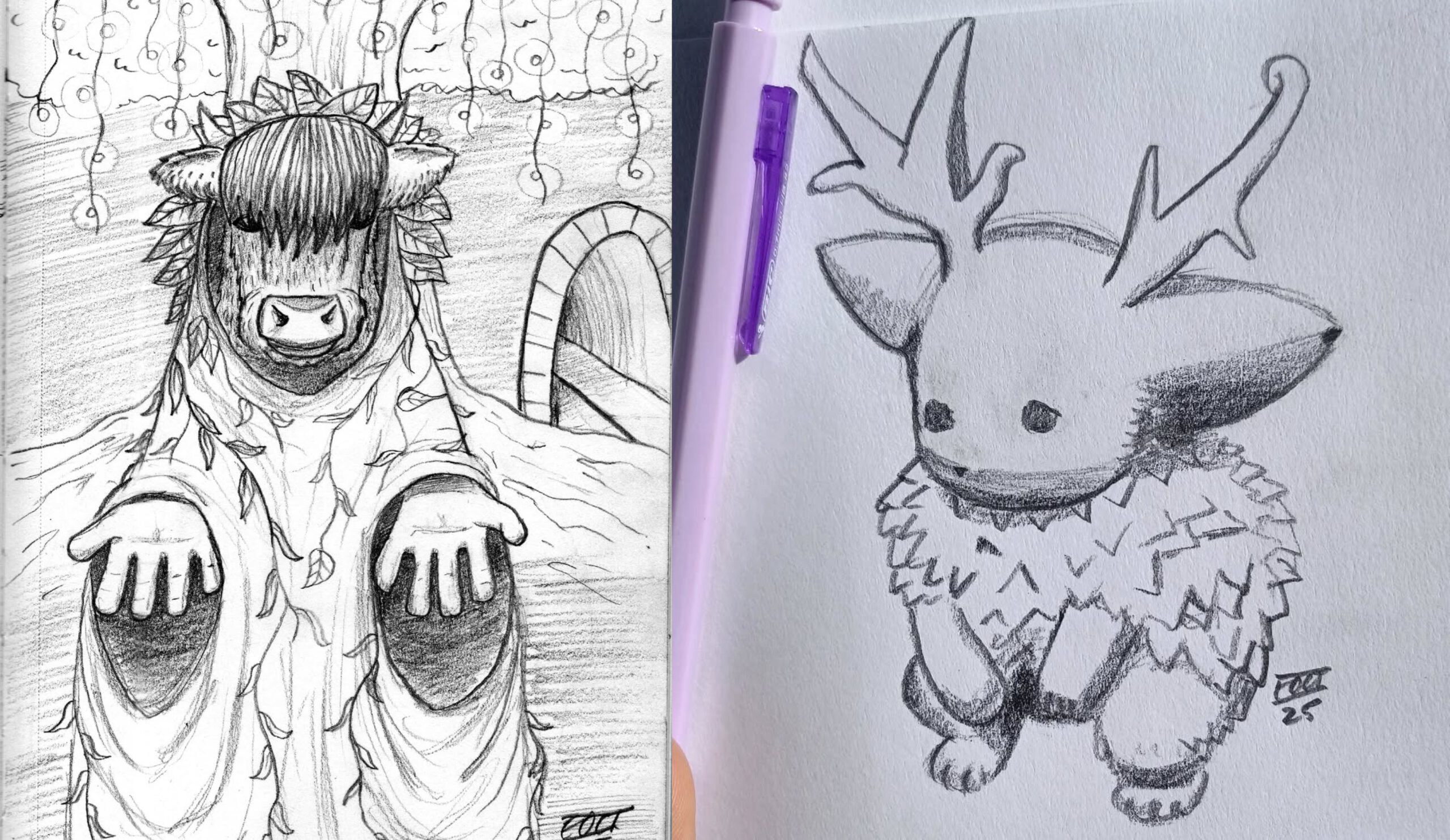
I would describe my creative endeavor and art style as chaotic and improvised. Sure, I can have a theme or idea in mind, but I let things flow as they go. I might start drawing something, but that inspires another vision or way around it, and I try to explore that too—basically, a chill, go-with-the-flow kinda mindset.
How did you discover TTRPGs?
I started playing and getting involved with TTRPGs in 2017, but I had heard of them way before that. Funny enough, what got me interested again was watching a live play where Matt Mercer game-mastered, and Vin Diesel was a player. I saw it and thought that I’d love to play that game.
(I believe he’s referring to this!)
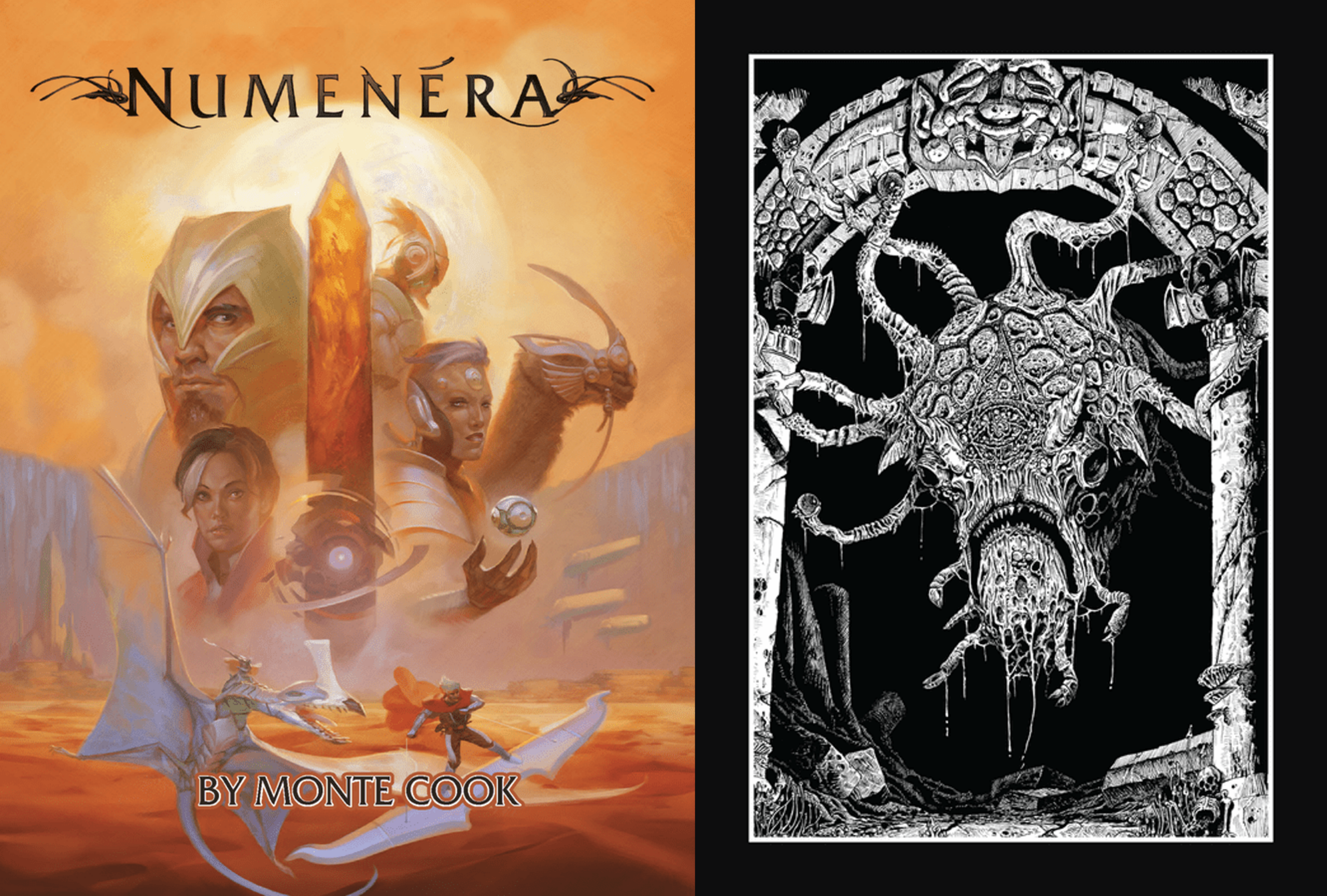
It’s like making a movie or series episode in collaboration, and I love movies and fantasy shows. After that, I went online and read everything I could find about systems, adventures, modules, bestiaries, etc. I really fell in love with the Numenera setting. It got me through the Hurricane Maria recovery time.
Do you actively play TTRPGs? What are you playing?
Right now, I have a campaign starting soon with a group of players from various Puerto Rico TTRPG Discord servers. It’s a Shadowdark campaign that I will GM for.
What do you want to play next?
I really want to get that Shadowdark campaign going, but I haven’t set an official date for it yet. Beyond that, I would also love to GM Numenera and play one-shots in a variety of different systems.
What projects do you have available right now, and what are you working on next?
Wow, this will be a long answer, so I’ll try my best to keep it short! I have many mini-zines available, from a simple D6 ruleset inspired by EZd6 and other TTRPGs to setting-inspiring zines. I also sell stickers and prints of my art. I’m currently working on turning my first published adventure, The Grand Palace Opera, into single pages so I can send it to print.
I also have a lot of ideas in mind, and some of them are starting to manifest, like a dungeon synth album and many more mini-zines. On the drawing side of things, I’m focusing on doodling every day. I love how it has inspired some of my best work. Also, I do art commissions and will soon be taking clients for tattoos!
Where can people find your work?
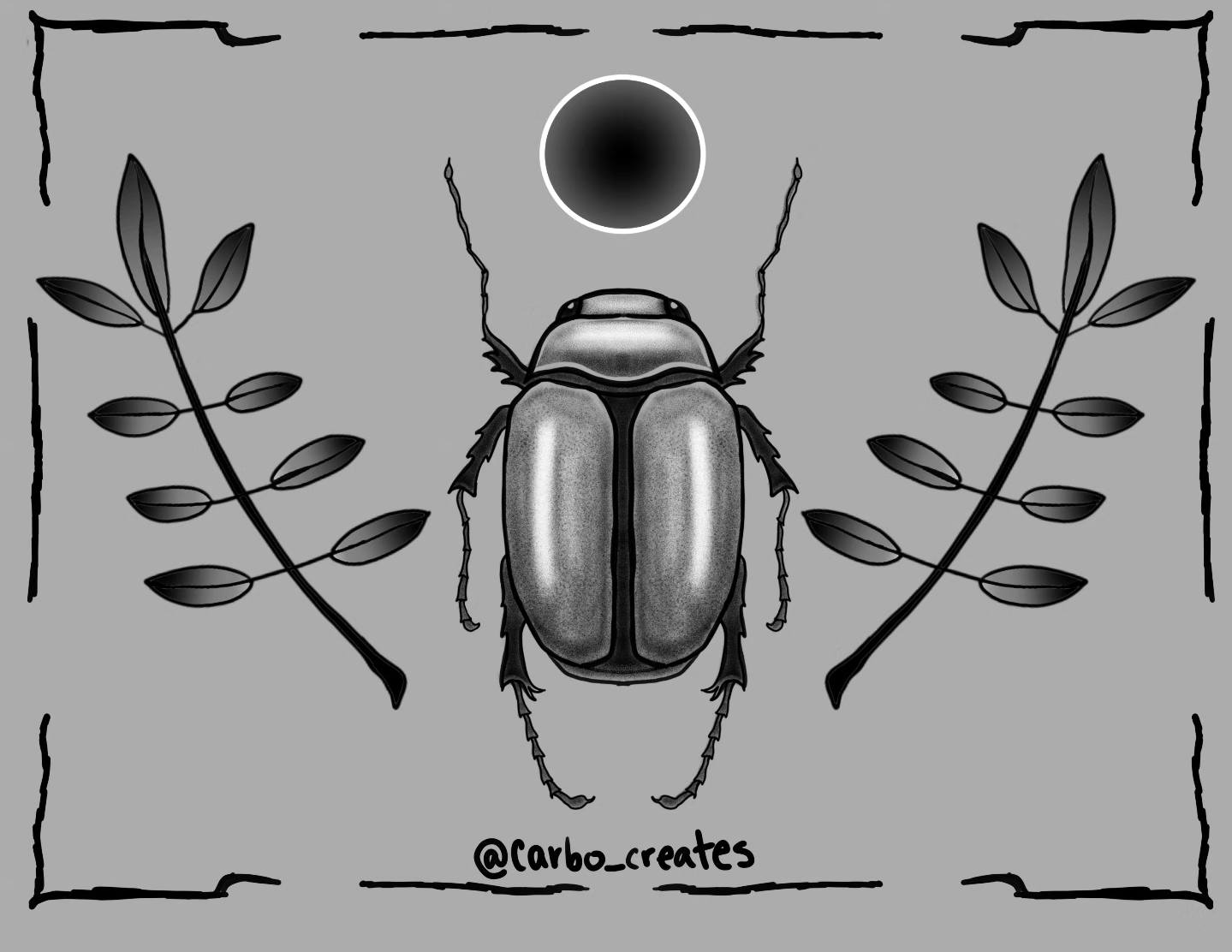
My work can be found on my Carbo_Creates itch.io and DriveThruRPG pages. You can also find me on Instagram and Facebook as Carbo_Creates. Most of my work is free in digital form, except for my music and The Grand Palace Opera adventure zine for Shadowdark.

Any closing thoughts? To close, I must thank you for this opportunity to share my story with TTRPGs and my art. To anyone reading this: keep imagining a better world, keep playing and having fun, experience joy in the little things, and explore your creativity as much as possible. Oh, and I guess check out my work!
We will definitely check it out, Eddie! I am really looking forward to seeing your future projects.
On a general note, I am actively looking for other Puerto Rican creatives in the TTRPG space—creating art, writing, or whatever it may be—who would like to share their experiences and their work. Your art does not even have to be directly related to TTRPGs, but I want to continue sharing interviews with Boricua gamer-creatives for this ongoing Sunday series.
I’m also open to interviewing other creators worldwide who want to share their art and experiences or have me review their products. If you’d be interested in a conversation or have some game-related project you’d like me to look at, reach out here via the blog or on my socials! I want this year of celebrating my 40th gaming anniversary to be a time to talk with and get to know other gamers and creators, and to help spread the word about new, interesting projects in our gaming space.
Categories: Tabletop Gaming Blogs
Arcton: From Ingala to the Wastes Crowdfunding
Do you remember my interview with Eliana Falcón-Dvorsky a few weeks ago? She is officially crowdfunding the project we discussed, Arcton: From Ingala to the Wastes, over on BackerKit!
Here is the description of the setting directly from the campaign page:
What is Arcton?

“An uncontested and insurgent undead army laid waste to the frozen nation of Arcton centuries prior. Now, 8 oligarchical Liches oversee their respective regions, sending their Officers to craft their undead labor force out of their own living citizens. These powerful and arrogant entities consume and destroy the land that once held a vast resource of wild and unpredictable magic.
However, the story is not truly about them. Arcton is a vast and distinct nation with various cultures, people, customs, and beliefs that remained isolated from region to region. This is the story of the details, the inhabitants, and the dangerous, but beautiful, land, as complicated and nuanced as it can all be. But most importantly, this story is about you.”
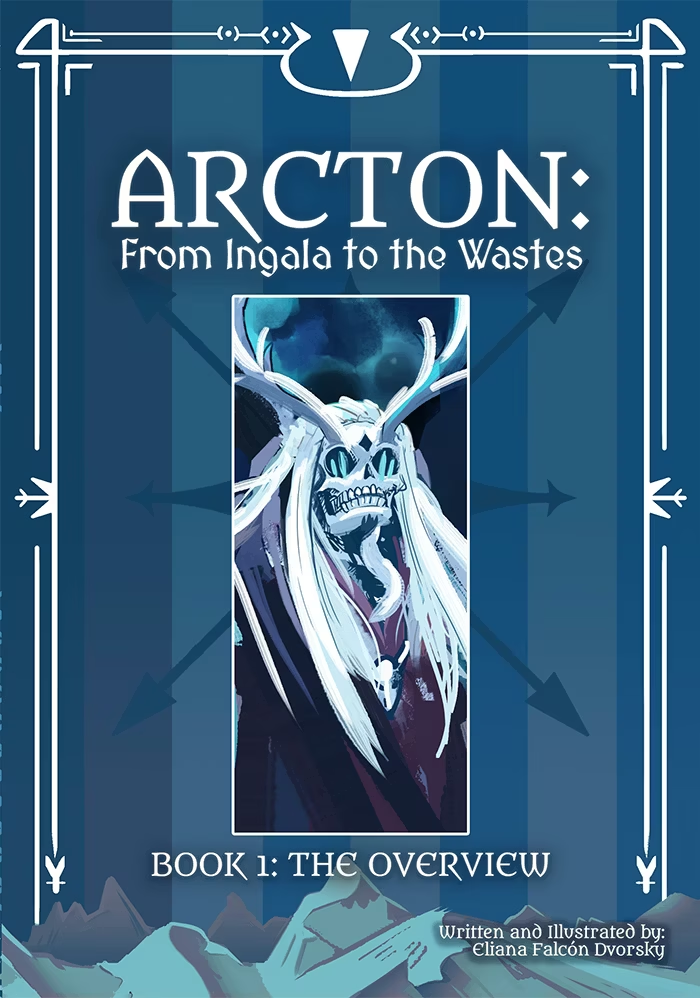
Eliana is an active member of the Puerto Rico TTRPG community and an absolutely amazing creator. The project is already fully funded, which is fantastic! I am proudly a backer, and if this setting interests you, I highly invite you to check it out and support it if you can.
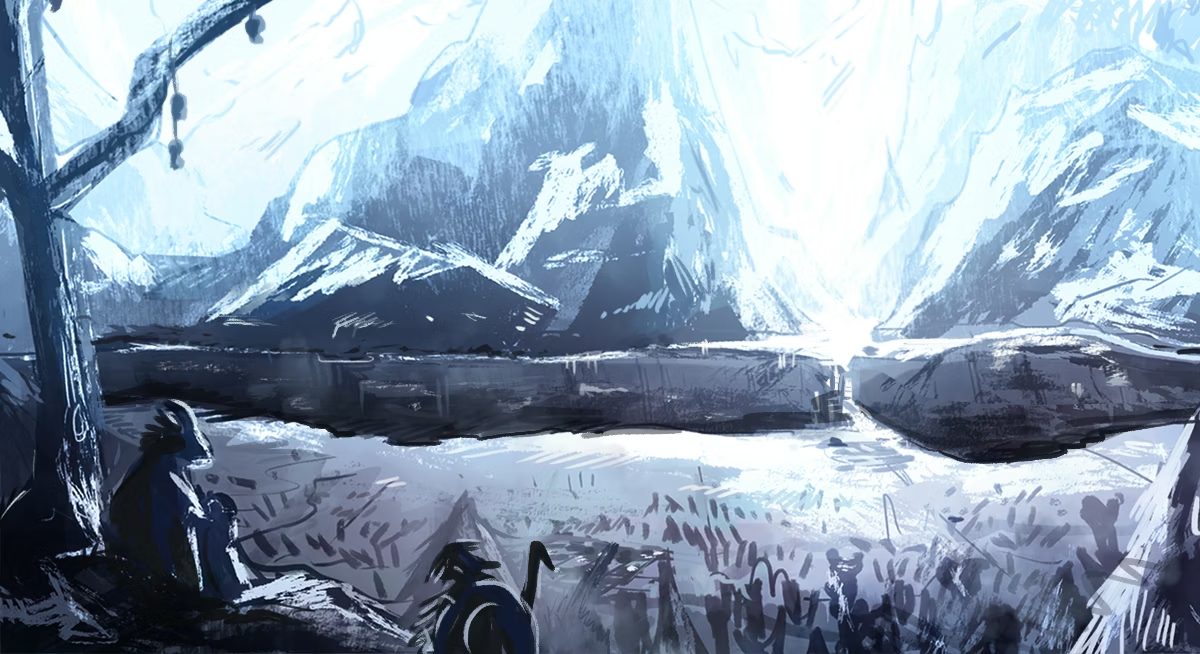
I wish Eliana continued success with this amazing project!
Project link: https://www.backerkit.com/c/projects/cosmographia/arcton-from-ingala-to-the-wastes-books-1-and-supplements
Categories: Tabletop Gaming Blogs
40 Years a Gamer – ‘Cause we’re living in a world of thieves, shaking us down!
I’ve written about the first TTRPG books I ever got at a garage sale a couple of times here on the blog over the years. I think it’s worth recapping the event for those who have not read about it—specifically because it relates to the topic of today’s post, which is (not so cleverly) revealed in my take on the classic Bee Gees’ lyrics in the title: Thieves’ World.
The Garage Sale Loot
In the summer of 1987, about a year after I had begun playing TTRPGs with my neighbors, I went to my Uncle Chechin’s house on the other side of the island for a few days. When I came back, my friends had brand new (to us!) D&D books. I remember them having a few modules from the Slavelords (A-Series) and Giant (G-Series), and I was immediately curious. They told me that a neighbor was having a garage sale, so I rushed right over to his apartment.
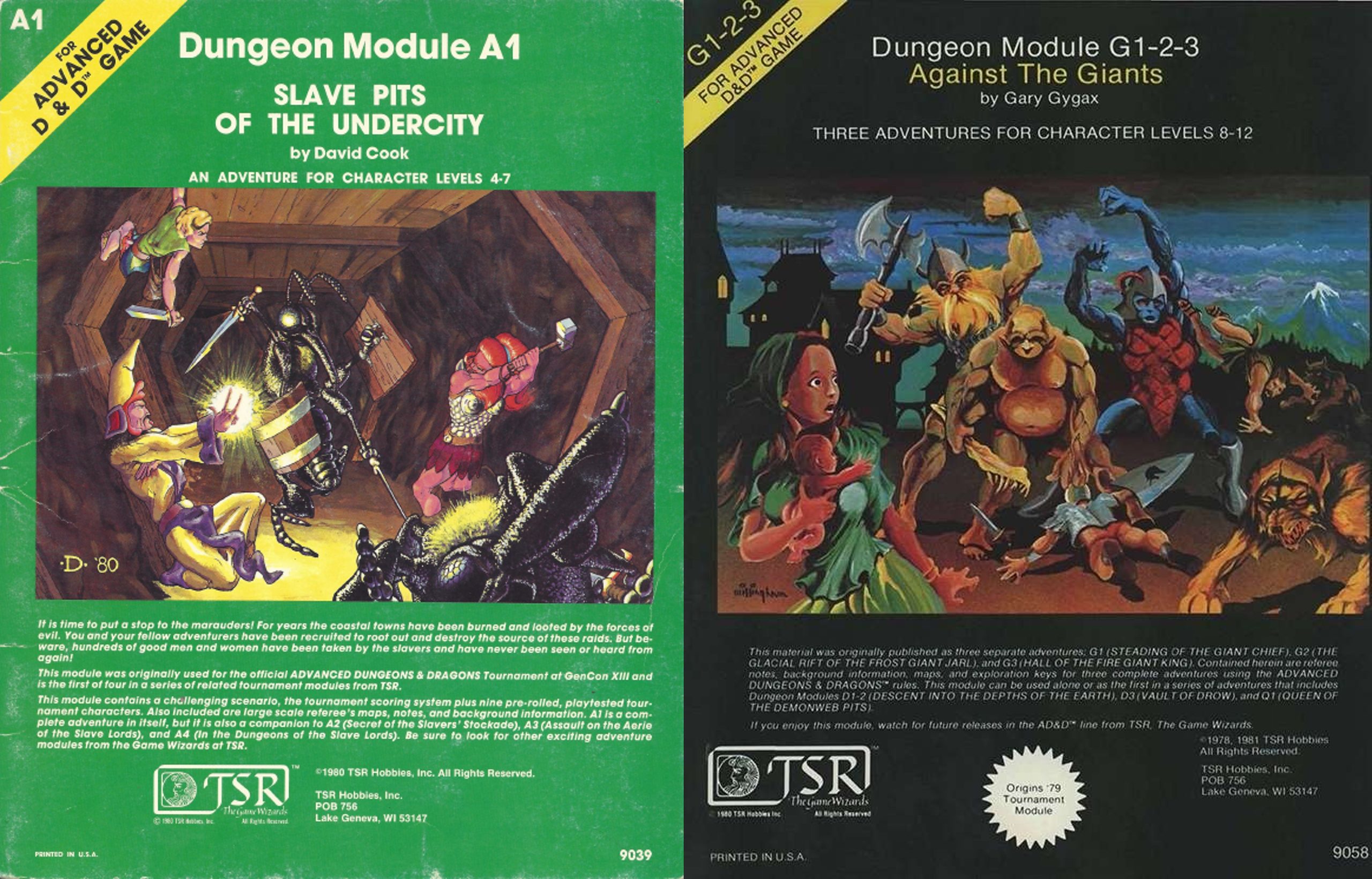
When I got there, he dismally told me my friends had already gotten most of the “good stuff” and that all he had left were the more expensive items. I was unfazed and told him I had money my grandfather had given me!
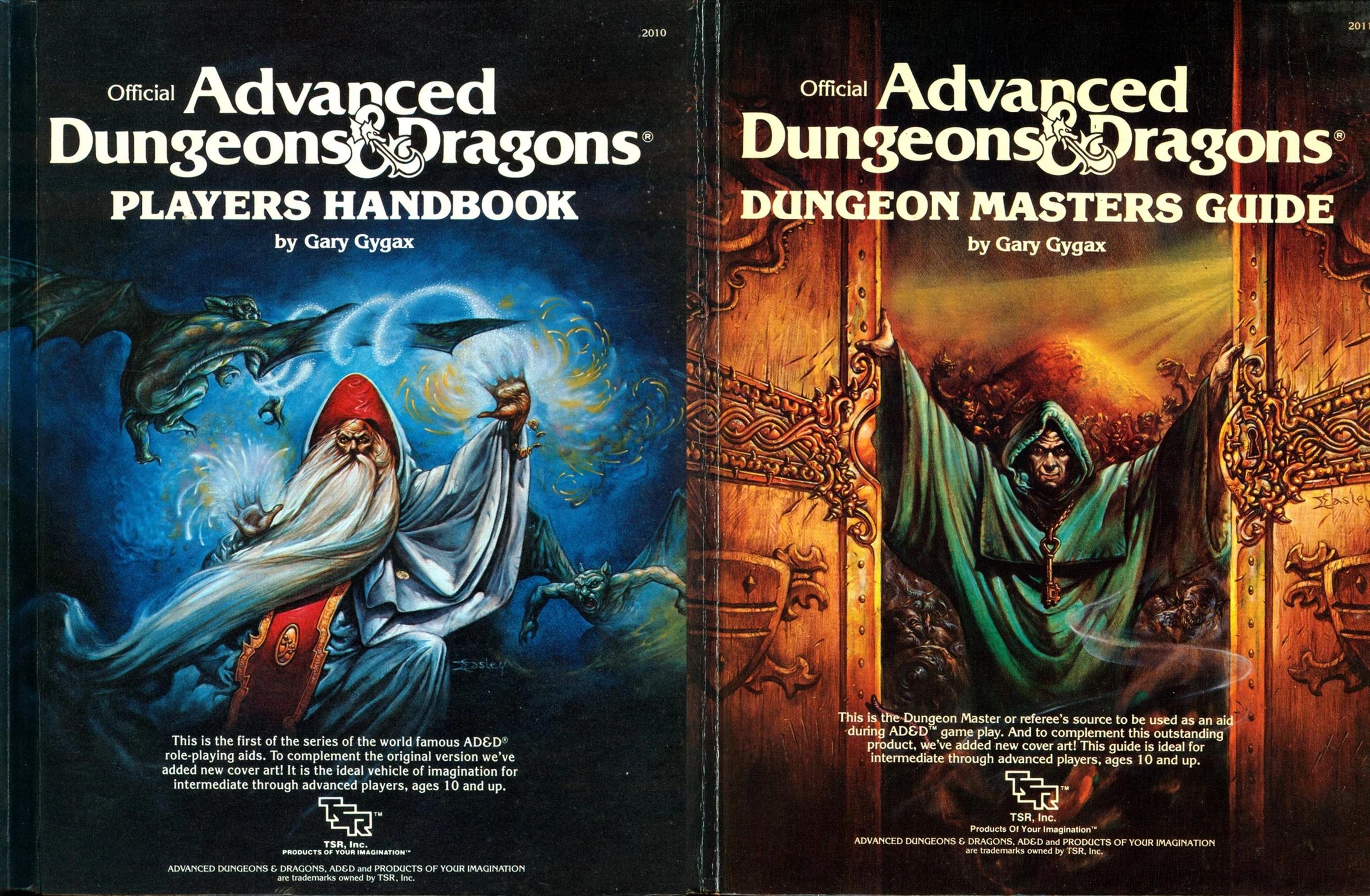
Before I go on, some context: while we had been playing D&D for months, I had recently purchased the AD&D Players Handbook (PHB) and Dungeon Masters Guide (DMG) and was in the process of reading them to “level up” our gaming experience to the advanced rules.
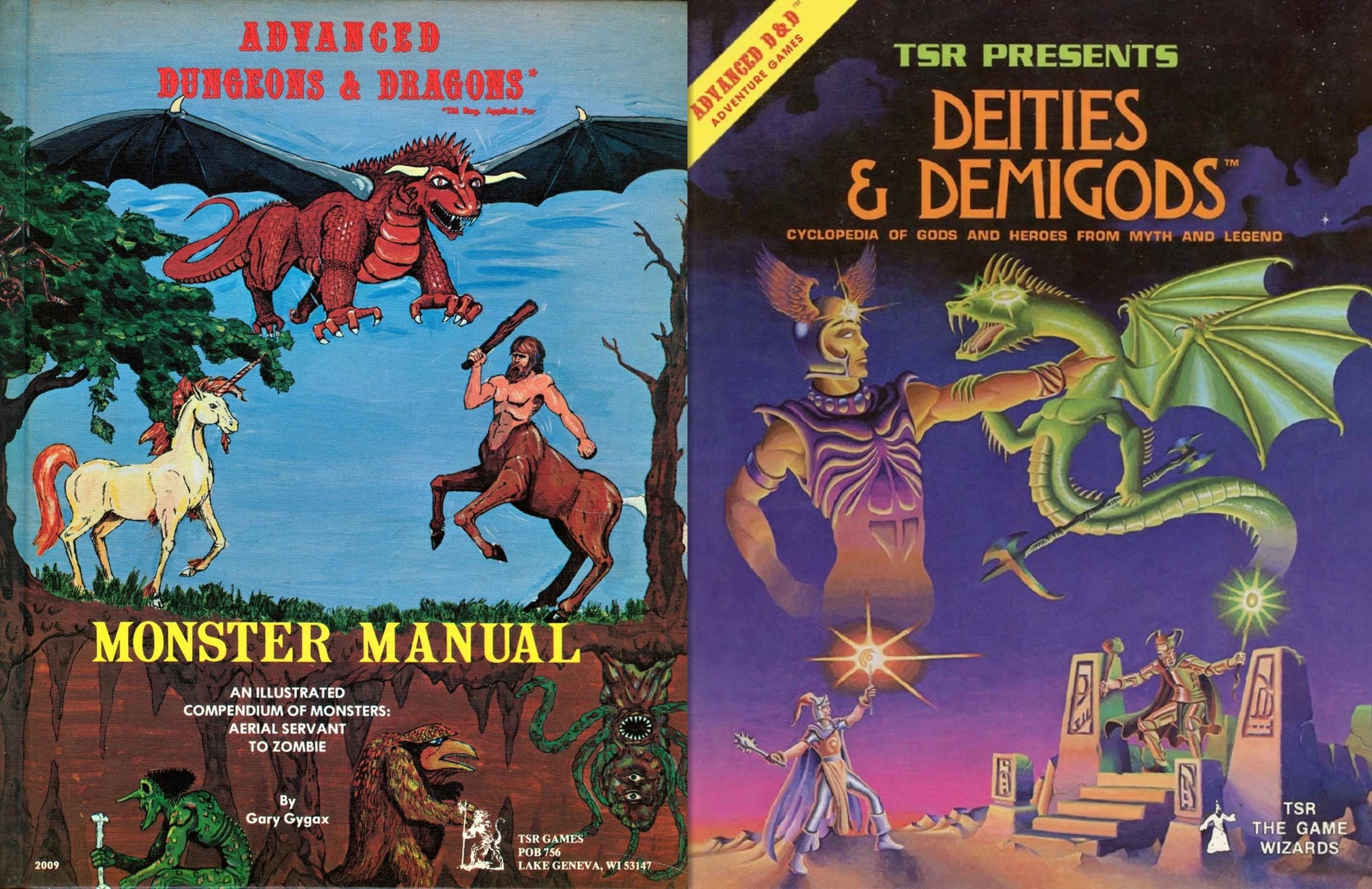
The neighbor pulled out a large piece of luggage, unlocked it, and showed me what he had left. Imagine my surprise when I saw the Monster Manual and Deities & Demigods. As I’ve mentioned recently, both featured the original covers, and the Deities & Demigods included the Cthulhu Mythos (which was famously removed from later editions). Furthermore, the owner had photocopied the “Saturday Morning Monsters” article from Dragon Magazine #48 and glued it to the end sheets. This was an extra cool find, and I had no idea at the time!
He asked for $10 per book, which had been too much for my friends. If memory serves, I had paid $15 for the PHB and $18 for the DMG, so $10 seemed very reasonable. Knowing what I know now, I think that was the original cover price for those books when he got them, so he was selling them used for what he paid—but that didn’t stop me! I had a very generous grandfather, so I handed him twenty dollars and walked out with two new AD&D books.
The Second Trip
But as I left, I knew there were two other things left in that luggage. So, the next morning, I convinced my grandfather and came back with $15 for the other two items.
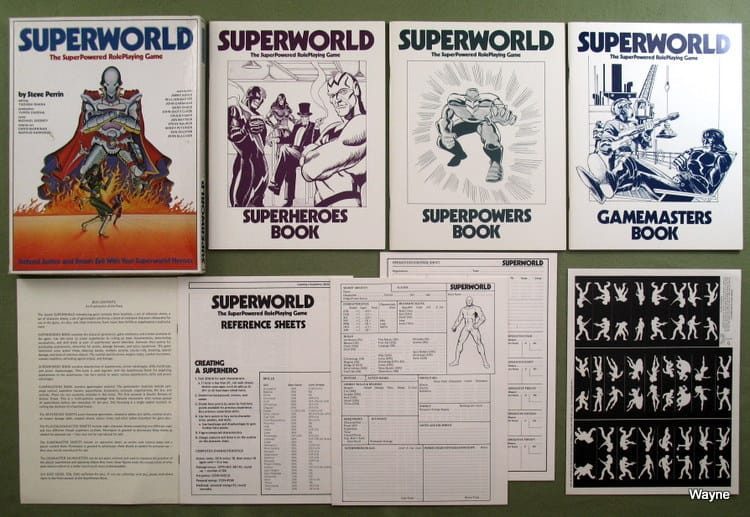
One was a book from the Superworld boxed set—just the character creation book. By itself, it wasn’t enough to play the game. I was a fan of the Wild Cards shared-universe anthology; I had read one or two books by then, and I had heard somewhere they were based on the author’s TTRPG Superworld campaign, so I was really interested. Alas, I was never able to play it since I never got the original Superworld box.
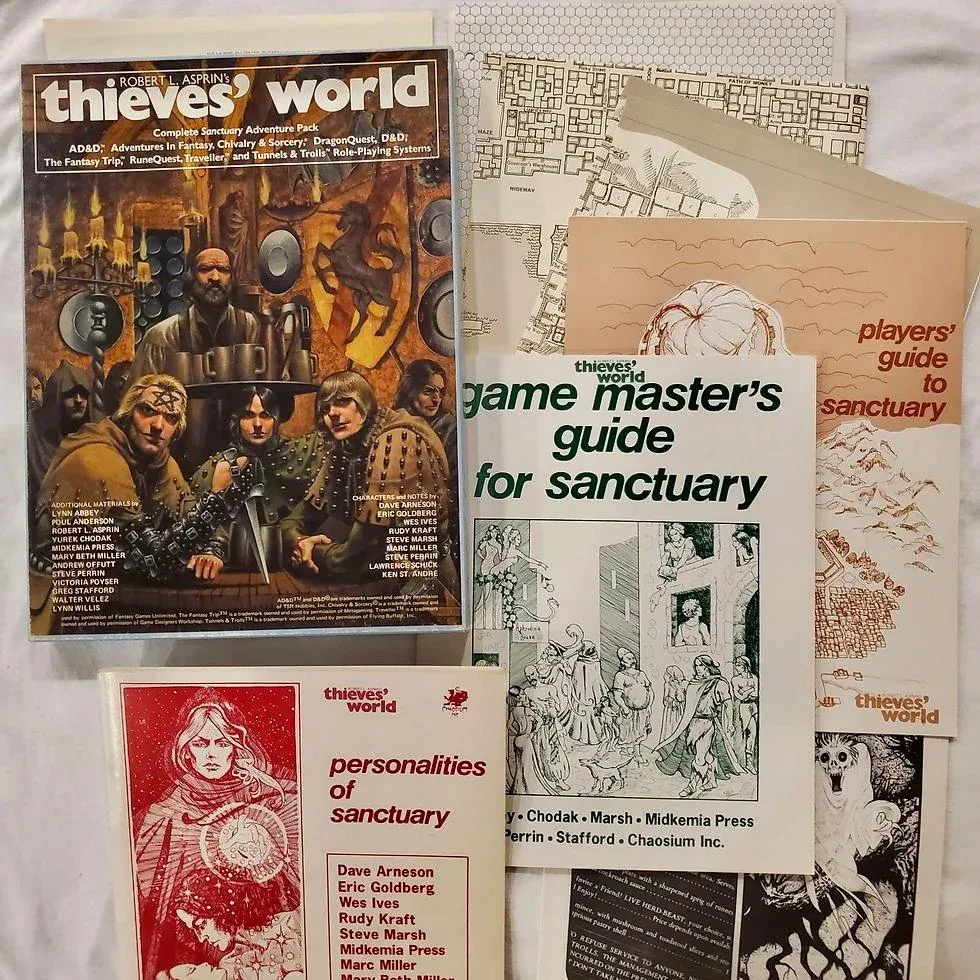
However, the other item I got was part of another shared-universe anthology: Chaosium’s 1981 Thieves’ World boxed set!
Discovering Sanctuary
I had never read the Thieves’ World anthology, so I had no context for what this was. The neighbor who sold it to me simply said it was the setting for a series of books, so that was all I had to go by.
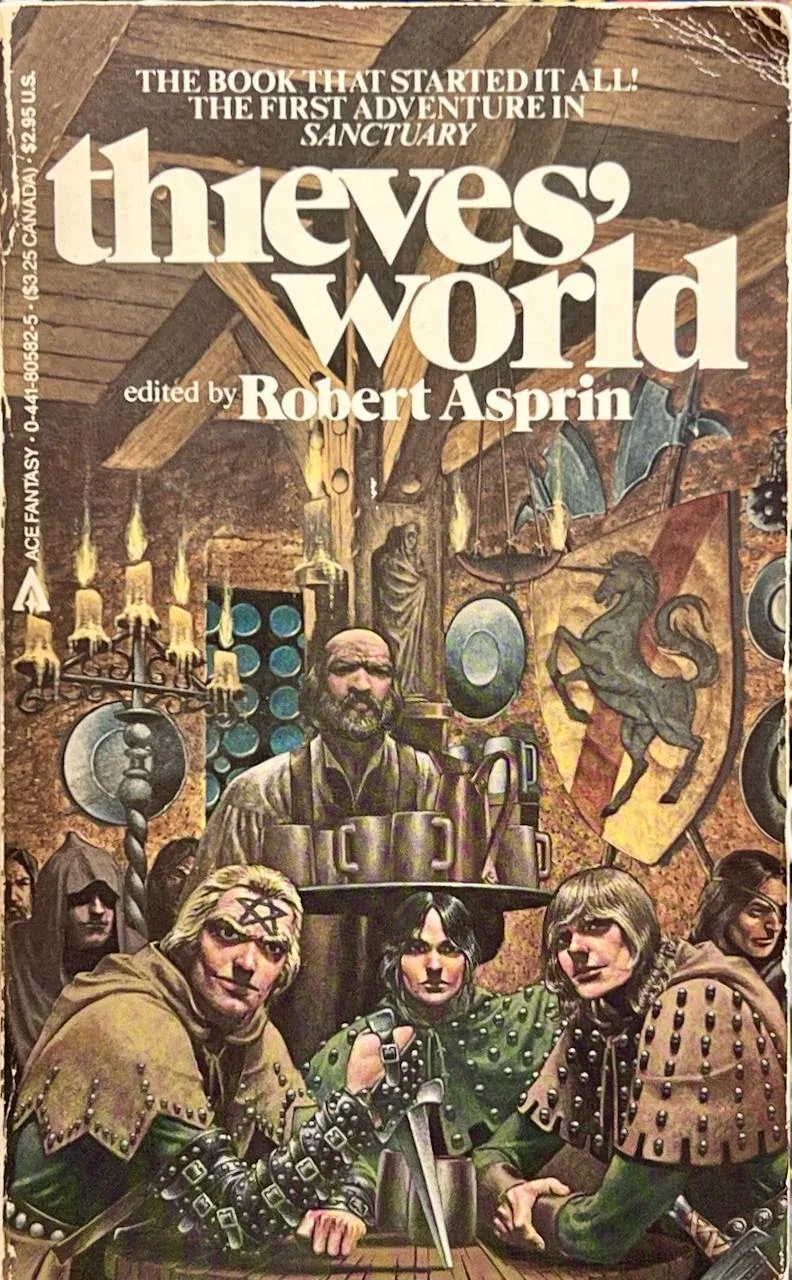
However, Walter Velez’s cover was so evocative that I had to open the box and delve in. I’ll admit there was a lot I did not understand. I was 14 years old, and my reading comprehension was still developing, but I absolutely loved what I did understand.
I loved the cover of the Player’s Guide to Sanctuary. To me, it looked exactly like a GM looming over his creation!
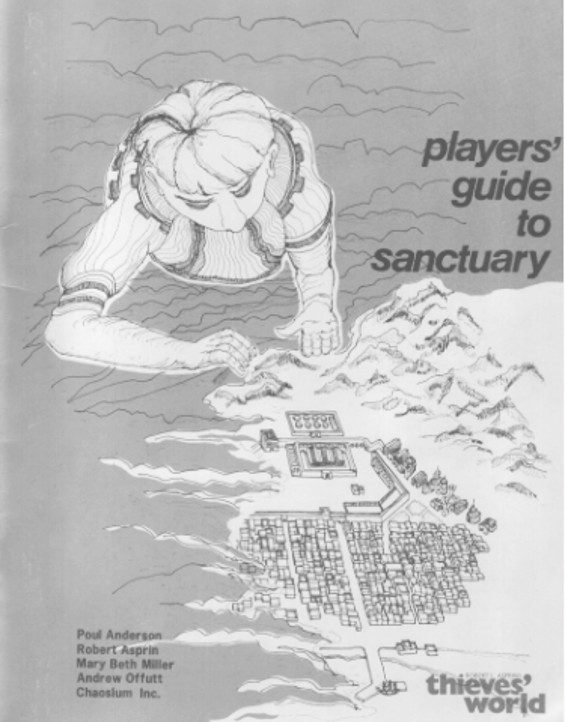
The discussion of the city, the details, the glossary! If the AD&D books felt textbook-like, this felt like a living, breathing, lived-in world. As an adult, I understand there was a lot of implied world-building in the early D&D books, but to my teenage mind, this was the opposite extreme—it was explicit and detailed. Come to think of it, this was perhaps the first fully fleshed-out campaign setting I ever encountered. There was the “Known World” section in the D&D Blue Box Expert Rulebook, but this was something else entirely.
The Maps and the Multiverse
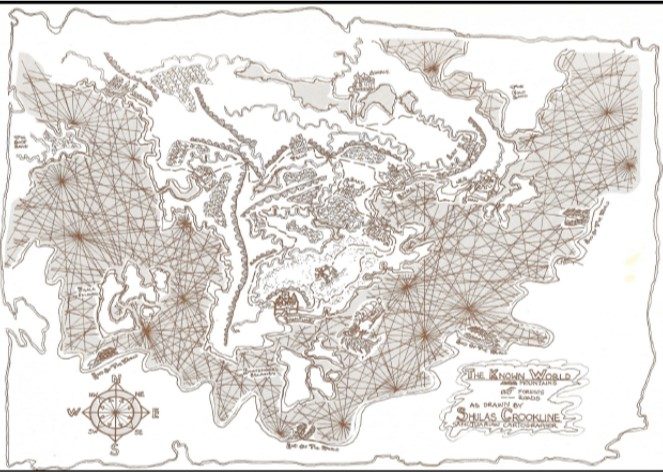
I loved the maps! I had actually forgotten this was also labeled as the “Known World” on the map at the end of the Player’s Guide to Sanctuary.
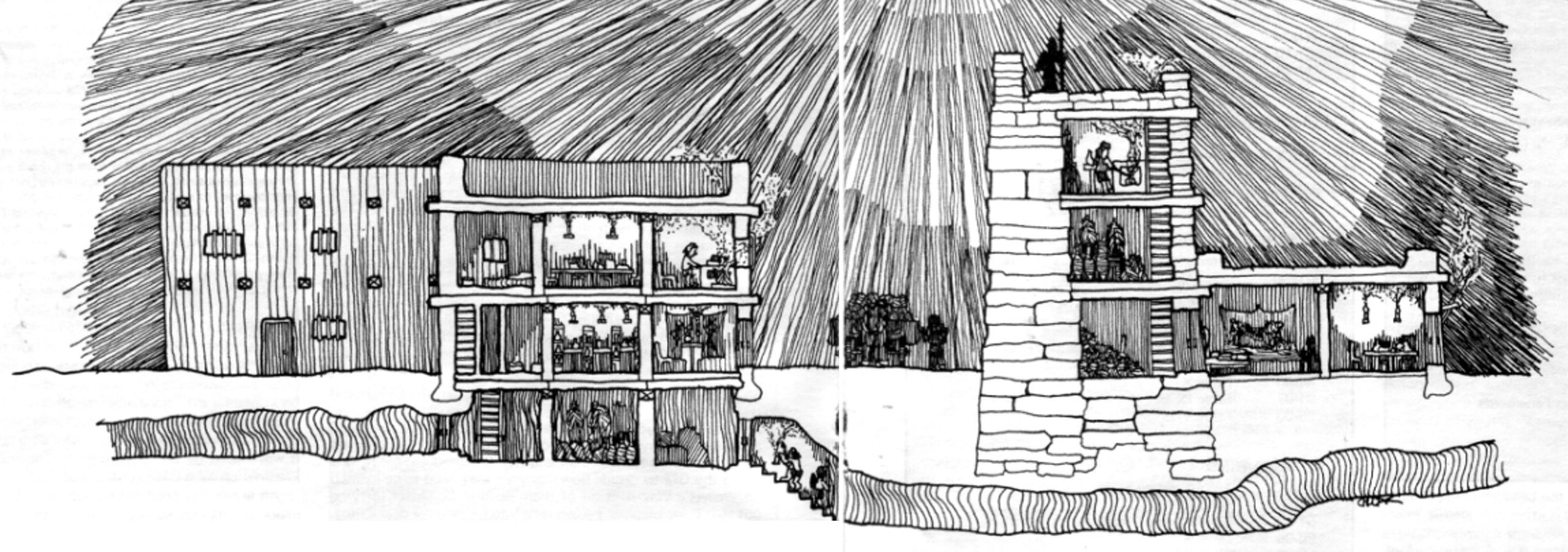
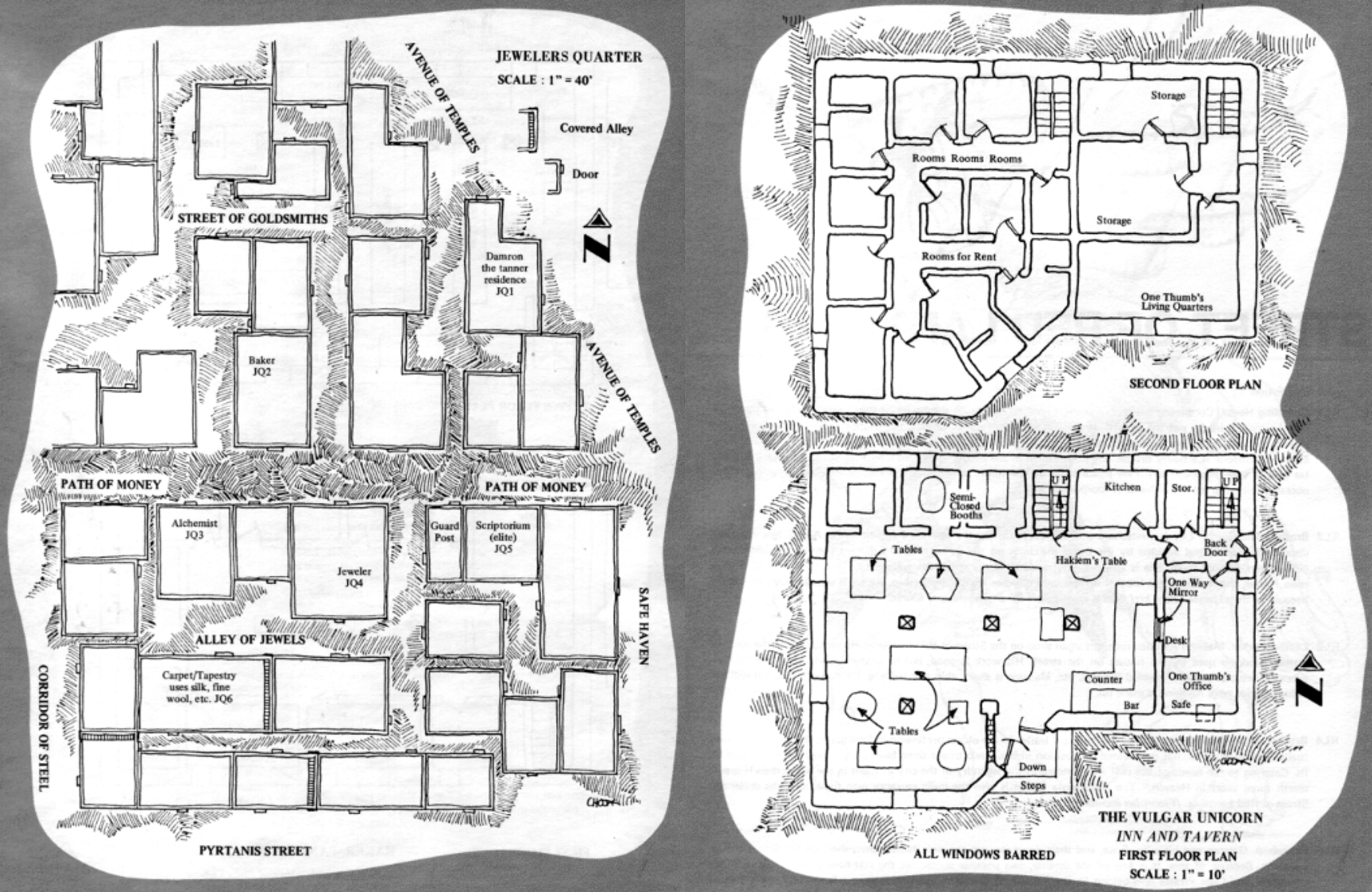
The maps in the Game Master’s Guide to Sanctuary were even better. I look back at the cut-aways on pages 33 and 34, the maps of buildings starting on page 37, and the details of city sections on pages 63 and 64, and I realize just how much these maps inspired my own map-making at the time and in the years to come. To say nothing of the incredible full-page Hellhound knight illustration on page 9!
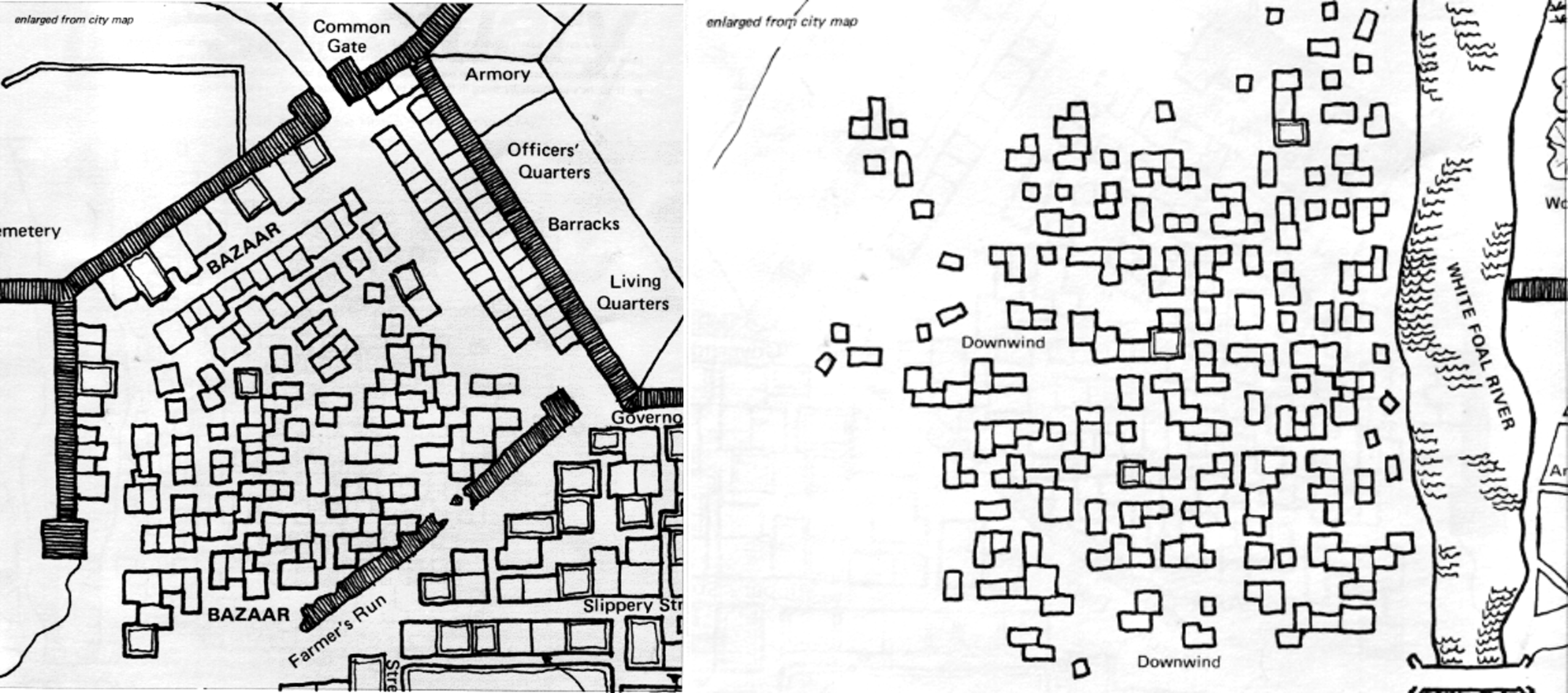
The Personalities of Sanctuary book was like a mysterious compilation of other games. I knew what D&D and AD&D were, but I had no idea about other systems. I pored over the stats, trying to figure out what these other games must be like.
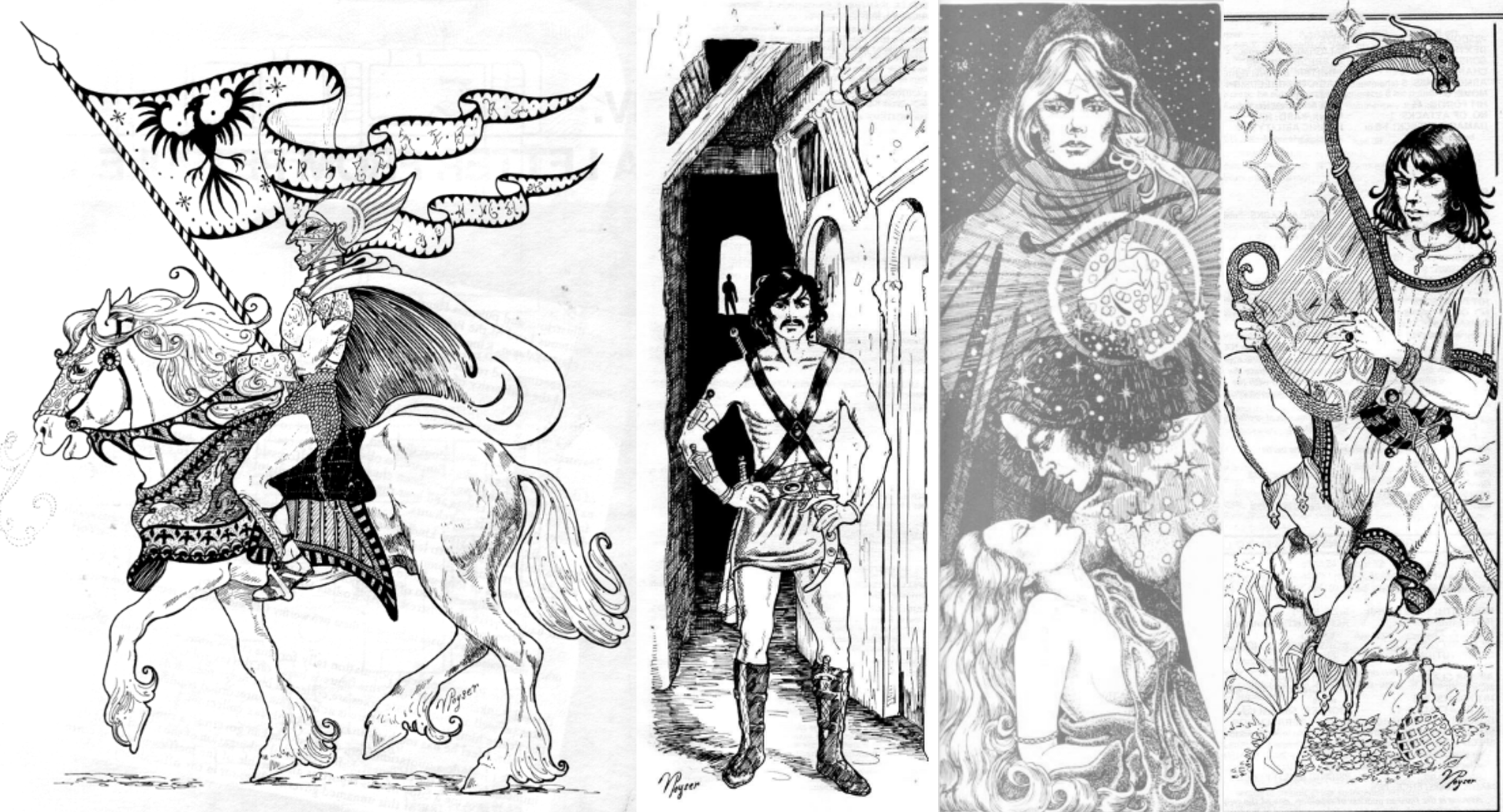
The art throughout the books was sparse but evocative, creating a unified feel and a deep sense of wonder for Sanctuary. Concepts like “The Maze” heavily influenced my concept of fantasy slums, and the “Vulgar Unicorn” inspired many of my tavern names in the same vein.
Looking Back
The maps were my favorite part, hands down. Early on, I would frequently use the map of Sanctuary in my games without necessarily using the setting itself.
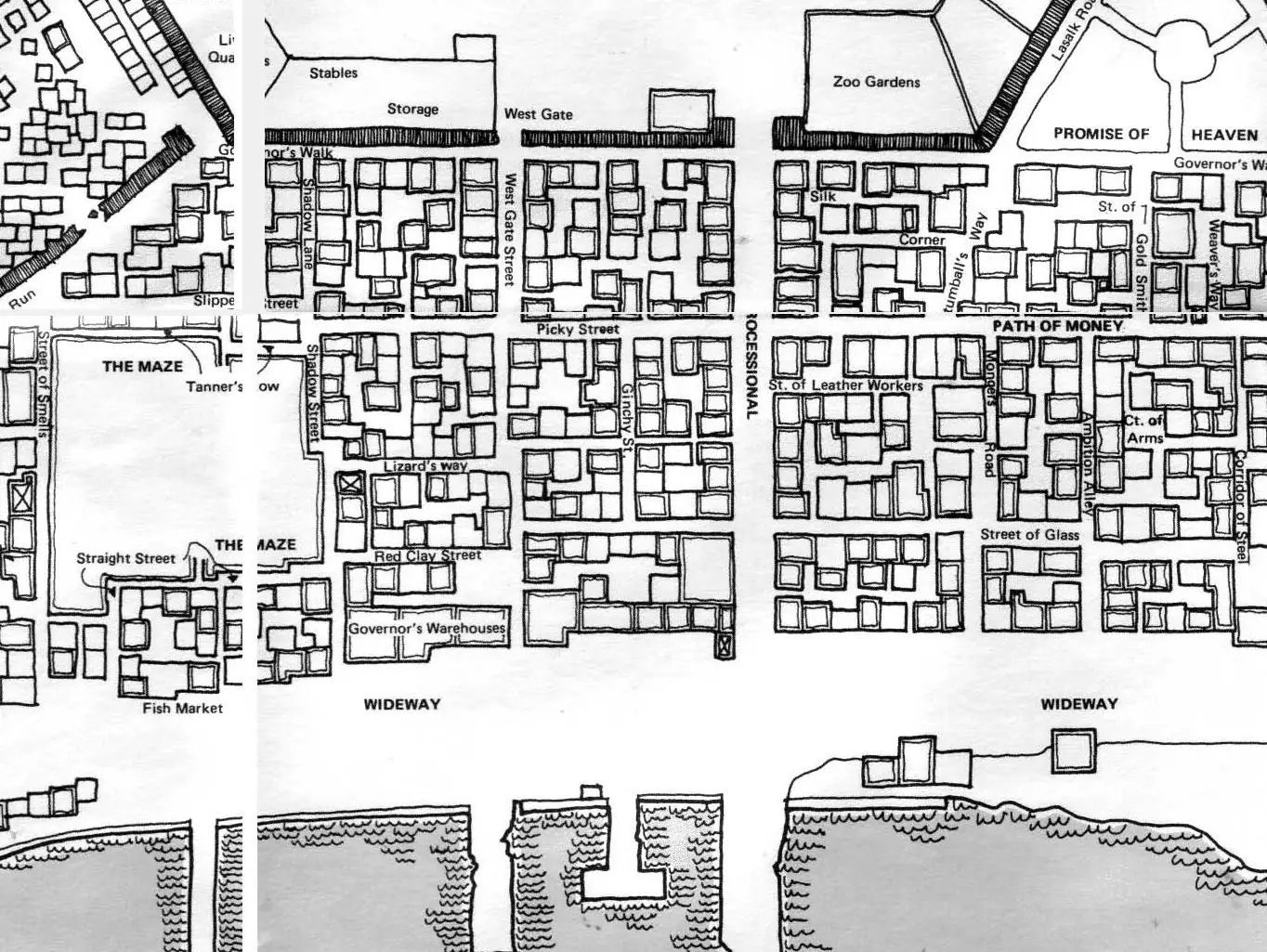
I still have the books and the maps, and taking them out to peruse before writing this was a delightful trip down memory lane. There were so many incredible details I had forgotten.
Sadly, I got rid of the actual box years ago. To save space, I threw out many of the boxes for my classic boxed sets. I really wish I had kept them.
Two more things before I go.
If you’ve read the wonderful Designers & Dragons by Shannon Appelcline, you might already know this, but just in case you don’t: the inclusion of the Melnibonéan and Cthulhu Mythos in the original Deities & Demigods is actually what made it possible for Thieves’ World to include stats for D&D and AD&D!
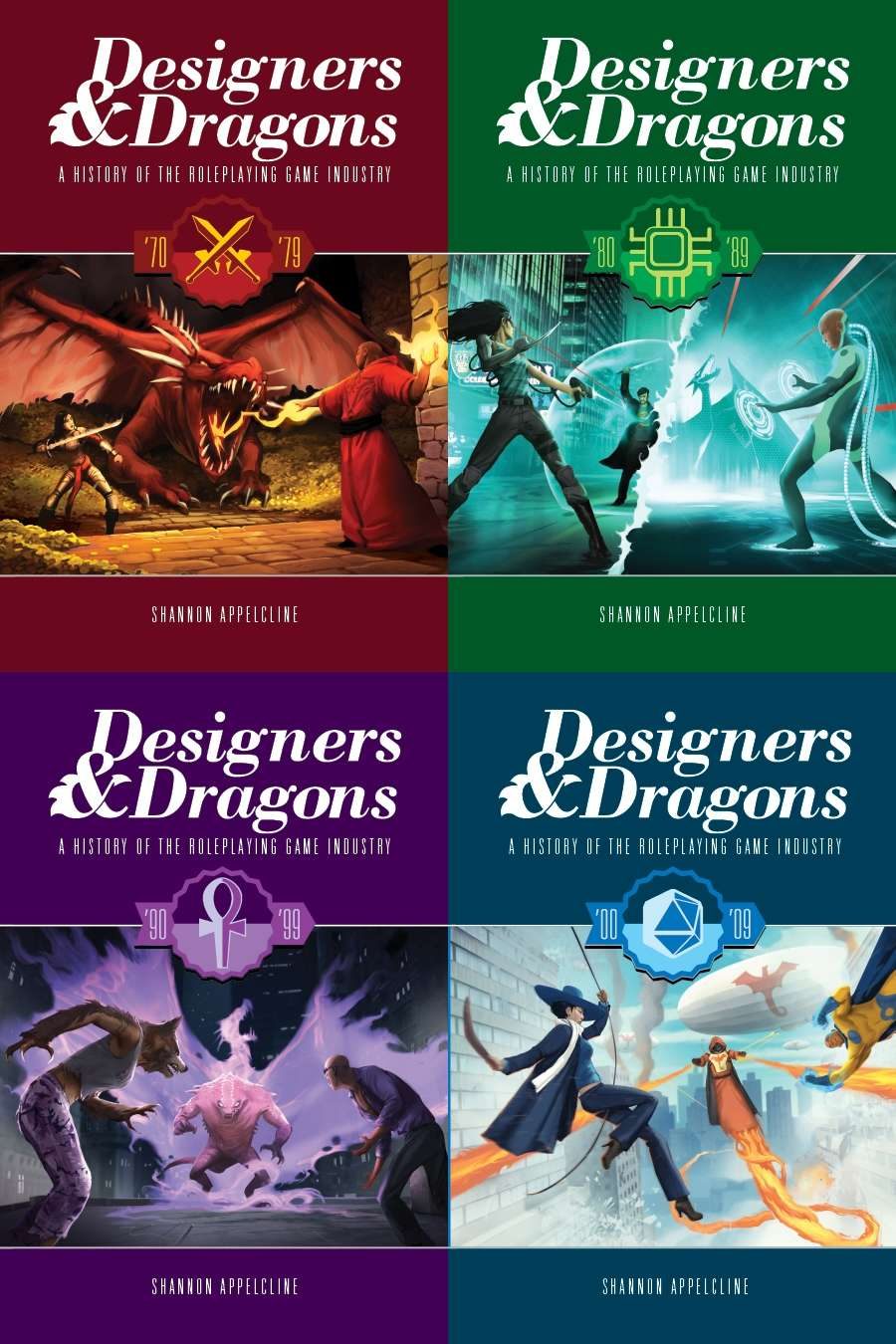
Here is a quote from Appelcline detailing this exchange from this RPG.net column:
“Chaosium (1980). Jim Ward characterizes what TSR received from Chaosium as a “C&D”. Knowing most of the principals at Chaosium, I find it unlikely that anyone wrote anything that antagonistic or legalistic. In any case, at the time Chaosium held contracts giving them gaming rights to Michael Moorcock’s Eternal Champion novels and H.P. Lovecraft’s mythos stories. But TSR published deities for both of those fictional settings in Deities & Demigods (1980), and Chaosium complained. The end result was that Chaosium granted rights to the usage based on a thank-you in the credits (but the Blumes quickly decided to remove the mythos entirely because they didn’t want to mention another roleplaying publisher) and that Chaosium got rights to use D&D stats in Thieves’ World (1981), which would be one of the last major licensed uses of the D&D game under TSR.”
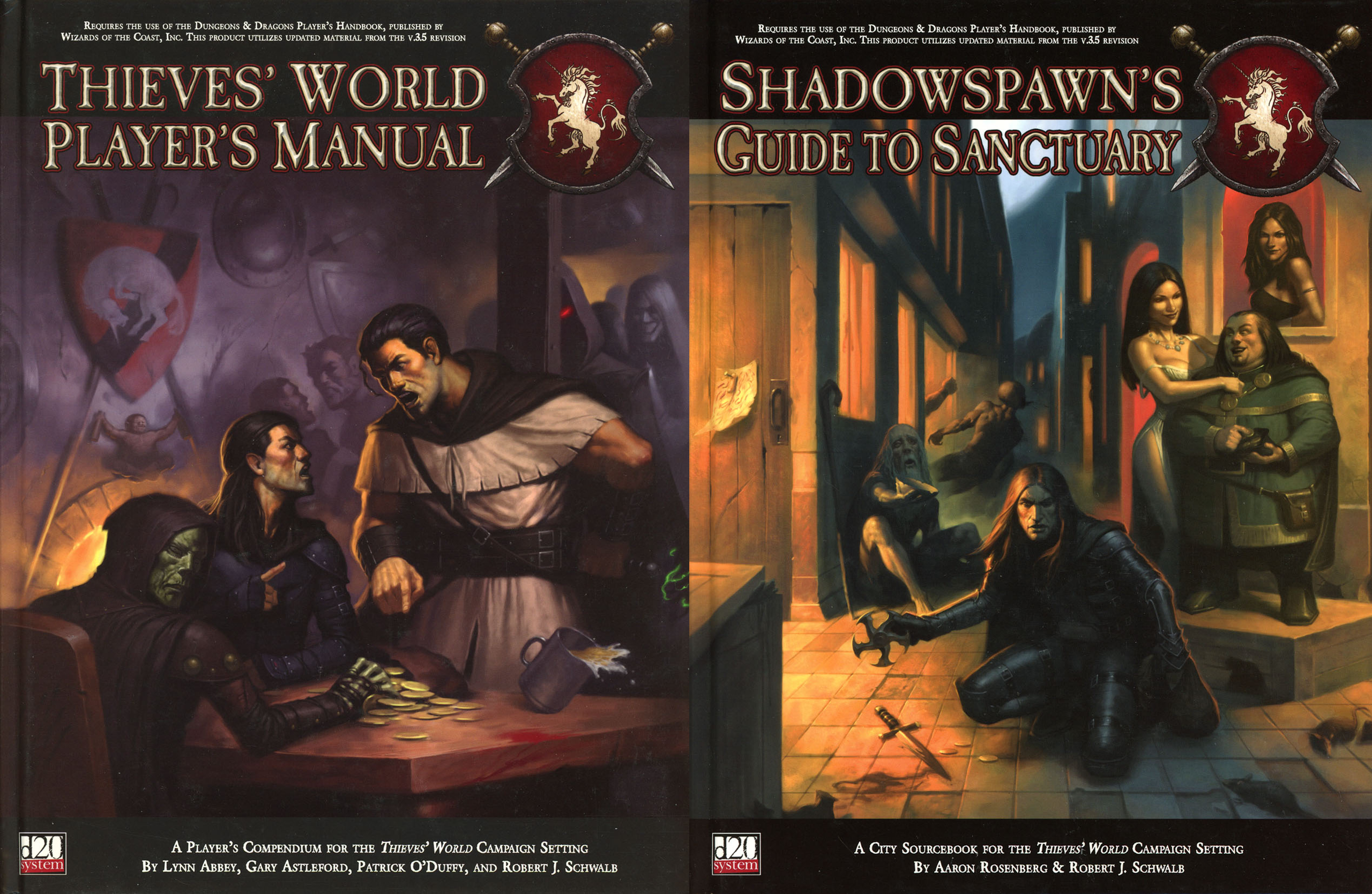
In the early 2000s, Green Ronin published new materials for Thieves’ World using the d20 rules. I own those books as well, but sadly, they no longer hold the license.
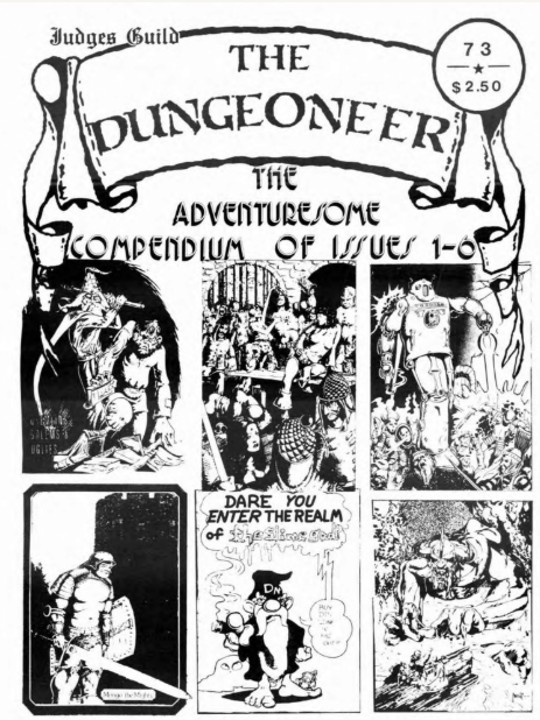
One final thought, at one point, I can’t remember if the first time or the second time, I visited my neighbor’s garage sale, I also got the Dungeoneer Compendium of issues 1 to 6. It was in bad shape, so I remember getting it for $1. It was $2.50 brand new. My neighbor fleeced me, really!
Categories: Tabletop Gaming Blogs
An Interview with Lala Mágica, a Sorceress with a Needle
Hello again, reader! Welcome back to my continuing series highlighting the art of incredibly talented Puerto Rican creators.
This week I’m talking to Laura, aka Lala Mágica. I’ve known about Laura for a few years. I’ve been following her on social media, seeing her creations. Laura happens to be married to a friend and longtime member of Puerto Rico Role Player (who I hope to interview in the future about his TTRPG content). It is a pleasure to talk to her and learn more about her as an artist and a gamer.
Without further ado, here is the interview.
Introduce yourself! Who are you and what do you create?
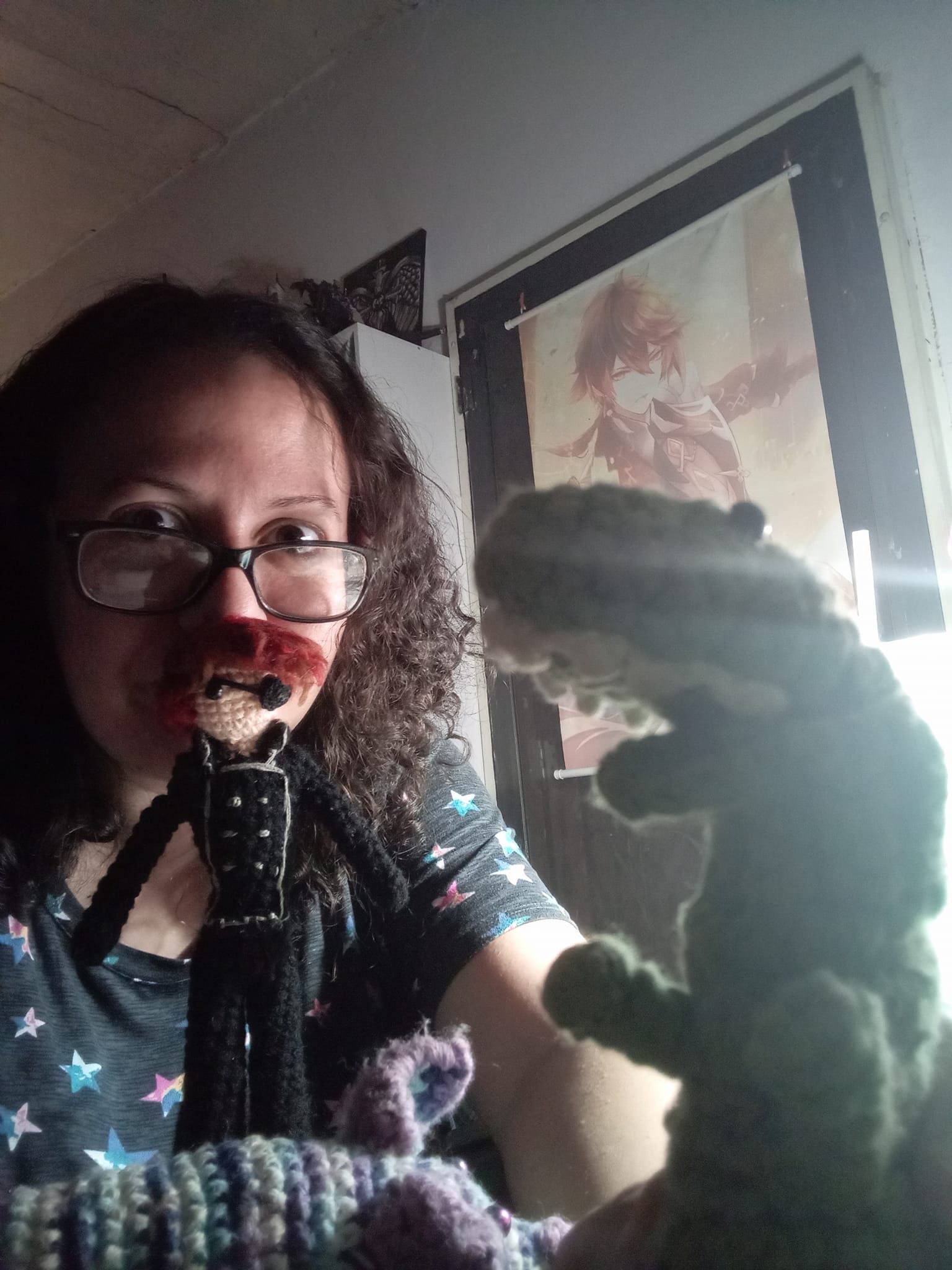
My name is Laura, but with my knitting needle, I am Lala Mágica. With a creative spirit in crafting, I like to knit original characters that aren’t easily found. I started with dice bags and then expanded into other accessories, such as keychains and garments.
How would you describe your art or creative endeavor?
Karso the Halfling Barbarian from Juego La Mesa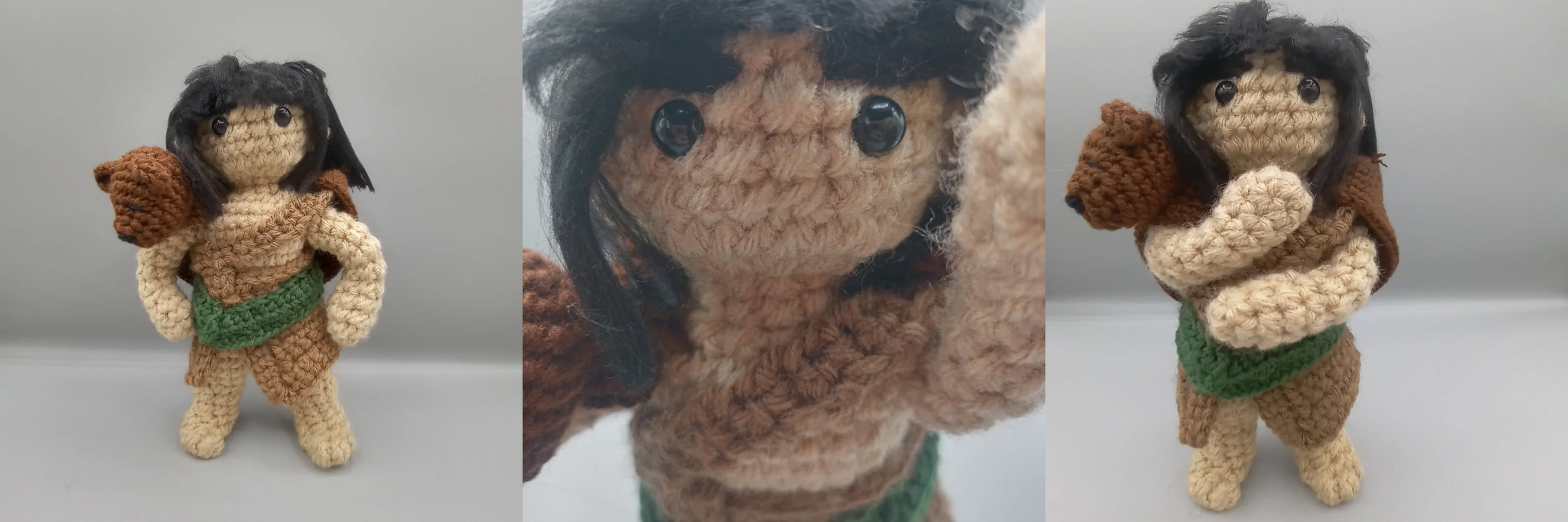
I would describe my art as 3D printing, but with yarn. Usually, I do what is known as “freehand,” which is knitting without following a pattern. So, creating a plush of your original character is possible for me.
How did you discover TTRPGs?
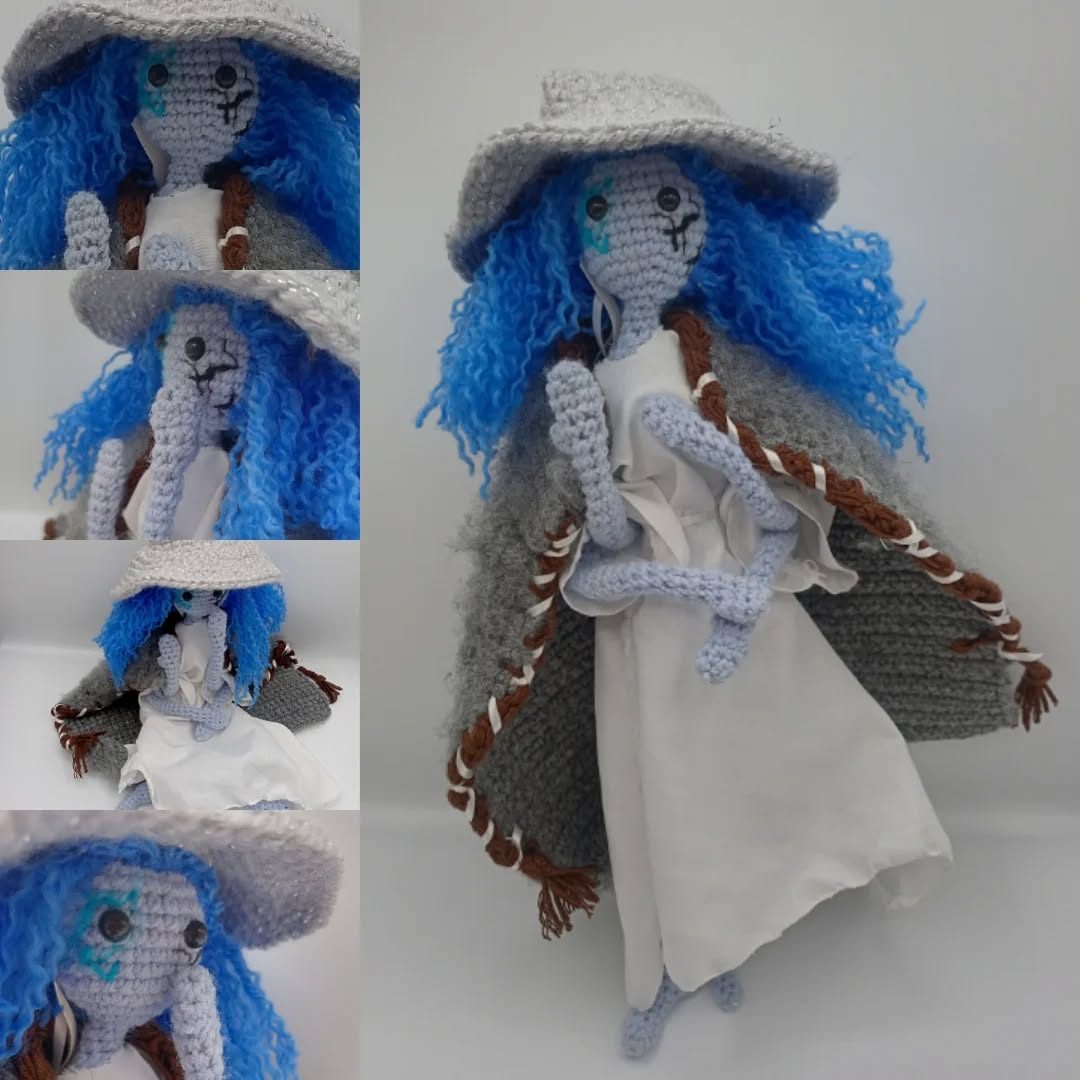
I discovered tabletop role-playing games through friends in college. I played two sessions of Mage: The Ascension, but I was able to get into the hobby properly after getting married. My husband is a DM, so we share that.
Do you actively play TTRPG? What are you playing?
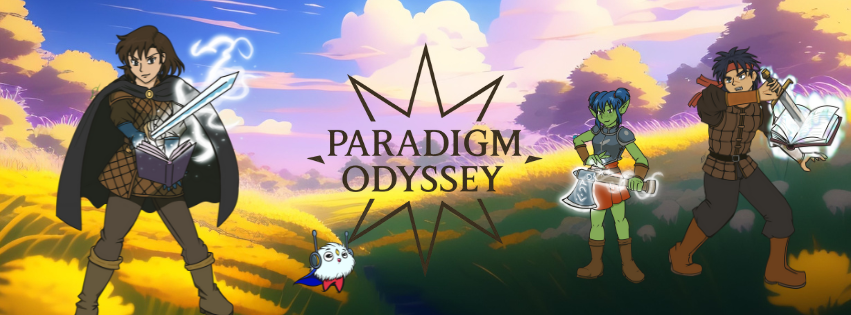
At the moment, I’m active in two campaigns: one of Paradigm Odyssey: “War is Raw” as a clown “living doll”, the system is being developed by Enyol currently, and one of Daggerheart: Age of Umbra as a fairy Seraph.
What do you want to play next?
What do I want to play next? Honestly, whatever my next session 0 throws at me. I’ll be honest, probably more Paradigm Odyssey.
What projects are available, and what are you working on next?
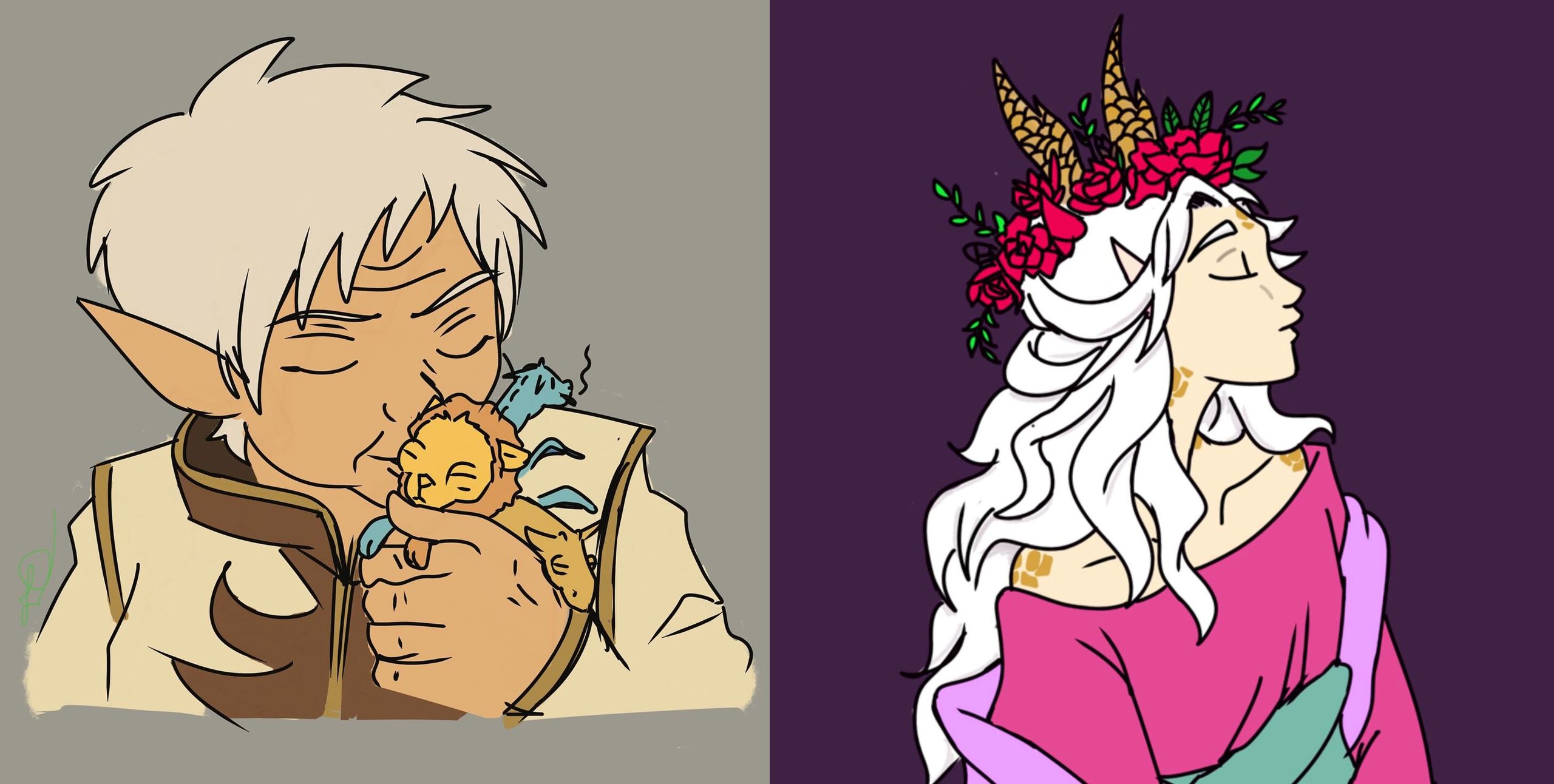
I’m in the process of a “restock,” since I gave away dragon and dinosaur coasters at the Juego La Mesa event last month. Besides that, I’m also recreating one of the small puppets that came out in the movie “Five Nights at Freddy’s.” On top of that, I’m illustrating the supplements that Enyol is sharing on DriveThruRPG, since drawing is another passion of mine.
Where can people find your creations?
You can find me actively on Instagram as Lala Mágica, and I have a FB page with the same name.
Any closing thoughts?
My hook is “My wand and my yarn is the magic”—whatever you can imagine, I can create.
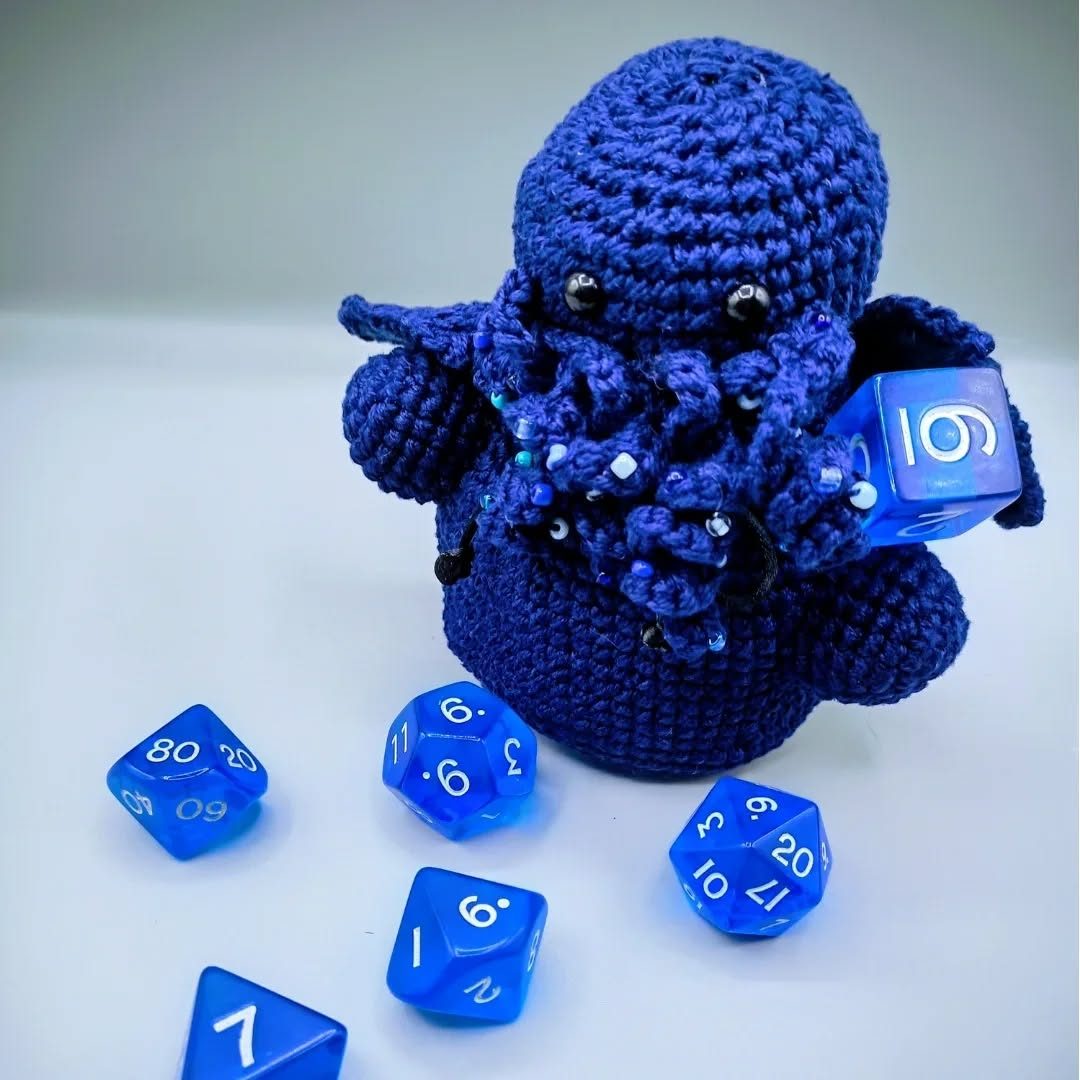
Thank you, Laura, for your time and for sharing your creations. As a Cthulhu Mythos fan, I must admit I love the Cthulhu dice bag below. It looks terrifyingly adorable.
Categories: Tabletop Gaming Blogs
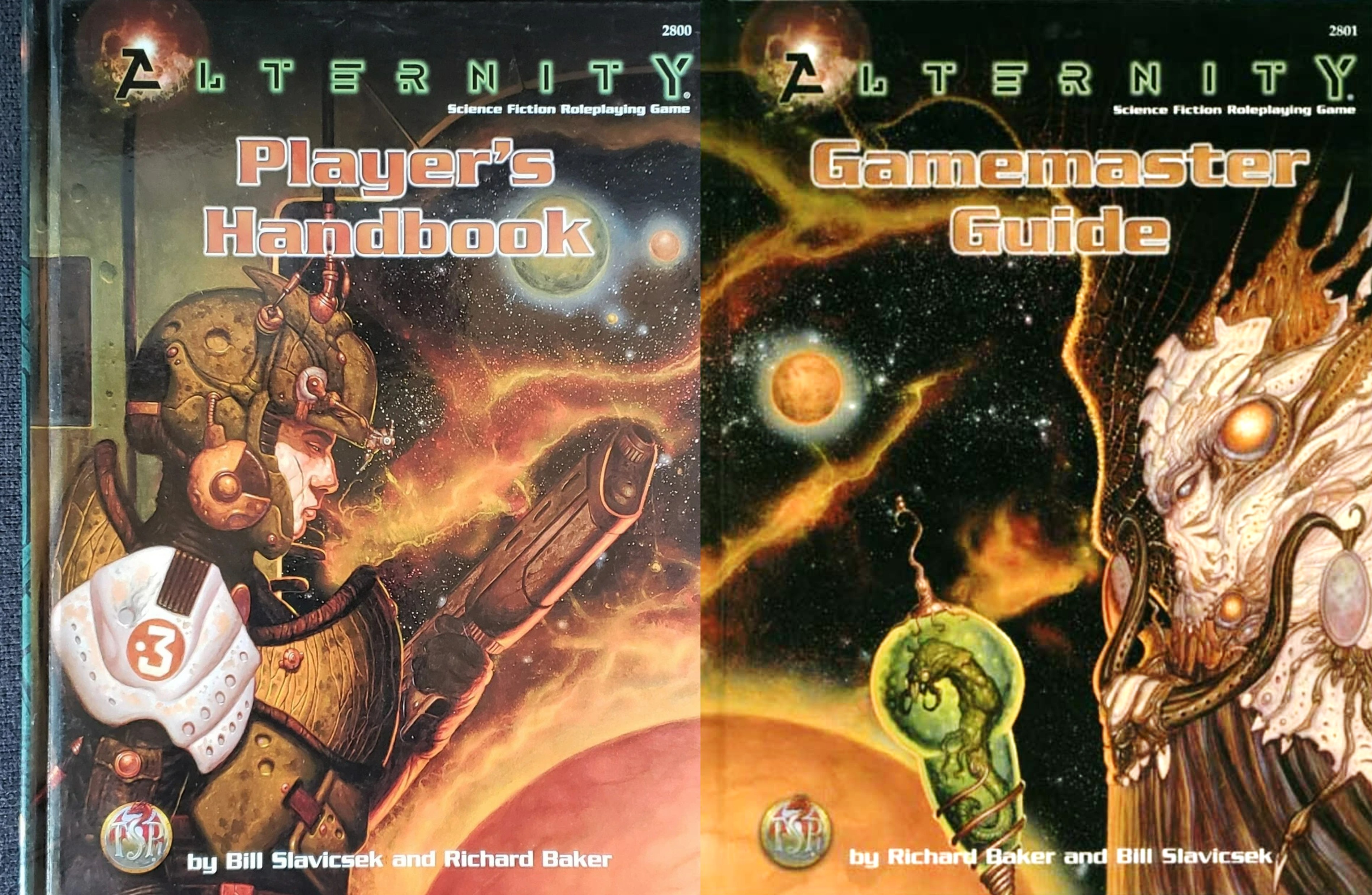
Knights of the Celestial Canticle – The Indomitable Order: Rules for the Original Alternity Game
Let me start by saying that I blame Michael (aka the Stargazer) for this! He recently started writing about the original Alternity game here and here, and it made me so nostalgic that I began digging through the files for my old campaign. That is where I found the topic for this post. Let me give you some context.
It was 1998. Alternity had been published earlier that year by TSR (which Wizards of the Coast had already purchased). I was obsessed with it. I wanted to run a campaign in a setting I had originally conceived around 1990 and had been tinkering with over the years: the Nirvani Alliance. Alternity felt like the perfect system for it, so I started adapting the rules for the campaign.
In September, I was busy planning my upcoming wedding, which was just three months away. Then, Hurricane Georges hit Puerto Rico! We lost power for days, so I spent nights by flashlight and candlelight, writing the campaign material discussed in this post.
What I wrote were the Alternity system rules for a mystic order of armored religious knights, inspired by various classic sci-fi influences. I eventually typed up the pages and showed them to my players. Naturally, none of them wanted to play one of the knights, so I shelved the rules and didn’t work on them any further.
Below are the rules, written 28 years ago, for an out-of-print game I still deeply love! I made no changes to the mechanics. I cleaned up the text, fixed some grammar, and made a few tweaks for clarity. This is not a professionally written or edited piece; it is a slice of house rules from my old Alternity campaign. I am sharing them purely for nostalgia’s sake, and I hope someone finds them useful.
This post includes an introduction and summary of concepts, rules, and ideas. At the end, you’ll find a link to the Alternity Indomitable Order Rules, an 11-page PDF with detailed information on this Order of warrior-knights. Don’t judge me too harshly, I wrote this almost 30 years ago!
The Age of the Nirvani
Of all the races inhabiting Alliance space, the Nirvani are the only ones not native to this galaxy. Even their name was a gift from the Keriani, who encountered them as they fled the forces of the TukNi-Amak puppet government. These refugees, who called themselves “humans,” claimed to hail from a distant galaxy decimated by a devastating plague.
The Keriani—whose name translates as “born from the womb of Ker”—named the newcomers Nirvani, or “born of no womb”. Though they arrived in the middle of a great interstellar war, the Nirvani were ready to start anew, and their arrival signaled a new order for the galaxy.
The Indomitable Order
The Knights of the Indomitable Order serve as the warrior sect of the Church of the Celestial Canticle. The Order traces its legacy to the foundation of the Alliance and the liberation campaign led by Lord Sparrowhawk. Selected by The Ever Present as a sword of vengeance, Sparrowhawk identified twenty-three soldiers of great faith—the Enlightened, or Saints of War—and bestowed upon them his wisdom and power.
These Enlightened formed the Bloodlines, passing their knowledge and unique abilities to subsequent generations. In modern times, the Order remains the Church’s premier fighting branch, though its influence has waned. Today’s knights survive by breeding strictly within the Bloodlines to retain their diluted, yet still formidable, birthright.
Life as an Indomitable
A member of the Order is born, not chosen. They serve as guardians, fighters, and symbols of the Church’s power. Those who abandon their destiny are branded Fallen, stripped of their heritage through an excruciating process involving power-inhibiting nanites. Those who openly rebel become Renegades, hunted down as enemies of the faith.
The Major Bloodlines
Each group within the Order has its own outlook and specialized abilities:
- The Sisterhood of Heimdal: Traditionalists and keepers of records who use “Bloodsense” to identify a newborn’s destiny. In Alternity terms, they possess the Enhanced Sense mutation.
- Bloodline Gilgamesh: The highly militaristic ground troopers. They receive a +1 to their STR score and a +3 to their Wound rating.
- Bloodline Zeus: Known as the “Scions of Thunder,” these warriors can manifest an Electrical Aura to damage enemies.
- The Conclave of Ra: Progressive tacticians who possess a variation of Energy Absorption, allowing them to turn light into energy.
- The Icarians: Independent and reclusive, these members have an improved DEX score and the Adaptation Gravity (light gravity) power.
- The Fellowship of the Jesesites: The only ordained Bloodline within the Church. They are healers who possess the Enhanced Healing power, though using it on others can cause them to suffer physical strain.
Relics of the Order
For players navigating the Alternity system, the Order’s equipment provides significant tactical advantages:
- Rune & Relic Armor: These suits are powered by the hero’s own bio-field. While wearing them, the specific powers of each Bloodline are augmented—for example, a Jesesite gains Hyper Healing, while an Icarian gains the ability to fly.
- Star Swords: Members of the Order receive a -1 step bonus to their Melee Weapons—Powered weapons skill base situation die when wielding these blades. They can even parry energy attacks.
- The Indomitable Ancestry Perk: A new 3-point Perk that allows a normal Nirvani hero to use Rune or Relic armor, though it costs them fatigue points to do so.
The life of the Indomitable is one of pride and strict adherence to the faith. Whether you are a dedicated soldier of the Church or a Renegade running from your heritage, you are “the chosen among the chosen”.
Want to dive into the mechanics? Check out this file: Alternity Indomitable Order Rules, for my complete notes on the Indomitable Order using the Alternity rules.
Are you ready to wield a Star Sword in your next session? Let me know which Bloodline fits your playstyle!
Writing and reviewing this document really stirred up my nostalgia for the game and for the campaign setting. I hope you find the Indomitable Order concept and its mechanics interesting. Let me know what you think of the application of the Alternity rules, the lore, or the campaign itself.
Would you be interested in reading more about the concepts or the Nirvani Alliance? I’m really looking forward to your comments!
Categories: Tabletop Gaming Blogs
40 Years a Gamer: The Artists Who Inspired Me – Early Artistic Luminaries of TSR
I began playing D&D during the heyday of the artists known as the “Four Horsemen” of TSR—Elmore, Easley, Caldwell, and Parkinson—which I discussed in my previous post on the artists who inspired my TTRPG gaming.
However, I switched from BECMI D&D over to AD&D around the winter of 1987, if memory serves. I remember it vividly because during one of those very first sessions, I was running the game as the Dungeon Master while listening to the American Top 40 end-of-year countdown. But I had actually been buying and reading the AD&D 1st Edition books for a few months before we ever rolled dice.
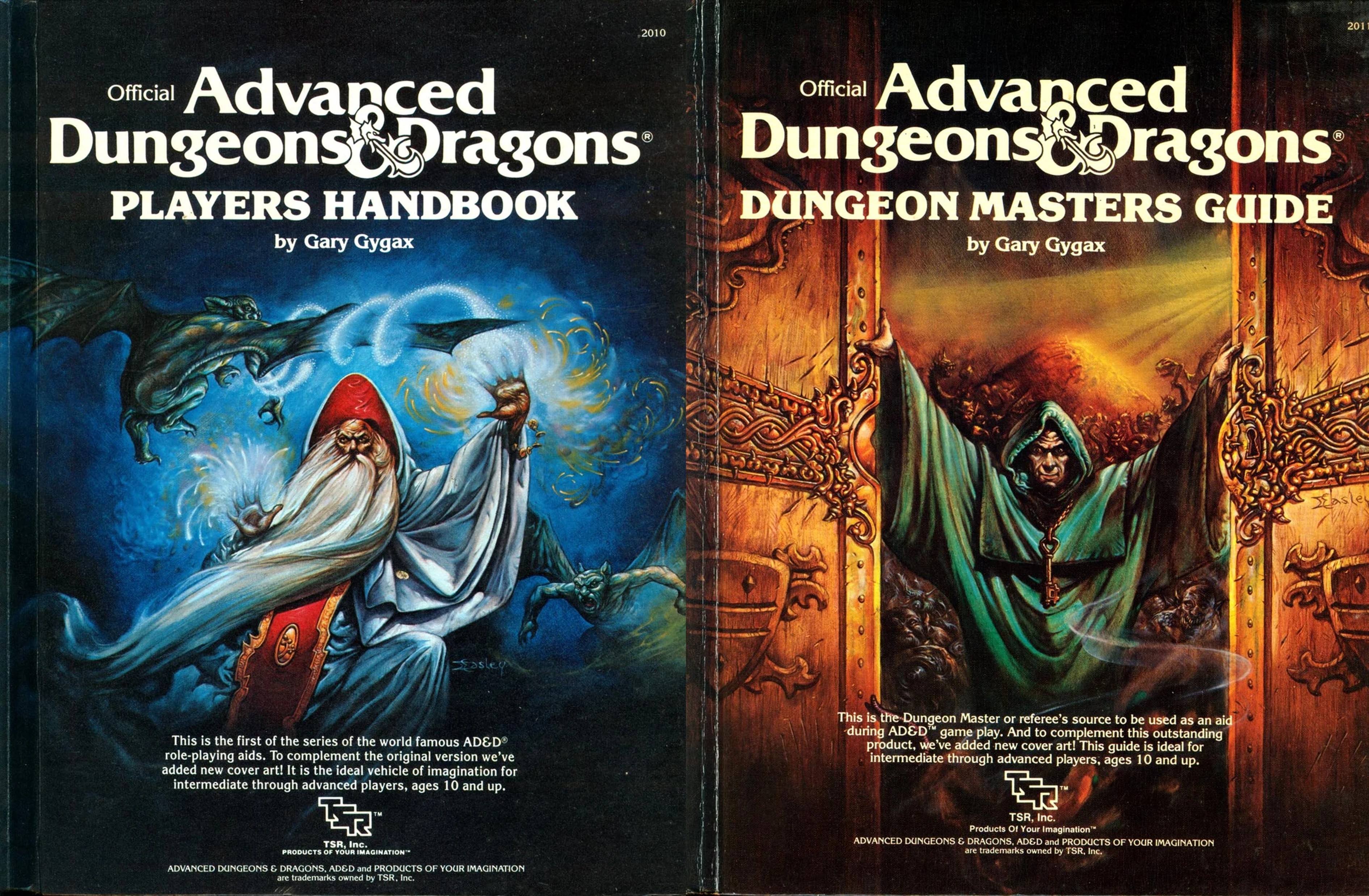
My original AD&D 1e books were the orange-spine printings featuring the iconic covers by Jeff Easley. I got the Dungeon Masters Guide (DMG) first, followed by the Players Handbook (PHB). The only two AD&D books I owned that were not orange-spine editions were the original Monster Manual (MM) and a copy of Deities & Demigods (the rare printing that still included the Cthulhu and Melnibonéan Mythos!), which I scored from a neighbor’s garage sale. You can read the full story about that lucky find right here.
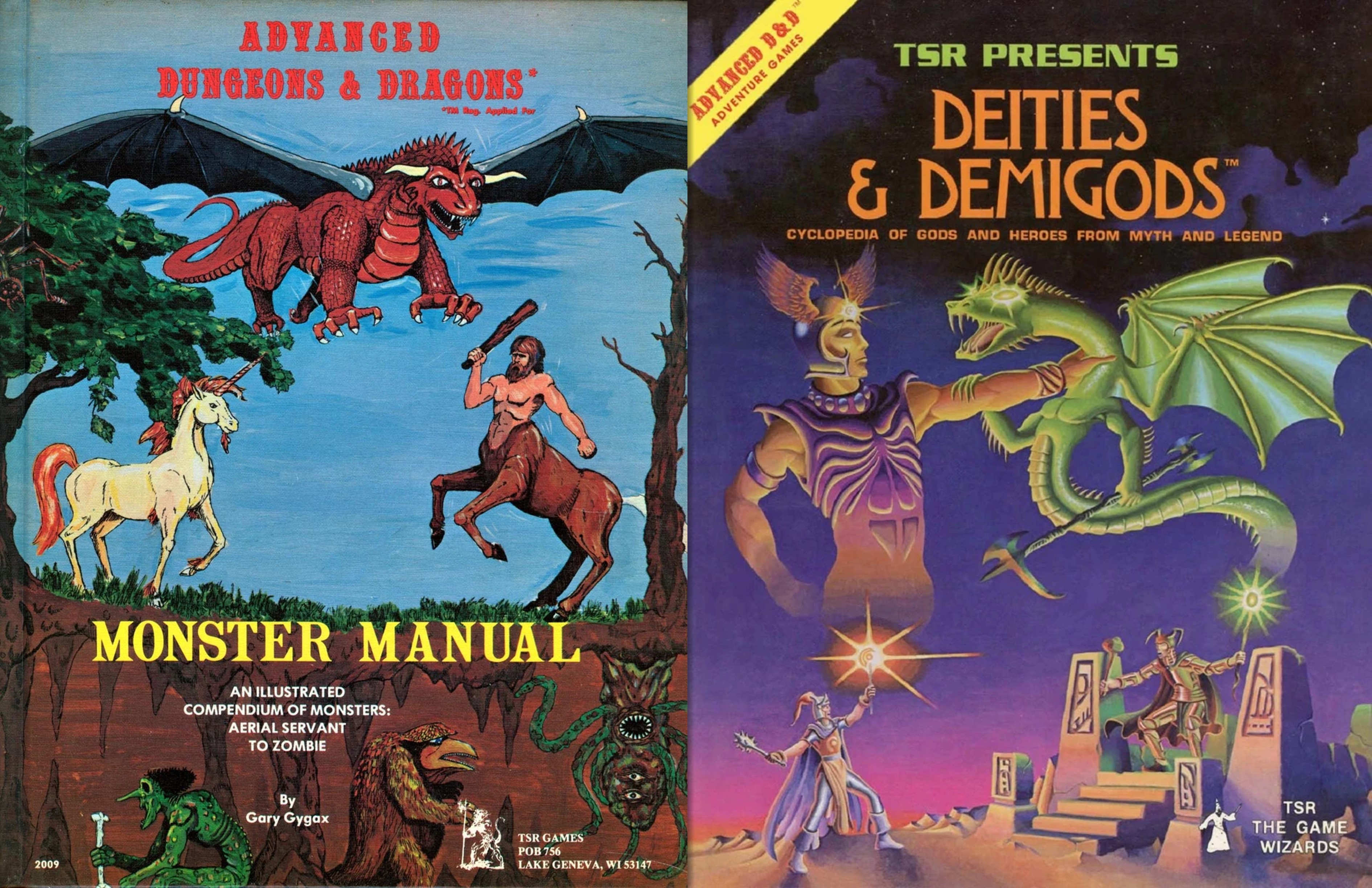
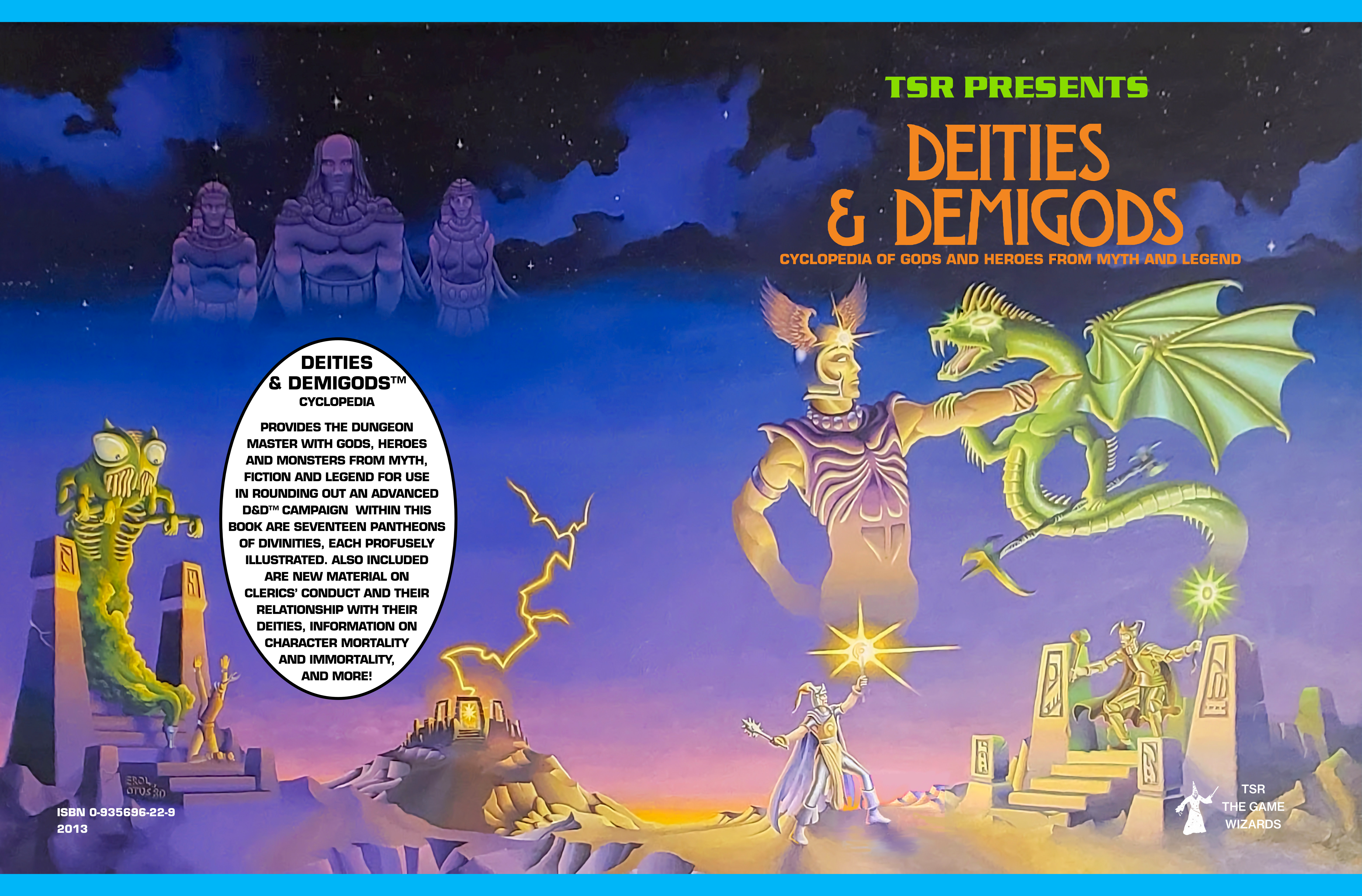
The covers for Deities & Demigods by Erol Otus and the Monster Manual by David A. Trampier served as my true introduction to TSR’s earlier art style. But, despite my books sporting the newer Easley covers on the outside, the interiors still featured the original 1e layout and illustrations. And I must admit… at first, I was turned off by them.
Let me explain before you burn me at the stake!
I came into the hobby through the Mentzer Red Box and the rest of the BECMI sets. While they weren’t anywhere near as cleanly laid out as modern games, they had a very approachable, easy-to-use style. They were specifically designed to welcome you in and teach you the game.
When you dive into the 1e PHB—and especially the DMG—they are not easily approachable books. I know now that their design came directly from the layout style of miniature wargaming rulebooks, but to young me, they just felt like inscrutable, textbook-like mystery tomes.
To add to my confusion, I started reading the books in the opposite order to their publication! Starting with the DMG didn’t make much sense if you hadn’t read the PHB first. I eventually figured it out and switched books, but coming directly from the polished look of BECMI, I was a little disappointed by the interior art.
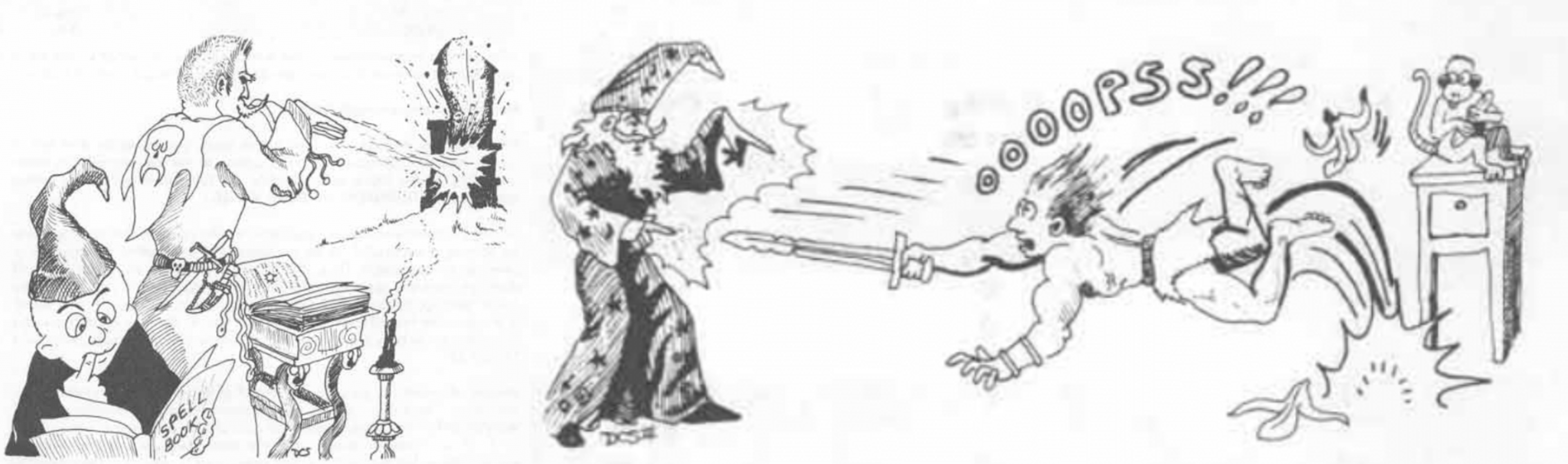
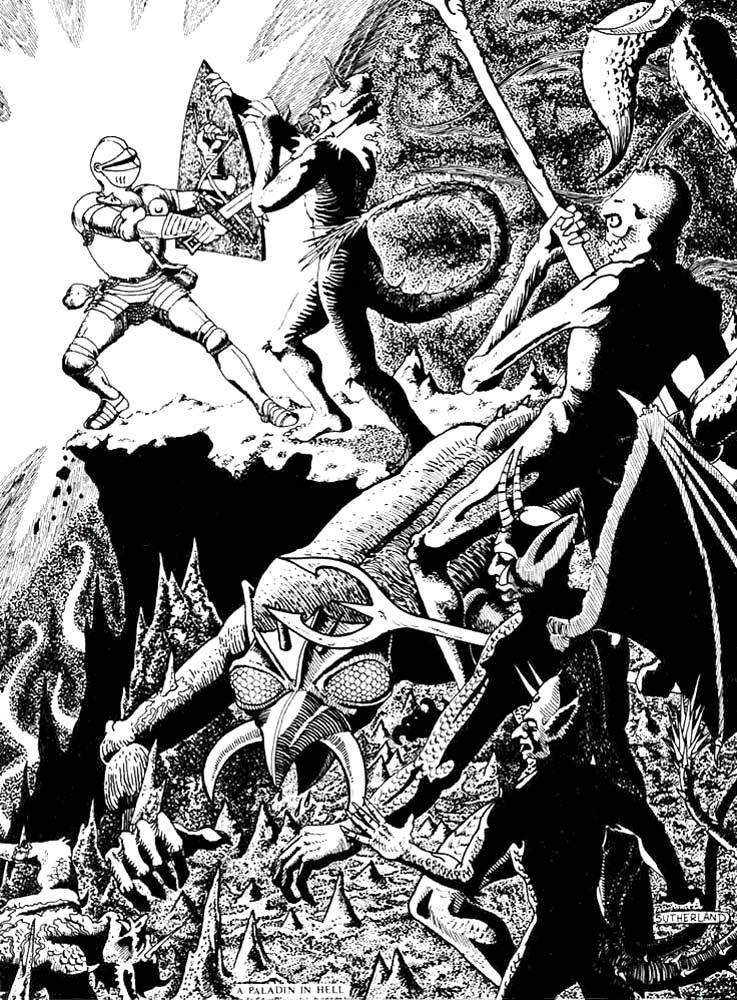
The cartoonish illustrations next to the Intelligence and Dexterity tables in the PHB were okay, but they didn’t quite match my epic expectations for the game. I’ve also never been a huge fan of the “races” lineup on page 18 by David Sutherland. But then I flipped a few pages and saw his A Paladin in Hell full-page piece… and I was absolutely blown away!
The MM had more illustrations that captured my imagination. But it was truly through the original Deities & Demigods that I learned to appreciate the old-school, foundational art of early TSR deeply. So, let me talk about these luminaries—Jeff Dee, Erol Otus, David C. Sutherland, David A. Trampier, and Jim Roslof—the artists who were there at the birth of the hobby, and how their work inspired me!
Jeff Dee
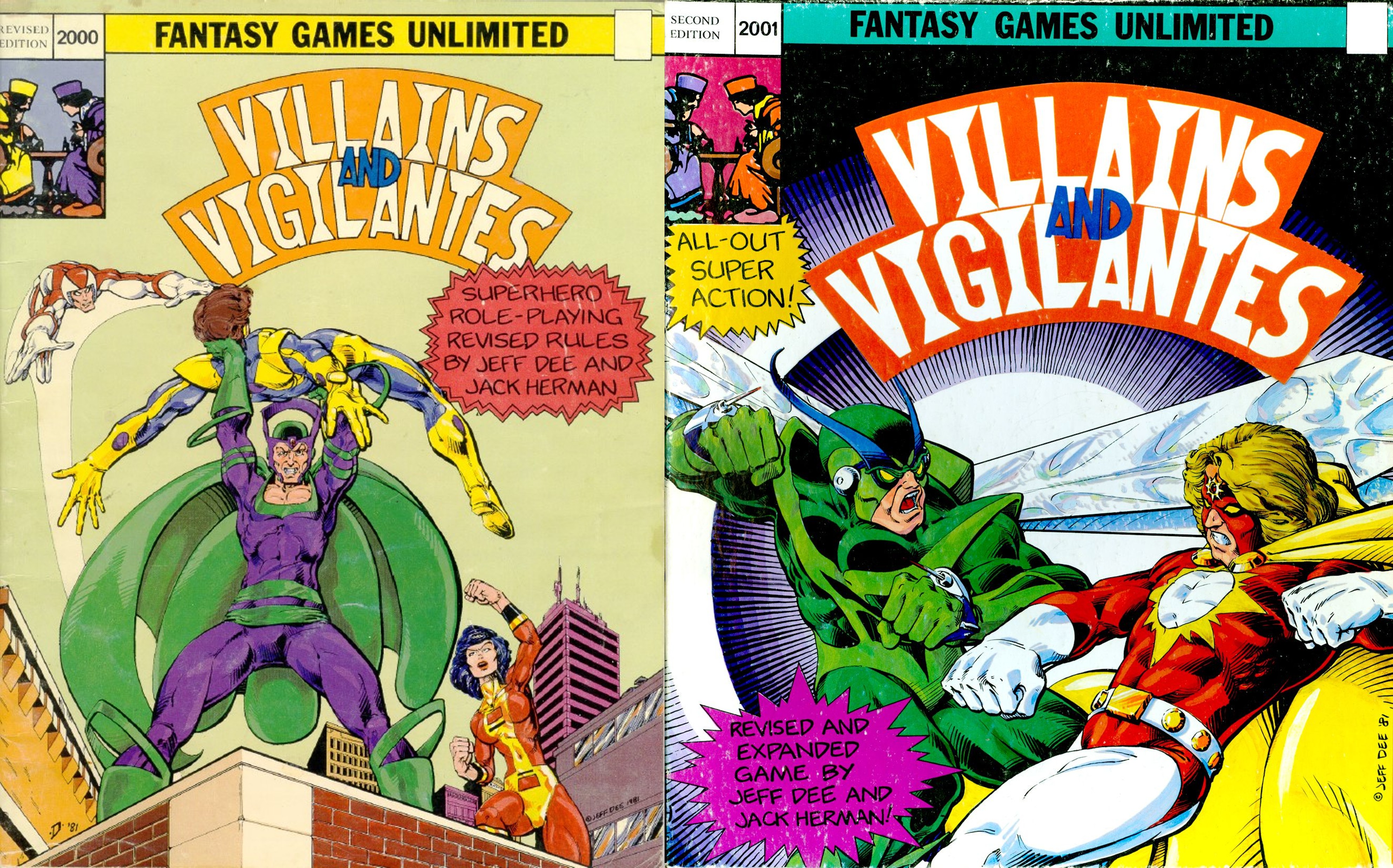
Of all the artists who originally worked for TSR, Jeff Dee is my absolute favorite. He has a distinct, clean style with clear comic-book influences. He didn’t just work on D&D; he also illustrated Villains & Vigilantes and The Mighty Protectors. I was actually lucky enough to interview him here on the blog back in 2015.
I must admit that of all the original TSR artists, his was the only name I knew by heart for a long time. As my interest in the hobby grew, I learned about the other legends and their trajectories, but Dee’s name always stuck with me. Strangely enough, I had no idea what he actually looked like. So, when I started watching episodes of The Atheist Experience and heard his name, I thought, “Huh, this guy has the same name as the fantasy artist.” Little did I know they were the same person!
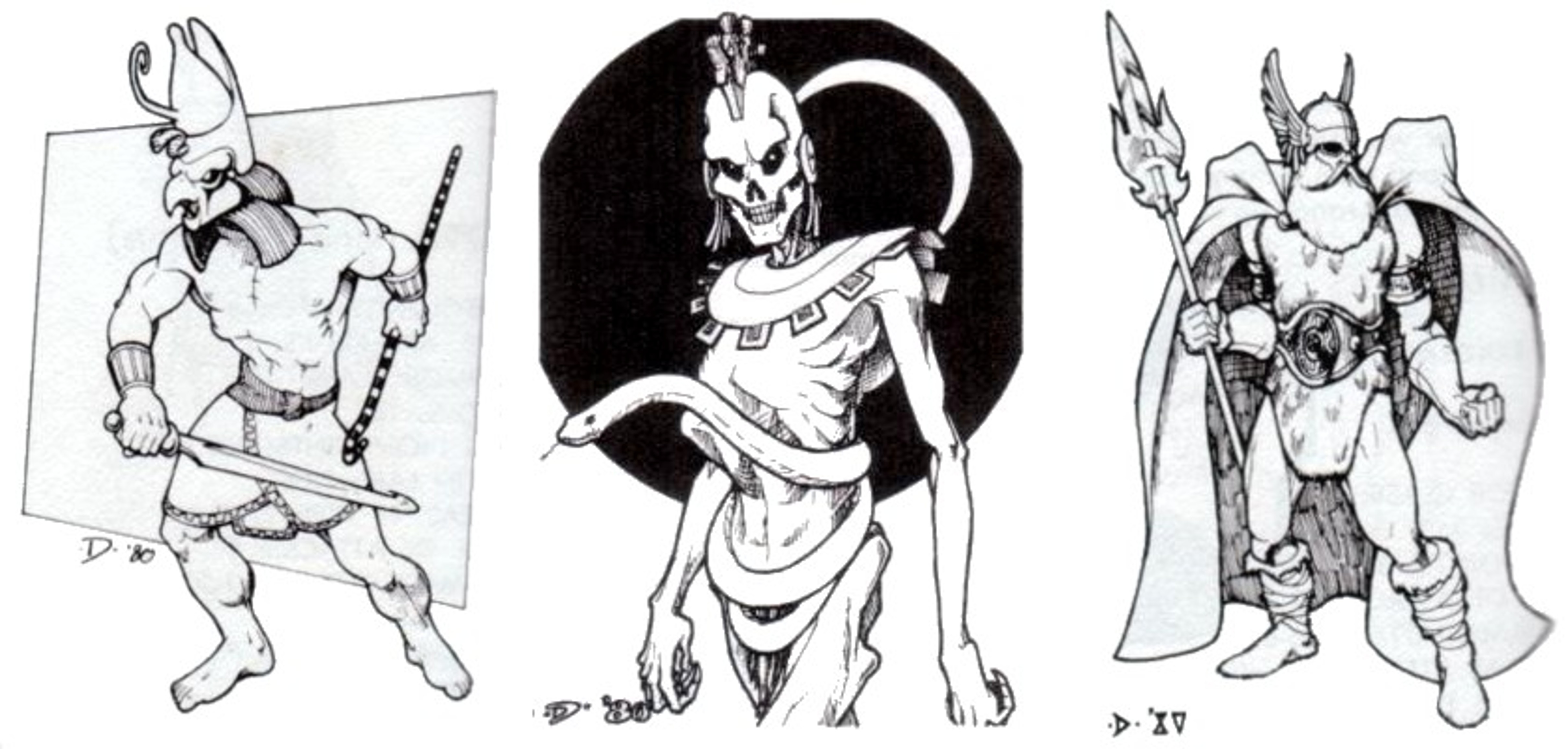
His work on the Norse, Egyptian, Melnibonéan, and Non-Human Mythos sections of Deities and Demigods blew me away. That book was my first introduction to Elric of Melniboné, and Dee’s illustration of Gruumsh is still exactly how I imagine the orc god today. Jeff worked on a lot of classic modules that I read but never actually played, and because of his distinctive line work, even as a teenager, I could immediately tell when he had drawn something.
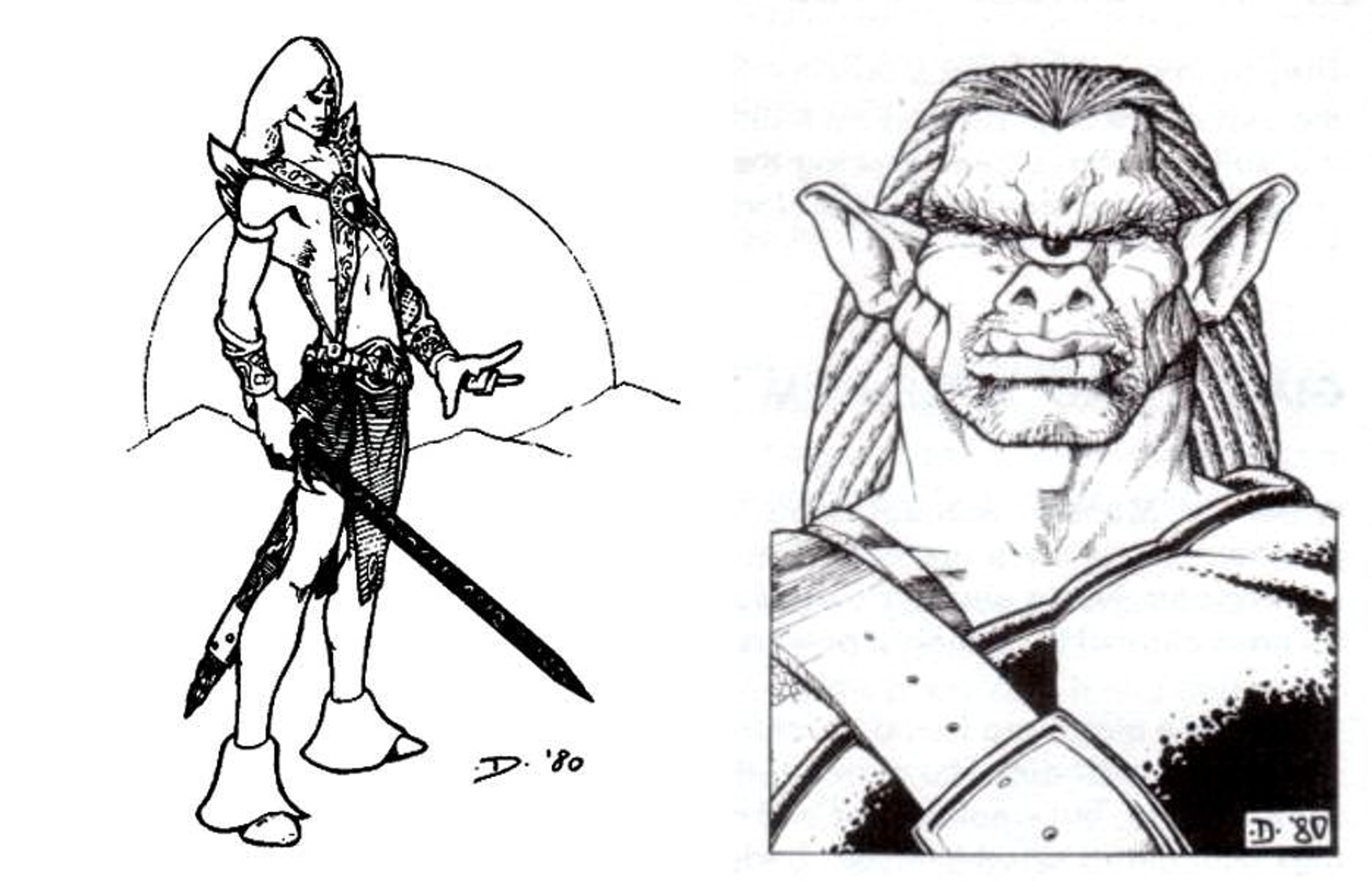
Later on, I discovered his art for Villains & Vigilantes, which completely solidified my love for his work. His aesthetic reinforced for me the connection between comic books and the fantasy genre, which I still think is a perfect fit.
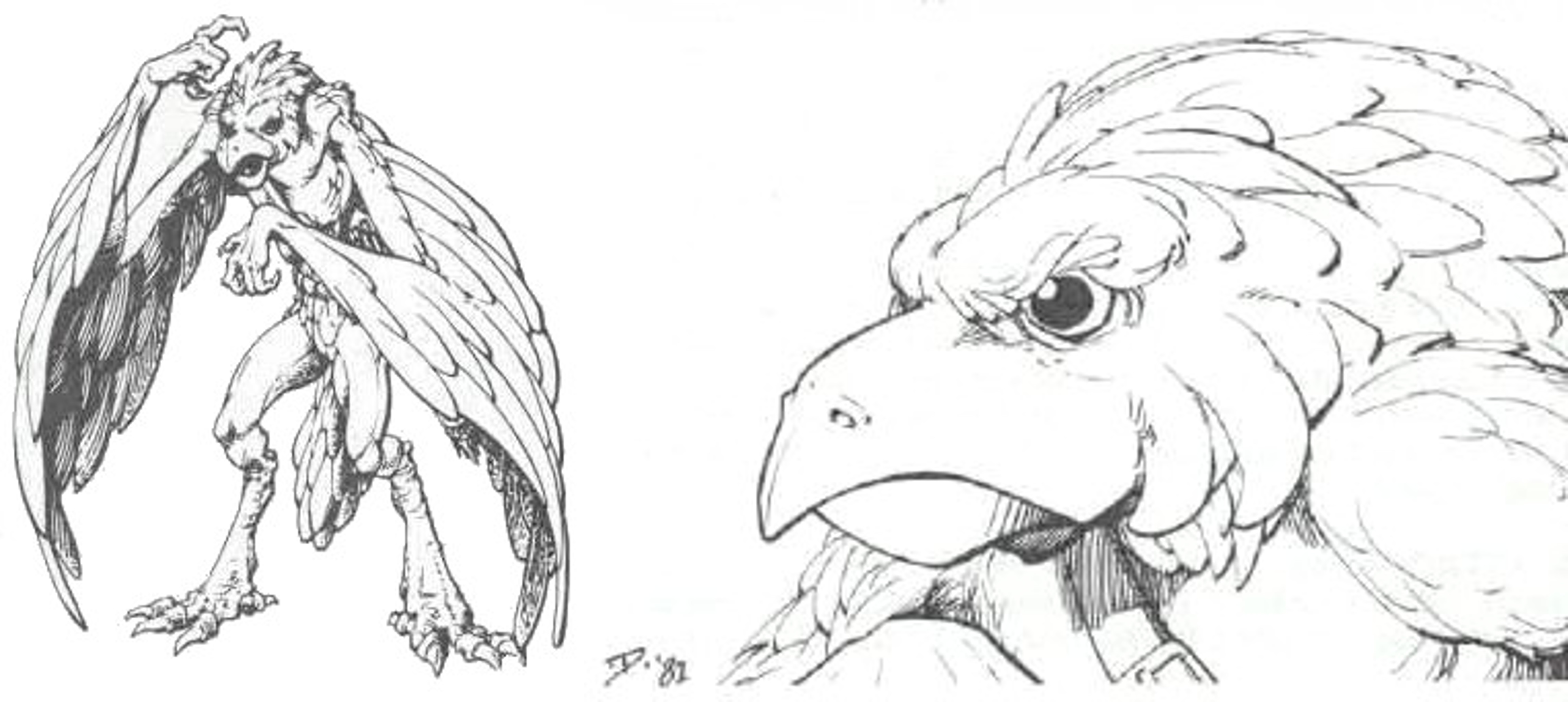
Jeff Dee didn’t draw any of the monsters in the original MM. But he did draw my absolute favorite monster in the Fiend Folio—which also happens to be my favorite non-traditional D&D ancestry, the Aarakocra! Their physiology in the game may have changed over the years (they now have separate arms and wings), but to me, Dee’s illustration is the true Aarakocra.
Erol Otus
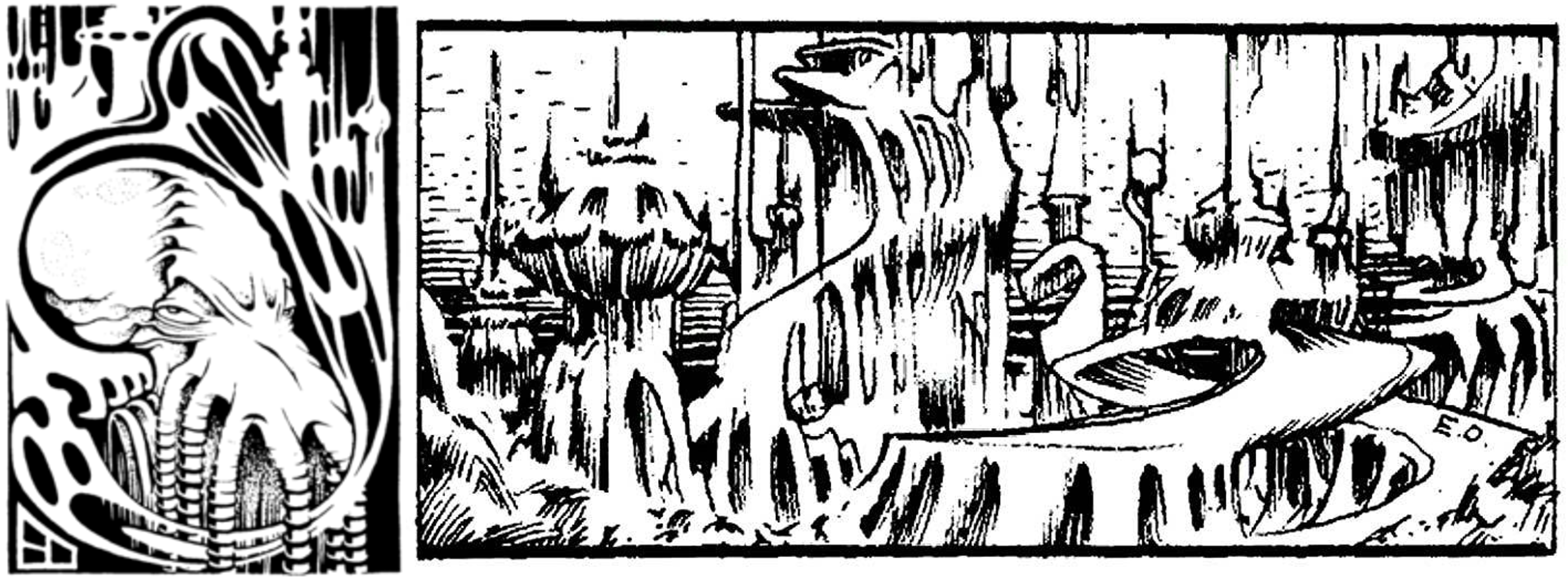
Otus is my second favorite artist from this period. Just like Jeff Dee introduced me to Elric, Otus introduced me to Cthulhu via Deities & Demigods. While I wouldn’t discover H.P. Lovecraft’s actual writings or the Call of Cthulhu RPG until a year later, this book was my very first exposure to the Mythos.
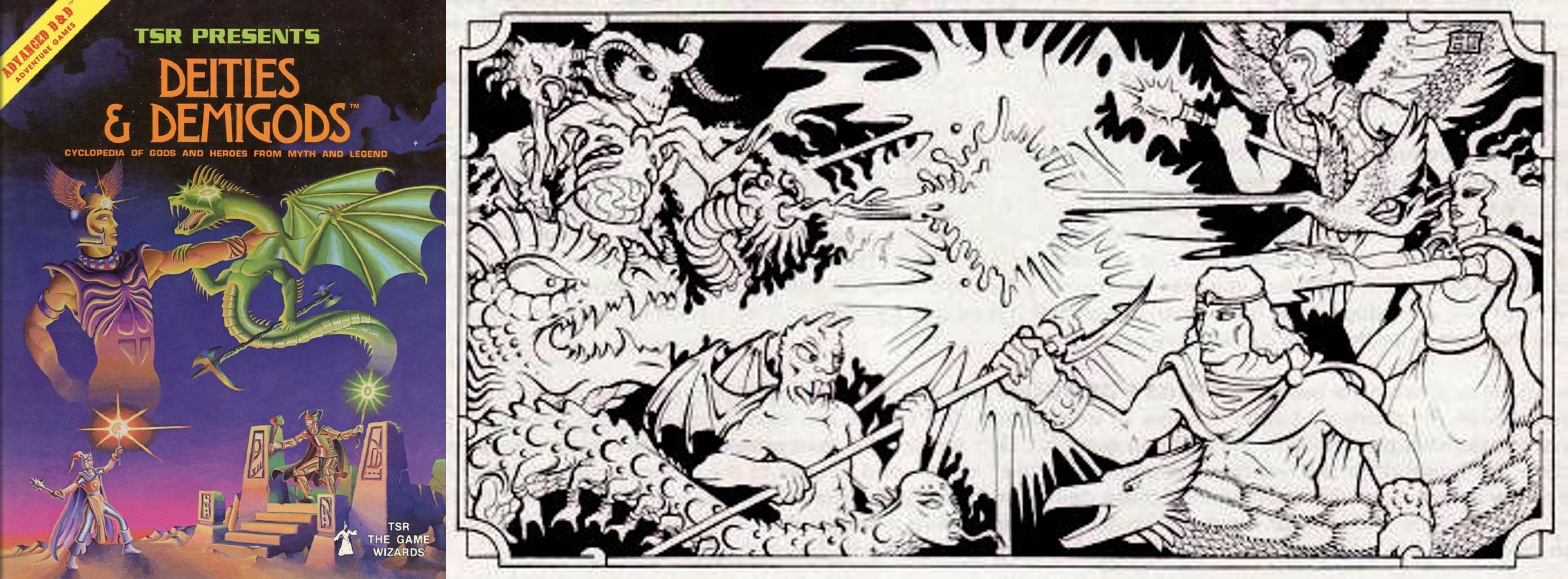
Erol Otus’ cover for that book absolutely beckoned me. While Sutherland’s MM cover was great for showing you the creatures inside, Otus’ Deities & Demigods cover illustrated the terrifying, cosmic connection between mortals and deities perfectly and efficiently.
I would only discover and come to appreciate his iconic covers for the Basic and Expert sets much later in the late 90s, when I finally tracked down used copies. Perhaps because I discovered it so much later, his dragon on the Basic set isn’t my definitive mental image of a dragon—Elmore had already imprinted that concept onto me with his Red Box art.
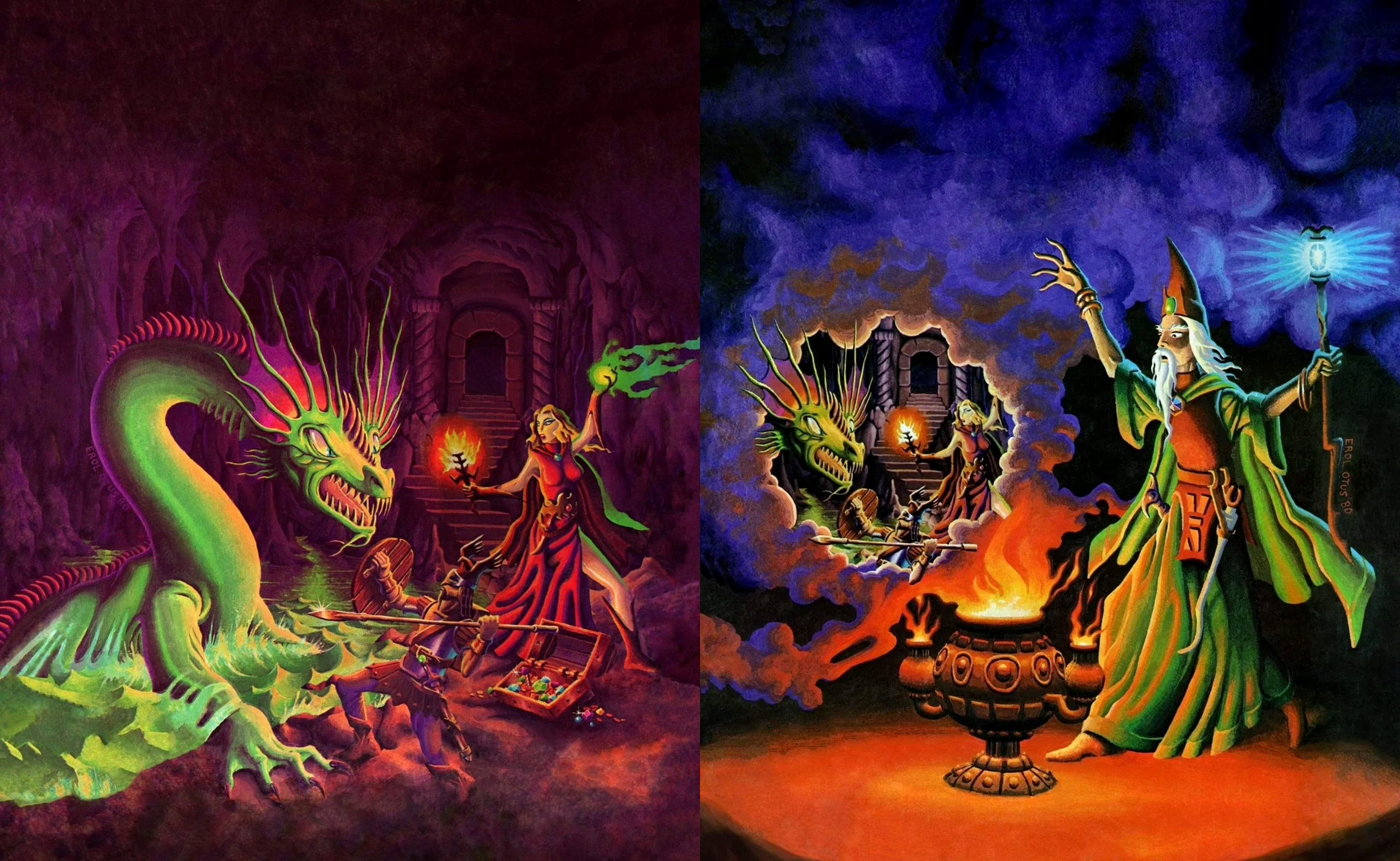
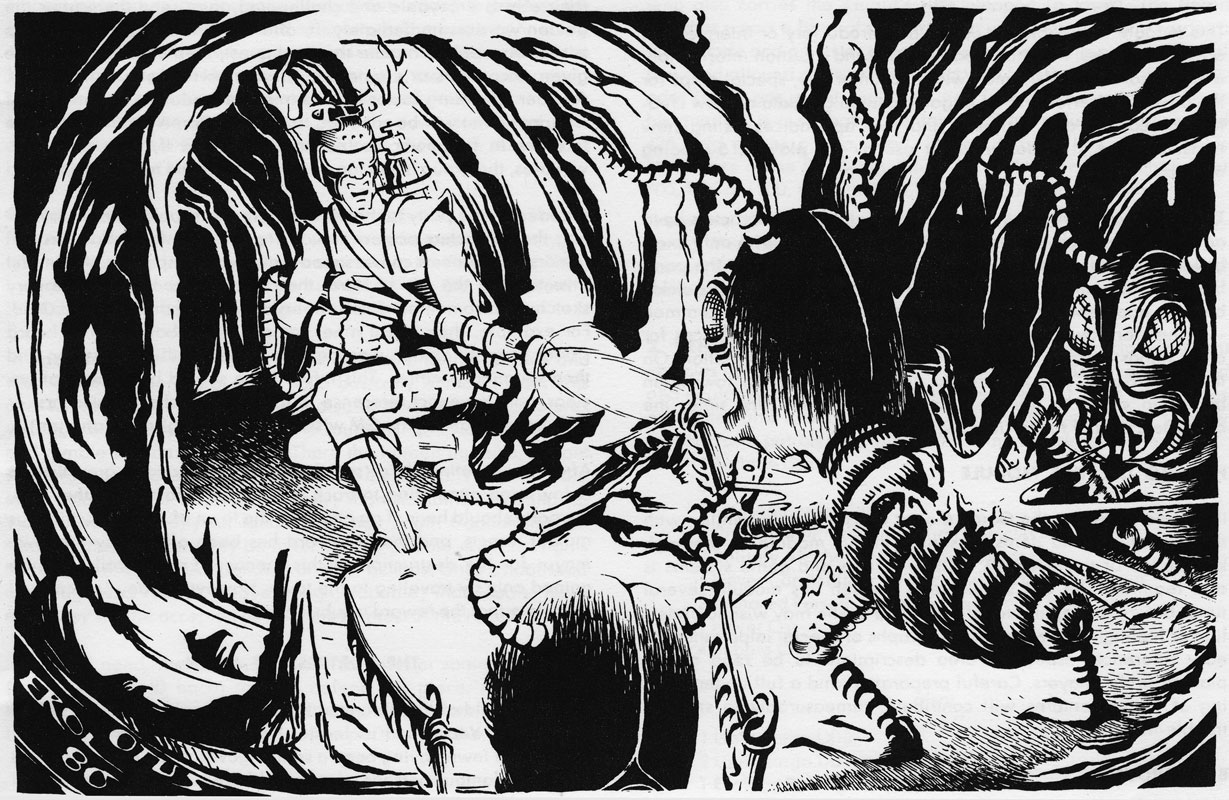
But when I began collecting old Gamma World supplements and adventures, I was thrilled to find his work scattered throughout that line as well.
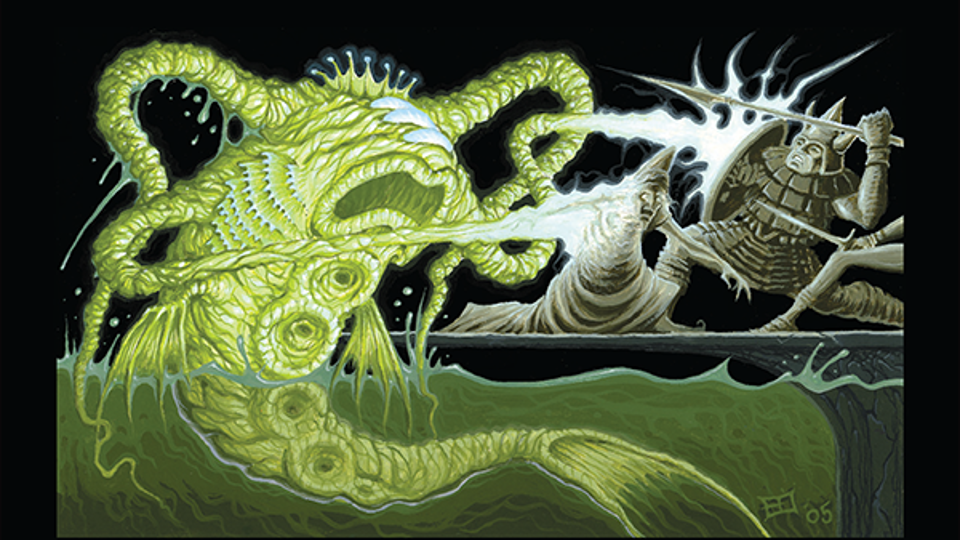
Erol Otus’ modern work is reminiscent of a psychedelic dream, and I mean that as the highest possible praise. His style is a perfect fit for the weird, gonzo feel of Goodman Games’ Dungeon Crawl Classics (DCC). He even drew one of my favorite interpretations of my favorite D&D Cthulhian monster—the Aboleth—for the cover of DCC Module #25: The Dread Crypt of Srihoz.
David C. Sutherland III
Sutherland wasn’t my favorite artist of the bunch, but his A Paladin in Hell is arguably a masterpiece of early RPG art. When I rolled up my very first character—a Paladin—that illustration was exactly how I imagined him!
His cover for the DMG is an undeniable classic. It’s incredibly evocative, and much like the MM cover, I can deeply appreciate the nostalgia it elicits and how it influenced later generations of gamers, even if it isn’t my personal favorite piece.
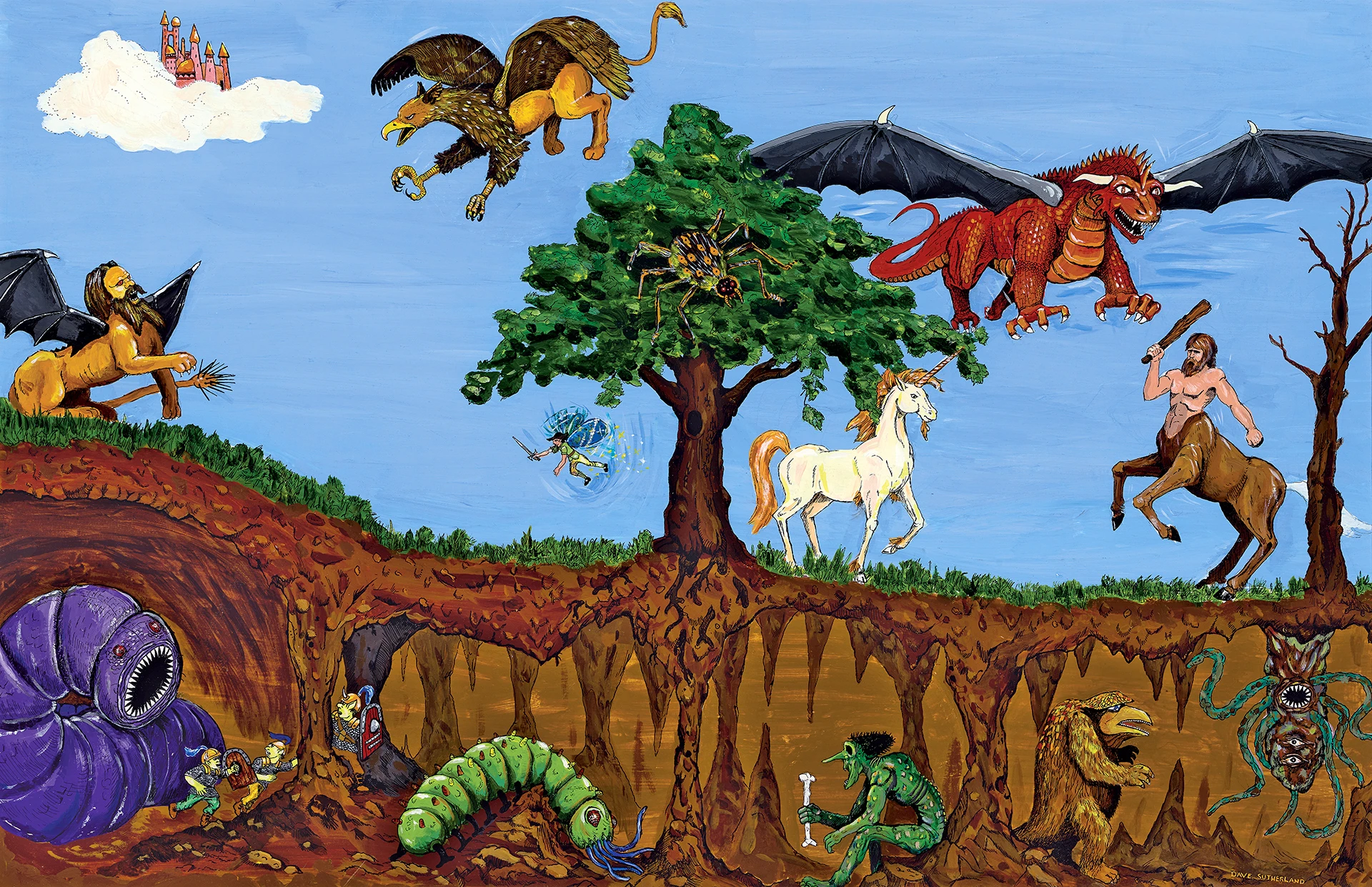
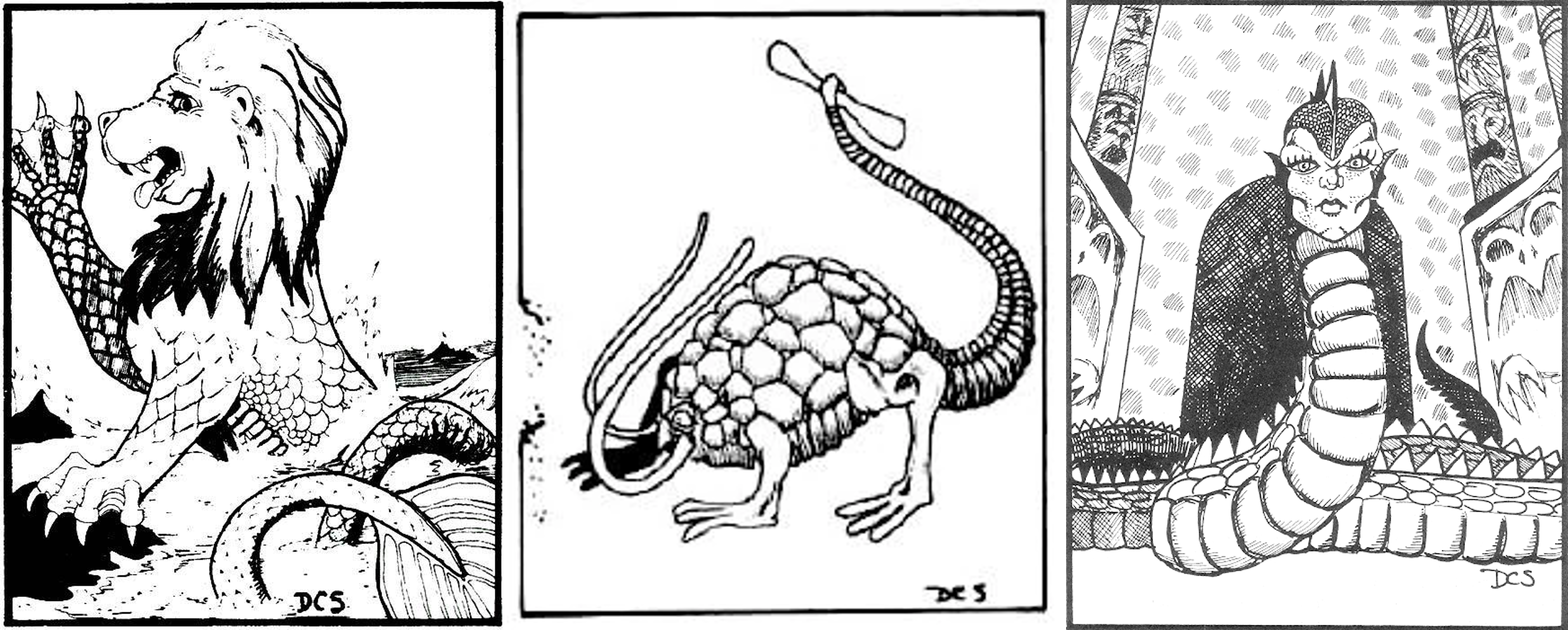
What I do love is his monster illustrations inside the Monster Manual. Some of them were quite simple, but they captured my imagination completely. I prefer his smaller, in-text illustrations to his full-page spreads. His Mind Flayer is so basic, yet incredibly charming. I love his Sea Lion and Rust Monster, but his Naga remains my absolute favorite in the book.
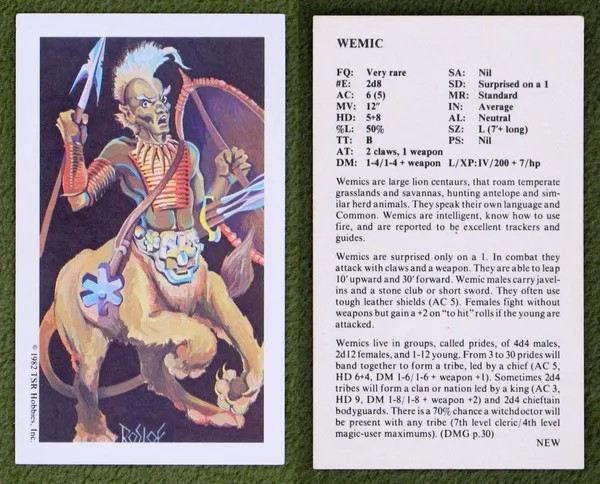
Fun fact: While researching this post, I discovered that Sutherland designed my favorite creature from the Monster Manual II—the Wemic—which was first published in Monster Cards Set 3 with art by Jim Roslof!
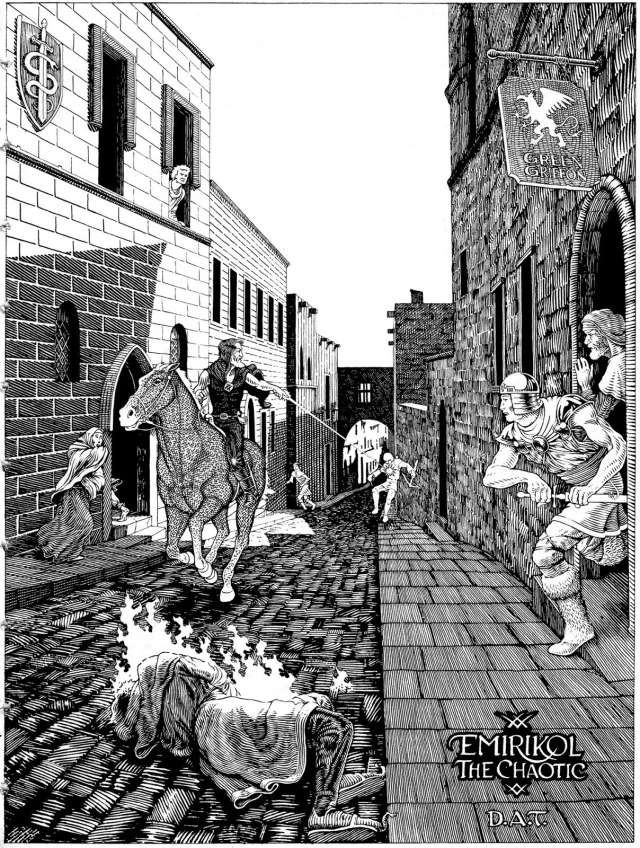
David A. Trampier (DAT)
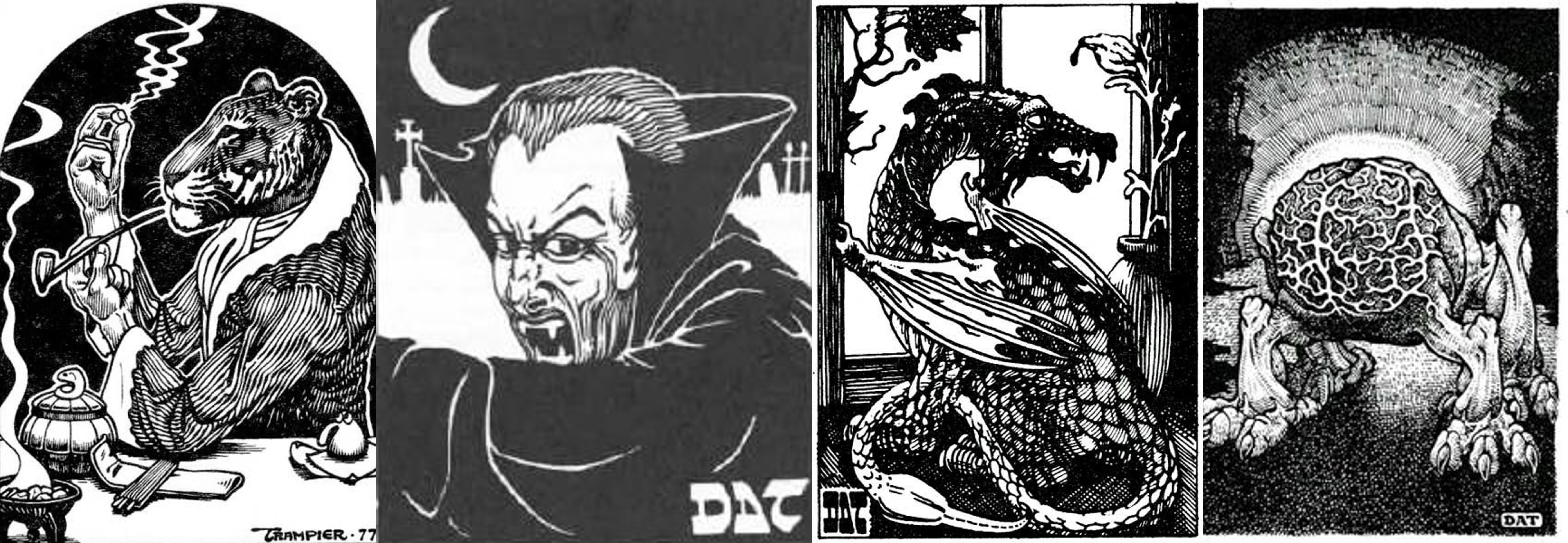
I was never really into Trampier’s Wormy comic strip; it just didn’t catch my fancy. I primarily knew his art from the AD&D 1e rulebooks. His illustration of Emirikol the Chaotic riding through the streets in the DMG is my favorite piece in that entire book. The sheer action and excitement of it invited you to imagine the story happening around the frame. I desperately wanted to play in a game that felt like that!
In the Monster Manual, his illustrations for the Rakshasa, Vampire, Pseudodragon, and Intellect Devourer immediately made me want to throw those monsters at my players.
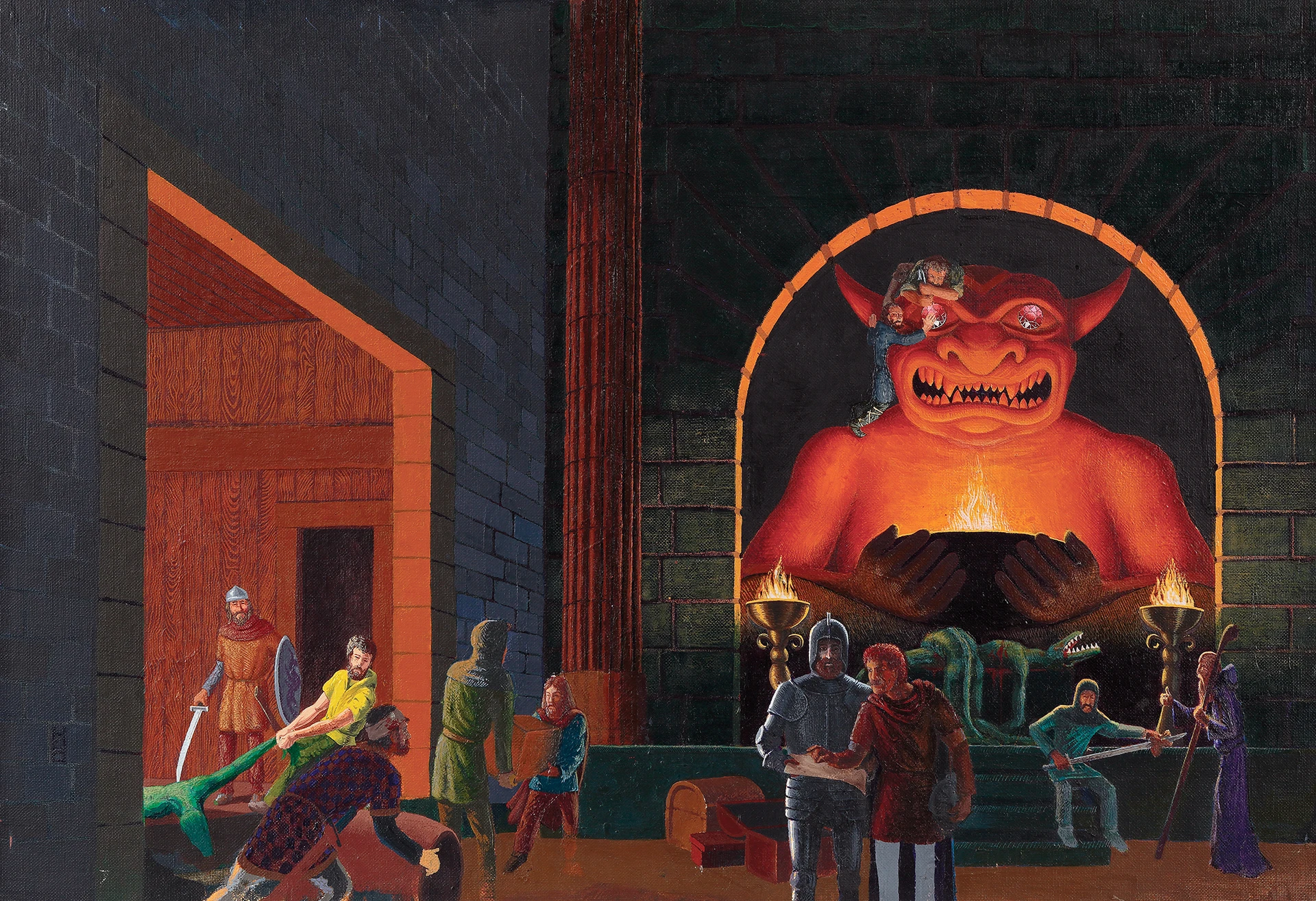
I finally got a second-hand copy of the PHB featuring his original cover around 1993, and of the three original AD&D core books, it is my favorite cover. It is the perfect classic murder-hobo scene; it captures the dark, dangerous feel of an old-school dungeon crawl.
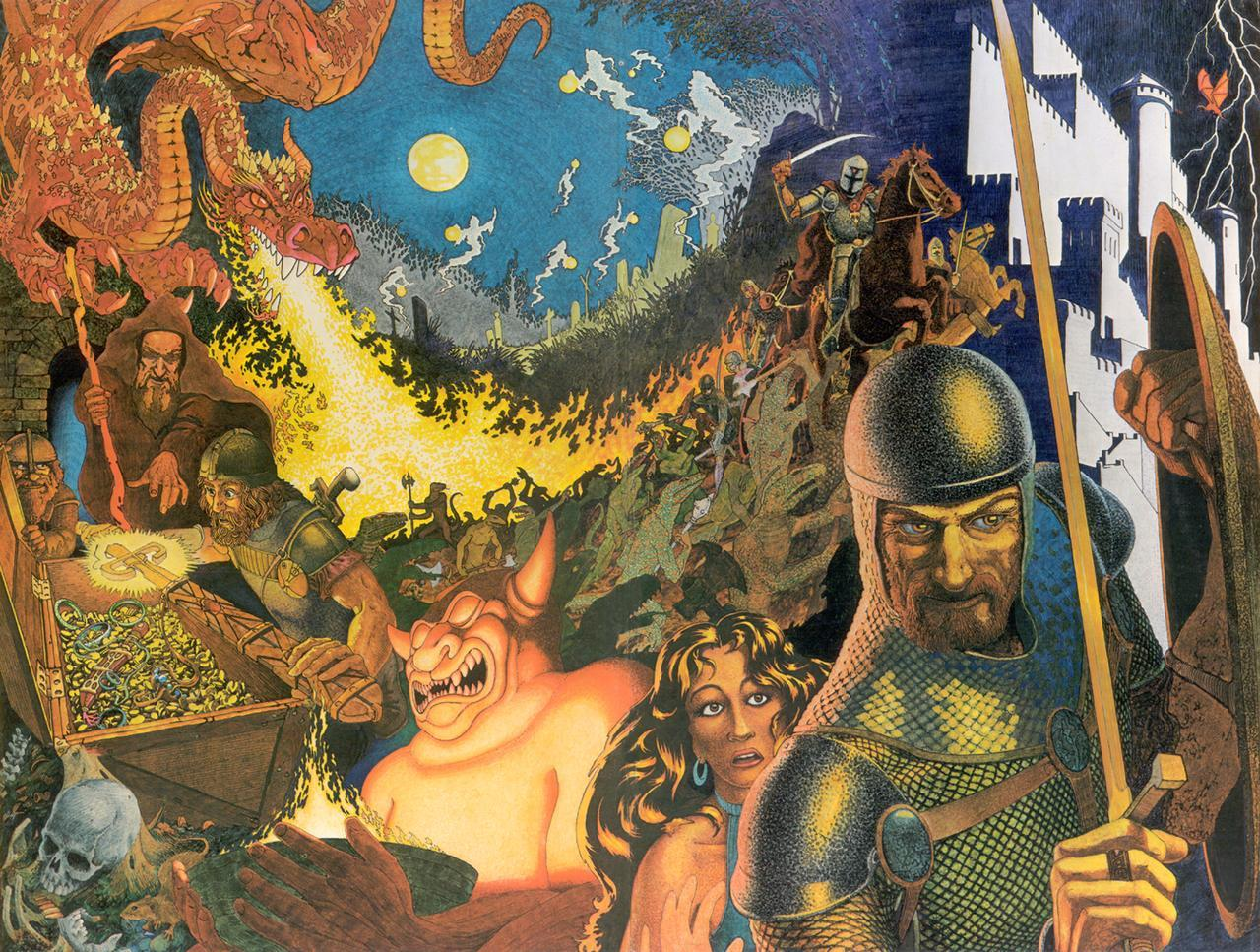
However, my second favorite piece of art by DAT is something I never actually owned: the panoramic art for the original AD&D 1e Dungeon Masters Screen. It is a masterpiece. You might argue it’s technically better than Emirikol, but the DMG art remains near and dear to my heart simply because of how deeply it inspired my games.
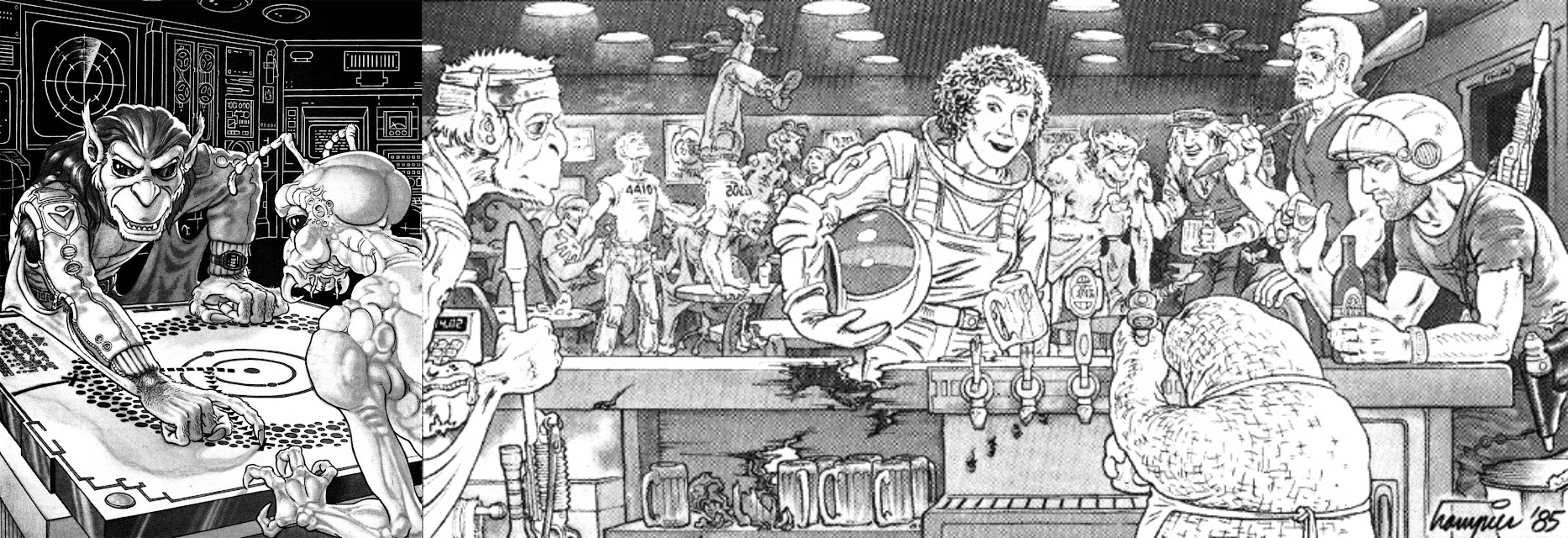
Another fun fact I learned while writing this: DAT also created illustrations for one of my favorite sci-fi games, Star Frontiers!
Jim Roslof
When I originally outlined this post, Roslof wasn’t on my list. But as I flipped through my old books for research, I saw his full-page illustration of Thor. I immediately realized just how important that specific piece of art was to sparking my lifelong interest in Norse mythology. It is a powerful, inspiring image and an absolute classic of D&D art.
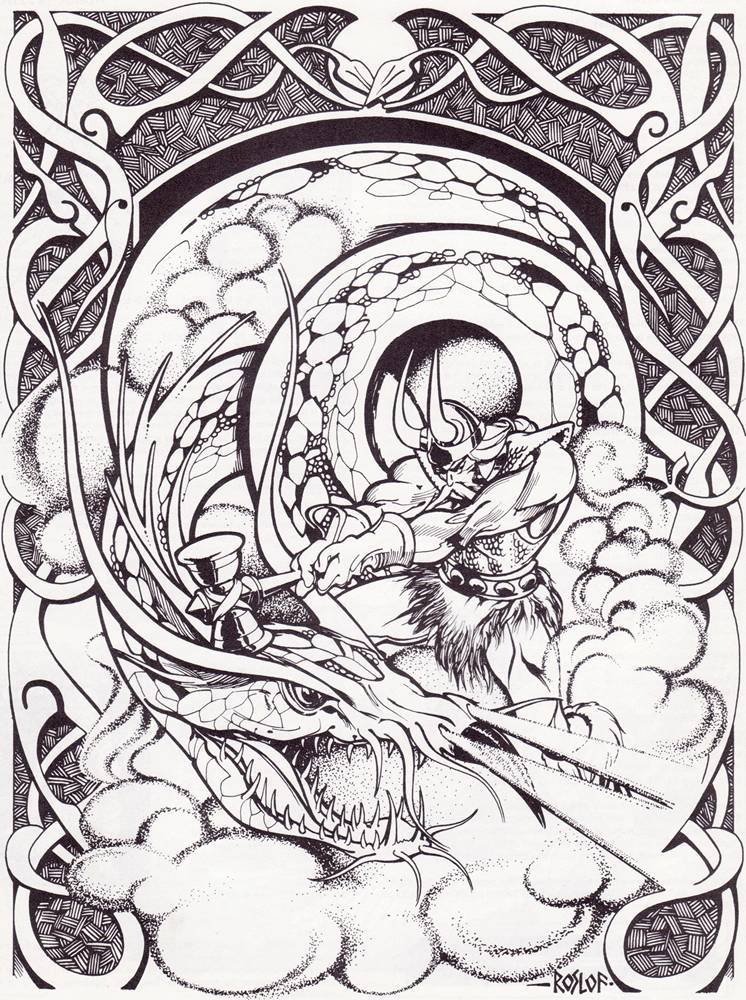
It’s also worth noting that, as TSR’s Art Director, Roslof was pivotal in hiring the exact artists I wrote about in my previous post in this series (Elmore, Easley, etc.), so the inspiration really does come full circle!
I am still not done talking about the classic TSR artists! Keep an eye out for the next post in this series as we continue the 40-year retrospective.
Categories: Tabletop Gaming Blogs
Is there a chance of bringing Alternity back?
As I’ve wrote in one of my recent posts I am currently rereading all of my Alternity books. Alternity is a roleplaying game I’ve wanted to run since I first bought it but something always got into the way. But there’s a problem. Even though I own quite a few Alternity books, I don’t own all of them and since the game has been out-of-print for many years it gets increasingly hard (and expensive) to track down copies. But what about digital copies online? There are actually quite a few Alternity books available for purchase on DrivethruRPG. Unfortunately they are not easily found since most of them are stuck in the d20 Modern Generic section. Another problem is that the two core rulebooks are not available online aside from the “Limited Preview Edition” of the Players Handbook.
But I hear you asking “what about the new Alternity”. A couple of years back Rich Baker, one of the original designers of TSR’s Alternity released a new version of the game after a successful Kickstarter. Sasquatch Game Studio, Baker’s new company was actually able to register the Alternity trademark back then since Wizards hadn’t bothered to renew it. Unfortunately not much of Alternity’s original ideas made it into the new game. So while there’s still a game called Alternity out there, it doesn’t have much in common with the original besides being a sci-fi tabletop roleplaying game. But like it predecessor it’s pretty much dead at his point. The last update on the Sasquatch Game Studio website has been in 2018 and no new products for the game has been released since then.
Could Wizards of the Coast actually bring back Alternity properly? That’s highly unlikely. The most we can hope for is that they release all the Alternity products as PDF downloads on DriveThruRPG and hopefully also add a POD option at some point. A limited reprint of the original corebooks as an “anniversary edition” like FFG did it with WEG Star Wars 1st Edition would be brilliant, but unlikely due to the trademark situation. The trademark is still owned by Sasquatch Game Studios and I don’t know what kind of deal Sasquatch has with Wizards which allows the latter to release products using that name.
One option I haven’t written about yet is a retro clone. In a post a few years ago I stated my belief an Alternity clone could cause ire from WotC’s lawyers but that’s probably not the case. As long as someone rewrote the rules without directly copying the texts things should be fine. Mechanics are not copyrightable after all. The bigger question is if there’s an interest in doing so. Sure, there are countless D&D retro clones, but D&D was way more popular than the rather niche scifi TTRPG released shortly before TSR vanished as an entity completely.
Roleplaying games aren’t really dead as long as some people still play them, but in the case of Alternity there’s a true risk of it going extinct. It’s out of print and it was a niche product even when it was new. There are other, more popular options for Sci-Fi fans which are available like for example Traveller in its many incarnations. But if we keep talking about Alternity there’s a chance someone at WotC will commit to bringing all the books back or someone writes a retro clone so that at least its mechanics are available to find new fans.
What are your thoughts on the state of Alternity? Would you like to see it properly resurrected? Do you actually prefer the Sasquatch Game Studio’s version? Please share your comments below!
Categories: Tabletop Gaming Blogs
May 4th Be With Your Gaming!
It’s May 4th, Star Wars Day! “May 4th be with you” and all that. Today, I wanted to reminisce about Star Wars TTRPG gaming as part of my 40 Years a Gamer retrospective.
Star Wars was immensely influential for me. I watched Star Wars—before it was called A New Hope—in theaters when I was just 4 years old. I had the toys and played with them endlessly. I learned what the Hero’s Journey was before even being introduced to the concept.
Hero’s Journey, Star Wars style! Image taken from IMGUR: https://imgur.com/a/heros-journey-sMfdk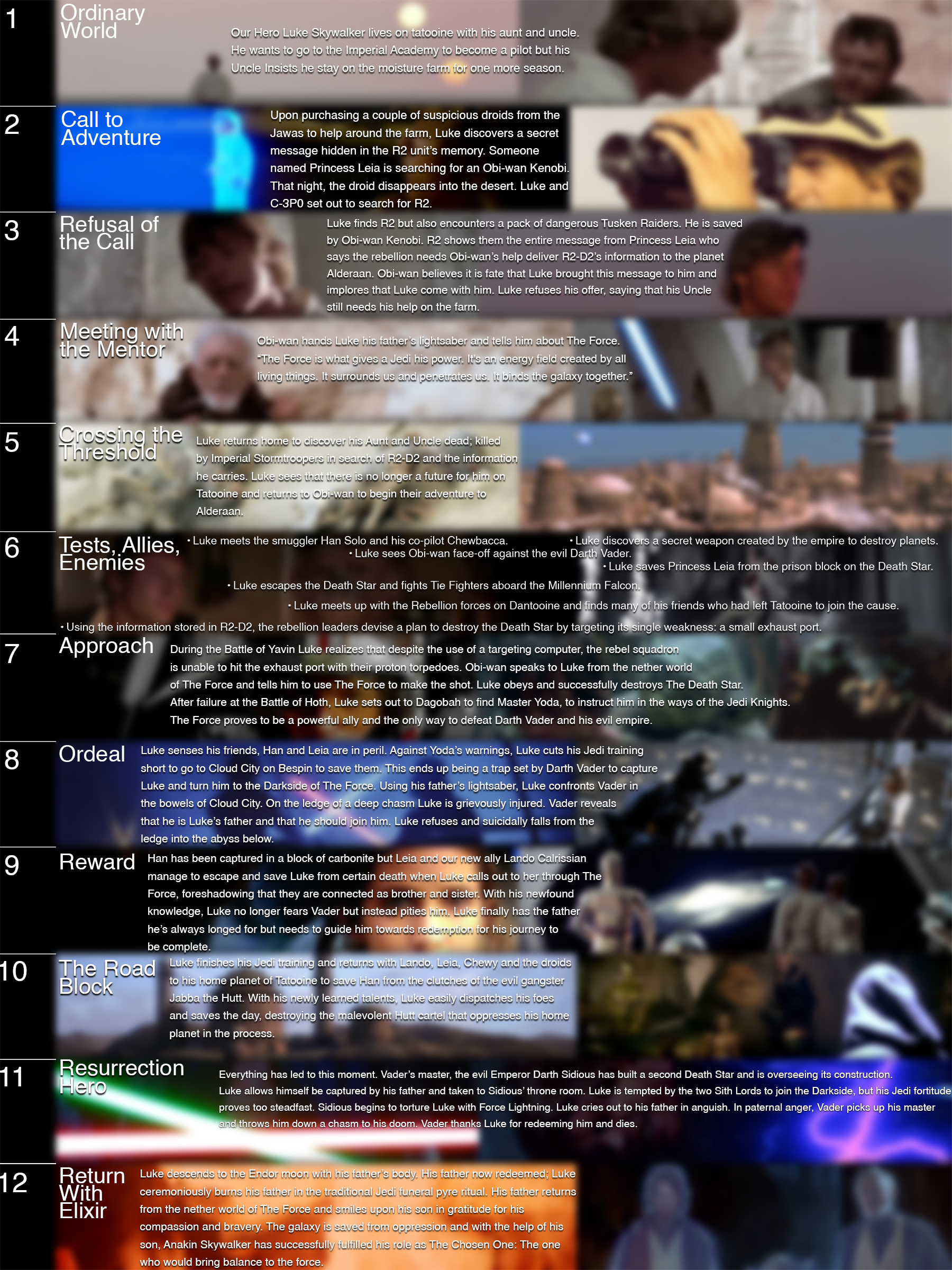
The franchise was instrumental in teaching me about the oppressed fighting the oppressor, a hero breaking the cycle of violence and choosing to forgive, and evil ultimately consuming itself.
Incredibly, for something so influential, I did not immediately think about roleplaying in a Galaxy Far, Far Away.
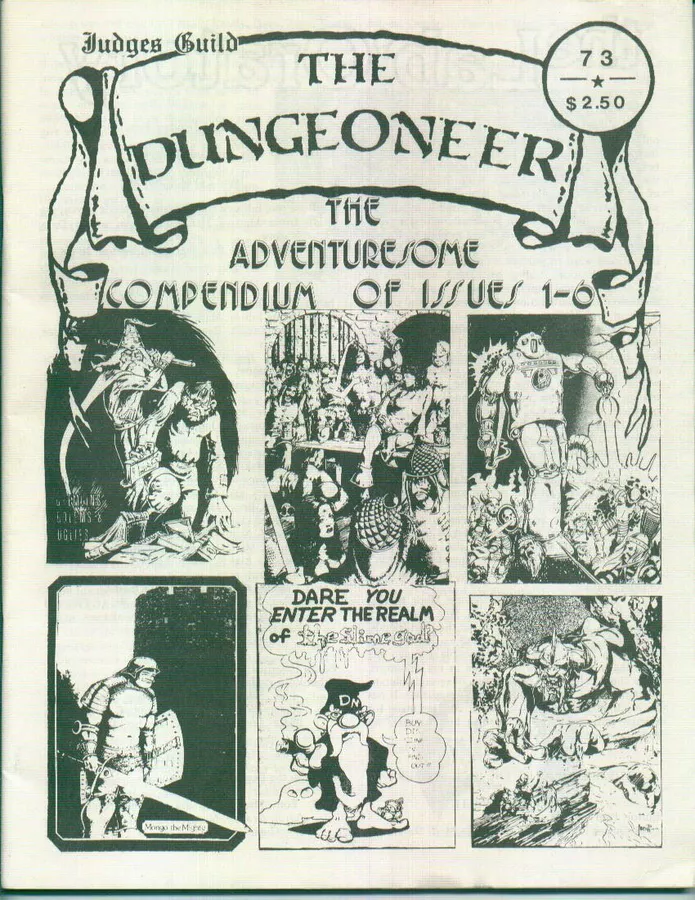
My first idea to use elements from Star Wars came from reading The Dungeoneer Compendium, issues 1-6, which I picked up at the same garage sale where I got my original Monster Manual and Deities & Demigods. Page 28 of the compendium had this entry in a random table: “Have C-3PO and R2-D2 of Star Wars come and join the group. However, have a group of Imperial stormtroopers hot on their tails.”
During an adventure in the summer of 1988, the players were in a magical library. They opened a tome, and R2-D2 and C-3PO came running across the room, hotly pursued by Stormtroopers and Darth Vader himself! One of the players tried to face Vader, who promptly sliced his magical sword in two and left the room to pursue the droids. That was it, a quick gag, sadly leaving a player with a broken magic sword, but not much more than that.
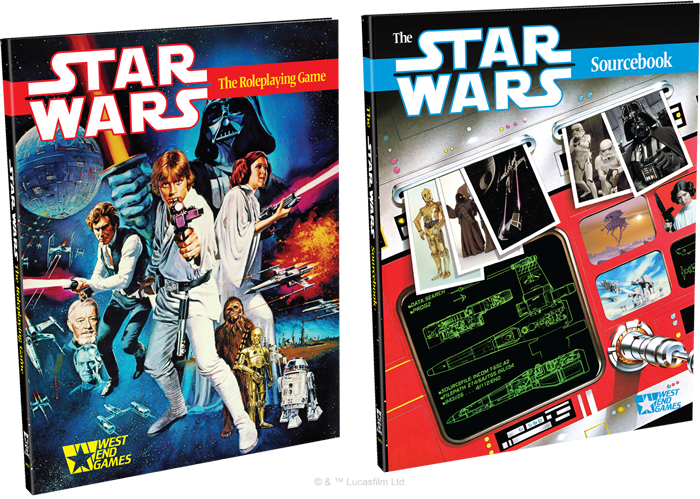
Around that time, I learned about the official Star Wars: The Roleplaying Game from West End Games, and I picked up the core book and the sourcebook. It was either late 1989 or early 1990 when I read it. I had an accident in my 11th-grade chemistry lab, and I vividly remember reading the Star Wars Sourcebook while waiting at the doctor’s office!
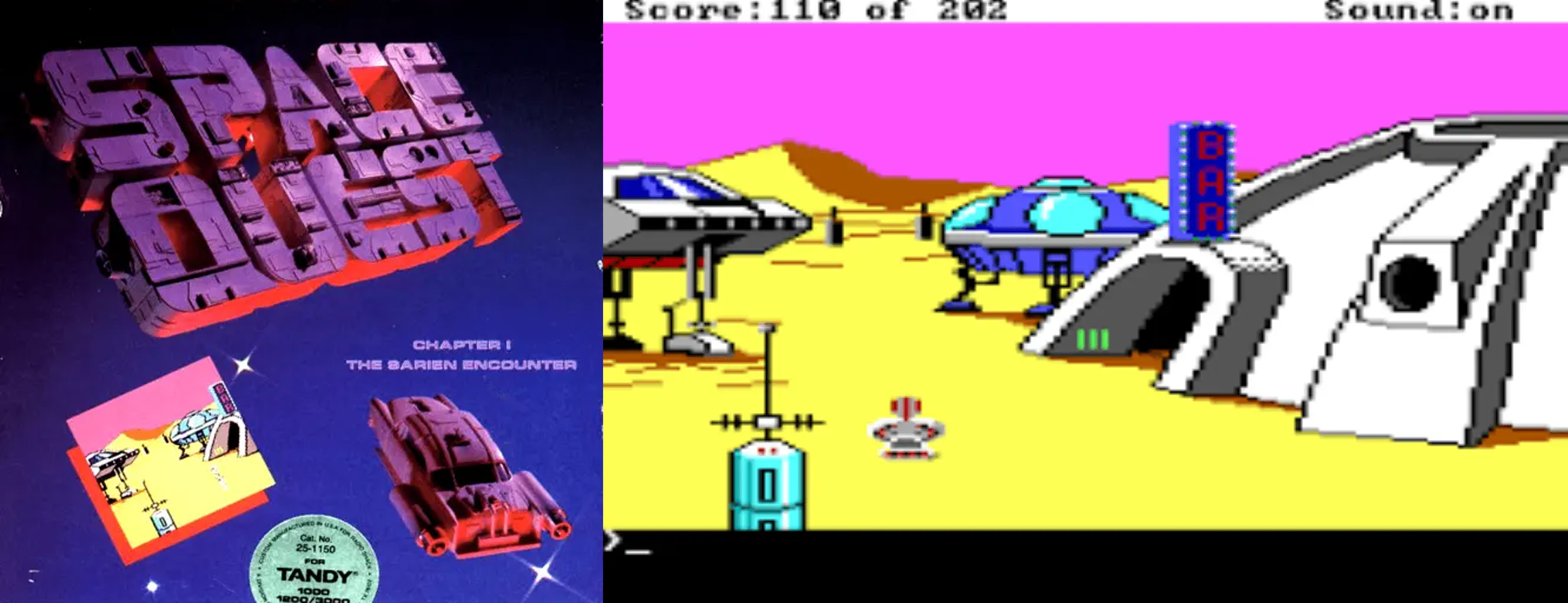
I didn’t run Star Wars as a GM back then. I did, however, play a Han Solo clone based on the character Dagg Dibrimi from Starchaser: The Legend of Orin (an animated Star Wars rip-off). I was a little disappointed when, halfway through the adventure, I realized we were playing a campaign based on the Space Quest video games!
I love the Star Wars D6 system. It developed so many ideas that became foundational to the Star Wars Expanded Universe (now Legends), keeping the franchise alive and vibrant between the end of the original trilogy and the launch of Timothy Zahn’s Heir to the Empire trilogy. However, I had no luck running a satisfactory game in that universe. I tried launching an ambitious post-Return of the Jedi game in college, but my players complained that it “felt too much like a fantasy game.”
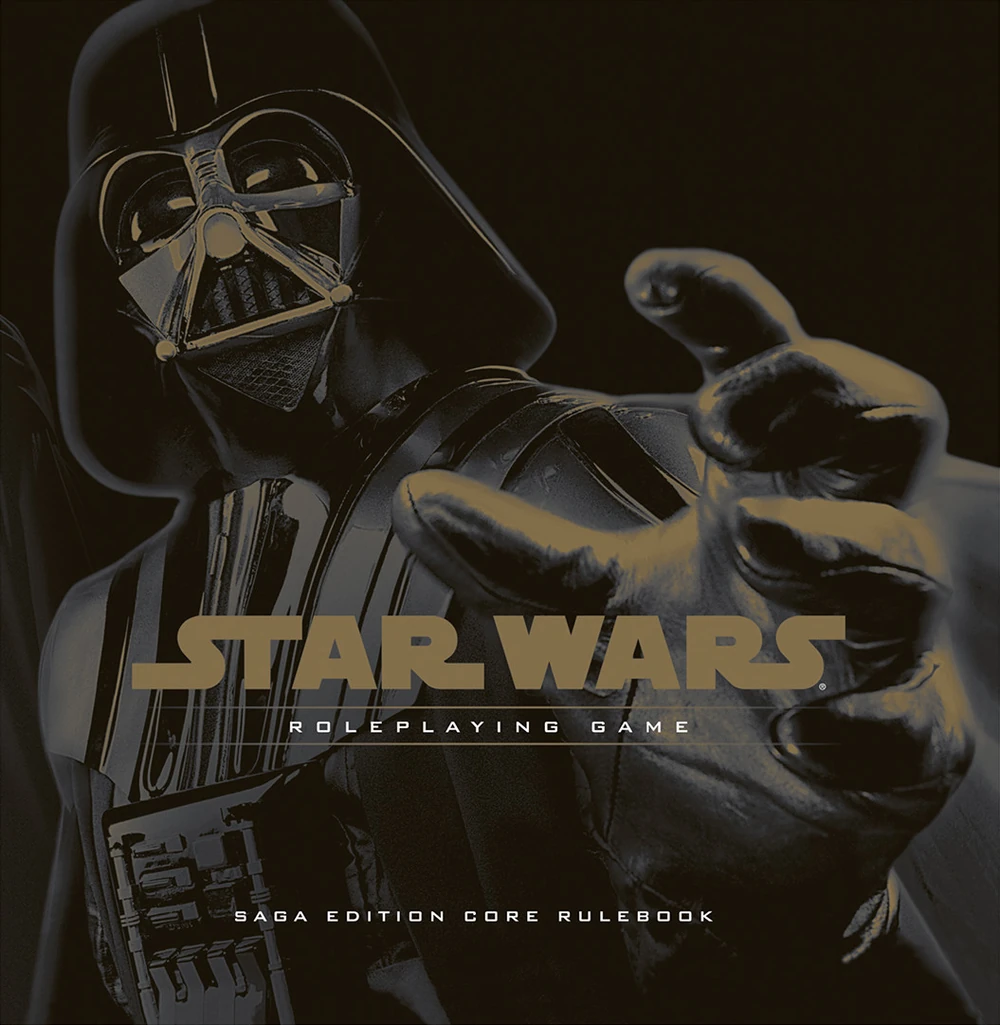
I would have to wait for ANOTHER system to run my definitive Star Wars campaign. When Wizards of the Coast got the license, I purchased their original edition but never played it. I did, however, play their second attempt at the rules: the Star Wars Roleplaying Game: Saga Edition, published in 2007.
I own all the books in that series, and I used them to run an Infinities campaign (i.e., “What if?” or alternate timeline). I won’t go into too much detail here, as I previously posted a long series of articles on the blog about the campaign, Star Wars: The Gathering Storm. You can read the first post in the series here and read the rest of the series if it interests you.
I loved the system, planned on using it for other sci-fi franchises, and really hoped D&D 4th Edition would be just like it! It was not, but that’s a story for another day. In the process, I also acquired WAY too many Star Wars miniatures and ships from WotC.
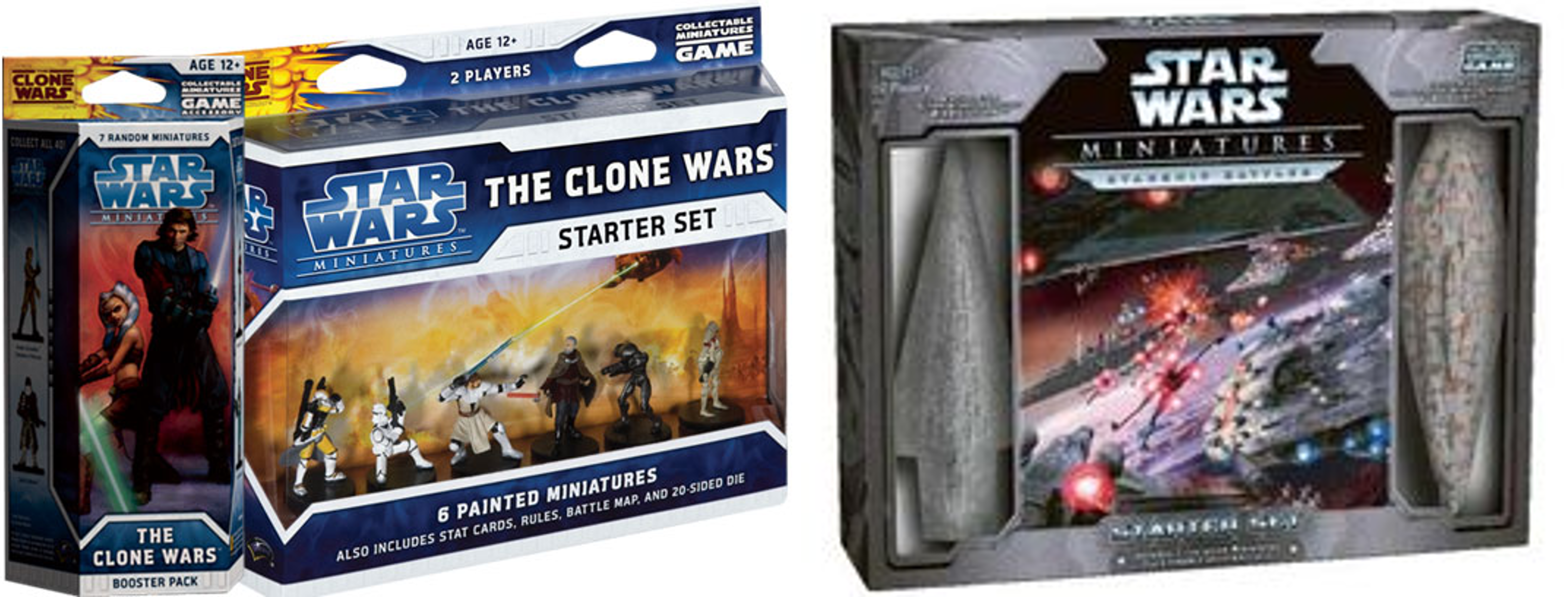
Looking back, it isn’t a perfect system. It still has a bit too much “d20” in its DNA, which isn’t always a good fit for the genre. Jedi were generally better than other classes, and they quickly became the superhero-like versions that later Star Wars media made them out to be. I really prefer the WEG d6 version, which captured the grounded feel of the Jedi from the original trilogy.
I’ve never played the Star Wars Roleplaying from FFG/Edge Studio. Friends have told me it is great, and I have read very interesting reviews. I must admit to being a little averse to “funky dice” (proprietary dice with strange symbols), which kept me from giving it a try. From what I’ve seen, that is probably my loss. I own the original starter set for the Star Wars: X-Wing Miniatures Game, 1st edition, and enjoyed playing it, but I never bought anything beyond that core box.
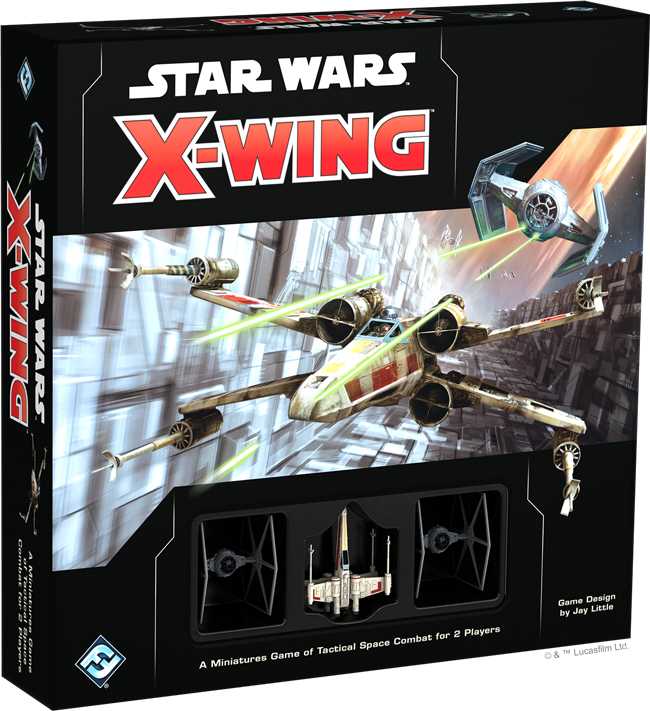
I hope to play some more Star Wars TTRPGs in the future, probably in the same vein as my The Gathering Storm campaign—an alternate version of the Galaxy Far, Far Away. But what system to use?
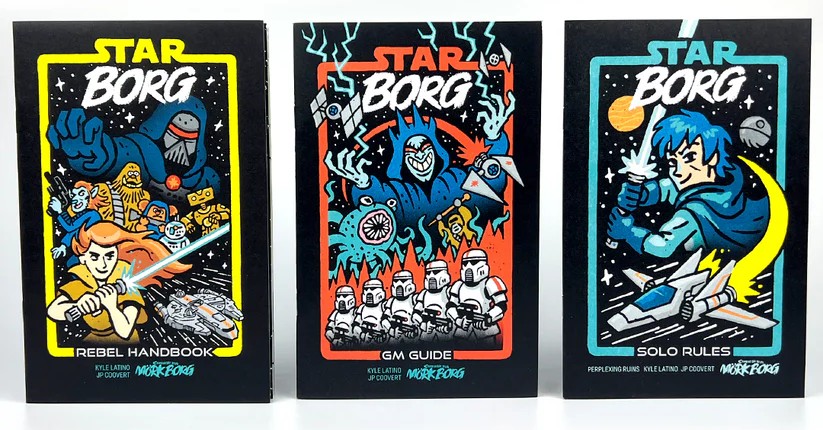
I don’t think I’ll use the official TTRPG from Edge Studio. I am curious about Star Borg by JP Coovert; it looks like a very fun adaptation of Star Wars ideas to the Mörk Borg rules.
I also believe White Star: Galaxy Edition could handle Star Wars with little problem, especially if you add the Between Star & Void supplement.
Stars Without Number would also work beautifully, particularly with the Codex of the Black Sun sourcebook.
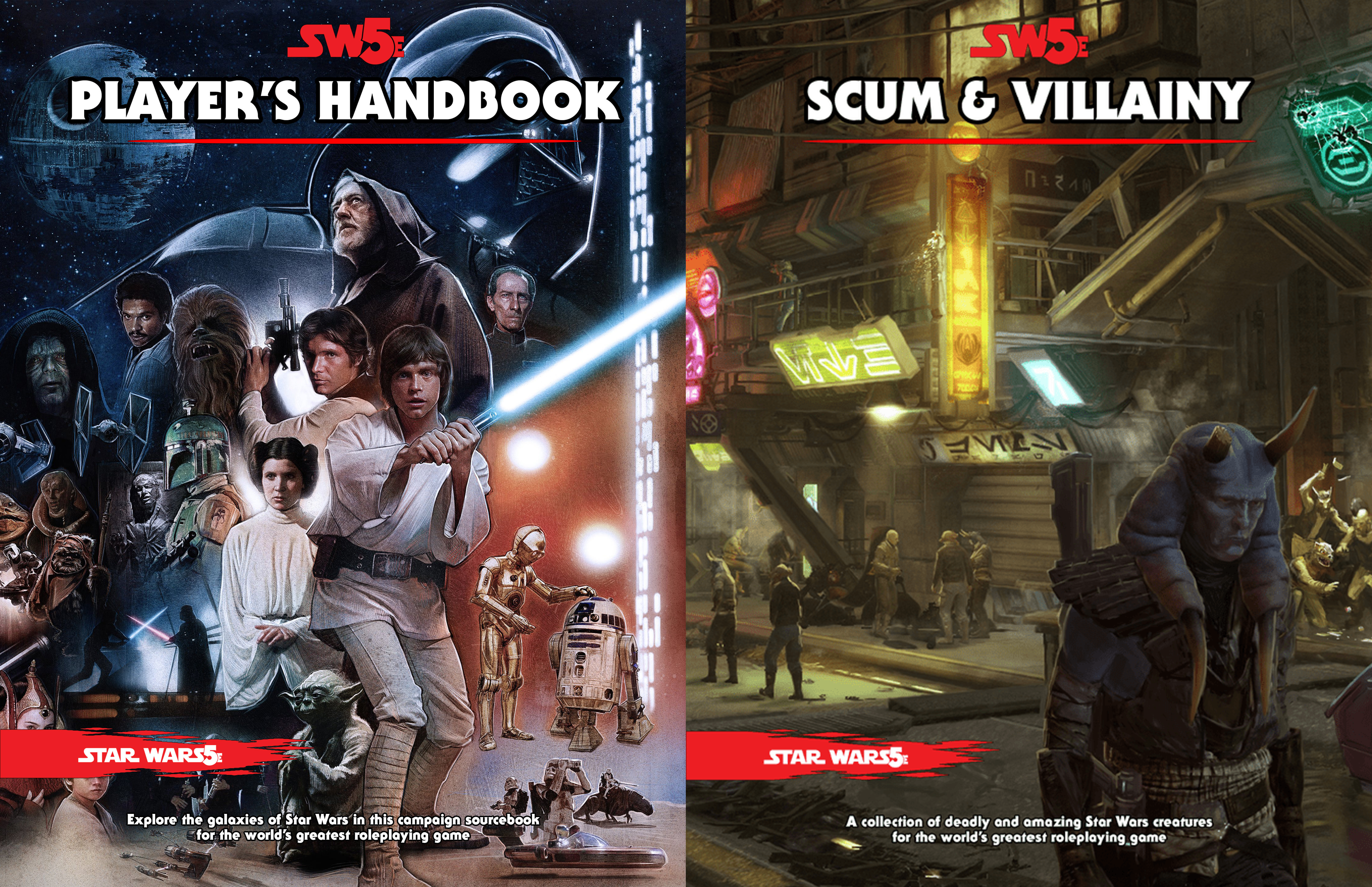
There is always the Star Wars 5e fan project, but if I were going to use a more modern iteration of the d20 rules, I would likely go back to playing the Saga Edition with some house rules.
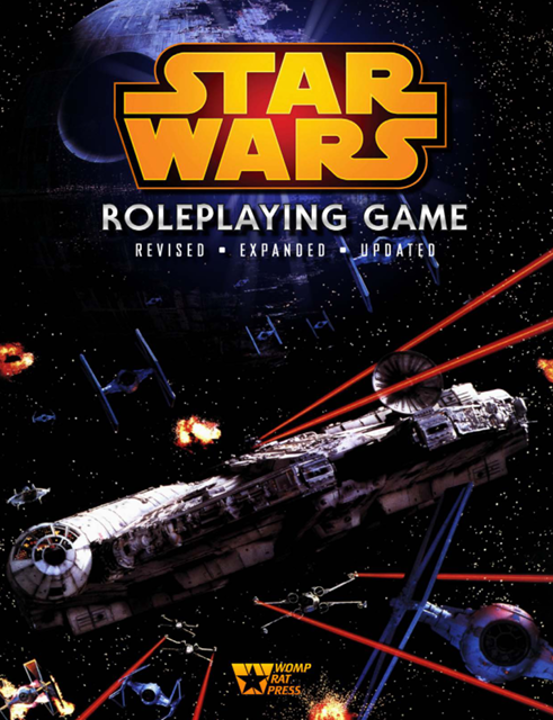
Of course, you can always try Star Wars d6 REUP (Revised, Expanded, and Updated), a fan-made update of the WEG rules!
But let’s be sincere: if you know me, or follow me on social media at all, you know exactly where I was getting to with this.
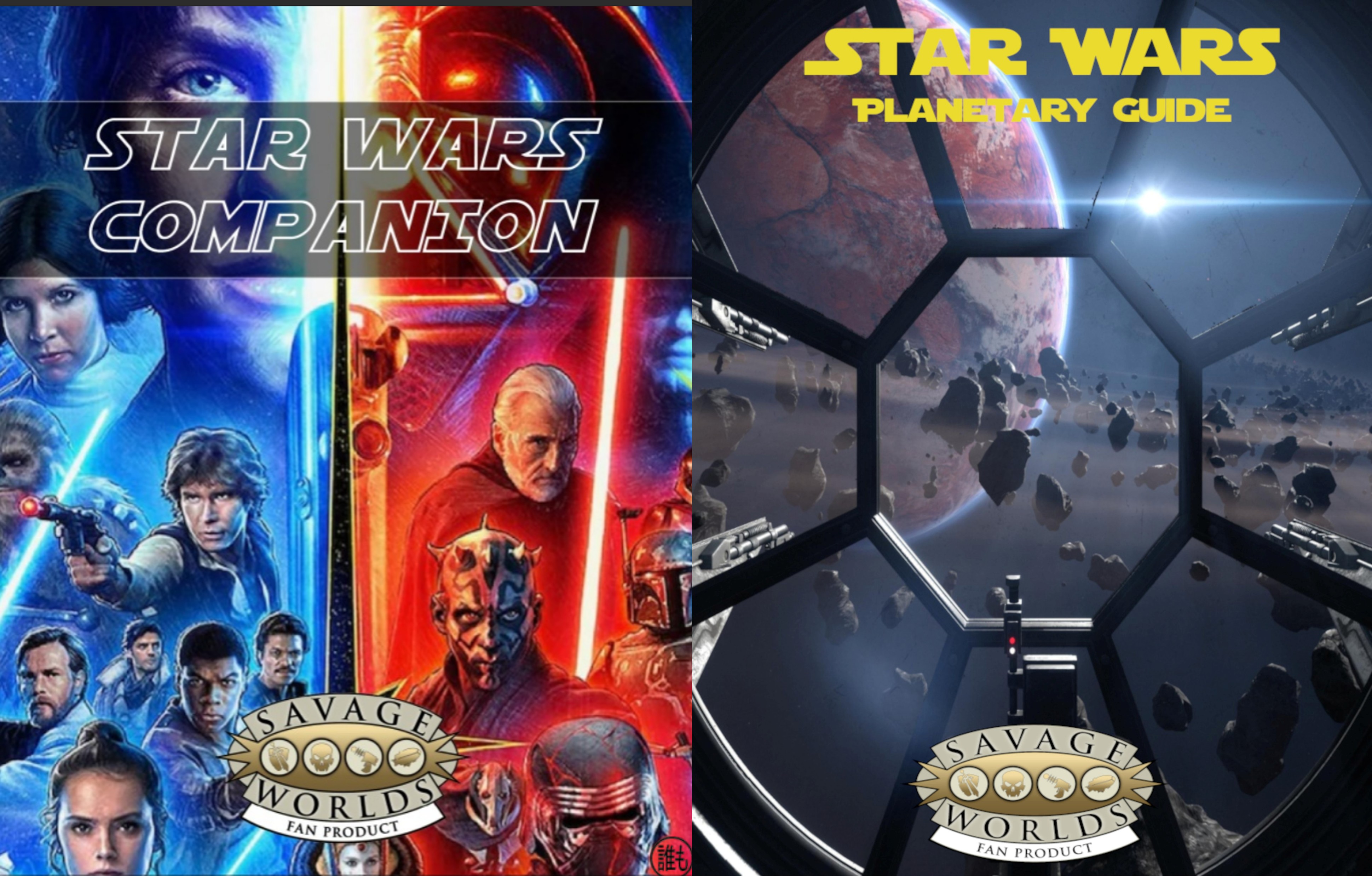
If I were to run a Star Wars game today, I’d probably use Savage Worlds to do it! There is an incredible fan-made Star Wars: Savage Worlds Compendium. I’ve downloaded all their supplements and even printed the book via Lulu. I am completely ready to play Savage Star Wars… I just need to find the time.
Did you play Star Wars D6? What system did you use to play Star Wars? Do you have any recommendations? I’d love to read your feedback in the comments.
Happy Star Wars Day to all. May 4th, and the Force, be with you, always!
Categories: Tabletop Gaming Blogs
An Interview with Karla Miranda, Puerto Rican Artist
Welcome to the third entry in my ongoing series highlighting incredible Boricua creators! Today, I’m thrilled to share my interview with Karla Miranda.
I first became aware of Karla’s work through her posts in the Puerto Rico Role Players and Dungeons & Dragons Puerto Rico Facebook groups, where she regularly shares her stunning character portraits. She was kind enough to take the time to answer a few questions about her creative process and her time at the gaming table. I am incredibly grateful to her and to all the other local creators who have been participating in this series.
Here is our interview!
Introduce yourself! Who are you and what do you create?
My name is Karla Miranda, and I’m a full-time teacher and occasional artist! I usually just love illustrating my characters, with the occasional piece of fan art.
How would you describe your art or creative endeavor?
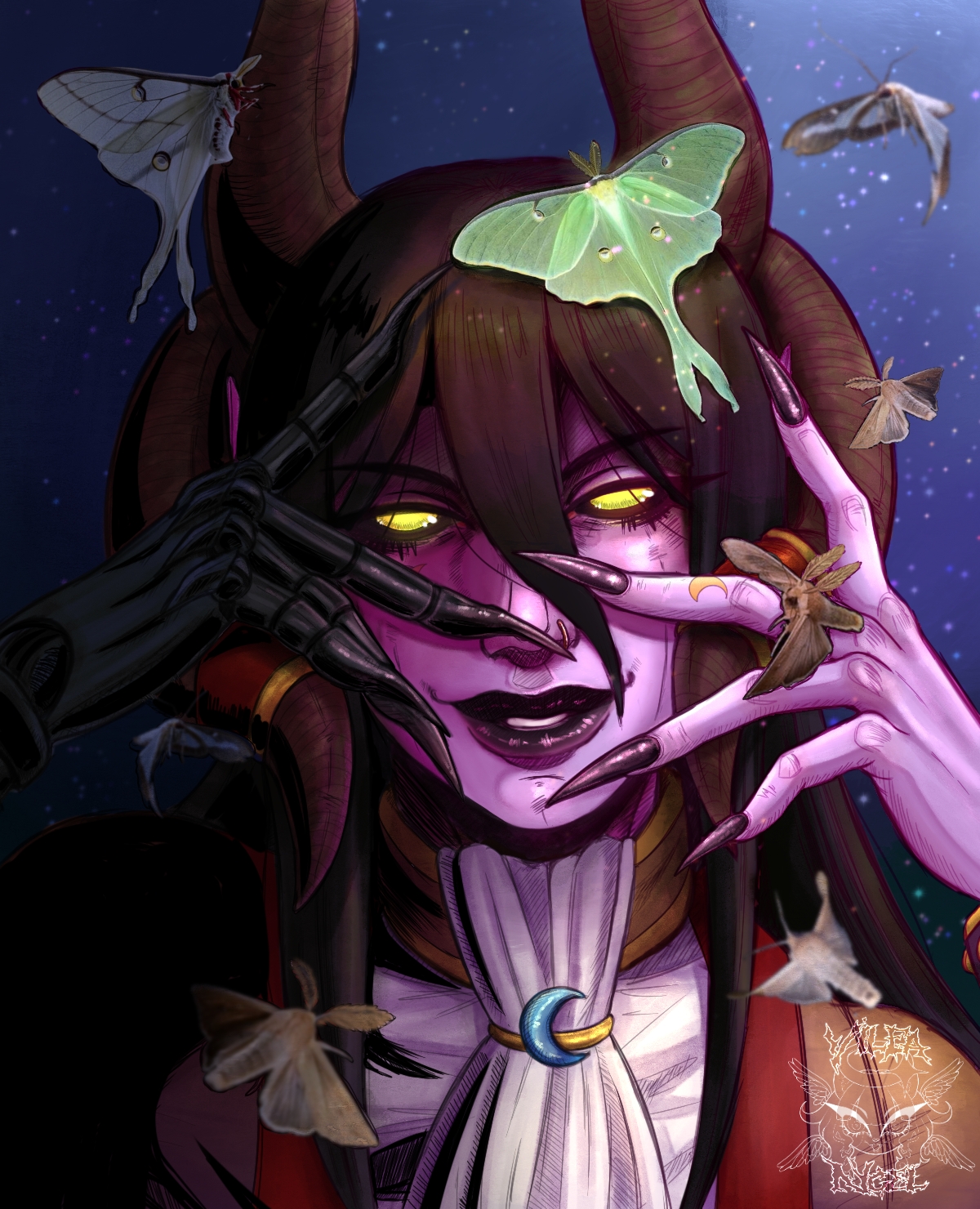
My art is catered specifically to me, LOL. I’ll get a sudden hit to create a new character or update an existing one, and my process is always accompanied by a 1+ hour YouTube essay.
How did you discover TTRPGs?
A friend suggested we try an experimental version of just regular verbal roleplay with occasional dice rolls. After that, he invited me to play D&D 5e Princes of the Apocalypse!
Do you actively play TTRPGs right now? What are you playing?
I currently play with my girls and @Wenceslavos, who is our DM! We’re playing Curse of Strahd, and it’s been an incredible two years already!
What do you want to play next? The next thing in the queue to play is Dark Matter, published by Mage Hand Press, with my girls, and Rime of the Frostmaiden (RotF) in our in-real-life game!
What projects are available, and what are you working on next?
Right now, @Wenceslavos and I are brainstorming more beginner-friendly and advanced player One-Shot Adventures with full character art, plus creating the characters for our upcoming RotF adventure!
Where can people find your art?
You can find my work only on Instagram @vilea_ngel_ !
Any closing thoughts? If you’re an artist, be insane with your favorite characters. You’ll learn to draw so quickly if you hyper-fixate, LOL. And if you’re not, it’s never too late to join the light and pick up a pencil to start learning! You gotta be bad at something before you’re good!
Huge thank you to Karla! I’ve actually had the immense pleasure of meeting her in person; she is not only a talented artist but a fantastic GM and a genuinely amicable person.
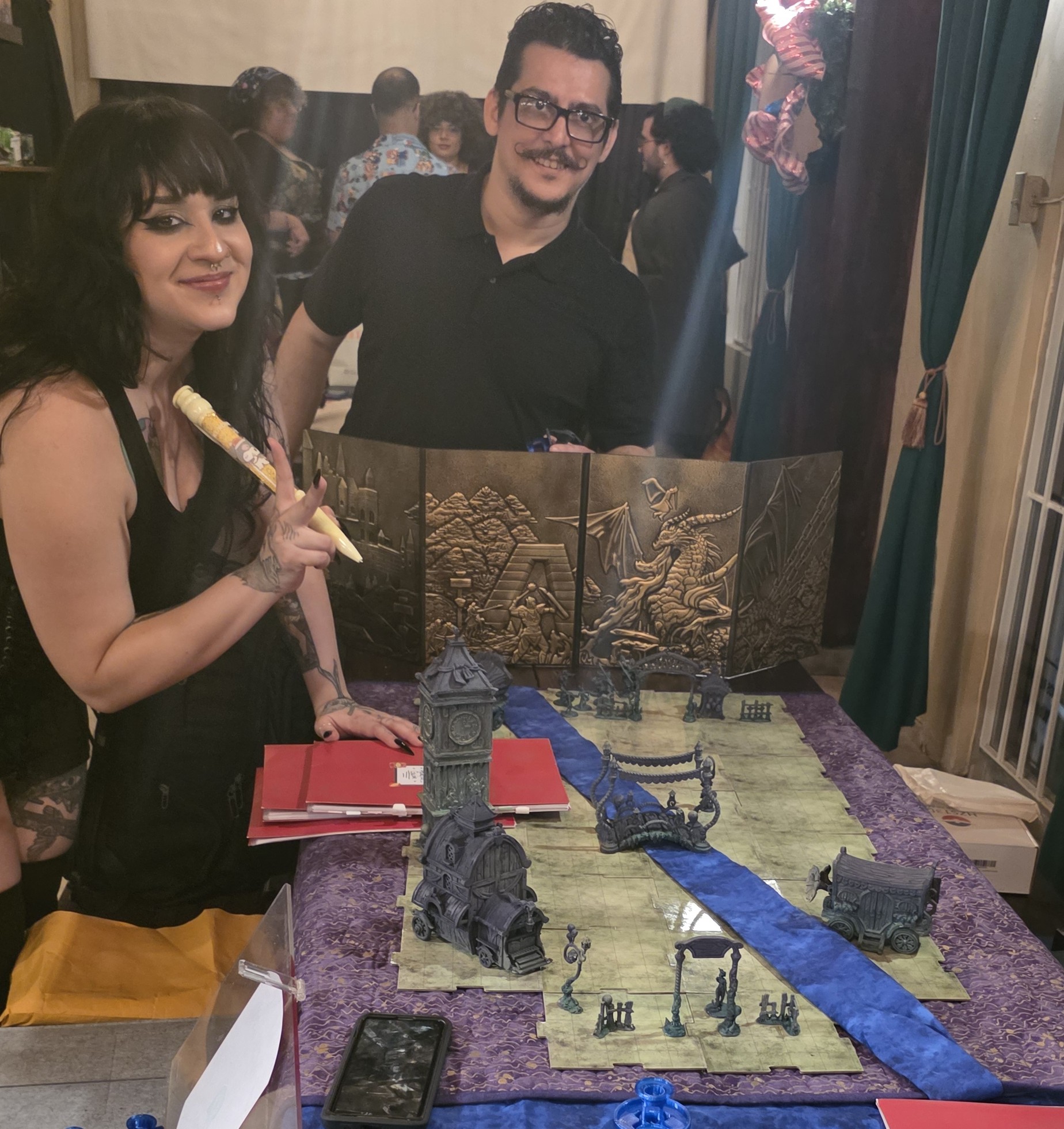
I got to see her run a game at El Gremio in Cayey for the Puerto Rico Role Players holiday event. You can also spot her as one of the local gamers interviewed by Juego La Mesa for the 50th Anniversary of D&D (which I was actually interviewed for as well!): Watch the Facebook Reel Here
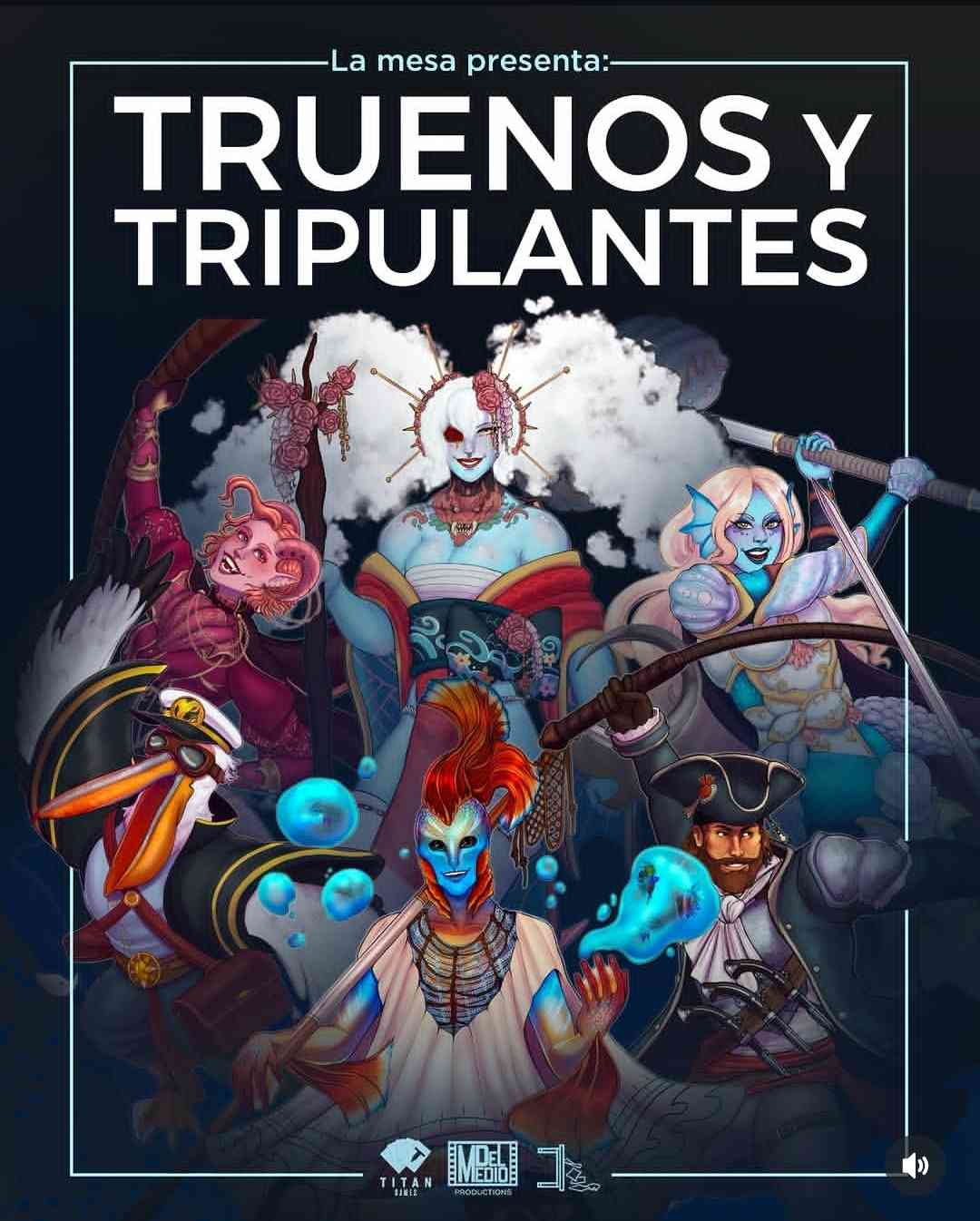
She also provided the art for—and played in! —This excellent one-shot run by Juego La Mesa:
It is a true privilege to know her and to share her art with all of you. Make sure to go and give her a follow!
Categories: Tabletop Gaming Blogs
Mayday! Mayday! Happy Traveller Day
“Mayday! Mayday! This is Free Trader Beowulf! Calling anyone! Our ship has suffered a catastrophic systems failure and is drifting in space. We are in grave and imminent danger!”
Today is May 1st, and in the TTRPG community, we celebrate Traveller Day. This classic sci-fi game was created by Marc Miller 49 years ago—which means next year is the massive 50th anniversary!
Traveller is near and dear to our hearts here on the blog. Just look at all the posts we have written and how often we’ve mentioned it. Seriously, go ahead and search the archives!
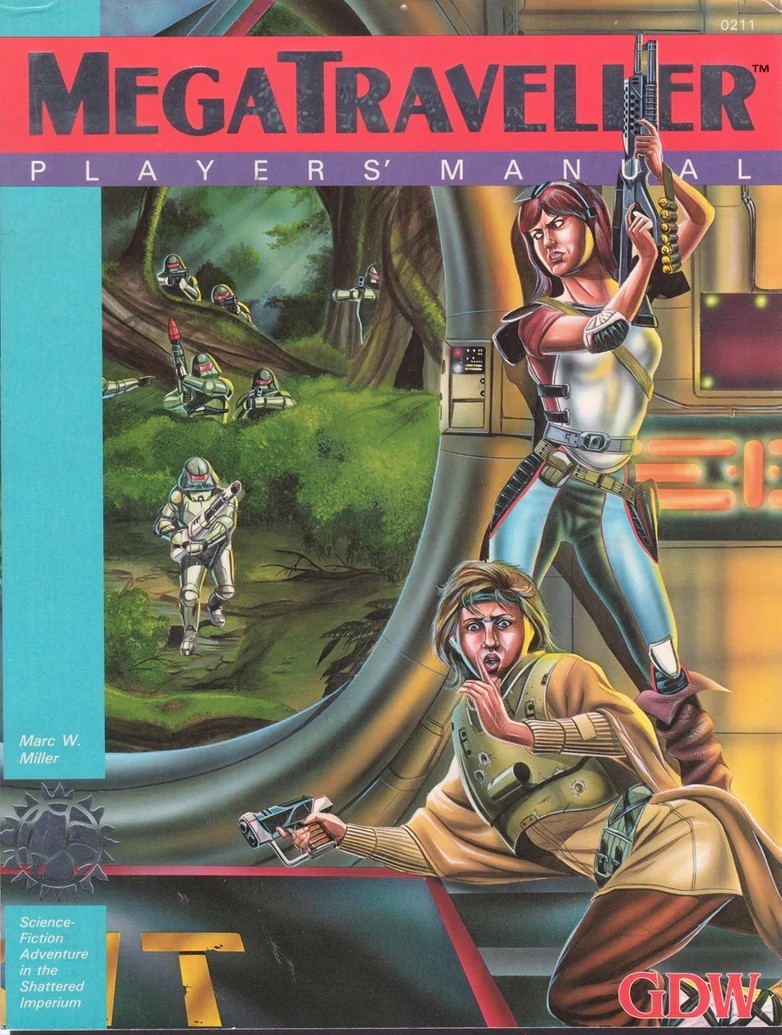
I originally discovered the game via MegaTraveller after seeing the ads in Dragon Magazine. I ordered it from Wargames West, and while the rules weren’t the easiest for me to follow back in 1988, the Imperial Encyclopedia grabbed me immediately. I read entry after entry, and I was completely hooked on the Imperium.
From there, I hunted down every Traveller book I could find. I picked up the Little Black Books (LBBs) second-hand, a boxed set in Spanish, and nearly every subsequent rulebook version—including the original d20 book, Traveller: The New Era, and GURPS Traveller. I’m pretty sure that after D&D, Traveller is the game system I own the most versions of.
I also have the Far Future Enterprises CD-ROMs, and I absolutely loved Marc Miller’s novel, Agent of the Imperium.
Today, I believe Mongoose Publishing is a fantastic steward for Traveller and Miller’s other games. I own their 1st edition, 2nd edition, the 2022 revised versions of their core rules, and a myriad of supplements. Add to the mix the various retro-clones such as Cepehus, and additional editions out there, and even though Traveller is turning 50 next year, it is an incredible time to be a fan.
While Traveller is a robust sci-fi ruleset you can use to run your own homebrew games, for me, it truly shines when exploring the rich setting of the Third Imperium.
If you want to dive deeper into the history of the game, I wholeheartedly recommend This is Free Trader Beowulf by Shannon Appelcline (also available digitally).
Since it’s Mayday, there are some great Bundle of Holding offers you can take advantage of right now to start playing:
- The Traveller Update (featuring the latest iteration of the Mongoose rules): https://bundleofholding.com/presents/TravUpdateR1
- Traveller Mercenaries: https://bundleofholding.com/presents/TravMercs2026
- Traveller Imperial Navy: https://bundleofholding.com/presents/ImperialNavy
- The Little Black Books bundle: https://bundleofholding.com/store/TravellerLBBs
You can also try out the rules for just $1 with the Traveller Explorer’s Edition.
Now there is even a digital companion, Traveller Nexus. The easiest comparison is D&D Beyond for Traveller.It seems that the Explorer Edition rules are free on Traveller Nexus.
What else can I say? It is a great time to be a Traveller fan. Begin your journey into the Third Imperium!
Categories: Tabletop Gaming Blogs
An Interview with Elias “Gambit” Meléndez
Today’s post is a fortuitous confluence of two topics I’ve been writing about recently: comics as TTRPG inspiration and talented Puerto Rican creators.
Gambit is a friend. I don’t recall exactly when we met, but I suspect it was while I worked at Metro Comics back in the 90s. We were both part of the Puerto Rico TTRPG community and have many friends in common. In fact, he created a local comic book with our mutual friend AJ, with whom we’ve both played TTRPGs. I’ll also never forget that Gambit invited me onto his streaming radio show years ago to talk about tabletop gaming.
We don’t see each other often enough now that he lives in Florida, but we stay in touch via social media. We did get to catch up in 2025 at the Puerto Rico Comic Con, where I picked up an incredible Red Sonja print from him. My son met him there and still always asks me about my “friend with the horns!” (See the picture below for context!)
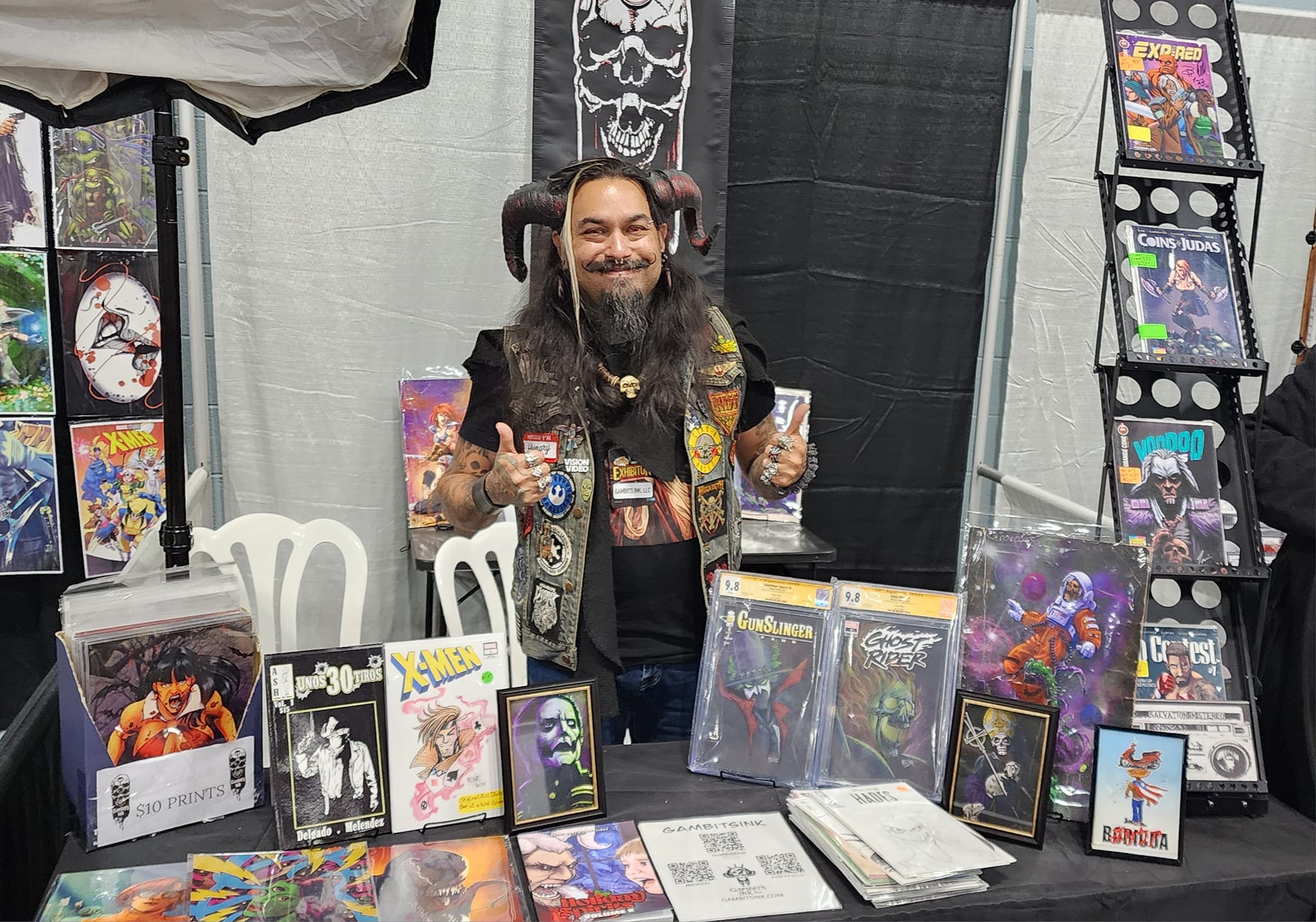
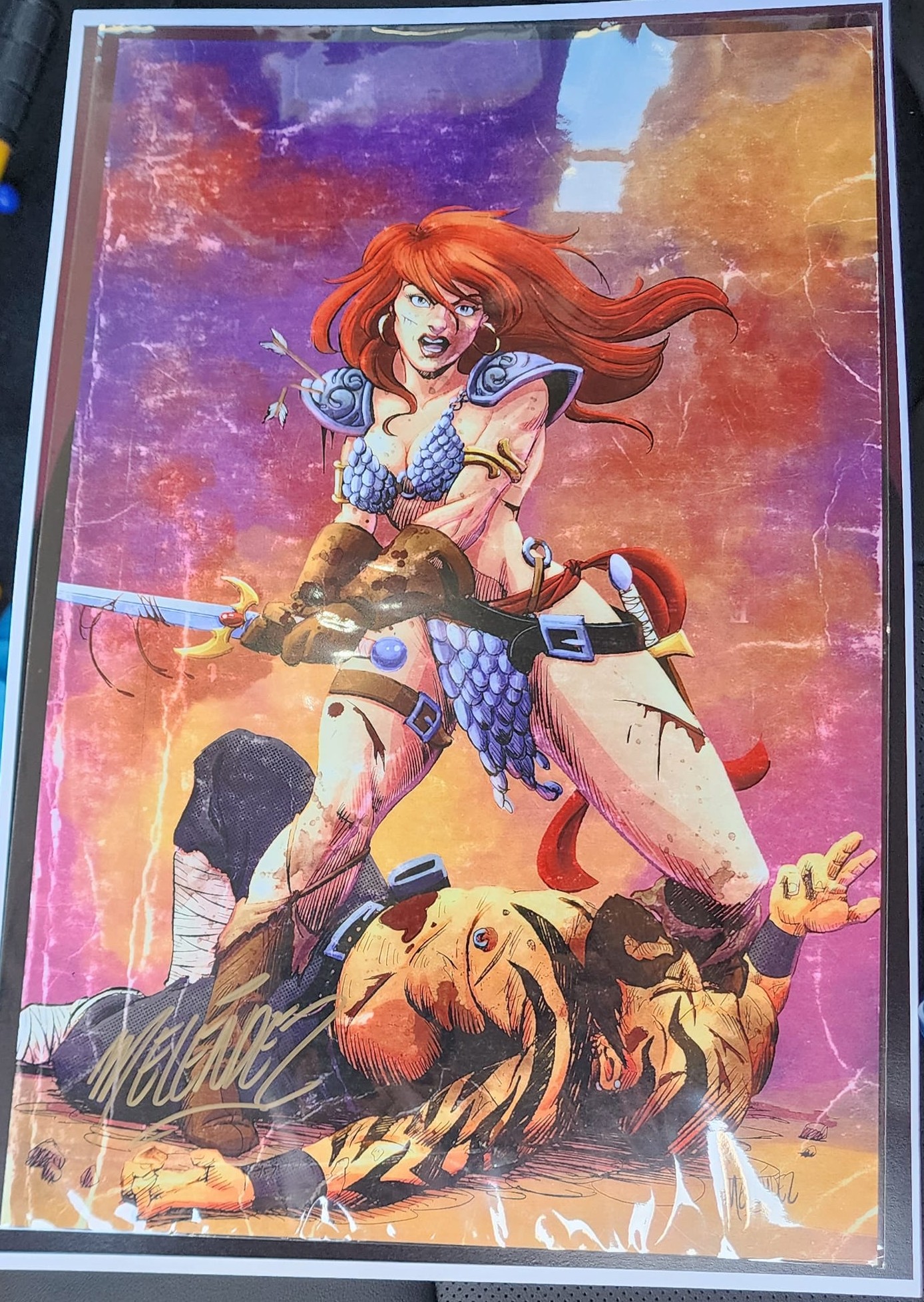
He was also the cover artist and did interior illustrations for the Dungeon Crawl Classics Purple Planet adventure/supplement, Random Acts of Violet. I proudly own a copy; you can see the pictures I took of it below.
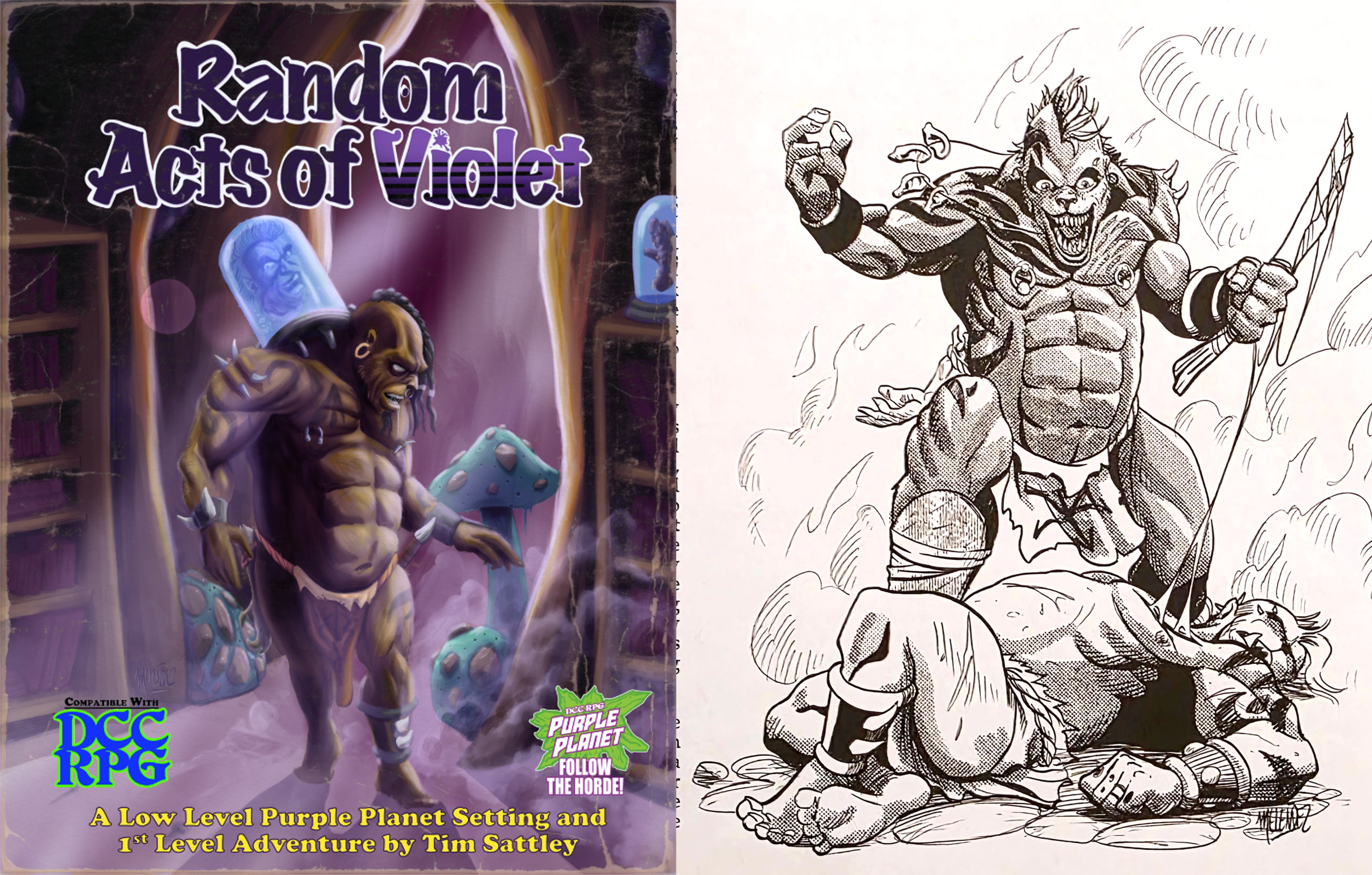
All of this preamble is to say that Gambit is a very cool artist with a deep TTRPG background, working across games and comics. He is also the co-creator of a new comic currently being funded on Kickstarter. I wanted to interview him so you can all get to know him better, learn about this exciting new project, and, if you can, support him in his creative endeavors. He graciously agreed to sit down with me, and here are the results!
Introduction & Art
Introduce yourself! We know you as Elias “Gambit” Meléndez, the creative force behind Gambit’s Ink, but for our readers here at Stargazer’s World, who are you, and what kind of worlds do you create?
Hello! I’m Elias “Gambit” Meléndez. I go by Gambit, and I’m a tattoo artist, a comic book artist, and sometimes a musician. I’m from Puerto Rico and currently reside in FL. I like creating dark fantasy and superhero worlds.
How would you describe your art? You work across several mediums—from sequential art and sketch covers to tattoos and custom prints. How does your creative process shift when jumping between these different styles?
I honestly have trouble describing my art. As you mentioned, I work across different media, and with each, I try a different technique or style. Lately, I’ve been making my personal comic work look retro, using coloring techniques similar to those from the golden age of comics.
I work on various projects at the same time, so I constantly and seamlessly shift from one to the other. The creative process changes depending on what I’m working on. For example, if I’m working on a comic page, I follow a script, and that gives me the direction I need. If I’m working on a cover, I think of it as a scene—I think of the before and after of that moment I’m working on. So even though I’m not making a sequential comic page, I’m still thinking of it as one. I even apply that to some of the tattoos I do.
Tabletop Gaming
How did you discover TTRPGs? We are all about tabletop gaming here, so we have to ask about your origin story! What was your introduction to the hobby?
I was 14, I think, around 14 to 16, and two friends came home one day with a Dungeons & Dragons box and said, “Let’s create you a character.” They helped me create a thief and gave me the basics to start playing. We played a short session and were immediately hooked!
Ah, I remember now, I was 14! I was so fascinated by the game that I wanted to play it again. When I learned a year later that I could buy the same box at Toys ‘R’ Us, I got some friends together, drove to the store, and got us a box. For the next few years, I played for hours every weekend! As an adult, I took a break for a few years, but I couldn’t stay away for long, lol.
Do you actively play TTRPGs right now? If so, what games, systems, or campaigns are keeping you busy at the table?
I am not playing anything at the moment, but I still buy games that interest me. “Recently,” I read Hellguard: Curse of Caina. It’s a miniature roleplaying game designed for one-session adventures, perfect for game groups that can’t play long campaigns. I am also currently waiting for the new edition of Mutants & Masterminds. Writing this, I realized that my taste in games is similar to my work: Hellguard is dark fantasy, and M&M is superheroes!
What do you want to play next? Is there a specific game, setting, or class on your bucket list that you are just dying to try out?
I’m excited for the new M&M edition. I don’t really have a bucket list, honestly. Usually, I decide what I’m playing based on what the party needs or on something specific that sparks creativity.
Summit Comics & The Cobalt Cricket
Tell us about Summit Comics and your new project! You are currently part of the Kickstarter for The Cobalt Cricket #1. For those who haven’t seen the campaign yet, what is the story of Glenn Fielding, Karl’s Bay, and your role in bringing this corner of the Summit Comics universe to life?
Summit Comics is a new superhero shared-universe comic publisher that emerged when a few friends and collaborators wanted to make comics together. Cobalt Cricket is just one of the many comics planned to be released this year.
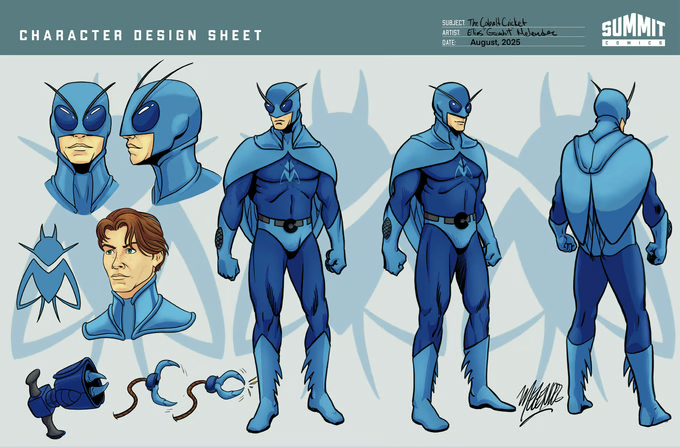
Our hero, Glenn Fielding, is a messenger in Karl’s Bay, FL, and he is involved in an accident that exposes him to radioactive goop and crickets. Next thing you know, cricket powers! With his friend’s help, he becomes The Cobalt Cricket. Sebastian, the co-creator, messaged me to ask if I could help him design a character, and I said yes. He gave me the concept and his idea, I made a few sketches for him, and he loved them so much that he made me a co-creator.
I understood his concept and his idea for a fun book, and I was there when he called. Since then, we’ve bounced ideas for the book and discussed its direction and tone. This book is a love letter to characters like Blue Beetle and Spider-Man. We are making a fun, colorful comic, with over-the-top “science” and heroics. Glenn knows he is not Wolverine or Batman, lol. My role is to give Sebastian’s ideas and concepts a visual style. I know Seb very well now, and I can visualize his thoughts pretty well.
What superhero game would you use to create The Cobalt Cricket? If we wanted to bring Glenn and his insect-proportional abilities to the gaming table, how would you build him and his rogues’ gallery?
As I mentioned before, Mutants & Masterminds by Green Ronin Publishing is one of my favorite RPGs, so I would definitely use that system. In fact, as I was answering these questions, I was talking with one of my friends about creating CC and his rogues’ gallery for the new edition. I’m now planning to do that and make them available for fans and players to use!
(Roberto’s note: I’m incredibly excited about this idea. Imagine a Summit Universe Mutants & Masterminds supplement! A GM can dream…)
Do you have a personal preference for a particular superhero system? When it comes to capturing that classic 60s, 70s, and 80s comic book feel, which TTRPG system does it best for you?
I think M&M is versatile enough to capture the feel of any era of comics and any genre.
How can people support you? Where is the best place for the Stargazer’s World community to back The Cobalt Cricket Kickstarter, and where can they find your original art and projects over at Gambit’s Ink?
You can get The Cobalt Cricket #1 via our Kickstarter: https://www.kickstarter.com/projects/948324172/the-cobalt-cricket-1-summit-comics
And if you want to support me directly, you can do so through my Ko-fi page: https://ko-fi.com/gambitsink
Or my Redbubble page for merch like t-shirts, hats, and other products: https://www.redbubble.com/people/gambitsink/shop
Any closing thoughts? Any final advice for aspiring artists or gamers out there looking to jump into the creative space?
To anyone who is itching to create but is afraid to do so, or thinks they don’t know how, or is waiting for the right moment: That moment is now. All you have to do is create. Don’t think about putting it out for the world to see; you’ll know when to do that. Just do, create, write a short story if you have the idea, draw it if that’s what you do. There is no perfect moment, and there is no shortcut; you have to do it. Write, draw, compose, whatever you love to do or want to do, do it. It’s a rough life sometimes, but the rewards of creating compensate for the bad days.
I have a closing thought to add to that closing thought! I want to mention that Gambit actually designed my absolute favorite TTRPG t-shirt. I got it off his Redbubble page—it’s his “Tira iniciativa’ pa” shirt, and you can see me modeling it below!
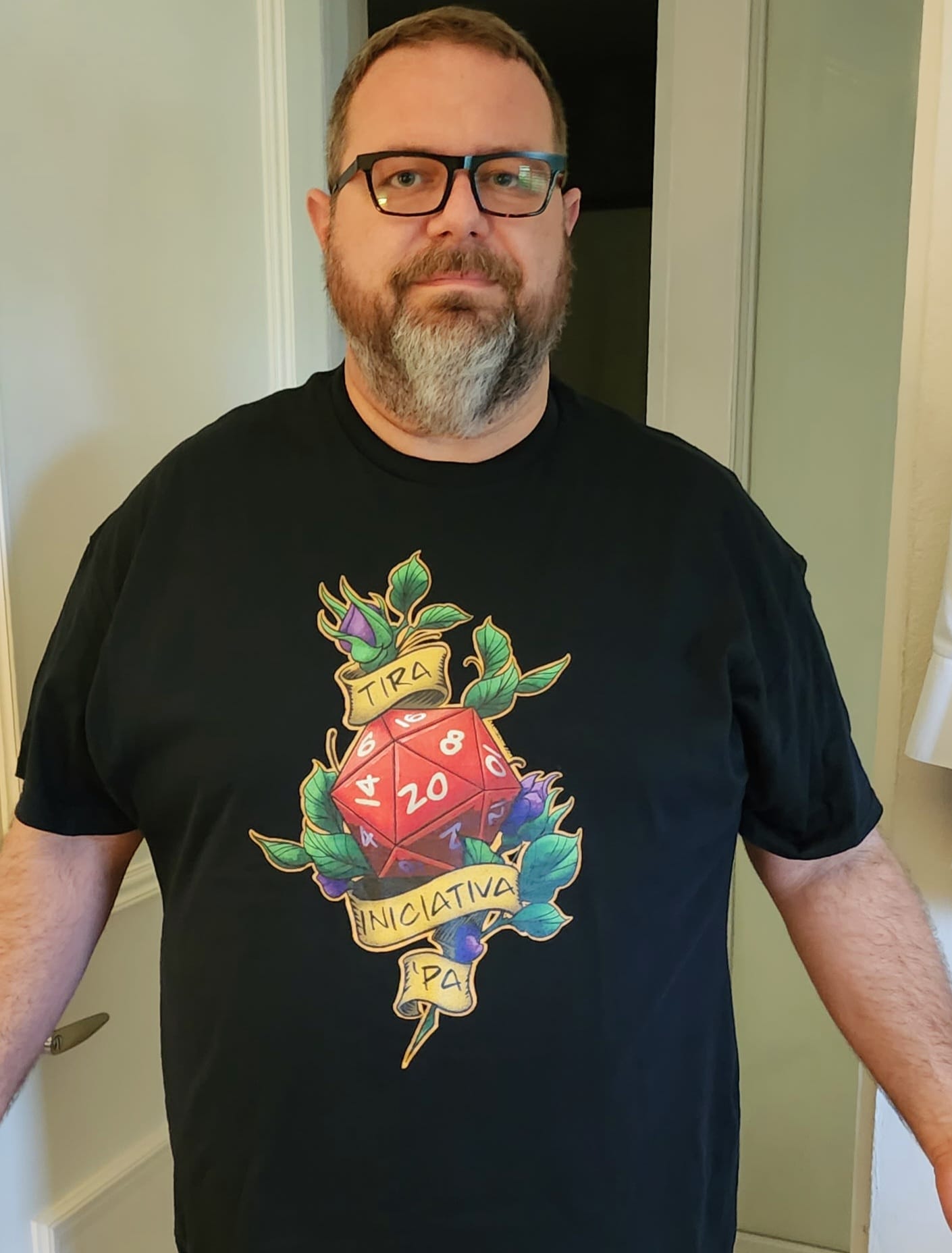
Thank you, Gambit, for taking the time to do this interview.
Everyone, please don’t forget to check out The Cobalt Cricket Kickstarter before it ends: https://www.kickstarter.com/projects/948324172/the-cobalt-cricket-1-summit-comics
The project is funded. I’m a backer!
Categories: Tabletop Gaming Blogs
Uprising on Antares-9
Back in 2010 (wow, has it been 16 years already?) I released a little game called Warrior, Rogue & Mage. It had some modest success and quite a few people have high regards for it because it’s simple, easily hacked and dirt cheap since it’s free. I also released the rules portion under a Creative Commons Attribution license so everyone can create new games using these rules as long as they give credit.
One of the games created using these rules is Christian Conkle’s Uprising on Antares-9. It’s a roleplaying game based on a TSR Sci-Fi minigame called Revolt from Antares designed by Tom Moldvay. I have to admit that I never even heard about this minigame before Christian told me about his project. The game consists of six small booklets available for free on itch.io but you can also order physical copies from Lulu. You’ll find all further information on the game’s itch.io page.
The whole project started as a thread on the rpg.net forums back in 2021 when Christian asked for help finding a system suited for a Revolt on Antares RPG. The thread is still active and if you enjoy Uprising on Antares I recommend you go there and post about it.
If you are either a WR&M fan looking for more stuff to play with or someone who has fond memories of Revolt from Antares you should definitely check out Christian Conkle’s game.
Categories: Tabletop Gaming Blogs
40 Years a Gamer: The Artists Who Inspired Me – The Four Horsemen of TSR
In my early years as a gamer, four artists truly defined my conception of D&D and tabletop fantasy art: Larry Elmore, Jeff Easley, Clyde Caldwell, and Keith Parkinson.
I first recall them being referred to as the “Four Horsemen” in the excellent 2019 documentary Eye of the Beholder. Since I’ve been writing so much lately about the artists who inspire my games, I recently sat down to rewatch it. You can find where to stream it from the official website here. If you’re curious, here is the trailer:
But back to the artists. Elmore, Easley, Caldwell, and Parkinson completely defined D&D for me as a teenage gamer. Little by little, I discovered the early artists who originally shaped the game (and they’ll get their own post!), but when I first started playing, these four were the absolute pillars of fantasy TTRPG art. You probably know them, so I won’t recount their entire careers—others have covered them far more thoroughly than I ever could. Instead, I want to focus on how they left an impression on me and inspired my campaigns.
Larry Elmore
For a long time, Elmore was my absolute favorite fantasy artist! He drew the cover for the very first TTRPG book I ever bought. That archetypal red dragon of the Mentzer Red Box (and yes, it only has one horn, look closely at the art!) beckoned me into gaming. But his influence went far beyond the cover. He drew most of the art in the Players Manual inside that box, accompanied by some amazing standouts by Easley. The images of the adventurer entering the dungeon in the solo tutorial, the illustration of Aleena, Bargle attacking her, and the adventurer acquiring equipment—these visuals were fundamentally tied to learning the game, and they remain with me to this day.
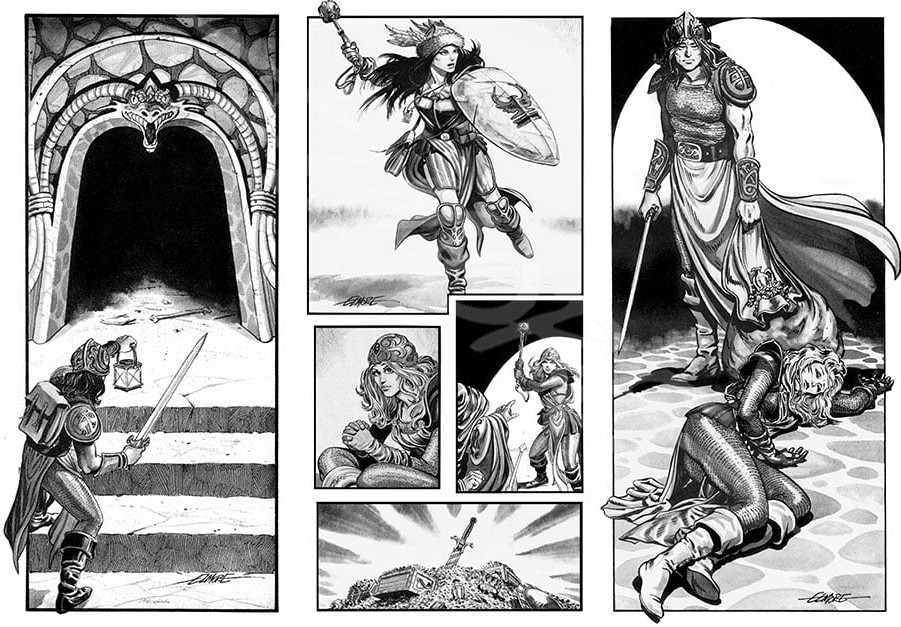
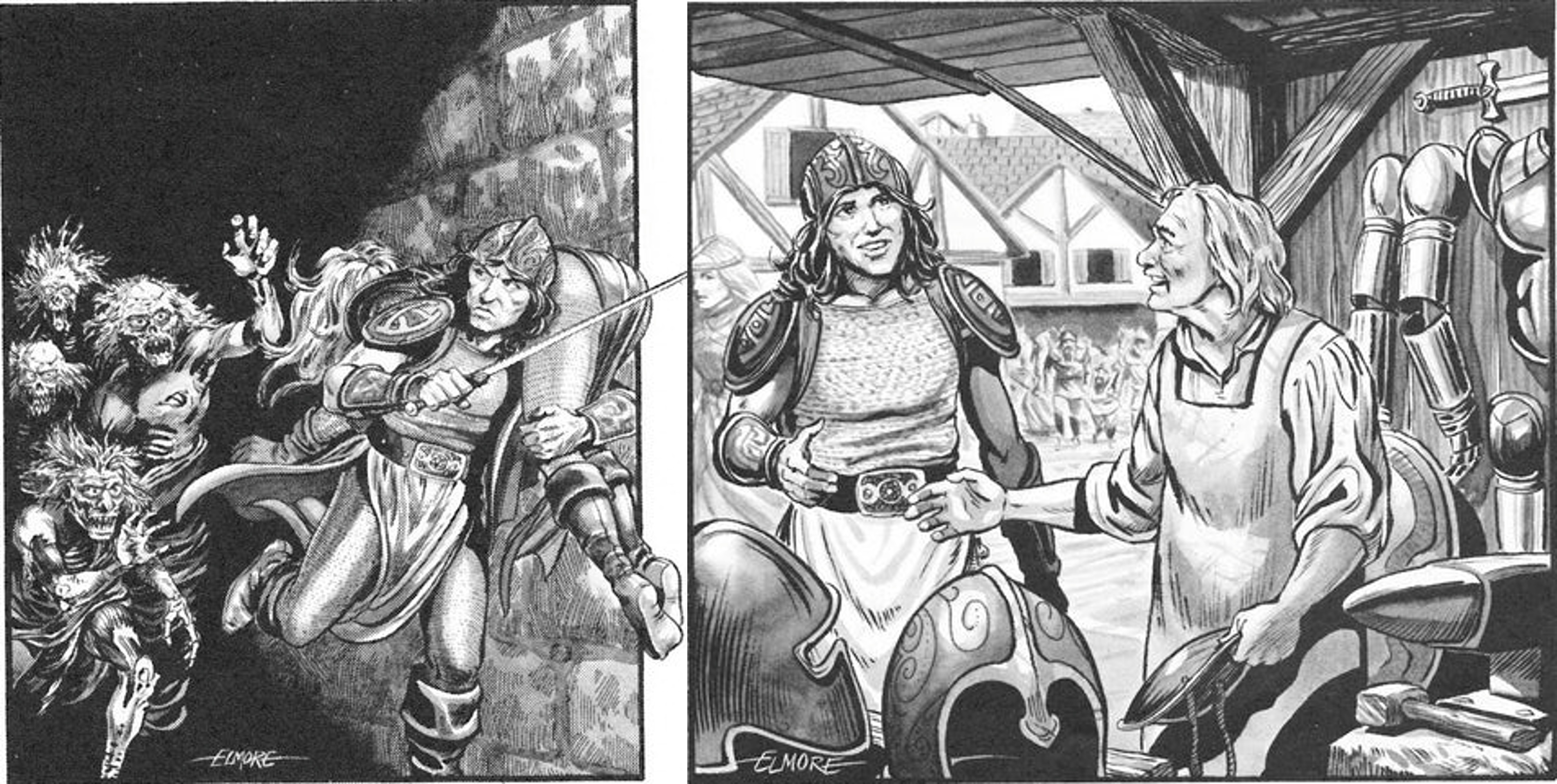
His art also graced the Expert set cover and most of the interior illustrations. I particularly love the one-page illustration of the duel.
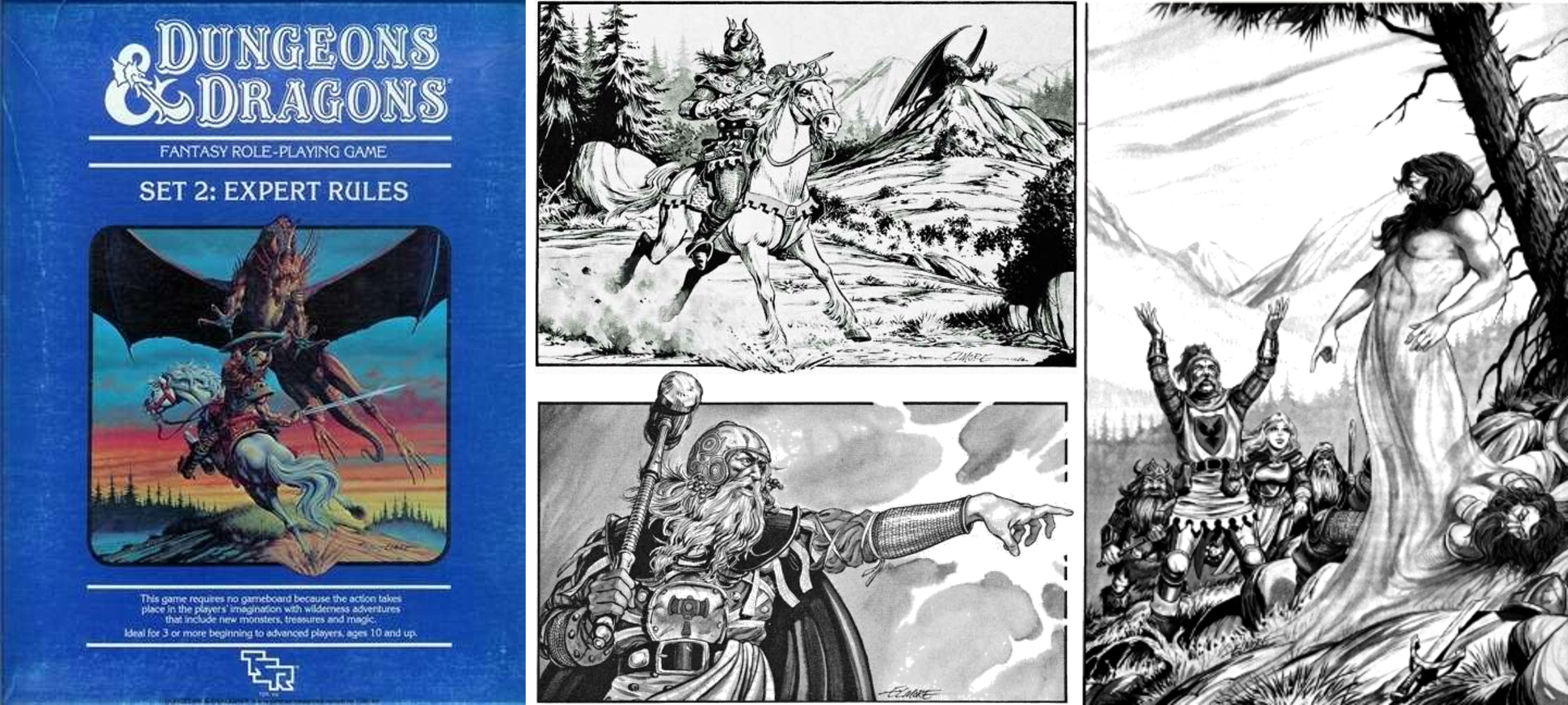
He went on to do the covers for the Companion, Master, and Immortal sets, and I vividly remember the weapons illustrations in the Companion rulebook.
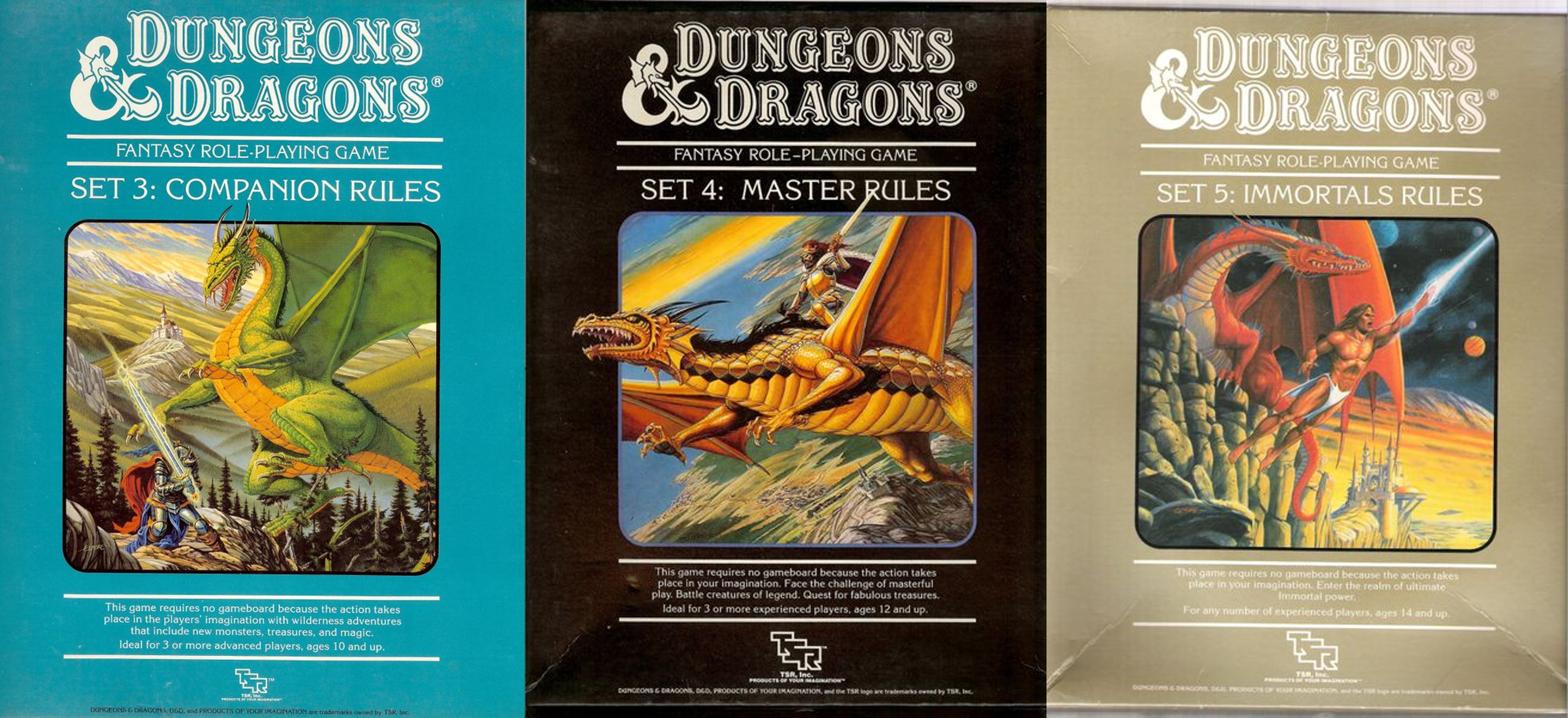
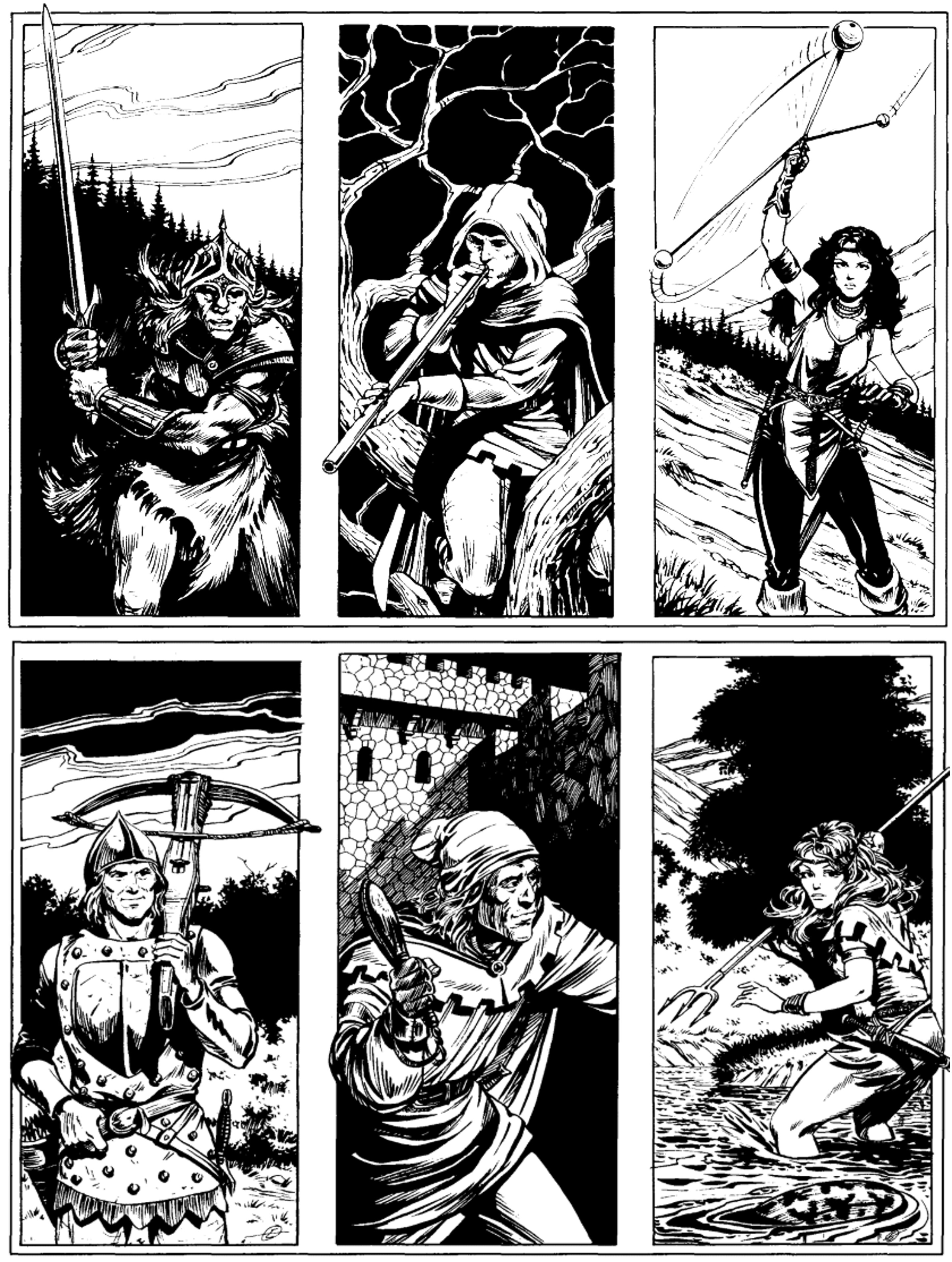
Whenever I saw Elmore’s art, I was entranced. His covers for the Dragonlance Chronicles and the Star Frontiers boxed set were undeniably a huge part of why I purchased those products. His aesthetics and clean lines defined civilization in D&D for me. When I thought of the classes and ancestries, I pictured them exactly as Larry Elmore painted them.
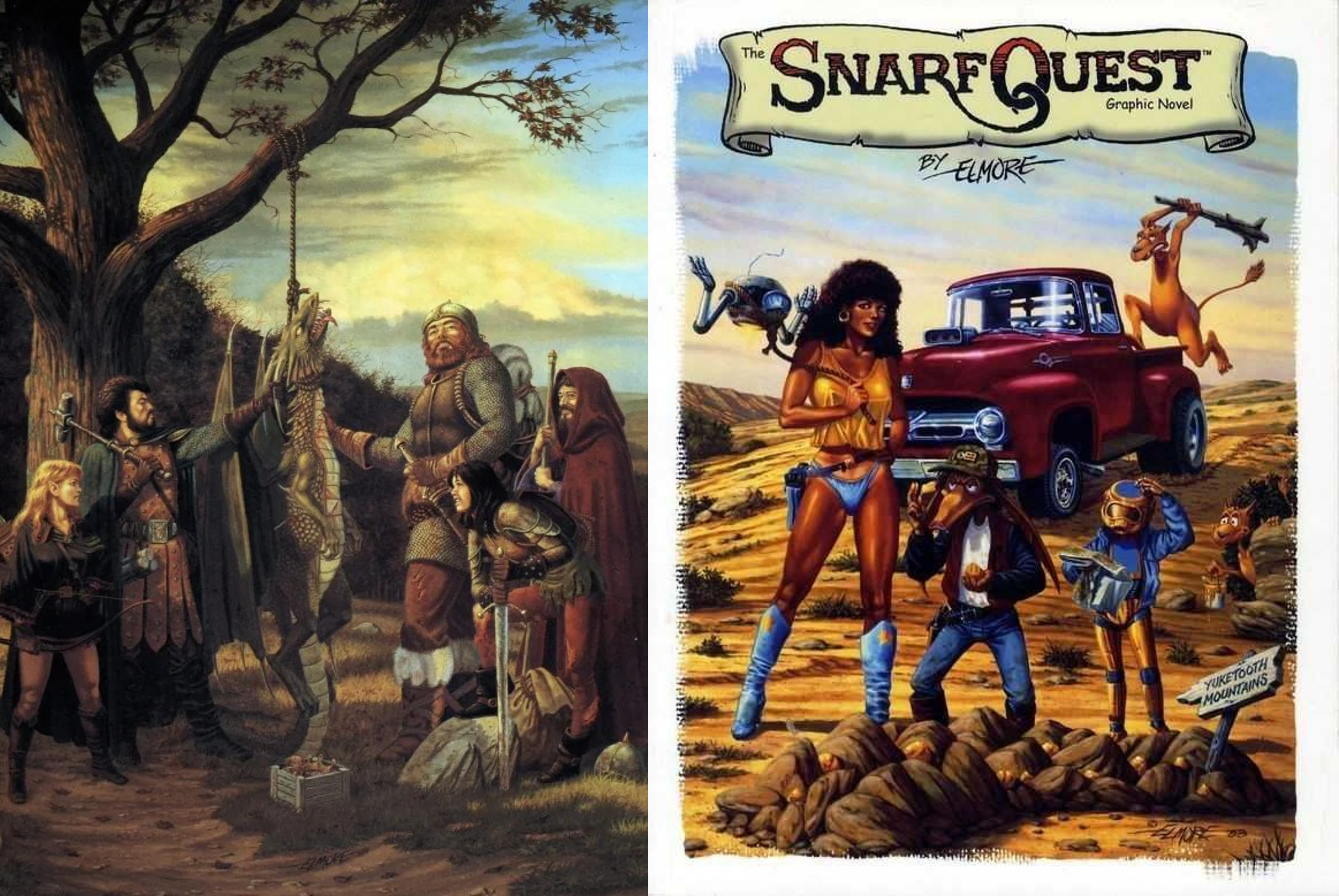
I know many people love his Dragonslayers and Proud of It piece from the AD&D 2nd Edition PHB, but I honestly wasn’t a fan. I understand what he tried to convey with the new heroes slaying a small dragon, but it didn’t catch my eye the way his other work did. I did, however, love a lot of his Dragon Magazine covers from this period. I read SnarfQuest, too, though I wasn’t a massive fan.
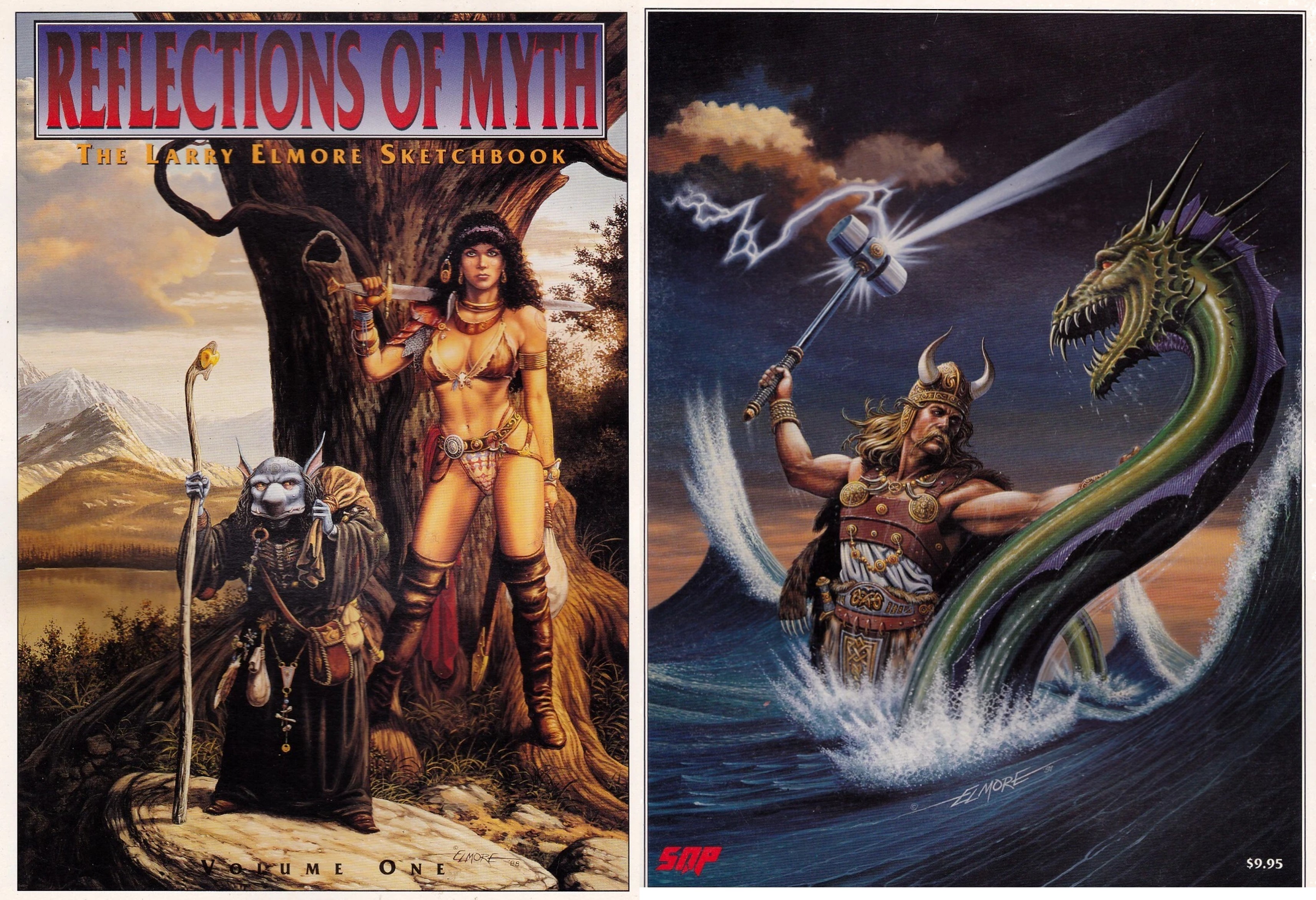
I still own a copy of Reflections of Myth: The Larry Elmore Sketchbook. I loved that book! I would often turn to a specific drawing in it and tell my players, “This NPC looks exactly like this.”
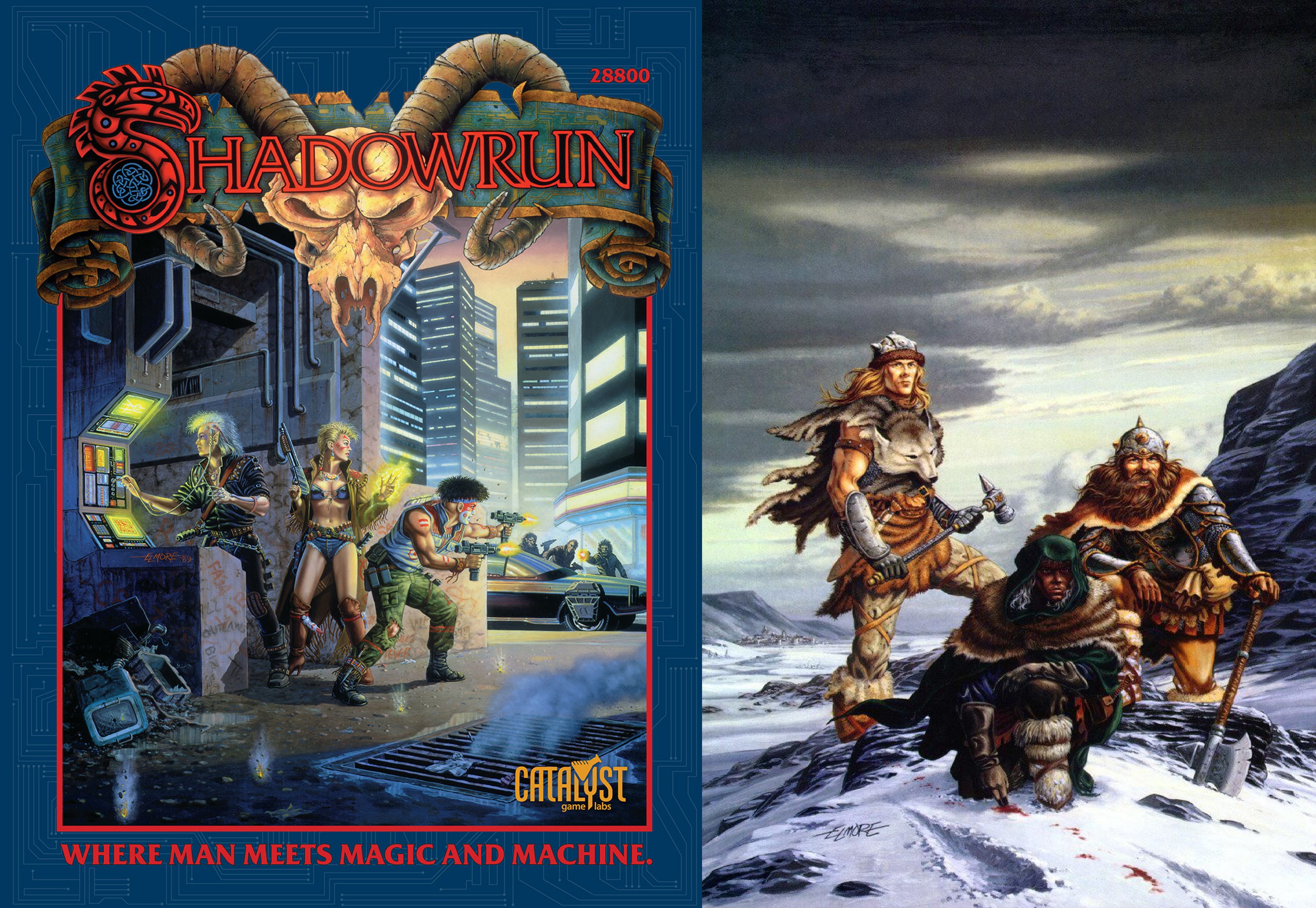
I probably would not have looked twice at Shadowrun if it hadn’t featured a cover by Elmore, and the same goes for The Crystal Shard novel. Larry Elmore’s art was my true gateway into Dungeons & Dragons and fantasy TTRPGs in general. In my imaginary, perfect D&D book, all the class and ancestry illustrations are drawn by him.
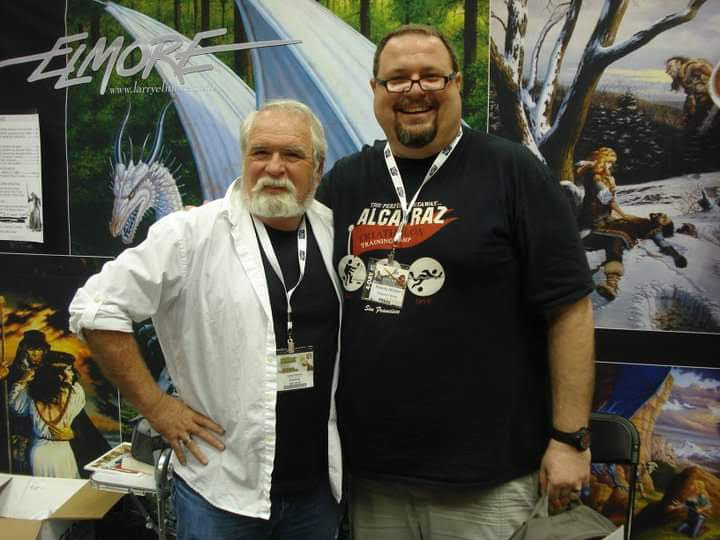
I was lucky enough to meet him and take the photo you see above at Gen Con 2010.
Jeff Easley
Elmore did all the covers for the BECMI boxed sets, but when I “graduated” to the Advanced version of D&D, all the covers for the orange-spine books were painted by Jeff Easley. While I later acquired copies of the original PHB, DMG, MM, and Deities and Demigods covers, when I first got the core books, it was Easley’s art gracing them.
His art seemed darker, more grown-up, and much more foreboding. This was definitely the “advanced” game. While his covers for the AD&D 2nd Edition books rarely come to mind as my all-time favorites, they were so prevalent that they heavily influenced the aesthetics of my growing fantasy world.
I loved The Magister supplement for Forgotten Realms, and Easley’s cover for it. That specific piece of art became the appearance of a major NPC in my campaign. His covers for the Rules Cyclopedia and Wrath of the Immortals are also pieces I treasure because of their connection to my favorite TSR-era campaign world, Mystara.
Clyde Caldwell
Caldwell is perhaps best known for his Ravenloft cover, featuring Strahd looking like a classic movie vampire, and that recognition is well deserved. But for me, he will always be the artist who drew the covers for my favorite series of supplements: the Gazetteer series.
For me, his covers encapsulated what each region of the world represented, even if the Shadow Elf on the cover of the Elves of Alfheim was drawn as a Drow. Mistakes happen!
Later, his Resilient Wanderer art from Magic: The Gathering directly inspired the look of an entire culture in one of my campaigns.
Then there is…
Keith Parkinson
If Elmore was my favorite of the four as a young gamer, Parkinson would become my favorite of the four as an adult.
I actually saw his art before playing D&D, inside the Amazing Stories 1986 calendar I got in late 1985. It featured work from all the artists in this post. I remember staring at the art, trying to invent stories to match the scenes. While the fantasy art was great, it was the post-apocalyptic sci-fi (even if I didn’t know to call it that back then) that really caught my eye.
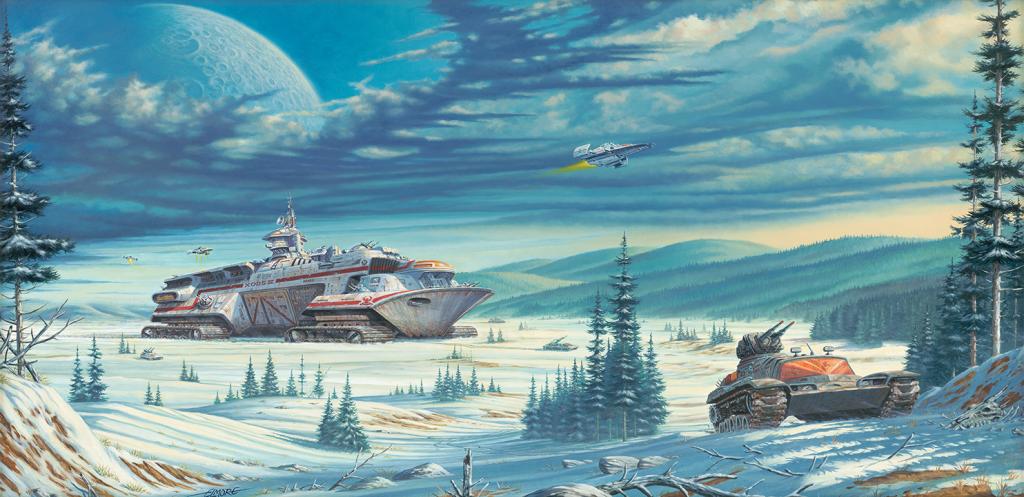
There was an Elmore piece (Epsilon Cyborgs from Gamma World, see above) and an Easley painting (The Fallen, featuring a man in power armor defeating a dinosaur while another attacks, an image I frustratingly cannot find anywhere online). But it was Parkinson’s art—the cover of the calendar, which would later become the cover of Gamma World 3rd Edition featuring the Ultimate ATV —that I remember most vividly.
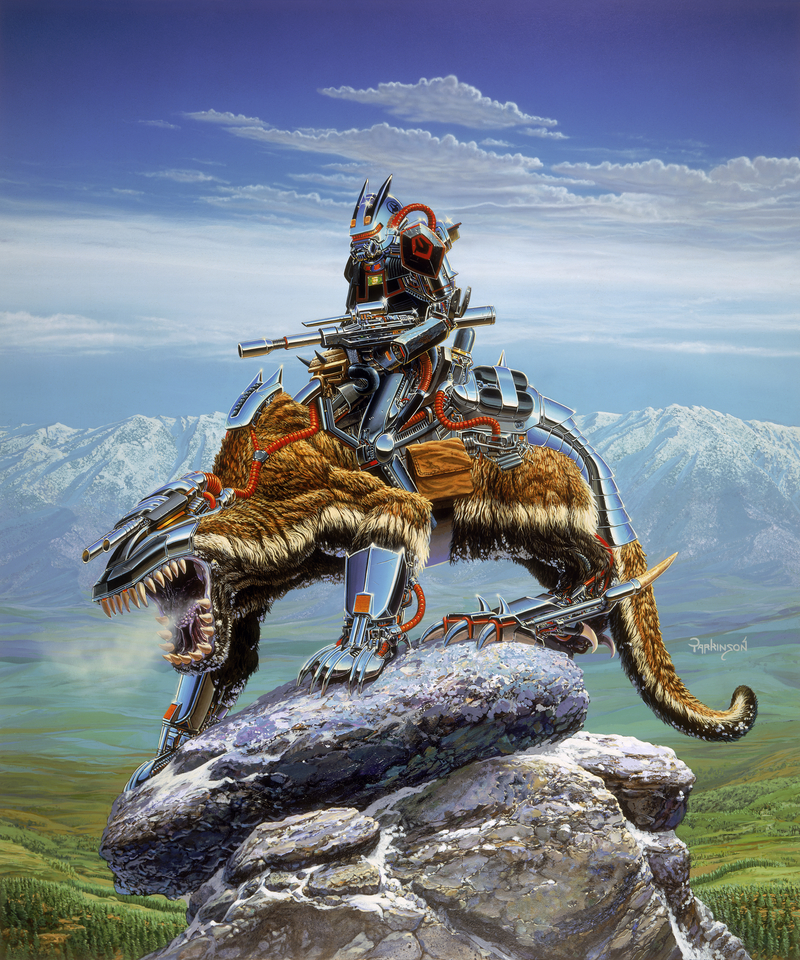
I absolutely love his fantasy work, too. Lord Soth’s Charge is amazing (and he remains one of my favorite D&D villains). The North Watch from Dragon magazine issue 137 is breathtaking.
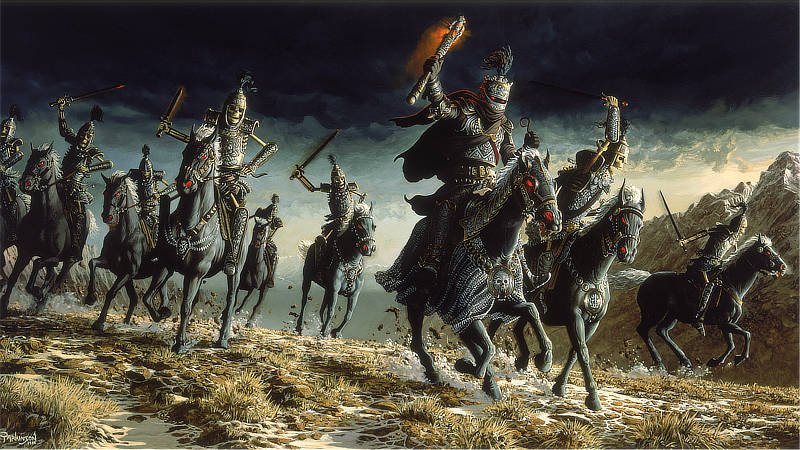
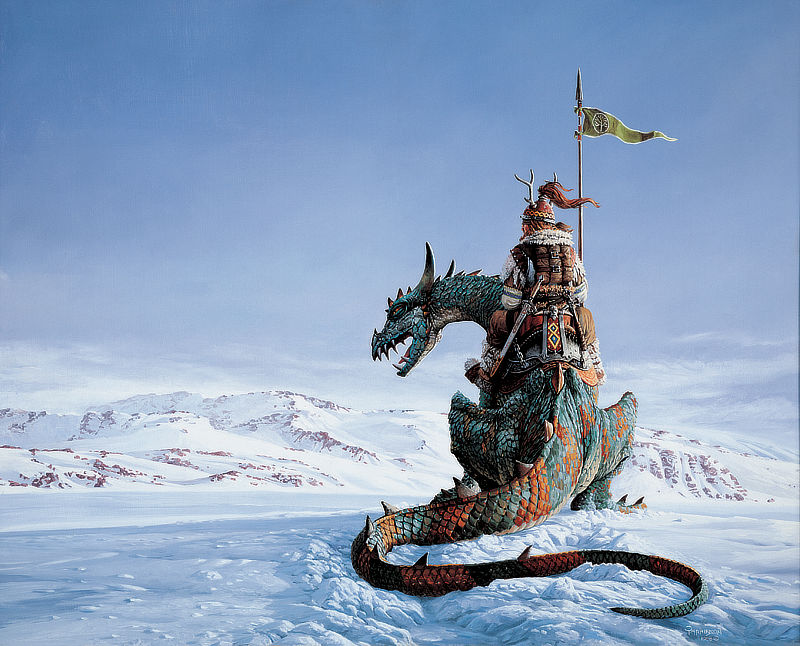
And, of course, the seven covers he did for the Death Gate Cycle books.
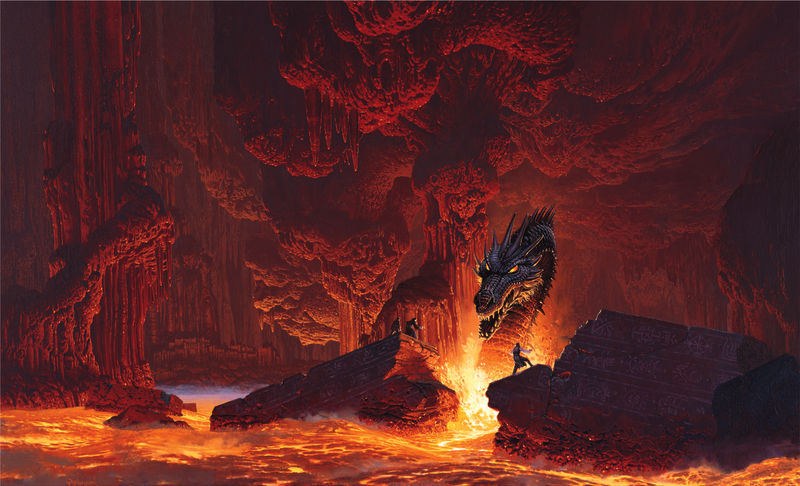
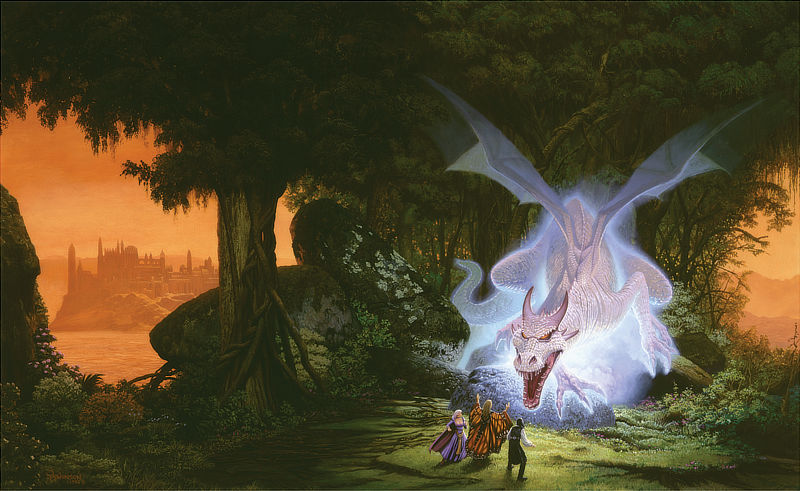
Then there are his Rifts covers! The original edition features the Splugorth Slaver, Mutants in Orbit, and Atlantis. I was a massive Rifts fan in the 1990s, and seeing his art in those books completely blew my mind.
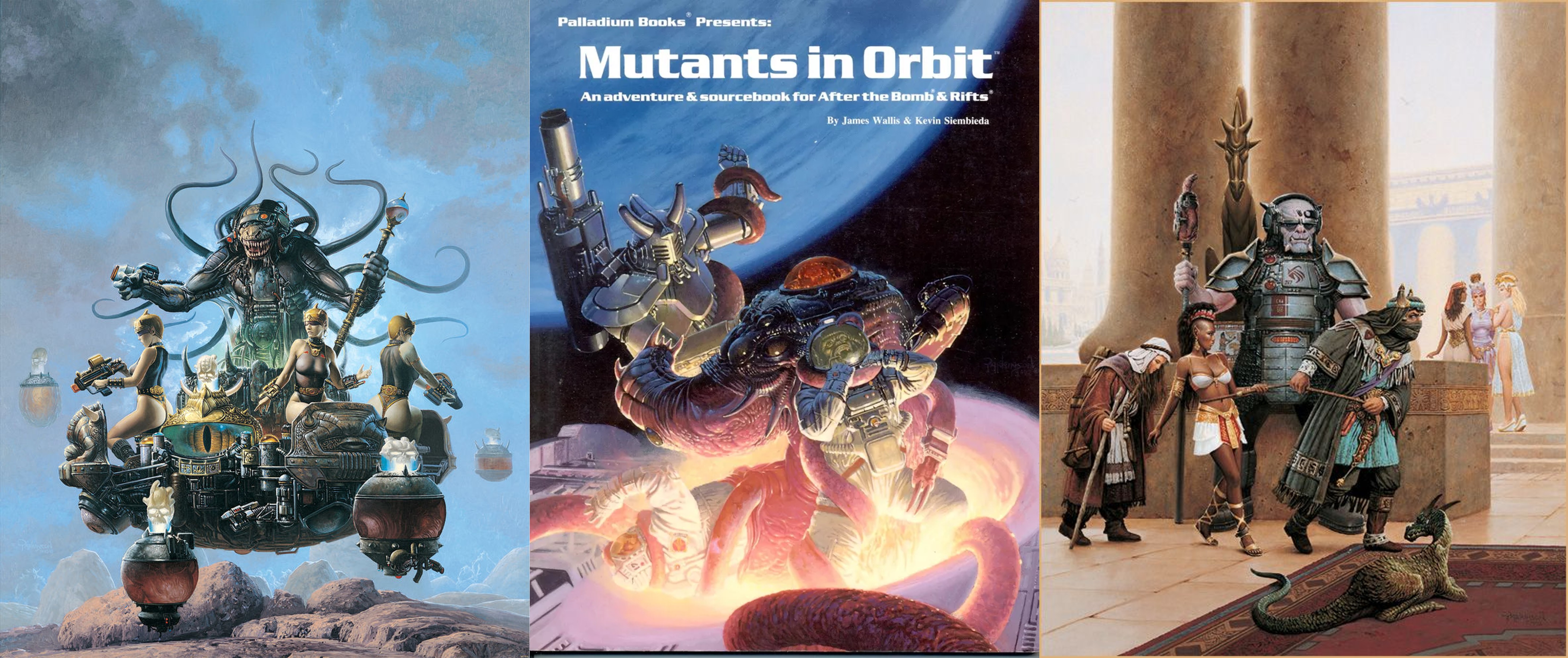
Sadly, he passed away in 2005 at only 47 years old. But his art continues to inspire me today.
I love the work of all four of these artists. They were incredibly formative to me as a young fan of fantasy and sci-fi, and as a burgeoning Game Master. Even now, when a scene takes shape in my mind, when I describe a location or NPC to my players, or when I write about my campaign world, the images created by these four men shape my imagination. I am forever grateful for their art, which has so deeply enriched my life, and this hobby I enjoy so much.
Categories: Tabletop Gaming Blogs