
Your wildly multifarious home!
Tabletop Gaming Feeds
To Lose Your Heart in That Eldritch Sea (Design Post)
Substack is starting to come together for me. Regular Notes, first couple of subscribers and here's the second post. A design post about some ideas I had for a game I'm writing just now: That Eldritch Sea. You'll get an idea what the game is about, how it will work and the details on one little idea I needed to make that game click.
You can find it here (for free):
.jpeg)
As I said in the introduction, there's a bit more to discover now. I'll use blogger solely as a sign post from now on, until I think the blog is dead for good. It is for the better. Blogger has run its course and I need a new start of sorts. Substack fits that bill, and I'll be happy to see all those over there who liked my stuff here. As well as making new friends, of course.
Another post will hit Sunday. Meanwhile I'll do a little series of note about all my projects. That's a lot, as you'll find ^^
Categories: Tabletop Gaming Blogs
Draw Steel Monsters on a Credit Card
Click to get it full-size
front and back!
I’m the guy who does “monsters on a business card” posts, and I just started at MCDM, so I should probably do a Draw Steel Monsters on a Business Card, right?
Well it turns out I don’t have to! Amber over at amby.navy did it for me!
If you’re new to DS, there are a lot of new terms here and it may look intimidating! Luckily, it’s all spelled out in a few pages in the introduction of Draw Steel: Monsters. (No reverse engineering required!) But once you’ve read those pages, you may want to grab Amber’s card, which is a clever and compact distillation. Print it out, carry it, and use it to design monsters, and, heck, run completely improvised Draw Steel monsters on the fly!
The latter goal may seem crazy, but why not? In my never-ending goal to reduce my game prep time to just thinking about story beats, I intend to try out the business card to do that very thing.
Categories: Tabletop Gaming Blogs
Saints and Clerics

In the post-industrial fantasy, The Gutter Prayer, by Gareth Hanrahan, gods are essentially strange loops of magical energy, powered by worship and quite obviously a lot more trouble than they're worth. At least most of them don't eat the souls of living being like the gods in R. Scott Bakker's The Second Apocalypse series, but that's about the only thing one could say in their favor.
One of the interesting things in Hanrahan's portrayal are the saints. These saints are much like "The Gifted" in my Weird Adventures setting and in other posts in that they are people effectively imbued with super-powers by a god. As such, they make good inspiration for an approach to clerics in fantasy rpgs.
Saints differ from your standard cleric of the D&D variety in a few ways. One, they don't seem to cast spells, just manifest divine powers. Two, they aren't necessarily people of high faith, but ones who just happen to be on the same psychic wavelength as the god, making it easier for the god to establish a connection and work through them. Third, the saints, then, aren't the evangelists and expanders of a faith, generally, but it's holy warriors.
I've long felt that having clerical magic-users that are separate and distinct from regular priests and priestly hierarchies worldbuilding-wise, and this remains a really good approach, I think, and I feel like Hanrahan provides a flavorful implementation of it, with an interesting take on the gods, in general.
Categories: Comic Book Blogs, Tabletop Gaming Blogs
40 Years a Gamer: The Artists Who Inspired Me – Mike Ploog
My recent deep dives into comics led me to explore other fantasy and sword-and-sorcery books I’d either missed or forgotten about over the years. That winding path eventually led me to Weirdworld, a comic created by Doug Moench and Mike Ploog. And honestly, rediscovering this series sparked an entirely new topic for my “40 Years a Gamer” retrospective: the artists who inspired my campaigns.
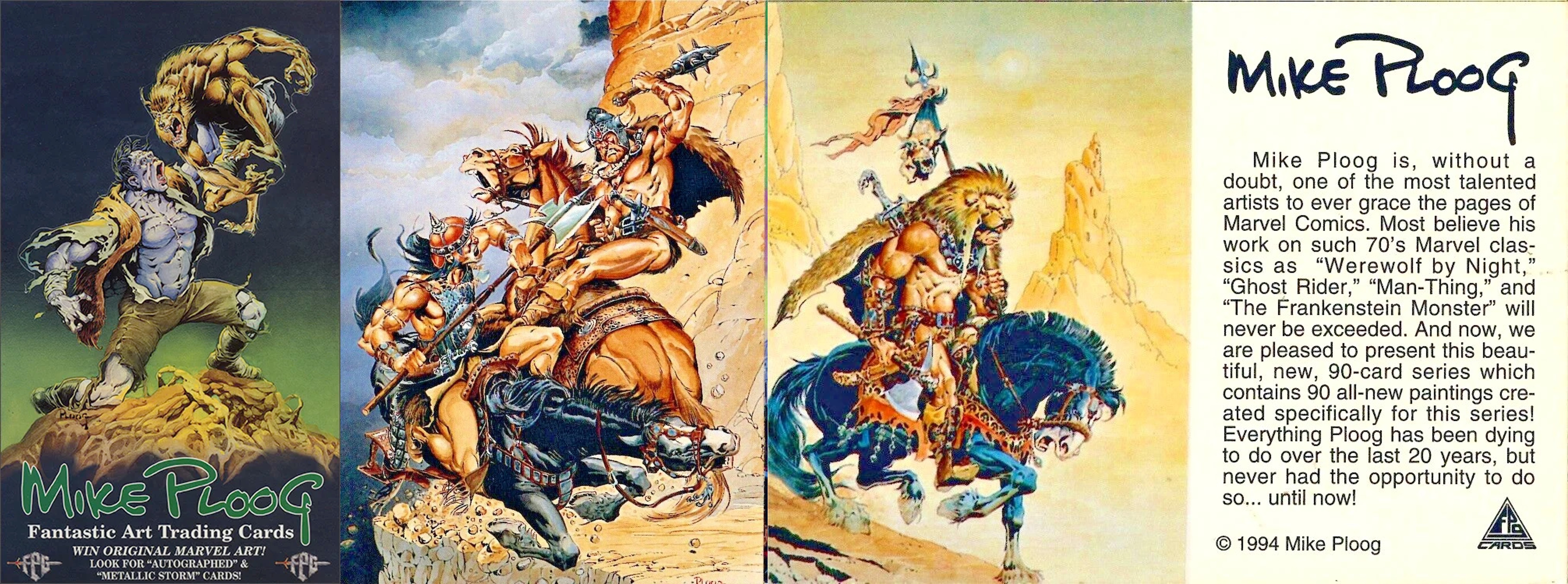
I absolutely love Mike Ploog‘s fantasy art. I first became consciously aware of him through his 1994 trading card collection, back when I was working at Metro Comics. I collected all those cards and used them as visual references and inspiration for NPCs and events in my homebrew world.
I eventually realized I had already seen his comic work in various back issues. I also found out later that he worked on Ralph Bakshi’s animated movies, Wizards and The Lord of the Rings, which were two of my absolute favorites!
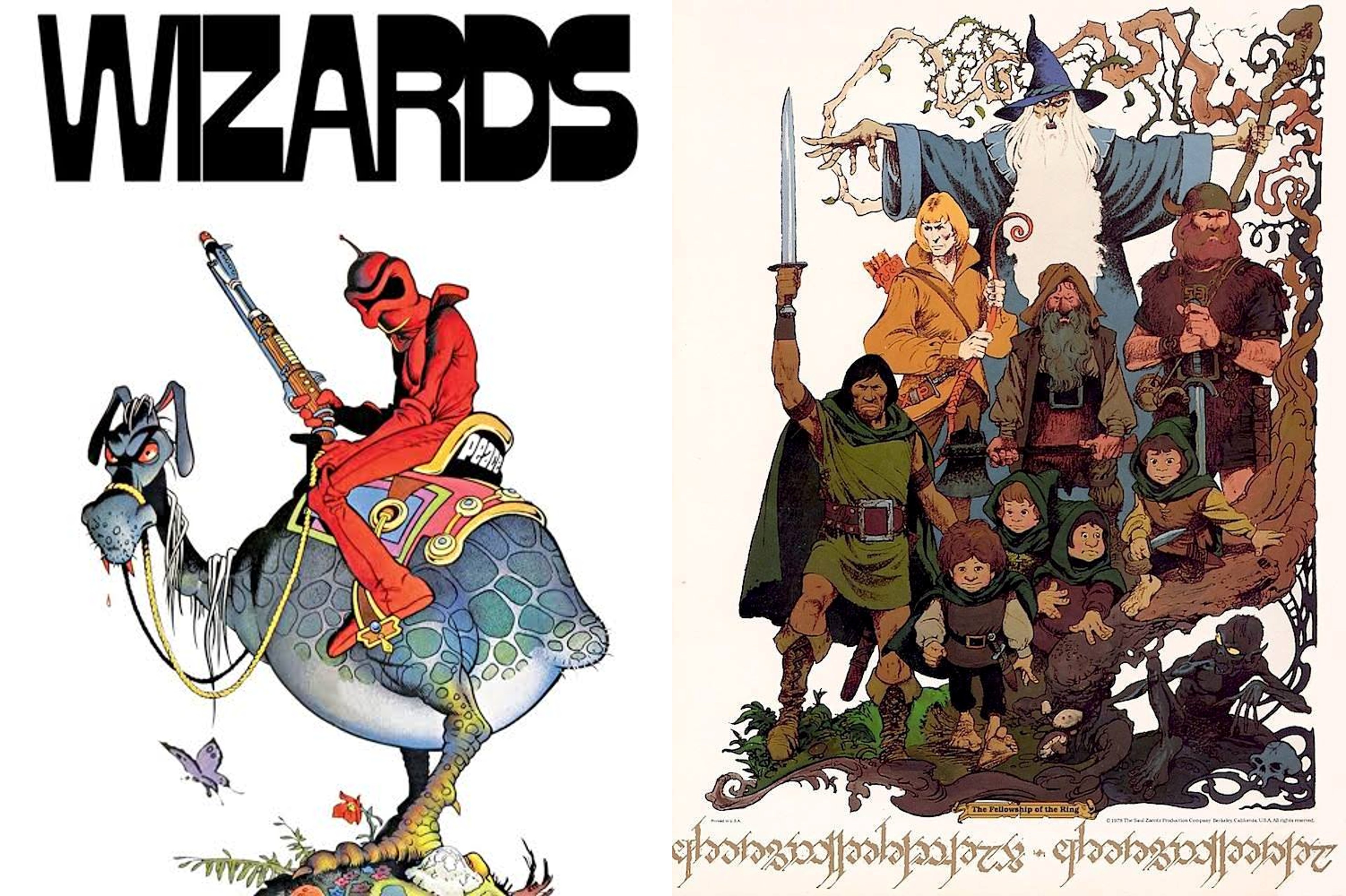
His art style was a bit cartoony—different from the more traditional fantasy art that usually inspired me as a young GM—but it had this incredible dynamism and movement that other pieces just lacked. Sadly, I no longer have the complete trading card set. But back in the days before high-speed internet and Pinterest, physical art books and trading cards were the main sources of visual inspiration for the table.
The Weirdworld connection that sparked all these memories is actually pretty funny. I had completely forgotten about these characters. I originally read about them in Marvel Fanfare issues 24-26 back in 1986. Because I was such a huge Elfquest fan, I was thrilled to find another fantasy story, but I remember being a little disappointed. It just didn’t capture me the way Elfquest did. As it turns out, the stories I read were NOT drawn by Mike Ploog!
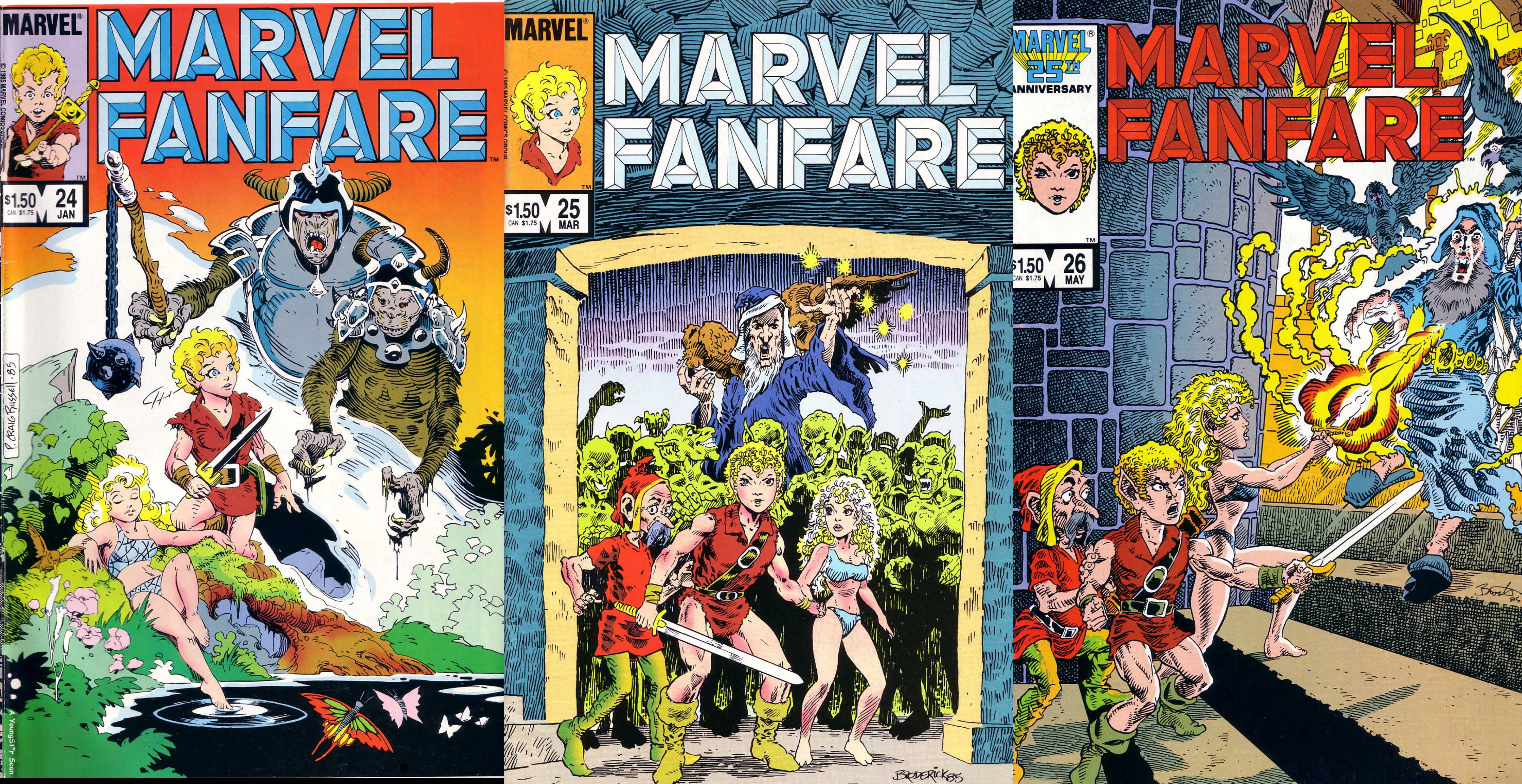
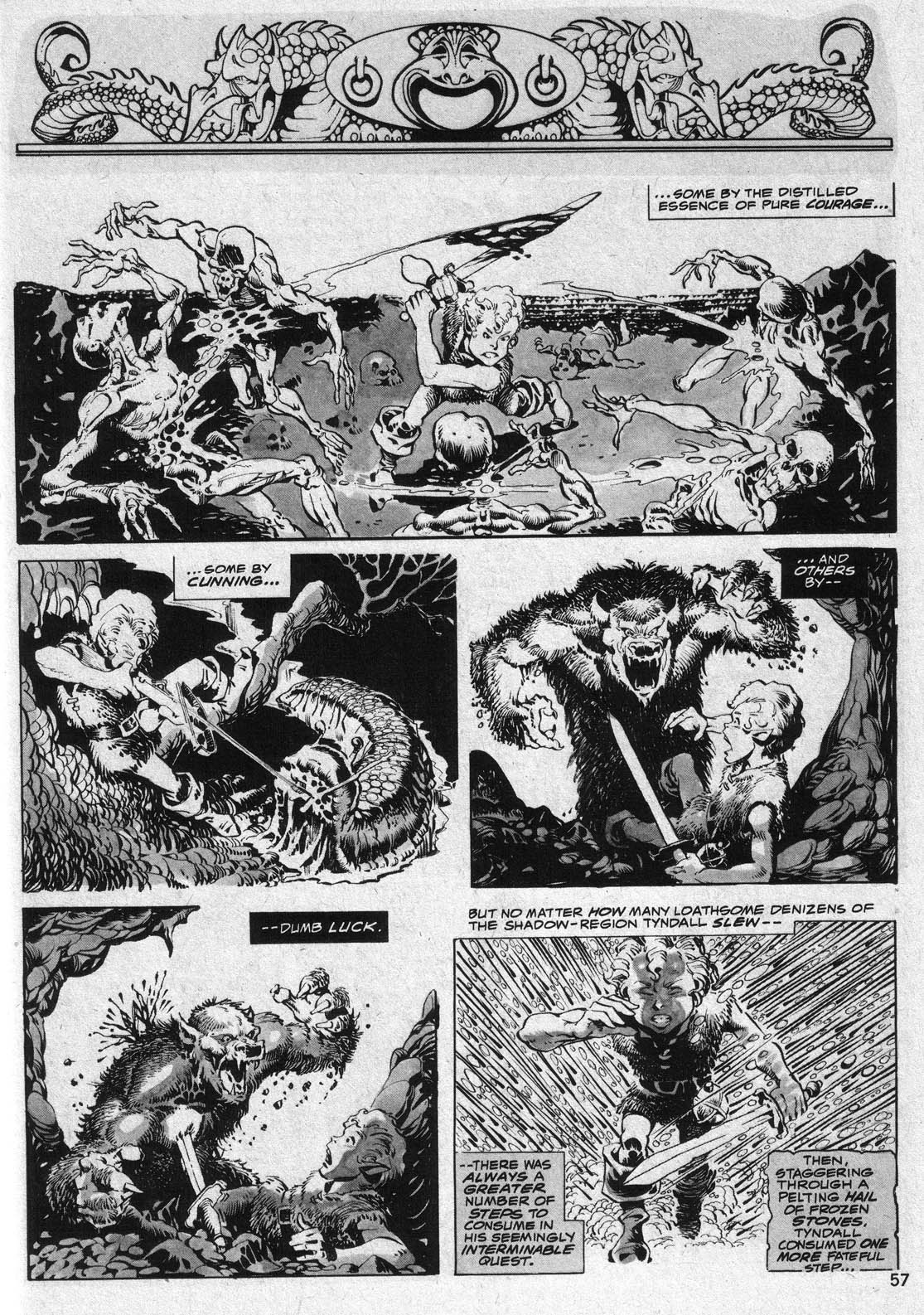
Because of that, I completely forgot about the setting until I stumbled across it again a few days ago and realized it was co-created by one of my favorite artists. What a great connection to finally make. You can see some of Ploog’s original Weirdworld art below.
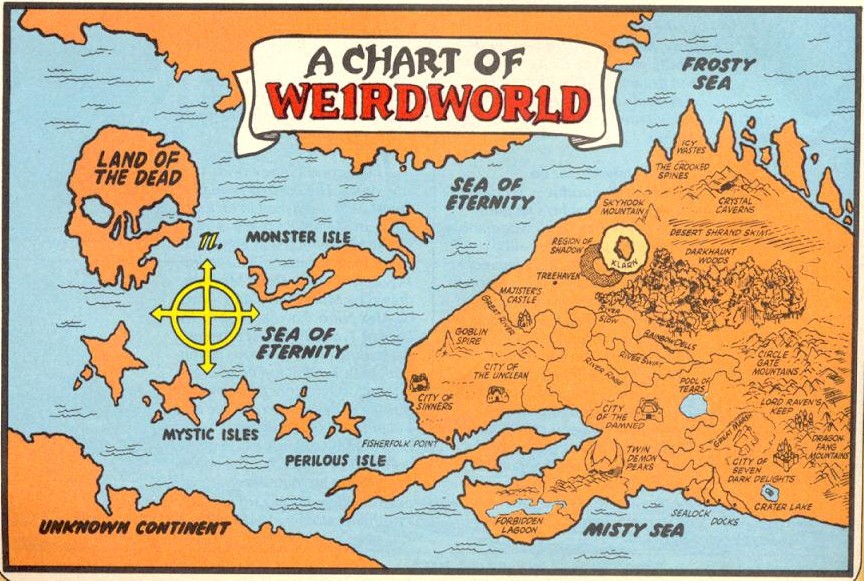
Bonus! There was a map of Weirdworld published in Epic Illustrated #9. The map is a little silly—or perhaps whimsical, and fairy-like is a better description! While I might not use it as direct inspiration for a TTRPG right now, we’ve had two significant adventures in the Fey Realm in my long-running homebrewed campaign, so I am absolutely keeping this handy for later reference.
Categories: Tabletop Gaming Blogs
It's April
Random notes.
After having ran and played in multiple games with player-facing dice rolls, I gotta say I strongly prefer them. Having players roll all the dice frees the GM up to focus more on what's happening and what happens next and it keeps players being active contributors.
Player-facing rolls have moved up the ranks in my gaming preferences right up there with luck points and death choices.
Speaking of gaming... shit I'm behind. I playtested ZSF and I'm in a spot where I could hone it, focus in, and get the game done. But right now in this instant I do not have that fire. I'll get back to it later.
Meanwhile I've dashed out a few other game ideas. I wrote one the other day based an older idea called Dirty Dozen Death Squad. You make a unit of 4 or 5 characters, then all the players bring all their characters and you just go through a violent mission. I guess it's more of a skirmish game and RPG.
Made another one this week. No name yet, but it's got a neat little core where you roll a d20 if you've got a skill and a d12 if you don't. Each hit you take knocks you down a die step. But it's not a combat game... it's more of an explore and interact kind of thing.
Sketching is always on the table. Tons and tons of drawing and doodling and coming up with ideas. I've written many comic book scripts lately. I just can't seem to find the oomph to focus on one thing long enough to get it done.
But I'll get there.

Categories: Tabletop Gaming Blogs
New Flesh Rpg Adventure - Mission Brief: Operation "Threnody in Glass" Adapting The Cultclassic TV show T.H.E. Cat into our New Flesh campaign- "The Hemostat"
The PC's were contacted by The Ghost of Hong Kong after she took on an assignment from Tankana's corporate rivals. I'm using The Ghost of Hong Kong: Targets as a reference. The events of Bidonville Blues adventure & the Thresher almost ended two PC's. This session report picks right up from New Flesh Rpg Adventure - Mission Brief: Needleshttp://www.blogger.com/profile/11243274667834930867noreply@blogger.com0
Categories: Tabletop Gaming Blogs
OSR Commentary Adapting I2: Dwellers In The Forbidden City by David Cook To The Barrows & Borderlands Rpg
Adapting David Cook’s 1981 classic I2: Dwellers of the Forbidden City for a modern, grit-forward system like Barrows & Borderlands (B&B) requires shifting the focus from "heroic monster-slaying" to "tactical survival and factional maneuvering." This blog post picks right up from OSR Commentary Adapting C1: The Hidden Shrine of Tamoachan To The Barrows & Borderlands RpgThe Needleshttp://www.blogger.com/profile/11243274667834930867noreply@blogger.com0
Categories: Tabletop Gaming Blogs
Mining 70s DC Comics for TTRPG Inspiration: Maps, Missing Souls, and Cosmic Conflicts
When I recently shared that image of classic DC Comics sword-and-sorcery characters as great TTRPG inspiration on my Facebook Page (see the featured image above!), I honestly didn’t expect to fall down such a deep rabbit hole learning about them. But one thread pulled another, and I ended up finding some incredible material that I can’t wait to bring to the table.
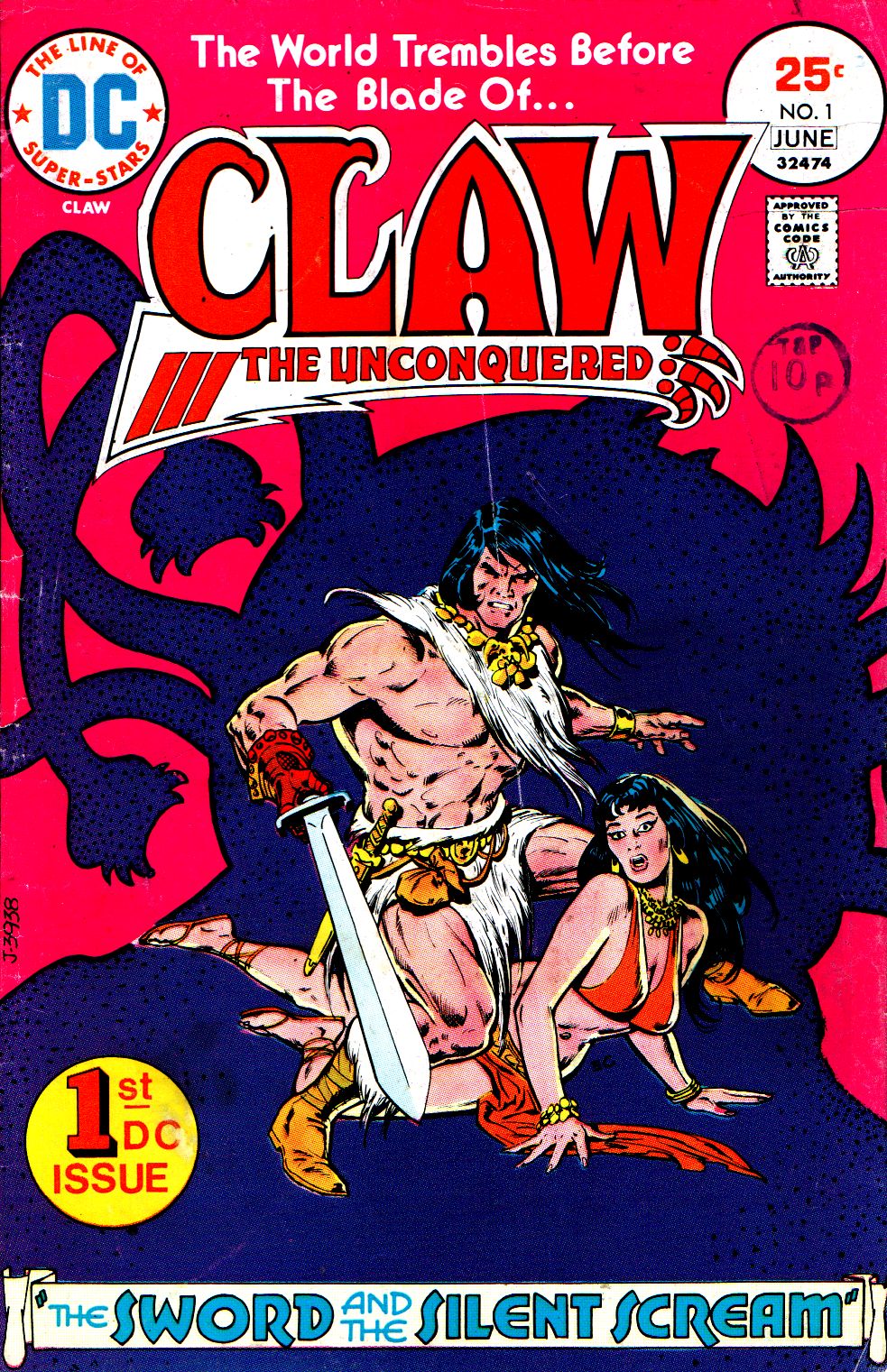
First up was Claw the Unconquered. At first glance, he looks like a standard Conan knockoff. But I was reading Scott Dutton’s Catspaw Dynamics blog (which I mentioned in the blog post where I wrote about Conqueror of the Barren Earth), and Scott shared some beautifully digitally recreated art for the series. More importantly, he shared a map of the setting where Claw’s adventures take place.
It’s literally called “The Known World.”
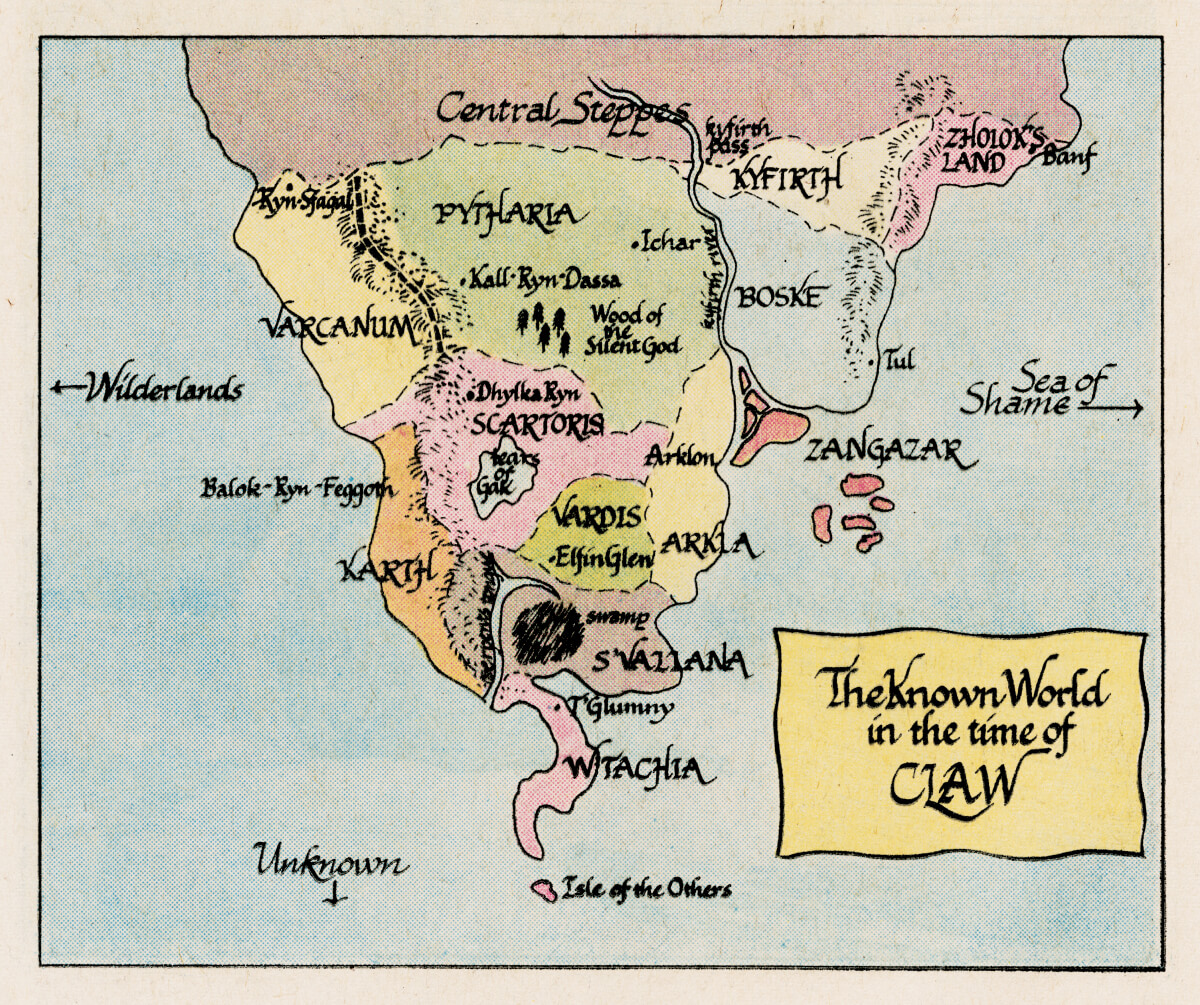
Anyone who knows me knows I am an absolute sucker for fantasy maps, and seeing a “Known World” instantly triggered my Mystara nostalgia! Seeing this immediately makes me want to track down these old comics just to learn more about how they built this world and see what I can borrow for my own campaigns.
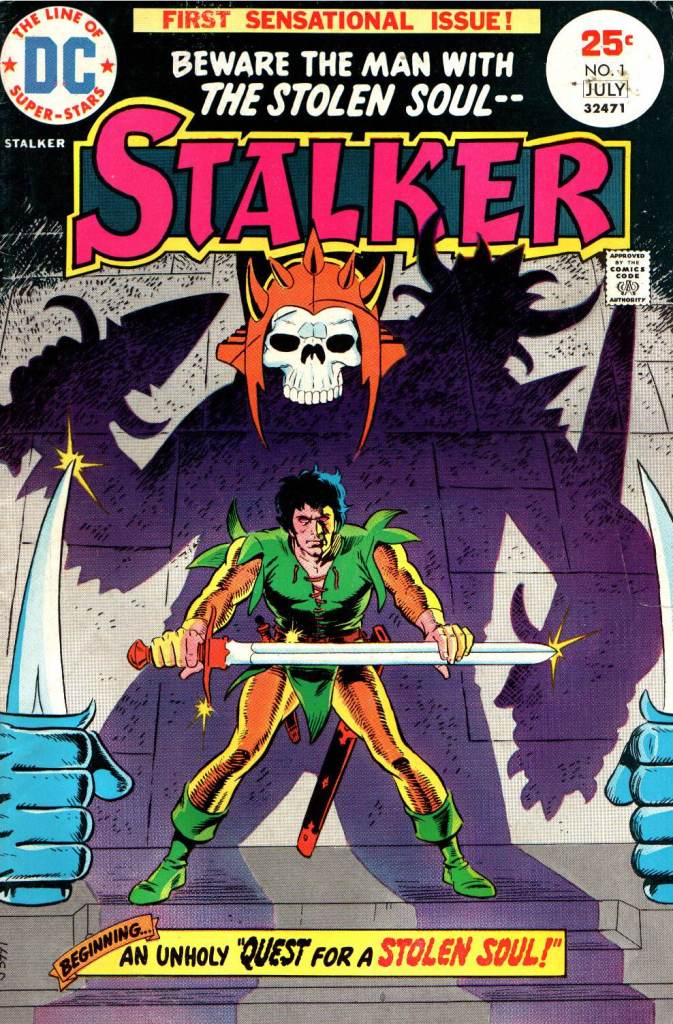
Another classic DC Comics sword-and-sorcery character from that same era that caught my attention is Stalker. And just like Claw the Unconquered, he has a world map too! It’s a simpler one, but it still makes me want to mine it for campaign material.
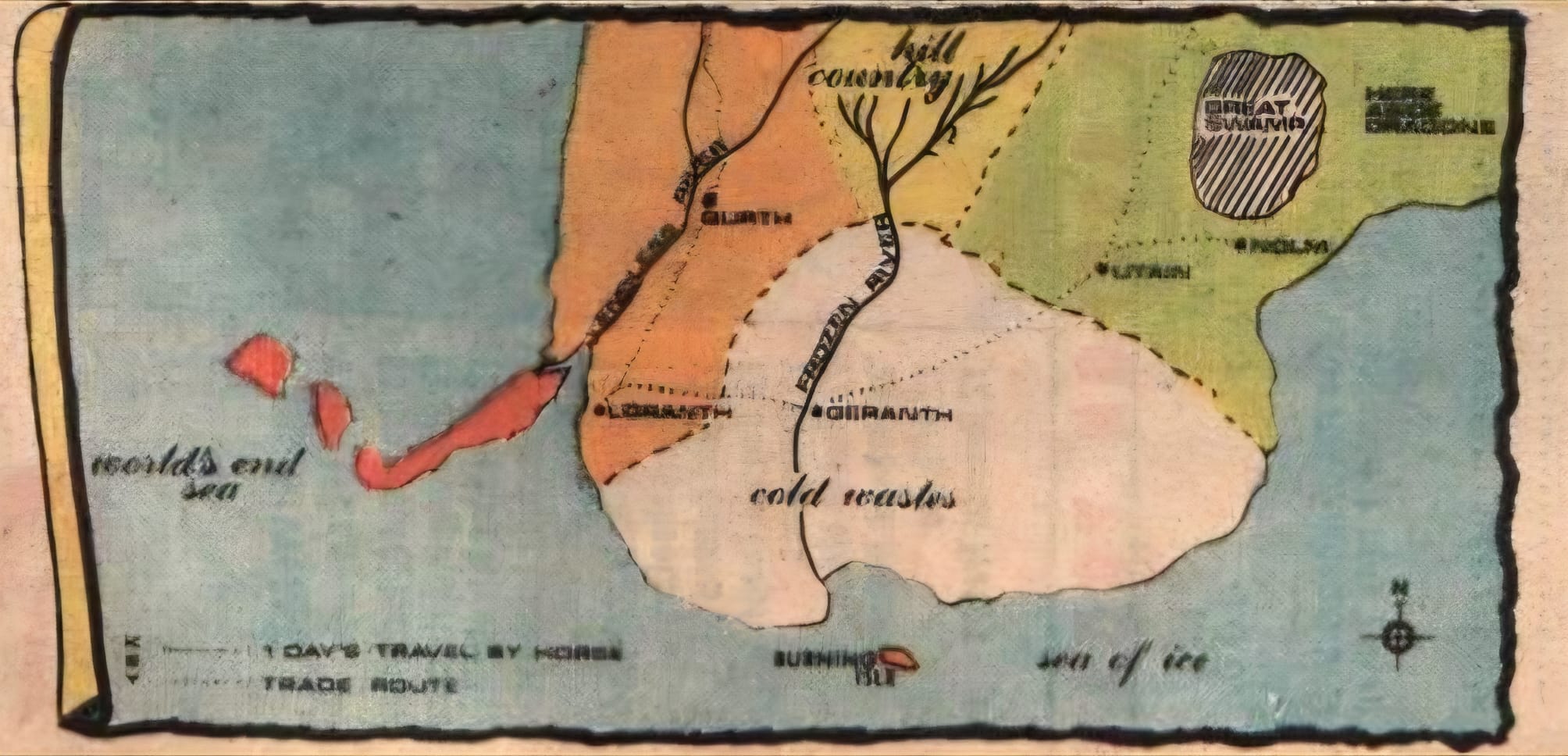
The premise of the book is intriguing: Stalker is a man who sells his soul to become an unbeatable warrior, then goes on a brutal quest to recover it. The art is by the legendary Steve Ditko—obviously of Spider-Man fame, but he did so much more than that. The whole concept of a soulless warrior trying to wrest his soul back from the demon god who granted him power is such a perfect hook for a TTRPG campaign.
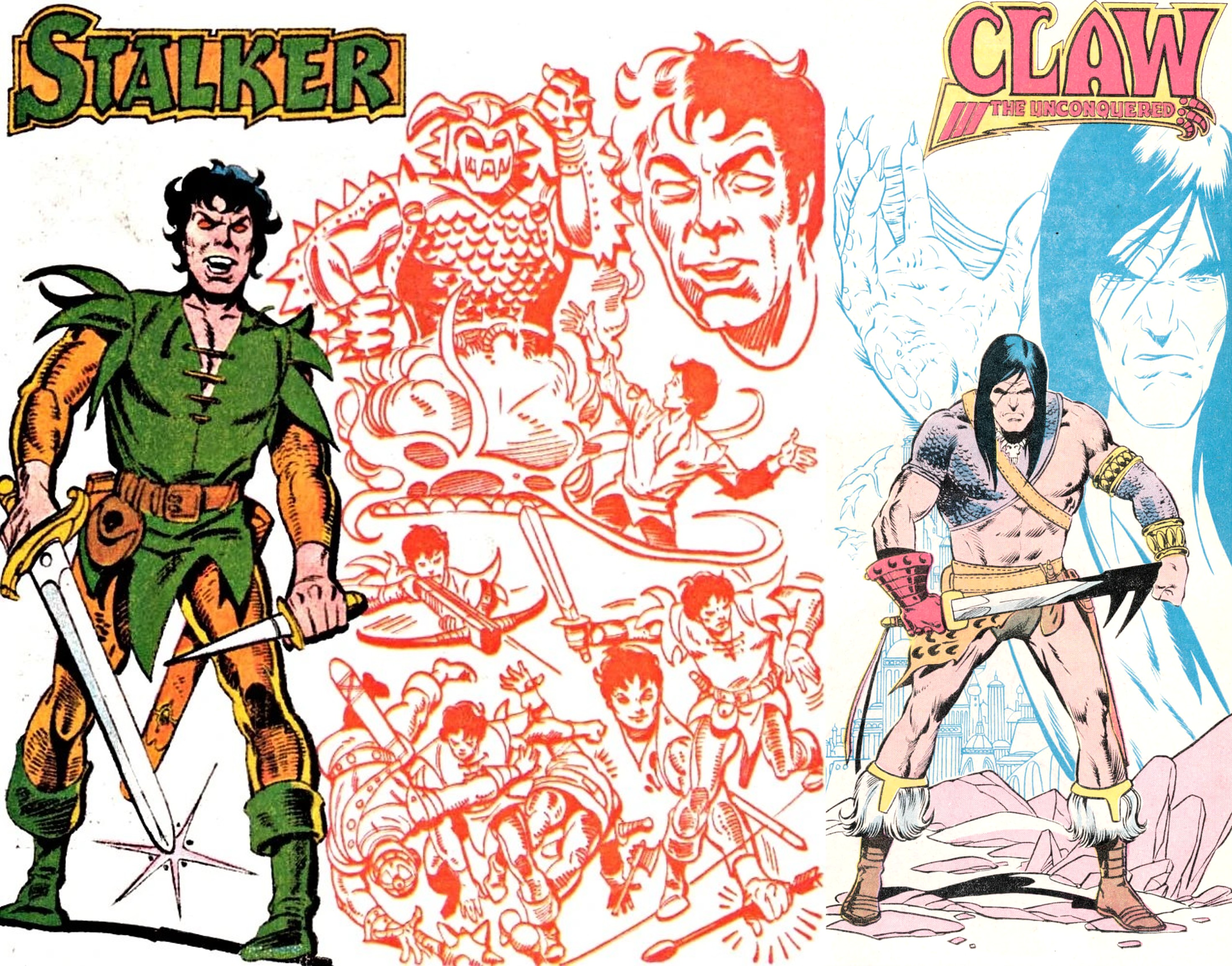
I really want to drop Stalker the Soulless and Claw the Unconquered in as NPCs in a future fantasy game. They could easily fit into Worlds Without Number or Savage Worlds, but honestly, they both give me massive Shadowdark or Old School Essentials vibes. Since I’ve been rereading the Shadowdark rules during my recent holiday, I’m genuinely tempted to just roll up a PC based entirely on Stalker.
As I kept digging, it turns out that back in the late 70s, DC wasn’t just publishing sword-and-sorcery heroes. They were also putting out some wild science-fantasy and sci-fi comics. I honestly did not know much, if anything, about these until I took this deep dive into old comics lore!
There are two I want to learn more about, especially since the descriptions I read online make them seem to be in the exact same vein as one of my all-time favorites, Atari Force.
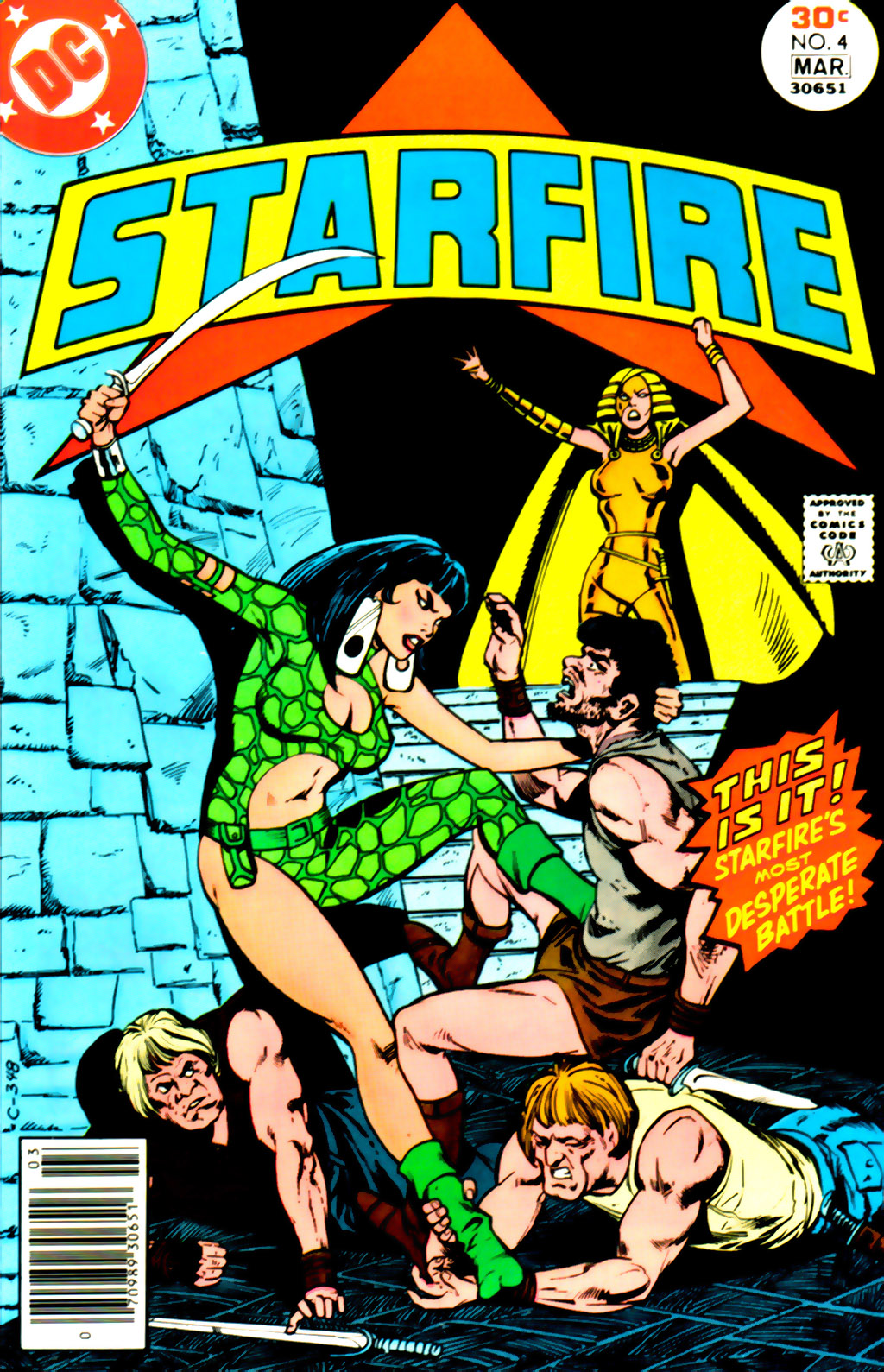
The first is a science-fantasy heroine named Starfire (yes, she had the name before the Teen Titans character!). According to a quote from Hope Nicholson’s The Spectacular Sisterhood of Superwomen on the Wikipedia page, she was originally meant to be DC’s answer to Marvel’s Red Sonja. However, writer David Michelinie took her in a different creative direction, trying to give the series a vibe closer to Edgar Rice Burroughs‘ Barsoom.
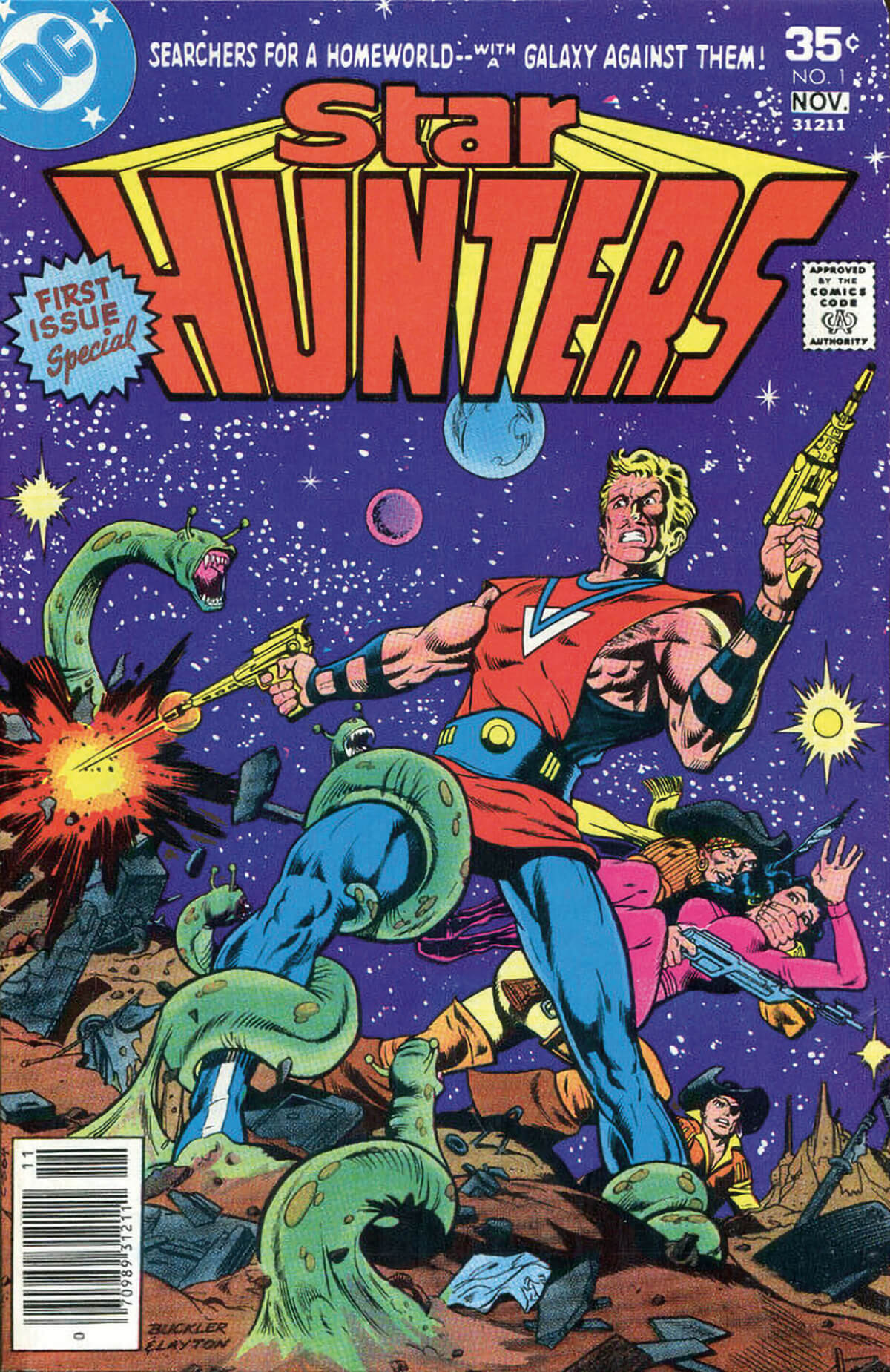
The second is a sci-fi team book called Star Hunters. According to one review I read, it sounds like a bit of a mess—but that might be the fun of it. The art looks genuinely intriguing, and Donovan Flint, the titular Star Hunter, looks an awful lot like Corsair from the X-Men.
Here is the absolute best part of this whole dive: Michelinie actually created Claw the Unconquered, Starfire, and Star Hunters, and he originally wanted them all to be connected as champions in a massive battle between universal forces. It is a direct callback to that cosmic Law vs. Chaos conflict I wrote about Arion a few days ago.
All of this will absolutely serve as inspiration for my future Stars Without Number campaign.
If you want to check out the art and read more about these characters, the Catspaw Dynamics blog has some great entries with preserved and recreated art:
- Claw the Unconquered
- Starfire Poster by Mike Vosburg
- Star Hunters #1 Cover
- Star Hunters #8 (Unpublished Cover)
- The Connected DC Universe of David Michelinie
And if you want a laugh, here is that review of Star Hunters.
Categories: Tabletop Gaming Blogs
The Rook & The Crook
By Taron Pounds
Land of the Blind
OSR/Vagabond
Levels 6-10
Land of the Blind
OSR/Vagabond
Levels 6-10
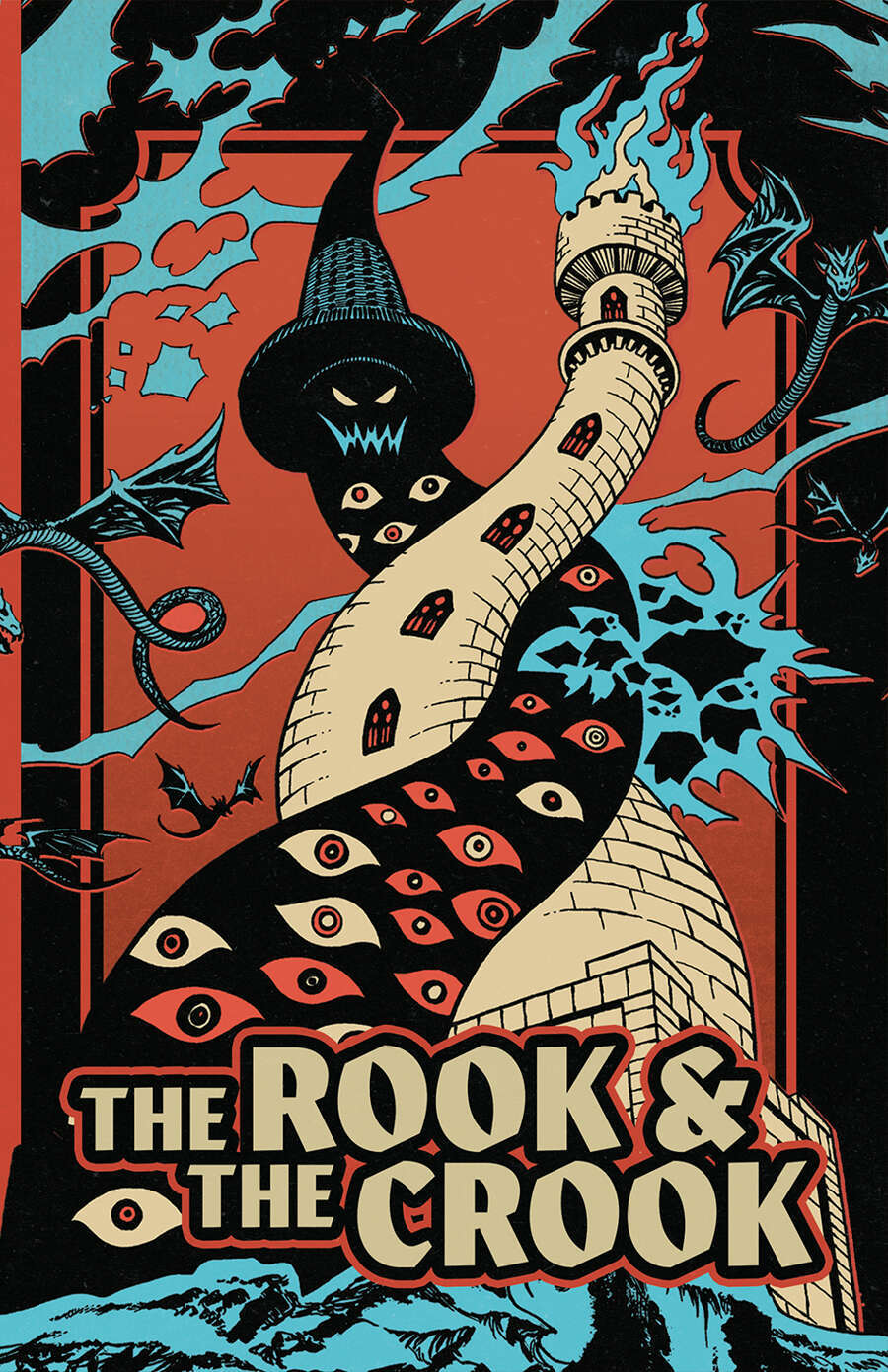
An explosion rocks a nearby mountain range. Once the dust clears, two twisted and screaming towers remain: one black and one white. Ominous seals appear on the moon and stars. A wicked smile spreads across the eye-spotted black tower’s upper story, capped by a witch hat-like roof. Its upper and lower floors appear to be separated, with arcs of blue lightning emanating from its center. The white tower is a bastille of pale stone, with an otherworldly blue fire burning at its top. Windows of stained glass bend without breaking along the white tower’s exterior, and eyes of madness follow those who approach the black. A flock of winged serpents fly around these profanities of architecture. No one knows where these towers came from, and what has corrupted the celestial bodies. It is up to the heroes to uncover the mystery to stop a cataclysm that has been unfolding for centuries in secret.
This 44 page dungeon presents two towers with about nineteen rooms between them. It’s a funhouse dungeon in which the world ends. That’s fun! Also, you don’t actually need to do anything here but go to the top floor and pull a lever. That’s fun! I don’t see a reason to go inside.
The gods have trapped one of their own in a magic prison. Dude wants out and finally is about to break free, thanks to his two followers, each of whom built a tower. You don’t know any of this. You’ve just got some generic rando hooks that come down to “you see these two weird towers.” I hope you go inside, because if you don’t then the world ends. That’s rough. Anyway, you go inside and find a funhouse dungeon, the two towers connected to each other with some magic pathways and normal stairs and so on. Turns out that if “the steamworks” is functioning inside the tower, and someone has had their soul aged in the aging room, then if you pull the level at the top of one of the towers then the trapped god will go back to jail. There’s a friendly phoenix, powering the steamworks through a portal to the elemental plane of water, that will tell you all of this who is at the top of the other tower. Anyway, so, the steamworks already works. And someone has already given their soul to the aging room. So, just pull the level in the other tower.
To get there you will need to … ignore everything. Basically. Whatever is in the room, just ignore it and go up the stairs or through a door. Yeah! You’ve overcome that challenge. I’m not sure anything really attacks you in this unless you go fucking with shit. Oh, wait, hang on, there’s a death knight. “Motionless at first, but disappears if vision on him breaks and he then stalks the party.” I don’t know what the whole “disappears and then stalks” thing is about. I guess that’s for the DM to handle. So, I guess you gotta fight him? I THINK that’s the only required combat. Also, “required” is a loose word; I think you can make your way through the tower without having to go in to the throne room where he sits.
Let’s double check my theory. Room one, walk backwards down a mirror hall. No consequences for not doing that. Room two, touch nothing and go up the stairs. No consequences for not doing that. Room three, go up the stairs and don’t touch the floating books. Room four, ignore the tree and go through one of the doors. Room five ignore everything. Room six, go through a door. Room seven, go up the stairs. Room eight, go up the stairs. Room nine, go up the stairs. Room ten, meet the phoenix. That’s one full tower and half the rooms. Congrats. The second tower, to my recollection, is more of the same.
But, hey, you can still make the world end. Every time you use a spell or a magic item or go through a magic portal in the tower then the DM rolls a die. The third time they roll a one the dude breaks free and immediately destroys the universe. You get a warning though, you hear an owl screeching, which, obviously, means the universe is going to end if you cast another spell. This mechanic also ties in to a fun “weird things happen!” table, with entries like “Unluckiest PC must save or their limbs become accordions for 1 Minute.” or some blobs teleport in, loudly fart, and then teleport out again. Fun! … Humor, gentle readers, is highly subjective and doesn’t translate well.
We lead off with three paragraphs of italics read-aloud. We get read-aloud like “This room appears to have been built to keep a phoenix in a consecrated prison.” Appears to be. And how the fuck do we know it’s a prison? Or that it’s consecrated? It’s just garbage. In one room you find some masks. “Each is Cursed and Sentient, but only speaks while worn.” We’re referred to a table telling us what they do. “The wearer fails Checks against surprise.” Dazzling. Sublime. You didn’t even bother to give the mask a name or a personality or anything else.
I’m not a fan of the zany funhouse, but this isn’t that. I’m also not a fan of the museum trip, and this is more in that vein. Just don’t touch anything and look at the scenery and you’ll be fine. But, also, the whole “lets nerf the party” and “oops! The world ended! Guess you didn’t figure out that was going on!” is VERY time. You need to communicate that the party is racing against time or else it’s not a race against time. It just ends up being the wandering damage table and rocks fall, everyone dies. Weird that’s not fun. And if you need to nerf the party then you wrote the adventure for the wrong level range.
This is $5 at DriveThru. The preview is seven pages and shows you nothing of import. Poor preview.
https://www.drivethrurpg.com/en/product/561060/the-rook-the-crook?1892600
Categories: Tabletop Gaming Blogs
Wednesday Comics: DC, July 1985 (week 3)
I'm reading DC Comics' output from January 1980 (cover date) to Crisis! This week, I'm looking at comics that were published on April 18, 1985.
Batman and the Outsiders #23: The story continues from last issue: the Outsiders are trying to rescue Halo from the Aurakles. First, they travel to Japan to retrieve the ritual necessary to call forth the Aurakle whose soul is captive in Katana's sword. They compel the being to take them to its dimension. There they defeat the Aurackles in a surprise attack leading up to a threat to destroy them all via Black Lightning's power and Metamorpho turned into a conductive line. The Aurackles give in and let Halo go. Halo is conflicted over the fact that she stole Violet Harper's body, possibly even inadvertently killing the young woman, but Katana tries to assure her that Violet was a terrible person who didn't deserve life, making Violet (like Terra) one of the "utterly evil young women" of the era. Halo isn't completely convinced, though, so maybe Barr isn't either. Davis' art is perhaps not as polished as what will come from him in a few years, but it's already great.
Blue Devil #14: Mishkin/Cohn and Kupperberg/Maygar introduce Kid Devil, whose Marla's nephew, Gopher, in a devil suit he built from stuff in Dan's workshop. Smart kid! Dan is, at first, annoyed, but when the plane Gopher's parents are arriving in is hijacked, Kid Devil is helpful in saving them.
G.I. Combat #278: The first Haunted Tank story by Kanigher/Glanzman is sort of weird (which has been happening a lot lately). The Elder Craig is having nightmares and survivor's guilt about his former tank crew from WW I that were never recovered. When trying to defend a bridge at Riviere Du Diable, the crew finds a tank and bodies from the previous war, then slip into some liminal realm (time travel maybe?) where they are unable to act in their defense, but the ghosts of Craig's old crew come to their rescue.
There are 3 short World War II stories. One is brief Haunted Tank piece about the younger Craig, but the other two feature non-series characters: a G.I. in love with a French girl trying to save her village and a klutzy apiarist G.I. who uses his bee-knowledge to save the day.
Finally, there's a Mercenaries story, but it is one of the weakest some far, I think. After foiling a kidnapping attempt against some guy in San Francisco, they agree to be his bodyguards and go with him to his secret research vessel, Pandora, in Antarctic waters where he's developed a ship-based satellite-killer missile. All of this makes him seem like a super-villain, but before we can explore any of this they are attacked by a Soviet ship. The Mercenaries sink Pandora rather than let it fall into Soviet hands.
Green Lantern #190: This Predator arc takes a weird turn. As Stewart tries to get his ring to tell him his predecessor's secret ID, Green Arrow, Black Canary, and the reporter Tawny show up with video tapes that record Stewart visiting with the two heroes at Carol's house in Coast City, something that none of them remember. Suddenly, everyone is paralyzed, and Predator swoops in and pops the tape out of the player. Katma is unaffected and tries to stop him but can't. The others have no memory of these events.
Meanwhile, Hal is on a stakeout, trying to figure out who the Predator is. He follows him, but the Predator alludes him. In the abandoned theater where the Predator had apparently been holed up, Hal catches the distinct smell of Carol's new perfume.
Also, Guy Gardner starts to come out of his coma.
Infinity, Inc. #16: The Thomases and McFarlane/DeZuniga introduce Mr. Bones, who has a design that sort of anticipates McFarlane's Spawn. Before this though, the issue has a beach volleyball match to get in some gratuitous swimsuit shots not unlike a lot of stuff we'll be seeing in X-Men in the latter eighties. Among the bikini beauties is the newly introduced Yolanda Montez, who we aren't told much about yet, but she arrives with Wildcat. Anyway, after all this, Bones catches Fury alone and kidnaps her. To be continued!
New Teen Titans #10: Having finished the previous storyline, this issue is mostly setup for things to come. Lilith is made an Olympian god, and the other Teen Titans are sent back to Earth. Everybody is happy, except for Azrael who's really broken up, and the Titans are perhaps realistically but amusingly not terribly sympathetic to him. Cyborg kind of makes fun of him, and Azrael flies off. Meanwhile, a Tamaranian ship heads toward Earth to retrieve Koriand'r now that the Citadel is defeated.
Most of the issue is devoted to Joe and Kole. He helps her go looking for her father. In a sequence like something out of one of DC's bygone horror titles, her scientist Dad rants and tries to force them away. Joe possesses his body and they go into his laboratory, which they find full of monstrous human mutants created to find some form that could survive a nuclear war. freaked out, Joe and Kole flee. I'm sure that's not the last we've seen of Dr. Weathers, though.
Sgt. Rock #402: The main story by Kanigher/Redondo tells something of Wildman's background as the seemingly neurologically locked-in G.I. is about to receive a metal for bravery. Wildman manages to wake up and move to declare he doesn't deserve the award as the real act of heroism was performed by a former student of his who had just joined Easy.
In the second story, a reprint from 1974, an Indian survivor of a U.S. Cavalry attack on his village gets revenge on the soldiers by stealing their horses in a mountain trap. When a blizzard descends, the warrior pragmatically uses the horses to survive while the soldiers freeze to death.
Saga of Swamp Thing #38: Moore and Woch/Totleben get "American Gothic" underway with the Swamp Thing returning to Rosewood, Illinois, which he last visited about 3 years ago to the day in issue 3. Flooding Rosewood didn't get read of the vampires, but instead caused them to evolve into an aquatic, eusocial form, even more dangerous. Before telling Swampie anything more of the secrets he wants, Constantine wants him to deal with those vampires, so Swamp Thing wades in to do that.
Warlord #94: I reviewed this issue here.
Who's Who #4: More C's! Looking at characters particularly related to the period I've been reading here, we have Circe from Wonder Woman who re-appeared not too long ago, Computo showed up in Legion, and the Construct who just turned up last week in Red Tornado #1. Color Kid is also fresh off an appearance in the Legion of Substitute Heroes Special #1. There are also several entries for characters/organizations that had their first appearance in this period: The Creature Commandos soldiered through Weird War Tales for a period close to its ending; Colonel Future from introduced in Superman #378 and had at least 1 appearance since, and then there's Croc who got a whole arc in the Bat-titles. Two of these represent dangling mysteries: The identity of Colonel Computron was left unrevealed, though maybe it has been post-Crisis, as the character has had a few appearances. The generic, shadowy villainy of the Council from Supergirl is likewise noted here, though it never got fully exposed or dealt with. In the "Obscure Characters that Trey likes" column, we have Claw the Unconquered with art by Giffen.

Batman and the Outsiders #23: The story continues from last issue: the Outsiders are trying to rescue Halo from the Aurakles. First, they travel to Japan to retrieve the ritual necessary to call forth the Aurakle whose soul is captive in Katana's sword. They compel the being to take them to its dimension. There they defeat the Aurackles in a surprise attack leading up to a threat to destroy them all via Black Lightning's power and Metamorpho turned into a conductive line. The Aurackles give in and let Halo go. Halo is conflicted over the fact that she stole Violet Harper's body, possibly even inadvertently killing the young woman, but Katana tries to assure her that Violet was a terrible person who didn't deserve life, making Violet (like Terra) one of the "utterly evil young women" of the era. Halo isn't completely convinced, though, so maybe Barr isn't either. Davis' art is perhaps not as polished as what will come from him in a few years, but it's already great.

Blue Devil #14: Mishkin/Cohn and Kupperberg/Maygar introduce Kid Devil, whose Marla's nephew, Gopher, in a devil suit he built from stuff in Dan's workshop. Smart kid! Dan is, at first, annoyed, but when the plane Gopher's parents are arriving in is hijacked, Kid Devil is helpful in saving them.

G.I. Combat #278: The first Haunted Tank story by Kanigher/Glanzman is sort of weird (which has been happening a lot lately). The Elder Craig is having nightmares and survivor's guilt about his former tank crew from WW I that were never recovered. When trying to defend a bridge at Riviere Du Diable, the crew finds a tank and bodies from the previous war, then slip into some liminal realm (time travel maybe?) where they are unable to act in their defense, but the ghosts of Craig's old crew come to their rescue.
There are 3 short World War II stories. One is brief Haunted Tank piece about the younger Craig, but the other two feature non-series characters: a G.I. in love with a French girl trying to save her village and a klutzy apiarist G.I. who uses his bee-knowledge to save the day.
Finally, there's a Mercenaries story, but it is one of the weakest some far, I think. After foiling a kidnapping attempt against some guy in San Francisco, they agree to be his bodyguards and go with him to his secret research vessel, Pandora, in Antarctic waters where he's developed a ship-based satellite-killer missile. All of this makes him seem like a super-villain, but before we can explore any of this they are attacked by a Soviet ship. The Mercenaries sink Pandora rather than let it fall into Soviet hands.

Green Lantern #190: This Predator arc takes a weird turn. As Stewart tries to get his ring to tell him his predecessor's secret ID, Green Arrow, Black Canary, and the reporter Tawny show up with video tapes that record Stewart visiting with the two heroes at Carol's house in Coast City, something that none of them remember. Suddenly, everyone is paralyzed, and Predator swoops in and pops the tape out of the player. Katma is unaffected and tries to stop him but can't. The others have no memory of these events.
Meanwhile, Hal is on a stakeout, trying to figure out who the Predator is. He follows him, but the Predator alludes him. In the abandoned theater where the Predator had apparently been holed up, Hal catches the distinct smell of Carol's new perfume.
Also, Guy Gardner starts to come out of his coma.

Infinity, Inc. #16: The Thomases and McFarlane/DeZuniga introduce Mr. Bones, who has a design that sort of anticipates McFarlane's Spawn. Before this though, the issue has a beach volleyball match to get in some gratuitous swimsuit shots not unlike a lot of stuff we'll be seeing in X-Men in the latter eighties. Among the bikini beauties is the newly introduced Yolanda Montez, who we aren't told much about yet, but she arrives with Wildcat. Anyway, after all this, Bones catches Fury alone and kidnaps her. To be continued!

New Teen Titans #10: Having finished the previous storyline, this issue is mostly setup for things to come. Lilith is made an Olympian god, and the other Teen Titans are sent back to Earth. Everybody is happy, except for Azrael who's really broken up, and the Titans are perhaps realistically but amusingly not terribly sympathetic to him. Cyborg kind of makes fun of him, and Azrael flies off. Meanwhile, a Tamaranian ship heads toward Earth to retrieve Koriand'r now that the Citadel is defeated.
Most of the issue is devoted to Joe and Kole. He helps her go looking for her father. In a sequence like something out of one of DC's bygone horror titles, her scientist Dad rants and tries to force them away. Joe possesses his body and they go into his laboratory, which they find full of monstrous human mutants created to find some form that could survive a nuclear war. freaked out, Joe and Kole flee. I'm sure that's not the last we've seen of Dr. Weathers, though.

Sgt. Rock #402: The main story by Kanigher/Redondo tells something of Wildman's background as the seemingly neurologically locked-in G.I. is about to receive a metal for bravery. Wildman manages to wake up and move to declare he doesn't deserve the award as the real act of heroism was performed by a former student of his who had just joined Easy.
In the second story, a reprint from 1974, an Indian survivor of a U.S. Cavalry attack on his village gets revenge on the soldiers by stealing their horses in a mountain trap. When a blizzard descends, the warrior pragmatically uses the horses to survive while the soldiers freeze to death.

Saga of Swamp Thing #38: Moore and Woch/Totleben get "American Gothic" underway with the Swamp Thing returning to Rosewood, Illinois, which he last visited about 3 years ago to the day in issue 3. Flooding Rosewood didn't get read of the vampires, but instead caused them to evolve into an aquatic, eusocial form, even more dangerous. Before telling Swampie anything more of the secrets he wants, Constantine wants him to deal with those vampires, so Swamp Thing wades in to do that.

Warlord #94: I reviewed this issue here.

Who's Who #4: More C's! Looking at characters particularly related to the period I've been reading here, we have Circe from Wonder Woman who re-appeared not too long ago, Computo showed up in Legion, and the Construct who just turned up last week in Red Tornado #1. Color Kid is also fresh off an appearance in the Legion of Substitute Heroes Special #1. There are also several entries for characters/organizations that had their first appearance in this period: The Creature Commandos soldiered through Weird War Tales for a period close to its ending; Colonel Future from introduced in Superman #378 and had at least 1 appearance since, and then there's Croc who got a whole arc in the Bat-titles. Two of these represent dangling mysteries: The identity of Colonel Computron was left unrevealed, though maybe it has been post-Crisis, as the character has had a few appearances. The generic, shadowy villainy of the Council from Supergirl is likewise noted here, though it never got fully exposed or dealt with. In the "Obscure Characters that Trey likes" column, we have Claw the Unconquered with art by Giffen.
Categories: Comic Book Blogs, Tabletop Gaming Blogs
OSR Commentary - Castles & Crusades Codex Infernum Stephen Chenault, & Jason Vey For Old Campaign Setting
Codex Infernum for Castles & Crusades is a comprehensive infernal bestiary and sourcebook released by Troll Lord Games. It serves as a dark companion to Codex Exaltum (which focuses on celestial beings) and provides Castle Keepers (GMs) with the tools to integrate demons, devils, and the metaphysics of evil into their campaigns.Key Features & ContentThe Bestiary: The book contains Needleshttp://www.blogger.com/profile/11243274667834930867noreply@blogger.com0
Categories: Tabletop Gaming Blogs
Comic Books That Inspire My Gaming: Visualizing the Possibility Wars with Malibu’s Torg
For someone who posts primarily about tabletop role-playing games, I certainly have been talking a lot about comics lately. Indulge me again, because this one is directly related to the hobby. Today, I want to look at a comic book based specifically on a TTRPG—Malibu Comics’ 1992 Torg mini-series, published under their Adventure Comics imprint.
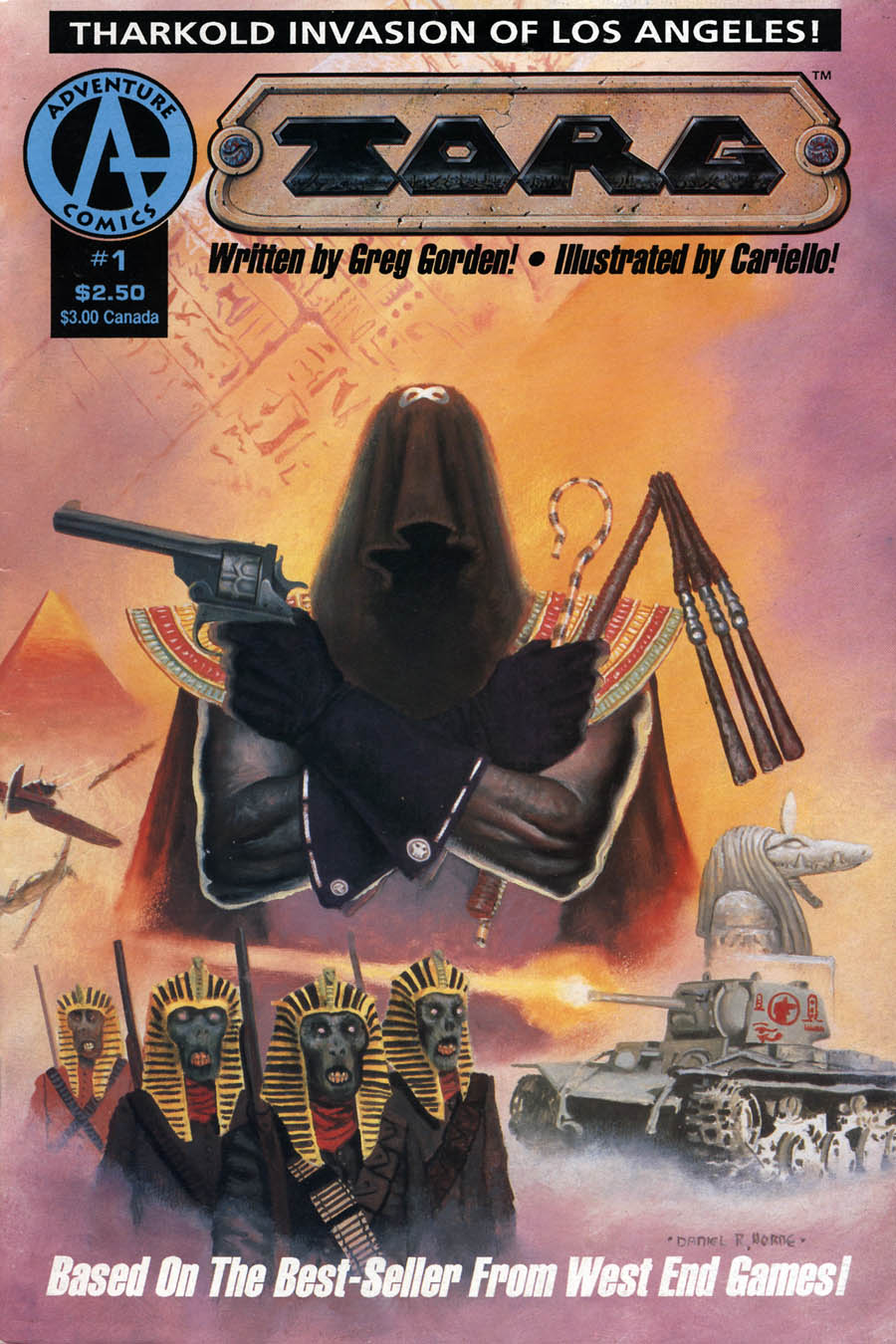
It was 1992. Torg: Roleplaying the Possibility Wars had been out for two years, and I was completely obsessed with it. I had read the first tie-in novel (because it seemed like every major TTRPG released in that era had to have one!), and as much as I liked it, I was still trying to wrap my head around what a Torg campaign should actually look like at the table.
This comic finally gave me that answer.
It was thrilling to see an alternate-world reality invading Earth on the page. Specifically, the Tharkoldu invasion of LA! The book perfectly illustrated the dynamics of heroes from wildly different realities teaming up to face these massive challenges. I don’t have the physical issues in front of me right now—they are packed away in storage—but at the time, I was a massive fan. I managed to get my hands on issues 1, 2, and 4 right away, though it took me years to finally track down issue number 3. When someone asked me what Torg was like back then, I didn’t point them to the heavy rulebook; I referred them to these comics.
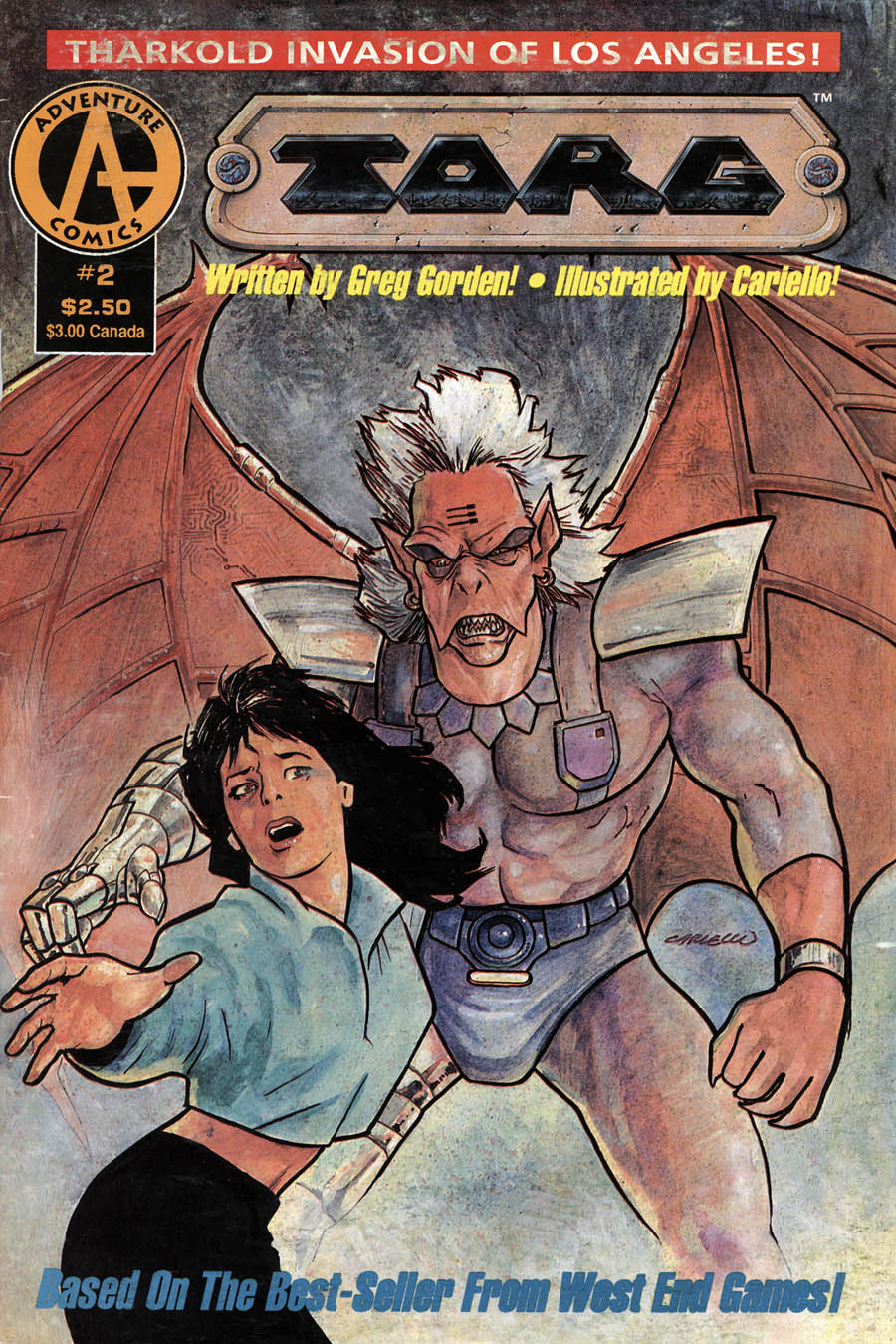
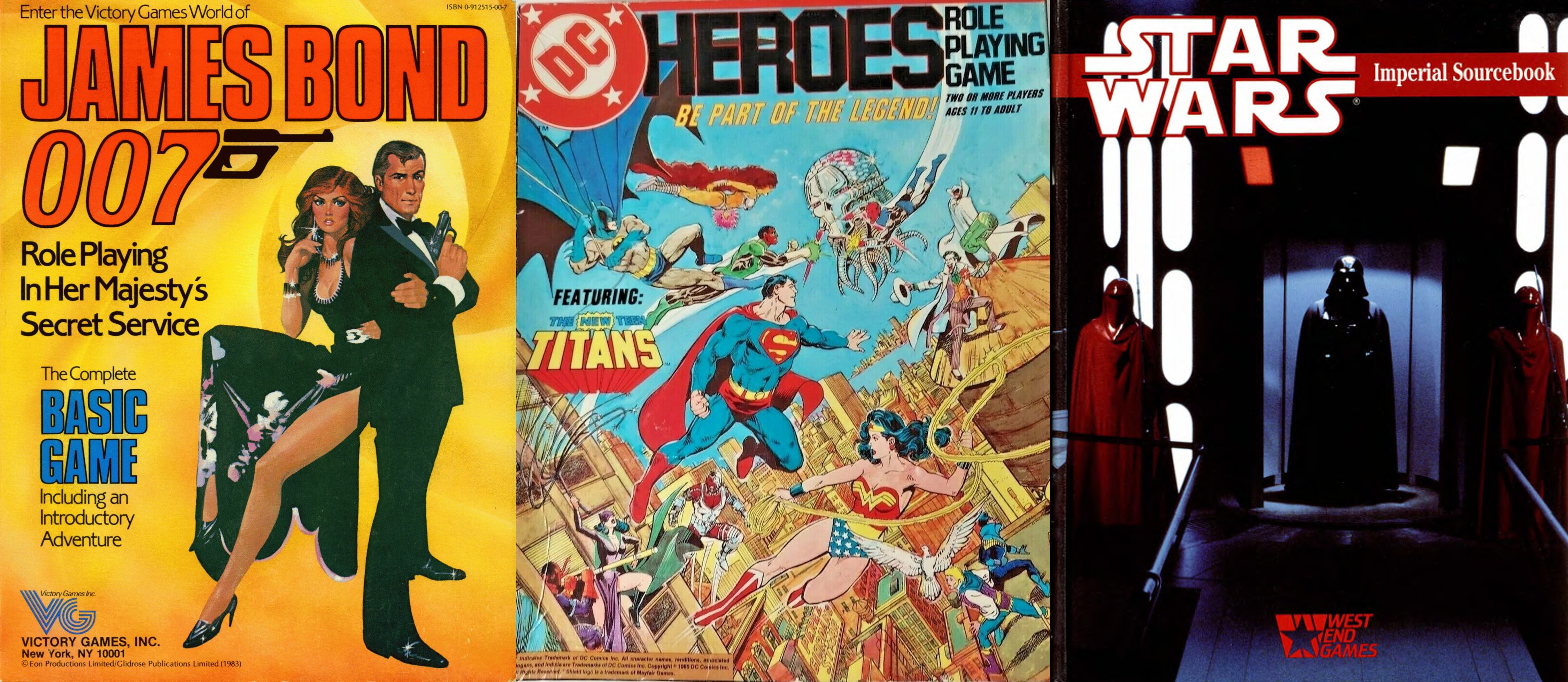
It helps that the book was written by legendary game designer Greg Gorden, who was actually part of Torg‘s original design team. His resume is incredible. He was part of the team that designed the James Bond 007 RPG, served as the main designer on Mayfair’s DC Heroes, worked on West End’s Star Wars D6, and was the main author of the Imperial Sourcebook—setting a high bar for game design that influenced the entire Star Wars franchise. He also worked on the original Deadlands, which ties my early love of Torg directly to my current predilection for Savage Worlds.
If you want a deep dive into his game design and influence on the hobby in general, check out this excellent interview and analysis over at Geekerati Media.
The art was handled by Sergio Cariello. He went on to work for more mainstream titles, but here he captured the setting’s cinematic feel perfectly. The comic looked like a gritty action movie—more grounded and realistic, and not four-color at all. It was black and white, after all!
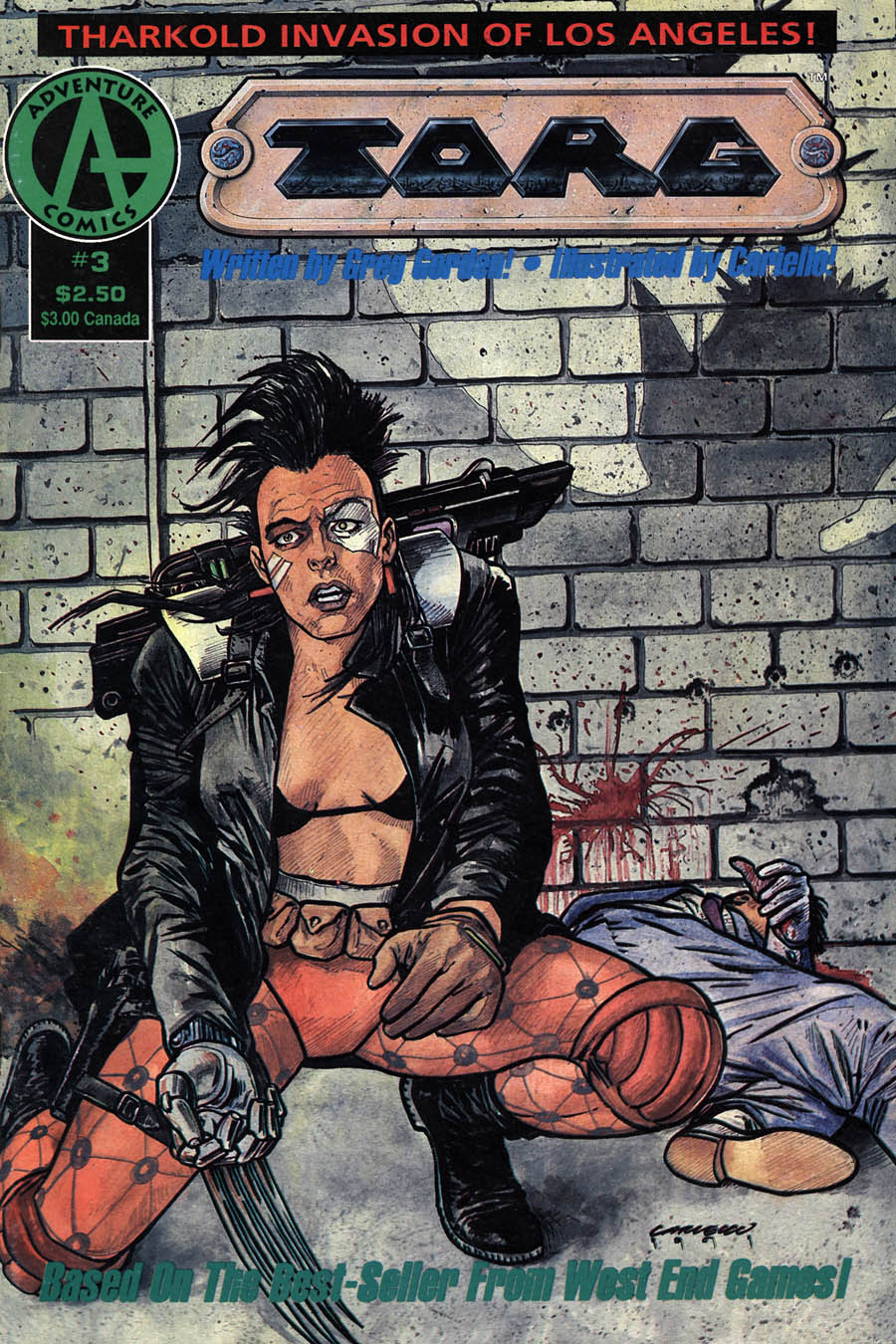
There might be some rose-colored-glasses reminiscing about what I just wrote. But in 1992, and for a few years afterward, this four-issue run was hugely influential in shaping my conception of what Torg was and could be. I reread the original novel trilogy and these comics to prep for a Torg prequel campaign I ran in the early 2000s.
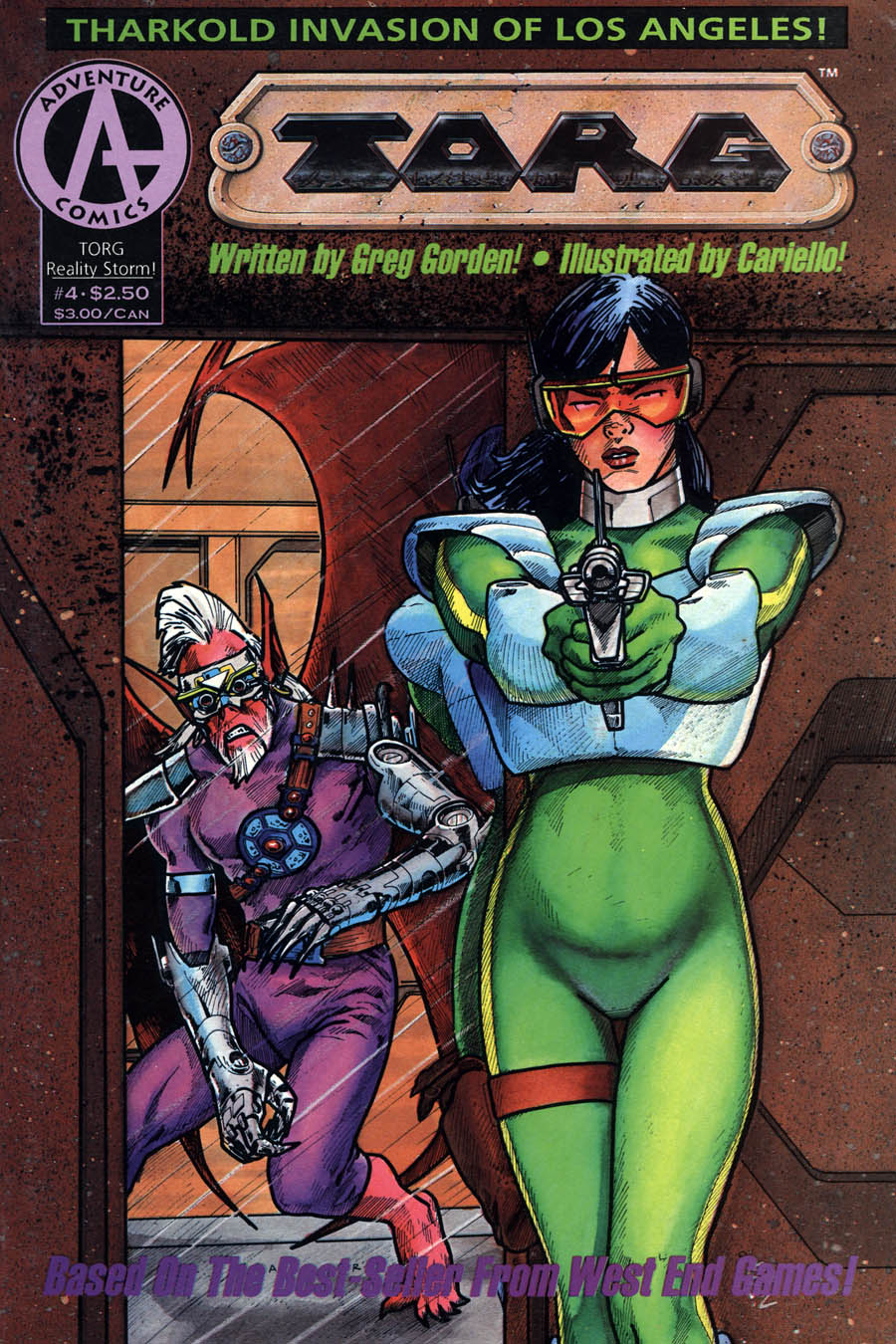
I really wish more TTRPG comic crossovers would use the medium to show what playing the game feels like, rather than just telling a generic story with the game’s branding slapped on the cover.
Have you ever read a tie-in novel or comic that completely changed how you ran a specific RPG?
Categories: Tabletop Gaming Blogs
Off we are ... to new frontiers! (this is about me being somewhere else)
Hello, friends and neighbors. Long time no see, right? Well, I was undecided how to move on from blogger. It's just that ... well, the algorithm is an unkind mistress, so we are moving tents to greener pastures. I'll show you the way.
Looky here, a Substack ...
Blogger was good the first couple of years I used it, but when g+ got the boot, it all fizzled away. And the OSR community (of yore) with it. I stayed. I tried. And I never stopped working on the stuff I started. But this isn't the place for it anymore. I barely get traffic from other blogs anyway (AND haven't been doing much here as well).
So I have to move on.
But I'd be happy to take you! So here's where it's at, with a couple of words about what it will be about:
Go there, if you will

You see? I shift focus a bit. Not so much about the culture and more about me being a publisher and talking about my projects, about the tools of the trade, all that good stuff, and with clear dedication to give this a proper pulse.
I'll update here when I update there until I feel like this blog can rest now.
See you on the other side!
Categories: Tabletop Gaming Blogs
D100 Random Sword & Sorcery on The Trail Encounters Table For A Castles & Crusades rpg Campaign
The road in a Sword & Sorcery setting is rarely just a means of travel; it is a gauntlet of ancient grudges, desperate survivors, and cosmic indifference.Here is a D100 Random Encounters Table designed for grit, atmosphere, and high stakes. This table picks right up from D100 Sword & Sorcery Random Urban Encounters Table for Castles & Crusades rpgThe Trail Encounters Needleshttp://www.blogger.com/profile/11243274667834930867noreply@blogger.com0
Categories: Tabletop Gaming Blogs
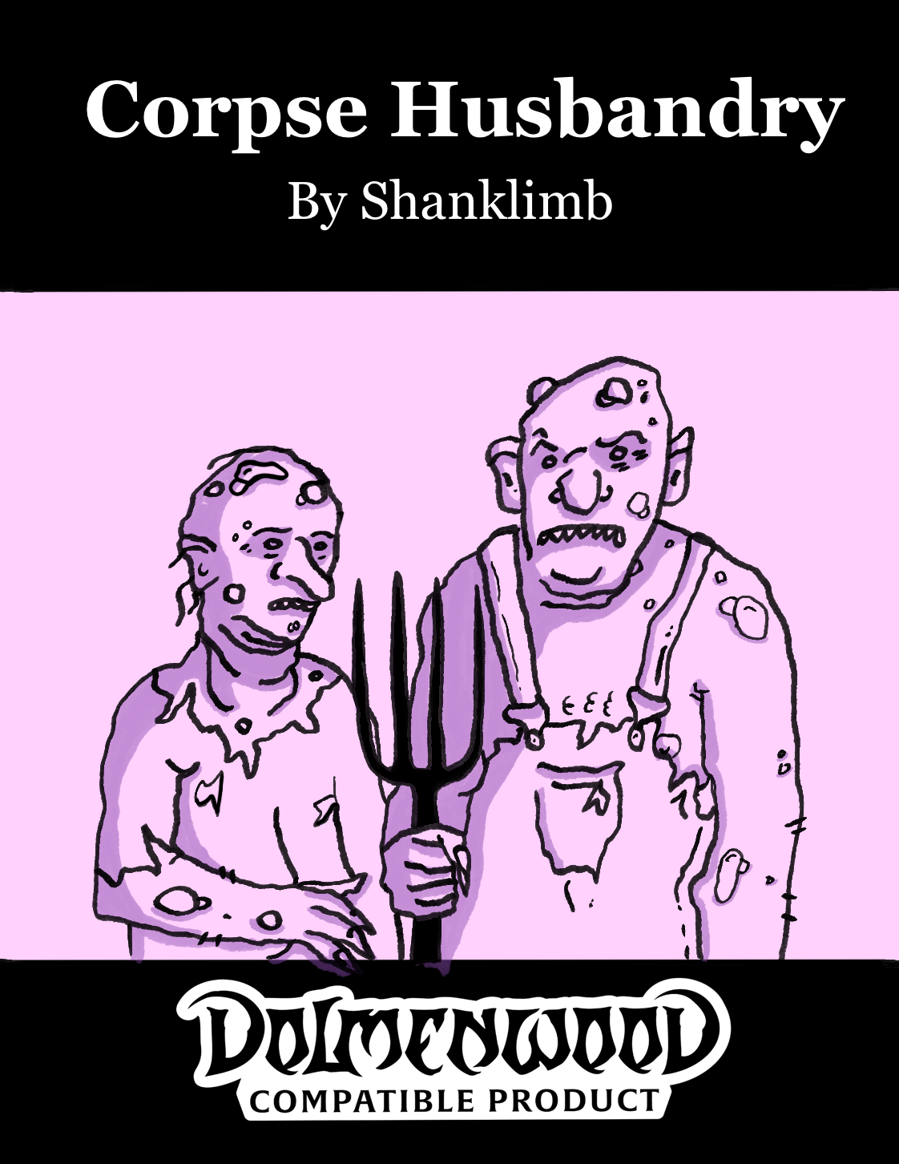
Corpse Husbandry
By Shanklimb
Self Published
OSR
Levels 4-6
Self Published
OSR
Levels 4-6
In recent months, strange mushrooms have erupted across a corner just outside the Mulchgrove. Local foragers reported vivid, peculiar dreams after extracting them – visions of mosslings sharing tea with mammoths, a boulder tucked in for naptime, and other odd sights. Now the dreams are coming uninvited, in daylight, to people who never touched the mushrooms at all. The mosslings of Mulchgrove are divided. Most believe the fungi are a divine offering – though no two can agree which god sent them, or why. But it’s to be sure: someone, or something, is broadcasting.
This eleven page adventure describes fifteen rooms, mostly linear, in some caves. Low on interesting, you get some sub-standard descriptions of slime mold rooms. Nothing to see here, move along, move along.
The locals have discovered a new type of mushroom. You’re hired to check it out. You find some caves with some friendly trolls in them. They grow moss. In beds fertilized with corpses. Looks like slime molds have attacked their caves. You go kill the slime molds.
Aimless, perhaps, is how I would describe this. There just isn’t much motivating going on in any sense. The situation in the local village is “oh, look, new mushrooms!” with no real sense of urgency behind it. The hooks are all Hiring in one sense or another, usually with a “I’d some of that new mushroom variety …” There’s little personal motivation in any of that, just a blatant appeal to your desire to play D&D tonight or go to a bar instead. There’s not much of a hunt for an entrance, I guess all of the locals are blind or something, just “here’s the hole in the ground!” and then, once inside it’s more of the same. You enter a room with moss in it. This room has trolls and moss. The trolls are friendly. They don’t care. Well, one room has some sleeping trolls in it who are not pleased at being woken up, if you hang around. I wouldn’t be either. Anyway, they don’t care. Yeah, they are fertilizing their ground with corpses, but there’s no indication they are KILLING people. The descriptions are entirely neutral on that point. “Investigating the corpses: Human commonfolk, arranged with almost ceremonial care. Their hands are folded, mouths held agape with sticks. No possessions of any value.” Sure thing man. No one cares. Well, the trolls are not happy that their moss tunnels have now been invaded by slime molds. Pretty please? This puts us, I don’t know, halfway through the encounters? So you wander around looking at moss and trolls until you reach the barricades that block off the other half of the rooms. Once there things change. You kill gelatinous hulks and other mindless blob things. Yeah! You did it! ‘
The last half of the room, eight rooms, are handled in two pages. So, two pages of content here. Two pages of things to do. You enjoy yourself here.
Room descriptions are in the old OSE style and meh. “The Threshold Black walls (thicker roots). Translucent threads (hang from ceiling, like a curtain).” This is ok, but not great. It’s just not very evocative, but, at least, it’s not overly long, thank god.
There’s just not much here. Stab the blob things. Maybe don’t touch the pools that are obviously acidic. It’s like The Adventure Of Getting Inzto My Condo! Avoid the church people in the drive and hit the open gate button on the app. Don’t yell at the old person driving slowly in front of you. Open the garage door with the opener. Park in the garage being careful not to hit the concrete post on one side. Roll 1d6, if you get a 1-3 then the car on the other side is present also and you should not hit it. Push the elevator button. Wait forever. 1-3:d6 other people get off on floor one, slowing your ascent. Yeah. Ok. I guess things happen. I guess? Do they matter? No.
Also, I’m annoyed that the numbers on the map are in a black font in purple background blobs. This is my usual Hard To Read rant. And, then, the dungeon proper, “This dungeon is made up of an expanding fungal root-system, the roots of which form mid-sized tunnels and rooms.” I guess the roots are hollow?
Nothing here. Move along. Move along.
https://www.drivethrurpg.com/en/product/560343/corpse-husbandry-an-adventure-in-dolmenwood?1892600
Categories: Tabletop Gaming Blogs
Drifting Between Small Worlds

My vacant in Hawaii last week got me thinking about the subgenre of pulp adventure fiction that dealt with tales of freighter captains or sailors making having adventures in various ports of the South Pacific. The radio show Voyage of the Scarlet Queen is in this genre as are Howard's adventures of Sailor Steve Costigan. Aviators get into similar sort of adventures in the same locales as well, as seen in the 80s TV Tales of the Gold Monkey and the comic strip Terry & the Pirates.
I think the same basic setup of these stories could be transported to a science fiction setting. Imagine a group of relatively closely spaced, small worlds (to be "realistic" about it, they would likely have been placed there by an Arbitrarily Advanced Civilization). It could be a Dyson Swarm or its remnant like in Reynolds's Revenger series, or it could just something like the Vega System as presented in DC's Omega Men (which could be a kind of modular ringworld, I guess). Why small worlds? Well, I think it better reflects the island or city focus of the source material and makes it easier to place them relatively close together.
Whatever the setup, this system is on the hinterlands of "galactic civilization," a place where outlaws, adventurers, and malcontents would drift to from the more controlled, "safe" worlds. Within the source material, of course, this is the unexamined Western-centric view of South Pacific, but in a science fiction setting this could more genuinely be the case. Similarly, the elements of colonialism and exploitation of native peoples is probably something to avoid (unless one wanted to make that a central conflict of the setting), but like in Vance's Demon Prince series, a lot of unique or eccentric societies may have grown up there as generations of nonconformists fled the core. Perhaps among the ruins of an alien Precursor race, ideas about whom may be part of the eccentricity of some of the societies.
The vibe could be very retro pulp, but you could just as easily do it with inspiration from Cowboy Bebop or with an Alien/Outland aesthetic.
Categories: Comic Book Blogs, Tabletop Gaming Blogs
Diving into the Arduin Underworld - OSR Commentary On House of the Rising Sun (Arduin Grimoire volume 6)
The House of the Rising Sun is the sixth volume of the Arduin Grimoire series, released in 1980. Authored by David A. Hargrave, it is a seminal piece of the "Old School Renaissance" (OSR) DNA, known for its kitchen-sink fantasy style, high lethality, and unapologetic weirdness. This picks up from Diving into the Arduin Underworld - OSR Commentary On Winds of Chance (Arduin Grimoire Needleshttp://www.blogger.com/profile/11243274667834930867noreply@blogger.com0
Categories: Tabletop Gaming Blogs
Travis Morgan aka The Warlord As a Sword & Sorcery NPC for Sword of Cepheus 2nd edition
Adapting Travis Morgan, the iconic Vietnam-era pilot turned barbarian king, requires balancing his modern military background with the high-adventure tropes of a "Dying Earth" or "Lost World" setting.In Sword of Cepheus (2nd Edition), Morgan is a high-ranking character, likely having completed 5–6 terms before being "stranded" in Skartaris.Travis Morgan: The WarlordSocial Class: 9 (Officer/Needleshttp://www.blogger.com/profile/11243274667834930867noreply@blogger.com0
Categories: Tabletop Gaming Blogs
D100 Sword & Sorcery Random Urban Encounters Table for Castles & Crusades rpg
The sprawling, soot-stained alleys and marble-clad plazas of a Sword & Sorcery city are often more dangerous than any dungeon. This table is designed for Castles & Crusades, leaning into the gritty, "Long 90s" gritty-industrial aesthetic and the pulp tradition of Howard and Leiber. This picks right up from d100 Random Wilderness Swords & Sorcery Encounters table for CastlesNeedleshttp://www.blogger.com/profile/11243274667834930867noreply@blogger.com0
Categories: Tabletop Gaming Blogs
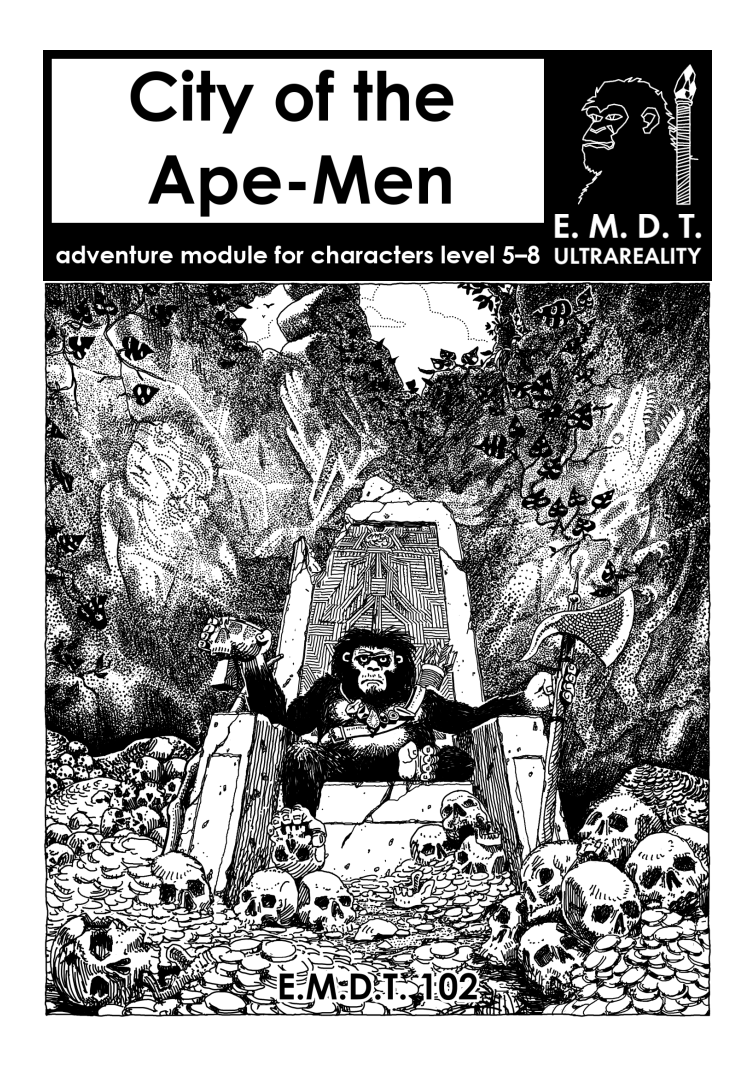
City of the Ape-Men
By Gabor Lux
EMDT
OSRIC
Levels 5-8
EMDT
OSRIC
Levels 5-8
Linquar the Eternal has fallen, its palaces and temples decaying in the teeming jungles. Few dare to head for the misty island plateau where the ruins stand, and even fewer have succeeded in claiming its treasures from the savage ape-men who now rule in its citizens’ stead. The great city is largely forgotten, and even its name only refers to a squalid pirates’ nest that had once been its trading outpost. What had been the capital of the isles is known as a cursed and abandoned place that’s better left undisturbed. But more often, it is simply known by its current inhabitants… as the City of the Ape-Men!
This sixty page adventure is an Isle of Dread, but with ape-men in the lost city. A complex environment with large groups to challenge the parties looting efforts, it does a hex crawl with some locations being mini-dungeons. Bring those cargo ships to haul away the loot and avoid the pirates while dodging the secret masters manipulation of the apes. The logistics game is the only thing missing.
We’ve got the ol Dread here, a jungle island with some dinos and ‘big fucking snakes’, the former seat of an empire that prospered from the spice farmingo n the island. Their former slaves, the ape-men are now all that’s left, along with a smaller island off the coast that has a pirate town on it that can serve as a home base. You hex crawl the island looking for spice, pirate-loot, and the wonders of the fallen empire. Don’t worry, in spite of dinos and ape-men there are also a handful of giant frogs, frog-lizards and frogodiles.
The hex encounters, about twenty, range from the very small “R. The weird rock: A large stone with a spongy, greasy surface stands here with nuggets of a rare ore embedded in it (2500 gp).” to more involved paragraphs to handful (sixish) of mini-dungeons. These range from the “wildlife wants to eat you”, with flying manta rays and dinos and snakes and spiders, to monoliths and locales from the old empire, usually with some mythical bend to them. (Meditation on the holy ruins on the highest peak gives you a +1 to two stats … if you can make it to the top.)
Running throughout we’ve got LARGE groups of ape-men running around, like, in groups of five to forty. And then in their bases near the lost city, proper, groups of forty to seventy. Ouch! I love a large group of enemies to challenge high level parties in an open environment like this where the party can plan and plot, and flee in a crazed terror through the jungle when the masses appear.
The apes are divided in to three factions, buying for power. They hate each other, but, also, they hate all humans more. Like, ravenously hate them. They are taking instructions from their GODDESS, a talking statues. We’ve all seen Oz, so we know what’s up, Turns out that there are tunnels full of spider people who are the secret masters, subtly working the apes against each other to keep their numbers low. But, also, they are gonna make sure that nosey adventurers get fucked up hard. Once technologically advanced, their crashed spaceship is on the island also. Don’t worry, it doesn’t really go gonzo at all. The whole place is nice and sandboxy.
I do have a few issues though.
I can’t make much sense of the elevation contour lines on the map. I think the text says something like the island rises to 1200 feet high, and the map says that contour lines represent 1200’ feet. I assume there’s a typo in there somewhere, but, also, I’ve had a REAL hard time making sense of the contour lines on the map. There IS a separate map that just shows the contours, and it helps a lot, but that’s alot of referencing back and forth when trying to relay information to the party.
The hex crawl instructions are decent, and none of those fucking environment/humidty rules that I hate dealing with in crawls. “You can’t wear platemail!” Fuckoff. You’ll have to kiss me first. My major issue is, with most hex crawls and this one, the lack of mentioning how far you can see/landmarks when getting high up. It makes sense to climb a tree, or a plateau, to see what’s around (See also: the Fallout Red Glow At Night) and a sentence about that would have been nice.
Given that there is a high likelihood of this being a treasure extraction game, the pirate town could have used a little more as well. It’s covered in several pages and there are several factions there as well. A little more on off-loading the goods and/or a pirate ship/response to the party brining in loot would have been nice. A sample raiding ship or two, perhaps? There is enough, generally, to understand that there SHOULD be complications but a sentence or two, maybe a paragraph, on potential extraction play would have slotted in quite nicely for this one.I might quibble as well with their being simple ruins that are unlooted in a town full of destitutes, or bordellos opening at sundown in a lawless place, but those are just quibbles. It’s also full of good human nature type things like “Linquar’s beggars are downtrodden wretches begging for scraps. At night, more aggressive begging also takes place if the beggars outnumber the opposing party 2:1”
This is a better jungle crawl than Dread. Where Dread was a little sparse this contains the makings of a nice long game, with factions and complications, as well as a base, to help support that longer arc of a game. There are real rewards for dealing with a group of forty flying dinos, or making it through the ape-city, or climbing the highest peak. Intelligent play, by following ruined roads that see from up high, will help direct the party to most places. Three is a place to recruit and offload loot. The apes are presented as SO hateful, though, that it doesn’t leave much room at room for factions, other than, perhaps, subtly working them against each other.
This is $6.40 at DriveThru. The preview is the first thirteen pages, which shows the island map and some of the town and general instructions. That’s probably enough, although, as always a page of the island encounters or lost city encounters would have been nice as well.
https://www.drivethrurpg.com/en/product/559570/city-of-the-ape-men?1892600
Categories: Tabletop Gaming Blogs
Pages
