
Your wildly multifarious home!
Tabletop Gaming Feeds
Shrieks in the Dark
By Martin Cubas
Weird Adventures by Martin A. Cubas
Castles & Crusades
Levels 2-3
Weird Adventures by Martin A. Cubas
Castles & Crusades
Levels 2-3
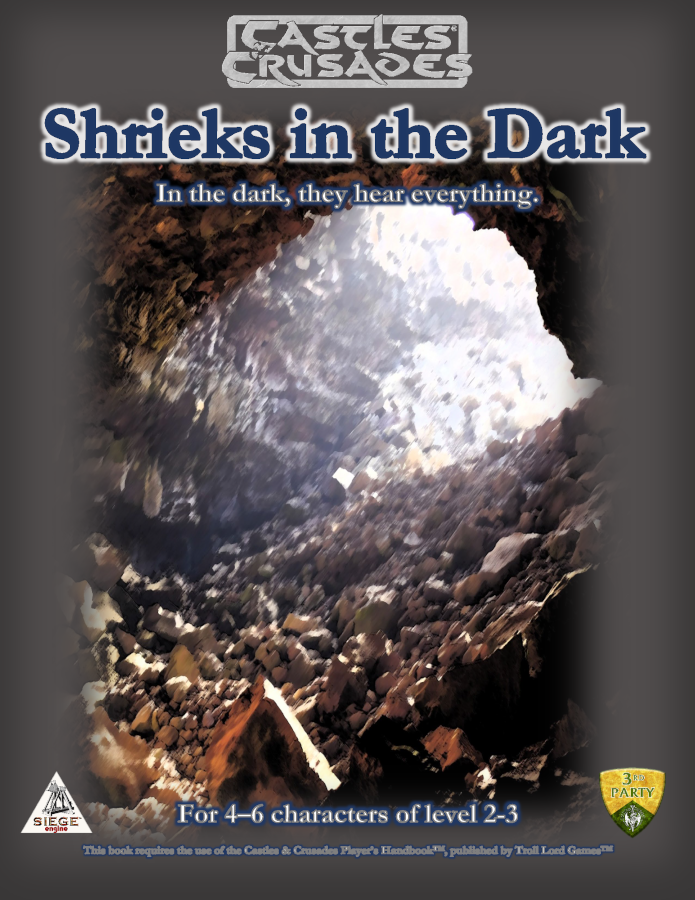
They can’t see you. They don’t need to. A colony of blind, grotesque predators has infested an abandoned temple deep inside a canyon. They hunt by sound. They move in packs. And they’re starving.
This thirty page adventure uses about fourteen pages to describe seven rooms. Obviously long-winded and padded out, you kill a few monsters. Also, it’s not dark.
Oh lop-sided page count, where have you been? I’ve missed you. Look, I get it, PDF pages are “free”; you’re not paying to print them. Why not put in a bunch of appendices, and lead in, and backstory, and everything else? It’s free! Academically, I agree. But, in practice, what I see time and time again is a poor adventure with a low “core” page count with a whole lot of extra information. While a bit hyperbolic, one must ask oneself, is the designer interested in writing an adventure or ar they interested in world building and the adventure is just a pretext for that? Again, I don’t care if you world build. I don’t care if the page count ration is one adventure page per one hundred pages of backstory. But if you’re selling me an adventure then it had better be a ROCK. FUCKING. SOLID. Adventure. And it almost never is. The designer is distracted by the fluff. They spend their effort there instead of in the core adventure text. What pops out the other end is just another crappy adventure surrounded by a bunch of backstory and appendices. Who would like to guess if this is in the one in a thousand adventure in which there is a lot of fluff and a solid adventure? We all know the fucking answer already. You have to AGONIZE over the adventure text. It should be the best possible, that you are capable of (… ) and more.
Ok, so, we’ve got some eyeless creatures in a cave. There’s a long backstory here about bandits, a holy order, orcs, and so on but all that really matters is that there are eyeless creatures in a cave. They hunt by sound. This whole “shrieks in the dark” thing doesn’t really matter. They can use a sonic attack, but the party is never limited on light. So, you’re just stabbing some monsters in a cave. The central conceit, of these creatures who can hunt without sight, is never capitalized on. We get long monster ecologies (in fucking italics …) who nothing about them putting out lights, etc. So, you’re fighting 5HD orcs in a cave that have a sonic attack.
Room descriptions average a couple of pages each. There’s no need for that. Nothing that interesting is going on. “The disc was collected by the Shrieklings along with other debris from the caverns and has no special significance to them.” Great. You want me to etll you about the pile of shit I collected this morning? It has no bearing on anything, so why not? Backstory, meaningless trivia. Overexplained things. “The Shrieklings’ thick, mucus-coated skin produces a scent that naturally repels the barracuda, allowing them to swim and hunt freely.” Explanations on ecology. Great. That’s not coming up during play, so it’s a great thing it’s in there clogging up the descriptions (as my aforementioned shit this morning may have the toilet?) These are simple rooms with simple interactivity that are just padded out in what amounts to a wall of text. Bullet point up the main issues, but if the bullet is half a page then what’s the point? Sixty some words to describe “+4 to move silently when within 15’ of the waterfall.”
The designer notes that this is inspired by the a Dungeon Design Framework. Monsters have patterns and routines, etc. There are a couple of charts to help with the monsters wandering patrol paths. I’m not saying they are wrong, but they are poorly done, not noting the creatures locations. Just dots and blips that you must then interpret and expand on. Hooks are all “you are hired to “ nonsense. And, in particular, the claim that “Inside, you’ll find tightly written areas built around meaningful encounters, and systems that keep the dungeon active between player actions.” would not be true. Tightly written. Meaningful encounters. I think not.
This is likely the last Cubas review, joining Mohr, Filbar, Elven Tower and the rest.
This is $2 at DriveThru. The preview is ten pages. Meaning nine pages of background/fluff/intro and one that starts to show the first room. (There’s another full page of room one info.) Take a look at that Gannt chart like thing. The blue and reds could be handled much better to show current location, not moves.
https://www.drivethrurpg.com/en/product/563481/c-c-shrieks-in-the-dark-c-c-edition?1892600
Categories: Tabletop Gaming Blogs
Two D100 Sword & Sorcery sewer & dungeon encounter tables For Castles & Crusades Campaigns
Exploring the depths beneath a decaying city requires a mix of environmental hazards, weird sorcery, and gritty martial threats. This table is designed with an OSR (Old School Renaissance) sensibility, favoring traditional mechanics and a "Dying Earth" or Sword & Sorcery atmosphere.This blog post picks right up from Detail d100 Sword & Sorcery Random back alley encounters For Needleshttp://www.blogger.com/profile/11243274667834930867noreply@blogger.com0
Categories: Tabletop Gaming Blogs
The Army Ants Companion
I've been plugging away at the Army Ants Companion (a living document you can access at any time) for the Army Ants RPG, and I've made a few tweaks to the game. One tweak I've made is in regards to soaking damage; I had borrowed the 'save for half damage' mechanic that is embedded into the heart of my little D+D design hangups. I've swapped that out for rolling Reflex to soak damage from grenades and areas of effect. This opens me up for a variety of other attack types, linking each type to a trait. For example, sensory damage now gets soaked by Spirit, and poisons/toxins get soaked by Body. Mental attacks get soaked by Mind. I like the variety of play options that this opens up.
I also think I've settled on a 'look' for the Army Ants. I'd been giving them heavier grays in their uniforms, but this Phil design feels a little lighter and more attuned with how I want the look to carry.

I also think I've settled on a 'look' for the Army Ants. I'd been giving them heavier grays in their uniforms, but this Phil design feels a little lighter and more attuned with how I want the look to carry.
Categories: Comic Book Blogs, Tabletop Gaming Blogs
Reverb The Dimensional Dandy For The Belle Époque, Red Rpg By The Red Room & Troll Lord Games Victorious Role Playing Game
In the Victorious RPG, where Victorian-era aesthetics meet superheroic action, a character like Reverb fits perfectly as a "dimensional dandy" or a cosmic traveler grounded in 19th-century theories of the luminiferous ether.Here is a profile for Reverb, designed for the Victorian supersetting.Hero Profile: ReverbSecret Identity: Alistair ThorneArchetype: Astral Traveler / Sound Needleshttp://www.blogger.com/profile/11243274667834930867noreply@blogger.com0
Categories: Tabletop Gaming Blogs
[Parsulan] Scavengers and the Field of the Fallen Colossi
Art by Guy Wurley
The ramshackle boomtown called Salvage by its inhabitants and the Scrapyard by outsiders is built amid the fallen combatants of an ancient battle. The colossi are named for their color. Red Knight lies on its back, reaching for a sword that is out of reach. Blue Knight fell forward. Its weapon is long gone, but one hand is raised. The plains have made half-hearted attempts to reclaim the giants, and the knives of time have marked them, but they remain, tempting those interested in making a quick fortune or simply curious about their enigma. The colossi are unusual treasure troves, or above ground mines, made as they are from rare materials and magitechnologies unreproducible in the current age.
All the prospectors, adventurers, scholars, and thieves looking to claim their own piece of the colossi, and the merchants, dealers, entertainers, and bandits looking to get rich off them, crowd into haphazard buildings constructed along and amid the fallen giants. It's a dangerous place. There is no law in Salvage and plenty of desperate characters. Guns are more common that elsewhere given the relative abundance of both artificers and the raw magitech materials.
The danger isn't just from the inhabitants. There are caustic fluids, poison gases, and other environmental hazards to be sure, but also the colossi are not as dead as they appear. They haven't moved in ages, but not all of their internal parts have been stilled like their limbs. Component constructs, perhaps something like immune system elements, sometimes react violently to scavengers crawling through a colossus's insides. Some grow independent and feral and prowl outside the bodies as if their look for prey or raw materials to affect repairs.

The ramshackle boomtown called Salvage by its inhabitants and the Scrapyard by outsiders is built amid the fallen combatants of an ancient battle. The colossi are named for their color. Red Knight lies on its back, reaching for a sword that is out of reach. Blue Knight fell forward. Its weapon is long gone, but one hand is raised. The plains have made half-hearted attempts to reclaim the giants, and the knives of time have marked them, but they remain, tempting those interested in making a quick fortune or simply curious about their enigma. The colossi are unusual treasure troves, or above ground mines, made as they are from rare materials and magitechnologies unreproducible in the current age.
All the prospectors, adventurers, scholars, and thieves looking to claim their own piece of the colossi, and the merchants, dealers, entertainers, and bandits looking to get rich off them, crowd into haphazard buildings constructed along and amid the fallen giants. It's a dangerous place. There is no law in Salvage and plenty of desperate characters. Guns are more common that elsewhere given the relative abundance of both artificers and the raw magitech materials.
The danger isn't just from the inhabitants. There are caustic fluids, poison gases, and other environmental hazards to be sure, but also the colossi are not as dead as they appear. They haven't moved in ages, but not all of their internal parts have been stilled like their limbs. Component constructs, perhaps something like immune system elements, sometimes react violently to scavengers crawling through a colossus's insides. Some grow independent and feral and prowl outside the bodies as if their look for prey or raw materials to affect repairs.
Categories: Comic Book Blogs, Tabletop Gaming Blogs
Using the Belle Époque, Red Rpg By The Red Room & Troll Lord Games Victorious Role Playing Game
Setting a campaign in the Belle Époque (roughly 1871–1914) using the Victorious RPG system—and specifically integrating the Red RPG (The Red Book) mechanics—creates a unique blend of superheroic "Steampunk" and gritty, high-stakes tactical play.Here is how you can detail and merge these two influences for a campaign.1. The Setting: The Beautiful EraThe Belle Époque was a period of optimism,Needleshttp://www.blogger.com/profile/11243274667834930867noreply@blogger.com0
Categories: Tabletop Gaming Blogs
Knights of the Celestial Canticle – The Indomitable Order: Rules for the Original Alternity Game
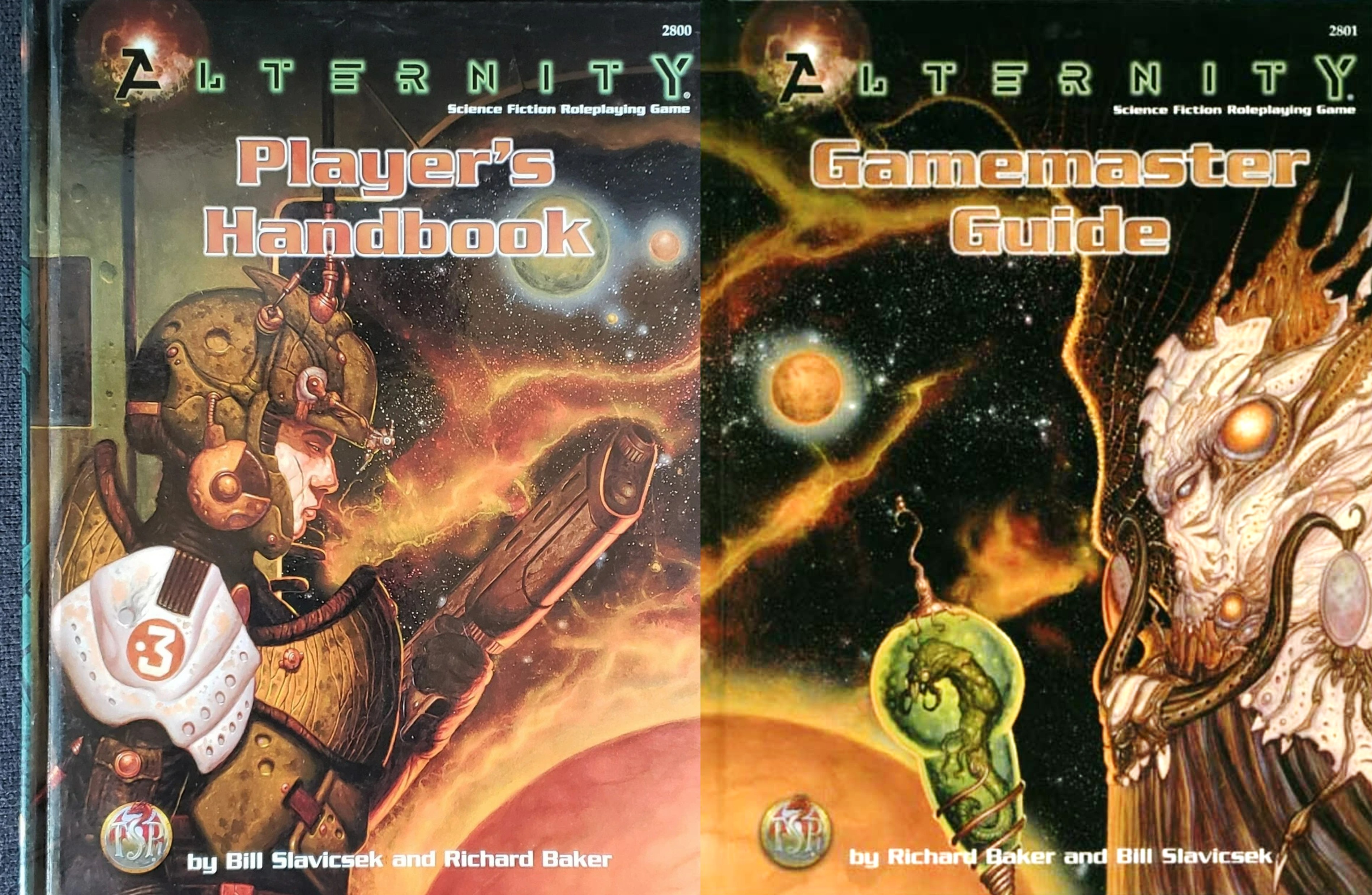
Let me start by saying that I blame Michael (aka the Stargazer) for this! He recently started writing about the original Alternity game here and here, and it made me so nostalgic that I began digging through the files for my old campaign. That is where I found the topic for this post. Let me give you some context.
It was 1998. Alternity had been published earlier that year by TSR (which Wizards of the Coast had already purchased). I was obsessed with it. I wanted to run a campaign in a setting I had originally conceived around 1990 and had been tinkering with over the years: the Nirvani Alliance. Alternity felt like the perfect system for it, so I started adapting the rules for the campaign.
In September, I was busy planning my upcoming wedding, which was just three months away. Then, Hurricane Georges hit Puerto Rico! We lost power for days, so I spent nights by flashlight and candlelight, writing the campaign material discussed in this post.
What I wrote were the Alternity system rules for a mystic order of armored religious knights, inspired by various classic sci-fi influences. I eventually typed up the pages and showed them to my players. Naturally, none of them wanted to play one of the knights, so I shelved the rules and didn’t work on them any further.
Below are the rules, written 28 years ago, for an out-of-print game I still deeply love! I made no changes to the mechanics. I cleaned up the text, fixed some grammar, and made a few tweaks for clarity. This is not a professionally written or edited piece; it is a slice of house rules from my old Alternity campaign. I am sharing them purely for nostalgia’s sake, and I hope someone finds them useful.
This post includes an introduction and summary of concepts, rules, and ideas. At the end, you’ll find a link to the Alternity Indomitable Order Rules, an 11-page PDF with detailed information on this Order of warrior-knights. Don’t judge me too harshly, I wrote this almost 30 years ago!
The Age of the Nirvani
Of all the races inhabiting Alliance space, the Nirvani are the only ones not native to this galaxy. Even their name was a gift from the Keriani, who encountered them as they fled the forces of the TukNi-Amak puppet government. These refugees, who called themselves “humans,” claimed to hail from a distant galaxy decimated by a devastating plague.
The Keriani—whose name translates as “born from the womb of Ker”—named the newcomers Nirvani, or “born of no womb”. Though they arrived in the middle of a great interstellar war, the Nirvani were ready to start anew, and their arrival signaled a new order for the galaxy.
The Indomitable Order
The Knights of the Indomitable Order serve as the warrior sect of the Church of the Celestial Canticle. The Order traces its legacy to the foundation of the Alliance and the liberation campaign led by Lord Sparrowhawk. Selected by The Ever Present as a sword of vengeance, Sparrowhawk identified twenty-three soldiers of great faith—the Enlightened, or Saints of War—and bestowed upon them his wisdom and power.
These Enlightened formed the Bloodlines, passing their knowledge and unique abilities to subsequent generations. In modern times, the Order remains the Church’s premier fighting branch, though its influence has waned. Today’s knights survive by breeding strictly within the Bloodlines to retain their diluted, yet still formidable, birthright.
Life as an Indomitable
A member of the Order is born, not chosen. They serve as guardians, fighters, and symbols of the Church’s power. Those who abandon their destiny are branded Fallen, stripped of their heritage through an excruciating process involving power-inhibiting nanites. Those who openly rebel become Renegades, hunted down as enemies of the faith.
The Major Bloodlines
Each group within the Order has its own outlook and specialized abilities:
- The Sisterhood of Heimdal: Traditionalists and keepers of records who use “Bloodsense” to identify a newborn’s destiny. In Alternity terms, they possess the Enhanced Sense mutation.
- Bloodline Gilgamesh: The highly militaristic ground troopers. They receive a +1 to their STR score and a +3 to their Wound rating.
- Bloodline Zeus: Known as the “Scions of Thunder,” these warriors can manifest an Electrical Aura to damage enemies.
- The Conclave of Ra: Progressive tacticians who possess a variation of Energy Absorption, allowing them to turn light into energy.
- The Icarians: Independent and reclusive, these members have an improved DEX score and the Adaptation Gravity (light gravity) power.
- The Fellowship of the Jesesites: The only ordained Bloodline within the Church. They are healers who possess the Enhanced Healing power, though using it on others can cause them to suffer physical strain.
Relics of the Order
For players navigating the Alternity system, the Order’s equipment provides significant tactical advantages:
- Rune & Relic Armor: These suits are powered by the hero’s own bio-field. While wearing them, the specific powers of each Bloodline are augmented—for example, a Jesesite gains Hyper Healing, while an Icarian gains the ability to fly.
- Star Swords: Members of the Order receive a -1 step bonus to their Melee Weapons—Powered weapons skill base situation die when wielding these blades. They can even parry energy attacks.
- The Indomitable Ancestry Perk: A new 3-point Perk that allows a normal Nirvani hero to use Rune or Relic armor, though it costs them fatigue points to do so.
The life of the Indomitable is one of pride and strict adherence to the faith. Whether you are a dedicated soldier of the Church or a Renegade running from your heritage, you are “the chosen among the chosen”.
Want to dive into the mechanics? Check out this file: Alternity Indomitable Order Rules, for my complete notes on the Indomitable Order using the Alternity rules.
Are you ready to wield a Star Sword in your next session? Let me know which Bloodline fits your playstyle!
Writing and reviewing this document really stirred up my nostalgia for the game and for the campaign setting. I hope you find the Indomitable Order concept and its mechanics interesting. Let me know what you think of the application of the Alternity rules, the lore, or the campaign itself.
Would you be interested in reading more about the concepts or the Nirvani Alliance? I’m really looking forward to your comments!
Categories: Tabletop Gaming Blogs
Immersion is not what you think, player
Here we go, another post on the Substack. I think I can claim that I'm back at it. There are already two new essays lined up, and I'm aiming at one a week with one of those for those who have also subscribed. I can say one more thing: people are seeing the posts and it gets Likes, which is far and beyond of what blogger is offering. Good. Anyway, check out my new essay:
[link].jpg)
Excerpt:
Sometimes I just get hit by a topic. This is one of those times. You know how some issues will just not stop returning into the general discussion how a thing is done or not? The performative aspect of that aside (which has gotten worse, tbh, but it’s just a phase), it may be an indicator that something is either not understood properly or (and?) that an idea really needs looking into. Immersion is one of those.
What we agree upon is not what we think.
There is a new kind of meme going viral just now where someone takes music videos of famous bands and replaces the music and singing with just squeaky shoes and grunting. It’s unbearable (and funny, to a degree), but it manages to point something out that we tend to forget: many of the visual media we look at need something as abstract as music to even allow immersion. It’s not just what we see, it’s the combination of seeing and hearing that may create the kind of trance we need to lose ourselves in what we see.
Language can be, in that sense, like music and entrance a listener just the same (and that will be important later on). That is mostly due to the fact that we are reduced to seeing and listening with visual media. Many are not aware that those are skills we learn, actually.
It is hard to tell if allowing that kind of immersion for playing video games (which has an active part, of course) needs the training we naturally receive for growing up with visual media. But assuming that you need some proficiency in how moving pictures work before you could play something like Quake seems to be evident. Just give your grandma a controller and see how she’ll fare.
Anyway, the base line here are two factors: rhythm and the skill to interpret it towards an experience. That’s a good start, but not the whole picture, because we need to know the frame of what we explore, too. In other words, the experience needs to pose a question we need to be able to understand in order to work our way along the rhythm towards an answer.
Very broadly speaking, that question needs to be rooted in our understanding of reality. Specifically speaking, if the question leading into an experience is based on a compromise we can agree upon, then we are more willing to leave that base towards where the experience is leading to (which is why playing a character helps along the way so easily).
Categories: Tabletop Gaming Blogs
OSR Commentary - Detail the best classic D&D modules for A Castles & Crusades Rpg Exploration Campaigns
When it comes to exploration-heavy campaigns, the best modules are those that provide a solid "sand-box" environment—giving the players a destination but leaving the "how" and "where" of the journey entirely up to them.Here are the quintessential classic modules for a campaign focused on discovery and hex-crawling.1. B2: The Keep on the BorderlandsThis is the gold standard for introductory Needleshttp://www.blogger.com/profile/11243274667834930867noreply@blogger.com0
Categories: Tabletop Gaming Blogs
Stalwart Phile #8
The 8th issue of the Stalwart Phile is now posted. It focuses on the Null Zone, presenting a few creatures who come from it. As you can see, I've done some housekeeping here on ye old blog. I've also done some updates to the Doc Stalwart Comic Database, and added a bit to the Resources tab for Stalwart '85.

Categories: Comic Book Blogs, Tabletop Gaming Blogs
The Ghost of Hong Kong by Steve Miller Pulp Hero and the Trail to San Moros, CA - Very Evil & Very Nice Part II
Danhausen and Joe Hendry distracted the brother enforcers with a curse and a song enabling them to get hit with a nasty shot by Mae Ling. A single promethean bullet ended the lives of The Crimsiki Brothers (Anton & Viktor) shot by the assassin Mae Ling. This session picks right up from The Ghost of Hong Kong by Steve Miller Pulp Hero and the Trail to SanNeedleshttp://www.blogger.com/profile/11243274667834930867noreply@blogger.com0
Categories: Tabletop Gaming Blogs
Troubled Troll Grotto
By Dougal Cochrane
Self Published
Dolmenwood
Level 2
Self Published
Dolmenwood
Level 2
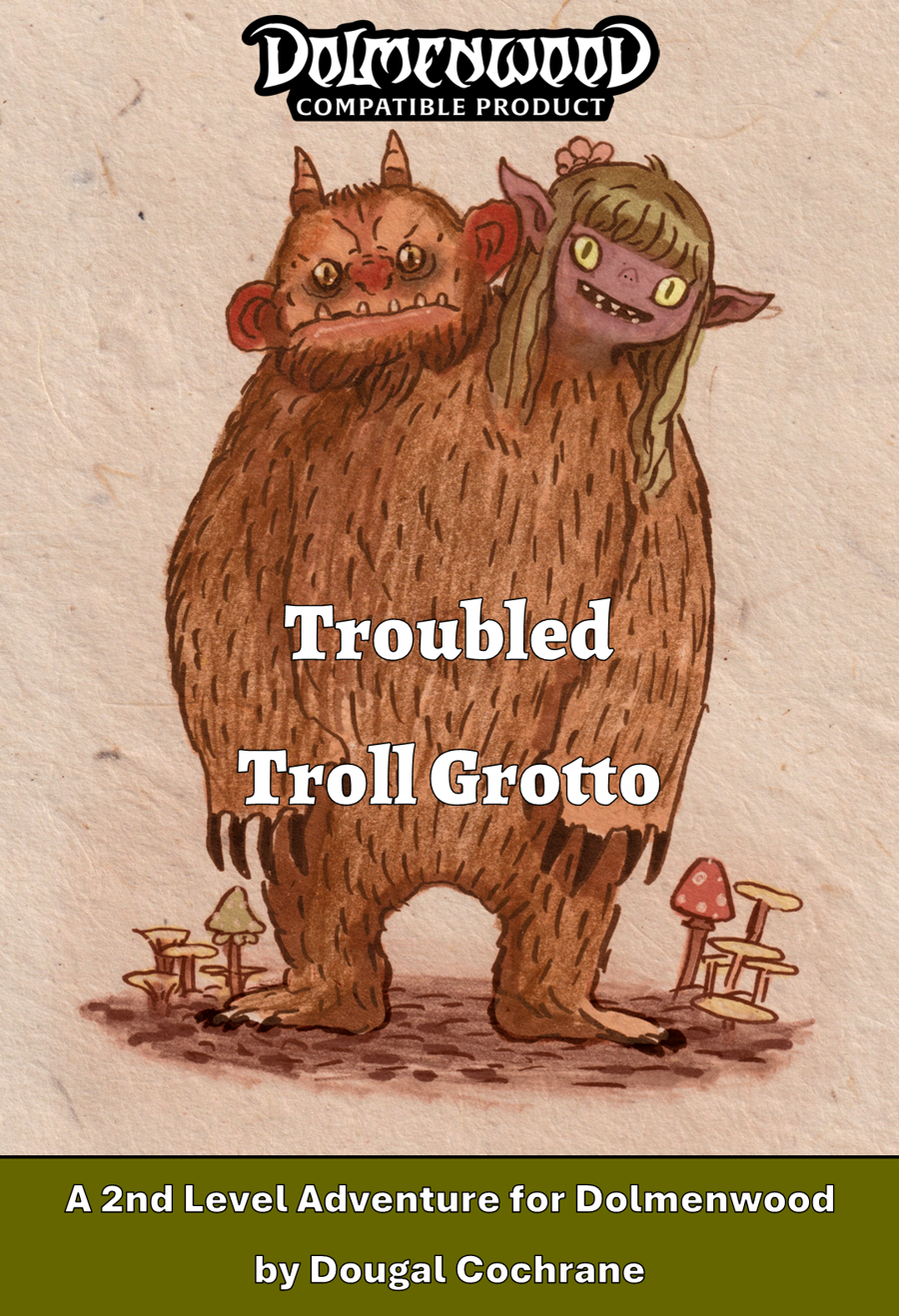
South of Fog Lake, where the Cave Path plunges into the Ballow-Clefts, the horizon narrows to a ravine of glistening wet stone, steeped in shadow. Pale yellow celandine flowers bloom ankle-high in the gloom, their petals never fully opening except at noon when the sun shines in. Narrow clefts riddle the rock, most shallow and choked with roots. From one fissure seeps the earthy scent of moss and the sickly odour of mildew. The cavern leads down into the Grotto of Grundlow Greenteeth.
This 22 page adventure uses about nine pages to describe twelve rooms in an underground troll den/garden. It’s wordy, cutsy, and has both too much going on and not enough at the same time.
Can you be nicely formatted and STILL have wall of text issues? Why, yes, I think, now, that you can, after reading this. Is it wall of text, actually? I’m not so sure. It is certain A LOT of text. Because A LOT is going on. And the text, while not in traditional straight paragraph wall of text format, does repeat certain patterns that obfuscates.
But first, our setup. There’s a two-headed troll in a cave, with a grumpy head and a romantic head. He eats moss. He’s got a mossling cook enslaved. Mossling hates grumpy head and is in love with romantic head. Mossling grows herbs and puts grumpy head to sleep. Thus the Bog Red Button. Don’t wake the grumpy troll head … that you generally don’t know exists. Then, there’s a dude with a body switching thing. He’s trying to dig up a gate in the troll cave. He’s made several people switch bodies and minds. And a gang of skeleton thieves (as in, they are skeletons who are thieves.) is trying to knock off a prospector for his emeralds … and the prospector and his donkey have both been mind-switched. And, there’s a slumbering demon who does NOT give eternal youth when awakened. All that shit, and more, is in twelve rooms.
There’s A LOT going on in here. Rooms can range from a column to a page. And this is where things start to get rough. Rooms start with a little description in an offset box that is easy to locate. Let’s say, something like this: “Dark, earthen tunnel (wet stone floor) tangled with thick tree roots (beaded with dripping water). Several wooden buckets (half-filled) sit beneath the largest roots, placed to catch water. A skull is wedged in a crevice halfway along the tunnel.” So, king od a mashup from OSE style to paragraph style. I’m not sure it works. If this had been a paragraph, without parens, or terse OSE, I think it would have gone better. The sentences with lots of parens distracts. I mean, not a bad description by any means, I’m nitpicking here. Certainly better and more evocative than the vast majority of adventures.
And then we move on to the details of the contents of the rooms. And this is, I think, where things start to get rough in terms or formatting. There is a bolded heading and bullets with more details on what to see and do. Maybe a couple of words of description or explanation or mechanics or whatever. And they are nested, so, looking at one thing that has more subparts SHOULD be fine.
I think the issue here is sheer quantity and the use of the bold/bullet/indent format on, essentially, everything. Let us assume I have a bookshelf with 24 books on it. Each book gets a bolded heading/bullet, a sentence or two, and then I move on to the next. A few get a few indents and a mechanic or two. Everything is relatively mundane. Book eleven kills you when you open it. Meh, bad example. You REALLY need to know book eleven is there and it is the only book that does something meaningful, most of the rest is trivia, or else meaningless more or less to the adventure. Should book eleven be in the exact same format as everything else? Should it be highlighted? I’m not sure of my example, here, but I know the principle involved: when everything is special nothing is. I’m looking at a page of, I don’t know, a couple of major headings with read-aloud, major bolded headings, several subheadings, bolding at the start of major sections and in the paragraph text. It’s too much. EVERYTHING is calling for attention. You know how garbage adventures tell you what ‘AC” means and what “read-aloud” looks like? This may be the first adventure in which I think I actually have failed to understand the formatting involved. Everything is calling for your attention. What should I pay attention to? I’m not willing to say this format doesn’t work for complicated rooms, but I am willing to say that it doesn’t work HERE, on THESE rooms.
I don’t know what to say about interactivity. Don’t wakey wakey the grumpy troll head. Feed people sleeping herbs. Maybe do a deal with the skeleton dudes or the wizzo doing the body/mind swaps. I think it’s hard to dig through here and figure out what’s going on. I’m thinking of a room with a kind of west garbage pit in it. I’m thinking like the Trash Compactor scene from Star Wars. There’s a description. There’s a columns of bullets and bolding and sentences. And then there’s this note that a major NPC (mind swapped in to a donkey) is “braying piteously and thrashing to stay afloat in the muck.” Well fuck me man. That’s obviously the reason the room exists. Don’t you think maybe I should know about it sooner, and the party should as well? Why go through all this trouble of description and mechanics of staying afloat and then bury the lead? Most rooms are like this; something important is in there and it’s almost certainly NOT getting called to your attention in any meaningful way.
There’s a lot going on here in a short amount of space over a short amount of time. And, yet, it’s not written to run as a kind of madcap adventure, as that would imply. There’s not enough room for everything going on and there’s both too much going on in the room descriptions while, at heart, not an extreme level of interactivity. It LOOKS like there is, due to all the herbal concoctions and hooks and ind swaps and so on. But I don’t think any of it really means much at all. I’m not going to commit fully to that opinion, this thing is a bear to dig through and that may be impacting my judgement. But, also, I’m pretty sure I’m right. Just fucking walk around and stab everybody and everything is solved and you’re much safer in the end.
This is $5 at DriveThru. There is no preview. Boo! Hiis! We need a preview to make an informed purchasing decision.
https://www.drivethrurpg.com/en/product/563700/troubled-troll-grotto?1892600
Categories: Tabletop Gaming Blogs
Wednesday Comics: DC, August 1985 (week 2)
My mission: to read DC Comics' output from January 1980 (cover date) to the end of Crisis. This week, I'm looking at the comics that were on stands in the week of May 9, 1985.
Warlord Annual #4: This was the first Warlord Annual I bought off the stands, because it has a map of Skartaris in it, which will appear again in Who's Who. I reviewed this issue here.
Atari Force #20: Baron and Bareto/Villagran give the Martin Champion and by extension the rest of the Atari Force their day in court on New Earth. Thanks to Morphea and Targg the court gets a good look at the malevolence of the Destroyer through his psychic residue. Though they are exonerated, there are still powerful forces in New Earth society arrayed against them, so Champion and friends choose to use a device to jump to a new universe to see what else is out there. There's also another humorous Hukka story by Fleming/Giffen/Kesel.
Helfer tells us in the editorial that Atari Force isn't getting canceled because of sales (it's a middling seller) but because it was decided this was the right ending for the characters. I have to say, I'm a little skeptical. I buy it's middle of the pack on sales, but it is a licensed book. Surely a middling wholly DC owned book would be better for the company than having a publishing slot taken up by a licensed book? I do think, though, that the creative teams they've put on the book couldn't figure out anything more to do with the characters. Conway's later issues and Baron's entire run have mostly relied on them being on the ship but not encountering much interesting. No "strange new worlds and civilizations" here. The only mystery is why they didn't have anyone would better ideas, particularly when they were giving the book great artists?
Crisis on Infinite Earths #5: Wolfman and Perez/Ordway open with the Antimatter a bit confused. He thought he destroyed Earth-One and Two, but he hasn't gotten the victory he should have gotten. He lets Psycho-Pirate play the Flash while he investigates. Earth-One and Two have sort of merged and different eras in time are bleeding over. Harbinger and Alexander Luthor assemble a group of heroes to explain what is happening: the Monitor gave his life to power a transfer of the Earths to a netherverse to hide them from his Adversary, but now they now are trying to occupy the same space which will destroy them anyway. The only choice is to re-integrate them as a single universe as it was in the beginning.
We get a lot of cameos, and Travis Morgan, the Warlord, even gets some dialogue.
The Adversary adapts to these developments, though. He takes control of Red Tornado (In a limited series on sale now! Or then, I mean.) and transforms the android for his own purposes. Flash briefly breaks free of the Psycho-Pirate, and we get a glimpse of the shadowy Adversary's face, and he names himself as the Monitor, though he doesn't look like the Monitor we have seen.
Fury of Firestorm #38: Conway and Kayanan/Akin/Garvey have Stein arriving at Vandermeer University in Pittsburgh to start a new position only to find the campus afraid and under siege due to mysterious and vicious killings of facility members. Stein is in danger of becoming the next victim as he is attacked by the Weasel in his apartment. The Weasel keeps ranting about once he kills Stein, he'll be out of danger. Ronnie is out for a date with Doreen where Cliff accuses him of cheating, thanks to his uncharacteristically good grade on a test, when he is summoned to form Firestorm.
Thanks to poor vision and bumbling, both Stein and Raymond are captured by the Weasel and put in a deathtrap with molten steel about to pour on them.
Jonni Thunder #4: Thomases and Giordano bring this detective story/superhero hybrid to a conclusion. First, Jonni has a confrontation with "Slim" Chance which she only wins by wielding the power of the Thunderbolt without the idol. Then after some uncertainty and romantic tension with Harrison Trump, the rival PI, they are ambushed by Red Nails and her crew. Luckily, Jonni has now figured out that the power is in her, not the statue, which gives her the element of surprising, keeping them alive along enough for Detective Sanchez to swoop in with the police. The series ends with a hope for more Jonni Thunder adventures. We'll see how that goes.
Justice League of America #241: The Tuska/Machlan combination on art doesn't do this issue any favors, but mostly it's tough to get back into the New League after the disruptions. A conversation with Vixen prompts Aquaman to head out without telling anyone to find his estranged wife, Mera. Vibe agrees to let Steel date his daughter then gets a new less garish (slightly) costume. Then the team under J'onzz's leadership heads off to Canada where Amazo is on a rampage. J'onzz splits the party, and he and Dale are almost immediately attacked by the android.
Tales of the Teen Titans #56: Wolfman and Patton/DeCarlo bring Raven and the Fearsome Five (minus 1!) into the story. Agents of Gizmo assault STAR Labs to steal Neutron who has been brought in in a containment capsule. Raven shows up and deals with them ruthlessly, but when she realizes what she's doing, she instead uses her power to heal the patients there. Meanwhile, Gar greets Jericho and his mom at the airport to bury the hatchet, and Cyborg undergoes surgery to replace his obviously mechanical limbs with more natural looking ones. The rest of the Titans deal with an attack by the Fearsome, uh, Four, and are defeated in two engagements. The Fearsome Folks make off with a another encapsulated super-being from Tri-State Prison.
Vigilante #20: Wolfman/Kupperberg and Smith/Maygar reveal that giving up the Vigilante identity may not prove so easy for Chase. The Vigilante is still in the streets, more violent than ever, including killing a cop. Meanwhile, Chase seems like he's having a nervous breakdown as he is tormented by nightmares where he is the Vigilante committing these acts. He wonders if he might somehow have lost his mind and actually be responsible. Nightwing fights with the murderous Vigilante in the streets, but winds up getting thrown off a bridge. Later, he crawls in through Chase's window to confront him.

Warlord Annual #4: This was the first Warlord Annual I bought off the stands, because it has a map of Skartaris in it, which will appear again in Who's Who. I reviewed this issue here.

Atari Force #20: Baron and Bareto/Villagran give the Martin Champion and by extension the rest of the Atari Force their day in court on New Earth. Thanks to Morphea and Targg the court gets a good look at the malevolence of the Destroyer through his psychic residue. Though they are exonerated, there are still powerful forces in New Earth society arrayed against them, so Champion and friends choose to use a device to jump to a new universe to see what else is out there. There's also another humorous Hukka story by Fleming/Giffen/Kesel.
Helfer tells us in the editorial that Atari Force isn't getting canceled because of sales (it's a middling seller) but because it was decided this was the right ending for the characters. I have to say, I'm a little skeptical. I buy it's middle of the pack on sales, but it is a licensed book. Surely a middling wholly DC owned book would be better for the company than having a publishing slot taken up by a licensed book? I do think, though, that the creative teams they've put on the book couldn't figure out anything more to do with the characters. Conway's later issues and Baron's entire run have mostly relied on them being on the ship but not encountering much interesting. No "strange new worlds and civilizations" here. The only mystery is why they didn't have anyone would better ideas, particularly when they were giving the book great artists?

Crisis on Infinite Earths #5: Wolfman and Perez/Ordway open with the Antimatter a bit confused. He thought he destroyed Earth-One and Two, but he hasn't gotten the victory he should have gotten. He lets Psycho-Pirate play the Flash while he investigates. Earth-One and Two have sort of merged and different eras in time are bleeding over. Harbinger and Alexander Luthor assemble a group of heroes to explain what is happening: the Monitor gave his life to power a transfer of the Earths to a netherverse to hide them from his Adversary, but now they now are trying to occupy the same space which will destroy them anyway. The only choice is to re-integrate them as a single universe as it was in the beginning.
We get a lot of cameos, and Travis Morgan, the Warlord, even gets some dialogue.
The Adversary adapts to these developments, though. He takes control of Red Tornado (In a limited series on sale now! Or then, I mean.) and transforms the android for his own purposes. Flash briefly breaks free of the Psycho-Pirate, and we get a glimpse of the shadowy Adversary's face, and he names himself as the Monitor, though he doesn't look like the Monitor we have seen.

Fury of Firestorm #38: Conway and Kayanan/Akin/Garvey have Stein arriving at Vandermeer University in Pittsburgh to start a new position only to find the campus afraid and under siege due to mysterious and vicious killings of facility members. Stein is in danger of becoming the next victim as he is attacked by the Weasel in his apartment. The Weasel keeps ranting about once he kills Stein, he'll be out of danger. Ronnie is out for a date with Doreen where Cliff accuses him of cheating, thanks to his uncharacteristically good grade on a test, when he is summoned to form Firestorm.
Thanks to poor vision and bumbling, both Stein and Raymond are captured by the Weasel and put in a deathtrap with molten steel about to pour on them.

Jonni Thunder #4: Thomases and Giordano bring this detective story/superhero hybrid to a conclusion. First, Jonni has a confrontation with "Slim" Chance which she only wins by wielding the power of the Thunderbolt without the idol. Then after some uncertainty and romantic tension with Harrison Trump, the rival PI, they are ambushed by Red Nails and her crew. Luckily, Jonni has now figured out that the power is in her, not the statue, which gives her the element of surprising, keeping them alive along enough for Detective Sanchez to swoop in with the police. The series ends with a hope for more Jonni Thunder adventures. We'll see how that goes.

Justice League of America #241: The Tuska/Machlan combination on art doesn't do this issue any favors, but mostly it's tough to get back into the New League after the disruptions. A conversation with Vixen prompts Aquaman to head out without telling anyone to find his estranged wife, Mera. Vibe agrees to let Steel date his daughter then gets a new less garish (slightly) costume. Then the team under J'onzz's leadership heads off to Canada where Amazo is on a rampage. J'onzz splits the party, and he and Dale are almost immediately attacked by the android.

Tales of the Teen Titans #56: Wolfman and Patton/DeCarlo bring Raven and the Fearsome Five (minus 1!) into the story. Agents of Gizmo assault STAR Labs to steal Neutron who has been brought in in a containment capsule. Raven shows up and deals with them ruthlessly, but when she realizes what she's doing, she instead uses her power to heal the patients there. Meanwhile, Gar greets Jericho and his mom at the airport to bury the hatchet, and Cyborg undergoes surgery to replace his obviously mechanical limbs with more natural looking ones. The rest of the Titans deal with an attack by the Fearsome, uh, Four, and are defeated in two engagements. The Fearsome Folks make off with a another encapsulated super-being from Tri-State Prison.

Vigilante #20: Wolfman/Kupperberg and Smith/Maygar reveal that giving up the Vigilante identity may not prove so easy for Chase. The Vigilante is still in the streets, more violent than ever, including killing a cop. Meanwhile, Chase seems like he's having a nervous breakdown as he is tormented by nightmares where he is the Vigilante committing these acts. He wonders if he might somehow have lost his mind and actually be responsible. Nightwing fights with the murderous Vigilante in the streets, but winds up getting thrown off a bridge. Later, he crawls in through Chase's window to confront him.
Categories: Comic Book Blogs, Tabletop Gaming Blogs
40 Years a Gamer: The Artists Who Inspired Me – Early Artistic Luminaries of TSR
I began playing D&D during the heyday of the artists known as the “Four Horsemen” of TSR—Elmore, Easley, Caldwell, and Parkinson—which I discussed in my previous post on the artists who inspired my TTRPG gaming.
However, I switched from BECMI D&D over to AD&D around the winter of 1987, if memory serves. I remember it vividly because during one of those very first sessions, I was running the game as the Dungeon Master while listening to the American Top 40 end-of-year countdown. But I had actually been buying and reading the AD&D 1st Edition books for a few months before we ever rolled dice.
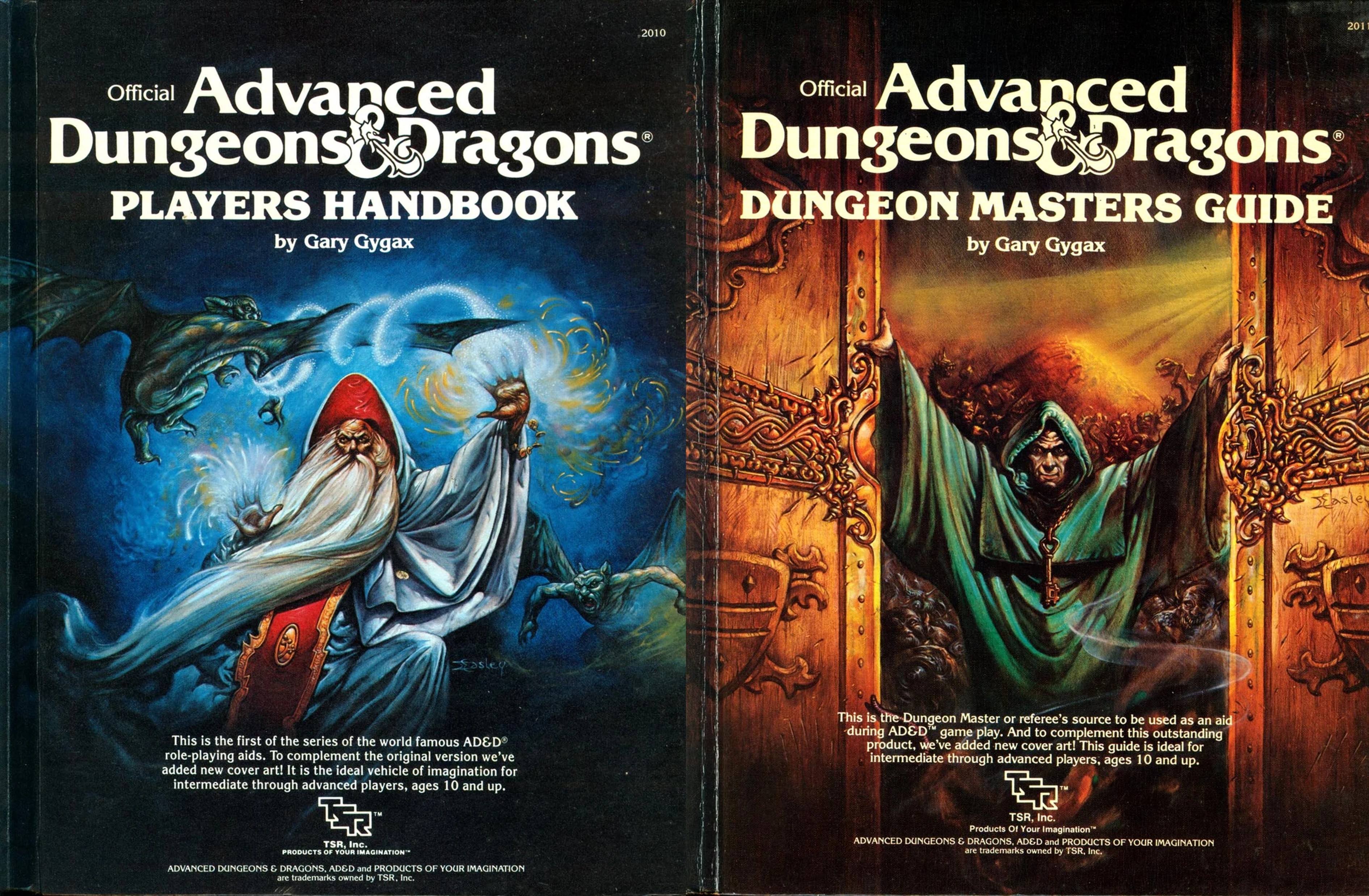
My original AD&D 1e books were the orange-spine printings featuring the iconic covers by Jeff Easley. I got the Dungeon Masters Guide (DMG) first, followed by the Players Handbook (PHB). The only two AD&D books I owned that were not orange-spine editions were the original Monster Manual (MM) and a copy of Deities & Demigods (the rare printing that still included the Cthulhu and Melnibonéan Mythos!), which I scored from a neighbor’s garage sale. You can read the full story about that lucky find right here.
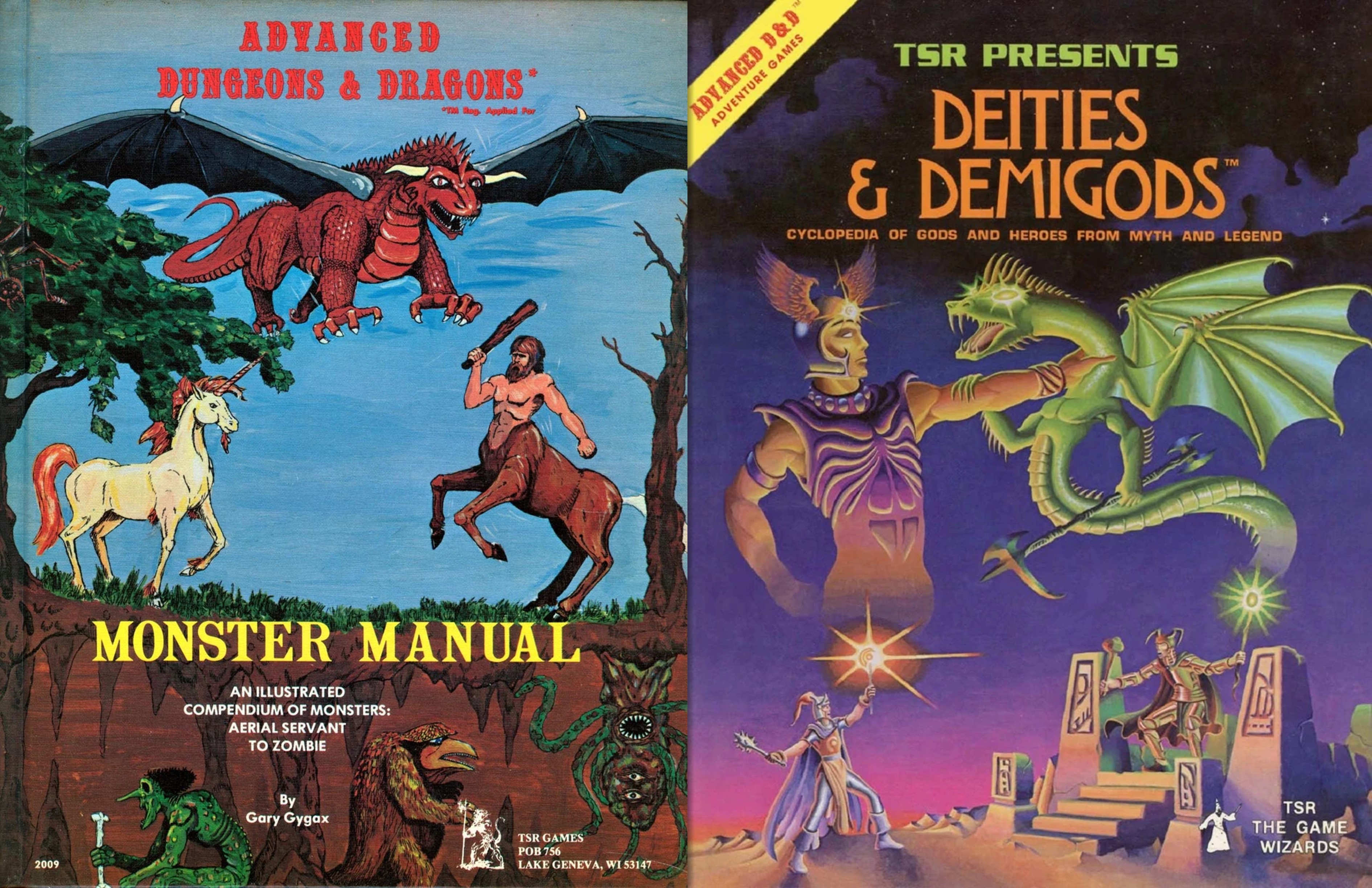
The covers for Deities & Demigods by Erol Otus and the Monster Manual by David A. Trampier served as my true introduction to TSR’s earlier art style. But, despite my books sporting the newer Easley covers on the outside, the interiors still featured the original 1e layout and illustrations. And I must admit… at first, I was turned off by them.
Let me explain before you burn me at the stake!
I came into the hobby through the Mentzer Red Box and the rest of the BECMI sets. While they weren’t anywhere near as cleanly laid out as modern games, they had a very approachable, easy-to-use style. They were specifically designed to welcome you in and teach you the game.
When you dive into the 1e PHB—and especially the DMG—they are not easily approachable books. I know now that their design came directly from the layout style of miniature wargaming rulebooks, but to young me, they just felt like inscrutable, textbook-like mystery tomes.
To add to my confusion, I started reading the books in the opposite order to their publication! Starting with the DMG didn’t make much sense if you hadn’t read the PHB first. I eventually figured it out and switched books, but coming directly from the polished look of BECMI, I was a little disappointed by the interior art.
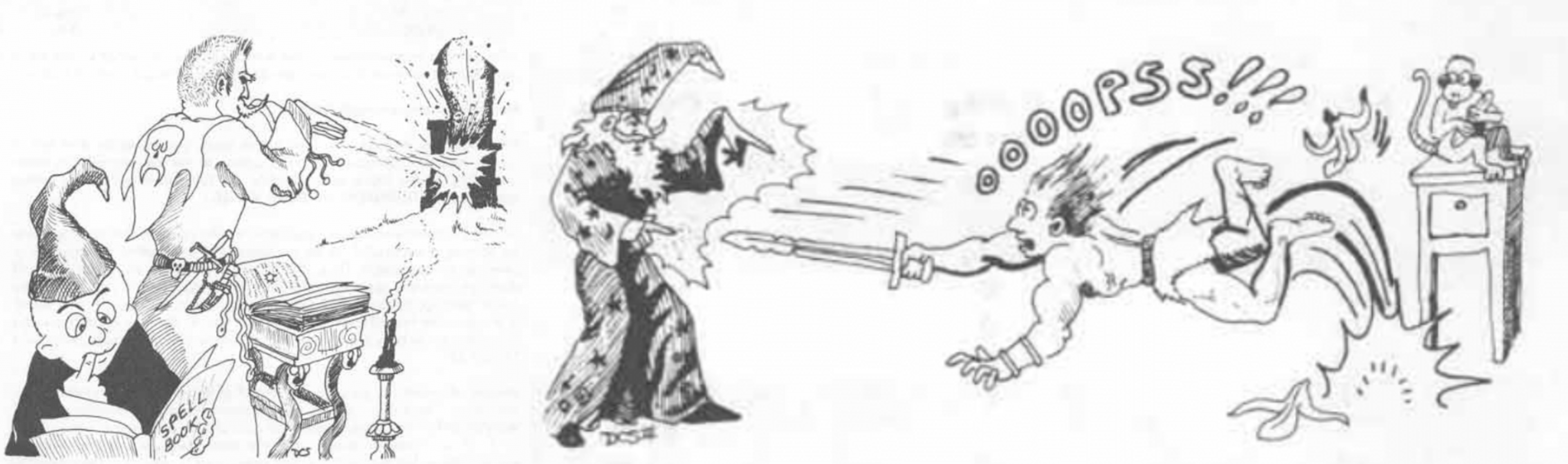
The cartoonish illustrations next to the Intelligence and Dexterity tables in the PHB were okay, but they didn’t quite match my epic expectations for the game. I’ve also never been a huge fan of the “races” lineup on page 18 by David Sutherland. But then I flipped a few pages and saw his A Paladin in Hell full-page piece… and I was absolutely blown away!
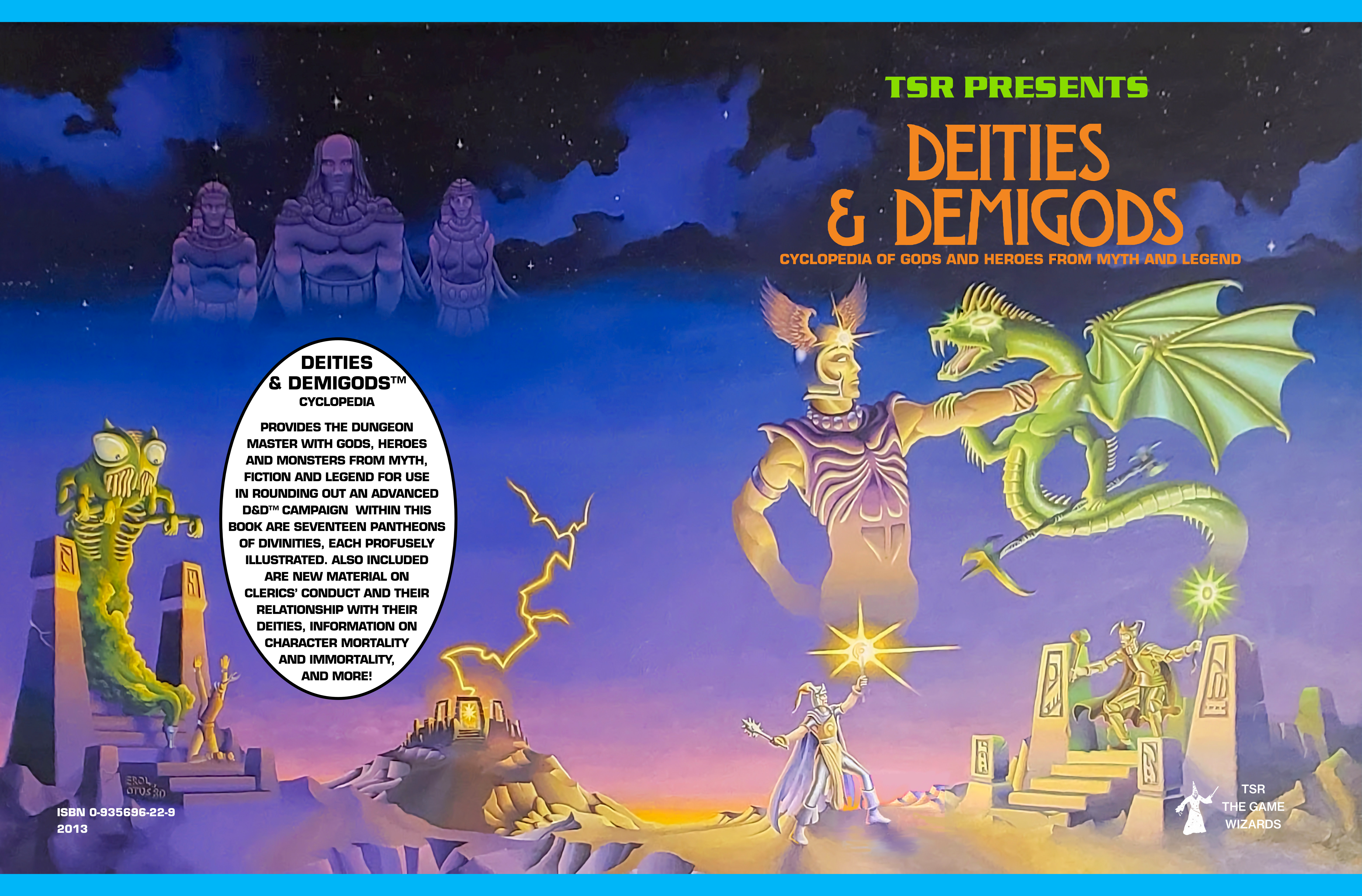
The MM had more illustrations that captured my imagination. But it was truly through the original Deities & Demigods that I learned to appreciate the old-school, foundational art of early TSR deeply. So, let me talk about these luminaries—Jeff Dee, Erol Otus, David C. Sutherland, David A. Trampier, and Jim Roslof—the artists who were there at the birth of the hobby, and how their work inspired me!
Jeff Dee
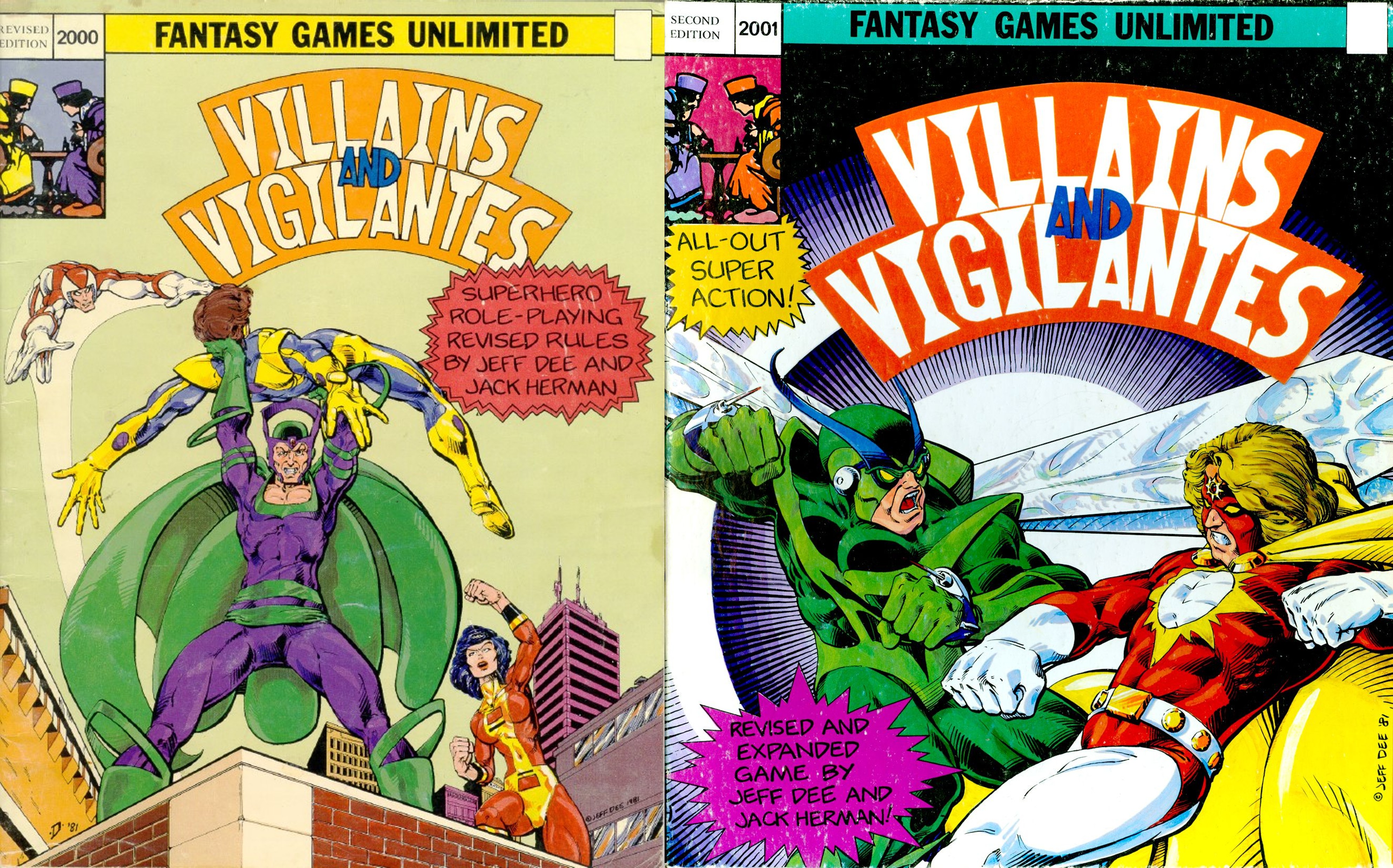
Of all the artists who originally worked for TSR, Jeff Dee is my absolute favorite. He has a distinct, clean style with clear comic-book influences. He didn’t just work on D&D; he also illustrated Villains & Vigilantes and The Mighty Protectors. I was actually lucky enough to interview him here on the blog back in 2015.
I must admit that of all the original TSR artists, his was the only name I knew by heart for a long time. As my interest in the hobby grew, I learned about the other legends and their trajectories, but Dee’s name always stuck with me. Strangely enough, I had no idea what he actually looked like. So, when I started watching episodes of The Atheist Experience and heard his name, I thought, “Huh, this guy has the same name as the fantasy artist.” Little did I know they were the same person!
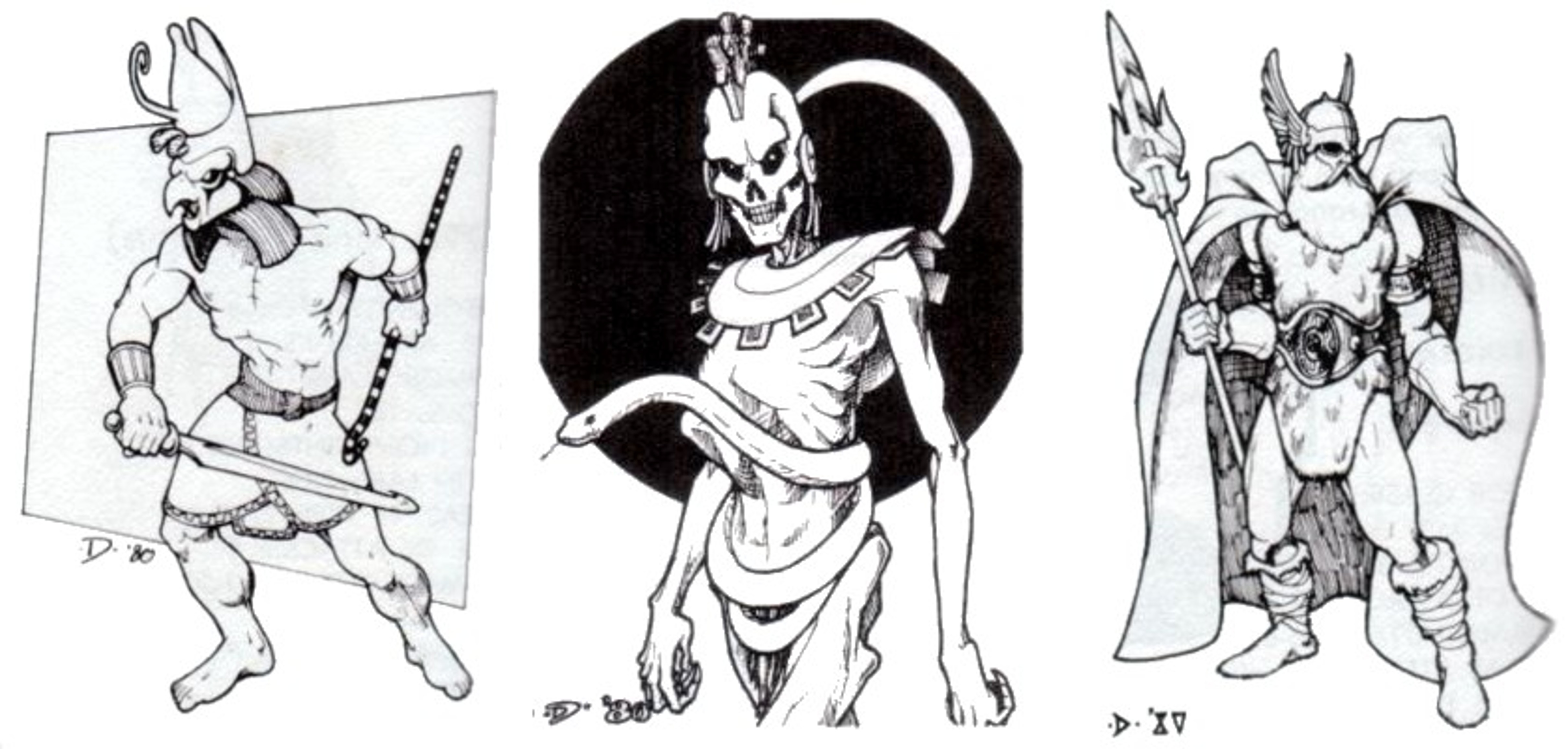
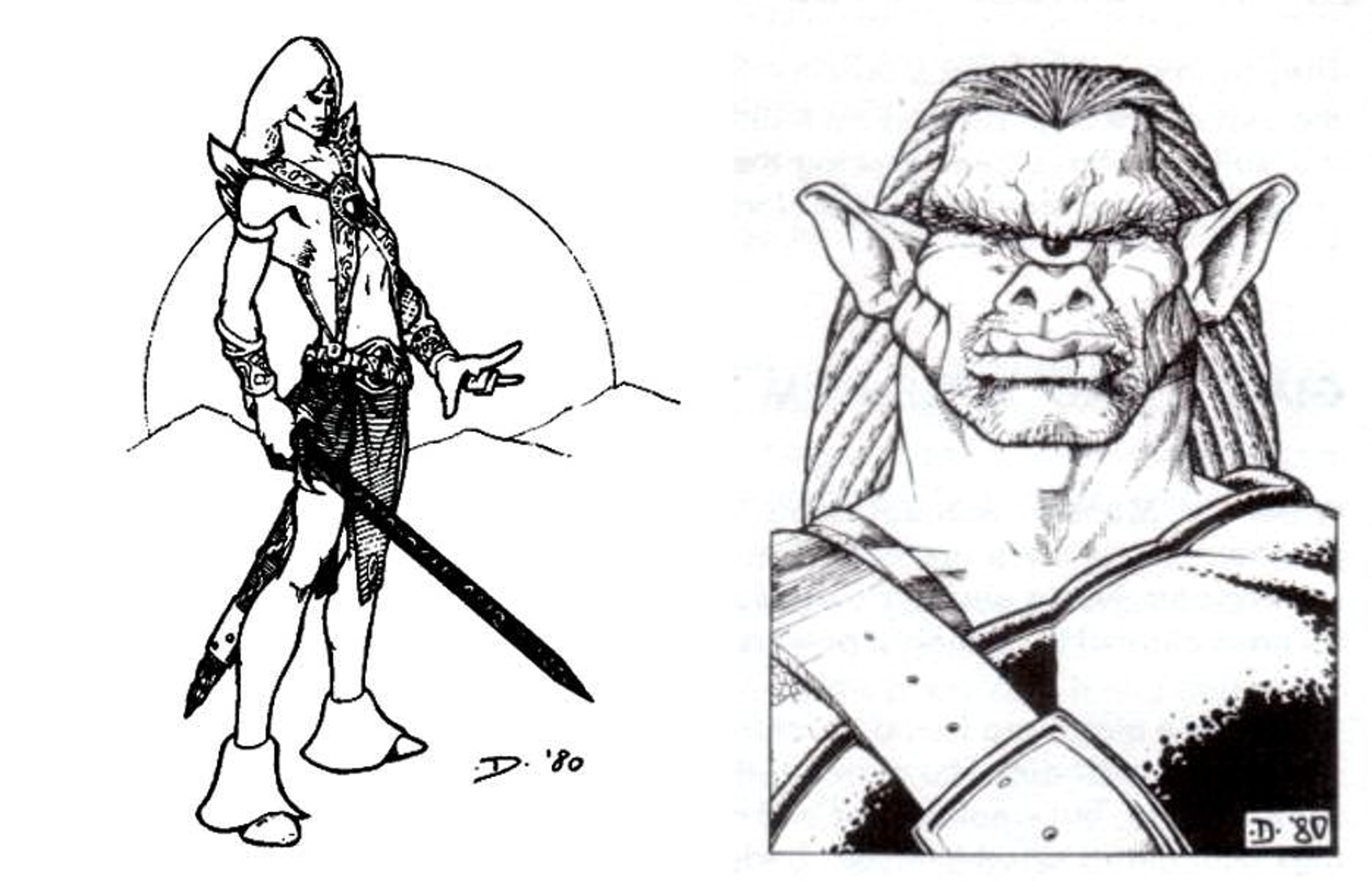
His work on the Norse, Egyptian, Melnibonéan, and Non-Human Mythos sections of Deities and Demigods blew me away. That book was my first introduction to Elric of Melniboné, and Dee’s illustration of Gruumsh is still exactly how I imagine the orc god today. Jeff worked on a lot of classic modules that I read but never actually played, and because of his distinctive line work, even as a teenager, I could immediately tell when he had drawn something.
Later on, I discovered his art for Villains & Vigilantes, which completely solidified my love for his work. His aesthetic reinforced for me the connection between comic books and the fantasy genre, which I still think is a perfect fit.
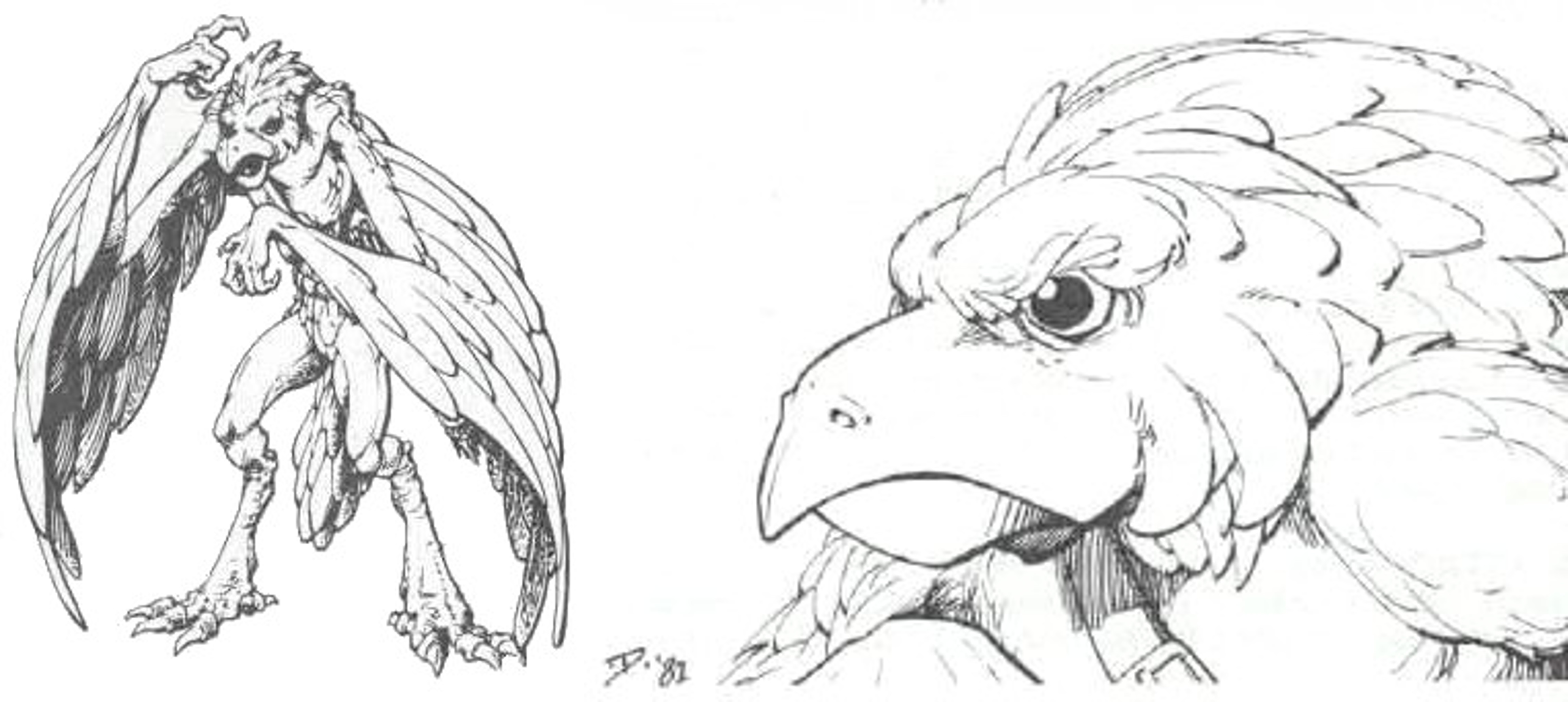
Jeff Dee didn’t draw any of the monsters in the original MM. But he did draw my absolute favorite monster in the Fiend Folio—which also happens to be my favorite non-traditional D&D ancestry, the Aarakocra! Their physiology in the game may have changed over the years (they now have separate arms and wings), but to me, Dee’s illustration is the true Aarakocra.
Erol Otus
Otus is my second favorite artist from this period. Just like Jeff Dee introduced me to Elric, Otus introduced me to Cthulhu via Deities & Demigods. While I wouldn’t discover H.P. Lovecraft’s actual writings or the Call of Cthulhu RPG until a year later, this book was my very first exposure to the Mythos.
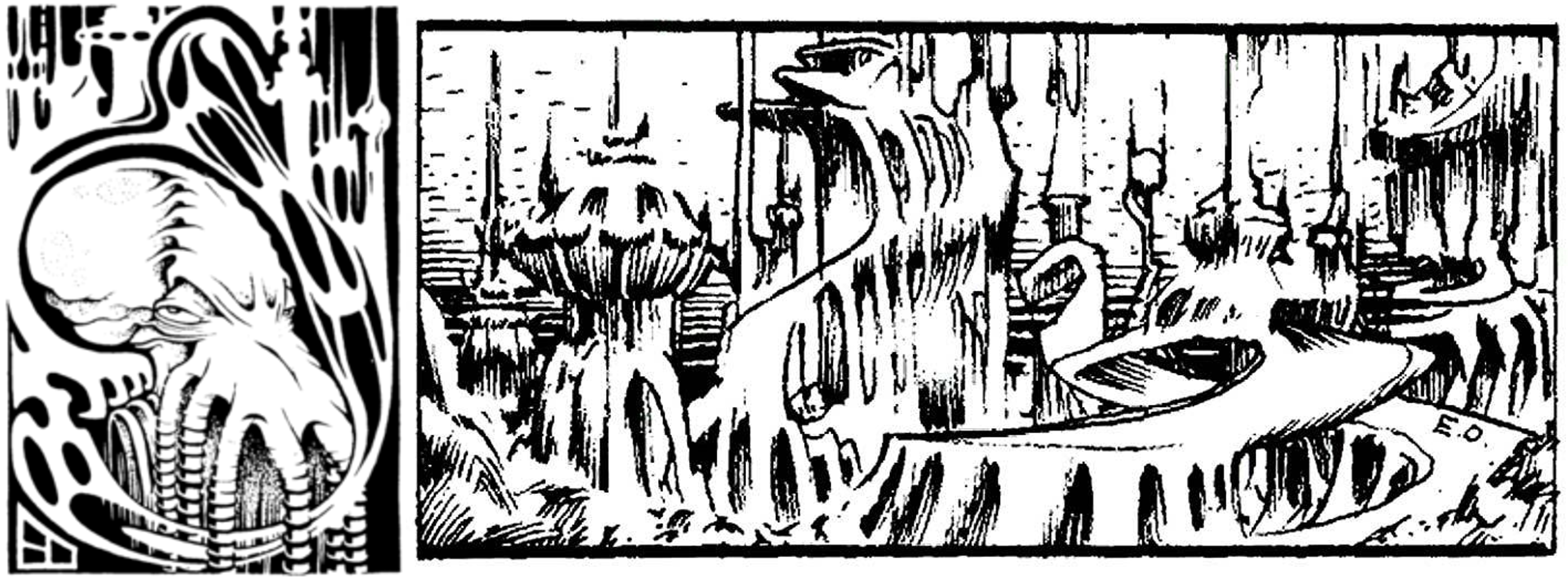
Erol Otus’ cover for that book absolutely beckoned me. While Sutherland’s MM cover was great for showing you the creatures inside, Otus’ Deities & Demigods cover illustrated the terrifying, cosmic connection between mortals and deities perfectly and efficiently.
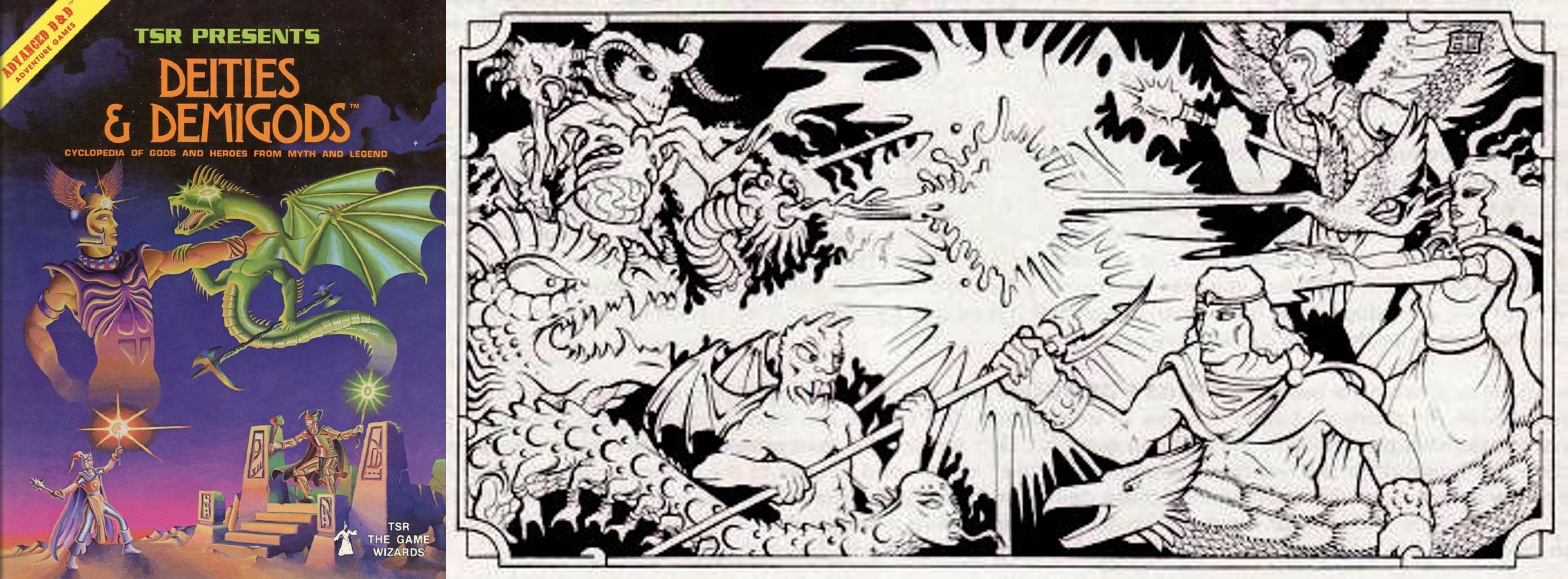
I would only discover and come to appreciate his iconic covers for the Basic and Expert sets much later in the late 90s, when I finally tracked down used copies. Perhaps because I discovered it so much later, his dragon on the Basic set isn’t my definitive mental image of a dragon—Elmore had already imprinted that concept onto me with his Red Box art.
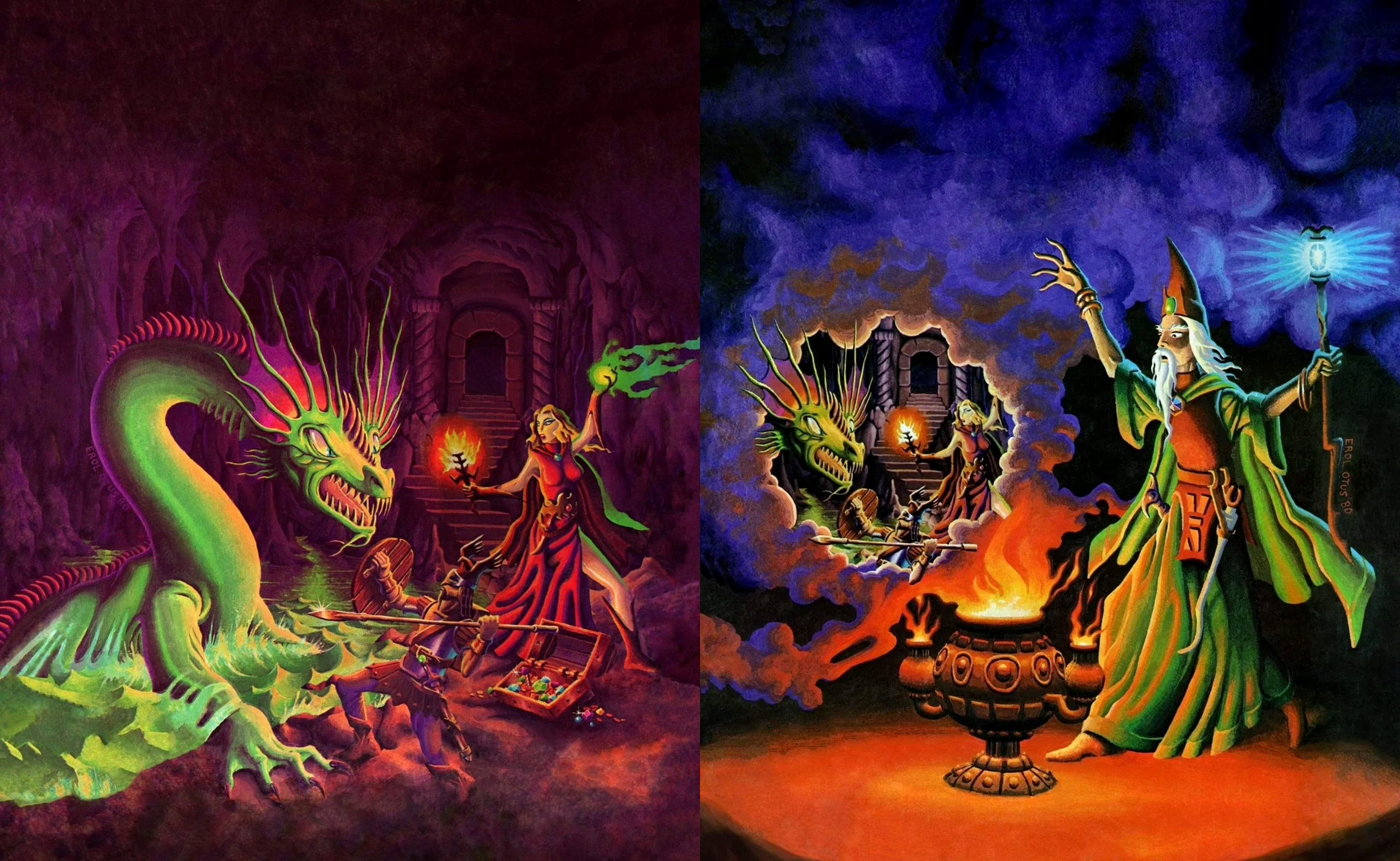
But when I began collecting old Gamma World supplements and adventures, I was thrilled to find his work scattered throughout that line as well.
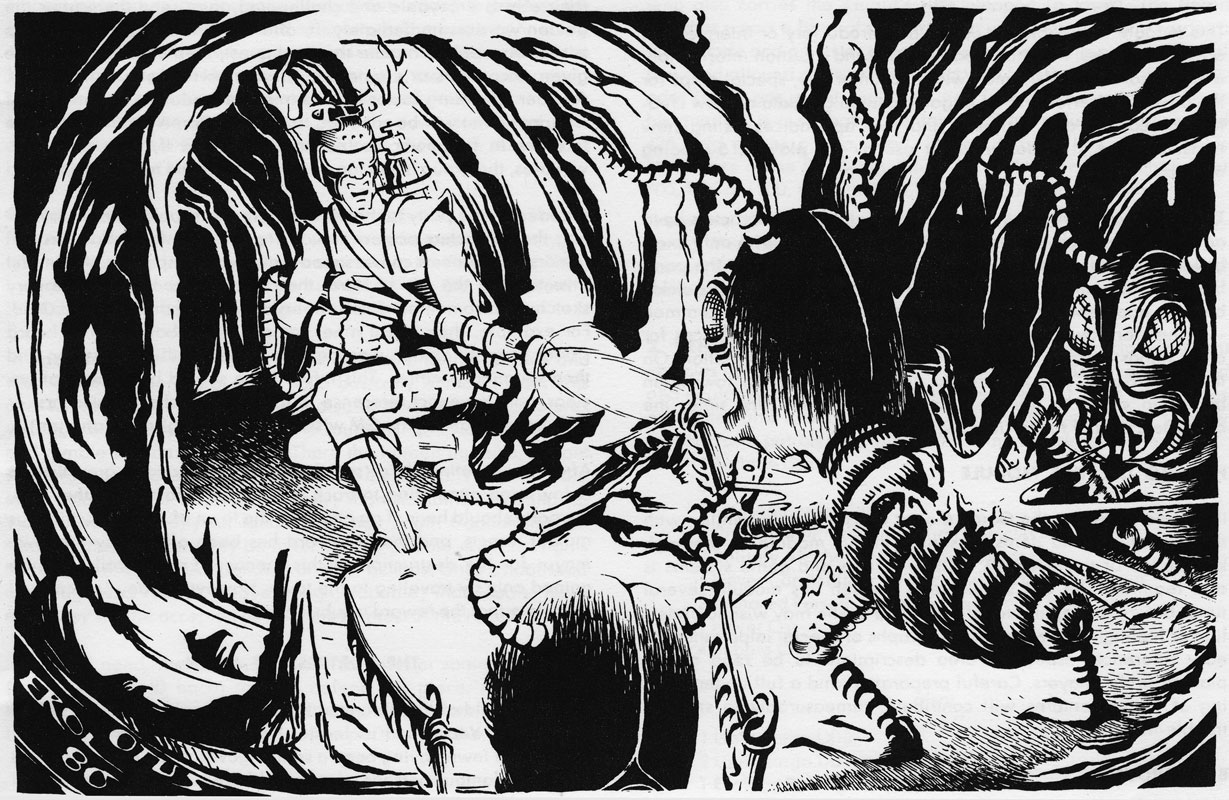
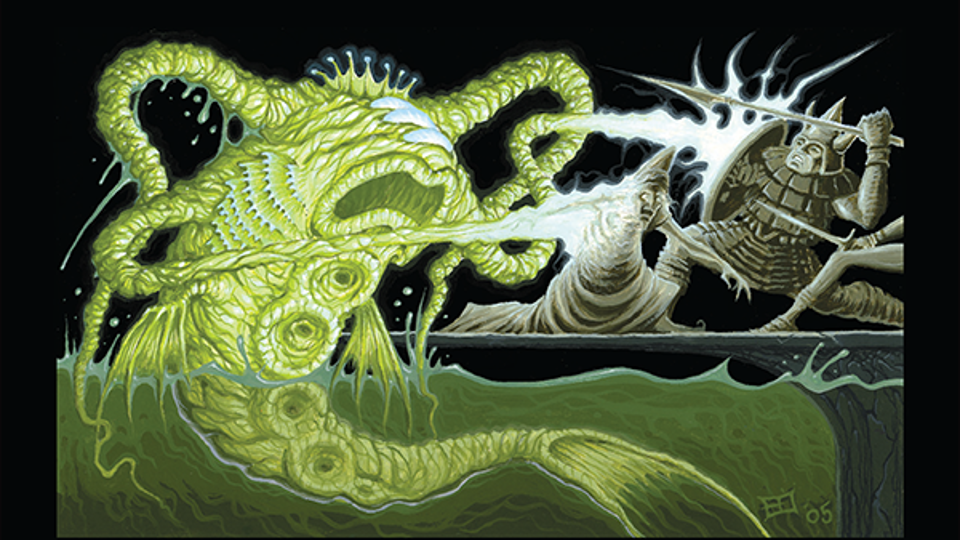
Erol Otus’ modern work is reminiscent of a psychedelic dream, and I mean that as the highest possible praise. His style is a perfect fit for the weird, gonzo feel of Goodman Games’ Dungeon Crawl Classics (DCC). He even drew one of my favorite interpretations of my favorite D&D Cthulhian monster—the Aboleth—for the cover of DCC Module #25: The Dread Crypt of Srihoz.
David C. Sutherland III
Sutherland wasn’t my favorite artist of the bunch, but his A Paladin in Hell is arguably a masterpiece of early RPG art. When I rolled up my very first character—a Paladin—that illustration was exactly how I imagined him!
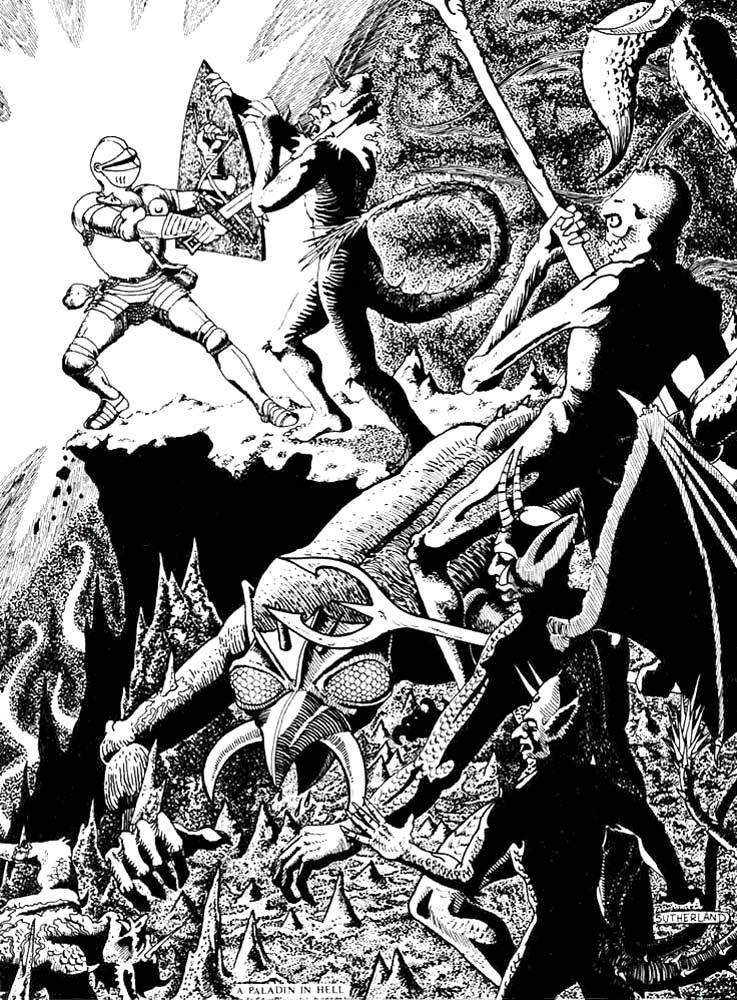
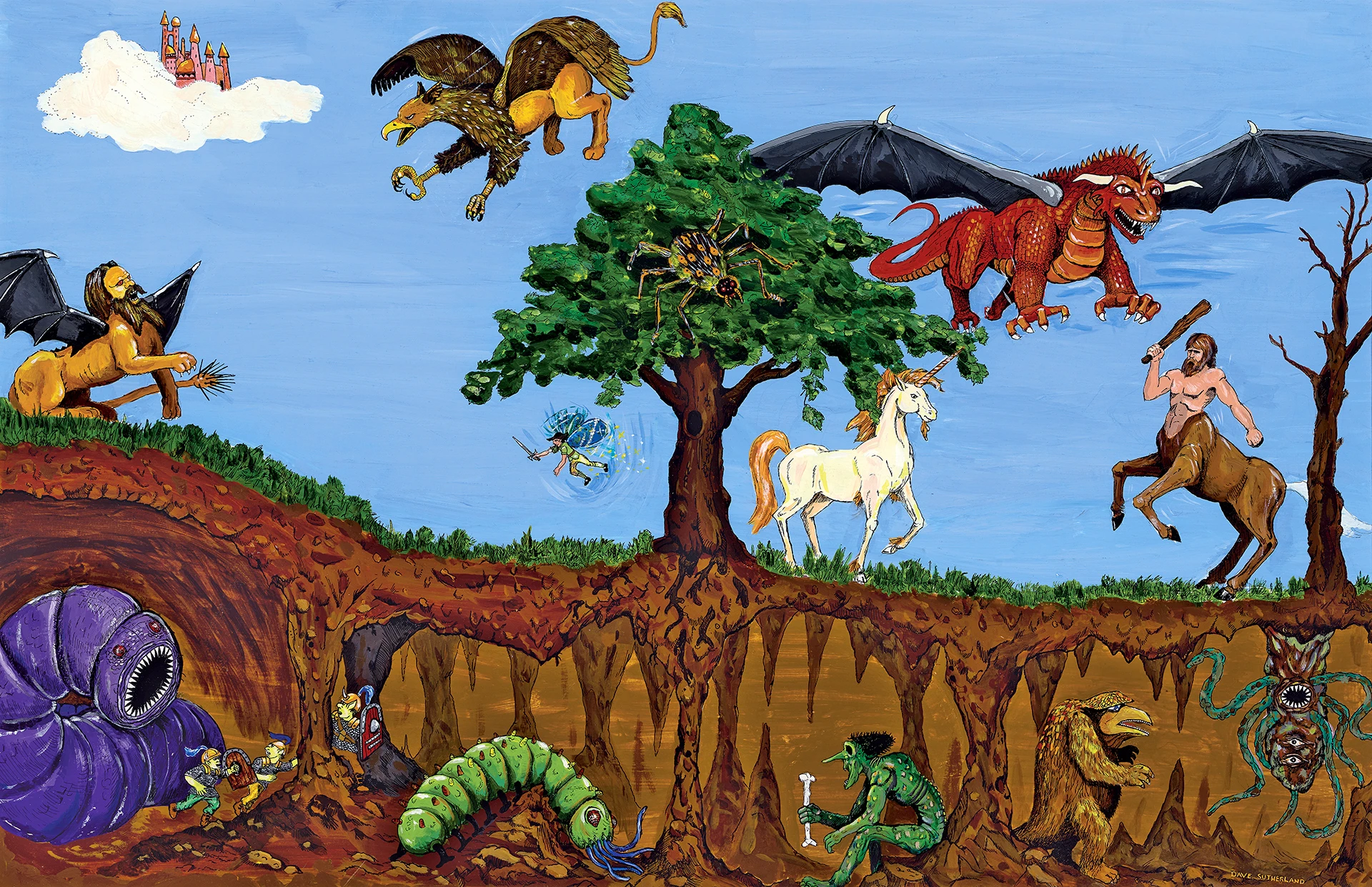
His cover for the DMG is an undeniable classic. It’s incredibly evocative, and much like the MM cover, I can deeply appreciate the nostalgia it elicits and how it influenced later generations of gamers, even if it isn’t my personal favorite piece.
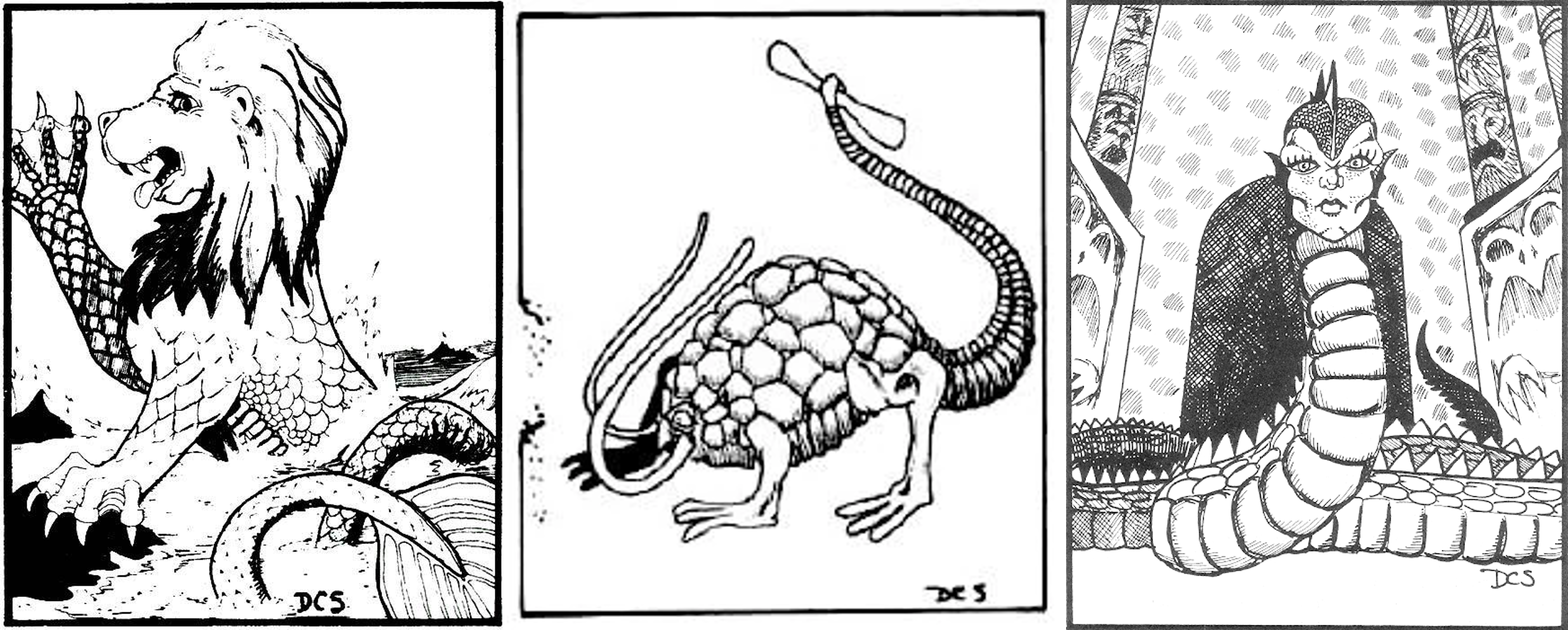
What I do love is his monster illustrations inside the Monster Manual. Some of them were quite simple, but they captured my imagination completely. I prefer his smaller, in-text illustrations to his full-page spreads. His Mind Flayer is so basic, yet incredibly charming. I love his Sea Lion and Rust Monster, but his Naga remains my absolute favorite in the book.
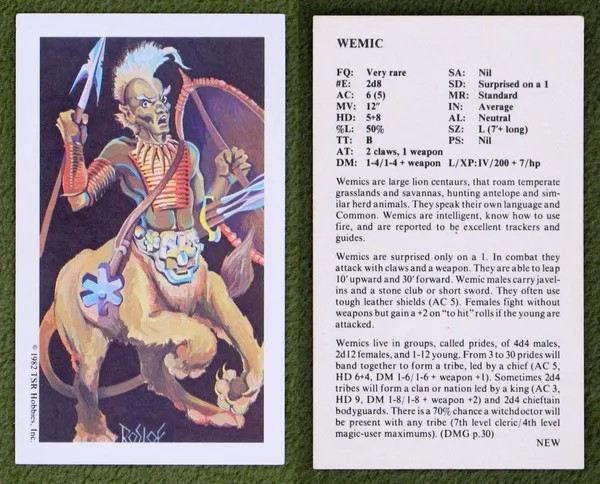
Fun fact: While researching this post, I discovered that Sutherland designed my favorite creature from the Monster Manual II—the Wemic—which was first published in Monster Cards Set 3 with art by Jim Roslof!
David A. Trampier (DAT)
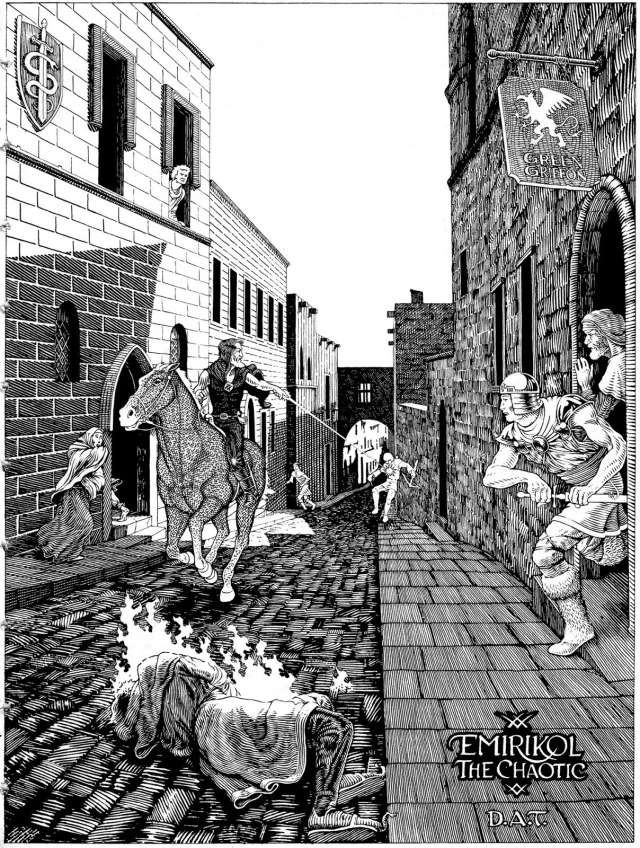
I was never really into Trampier’s Wormy comic strip; it just didn’t catch my fancy. I primarily knew his art from the AD&D 1e rulebooks. His illustration of Emirikol the Chaotic riding through the streets in the DMG is my favorite piece in that entire book. The sheer action and excitement of it invited you to imagine the story happening around the frame. I desperately wanted to play in a game that felt like that!
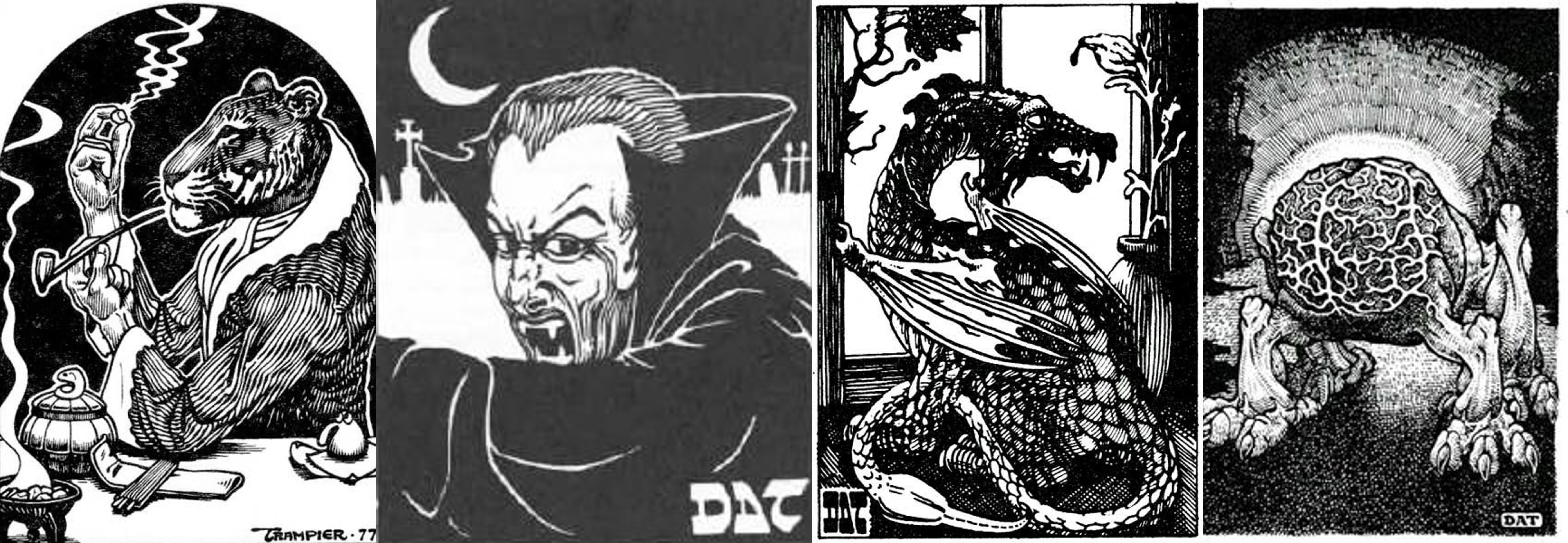
In the Monster Manual, his illustrations for the Rakshasa, Vampire, Pseudodragon, and Intellect Devourer immediately made me want to throw those monsters at my players.
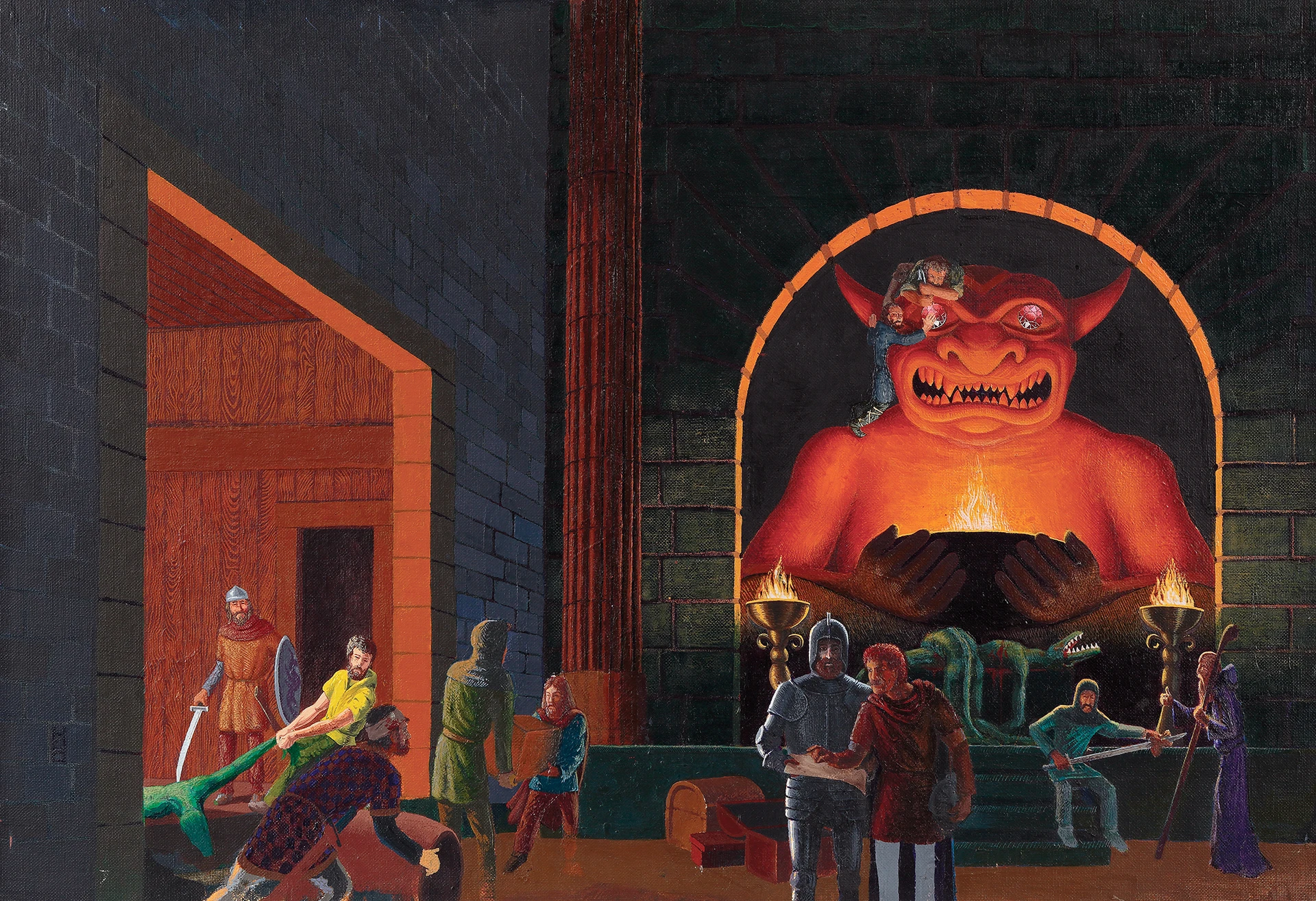
I finally got a second-hand copy of the PHB featuring his original cover around 1993, and of the three original AD&D core books, it is my favorite cover. It is the perfect classic murder-hobo scene; it captures the dark, dangerous feel of an old-school dungeon crawl.
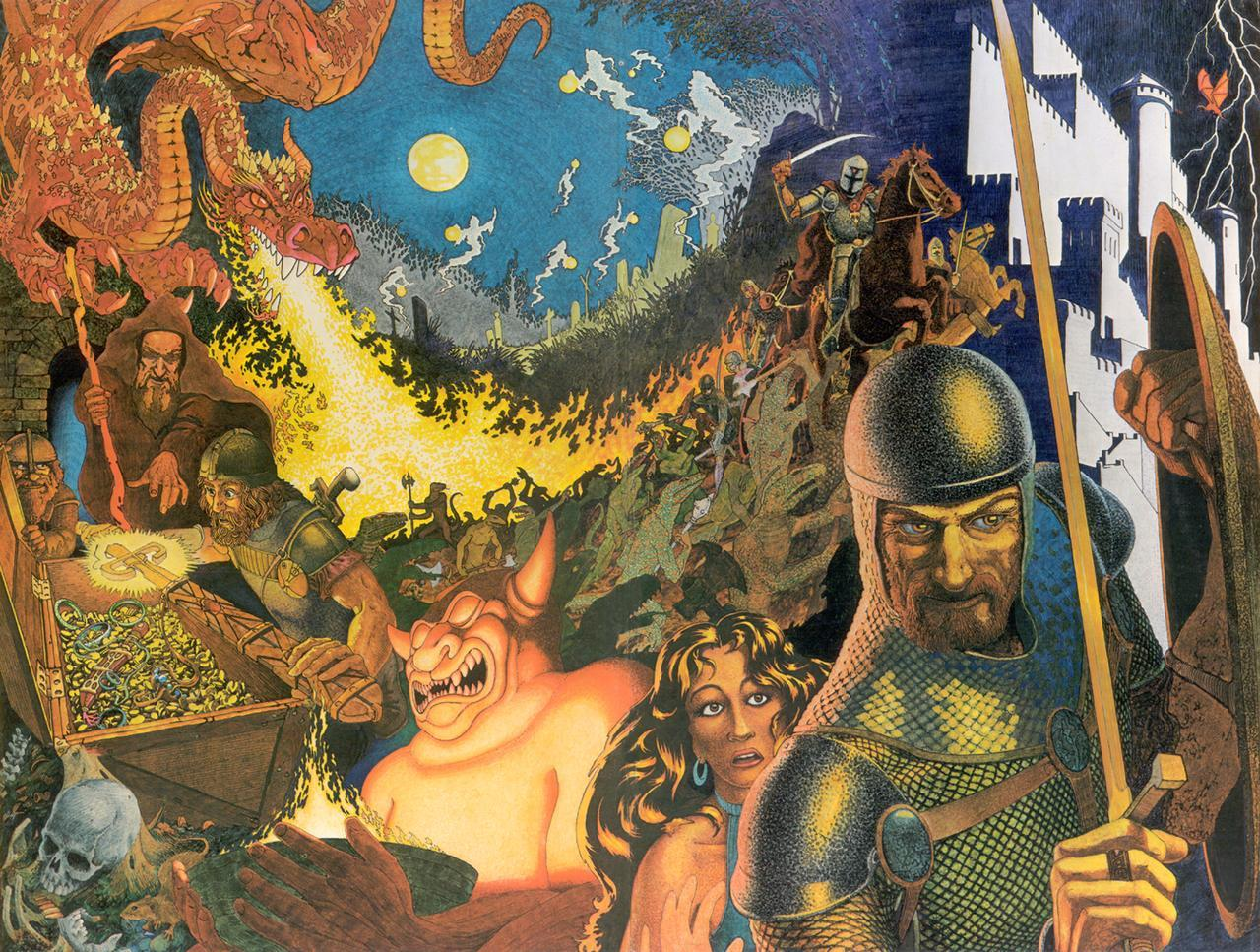
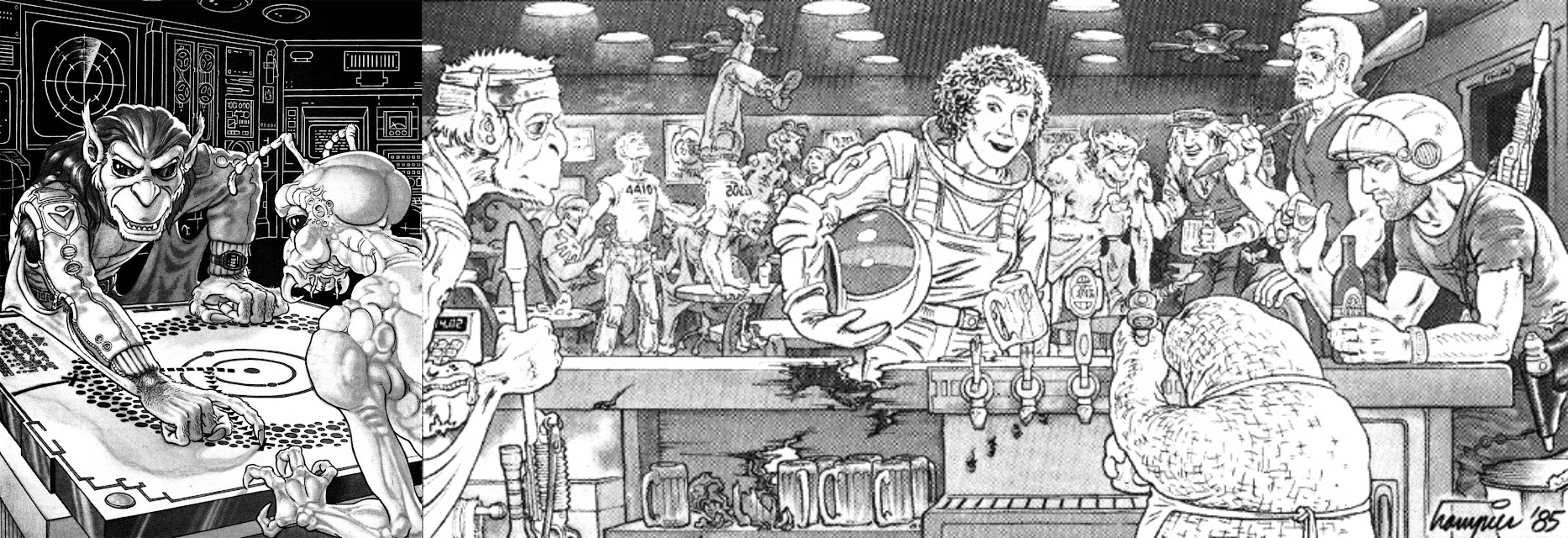
However, my second favorite piece of art by DAT is something I never actually owned: the panoramic art for the original AD&D 1e Dungeon Masters Screen. It is a masterpiece. You might argue it’s technically better than Emirikol, but the DMG art remains near and dear to my heart simply because of how deeply it inspired my games.
Another fun fact I learned while writing this: DAT also created illustrations for one of my favorite sci-fi games, Star Frontiers!
Jim Roslof
When I originally outlined this post, Roslof wasn’t on my list. But as I flipped through my old books for research, I saw his full-page illustration of Thor. I immediately realized just how important that specific piece of art was to sparking my lifelong interest in Norse mythology. It is a powerful, inspiring image and an absolute classic of D&D art.
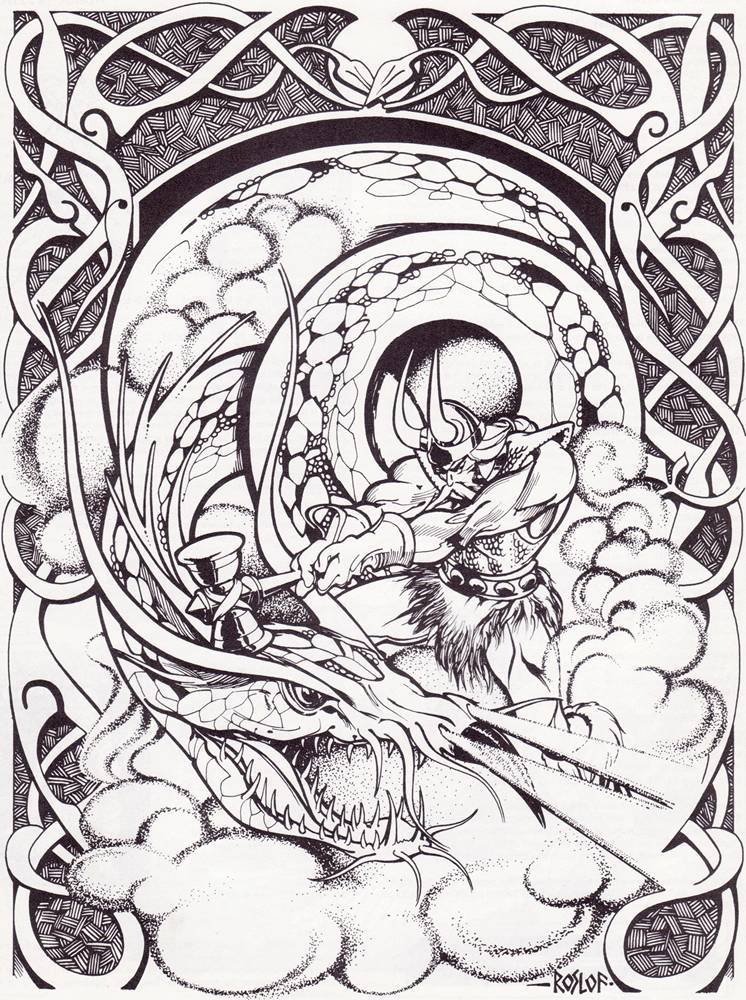
It’s also worth noting that, as TSR’s Art Director, Roslof was pivotal in hiring the exact artists I wrote about in my previous post in this series (Elmore, Easley, etc.), so the inspiration really does come full circle!
I am still not done talking about the classic TSR artists! Keep an eye out for the next post in this series as we continue the 40-year retrospective.
Categories: Tabletop Gaming Blogs
The best classic Dungeons & Dragons modules for an Inner Earth campaign For The Castles & Crusades rpg
For a campaign diving deep into the foundations of the world, "classic" D&D offers everything from gritty survival to high-fantasy politics. If you are looking for the definitive adventures that shaped the concept of "Inner Earth," these modules are the essentials. This blog post picks up from OSR Commentary Adapting C1: The Hidden Shrine of Tamoachan To Aethel, the Sunken Core Needleshttp://www.blogger.com/profile/11243274667834930867noreply@blogger.com0
Categories: Tabletop Gaming Blogs
Talon and Company Adapted From The Sword & Sorcerer 1982 for Sword of Cepheus 2nd Edition
Bringing the 1982 cult classic The Sword and the Sorcerer to the tabletop requires capturing that specific "heavy metal" fantasy aesthetic. In the Sword of Cepheus (2nd Edition) system, Talon is a high-powered protagonist, likely built with more than the standard three terms of experience.Here is the breakdown for Talon and his Mercenary Warband.TalonCareer: Mercenary (4 Terms)Rank: Needleshttp://www.blogger.com/profile/11243274667834930867noreply@blogger.com0
Categories: Tabletop Gaming Blogs
Is there a chance of bringing Alternity back?
As I’ve wrote in one of my recent posts I am currently rereading all of my Alternity books. Alternity is a roleplaying game I’ve wanted to run since I first bought it but something always got into the way. But there’s a problem. Even though I own quite a few Alternity books, I don’t own all of them and since the game has been out-of-print for many years it gets increasingly hard (and expensive) to track down copies. But what about digital copies online? There are actually quite a few Alternity books available for purchase on DrivethruRPG. Unfortunately they are not easily found since most of them are stuck in the d20 Modern Generic section. Another problem is that the two core rulebooks are not available online aside from the “Limited Preview Edition” of the Players Handbook.
But I hear you asking “what about the new Alternity”. A couple of years back Rich Baker, one of the original designers of TSR’s Alternity released a new version of the game after a successful Kickstarter. Sasquatch Game Studio, Baker’s new company was actually able to register the Alternity trademark back then since Wizards hadn’t bothered to renew it. Unfortunately not much of Alternity’s original ideas made it into the new game. So while there’s still a game called Alternity out there, it doesn’t have much in common with the original besides being a sci-fi tabletop roleplaying game. But like it predecessor it’s pretty much dead at his point. The last update on the Sasquatch Game Studio website has been in 2018 and no new products for the game has been released since then.
Could Wizards of the Coast actually bring back Alternity properly? That’s highly unlikely. The most we can hope for is that they release all the Alternity products as PDF downloads on DriveThruRPG and hopefully also add a POD option at some point. A limited reprint of the original corebooks as an “anniversary edition” like FFG did it with WEG Star Wars 1st Edition would be brilliant, but unlikely due to the trademark situation. The trademark is still owned by Sasquatch Game Studios and I don’t know what kind of deal Sasquatch has with Wizards which allows the latter to release products using that name.
One option I haven’t written about yet is a retro clone. In a post a few years ago I stated my belief an Alternity clone could cause ire from WotC’s lawyers but that’s probably not the case. As long as someone rewrote the rules without directly copying the texts things should be fine. Mechanics are not copyrightable after all. The bigger question is if there’s an interest in doing so. Sure, there are countless D&D retro clones, but D&D was way more popular than the rather niche scifi TTRPG released shortly before TSR vanished as an entity completely.
Roleplaying games aren’t really dead as long as some people still play them, but in the case of Alternity there’s a true risk of it going extinct. It’s out of print and it was a niche product even when it was new. There are other, more popular options for Sci-Fi fans which are available like for example Traveller in its many incarnations. But if we keep talking about Alternity there’s a chance someone at WotC will commit to bringing all the books back or someone writes a retro clone so that at least its mechanics are available to find new fans.
What are your thoughts on the state of Alternity? Would you like to see it properly resurrected? Do you actually prefer the Sasquatch Game Studio’s version? Please share your comments below!
Categories: Tabletop Gaming Blogs
Detail d100 Sword & Sorcery Random back alley encounters For Castles & Crusades rpg
In a Sword & Sorcery setting, back alleys shouldn't just be empty paths; they should feel like the digestive system of a decaying city—dark, cramped, and dangerous.Here is a d100 table tailored for the grit and high adventure of Castles & Crusades. This blog entry picks right up from D100 Sword & Sorcery Random Urban Encounters Table for Castles & Crusades rpgThe Back Needleshttp://www.blogger.com/profile/11243274667834930867noreply@blogger.com0
Categories: Tabletop Gaming Blogs
The Barbarians a 1987 sword and sorcery film for 2nd Edition Sword of Cepheus including NPC's, Items, and More
To bring Kutchek and Gore into your Sword of Cepheus (2nd Edition) game, you need to emphasize their sheer physical dominance and their "Dual-Hero" dynamic. In this system, they function as high-Stamina tanks who can dish out massive damage but are vulnerable to social manipulation or complex technology.The Barbarian Brothers (Kutchek & Gore)Trait: High-Octane SiblingsSocial Class: 2 (Needleshttp://www.blogger.com/profile/11243274667834930867noreply@blogger.com0
Categories: Tabletop Gaming Blogs
The Tower
By Pat_Sagor
Pat_Co Productions
Nimble/OSR
Level 3
Pat_Co Productions
Nimble/OSR
Level 3
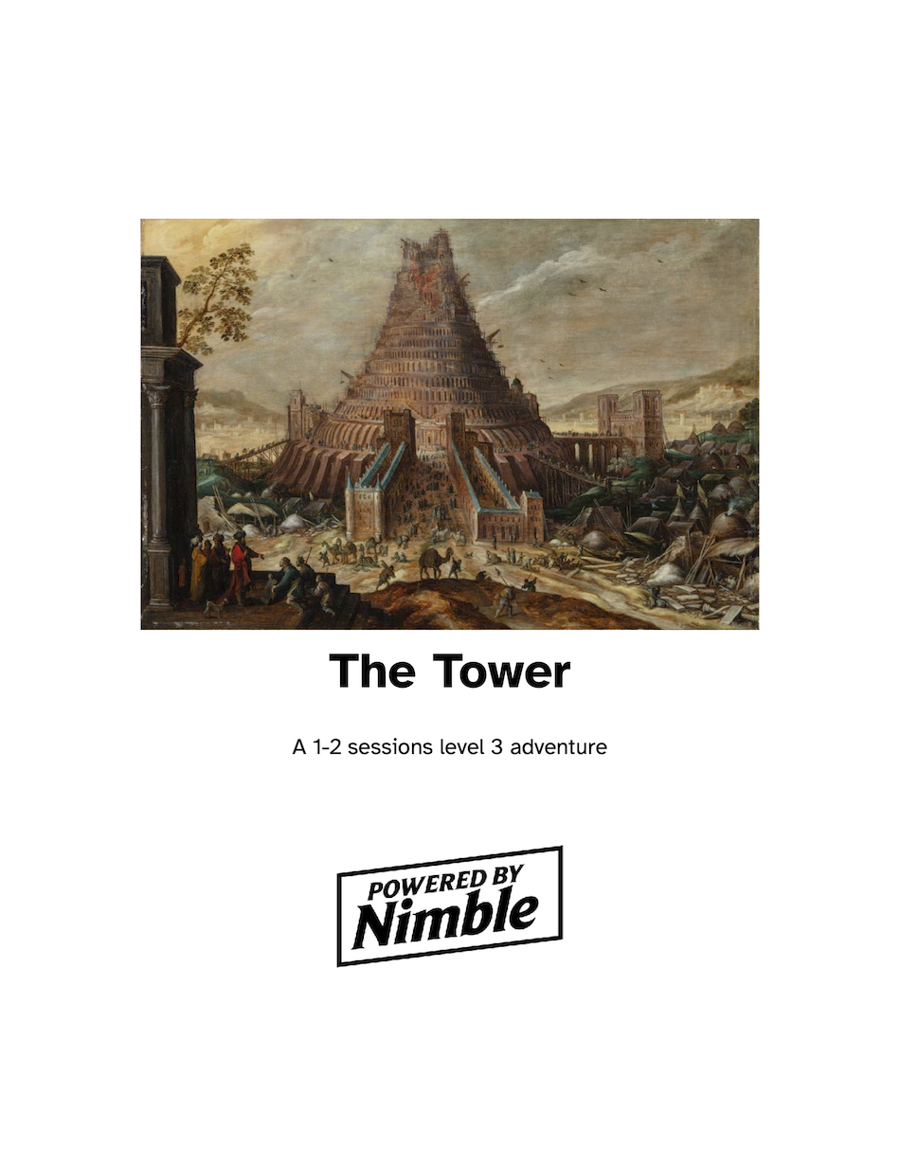
In the heart of a volcanic wasteland, the Tower rises amid fire and ash, a slender edifice of stone. Its citizens never leave the Tower, and keep their mysterious traditions out of sight from the outside world. But they have gained immense wealth trading wondrous artifacts extracted from the depths below the Tower… Outside the Tower, Baron Hugues DeMort’s massive army has been laying siege for over a month. Unable to breach its impervious gates, frustrated and desperate, he has devised a plan to infiltrate the Tower, and he just heard of a group of adventurers that are brave, capable, and … expendable. The perfect team to send on a probably suicidal mission!
Greetins Green Level adventurers! Friend baron has a new, fun, and exciting adventure for you! This fifty page adventure describes about twelve scenes inside a gigantic tower/city that is under siege. The party travels through a rigid caste-based society that really be in a 70’s social commentary scifi movie instead. Follow the script, stab the bosses and then … win?
Ok, so, Baron von Evil is laying siege to the massive tower city and sends the party in through some lower cave/tunnels to get to the city gates and blow them up with the bombs he’s devised for you to carry. You get in and find a massively caste-based society. The tower/city has four levels. The lowest, black are the workers, then the level above has the red managers, then the golden enforcers and judges above that, and then the white intelligentsia above that. We’ll let you decide if Black=Worst and White=Best has any meaning here. Anyway, it’s right out of a scifi movie and, in fact, this probably should have been a Gamma World adventure but, then, of course, it wouldn’t sell any copies at all. Ok, so, anyway, you’re in this city on the lowest levels. You gotta get ahold of some levitation bands to Ascend through the central shaft. Along the way you meet rebels, learns about the rape of an 8 year old by a cop, and find out that hte whites are not white, they are all really just one lich in charge of everything.
The designer kind of knows they’ve written a railroad and has some words on advice on how to make it not a railroad and more interactive. There are some very basic maps of the city regions, but, ultimately, the adventure comes down to the twelve or so scenes/events that make up the plot here. You’re in the tunnels and then watch some cops kill a couple of citizens just minding their own business. You watch an Ascension, where citizens are promoted to the next color up. You meet a rebel and then get arrested by the ol “four more show up every turn” trick. Youre in the middle of the Barons army invading the tower, you boss fight Golden Centurion Marigold 1 (that’s one of the tower peoples names. Like I said, SciFi) who covered up the rape of the little girl. Let’s see, one of the lich’s victims telepathics you, and then you fight the lich. Let’s see … have I bitched about rape yet? Of a child? Why are people putting this shit in their adventures? This is supposed to be fun. You know what’s not fun? Child rape. People just seem to toss that shit around the way they toss around Hitler when arguing. Maybe give it a rest and find something else for the cops to cover up? Maybe Soylent Green is people. That’s fun. Can you imagine? People love it. They riot over it. And it’s actually people. And, notably, not child rape. (and murder! Don’t forget the murder after the child rape.)
The adventure gives you a list of NPC’s, a list of scenes, and a list of locations. There’s a decent number of summaries and background information as well, but, really, it is the people, places, and events that drives this.
Well, I say people drive it, but it tends to be more of a “Guest Star of the Week” kind of the thing. You get an NPC in a scene or situation and then you’ll be lucky if they continue to show up. Thus there is a relatively large number of named NPC’s, each with decently long NPC descriptions. Those descriptions are fairly well done but at some point you’ve got to ask yourself why we have so many people. You can’t possibly form a bond with any of them, not in the amount of time they are showing up. There is supposed to be this underlying theme pr regression, rebelling against order, blind adherence to order and the neutral observers to it all that is handicapped (Let’s see the judiciary enforce their decisions when enforcement power belongs to the people they are ruling against.) And then, of course, ultimately the entire system comes from corruption at the very top, the farce of the liches leadership.
We’ve all seen a lot of liches. Party liches, grim liches. We’ve got a master manipulator here, that shows up a couple of times in public ceremonies impersonating a “white,” Possessing, really. And he has some tells. He raises his hands to his face and says “Actually …” a lot. There’s a fun little gimmick to get the party wondering, This is just slightly farcical and one of the better parts of the adventure.
Looks, it is essentially a railroaded scenebased adventure. The designer tries to help it not be that with some locations and a tad bit of free will, but that’s what it is. There’s nothing wrong with that. It is, I suspect, how the vast majority of people play D&D, some derivations of scene based with a lot of hand-waving. Not my favorite type, but I get it. If you’re gonna have scenes then lean in and write a scene based adventure. If you want your location based adventure to have events then dump those in. This adventure never fully commit to either and is the worse for it. Devo says you need to Sartre this baby up! This needed to be all events/scenes or a location based adventure with “secrets” to discover and a few events thrown in.
This is Pay What You Want at DriveThru with a suggest price of $1. The preview is eleven pages and gives you a good cross-section of different aspects of the adventure. Good preview.
https://www.drivethrurpg.com/en/product/563227/the-tower-for-nimble?1892600
Categories: Tabletop Gaming Blogs
Pages
