
Your wildly multifarious home!
Tabletop Gaming Feeds
[Parsulan] The Weird Wood

The Weird Wood of southern Parsulan is an ancient forest infused with potent arcane energies. In halls of Magical Academy at Abraxad, surrounded and protected by the wood, it is labelled as Forbidden and students have been disciplined or even expelled for entering it other than by the proscribed paths. Treasure seekers and adventures from other places sometimes travel the forest, however, but many don't return.
What is known from the reports of those that enter it is that the forest is a place of unusual magical power. At the very least, it alters a visitor's perception of time and distance. The wood is also said to be the abode of strange spirits, beings inhabiting both biological and mechanical forms.
Faerie woodlands are hardly a rarity in Parsulan, but somehow, the Weird Wood has become infected or entwinned with technomagical devices in addition to its natural, elemental powers. Some point to its relative proximity to the Field of Fallen Colossi and suggest some stray, animate portion of the giant combatants may have made its way to the forest. Others argue that given the sheer number of constructs and amount armament debris found there, moss covered or half-buried, it must be the remnant of an assault by a substantial force. Perhaps in times past someone marched against Abraxad, and this is the result? If that is true, then Abraxad would surely have record of it in its extensive libraries, but those remain closed to outsiders.
Whatever their origins, it is these artifacts that draw the scavengers.

The commonly encountered fae of the forest are mostly harmless and appear as small, crude figures or vaguely animal or insect shapes of metal. They seem to mimic biological life in a rough but analogous way to the manner Meks resemble humans.
The larger, more dangerous entities are harder to describe with certainty. Some appear as beasts with mechanical and biological parts. Others are shifting shapes of churning metal, churning storms of fury and blades.
Categories: Comic Book Blogs, Tabletop Gaming Blogs
OSR Review - The Type 3 Security Cutter For The Clement Sector Rpg Campaign
The Type 3 Security Cutter (also known as the Type 3 System Security Cutter) is a specialized law enforcement and patrol vessel in the Clement Sector RPG setting by Independence Games. While the Type 2 is a common sight in local system navies, the Type 3 represents an up-scaled, more formidable evolution of the security cutter concept.Here are the detailed specifications and background for Needleshttp://www.blogger.com/profile/11243274667834930867noreply@blogger.com0
Categories: Tabletop Gaming Blogs
May 4th Be With Your Gaming!
It’s May 4th, Star Wars Day! “May 4th be with you” and all that. Today, I wanted to reminisce about Star Wars TTRPG gaming as part of my 40 Years a Gamer retrospective.
Star Wars was immensely influential for me. I watched Star Wars—before it was called A New Hope—in theaters when I was just 4 years old. I had the toys and played with them endlessly. I learned what the Hero’s Journey was before even being introduced to the concept.
Hero’s Journey, Star Wars style! Image taken from IMGUR: https://imgur.com/a/heros-journey-sMfdk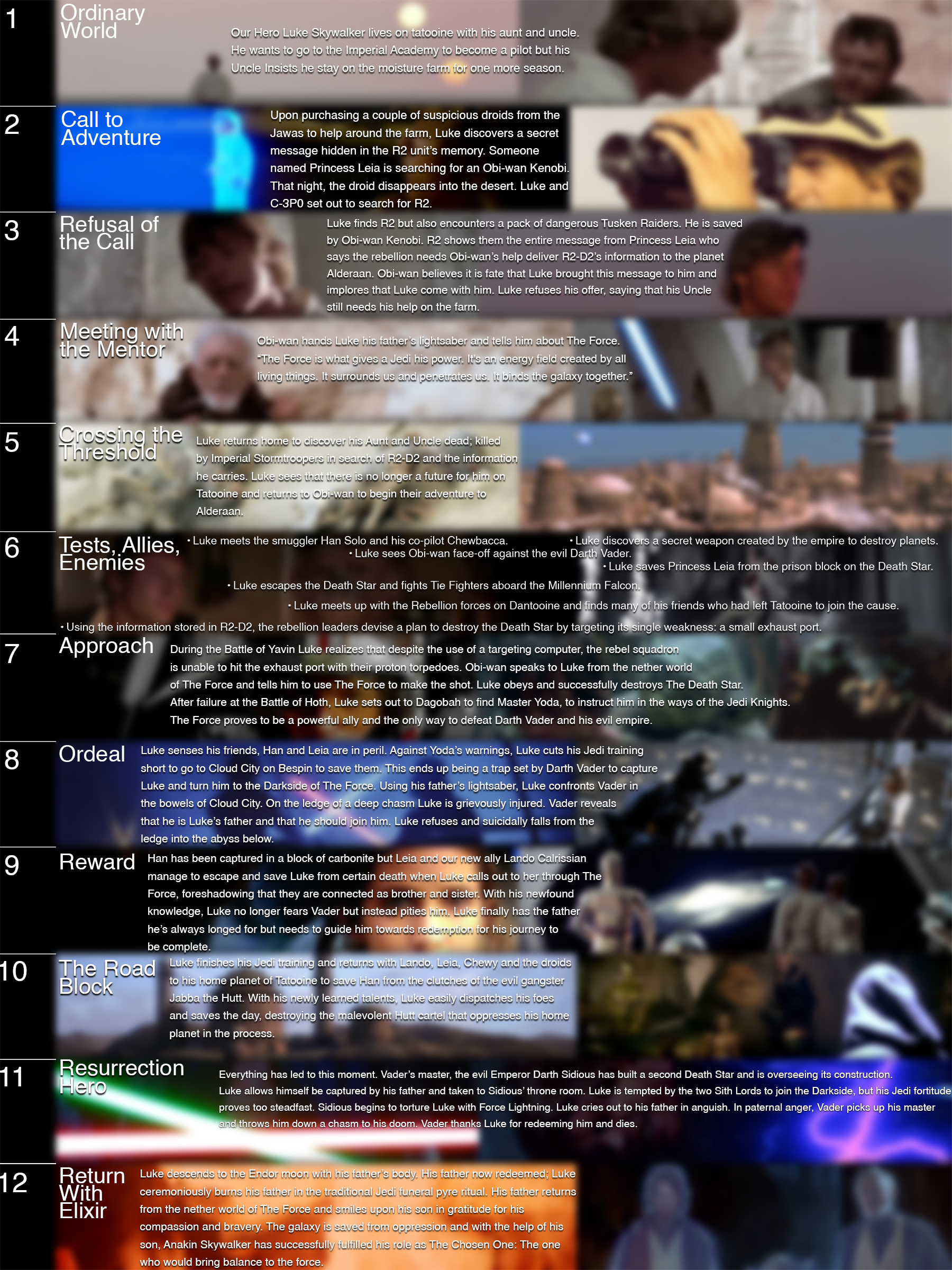
The franchise was instrumental in teaching me about the oppressed fighting the oppressor, a hero breaking the cycle of violence and choosing to forgive, and evil ultimately consuming itself.
Incredibly, for something so influential, I did not immediately think about roleplaying in a Galaxy Far, Far Away.
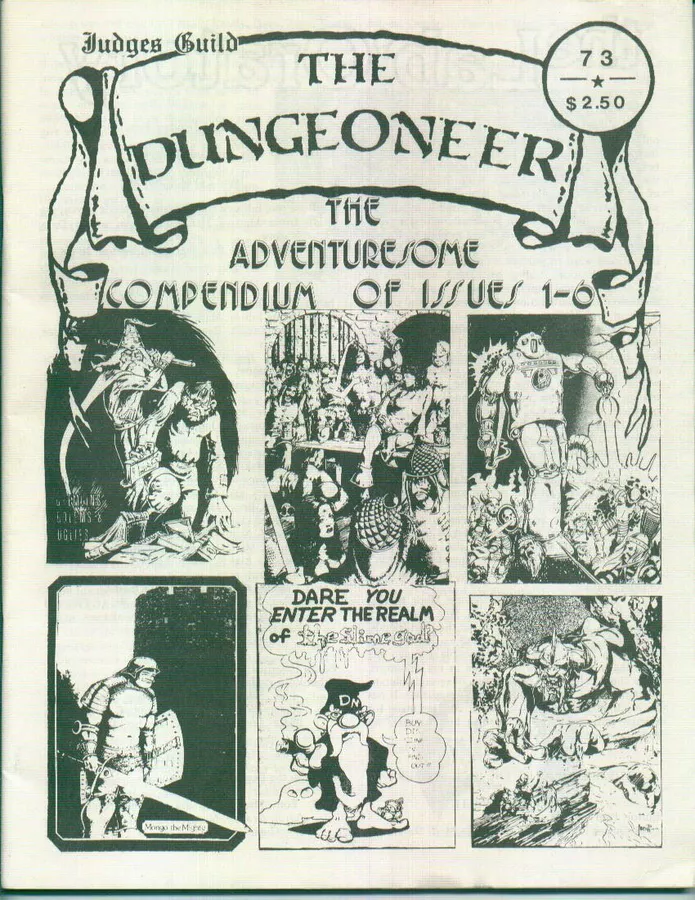
My first idea to use elements from Star Wars came from reading The Dungeoneer Compendium, issues 1-6, which I picked up at the same garage sale where I got my original Monster Manual and Deities & Demigods. Page 28 of the compendium had this entry in a random table: “Have C-3PO and R2-D2 of Star Wars come and join the group. However, have a group of Imperial stormtroopers hot on their tails.”
During an adventure in the summer of 1988, the players were in a magical library. They opened a tome, and R2-D2 and C-3PO came running across the room, hotly pursued by Stormtroopers and Darth Vader himself! One of the players tried to face Vader, who promptly sliced his magical sword in two and left the room to pursue the droids. That was it, a quick gag, sadly leaving a player with a broken magic sword, but not much more than that.
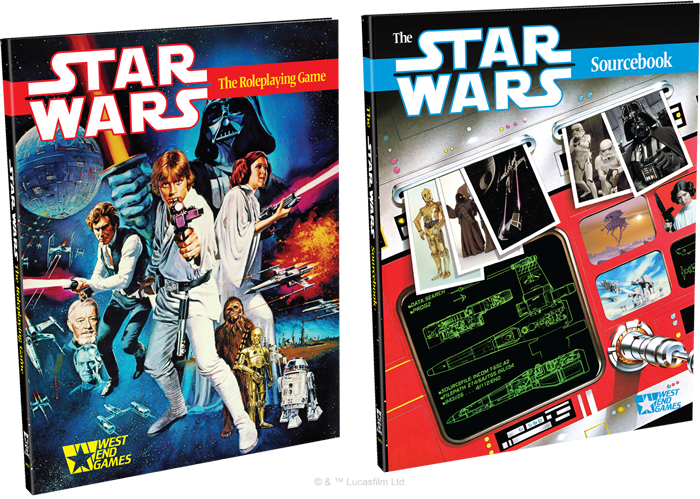
Around that time, I learned about the official Star Wars: The Roleplaying Game from West End Games, and I picked up the core book and the sourcebook. It was either late 1989 or early 1990 when I read it. I had an accident in my 11th-grade chemistry lab, and I vividly remember reading the Star Wars Sourcebook while waiting at the doctor’s office!
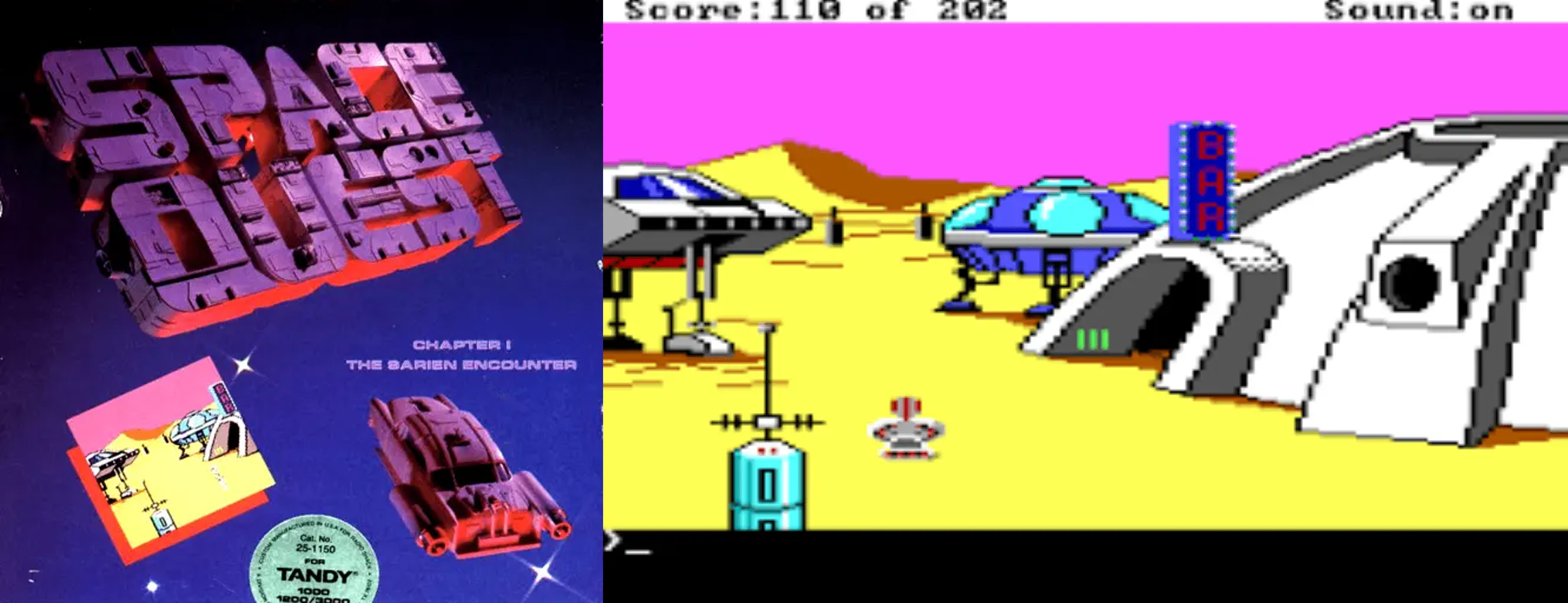
I didn’t run Star Wars as a GM back then. I did, however, play a Han Solo clone based on the character Dagg Dibrimi from Starchaser: The Legend of Orin (an animated Star Wars rip-off). I was a little disappointed when, halfway through the adventure, I realized we were playing a campaign based on the Space Quest video games!
I love the Star Wars D6 system. It developed so many ideas that became foundational to the Star Wars Expanded Universe (now Legends), keeping the franchise alive and vibrant between the end of the original trilogy and the launch of Timothy Zahn’s Heir to the Empire trilogy. However, I had no luck running a satisfactory game in that universe. I tried launching an ambitious post-Return of the Jedi game in college, but my players complained that it “felt too much like a fantasy game.”
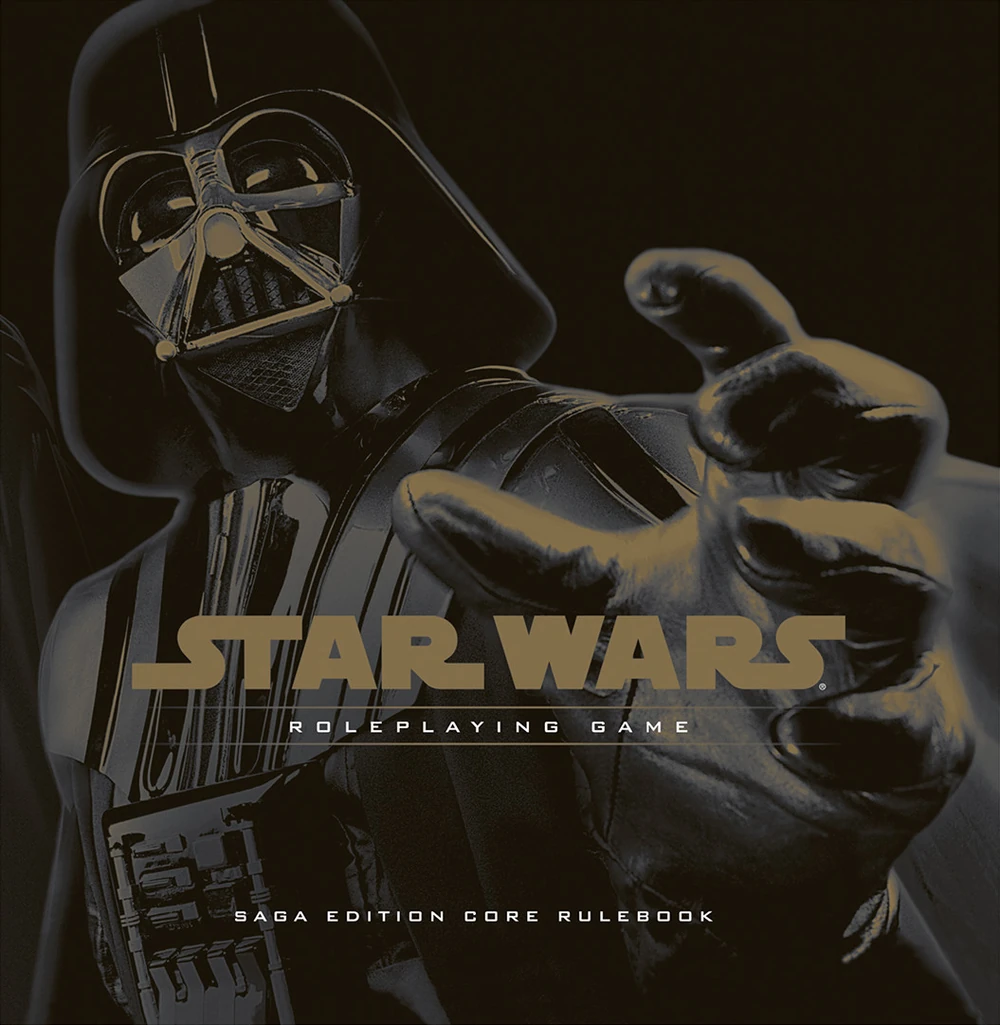
I would have to wait for ANOTHER system to run my definitive Star Wars campaign. When Wizards of the Coast got the license, I purchased their original edition but never played it. I did, however, play their second attempt at the rules: the Star Wars Roleplaying Game: Saga Edition, published in 2007.
I own all the books in that series, and I used them to run an Infinities campaign (i.e., “What if?” or alternate timeline). I won’t go into too much detail here, as I previously posted a long series of articles on the blog about the campaign, Star Wars: The Gathering Storm. You can read the first post in the series here and read the rest of the series if it interests you.
I loved the system, planned on using it for other sci-fi franchises, and really hoped D&D 4th Edition would be just like it! It was not, but that’s a story for another day. In the process, I also acquired WAY too many Star Wars miniatures and ships from WotC.
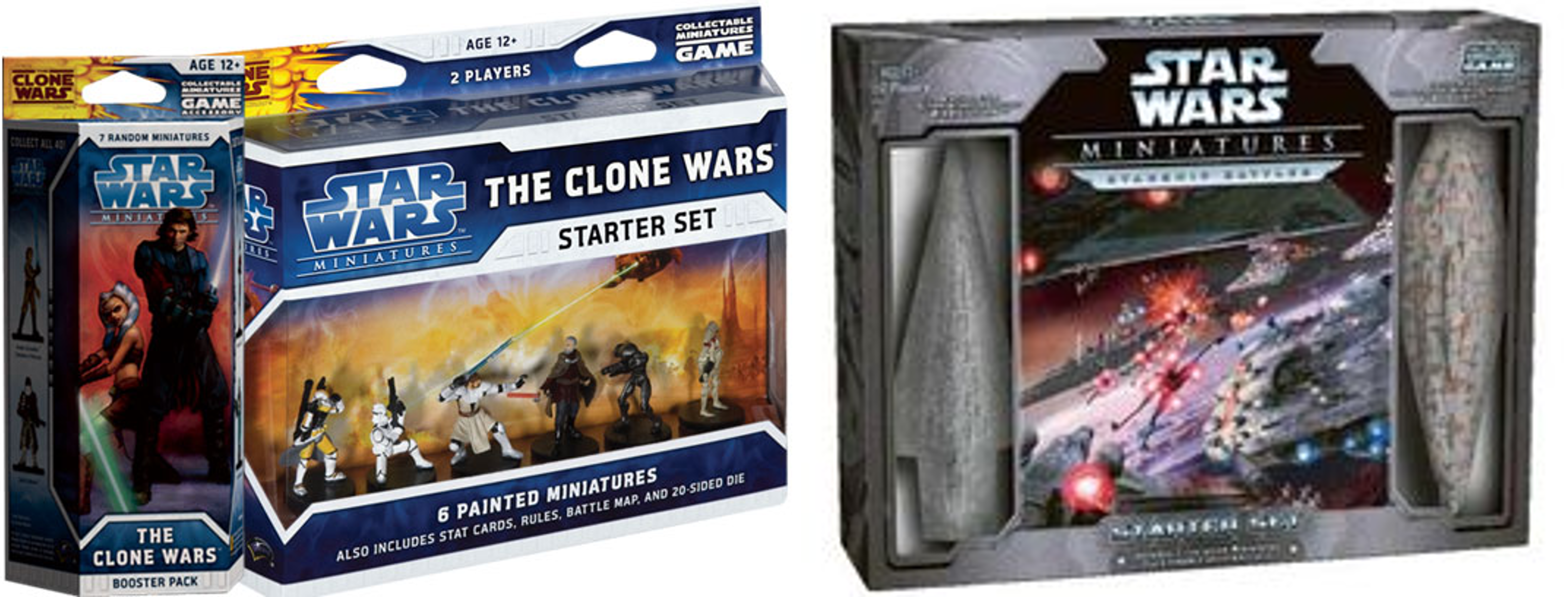
Looking back, it isn’t a perfect system. It still has a bit too much “d20” in its DNA, which isn’t always a good fit for the genre. Jedi were generally better than other classes, and they quickly became the superhero-like versions that later Star Wars media made them out to be. I really prefer the WEG d6 version, which captured the grounded feel of the Jedi from the original trilogy.
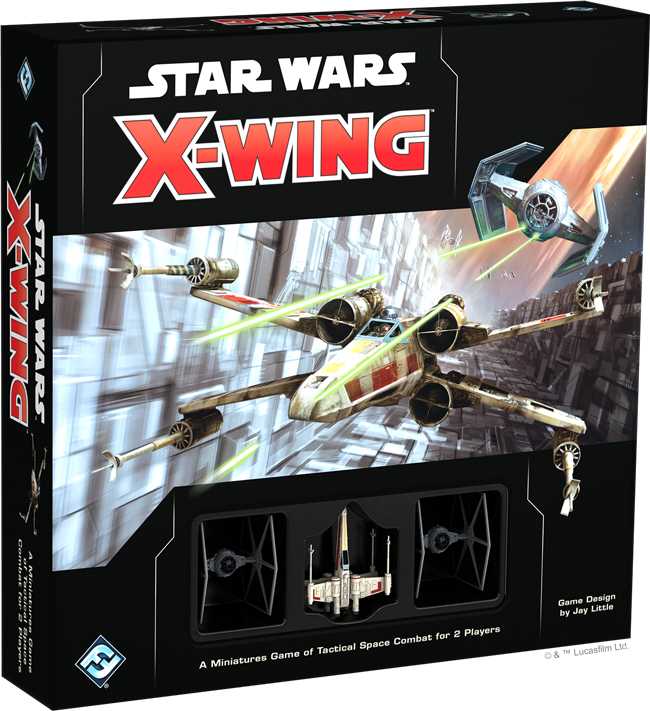
I’ve never played the Star Wars Roleplaying from FFG/Edge Studio. Friends have told me it is great, and I have read very interesting reviews. I must admit to being a little averse to “funky dice” (proprietary dice with strange symbols), which kept me from giving it a try. From what I’ve seen, that is probably my loss. I own the original starter set for the Star Wars: X-Wing Miniatures Game, 1st edition, and enjoyed playing it, but I never bought anything beyond that core box.
I hope to play some more Star Wars TTRPGs in the future, probably in the same vein as my The Gathering Storm campaign—an alternate version of the Galaxy Far, Far Away. But what system to use?
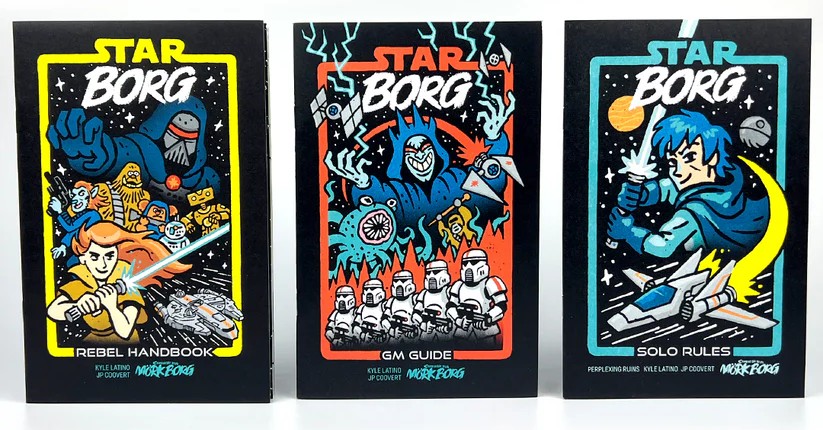
I don’t think I’ll use the official TTRPG from Edge Studio. I am curious about Star Borg by JP Coovert; it looks like a very fun adaptation of Star Wars ideas to the Mörk Borg rules.
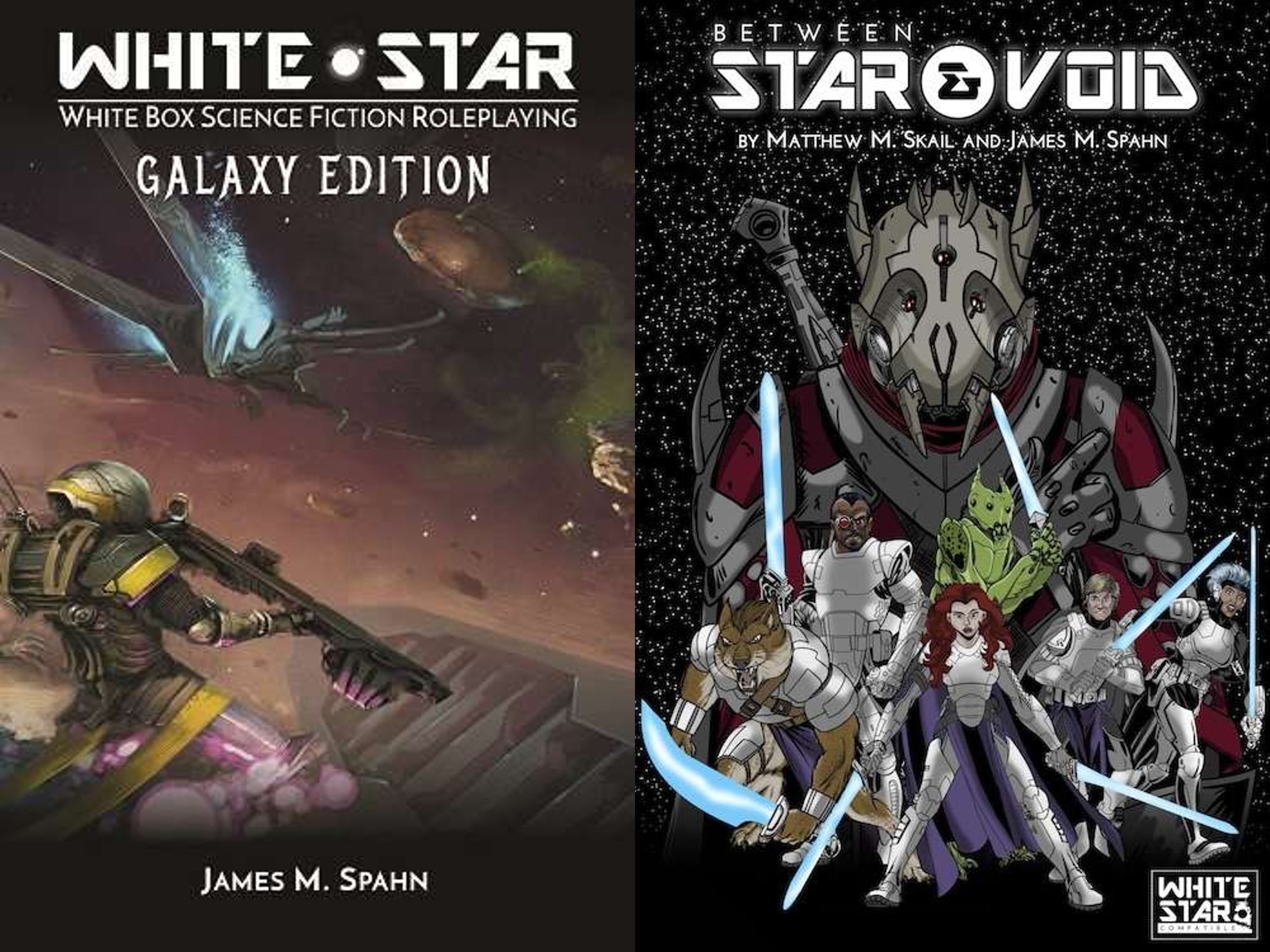
I also believe White Star: Galaxy Edition could handle Star Wars with little problem, especially if you add the Between Star & Void supplement.
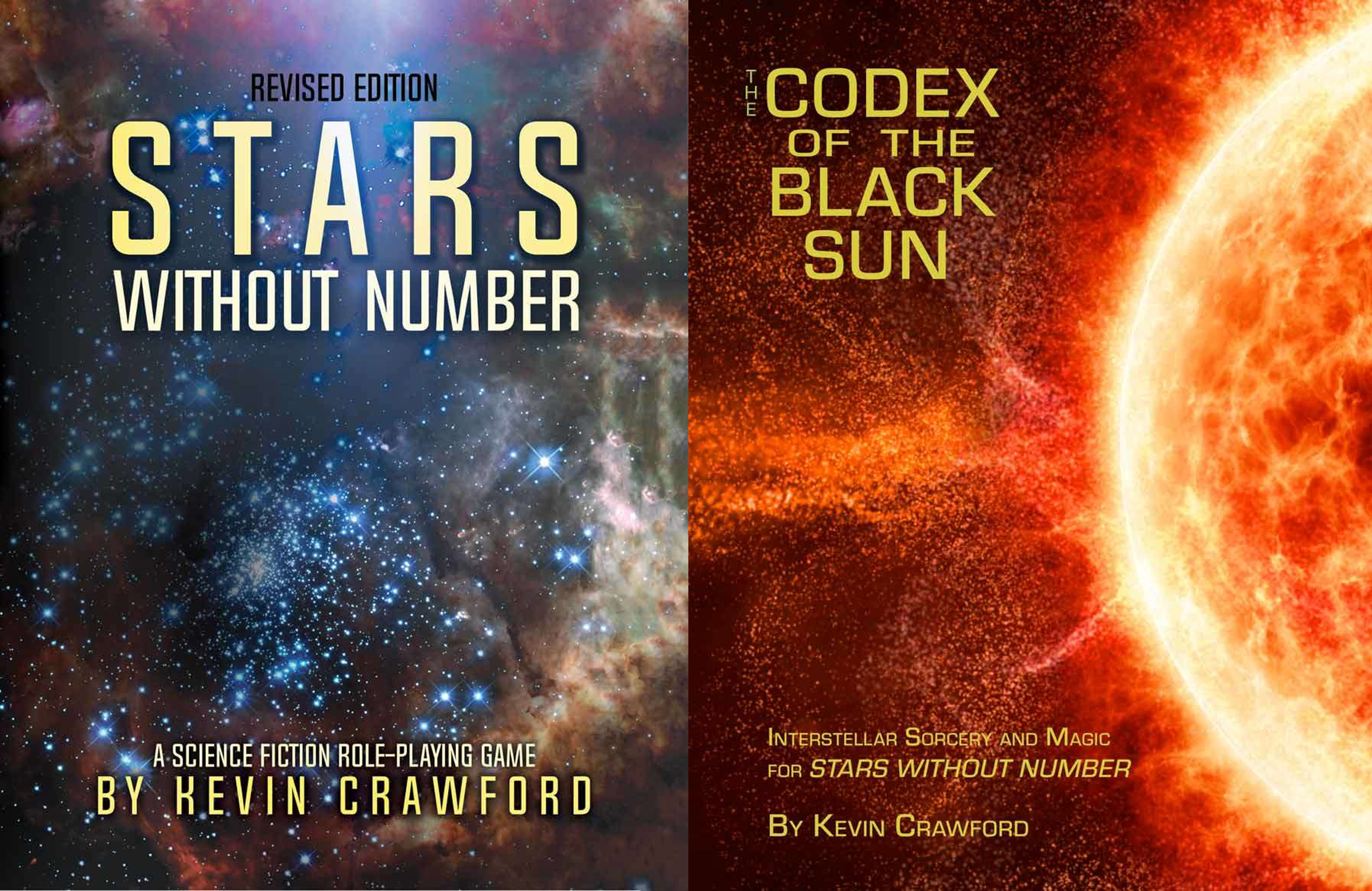
Stars Without Number would also work beautifully, particularly with the Codex of the Black Sun sourcebook.
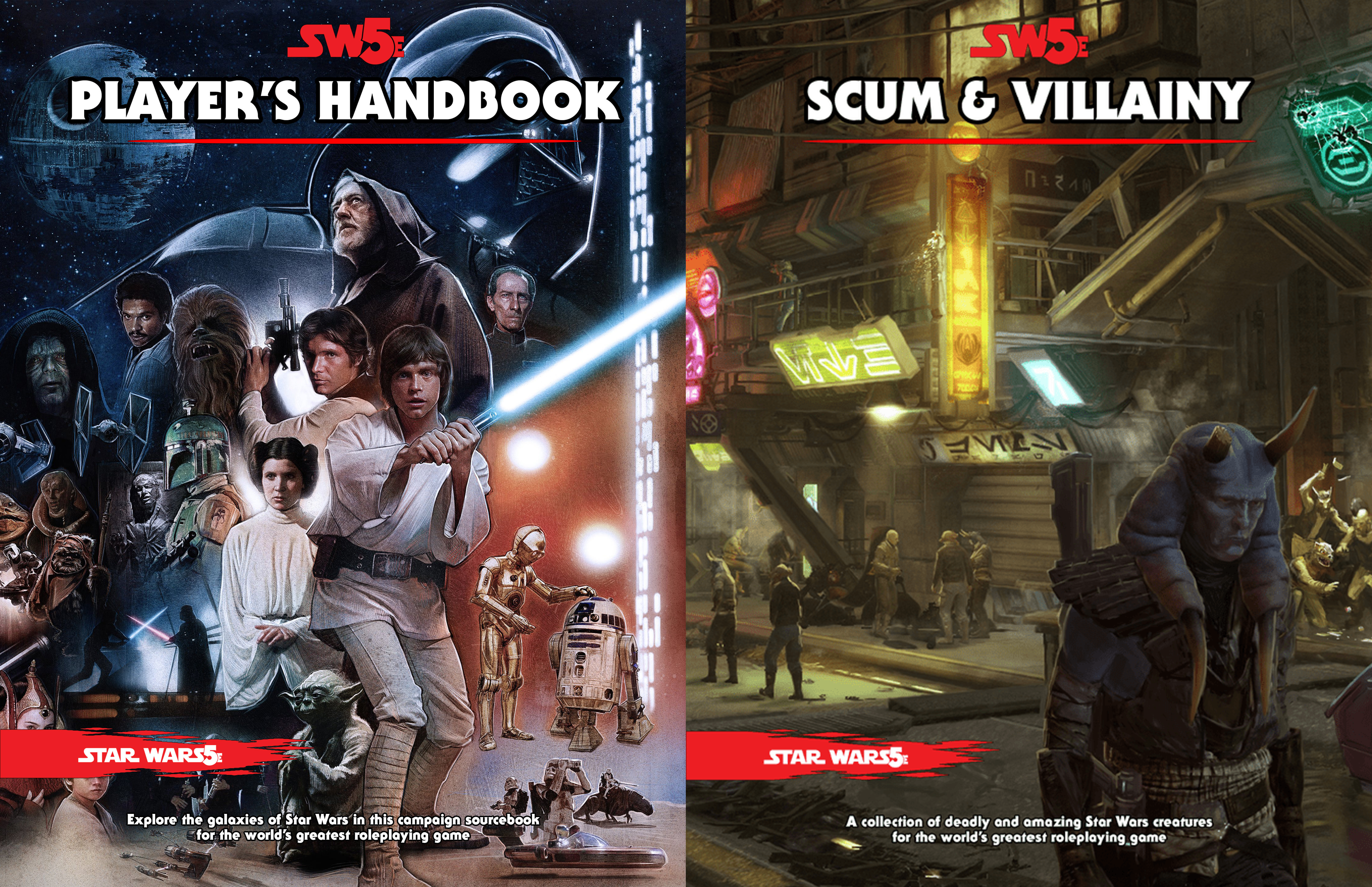
There is always the Star Wars 5e fan project, but if I were going to use a more modern iteration of the d20 rules, I would likely go back to playing the Saga Edition with some house rules.

Of course, you can always try Star Wars d6 REUP (Revised, Expanded, and Updated), a fan-made update of the WEG rules!
But let’s be sincere: if you know me, or follow me on social media at all, you know exactly where I was getting to with this.

If I were to run a Star Wars game today, I’d probably use Savage Worlds to do it! There is an incredible fan-made Star Wars: Savage Worlds Compendium. I’ve downloaded all their supplements and even printed the book via Lulu. I am completely ready to play Savage Star Wars… I just need to find the time.
Did you play Star Wars D6? What system did you use to play Star Wars? Do you have any recommendations? I’d love to read your feedback in the comments.
Happy Star Wars Day to all. May 4th, and the Force, be with you, always!
Categories: Tabletop Gaming Blogs
An Interview with Karla Miranda, Puerto Rican Artist
Welcome to the third entry in my ongoing series highlighting incredible Boricua creators! Today, I’m thrilled to share my interview with Karla Miranda.
I first became aware of Karla’s work through her posts in the Puerto Rico Role Players and Dungeons & Dragons Puerto Rico Facebook groups, where she regularly shares her stunning character portraits. She was kind enough to take the time to answer a few questions about her creative process and her time at the gaming table. I am incredibly grateful to her and to all the other local creators who have been participating in this series.
Here is our interview!
Introduce yourself! Who are you and what do you create?
My name is Karla Miranda, and I’m a full-time teacher and occasional artist! I usually just love illustrating my characters, with the occasional piece of fan art.
How would you describe your art or creative endeavor?
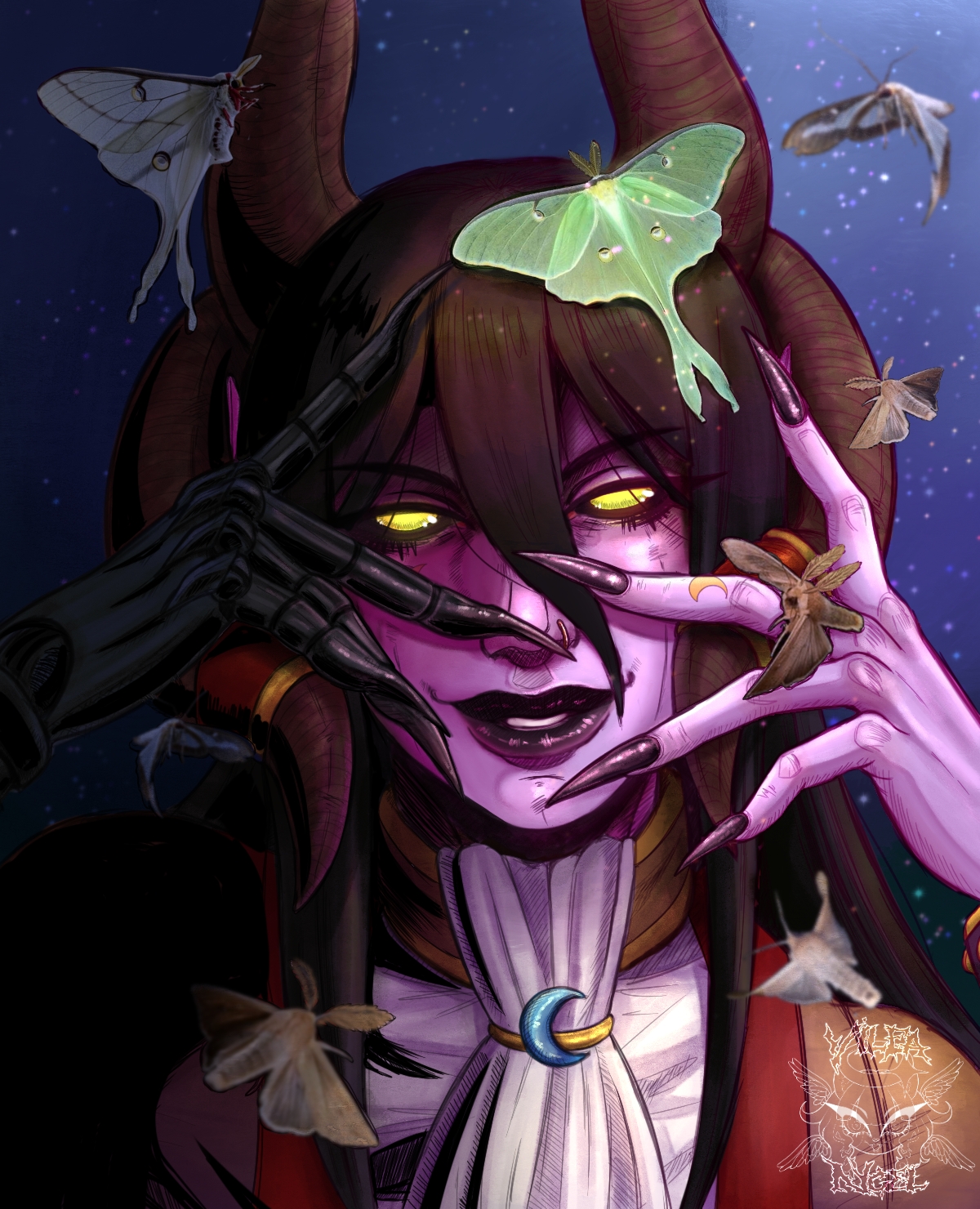
My art is catered specifically to me, LOL. I’ll get a sudden hit to create a new character or update an existing one, and my process is always accompanied by a 1+ hour YouTube essay.
How did you discover TTRPGs?
A friend suggested we try an experimental version of just regular verbal roleplay with occasional dice rolls. After that, he invited me to play D&D 5e Princes of the Apocalypse!
Do you actively play TTRPGs right now? What are you playing?
I currently play with my girls and @Wenceslavos, who is our DM! We’re playing Curse of Strahd, and it’s been an incredible two years already!
What do you want to play next? The next thing in the queue to play is Dark Matter, published by Mage Hand Press, with my girls, and Rime of the Frostmaiden (RotF) in our in-real-life game!
What projects are available, and what are you working on next?
Right now, @Wenceslavos and I are brainstorming more beginner-friendly and advanced player One-Shot Adventures with full character art, plus creating the characters for our upcoming RotF adventure!
Where can people find your art?
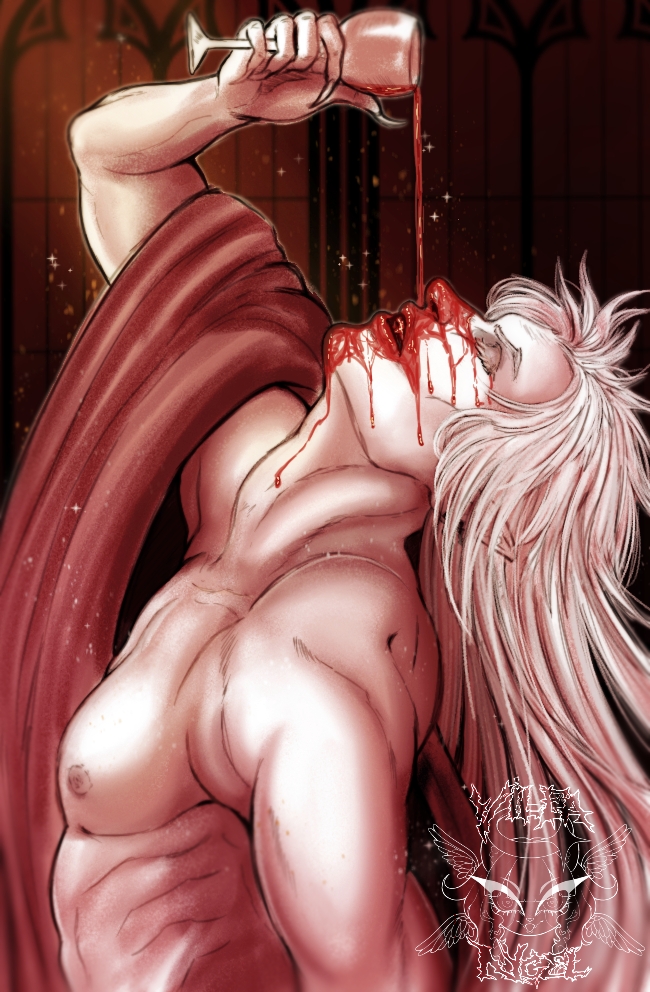
You can find my work only on Instagram @vilea_ngel_ !
Any closing thoughts? If you’re an artist, be insane with your favorite characters. You’ll learn to draw so quickly if you hyper-fixate, LOL. And if you’re not, it’s never too late to join the light and pick up a pencil to start learning! You gotta be bad at something before you’re good!
Huge thank you to Karla! I’ve actually had the immense pleasure of meeting her in person; she is not only a talented artist but a fantastic GM and a genuinely amicable person.
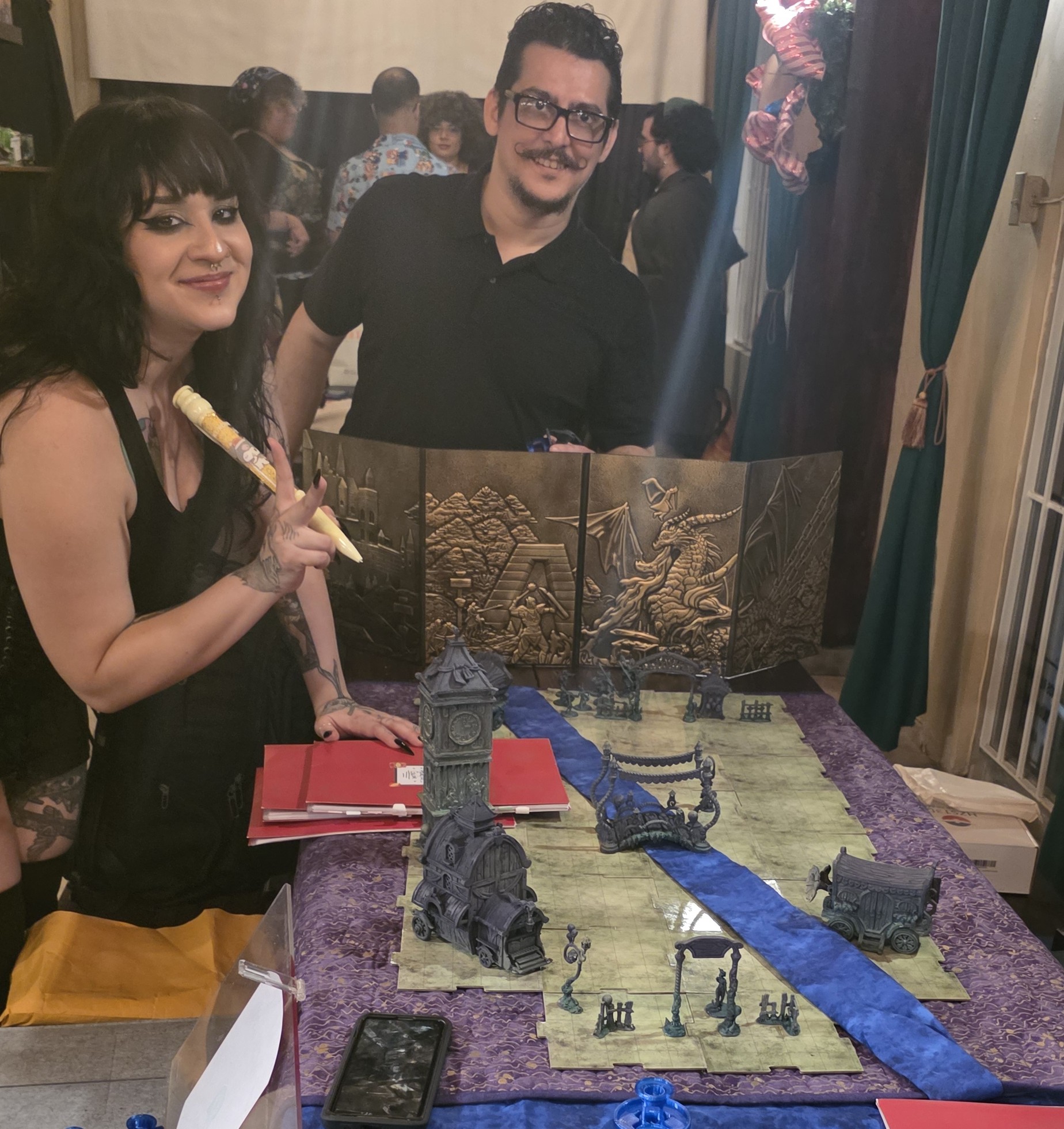
I got to see her run a game at El Gremio in Cayey for the Puerto Rico Role Players holiday event. You can also spot her as one of the local gamers interviewed by Juego La Mesa for the 50th Anniversary of D&D (which I was actually interviewed for as well!): Watch the Facebook Reel Here
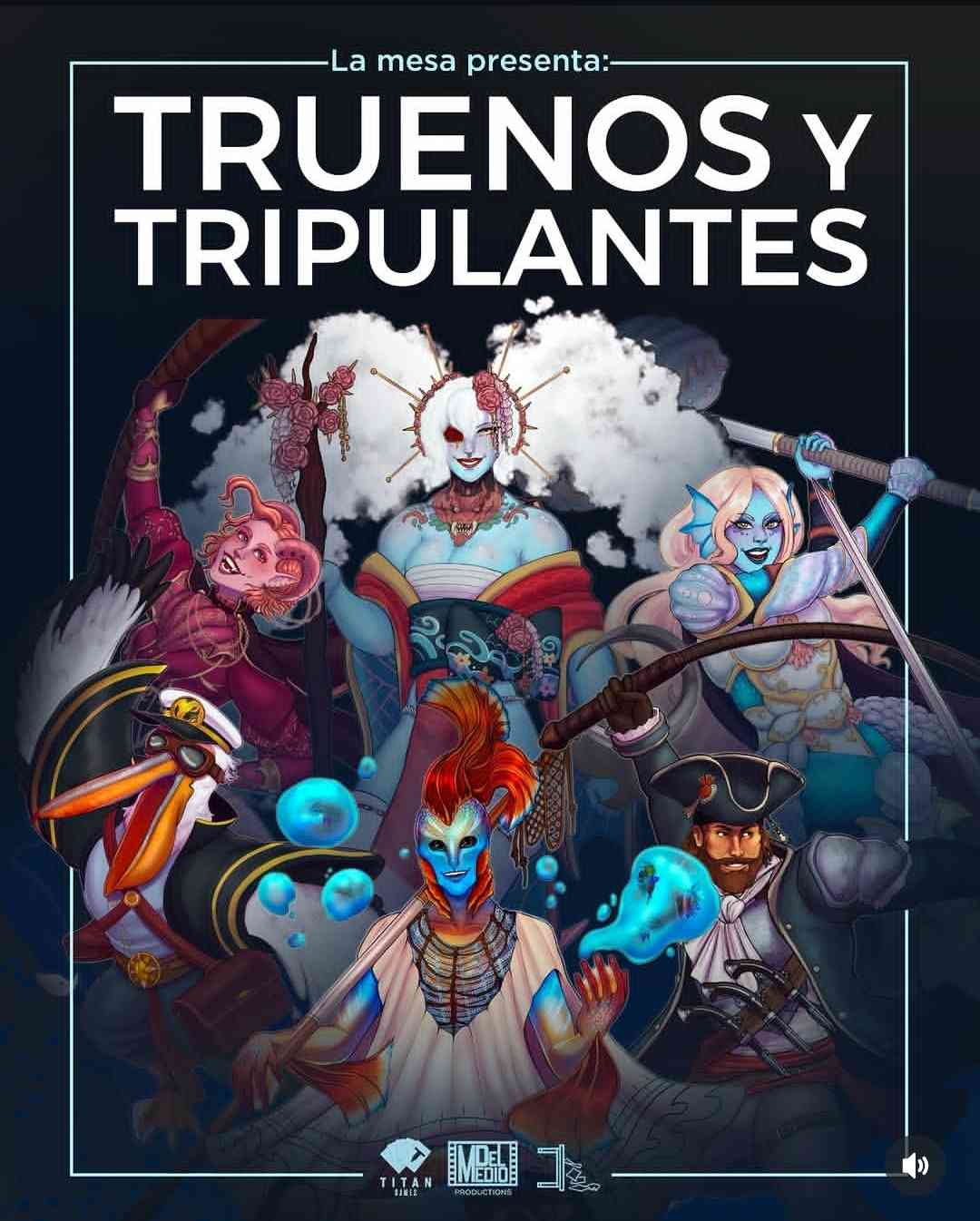
She also provided the art for—and played in! —This excellent one-shot run by Juego La Mesa:
It is a true privilege to know her and to share her art with all of you. Make sure to go and give her a follow!
Categories: Tabletop Gaming Blogs
[BLOG] News on the March! Episode XIV
This post continues the series of brief play reports I have been posting on Discord. This does not cover every single session (sometimes, recon and setup is what happens), but it covers our ongoing games.
Shadowing Pellostratos
19/01/2026 FOMALHAUT
News from Fomalhaut! After finding a connection between the monorail station and the cellars of Pellostratos the Thaumaturge below the city, the company placed discreet inquiries about the patrician, and his possible connections to the Uttermost Masters. It turned out Pellostratos was a known trader of fine artwork from an unknown source. They finally arrived at a plan to flush him out if he was in the UMs’ service. After midnight, Bocephus used an autoalteration and dreamsending spell, appearing in the thaumaturge’s dreams as one of the masked masters, and speaking: “The chance for you to shine is at hand. We are moving up the timetable, meet us at the usual place in the morning.” The company immediately set out for the monorail station to nab him if he was there, while Murat the Etunian, bearing a tiny communicator device, headed for his house to cover his above-ground tracks if he chose that route. Indeed, he saw the patrician approach in one of the dark streets with an escort of guards, also carrying a small chest. He shadowed Pellostratos through the streets and plazas, joined by an invisible Bocephus. They emerged on the Plaza of Kagmek Khotoummi, where their mark headed towards the Shrine of Deformed Frogs. Following him into the sanctum, they saw Pellostratos sacrifice incense sticks and valuables to the great Tsathoggus, asking him to interpret his strange dream. To the thaumaturge’s bad luck, he rolled quite badly on the divine sacrifice table, and was almost struck down with a punishment, parting with the frog-priests after some tense discussion. It seemed he was not, in fact, the Masters’ agent. Leaving him to return home, they headed for the Temple of the Fallen Idol to see if they could learn something underground. In the city streets, they encountered a procession of guards, courtiers, and a sedan chair: Tyraxus Tharg, Glourm’s wizard-tyrant was heading for some unknown location, and they left him well alone.
Starting from the monorail terminal, they investigated some bare passages made from featureless grey stone. Dark, formless blobs drifted in the air. After throwing some objects forward, it turned out the passage was a gravity anomaly where things were falling sideways. Unfortunately, the tests also agitated the zero-G amoebae, which proved tough opponents, only divided by edged weapons, and able to engulf their opponents. Once they were slain with some difficulty, the gravity wells could be examined – there were no ways further, but one of them had some old bones on its bottom with a decent amount of coinage. The next thing they checked were hallways to the south, which contained a starfish-shaped idol radiating cold, and a triangle-shaped room with a strange, shifting landscape on one of its walls. Bocephus, relying on information from a book plundered from the Doorless Arct, identified it as a dreamscape, and they chose not to investigate it. They headed east, into a cavern filled with hallucinogenic mushrooms and spore-spewing mushroom-men. This time, they came prepared; some monsters were webbed, and the rest killed off. Using her ring of water breathing, Lilith waded into a deep pool of water, eventually finding a connecting cavern and a fungus-encrusted treasure chest, filled with treasures and a different magic ring. Ascending to an upper floor, they continued exploring for a while, discovering a vault with a strange cross-legged statue, as well as an ancient ossuary filled with the innumerable bones of the long-dead. But as dawn was approaching, they chose to withdraw and return to their exclusive quarters at the Spheroid Fish to ponder their next move. According to the divination they had received earlier, there would be two more days before something interesting would be happening at the monorail terminal – and it was time to make preparations!
Deep into the Underworld
26/01/2026
THISIUM

News from the doomed city of Thisium! A large company of adventurers descended into the Thisian Underworld to seek the secrets of Mornalt Tamburello. Through the graveyard entrance, they descended into the Vercato crypt, then rappelled down to the Grand Mausoleum... before realising this was not the way to Mornalt’s underground domain. They returned to the surface to go through another entrance. Things did not get better from here. They descended from the gardens of Villa Tamburello, going for the nobleman’s underground aviary. Racha Ducka distracted the talking peacock there while the others snuck down a flight of stairs into an underground suite. Mornalt was out, and the company’s thieves ransacked his quarters. They found gold and silver, and the portrait of a raven-haired noblewoman, behind which was garlic, holy water, a holy symbol, a silver cross, and a small leather-bound notebook with several female names in it (many noted multiple times). Mornalt’s marble throne hid a switch which opened a large trapdoor before the seat, revealing a chute. Brighella the thief was lowered down with ropes, and found the slide leading to a cistern they have already visited. They left the suite, and went to check out a stairway on this level they had not yet investigated. It led down to a room identified by an inscription as „THE PATRIARCH’S REST”. The once-decorative chamber had a gaping hole in the middle (below which they saw the magically lit garden of the wizard Prospero), and a large, broken glass display case, the size of a wardrobe, stood on one side. They returned back the stairs, and headed for the Tamburello crypts, which still had two unexplored chambers. In the tomb of Gioconda Tamburello, marked „IT IS ONLY WITH THE HEART THAT ONE CAN SEE RIGHTLY; WHAT IS ESSENTIAL IS INVISIBLE TO THE EYE”, they opened the sarcophagus bearing the likeness of a mysteriously smiling lady to reveal... nothing. There was jingling laughter and the scent of perfumes.
Something large and invisible sprung from inside. Brighella received a mortal wound, and died along with Haldir, the ever-alert scout. This was a difficult fight, but they prevailed over the invisible monster, and poking around for false bottoms, Amedeo the halfling found a set of invisible gemstones. Following an unexplored corridor from the crypt, they found that it connected to a known section. Descending to the Temple of the Bat, they encountered three Northman berserkers, disappointed the place had no treasure. They sent them back to the Tamburello crypts where there might be some left. They proceeded to explore more corridors, where they met Brunello the Dwarf, an explorer who joined the company. Their exploration eventually led them to the Grand Staircase. Choosing to venture beyond a mysterious room with a fire-pit and the statues of three magic-users, they descended a set of stairs to an antique bronze door with the even beat of drums behind it. The chamber beyond was a shrine, its walls badly angled and its dimensions vertigo-inducing. Two worn iron statues stood by the entrance; slender-limbed humanoid things holding tridents, with conch-shell shaped heads. „This is just like the Temple of the Unknown God”, someone spoke. „It was some pretty horrible shit there.” „Let’s go for it anyway.” Brunello approached a trapdoor (which was in a vertical side-wall), and it almost sucked him in with some terrible force. The two statues animated, blocking the exit. Amedeo shot a slingstone at an ugly little obsidian idol on the altar, smashing off an arm and sending a tiny metal tuning fork clattering. One of the statues was lassoed and temporarily entangled, but in the combat, Racha Ducka’s magic mace was sucked inside the other’s body, and these things proved almost impossible to hit.
Paty and Dona Neves, both light foot, targeted their missiles at a spiral on the ceiling, and as they gazed into its patterns, felt themselves pulled in a hundred directions. Paty survived, but Dona Neves was torn into bits. The company’s porters panicked, running towards the altar. Alfredo fell sideways into the bottomless trapdoor, and was gone with a shriek. Piero the porter just screamed and screamed. Amedeo aimed the small tuning fork, producing a grey beam on the iron statue, but with no effect. They chose to run beside it, fleeing up to the Grand Staircase, then the Temple of the Bat. Climbing up to the higher level, they saw a shimmering “force-wall” approach in the corridor, with a floating blade behind it. Brunello advanced, and was almost engulfed by the gelatinous cube like a complete newbie. They fled through the side-passage to the Tamburello crypts, hoping to meet up with the Northmen. These hopes were dashed: the berserkers had disturbed the rest of several shadows, and were absorbed into their ranks. The company just dashed through the moaning shades, deciding to make their exits through the Lower Crypts, one level above. Passing through the burial vaults without issues, they followed a northwards corridor, forgetting about the pit trap in its middle. Amedeo and Racha Ducka fell down a greased slide into a spiked pit, but survived the deathtrap, and were pulled out (after the horrifying „do we even have rope left?” question). Staggering up to the Grand Mausoleum, they exited the Underworld through the Vercato crypt, where they had first entered it. They had spent over 8 hours down there, and were dead exhausted by the time they were out. Piero the porter retired, promising never to adventure again... but in all his life, he would never forget the subterranean shrine’s strange geometries, and the winged beings that stood there and fought with tridents. At this time, the city had 21 days left.

29/01/2026 KASSADIA
News from the fallen empire of Kassadia! (A report on two sessions.) The Lion Pack sailed north from Sormadium to return the body of Lady Gwaelben to the elves. For the night, they camped on the northern end of the island, but as they lit their fire, they soon noticed another nearby. Their new neighbours came over, 30 Northmen itching for a fight with Bull-Slayer Halfdan, King of the Seas as their leader. Jovial Faustulus wagered a great sum of gold against Halfdan’s golden bracers, turning the situation from a potential melee into a duel. The two warriors were well matched, but eventually, Faustulus was the one to land the third strike, and this impressed Halfdan and his men. They parted on good terms, the barbarians even inviting them on a raid against the village of Ucria, which they politely declined. They also revealed that the master of Castel di Lucio was buying slaves from them, and had a particularly beautiful slave girl in his possession. The next day, they sailed north in stormy weather, and returned the body of Lady Gwaelben to her companions. In turn, their leader, Nasril, granted them the healing herbs they were seeking. After resting in the elven tower, they sailed to the town of Sambuci, reached in difficult Autumn weather. What was once a town was now a mere village after a great plague, its houses walled-up or ruined, and its folk sullen and suspicious. They passed through quickly, as their destination was the neat and prosperous villa of the Bonnacorsi family, who had inherited one of the magic seals that would open the accursed tower of Quintus Equitius Elvorix. The current lord, Quirino Bonnacorsi, was a generous host to his visitors, as were his dreamy daughter, Mercede, and his son, the valiant Alvaro, both of marriageable age, but neither betrothed yet. Mercede had one suitor in the form of an impoverished, statue-obsessed noble named Edoardo Memmoli , while Alvaro seemed to be hiding something.
The next day, they raised the matter of the seal, and after some thought, Quirino suggested a compromise. He would grant them the item, but only after they proved themselves capable by winning another. To this, they agreed. The next seal they aimed for was in the village of Ucria, owned by Paolo Viglione. After more sailing in bad weather, they landed in the decrepit farming and fishing village, inhabited by a poor and unfriendly lot. The walls were crumbling and the houses were in bad repair, except for Villa Viglione, which now served as Ucria’s Monopoly, owned by the pink-robed magic-user Pirnox. Pirnox and his guards were just restoring things after the recent Northman raid, who had made off with considerable riches. It turned out Paolo had disappeared a while back, and the new owner had purchased sole trading rights in Ucria, and settled here. He didn’t know of any seal, but allowed his guests to search the upper floor to see if it was somewhere. As they spoke, though, Publius Varro noticed he was glancing at a spot on the wall, and while Pirnox was distracted upstairs, quickly found a secret niche, which held... not the seal, but a package of refined purple poppy, the drug that had been spreading in the cities of the Empire! He nabbed the pack, and they took farewells from Pirnox, finding shelter for the night in an abandoned cottage. Cornering a lurking urchin, they interrogated him about the village. He praised master Pirnox’s generosity to children, and also revealed many in the village were now spitting red from the drug, brought by shepherds from the mountains. Master Paolo had also gone up to the high valley when he was last seen. Considering what this all meant, they settled down to sleep, but awoke in the night to the smell of smoke. The roof was on fire, and they were surrounded by a strangely fanatical torch-and-pitchfork-mob of villagers with murder in their eyes, even with children among them!
They fought their way out from the burning building through screaming farmers and fishermen, coming into the fire of crossbowmen behind more distant houses. Petros the light footman went down to a bolt, while Lucia the light footwoman and Manius the bowman were cut down by the lightning bolt of Master Pirnox. But the tide of battle turned, and the owner of the Monopoly galloped away on a horse with a retinue of men, and his thugs fled into the wilderness also. Many villagers had been massacred (although children were only slept), and the rest didn’t dare come out of their hovels. They had full command of Ucria. The Monopoly was as before, but two large chests had been quickly emptied and all horses taken. They barricaded themselves for the night, resting off the attack. The following day, most of the villagers had vanished, fleeing with their meagre belongings, leaving only a few idiots and infirm people. The Lion Pack followed the horse tracks into the mountain valley. Passing by strange old ruins that were the bare walls of an above-ground labyrinth, they left the cultivated lands for wild pastures. Finally, the trail led them to a well-concealed canyon leading further up among the peaks. They spotted lookouts on a high precipice, and two of the group climbed the rocks to ambush and kill them (Publius used his spark-throwing dagger to good effect here). From this vantage point, they could see beyond the canyon. A small valley lay there with trees, and a field of red poppies covering all its upper reaches. Sheep grazed lower down, tended to by shepherds much like the men they had just killed. Around a stone house and the nearby stables were Pirnox’s thugs, going about their business. They waited for evening. Near sundown, Master Pirnox made an appearance outside the house, giving commands to five thugs, who descended the valley – and they would soon find the bodies who had fallen off of the cliffs! They needed to act.
The Hidden Valley
Five men came up
the path to check on the guards on the cliffs, while Publius slipped down in
the dusk to eavesdrop on those near the cottage. His companions took a stand
along the well-defensible mountain path, while Publius tried to remove a large
slate shingle to get a drop on Pirnox. Unfortunately, the alert magic-user
noticed, and blasted him with magic missiles. Publius feigned death, but
as men were running out and joining the fray on the path, he sprang up and
inundated Pirnox with flaming oil, badly burning him (and destroying his pink cloak
of protection +2). Ucria’s master ran for a horse, and tried to flee with
his life. With a web spell and an earth elemental conjured into Arden
Oakbark’s staff, the attackers on the mountain path were killed, and once the
fleeing magic-user went down to an arrow shaft from Aristeo Guarini, the
awesome display of power made the rest of the men run. Looting the house, they
found bags of coins (no doubt taken in haste from Ucria’s Monopoly), a
well-equipped alchemist’s laboratory to process purple poppies, and a good
quantity of the raw stuff ready for manufacturing. The next day, there was
heavy raining, and they spent it at rest... or rather, Martus the Opiate
continued Master Pirnox’s job on his own, preparing purple poppy paste to the
muffled tunes of Push it to the Limit. Sidius searched the valley
thoroughly, and under a stone pile, found old, carelessly buried human bones:
the rotting scraps of expensive clothing, and the magic seal they were seeking!
Thus was the resting place of Paolo Viglione discovered. Another day later,
they descended back to Ucria, whose inhabitants huddled in fear of them in their
cottages. They learned that the escaping thugs had tried to flee across the
stormy sea, but went down with their vessel. Seeing this as a sign this was no
day to embark, they slept another day at the Monopoly, and the following day,
they set sail for the city of Sormadium.

(Note the strategic use of Judges Guild’s Island / Village Book as templates to build from.)
Underground Passages
01/02/2026
FOMALHAUT

News from Fomalhaut! On the night before the day determined by augury, the company descended deep into the Temple of the Fallen Idol. They brought abundant supplies, as well as robes and bearded masks to take on the guise of the Uttermost Masters. With the city’s elite agents, they set up watch near the monorail terminal, and waited. Almost a day passed, but at last, the door on the hall’s northern side opened, and down came Pellostratos the Thaumaturge with an escort of guards bearing heavy crates. The masked adventurers stepped forward and greeted him in the name of the Uttermost Masters, asking him what he was doing in their domain. Pellostratos was scared out of his wits of the forms he had seen in his dream, and glimpsed in Glourm on previous occasions. It was determined that he had brought trade goods – food, fancy clothing, alcohol and narcotics – which he would periodically trade with the people who came by the monorail system. With another word, he was dismissed, to flee where he came. Now they waited, and slightly later, the monorail arrived through the great metal gates, bearing no men but goods – fancy ceramic pots, rich furniture, glassware, and other objets d’art. They quickly boarded, bid farewell to the agents, and waited for the journey to come. The metal tube travelled hours through unknown underground layers, and finally, through another gateway, arrived in a massive, empty, and ark hall. An inscription on the wall read: „TERMINEXUS, S. T. PHI”. They were not alone. A group of men in nondescript working clothes were in waiting, and as they saw the masked figures emerge, they made a run for one of the side passages. They were alone again. They followed the northern passages, reaching a gravel-filled room whose walls were lined by great stone faces, and an inscription reading: „THE OVERSEERS DECREE CONTINUED VIGILANCE.” The gravel was unstable in the middle, and Murat the Etunian was almost swallowed as in quicksand.
They continued, reaching a vast, unlit hall of unknown height. Massive towers of dark metal stood by the walls with balconies and apertures. Examining the silent structures, they were ambushed by a barrage of precisely aimed crossbow bolts. The four cloaked figures who attempted the assassination moved forward in a herky-jerky way, responding to no words – men, but men acting in an oddly mechanical way. Three were killed and one was tackled, but he did not speak. He was slain, and at the moment of death, showed a moment of panic and confusion before expiring. They continued exploring the hall, its towers and machinery all dusty and abandoned. They were soon beset by 12 shaggy, hunched humanoids clad in dirty rags and equipped with primitive weaponry, whom they slew. Further on, they discovered a hall filled with shallow pits containing rotting remains intermixed with human bones. Portcullises fell to seal all exits, a weird alarm sounded, and several howling noises came from the NW. With great effort, Ion raised the portcullis they came from, and they fled back through the passages to their starting point. Now they chose to follow the men who had escaped from them. An angled shaft led up to a sunlit outdoors courtyard. On one side were the roofs of a large building complex, and on the other, sheer cliffs rising to the infinity of a dull white sky, with the occasional dark hexagonal spot. A group of shabbily dressed men were relaxing by the walls. The encounter was tense, and they ended up getting chased out through a large gate into a massive city of antique, once-elegant buildings, now crumbling with their balconies, cupolas, and statuary.

The plazas and larger streets were populated by crowds clad in colourful clothing, and they noticed several faceless, togaed statues standing on plinths, as well as dark, polished metal disks mounted on building facades. They followed a street, encountering a procession escorting naked, laughing and weeping people. Avoiding them, they happened on a deserted little square by the cliffs, where a dirty alleyway hid a great stone face. Finding no way to make sense of it, they continued exploring, passing by a large, dusty plaza, where two ragged hoboes were hurling metal balls at each other among curses and invectives among the ruins of a larger building, watched by crowds making bets. Even further, they met a hysterical woman experiencing a nervous breakdown among the crowds. Ion stepped forward to calm her down. She introduced herself as Berenice, seeming distraught for reasons she could not explain. “It is mirror overexposure”, Ion suggested, pointing at one of the black disks on a nearby facade, mystifying her. He took her home, an apartment in one of the nearby building complexes. She treated Ion to some jerg (a pink, springy, sweet-and-sour lump serving as the common food here), and there could have been more if he had no other things to do. They headed towards the city’s western public park, where they had encountered the renegade philosopher Theognis on their previous visit, but his tower-villa was burned out. As they headed up a stairway to the grassy hills, they were accosted by 20 colourfully dressed, weak-chinned men, who started following and harassing them. The encounter soon devolved into mutual hostility, the louts accusing the visitors of offending their personal truth. When Polybios retorted in a dismissive manner, they became livid with rage. A large crowd surged forward to observe the events. They withdrew into the hills under a barrage of stones, which did little damage against armour. Among the trees, they made their stand, and the crazed flower children died under their weapons. The screaming survivors fled with the crowds back to the city, the rest remaining on the ground drenched in their own blood. Dusk was approaching, the light above unmoving but dimmed. Night was coming to the vast, crowd-filled city far beneath the surface of the earth.

03/02/2026 THISIUM
News from the doomed city of Thisium! A large group of adventurers, supplemented by the entourage of the Fomalhaut-born warrior Duran Duran, descended into the Thisian Underworld in pursuit of the Doom Below the City, thought to be found in fiery depths. Much rope and an empty barrel were taken along. Descending through the passages, the company fought off giant bats in the great cavern, where the new fighting-man proved his mettle. Onwards, beyond the Temple of the Bat, they filled the barrel with water from a pump, and carried it down the Grand Staircase. At the bottom was the Arena of the Overmen, a small fighting ring surrounded by marble statues of heroic proportions. Giacomo stepped forth to rise to the challenge, and went for the grand prize, the elixir of the very gods! He had to fight two overmen in arena combat, and prevailed, winning a draught that raised his STR and CHA to 18, sharing in the gods’ immortal glory! Continuing, they were ambushed by 6 berserkers, who slew Diaba the archer. Five were slept and the last was captured. They forced him into the arena, which he took in stride, defeating an overman and earning a hammer +1! Silver-tongued Giacomo, now perfectly charismatic, convinced him to join in their adventures, which the warrior accepted. They proceeded to the fiery well close by, peering down into great depths of volcanic fire. „You guys didn’t mention the lava”, said Giacomo. A barrel of water suddenly didn’t seem all that useful. Nevertheless, Aufidia Corvina bravely had herself lowered with ropes as far as she could descend (earning the berserker’s respect), and using two charges of her wand to detect secret doors, to no avail. They now chose another route: the stairs the berserkers were hiding in. The worn steps descended into a natural cavern. In its eastern end stood a wooden stage, with 31 motionless humans dipped in hardened wax standing before a painted theatrical backdrop.
Aufidia raised her holy symbol to turn undead (just in case), and indeed, four figures broke their wax shells, escaping in moans. A deep, bellowing voice came from behind the scenery: „COME CLOSER, AND ENJOY THE PLAY! ... IF YOU DO NOT WISH TO SEE JUST THE ART, HERE AM I, THE ARTIST!” Aufidia threw her fireball, destroying the 31 damned souls, and blasting the stage into smithereens. From behind came a terrible towering figure with bat wings, a great horned head and a massive body, brandishing a massive lightning-shaped sword and a fiery whip! The fighting-men charged. In terrible combat, the Berserker fought heroically with his magic hammer, and was killed with a swordstrike. Elkheart the dog ran between the demon’s legs with a rope to entangle it, and was executed with a swipe of the weapon. But the company fought just as well, wearing down the demon into a single Hit Point. It roared, „HERE COMES THE DEUS EX MACHINA!”, dragging Dorvo (Fighting-Man 5) into its flames, killing him. But Giacomo struck with his magic dagger, stabbing the horror, which disappeared with a final roar! There were great iron chests behind the stage, containing 11,000 gp, a shield +2 , potions, scrolls, gems, and a treasure map. With great difficulty, the treasure was distributed, though the survivors could barely move. They carried some of the load only to the Grand Staircase, where they hid it in the secret grotto below a (much larger) hoard of copper pieces. From here, they went up, and through known routes, returned to the room beneath the Pickled Carp – using their remaining rose of resurrection to return Dorvo to life. At this time, the city had 20 days left...
Meeting Old Friends08/02/2026 FOMALHAUT

News from Fomalhaut! Having killed or driven off the mob of crazed citizens who had attacked them, the adventurers sought shelter in the vast city as night was falling. They used to have a friend in this parkland area from their previous visit almost a year previously, but Theognis the individualist hermit was gone, and his ruined tower-villa was a burned-out ruin. They headed north through the streets, now quiet and desolate. An ambush came from dark doorways; eight shaggy brutes equipped with clubs and nets, the devolved men of the underground tunnel system. They fought and killed the assailants, and finally found shelter in a long-deserted apartment. The next dawn rose, and they went out among the crowds to seek out other people they had known. Words had spread of the massacre in the woods, and of poetry readings and new art projects. It was being whispered that the killings must have been the work of the Anti-Prophet, the city’s implacable enemy, still doing his nefarious work somewhere in hiding. They passed through the bustling Grand Plaza, filled with throngs of all ages, and passed by the hill where the mysterious, sealed Spiralling Temple. They headed NE, to one of the smaller plazas where lived Forbas the Philosopher. Finding his house among so many again was a challenge, but Gelastikos Antagoras, his rival who had lived in filth in a hollow stone sphere as a personal statement, could show the way to his hated enemy’s house. Heading that way, a local man approached them, and offered a trade for the „exotic” helmet worn by Meurios Andromakhos – a jewel worth a staggering 15,000! Meurios had inherited his armaments through several generations of aristocratic succession, but he was a shrewd trader as well, and after talking up his headgear, accepted the offer. They now went for Forbas’s house, but he no longer lived there, and the new tenants, a young family, did not know where he went. The trail was cold.
Heading back south and weighing their options, they were rushed by a demented, screaming old man, but Bocephus was alert, and quickly charmed him. The man, Eteokles, did not understand his momentary confusion – he saw someone in the characters he immediately forgot – but now they had a friendly guide. He took them for a lunch at the Through of Sustenance, where the city’s two types of food, gump (sloppy, sweet and savoury, faint hint of vomit) and jerg (springy, pink, elastic) were available for free, and where the wayfarers, those citizens who had given up all effort, spent their days in stupor. Of the city’s recent attractions, Eteokles was particularly impressed by the „talking frogs” of the nearby Theatre of Rapt Gazes, an art project of sorts. Having no better idea, they visited the place, home to artistic experimentation, poetry recitals, and various side-shows off the main area. Behind a curtain embroidered with an enormous frog-head, they met the young Theoron and his four companions, who showed them the frogs, stone statuettes standing on plinths, and instructed Bocephus in rubbing them with euphoric unguent. The carved images spoke indeed, and to Theoron’s massive surprise, ordered him to admit the company to the chambers’ inner sanctum. They stepped beyond another curtain, and stood before... a great, enthroned frog-thing between braziers of incense-smoke, peering down at them with three bulging, malevolent eyes. The fat frog-demon bellowed in surprise, recognising the killers of his fellows in the palace of Philetor Grentor, in the world of ULTRAREALITY! Bocephus quickly saved the day by proposing that they had no reason to fight in this city, as they had a common enemy in the city’s secretive masters – and besides, that affair back in the past was self-defence. This calmed things. The great Tsathoggus was only getting established here, in the initial phases of taking over the city, and was in need of all allies he could get.
The demon and his newfound cultists had already caught one of the strange assassins who had also ambushed the company in the subterranean halls. Through magic and drugged interrogation, they had learned that the „Overseers” had an underground tower, which could only be accessed through a special glyph, which was in turn hidden in a mirror – not the common dark metal disks found all around the city with their cryptic messages, but a special one in an unknown location. Bocephus thanked the great frog profusely, but modestly declined an offer of cooperation promising spells and magical devices in exchange for a small agreement, reasoning that his revenge on the Uttermost Masters came first, and only once this was sated could he entertain such an offer. With this, they parted, being let out by the awestruck Theoron and his men. Before the theatre, they ran into someone else: Milto, a young man loitering around with some of his peers. They queried him about the city’s black market of outside goods, which Milto seemed to know decently well. He also recalled that a craftsman in a nearby workshop had something similar to Kelombrotos’s magic mace in his store. Their curiosity piqued, they investigated the deserted alleyway and the dusty little store. Milto came up behind them with 20 strong lads, demanding their fancy clothes. Bocephus slept nine, Kleombrotos and the others slew most of the rest, while one ran. They dragged the bodies into the workshop, and interrogated the wannabe bandit leader for what he knew, taking his accumulated plunder for their own. They let the survivors run, and headed towards the Plaza of the Gloomy Wells, where illicit goods were traded – and where the ubiquitous dark mirrors were missing from their metal frame...
The Bridge of Fire
10/02/2026
THISIUM

News from the doomed city of Thisium! A large company descended to the deeper levels of the Thisian Underworld to seek the source of its doom. In the Arena of the Overmen, Dorvo fought for and won a pair of boots of speed. They went one level deeper, and ventured beyond the Theatre of the Demon. One passage they found led to upwards stairs opening into a great cavern filled with the ancient bones of men and atavistic beasts. Choosing to retreat and pick the other route, they discovered an ancient downwards staircase, its steps worn and unnaturally steep. The spiral stairs went not just down but somehow sideways. Minor chambers were adjoined to the stairwell, with niches holding broken pottery. From the corners of these chambers emerged 8 figures in dusty shrouds, attacking by surprise. Ezzard the porter and Filippo the bowman had their necks wrung by the attackers, while Big Borso Caladri the heavy foot and Duran Duran the Paviser were strangled and dragged back beyond the corners. In this terrible fight, the company nevertheless prevailed, slaying two creatures and driving off the rest. These were not undead, and their lean night-dark bodies had no faces. They continued down, finding a deep and incredibly ancient passage. Following it to the east, they discovered an intersection, but the side-passages were not horizontal; rather, vertical in relation to their position. As Dorvo jumped to the other side with rope, three more shrouded beings came, but one was killed and two were driven off. They threw the body upwards, and watched it fall in that direction. With Dorvo’s aid, they crossed the pit. The way led to a small grotto with unnaturally sharp shadows, whose dimensions shifted as they moved. Its inhabitant, a giant ammonite with a splendid rainbow shell, proved peaceful, and they left it well alone. Luin the Lugubrious searched the room, finding a secret door. Opening it, red light and great heat streamed in through the doorway.
They entered into a massive natural cavern, standing on a ledge above tremendous depths. The fires of the Underworld burned far below; steam and smoke rose in blistering heat. Above them, a great basalt bridge spanned the cavern. They climbed a set of rough stairs on the cliffside above the fiery abyss, and preparing for what they knew would come, crossed the bridge. A terrible apparition of red and black appeared to block their way: a raven-haired woman in the garments of nobility – Lucia Tamburello, stoned by the people of the city as a witch! Giacomo quickly stepped forward, presenting a token he had received from his love, Hestia Tamburello. The spirit halted when seeing the item from her niece, but spoke terrible words: just as the mobs of the city had killed her who had done them no harm, thus would she bring doom upon Thisium, as it has been promised to her by the gods. Giacomo tried to appeal to her better nature, but this was not enough to move Lucia. However, with some questioning, they learned that only the Sword of Roses could defeat her (this weapon was just recently recovered), and also that while it was the city’s people who had killed her, it was the poisoned words of her brother, Mornalt Tamburello who had guided their hand. Giacomo offered to bring him to her if this was enough to save Hestia, and received a tentative „Perhaps” as the apparition disappeared. They left the volcanic cavern, finding a set of fiery shafts through which they could escape from the lower levels with rope and a levitate spell. They emerged through the mouth of a covered pit at the bottom of a wide and very old stairway, with the head of a malevolent jester leering down on them from the arch – the Stairway of Fools! Exploring the nearby tunnels, they fought and killed a rust monster. Giacomo tried to peel its carapace with his magic dagger, which he promptly lost to rusting (as the SVoZ version does that).
They returned to the stairway. They knew from previous adventures something was hidden in this area, so Aufidia Corvina used her wand of secret door detection, discovering a smaller and larger one. The smaller hid a lever, which lowered the second into the stairway like a ramp. They climbed, finding themselves at the entrance of a dusty archive. Opposite the entrance, the brass bas-relief of an owl looked at them with glowing ruby eyes. Suspecting a trap, Dorvo tested the area before the head with a thrown sack, which was sliced apart neatly by industrial-strength laser beams. With some trickery involving a mirror mounted on a spear, they bounced the rays right back at the owl, cutting the metal in half, allowing the eyes to be retrieved. The archives held a wealth of administrative documents going back several centuries, from tax rolls to sewer maintenance orders. They also found a few incredibly valuable books, a cache of magic scrolls, and a small wooden door. It was opened from a distance by a knockspell, triggering a sharp guillotine trap without harm. Beyond the door, there was only a cabinet with a bundle of old documents sealed with several seals of Thisium from different eras. Someone made a connection going back one year of campaign time – these were the lost documents the mad bureaucrat Jacindo had stolen from the city’s archives! Deciding not to tamper with the seals for now, they took their treasures and headed back to the surface. As they returned to the deserted downstairs room of the Pickled Carp, they heard of grave news: Gordisio Pamfile, one of Thisium’s three most powerful nobles, had just been assassinated in his palace. At this time, the city had 19 days left...

14/02/2026 KASSADIA – WINTER ADVENTURING 2026
News from the fallen empire of Kassadia! (And the Winter Adventuring 2026 mini-con) A group of five adventurers and ten followers descended into the Blue Mausoleum in pursuit of treasure, following two treasure maps. They approached the entrance, where they found wide stairs flanked by six statues of hooded skeletons, one holding out a bony hand. They placed 19 coins in the palm, which deactivated some statues but not all, unleashing a barrage of magic missiles. The steps lead to a grandiose entrance hall with several exits, and a deep shaft in the middle. Gideon the halfling Fighter-Thief descended by rope to a lower level, landing on a pile of broken statuary. Looking around down here, he spotted a massive stone statue of a proud-looking man wearing a crown of gold and gemstones, which he quickly decided was going to be trouble, so he returned where he came. They proceeded westwards, fighting floating eyes in a catacomb section, discovering stairs up to a higher level, and a chasm spanned by a bridging stair leading up to an ominous throne. In the side of the chasm was a brass door marked „ARRHODES”. They used the enchanted roots of Thog to grow vines and roots on the wall, providing footholds to open up the door. An entrance corridor led to a hexagonal room of blazing fires, and a great red-hot metal face staring at them. A dispel magic was thrown in, destroying the face and the flames – an illusion! Investigating a small chamber, a ledge led to a side-chamber containing the tomb of Arrhodes, depicted on frescoes as a sage in a garden, being dismembered by a steel praying mantis. The sarcophagus contained treasures, including a ring of fire resistance. Satisfied, they headed up the stairs. The passages led to a shorter flight of stairs flanked by six statues of zombies bearing brass khopesh, and a narrow double door on the top.
Although they quickly noticed there was dried blood on the steps, Gideon nevertheless messed with the door, and narrowly escaped getting killed by sword blades striking from the wall. More carefully, he picked the lock, revealing a small tomb, where a toga-clad, pale patrician stood among shelves of treasure. Appius Avidius Albertonibus, a censor of the old Empire, almost charmed Gideon with his gaze, and managed to drain him before he fled down the stairs, struck by the statues’ swords as the vampire commanded them to be gone. Rather foolishly, they went for him again with the reasoning that „There is too much loot there to be worth missing out.” Incredibly luckily, Tobias the Cleric managed to control Appius Avidius, and the fight was turned into a parlay. He gave them a third of his treasures when requested, including a gladius +1 and a very expensive aquilifer (A.K.A. eagle-on-a-stick), and they parted amicably. The western passages led to a looted crypt with frescoes depicting augurs. A woman’s pleading came from a sarcophagus weighted down with heavy stones, but her tale that she was trapped therein by bandits for ransom was suspect, and the noble family name she gave was not known to them, so they steered clear. A nearby crypt was dedicated to „the Elevated Ones”, where three juju zombies ordered them to leave. An insult drew them out, and in a fight, they were killed, but so was Arboren of the Cliffs, light footman. From this crypt, stairs went up to a room with a magic triangle and a portal swirling with glowing mist. Hog the Hobbit meditated in the diagram, gaining +1 WIS. The portal contained a malevolent mist creature with many gnawing mouths, which spilled out when disturbed. They fled, but Settimia the Seeress, a porter, was killed. Tobias reanimated the dead zombies to retrieve the corpse, but they never returned from the mist either.
Onwards they went, through decrepit old crypts housing the servants of one „Alvus Tessero”. The way ended in a crypt inhabited by giant Venus flytraps, where multiple characters were almost killed. A stone disk in the floor was marked with the name of Alvus Tessero himself. Lifting it out revealed a burial pit with 14 zombies, who killed Vernatorix the spearman when he stepped into the first rank; and a wight, who was destroyed more easily, yielding magical weapons and much in treasure. With these, they returned to the exit, but again failed to pay the hooded skeletons enough, and right before the exit, Vellio the charcoal burner was killed by a magic missile. They returned to Pellagris richer to rest, resupply, and hire new followers. Here, incredible luck struck (literal 00 roll), resulting in Sir Vialor the Wild, a 12th-level Fighter generously kitted out with magical bling joining their adventure. Buffed up by his presence, they headed back. Investigating a passage from the entrance hall, they found a lapidary, and a stone statue calling himself the Stone Prophet. In exchange for a magic longbow, it told them where they might find the fabled Horn of Quintus on a different section of the upper level. Following the instructions, they got lost nevertheless, but found themselves in a multi-level burial vault spanned by bridges at multiple heights. Using his boots of levitation, Sir Vialor ascended to the upper level, got attacked by a swarm of mini-gargoyles, killed off the little buggers, and lowered a rope. After plundering a sarcophagus, they started exploring up here. They found the tomb of „Ansaldo Contrino, the Hunter”, whose sarcophagus rested among a collection of odd taxidermied monsters. Two of these were animated: a scitalis (a crystal-skinned snake) could hypnotise its victims, while a bonnacon (a shaggy bull) turned and covered its victims with burning excrement. The monsters were beaten and a pricy bow retrieved.
Following the passages, they finally found a secret door leading to the Alarus family crypt (the road to the Quintus Extension was regrettably buried under a lot of rubble). A metal sarcophagus was suspended high up from multiple chains. Sir Vialor levitated up, and got attacked by invisible swords, which were killed, but at the cost of Tullius the porter. Finding secret switches, the sarcophagus was lowered to the tomb floor. Opening it released a deadly gas trap, to which Luciano the kid succumbed, but a magical spark-throwing dagger studded with several sapphires, and other valuables were theirs. More exploration commenced on the adventure’s close, and Tobias gained permanent command of a gang of ghouls. They used them to loot a dangerous-looking room veiled in magical gloom, with dead adventurers lying on the floor. Alas, they also decided to burn a sinister-looking tapestry over the sarcophagi, releasing 4 wraiths. They shut the door at once, but the spirits came by surprise through the door, surrounded Sir Vialor, and for all his 12 levels, drained him of his life and turned him into a wraith before being dispatched. Tobias commanded their erstwhile companion to depart, which the sad shade did, and with their treasures, they headed for the exit, and the town of Pellagris...
I must also report that we went for a humble Chinese restaurant nearby, which had way better duck than anticipated, and I got a fortune cookie befitting a Gamemaster: “Your appearance infers leadership ability.” Indeed so, fortune cookie, indeed so.
Categories: Tabletop Gaming Blogs
OSR Commentary - AX3 Capital of the Borderlands (revised edition) By Alexander Macris, & Newton Grant For Adventurer, Conqueror, King II
The revised edition of AX-3 Capital of the Borderlands serves as a foundational "home base" module designed for use with the Barrows & Borderlands system and other classic RPG rulesets. It expands significantly on the original version, providing a more living, breathing urban environment for players to explore between dungeon crawls.Overview of the CapitalThe Capital is a bastion of Needleshttp://www.blogger.com/profile/11243274667834930867noreply@blogger.com0
Categories: Tabletop Gaming Blogs
D100 Random Outlaw Space Station Encounters For The Hostile Rpg
Outlaw Space Station Encounters (d100)The following table is designed for the gritty, "used-future" atmosphere of the Hostile RPG. These encounters range from atmospheric flavor to life-threatening complications common in the lawless fringes of the Reached.d100Encounter01-05Hydroponics Leak: A burst pipe floods the corridor with nutrient-rich, foul-smelling sludge. It's slippery and obscures Needleshttp://www.blogger.com/profile/11243274667834930867noreply@blogger.com0
Categories: Tabletop Gaming Blogs
Format Doormat
This post serves two purposes. 1) To demonstrate how my broken mind works and doesn't work. 2) To talk about a little passion project eating my broken brain. Read this post only if you want to be subjected to me meandering and ranting about mostly nothing important.
Formats. Sizes to print your book. They vex me. Always have.
See, I come from the 80s-90s small press scene. In 1987 I partnered with pals to make our first comic zine Fast Lane and we did it on my friend's dad's work Xerox machine on a Saturday when nobody was there. We understood that 8.5x11 was the standard paper size, so we made our book fit 8.5x11.
It was easy. I even drew the pages of my comics on 8.5x11 typing paper, so when we made copies it was as easy as laying the original in the machine and pushing the print button. We fiddled around until we got the front and backs correct, ran off 50 copies of each, then laid them all out on the floor to collate. Then we put a couple of staples in them and BAM. Comic book magic.
Next issue we decided to go with that sexy "digest" look. All that means is we did it half the size as before and arranged the pages side by side to fit on a sheet of paper. Same process, just a little bit fiddlier. Since 4 pages were connected by a single sheet of paper, you had to be careful to get the order correct. But we did it and it was fun.
On into the 90s I generally worked alone. I made my first mini-comics, as I understood the term. If our first book was full size and our second was half size, then these minis were quarter size. You can make an 8 page mini on a single sheet of paper. There are tons and tons of tutorials about this online.
4.25 x 5 inch book
This is the fiddliest of the standard versions of the zine sizes because each sheet of paper is 8 pages of your book, so the arrangement is crucial. You can't just go 1-2-3-4, you gotta make sure 1 flips over to be 2 and so forth. Easy to get fucking confused unless you're a right genius at spacial thinking, which I am not.
Anyway... there's also the classic comic book format. In the USA, currently, that means 6.625 x 10.25 inches. If weird numbers bother you like they do me, you can just call it 7x11 or 6.5x10 and be done with it. The slight difference won't mean shit.
The reason this format matters to me is because it's what comic books look like. And I want to make comic books. I have made proper comic books... and I want to keep making them. So I fixate on this. I worry that any comic I draw that doesn't fit that format can't fit into a comic book at some nebulous point in the future.
For example, I did some comics for The Merry Mushmen and Tuesday Knight Games and none of those are US format. If I reprint them on my own at some point, they won't look quite right on a floppy page.
It's a trivial thing to be bothered by. After all, Europe and Japan have entirely different comic book formats and I'm not worried about them am I? But hey, it's my nostalgia we're talking about here.
Anyway... I'm thinking of this RPG series in mini format. My idea was to do this series of books at 4.25x5.5 and roughly 16 or 24 pages each (minis have to be in increments of 8 pages*). I can do this, but it's a pain in the ass to format so someone can print it from a PDF. I'm not aware of a good way to do it so that you can read the PDF like a proper book and also print it like a mini. I'm not saying it's impossible, I'm saying I don't know that secret sauce and it sounds like a lot of work, man.
Which leads me to the good ole workhorse of small press publishing: the digest. A sheet of paper folded in half. PDF brochure printing handles this automatically like a champ. It's a super common format, a nice pocket size, and is easy to set up. So I should probably go that route. It just makes the most sense.
But those sexy little minis... they call to me. That fiddly work you put into them can be fun. It's a bit novel to have a RPG book series that's tiny. (See how I talk myself into spirals?)
Yeah, so... that's where my brain is today. Oh, what's the game? It's just a simple micro game system for funsies. Something I can fit in 16 mini pages. Then crank out some adventures and shit for it. Just a silly idea I have. I have a lot of them.
*Well they don't HAVE to be. You can make a 4 page flat repeated twice on sheet so that you're at 4 page increments... but it means you gotta make 2 copies of the book each time. You can't just print 1 copy.
Categories: Tabletop Gaming Blogs
Visual Redesigns

One of the things I'm doing is a visual re-design of the various other creatures in the world of the ants. For many creatures, I only have some sketches or a handful of drawings in my comics. As a for instance, bees only ever made an appearance in the form of General Groth, and his design was pretty weak from the get-go. I always just kept it because that was how I'd established him. I've now come up with a re-design for bees that I think makes them a little more visually interesting, and reflects where I am now as an illustrator vs. where I was thirty years ago (and might still in some way feel beholden to)... this design is both kind of cute and a little menacing at the same time, which fits the vibe of the whole thing quite well. These are two drawings I did this morning that might give you an idea - a Bee Soldier and Dr. Weevil. For Dr. Weevil, I think that he is a mad chemical engineer who works for the Wasp Empire, and is developing all sorts of nerve toxins or biological weapons that could be used against the ants. This opens the game up for various effects that would be more than simply dealing or resisting damage.

I would think that any mission involving Dr. Weevil would require that he be brought back alive - I like him too much as a squirrely little nuissance to have him killed off entirely.
Categories: Comic Book Blogs, Tabletop Gaming Blogs
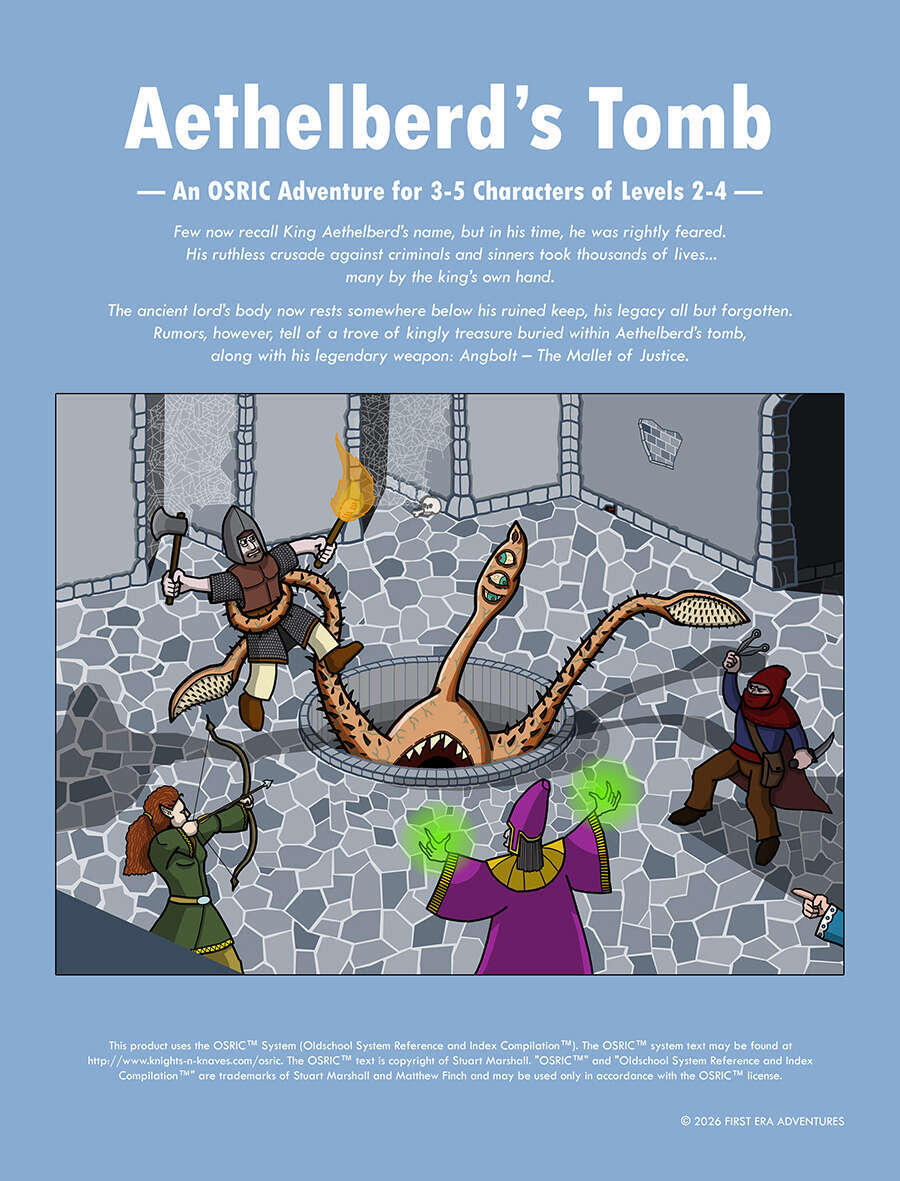
Aethelberd’s Tomb
By Scott_M
First Era Adventures
OSRIC
Levels 1-3
First Era Adventures
OSRIC
Levels 1-3
Few now recall King Aethelberd’s name, but in his time, he was rightly feared. His ruthless crusade against criminals and sinners took thousands of lives… many by the king’s own hand. The ancient lord’s body now rests somewhere below his ruined keep, his legacy all but forgotten. Rumors, however, tell of a trove of kingly treasure buried within Aethelberd’s tomb, along with his legendary weapon: Angbolt – The Mallet of Justice.
This thirteen page adventure presents a dungeon/tomb with about twenty locations. A ‘standard dungeon’ with a few different situations going on, it is relatively wordy for the degree of content present, coming out to about four keys per page or so for a mix of vermin, undead, and bandits.
I’m rather fond of the setup of this one, or, perhaps, the framing. There are some ruins on a hill in a wood. And I mean ruins; almost nothing left but a few walls. Once the tomb of majestic figure,eons past and nothing is left of Ozymandius (by Shelley you cetin! God how I love Frisky Dingo.) but two legs. And, now on the road through the wood you come upon a dying man and a ransacked cart. “Tracks in the dirt indicate that three humans in boots led a woman and child off into the woods, along with a heavily-laden mule or pony.” Low bandits, now hold up in the topside walls of the tomb of a lord known for justice, too scared to venture down the stairs. I find this framing rather poetic. No highborn rebels or a bandit-king with airs and plans, just the meanest and most low of ruffians, picking on a man and his woman/child brutally. Too common to even venture in to the hole in the ground in search of gold, camped in a place of utter ruin, of former majesty that they have no knowledge of. This is all handled rather briefly.
The rest of the adventure is not bad, but it doesn’t come close to that poetry. It is a relatively standard dungeon crawl, perhaps a bit above the usual average, with not a lot to distinguish itself and a few things that could be done better. This is not an Orcs in a Hole problem, but perhaps a sign of a hobby in which every adventure ever written is available immediately to you. How does one stand out in a crowded marketplace? [By each adventure having the unrealistic expectations of being a masterpiece, duh! If the premise of the blog is that common mistakes are repeated time and again then the secret hope is that those eventually get resolved and concentration can be done on more in-depth stuff.]
The bandits are huddled in the upper ruins, little more than a few crumbling walls. They’ve set a slack guard during the day and wall themselves in at night by moving boards. There’s a nice earthiness to this. They see the stairs, and have stuffed the women and child in a cellar room, where they whimper, but are too scared to venture any further. I might emphasize their condition, of both the captives and … beastiality? of the bandits a bit more, but the quick mentions of their fear and how they wall themselves in to the ruins is good.
The map supporting this is fine for it’s size. The hill, ruins and wood around it are covered fine, and the dungeon proper has a variety of features, caves, water, worked areas, streams, statues, same level stairs. It is clear and has creature notations on it, which I always find very useful when running an adventure to keep the surrounding dungeon context front and center when running an encounter/noise in a room. Good job, and something I wish more adventures did to help me out at the table.
The dungeon entries, proper, are where my hang ups mostly lie. And I have no idea how to describe what I think is wrong about them. They do tend to be a bit long, four paragraphs is not uncommon. There’s an occasional bolded words or ALL CAPS monster reference, which shows some awareness of trying to call the DMs attention to things. But, for all the world, I can’t figure out why the entries are long. Typical problems in other adventures might be backstory embedded in them, or victorian laundry lists of contents, overly describing, trap & door porn or explaining WHY. None of that really seems to be present here, and yet the entries tend to the long side, particularly for what they are.
I’m looking at an entry for room eight, The False Tomb, which I think is fair representation of the other rooms as well. There’s three paragraphs of general description. The first is the overall room, then one touching on some alcoves and frescoes, then one about the body in the room under a shroud, and its treasure, and the skeletons it triggers, and then one about a bronze chest and its loot. I can’t really fault any one of them for being there. The first paragraph reads “The shrouded body of a long-dead warrior is laid out upon a stone bier. The floor surrounding it is covered with various burial offerings: Ratgnawed baskets, sealed crockeries of seed oil and spoiled wine, moldering furniture and tapestries, graven idols of old gods, etc. (no value). Among the funeral goods stands a squat bronze chest” This is not the most evocative thing ever, but it’s trying and I recognize that. It’s also, I think, not lingering too much on the mundane. I can’t particularly fault the description of the body and chest and their treasures either.
So the descriptions are not in and of themselves problems. And the formatting is not terrible. It’s certainly not wall of text and there is an occasional bolded word to direct the DM to more information. The closest I think I can come is that there seems to be a disconnect between the length and the … mundanity of the interactivity. There are some traps here that are more than just a pit. (Flaming oil jet!) Rats, centipedes, skeletons, wraiths, shadow, zombie dog. The more special undead have a note or two to bring them to life. And there’s an otyugh in a well, ala Moria.
I don’t know why, but maybe the absence of more exploratory interactivity, but it feels plain to me. I’m not excited by this. It’s not bad. I just don’t look at it and and can’t wait to run it. Specificity? I’m going to assume this is a me thing.
This is $3 at DriveThru. The preview is six pages, which shows you the setup, the maps, and a few dungeon rooms. Good preview. Take a look and see if you can nail the descriptions thing.
https://www.drivethrurpg.com/en/product/561573/aethelberd-s-tomb?1892600
Categories: Tabletop Gaming Blogs
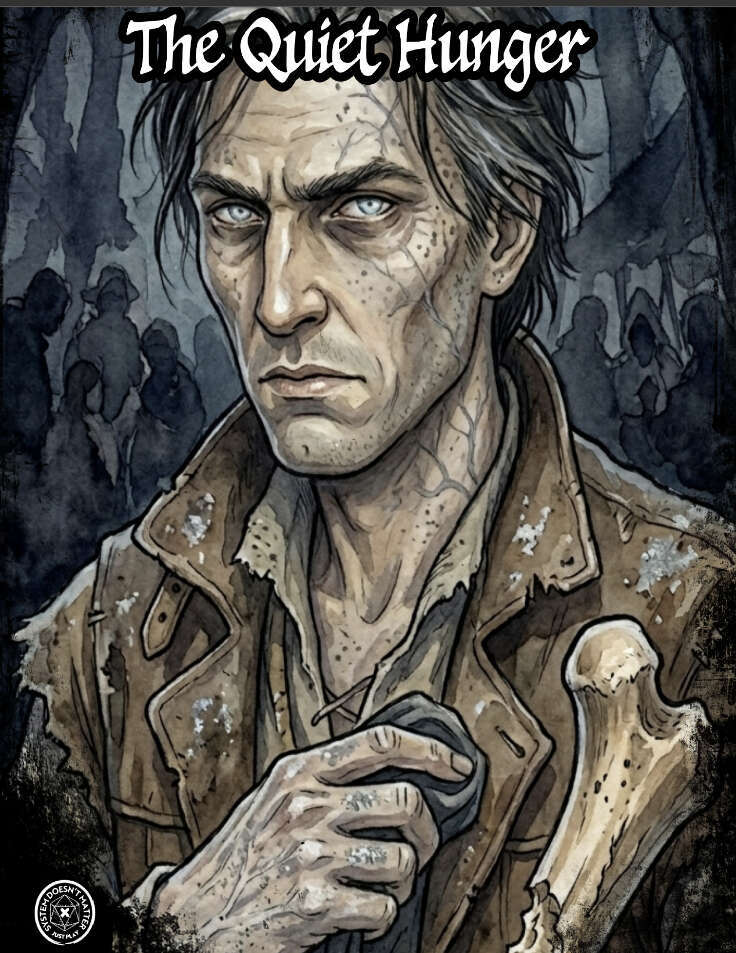
The Quiet Hunger
By Craig Turner
Aspire2Hope
Generic/Universal
Levels: Ghouls as an ememy
Aspire2Hope
Generic/Universal
Levels: Ghouls as an ememy
In Faynford at the Staple, tension simmers beneath the smell of hearth smoke and fresh bread. Old fears stir as food grows scarce, livestock go missing, and whispers spread—of sickness, of shadows, of the dead no longer resting easy. Beyond the river bends and chalk downs, the Hundred is holding its breath. The boundaries between custom and survival, welcome and warning, are wearing thin. Something hungers in the dark, and the quiet strength of this land may not be enough to hold it back. Your road has led here. Whether by duty, kinship, or necessity, you have arrived on the edge of a story that will not wait. Will you uncover the truth before Faynford at the Staple falls to fear—and to what walks in its shadow?
This twenty page horror-ish adventure describes a bucolic village, and the refugee situation that is unfolding as they absorb villages who have been displaced by war. It is quite long-winded and verbose for what is essentially an outline of an adventure. The outline part is ok, but the long-windedness results in confusion of the overall situation. Too much time on vibes and not enough time on specifics.
I’m a sucker for Harn-like settings for adventures. Call something A Hundred and I’m drooling, for some reason. I guess it was 100 Bushels of Rye. Whatever. We’re here today because of that. And, then, we mix in, from the marketing blurb, what appears to be a horror element. I think horror translates well because of the emphasis on situations that it fosters. I can restart a monster, but the vibes and plot and horror elements are for the designer. I love my classic exploratory dungeons, but the journey to and from the dungeon, and shit going on in town, has always been a part of D&D and these little situations are great for dropping in to spice up the “downtime.”
So, we got this village. Humans, halflings. The halflings were refugees about fifty years ago and have settled in. More war has caused an influx of new refugees. The locals kind of recognize kinship to them, accents, mannerisms, far less alien than the halflings were. Then a lamb goes missing. And a couple of people die from a new disease, ashskin. Things are tense. The local sheriff wants to relocate the refugees a little farther down the valley. This is the pretext for the adventure. It turns out that a local seedy patriarch is an agent for a foreign power and ashskin? That’s people turning in to ghouls. Did you recognize it by the name ashskin? I didn’t at first. And I love that kind of shit .Where you describe something to peoples faces and they don’t get it. They drop some gnawed bones and bodies here and there, and once you get to the graveyard and find out the graves were dug out from the INSIDE, well, the undead is up, so to speak.
The adventure wants to outline a situation. It’s trying to present a map with various locations on it and then explaining what is going on at those locales. It provides some NPC overviews with mannerisms and goals, for the DM to drop in to the game and use as the party comes across them or seeks them out. It flirts with doing the right thing. And then it fucks everything up.
The NPC descriptions fit, maybe, two to three to a column. There’s a bullet for Appearance, Personality, Goal/Motivation, Quick, Disposition, and What they know. Maybe somewhere from three words to a dozen or so, and then the person ends with a little quote. This is all too much. It’s on the right track, a quick, a goal, what they know, but then it muddies it up with too much information that one needs to dig through. And this is going to be a theme here.
The locales, a half dozen or so, stretch on for a column or page, and then have their NPC’s, in the same format as above. It starts with a setting prompt, in bullet form: Light, Sights, Sounds, Smells. This is too much. Shortening this to a sentence or two, including all of them in it, to give a little vibe would have been better. There’s a brief couple of paragraph description of the locations “the fields are well tended, it’s maintained through diligence.” Again, too much. The diligence comment it meta, and the whole location description is hard to sort through, I suspect, during play. Terse. Hit. Get out. We want a quick vibe if its not super-important to the location to have details. Then we have a section called Plot. I’m looking at seven paragraphs, one or two just a sentence, like “Corwin is dead” or “Pip knows what that means, even if he struggles to say it properly.” The plot section, what is happening, the meat of the location, what the party can find out and do and so on, is all muddled by this. This is NOT the time to get flowery with your language and clever with your descriptions. And yet it does, over and over again. This is a nightmare to dig through. This would have been the PERFECT time for all of those bullets.
The overall plot, what leads to what and who’s doing what, is confused because of all of this. Cognitively it’s a problem. After a couple of times through this I’m still not sure I can explain the hows and wherefore and whats connected. I THINK
The elements it wants to emphasize, the contention between the refugees, the more established refugees from fifty years ago and so on, these are not well handled at all. There’s little to bring these to life. The tension that should be going on isn’t added to by specifics. We’re not looking for everything spelled out and scripted, but vignettes, specificity, to drop in to make that tension come alive. Even the spying, it’s not really brought home.
This was a good idea. Blaming The Others should be relatable to the players. The mixing in of the ghouls and people turning. Great potential there. But this would need a lot of effort to bring to the table. It knows to outline a situation, and it knows the major elements to hit, it just fails in doing that in a way that can be run or in bringing it truly to life.
This is $4 at DriveThru. The preview is four pages, not quite enough to get a good vibe check on it. Only the last page really gives you an idea of what to start to expect in terms of writing and presentation.
https://www.drivethrurpg.com/en/product/562279/the-quiet-hunger?1892600
Categories: Tabletop Gaming Blogs
Kingdom
By James Desborough
Portmortem Studios
LotFP
Levels 2-4
Portmortem Studios
LotFP
Levels 2-4
A high-concept adventure beneath the bone-white hills of Southern England:. […] The hearthstone tilts forward as the ground beneath it gives way, and the fire collapses inward with a choked sigh. A black seam splits across the floor, racing between boots and table legs, widening in the stretch of a blink. Tankards slide. A bench tips and crashes onto its side. The air fills with a grinding roar as chalk collapses in vast, dry heaves beneath the inn. The far wall lurches downward, its timbers shrieking and daub shattering to powder and horsehair as it tears loose. Cold night air floods briefly in through the widening fracture, carrying the smell of wet earth Elinor cries out as the boards beneath her feet dip and tear apart, and she vanishes into the dark. Outside, horses scream, their hooves beating against nothing […]
This 62 page adventure presents seventeen rooms of pitch blackness in a “lair of the sub-humans” tunnel complex. The designer had an idea and tried to implement it, but has no idea of what an adventure is or how to write one. Thus a confused over-wordy mess that, I think, doesn’t understand the Lamentations game system either. The pretension, in the face of this, is interesting to see.
You’re sitting in a bar. Oh no! The tavern collapses in to the earth. It’s very dark. TOTAL darkness, not even infravision or magical sight works. Subhumans start killing the other survivors who fell in also. Thus starts a little over a dozen rooms of groping about and smelling your way to the mystical ate that gets you back to freedom while you suffer -2 hit, +2 to be hit, blah blah blah.
This is garbage. It didn’t have to be.
The designer here is a Clever Boy. We know that because he tells us that in page after page of introductory text that amounts to See How Bad Ass I Am? I don’t know, he’s scared of the dark, he obviously met Raggi once somewhere and they are basically the same person and now he wants to suck him off by name dropping and it’s not a Fuck You dungoen its actually just hard the way OSR dungeons should be. “This is Atypical You’re not going to find any of the typical adventure-book fare here.” Uh huh. Listen to the voice saying Follow Me, says Frankie. As it has always been, the person shouting the loudest is generally engaged in flim-flam.
“Perhaps the best/ worst example of this was The Tomb of Horrors, but the ‘fuck you’ is now used as a condemnatory slur directed at anything with even slightly elevated deadliness or Old School sensibilities.” No asshat, it is not. But you didn’t write this for the OSR, did you? You throw some words down on paper, with painfully little care, in order to slap a price tag on it and make a buck or three from whatever followers you have and test the waters for more from the OSR crowd. Alas, at least from your viewpoint, you will find little purchase here. I suggest one of the more niche circles for your medicine show.
Name calling? Ad hominem attacks? That’s not this blog. Or, rather, it’s reserved for the worst of the worst, the money grab people. Let’s see just why this adventure is garbage.
There is, at a minimum, column long section of text up front defending hard dungeons ala the Fuck You dungeon, and, of course, noting that this is not a Fuck You dungeon. This is wrong. It is a Fuck You dungeon. Further, it’s a Fuck You dungeon that, I suspect, has never actually been much less playtested. The mechanics in this just don’t work. The presentation doesn’t work. That’s how I know this. Perhaps one of the very earliest examples of this, in the text, is what happens when the tavern collapses. You have to make a save or take 2d6 damage. That’s gonna be a 16+. We’re looking at between 5 and 18 HP for a party of mixed classes for levels two to four. And you’re gonna take seven damage. AND THEN YOU NEED TO MAKE ANOTHER 16+ SAVE OR TAKE ANOTHER 2d6! These are not optional. They represent the collapse of the inn into the chasm belowground. That is, on average, fourteen damage, with a fighter, on average, having eighteen hit points at fourth level. And you want me to believe that you have play tested this? Run this? Believe you know how D&D works? No. I loathe mechanics. I loathe an appeal to balance. But I also know that the lack of understanding of low hit points, saves, and turning undead are the absolute tells of fuckwit medicine men. [As in, all medicine men are fuckwits, not an adjective to describe certain medicine men.] The designer does not, in any non-trivial manner, understand the game system that they are writing for. The snake oil is strong with this one.
How else do we know? The read-aloud. The read aloud here is long. VERY long. Like, a page long in some sections. A column, or a good chunk of one, is not uncommon in most places. James Desborough has never read that text aloud to anyone playing this game. Because if they had then it wouldn’t be that long. James would have seen his players turning on their portable gaming systems, watching tiktoks, going to get a beer, swiping on tinder, or whatever. No one pays attention. We know this. It’s common knowledge. You don’t monologue a villain. The players don’t pay attention. You don’t write long read-aloud, the players get bored. This is not a player issue. This is a designer issue. The WotC study, the article about it read-aloud and attention spans, should be well known by this point. And, as I noted, even if it were not the complete lack of player attention as you spew more and more irrelevant flowery text at them should have been a major hint to the designer. If it has been play tested, of course. Or even run for someone. Does it work for the players? Do you CARE that it works for the players?
How about the DM? Do you even care if it works for the DM? Or is this just a payday for you? You see, gentle reader, the text here is in italics. And in a funky fucking font in italics. No one, ever, in the fucking history of the world has ever said “Oh boy! I hope I get to struggle through a long section of flowery text in a font that is hard to read!” Long sections of italics are hard to read. This is, or should be, common knowledge. Funky fucking fonts can be hard to read. Funky fucking font in fucking long sections of italics are VERY hard to read. It’s a fucking cognitive issue in much the same way that single-column text causes more fatigue than double-column. Not that YOU give a fuck.
Let us move on to formatting. The text here is in a kind of long conversational paragraph styling. The only straight appeal to formatting is a bolded word like “Smell” or “Taste.” That’s good. It helps direct the DM attention to those needs. You know what else the DM needs? To know how many creatures there are in the room. Room one in this is where the adventure starts, so to speak, the pit the tavern and everyone has fallen in to. There’s some vignette shit where the party hears gurgles and screams as the Bone Tomahawks slit throats and cut hamstrings and the like. And, of course, there’s a fight for the party to take part in. It doesn’t actually say. Ever. Some of the people in the inn survive the fall and there’s a little section for each of them that describes their current state. Related, there’s a brief “event” that is the attack, and in the text of one of them, relating the attack on one of the fallen NPC’s, there is a note that says “If they kill both the attackers …” That’s all you’re fucking getting. Pretty fucking basic, isn’t it? How many enemies are in the room? No? You wanted to write some story game bullshit and slap an OSR label on it? Or, are you just incompetent as a writer after all these years? Or, given up and doing a money grab?
How now brown cow, let us look at immersion. There is little. What there is, though, is designer fiat. Why can you not see in the dark? A Wizard did it. Why is X? A wizard did it. I’ve been writing three reviews a week for, what, fifteen years now? The amount of contempt the designer has for their audience is beyond compare. Yes, fuckwit, we are all playing D&D. We know that if we want to play D&D tonight then take the hook. We know that everything in the fucking game is made up. And we rely on designers to provide the verisimilitude that does not break the fourth wall and does not drag us out of the vibe. You didn’t even fucking try. You just wanted X to happen. I don’t need explanations. Those suck also. A contingency spell goes off that triggers a magic mouth that says a spell trigger word. That’s bullshit also. Explanations suck. But immersion in the game does NOT suck. It’s a major fucking point of RPG play. But you don’t give a fuck about that do you? Cha ching! Given that no one makes any money in RPG’s I must then assume this is and ego boost for your self-described “high concept” pretentious adventure of little imagination.
There’s a reference sheet at the end with some mechanics on it. That’s good. There are also a series of NPCs who you end up with in the tunnels/pit. The descriptions of these are in three parts. A read-aloud (ug) and a paragraph or so of information that is full of background as well as mannerisms. The mannerisms are good, the backgrounds less so, and in most cases could have been eliminated or GREATLY reduced. Then there’s “their condition after falling in.” The mannerisms and condition information should have, also, been included on the reference sheet, in an abbreviated manner. There’s a nod to this, but just in terms of a name and tracking their alive/dead status. A few extra words here, on mannerisms, would have gone a long way. IE: how to use them in play.
Otherwise, this is just a series of encounters in the dark with little interactivity beyond that. There’s a lot of room in the OSR, from the RAW 1e crowd to those smaller games that lean more towards streamlined mechanics. I don’t see this as fitting anywhere in the spectrum.
This is $13 at DriveThru. There is no level range mentioned until you get in to the meat of the product, that should have appeared on the cover or the marketing page on DriveThru. The preview is six pages, the first six, so you get to see a good deal of the initial pretension. It should have included a page or two of encounters to give the potential buyer an idea of what they are purchasing. That is the purpose of a preview.
https://www.drivethrurpg.com/en/product/561839/kingdom?1892600
Categories: Tabletop Gaming Blogs
Fortress Tomb of the Ice Lich
By G. Hawkins
Mythmere Games
OSRIC
Levels 9-12
Mythmere Games
OSRIC
Levels 9-12
At Grathen Rift, the Ice Lich Vathudnar built a great fortress-tomb, populating the frozen ice-halls with his servants before sending his spirit out into the planes and strange dimensions beyond the material world. Thus far, no adventurers have dared to assault this legendary fortress … until now.
Hawk & Finch? What’s next, Calithena and Sham?
This 44 page adventure describes an ice fortress of eighty or so keyed entries that is full of cold-themed undead. And a lich. I hope you earned those twelve levels cause you’re gonna need all of your skill to get through this hack with your lives somewhat intact. Great map, a dangerous backdoor, and a soul gem only a lich mother could love.
G1 was a hack. But it wasn’t a BORING hack. It had the sleeping guards, the battle royale, the lothario, the orc rebellion and general weirdness in the basement, not to mention the inside.outside vibes. It’s a hack but it did present other elements to bring life to the hack. And this is doing that in much the same way. No, it’s not G1, but for being a high level hack it’s doing a decent job.
The background crap here is short and focused. Just what you need. After a short “historical background section”” it ends with “To this day the snow barbarian tribes still pay homage to the spirit and malice of Vathudnar, invoking his name for strength and favour” That’s a fun thing to work in! And, then, the rumor table is combined with a kind of hook table of a couple of entries, all motivated to get the party interested. Something like “The bands of snow barbarians that still worship the dreadful Lich King Vathudnar are rumoured to be active again, raiding the warm lands to the south. Some say that Vathudnar the Ice Lich has returned and stirred up his ancient followers, while others say that this is all a lie, and the lich’s fortress is ripe for pillaging, his followers hunting wide in search of a band of raiders that defiled his tomb.” Again, this is both clearly focused on working in to your game (war, and rumors of war …” as well as providing some colour to help bring things alive. We’re not gimping the party too much, and what there is makes sense. None of this “he cast 327 wish spells” shit. The place is made up of ice so there are slime cold effects and “how to handle fire/magical fire” is covered (which, should almost be a requirement for VERY adventure, honestly, based on adventurers proclivity to use mans oldest ally.)
The map here is a good one. Sufficiently large. Balconies, rifts and chasms, same level stairs and shafts. We get a few small water features and some nearby caverns that, ideally, a party could use to bypass the front door and maybe even shortcut to the lich lair. That way is not without its own dangers and annoyances (fucking fey …) but making friends and not mudering the little shits for their jokes can get you a decent way. I am absolutely THRILLED to see an adventure with a real map.
As with the Great Hall in G1, there are a couple of set pieces in this. The front door, main hall, and lich sanctum hall are all multi-level battles with interesting elevation features and challenges to overcome to turn them in to more interesting battles, again, thanks to the map.
There’s read-aloud, that’s kept to just a couple of sentences. It’s in second-person, with some “you’s” thrown in, but, it looks like some care has been taken and it is not generally railroady or prescriptive to how the party has entered, just a casual. It’s not common and is just the occasional “you can see …” type of phrase here and there. It’s walking the line well. It’s also pretty fact based, with entries like “Two dragon skeletons, encased in ice and snow, are entwined around each other, curling around the walls of this room. The ceiling is carved with a basrelief depicting a robed giant petting two dragons.” Pretty straight forward and committing no sins or over-revealing. It’s a spartan description, in terms of evocative writing, and I would prefer a word or two more of embellishment, but I also recognize that this is one of the harder parts of adventure writing and I’ll take a decent description like this adventure has over a more long-winded or poorer one.
Formatting is good, with the occasional use of a bolded word or two to call the DMs attention to it followed by a sentence or two. It’s easy to scan at the table, and thus easy to locate the information you need in the moment. Creatures, secret doors, major features are all highlighted appropriately.
There can be a decent amount of hacking in this. I hope you brought a cleric or three, the numbers are high. 11 HD undead giants are all over the place. But it’s not just a straight hack. There’s some nuance going on here. I want to call out a specific encounter earlier on that I think communicates the meat of the adventure. This is one of the longest read-alouds in the adventure “The interior of the building is frigidly cold. The high ceiling is covered in icicles, and drifts of snow collect at the base of the walls. In the centre of the chamber stands an altar of solid ice. Some dark substance stains the top and sides (dried blood). Behind the altar rises a frosted black obsidian idol of a regal skeletal figure with red gemstone eyeWs. Its hands clasp the sides of an old woman’s head, a living person whose emaciated body is held to the statue in encasing ice. Her pupilless eyes burn with a low blue light, but her gaze darts around blindly. A reeking stench flows out from a gaping pit at the back of the shrine. “ [That eyeWs type is a part of the adventure, not my usual carelessness. It’s the only type that stood out.] So, old crone encased mostly in ice with state hands clasping (great word choice!) each side of her head. She’s an oracle, and, yes, if you stab her then she has a couple of powers. But this doesn’t HAVE to be a hack. But, also, in particular, did you catch the reeking stench? There’s a frozen pit behind her with a lot of frozen crones bodies in it, previous oracles. That’s a nice touch, great Verisimilitude. But, also, the reeking. Ghasts. Twenty of them. YOU WERE TOLD THERE WERE GHASTS. It’s reeking bodies that are frozen, what did you expect? There is absolutely nothing better than telling the party straight up what is going to happen, hinting to them, and watching them fumble it and realize in retrospect that it was obvious. THATS fucking good. A blood sacrifice on the altar gets you a free pass here, one of a couple of places that can happen. It doesn’t clarify if it’s a cut palm or a full on Death of a Living Being thin. I’d maybe lean to full on living sacrifice, or hint at it, and then let the party do a palm cut, etc, to get by. Great little set of rooms here, working together, and a high point of the adventure.
There’s another section that I really like also, near the lich lair, proper. A series of kind of trophy rooms or his vanquished foes. A skeleton with a gold crown beaten in to an collar around the neck. Yup, that’s the kind of shit that an evil lich conquerer does. And, then, a captured demon that MIGHT be helpful, although, it is a demon after all. Or the bodies of a half dozen vanquished giant foes, kept as trophies that whisper to you when you enter. They want revenge and a clever party can turn them to their side for help in the final battle.
If I zoned this out I might mention the front door and palace/fortress sections, which is a fucking hack-a-thon, as one would expect a front door to be. And then the back door/passage that is dangerous in its own right and more similar to a classic exploratory dungeon section. And then the area near the sanctum, trophies, potential allies, and the like, with lots to ‘play with.’
On the down side, I wish the writing were just a bit more evocative. I understand there is some personal preference involved, and that this is one of the harder parts of writing. Just a little beefing up of this area would do wonders and still, I think, not interfere too much with personal preferences and the like. There’s also an area or two that is cumbersome. From the top of my head, there’s a set of stairs you have to go up, and you get shot at from the top. SOme notations on the map, or otherwise, to call this out would be helpful. Also, the lich will call in reinforcements from certain areas when his sanctum is breached. A play aid here would have been useful, to keep track of those areas specifically and who’s ‘alive.’ “Eight ghoul wolves from area 44.” Fuck! Are they still alive?! Did I take notes? Finally, I suspect this is not a single foray in to the fortress. A short paragraph about camping, returning, dangers, etc, ala G1, maybe mentioning a few complications also.
But, a decent high level adventure! Yeah! ‘Experienced players’ with experienced characters should prevail, but it’s going to be a real challenge. Which is exactly what you want in a high level adventure.
This is $10 at DriveThru. No preview. Boo! Boo! I wonder what the thinking was there? They should both know that a few encounters would go a long way.
https://www.drivethrurpg.com/en/product/554810/fortress-tomb-of-the-ice-lich?1892600
I wonder what you have to do to become THE ice lich instead of just ‘an’ ice lich?
Categories: Tabletop Gaming Blogs
Righteous Bro Cave
By Operant Game Lab
Self Published
OSR
Levels 1-2
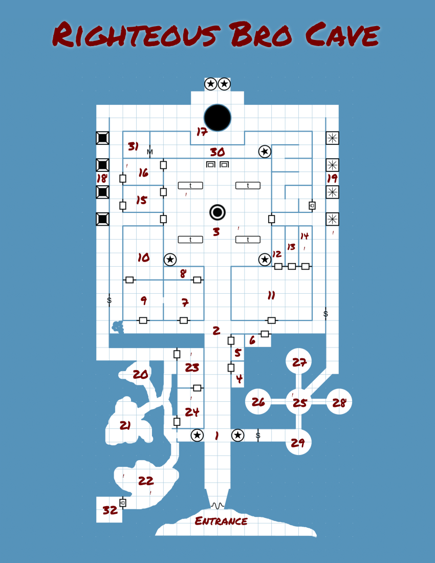
Self Published
OSR
Levels 1-2
Decades ago, there were two adventuring bros—Thom the Mighty and Oolnor the Weird. After much questing and looting and war against the hated bone men of the North, they carved for themselves a dungeon fortress one day’s march from the nearest village. Here, in this righteous bro cave (RBC), they stationed their henchmen, stashed their gold, and hosted epic parties. But there has been no trace of Thom or Oolnor for ten years now. A brave few have trespassed into their RBC, lusting for the riches that no doubt reside there. None have returned, for no force could be mightier than Thom and Oolnor’s eternal, bloodthirsty friendship.
This ten page adventure describes about 32 rooms in a “double adventurer” lair much akin, and a homage, to B1. It’s trying hard, and has some decent formatting and a writing style that is, in form if not function, almost consistently great. And, also, it comes off a bit staid and disconnected from itself. You getting close there, Operant Game Lab.
The set up here is much the same as B1, on purpose. Two adventuring buddies build a fortress to live together and then they disappear for over ten years now. Inside you’ll find some things harkening back to B, like pools, as well as some mushroom men wandering around, “the bone men”, a tribe of barbarians trying to retrieve the bones of their ancestors that were stolen by the dynamic due, and some leftover orc servants trying to fend off the bone men incursion.
I talk sometimes about good writing and great writing and how there is a way of writing in which more is implied than the written word. If I can write three words and it makes you think of some kind of misty forest glen, coming alive in your minds eye, then I’ve done a good job. But if you can build the rest of the forest from that then I’ve done an even better job. A good room description may bring a room to life and an even better one brings the SITUATION to life, or the NPC, or so on. And, one hopes, it is tersely written, helping us scan the page and run the game at the table, the whole idea being using words to their maximum effectiveness, implying more than the words themselves describe. At one point in this adventure you come across some orc officers, planning to repel the bone-men barbarians. They will talk, but want to make sure you are “orc tough” and “they are willing to generously split the resulting bone-men meat 50-50.” This is very good writing. You know EXACT:LY the tone that the designer is going for with this encounter. From this you, as the DM, know how to run this encounter perfectly. You can ad-lib and fill in the gaps of the encounter, and, because of this, can turn it in to something quite memorable for the party, something they will recall in stories for sessions to come. More than just imaging the environment of the room, it has communicated tone and a situation. And that is the very highest form of evocative writing. That certain wryness comes through in other places in this adventure as well, so while not consistently hitting, it’s not an accident either. One of the wandering encounters, on a roll of 00, has the two adventurers, “Thom and Oolnor, returning home at long last” with their seven giant golden idols. Well there’s a sticky wicket to toss in!
The writing here tends to be terse, but not overly so. Formatting and layout is done paragraph style, with a a few short intro sentences and a word or two bolded and then followed up in their own paragraphs, with rooms given names next to their key numbers in order to help frame the text for the DM. This is all great, easy to scan at the table while running.
Encounters can be, in places, well done. Outside the entrance we get a couple of sentences that ends with “Every few minutes, a gust of wind blows away the humidity and mosquitos.” More than just padding and setting the scene, if you listen to the wind you you catch the faint sounds of a flute, following it leads you to where the bone-men have made their encampment and their lon guard killing time playing his flute. This, obviously, helps the party, giving them clues as to whats to come. Depth, following up on what the DM has related to the party leads to more information and revelations. And that’s what you want in a room description.
In another spot, the treasure room, we get “Piles of Gold. On the scale of Scrooge McDuck, one could swim through these stacks of silver and gold coins. All told, there are 2,834 silver pieces and 198 gold pieces (many of them stained with the old blood of their previous owners)” On the Scale of Scrooge McDuck, this gives us an immediately visual image to work from as a DM. (As an aside, is that many coins really a hoard ala Smaug the Golden/Scrooge McDuck? The imagery works well but I’ve not sure I’ve ever seen an adventure in which the actual coinage lives us to that imagery. Or maybe I just don’t know what 2800 coins looks like in real life?) Other wry things include a room with an effigy of a woman in it, a crude statue built. “Parading the false wife around in “civilized” settlements confers a -1 ongoing penalty due to its creepiness.” That’s solid. The use of parading, civilized in quotes, creepiness. Great use of descriptive words to help nail the vibe.
There are some decent vignettes in this. Bone-men stacking up chairs and climbing on each other to get to their ancestors bones hanging from the ceiling in the great hall. A wounded bone-man, with his buddies keeping watch, that drank from a pool and hulked out and got wounded badly. In spite of this though I’m not going to even Regerts this. It’s close, but there are a few things that keep me from that. The entire thing feels, sparse? Staid? Disconnected from itself? Static? Maybe static. It’s not that there’s a lot of empty rooms, that can be cool in a dungeoncrawl. But it just doesn’t feel like a unified whole. There are little linkages, the bone-men through, the orc sector, the previously mentioned wounded bone-man from the pool. Certainly no order of battle though, or anything overly dynamic in the environment. It doesn’t feel like a place that is alive. The overall vibe of the place just doesn’t come through well. I wish I could put my finger on it. It doesn’t feel like a bone-man incursion to a place and the orc servants repelling them and the mushroom men adding trouble in a place that is already a little weird, being an adventurer home. Certainly all of those elements are present but they don’t feel like they are working together to create a unified whole. I’m thinking of this in terms of, say, the first level of Stonehell. Stonehell level one, or even the outside, feels like an empty dungeon but the overall emptiness, exploration, and creatures there make it, all together, feel like a certain place with a certain something going on.
I’m certainly not angry about this. Most adventures are piss-poor wastes of paper and this is not that. The overall environment just doesn’t get me excited to run this. I think it’s close, though, to being something worthwhile.
This is Pay What You Want at DriveThru with a suggested price of $2. The preview is ten pages, essentially the entire thing. Great preview. I’d check out, maybe room 3, 12, and 25 for an example of some of the better rooms.
https://www.drivethrurpg.com/en/product/561741/righteous-bro-cave?1892600
Categories: Tabletop Gaming Blogs
A Grinning Ghost’s Grim Tale
By GMaia
Knight of the Lake Games
OSR
Levels 4-8
Knight of the Lake Games
OSR
Levels 4-8
[…] A bold entrepreneur decided to reopen the “cursed” stage, now renamed the Daggerpierce Theater, and revive what was hailed as the greatest play ever written, and at the same time the one everyone wished never to see again. The from the Côte d’Écume, were not fully aware of the rumors surrounding the theater, the play, and its infamous author. Ignoring those who begged to keep the Daggerpierce Theater shut, the troupe accepted the job and sealed its fate along with that of The Tragedy of Gus de Montagne. The play was cut short just Wave fled Pont-Verre without leaving a single word or trace behind.
This 48 page adventure has a few locations in and around a theater with a curse. It’s pretty obvious what the adventure WANTS to be and it’s also pretty obvious that it is doing VERY little to make that happen. Maybe something like “This 48 page adventure presents some napkin notes that could one day be an adventure.” Oh, and it’s fucking pretentious.
Life. You try to make some money then you die. A symphony that is bittersweet. And this adventure explores that. The theater (always a good sign when there’s a theater in an adventure) is cursed. “the curse can only be broken when the play’s profound message is understood and performed with the sole purpose of teaching the people to value what truly matters.” Yeah, I guess The Verve is wrong because “as long as the work brings success and enriches actors and theater owners, it will remain misunderstood, and its performances will claim lives.” I don’t know, it’s love or selflessness or some shit like that. The playwright’s lover got framed by rich people to draw attention away from their counterfeiting. (Which, shows an incorrect view of counterfeiting. You don’t get away with fucking with the States money supply no matter who you are.) Anyway the designer, or playwright or someone somewhere, knows the meaning of life and The Verve’s more nuanced view can go fuck itself. This leads us to this interaction near the end where THE ENTITY asks the party questions. And you better get them right, or else! ““What would you have done for him, knowing he was innocent?” Examples: Refuse to be passive before injustice; vow to place life above wealth. 2. “What truth have you hidden for material gain that you could confess?” Examples: Based on PC story, reveal a secret of greed or betrayal. 3. “What act of justice would you perform now, even at great cost?” Examples: Cut off a hand that committed a selfish act; blind an eye that witnessed corruption.” So, yeah, childish morality. Which means I can take the stance that this is the designer attempting to impose their own childish value system on the rest of us, and their players, in a game night that is supposed to be fun, or ITS ON PURPOSE!!, the standard artist cop-out. In this case that would appear as something like the intent of the curser, the playwright, his beliefs, and curse following that and the characters needing to figure that out so they can navigate his bullshit reality correctly. But we all know that’s not what is going on here. It’s designer imposing their morality on the rest of us and punishing us for not following it. This is absolute fucking bullshit. You can stick in all the fucking orc babies you want, you just can’t punish people for not holding whatever bullshit views you do. ESPECIALLY when there is a god of evil in the game who is ACTIVELY rewarding their followers for evil acts. Fucking bullshit.
Hey, you want a challenge, how about this one? “Two to eight (2d4) energy discs hover in the air, half a meter wide, razor-thin,crackling with electricity.” There’s your fucking combat. I guess fighting rats might make a statement about man’s subjugation of the natural world. Far better to die by crackling electric discs.
The adventure is fucking garbage, what there is of it. I can make a decent case that this isn’t an adventure at all, just an outline of one, if that. You get a few locations, you get some NPC”s with motivations and the rough outline of a plot. GO!. This leads to discovering clues like “Torn letter referencing a mysterious debt – Actually belongs to Auguste, proving his ties to a shady merchant guild.” How’s that for evocative gameplay?! No more to this. Just that. No letter. No details. No specifics. That’s all you get. And everything in this is like that. Just a few general ideas and notes. No specifics on how to use things. It’s weird, how detached it is. You’d think, with actors, customers, and so on that you might have some vignettes or something, but, no. Nothing. Dads house has a couple of sentences on background and then three bullets of clues. “Empty painting frame in the bedroom – Points to the diary hidden in the Red Hills hideout.” How the fuck you make that jump I have no idea. Everything is like that, half finished? Just an idea? I think it might be referring to this? “Concealed inside a magic mirror hanging on the wall, framed identically to the empty frame found in Edwin’s house (Clue #1)” So. I don’t know? Is that a clue? Am I just being obtuse? Anyway, given the page count here the lack of specificity of ANYTHING resembling a plot or details is confounding.
The formatting is … well, an interesting choice was made. It’s doing a “facing pages” layout thing. Hardcoded in to the PDF. Ug. Not cool. Anyway, the left page is a more traditional text based description while the right is essentially a cliffs notes version of the same text. As the designer notes “this is to test whether presenting the same content twice can serve both those who enjoy a full,detail-rich reading experience and those who prefer concise keywords and minimal description.” I would take exception to this statement, The two are not mutually exclusive. Well, ok, maybe they are if we take “detail-rich reading experience” to mean “people who buy adventures to read instead of to play.” In which case, Fuck You. But I’m going to go with that the designer is taking the view that somehow full text and usable text are mutually exclusive. I think we all know, from numerous Best examples from this very blog, that is not he case.
In any event, this experiment fails. The facing page “terse view” is a disaster. The font is in some faux-handwriting thing, which immediately destroys readability. And then its in a light blue text, which makes it even hard to read. Then it slapped down on some “lined paper” background, which again interferes. IF something sane had been chosen to put the “bullet points” in then maybe this would have worked. But not as presented. Which is too bad because every once in awhile the summary information IS good. The theater producer, in his “full on” text has a line that says something like “Does not believe in the daggerpiece curse.” But, in his summary it says “The curse does not exist.” This is interesting, presenting what is essentially the same idea in two different manners., using two different wordings. Which conveys two different attitudes. The summary version “the curse does not exist” is, I think, far better, giving a much more solid foundation on which to roleplay the manager from.
The level range here appears to be arbitrary, with no real reason you’re level eight are fucking around with a playhouse. Also, the fucking overland map is a disaster with hard to read fonts on it. Why legibility” remains a barrier in 2026 is beyond me. And, for the final cinema sin, there’s a fucking expo dump in a fucking diary. It explains everything. Lame. LAME. DON”T PUT IN FUCKING DIARIES! DONT EXPO DUMP! Figure out how to convey information naturally through the game, if it even NEEDS to be conveyed.
This is $1 at DriveThru. There is no preview. You make baby jesus cry when there is no preview. You don’t want to make baby jesus cry do you?
https://www.drivethrurpg.com/en/product/558386/a-grinning-ghost-s-grim-tale?1892600
Categories: Tabletop Gaming Blogs
The Rook & The Crook
By Taron Pounds
Land of the Blind
OSR/Vagabond
Levels 6-10
Land of the Blind
OSR/Vagabond
Levels 6-10
An explosion rocks a nearby mountain range. Once the dust clears, two twisted and screaming towers remain: one black and one white. Ominous seals appear on the moon and stars. A wicked smile spreads across the eye-spotted black tower’s upper story, capped by a witch hat-like roof. Its upper and lower floors appear to be separated, with arcs of blue lightning emanating from its center. The white tower is a bastille of pale stone, with an otherworldly blue fire burning at its top. Windows of stained glass bend without breaking along the white tower’s exterior, and eyes of madness follow those who approach the black. A flock of winged serpents fly around these profanities of architecture. No one knows where these towers came from, and what has corrupted the celestial bodies. It is up to the heroes to uncover the mystery to stop a cataclysm that has been unfolding for centuries in secret.
This 44 page dungeon presents two towers with about nineteen rooms between them. It’s a funhouse dungeon in which the world ends. That’s fun! Also, you don’t actually need to do anything here but go to the top floor and pull a lever. That’s fun! I don’t see a reason to go inside.
The gods have trapped one of their own in a magic prison. Dude wants out and finally is about to break free, thanks to his two followers, each of whom built a tower. You don’t know any of this. You’ve just got some generic rando hooks that come down to “you see these two weird towers.” I hope you go inside, because if you don’t then the world ends. That’s rough. Anyway, you go inside and find a funhouse dungeon, the two towers connected to each other with some magic pathways and normal stairs and so on. Turns out that if “the steamworks” is functioning inside the tower, and someone has had their soul aged in the aging room, then if you pull the level at the top of one of the towers then the trapped god will go back to jail. There’s a friendly phoenix, powering the steamworks through a portal to the elemental plane of water, that will tell you all of this who is at the top of the other tower. Anyway, so, the steamworks already works. And someone has already given their soul to the aging room. So, just pull the level in the other tower.
To get there you will need to … ignore everything. Basically. Whatever is in the room, just ignore it and go up the stairs or through a door. Yeah! You’ve overcome that challenge. I’m not sure anything really attacks you in this unless you go fucking with shit. Oh, wait, hang on, there’s a death knight. “Motionless at first, but disappears if vision on him breaks and he then stalks the party.” I don’t know what the whole “disappears and then stalks” thing is about. I guess that’s for the DM to handle. So, I guess you gotta fight him? I THINK that’s the only required combat. Also, “required” is a loose word; I think you can make your way through the tower without having to go in to the throne room where he sits.
Let’s double check my theory. Room one, walk backwards down a mirror hall. No consequences for not doing that. Room two, touch nothing and go up the stairs. No consequences for not doing that. Room three, go up the stairs and don’t touch the floating books. Room four, ignore the tree and go through one of the doors. Room five ignore everything. Room six, go through a door. Room seven, go up the stairs. Room eight, go up the stairs. Room nine, go up the stairs. Room ten, meet the phoenix. That’s one full tower and half the rooms. Congrats. The second tower, to my recollection, is more of the same.
But, hey, you can still make the world end. Every time you use a spell or a magic item or go through a magic portal in the tower then the DM rolls a die. The third time they roll a one the dude breaks free and immediately destroys the universe. You get a warning though, you hear an owl screeching, which, obviously, means the universe is going to end if you cast another spell. This mechanic also ties in to a fun “weird things happen!” table, with entries like “Unluckiest PC must save or their limbs become accordions for 1 Minute.” or some blobs teleport in, loudly fart, and then teleport out again. Fun! … Humor, gentle readers, is highly subjective and doesn’t translate well.
We lead off with three paragraphs of italics read-aloud. We get read-aloud like “This room appears to have been built to keep a phoenix in a consecrated prison.” Appears to be. And how the fuck do we know it’s a prison? Or that it’s consecrated? It’s just garbage. In one room you find some masks. “Each is Cursed and Sentient, but only speaks while worn.” We’re referred to a table telling us what they do. “The wearer fails Checks against surprise.” Dazzling. Sublime. You didn’t even bother to give the mask a name or a personality or anything else.
I’m not a fan of the zany funhouse, but this isn’t that. I’m also not a fan of the museum trip, and this is more in that vein. Just don’t touch anything and look at the scenery and you’ll be fine. But, also, the whole “lets nerf the party” and “oops! The world ended! Guess you didn’t figure out that was going on!” is VERY time. You need to communicate that the party is racing against time or else it’s not a race against time. It just ends up being the wandering damage table and rocks fall, everyone dies. Weird that’s not fun. And if you need to nerf the party then you wrote the adventure for the wrong level range.
This is $5 at DriveThru. The preview is seven pages and shows you nothing of import. Poor preview.
https://www.drivethrurpg.com/en/product/561060/the-rook-the-crook?1892600
Categories: Tabletop Gaming Blogs
Corpse Husbandry
By Shanklimb
Self Published
OSR
Levels 4-6
Self Published
OSR
Levels 4-6
In recent months, strange mushrooms have erupted across a corner just outside the Mulchgrove. Local foragers reported vivid, peculiar dreams after extracting them – visions of mosslings sharing tea with mammoths, a boulder tucked in for naptime, and other odd sights. Now the dreams are coming uninvited, in daylight, to people who never touched the mushrooms at all. The mosslings of Mulchgrove are divided. Most believe the fungi are a divine offering – though no two can agree which god sent them, or why. But it’s to be sure: someone, or something, is broadcasting.
This eleven page adventure describes fifteen rooms, mostly linear, in some caves. Low on interesting, you get some sub-standard descriptions of slime mold rooms. Nothing to see here, move along, move along.
The locals have discovered a new type of mushroom. You’re hired to check it out. You find some caves with some friendly trolls in them. They grow moss. In beds fertilized with corpses. Looks like slime molds have attacked their caves. You go kill the slime molds.
Aimless, perhaps, is how I would describe this. There just isn’t much motivating going on in any sense. The situation in the local village is “oh, look, new mushrooms!” with no real sense of urgency behind it. The hooks are all Hiring in one sense or another, usually with a “I’d some of that new mushroom variety …” There’s little personal motivation in any of that, just a blatant appeal to your desire to play D&D tonight or go to a bar instead. There’s not much of a hunt for an entrance, I guess all of the locals are blind or something, just “here’s the hole in the ground!” and then, once inside it’s more of the same. You enter a room with moss in it. This room has trolls and moss. The trolls are friendly. They don’t care. Well, one room has some sleeping trolls in it who are not pleased at being woken up, if you hang around. I wouldn’t be either. Anyway, they don’t care. Yeah, they are fertilizing their ground with corpses, but there’s no indication they are KILLING people. The descriptions are entirely neutral on that point. “Investigating the corpses: Human commonfolk, arranged with almost ceremonial care. Their hands are folded, mouths held agape with sticks. No possessions of any value.” Sure thing man. No one cares. Well, the trolls are not happy that their moss tunnels have now been invaded by slime molds. Pretty please? This puts us, I don’t know, halfway through the encounters? So you wander around looking at moss and trolls until you reach the barricades that block off the other half of the rooms. Once there things change. You kill gelatinous hulks and other mindless blob things. Yeah! You did it! ‘
The last half of the room, eight rooms, are handled in two pages. So, two pages of content here. Two pages of things to do. You enjoy yourself here.
Room descriptions are in the old OSE style and meh. “The Threshold Black walls (thicker roots). Translucent threads (hang from ceiling, like a curtain).” This is ok, but not great. It’s just not very evocative, but, at least, it’s not overly long, thank god.
There’s just not much here. Stab the blob things. Maybe don’t touch the pools that are obviously acidic. It’s like The Adventure Of Getting Inzto My Condo! Avoid the church people in the drive and hit the open gate button on the app. Don’t yell at the old person driving slowly in front of you. Open the garage door with the opener. Park in the garage being careful not to hit the concrete post on one side. Roll 1d6, if you get a 1-3 then the car on the other side is present also and you should not hit it. Push the elevator button. Wait forever. 1-3:d6 other people get off on floor one, slowing your ascent. Yeah. Ok. I guess things happen. I guess? Do they matter? No.
Also, I’m annoyed that the numbers on the map are in a black font in purple background blobs. This is my usual Hard To Read rant. And, then, the dungeon proper, “This dungeon is made up of an expanding fungal root-system, the roots of which form mid-sized tunnels and rooms.” I guess the roots are hollow?
Nothing here. Move along. Move along.
https://www.drivethrurpg.com/en/product/560343/corpse-husbandry-an-adventure-in-dolmenwood?1892600
Categories: Tabletop Gaming Blogs
City of the Ape-Men
By Gabor Lux
EMDT
OSRIC
Levels 5-8
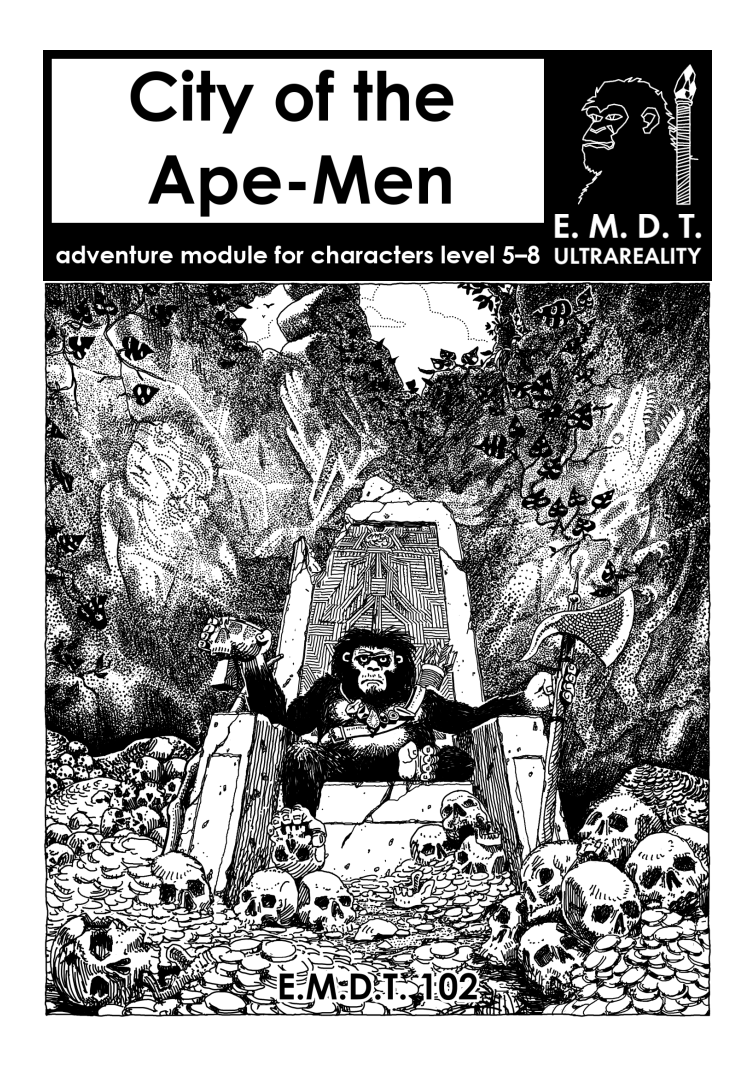
EMDT
OSRIC
Levels 5-8
Linquar the Eternal has fallen, its palaces and temples decaying in the teeming jungles. Few dare to head for the misty island plateau where the ruins stand, and even fewer have succeeded in claiming its treasures from the savage ape-men who now rule in its citizens’ stead. The great city is largely forgotten, and even its name only refers to a squalid pirates’ nest that had once been its trading outpost. What had been the capital of the isles is known as a cursed and abandoned place that’s better left undisturbed. But more often, it is simply known by its current inhabitants… as the City of the Ape-Men!
This sixty page adventure is an Isle of Dread, but with ape-men in the lost city. A complex environment with large groups to challenge the parties looting efforts, it does a hex crawl with some locations being mini-dungeons. Bring those cargo ships to haul away the loot and avoid the pirates while dodging the secret masters manipulation of the apes. The logistics game is the only thing missing.
We’ve got the ol Dread here, a jungle island with some dinos and ‘big fucking snakes’, the former seat of an empire that prospered from the spice farmingo n the island. Their former slaves, the ape-men are now all that’s left, along with a smaller island off the coast that has a pirate town on it that can serve as a home base. You hex crawl the island looking for spice, pirate-loot, and the wonders of the fallen empire. Don’t worry, in spite of dinos and ape-men there are also a handful of giant frogs, frog-lizards and frogodiles.
The hex encounters, about twenty, range from the very small “R. The weird rock: A large stone with a spongy, greasy surface stands here with nuggets of a rare ore embedded in it (2500 gp).” to more involved paragraphs to handful (sixish) of mini-dungeons. These range from the “wildlife wants to eat you”, with flying manta rays and dinos and snakes and spiders, to monoliths and locales from the old empire, usually with some mythical bend to them. (Meditation on the holy ruins on the highest peak gives you a +1 to two stats … if you can make it to the top.)
Running throughout we’ve got LARGE groups of ape-men running around, like, in groups of five to forty. And then in their bases near the lost city, proper, groups of forty to seventy. Ouch! I love a large group of enemies to challenge high level parties in an open environment like this where the party can plan and plot, and flee in a crazed terror through the jungle when the masses appear.
The apes are divided in to three factions, buying for power. They hate each other, but, also, they hate all humans more. Like, ravenously hate them. They are taking instructions from their GODDESS, a talking statues. We’ve all seen Oz, so we know what’s up, Turns out that there are tunnels full of spider people who are the secret masters, subtly working the apes against each other to keep their numbers low. But, also, they are gonna make sure that nosey adventurers get fucked up hard. Once technologically advanced, their crashed spaceship is on the island also. Don’t worry, it doesn’t really go gonzo at all. The whole place is nice and sandboxy.
I do have a few issues though.
I can’t make much sense of the elevation contour lines on the map. I think the text says something like the island rises to 1200 feet high, and the map says that contour lines represent 1200’ feet. I assume there’s a typo in there somewhere, but, also, I’ve had a REAL hard time making sense of the contour lines on the map. There IS a separate map that just shows the contours, and it helps a lot, but that’s alot of referencing back and forth when trying to relay information to the party.
The hex crawl instructions are decent, and none of those fucking environment/humidty rules that I hate dealing with in crawls. “You can’t wear platemail!” Fuckoff. You’ll have to kiss me first. My major issue is, with most hex crawls and this one, the lack of mentioning how far you can see/landmarks when getting high up. It makes sense to climb a tree, or a plateau, to see what’s around (See also: the Fallout Red Glow At Night) and a sentence about that would have been nice.
Given that there is a high likelihood of this being a treasure extraction game, the pirate town could have used a little more as well. It’s covered in several pages and there are several factions there as well. A little more on off-loading the goods and/or a pirate ship/response to the party brining in loot would have been nice. A sample raiding ship or two, perhaps? There is enough, generally, to understand that there SHOULD be complications but a sentence or two, maybe a paragraph, on potential extraction play would have slotted in quite nicely for this one.I might quibble as well with their being simple ruins that are unlooted in a town full of destitutes, or bordellos opening at sundown in a lawless place, but those are just quibbles. It’s also full of good human nature type things like “Linquar’s beggars are downtrodden wretches begging for scraps. At night, more aggressive begging also takes place if the beggars outnumber the opposing party 2:1”
This is a better jungle crawl than Dread. Where Dread was a little sparse this contains the makings of a nice long game, with factions and complications, as well as a base, to help support that longer arc of a game. There are real rewards for dealing with a group of forty flying dinos, or making it through the ape-city, or climbing the highest peak. Intelligent play, by following ruined roads that see from up high, will help direct the party to most places. Three is a place to recruit and offload loot. The apes are presented as SO hateful, though, that it doesn’t leave much room at room for factions, other than, perhaps, subtly working them against each other.
This is $6.40 at DriveThru. The preview is the first thirteen pages, which shows the island map and some of the town and general instructions. That’s probably enough, although, as always a page of the island encounters or lost city encounters would have been nice as well.
https://www.drivethrurpg.com/en/product/559570/city-of-the-ape-men?1892600
Categories: Tabletop Gaming Blogs
The Faceless Howl
By Patrice Crespy
Kabuki Kaiser
OSR
Levels 1-4
Kabuki Kaiser
OSR
Levels 1-4
It was bound to happen. Too many relics. Too many books. Too much past stacked in one place, the Monument Valley of scrolls and mouldy tomes. The Lucubrarium of Unobsolescence has gone wrong. In Bec–de–Corbin nearby, folk forget their names mid–sentence. Chalk–pale, traits blurred by scratches and hollow wrinkles, eyes sunk. Static. Howls in the night. The militia still stands at the keep and demands tolls, then forgets what it’s doing. The rain just won’t stop. Thugs move in, bold as daylight. And when night comes, the lights go out.
This 44 page digest adventure uses seven or eight pages to describe about forty locations in a town and in a two level library/abbey. You can tell what it is trying to do, but in spite of some great specificity it mostly fails to create the environment it is going for.
There’s this library place, including relics, with a small town around it. Some kind of memory eater/void monster shows up and people start forgetting their names. Some of them no longer have faces. Others are worse, their heads a ragged black blob and howling continually. You show up in town, make it to the library/abbey, and … do whatever. Loot the place for relics I guess.
Kabuki has some decent ideas and can conjure up some great imagery. The whole “forget your own name” is a nice touch. The ragged face monsters and howling and so on are quite appealing to me, personally (ever since The Void supplement for 3.0, I was captivated by it. Who doesn’t love Munch? At one point one of the random atmosphere tables has “A white noble dress fit for a young lady, nailed to a wall, torn. THAT’S NOT ME, written across the chest in coal.” Well now, that’s a statement, isn’t it? There are little bits and pieces of shit like this scattered throughout that are just great imagery.
Let us transition somewhat to the following entry. This particular location is a part of the “in town” section. “Falkenrot Manor Earl Falkenrot’s a ghoul — kept secret for ages by his family. When the Faceless came, they wandered off and left him here, locked down in the cellar. Half– Faced, black pits for eyes, ravenous.” Nice concept. Decent ghoul description. Mostly backstory. As a concept for something it’s great. As an actual place, meant to adventure in, it’s pretty lousy. And there is A LOT of this.
The town map is irrelevant, just a kind of conceptual thing with some numbers on buildings. The descriptions are short and=, again, just concepts. “Watchtower Deserted. An alarm fire atop has been spent. Did anyone see it?” Well I don’t know, did they? Are there consequences one way or another to that?
That bit at the end, it’s some kind of hipster pretension. And THAT absolutely IS prevalent everywhere. The whole “let’s put in a meaningless question under the pretext of giving the DM possibilities!” There’s a forest wolf encounter. The wolves are hungry and want to steal food and run off, mostly. That’s great! Except we also get “No food, they come in.’ This is supposed to, I think, convey a sense of menace. It does not. Nearby this, in a description meant to be atmospheric, about the journey to the town, it ends with something meant to convey the inclusion of the party in the description. “Chatter about the heist, maps, treasure. Or dead silence. Up to the table.” Why, yes, it is up to the table. But also, what’s with the sentence “Up tp the table?” Ol Craig used a cut down sentence, with dropped words and fragments, in order to save space. Space clearly isn’t an issue here given the ‘luxurious’ room given to simple tables. A couple of pages for “Which of the six howlers show up” could be compressed to maybe six short sentences. Or, the text implies that only three howlers exist, so, perhaps not having a table at all? This sort of needless randomness drives me crazy; an adventure is almost always better when the locales are themed around the specifics of a creature rather than just giving a random determination, for these sorts of encounters.
And how about those dungeon rooms? “Portcullis: Disjointed and stuck shut. S7 STR with up to 4 characters adding their STR to lift/bend. One attempt only.” Great! That’s how we get those thirtyish rooms down into the quite small page count devoted to locations, with the bulk of the text being other tables. The interactivity here boils down to finding, say, the wormacide that helps you fight the giant bookworms, or being confident in answering a forgetful sphinx’s riddles.
Not Kabuki’s best work. It feels like it needs another couple of polishes to make everything come together and work as a cohesive whole. Better integration of the various major enemy groups, and a more solid effort in brining out the … joylessness? Melancholy? The forgetful nature of things.
This is $5 at DriveThru.The preview really shows off the worse parts of the adventures, the sparse table nature. Things change, the text style and descriptive style, deeper in and that, being the bulk of the adventure, is where the preview should have focused.
https://www.drivethrurpg.com/en/product/556896/the-faceless-howl?1892600
Categories: Tabletop Gaming Blogs
Chipped Saucer
By Daniel Hicks
Self Published
ACKS
Levels 4-6
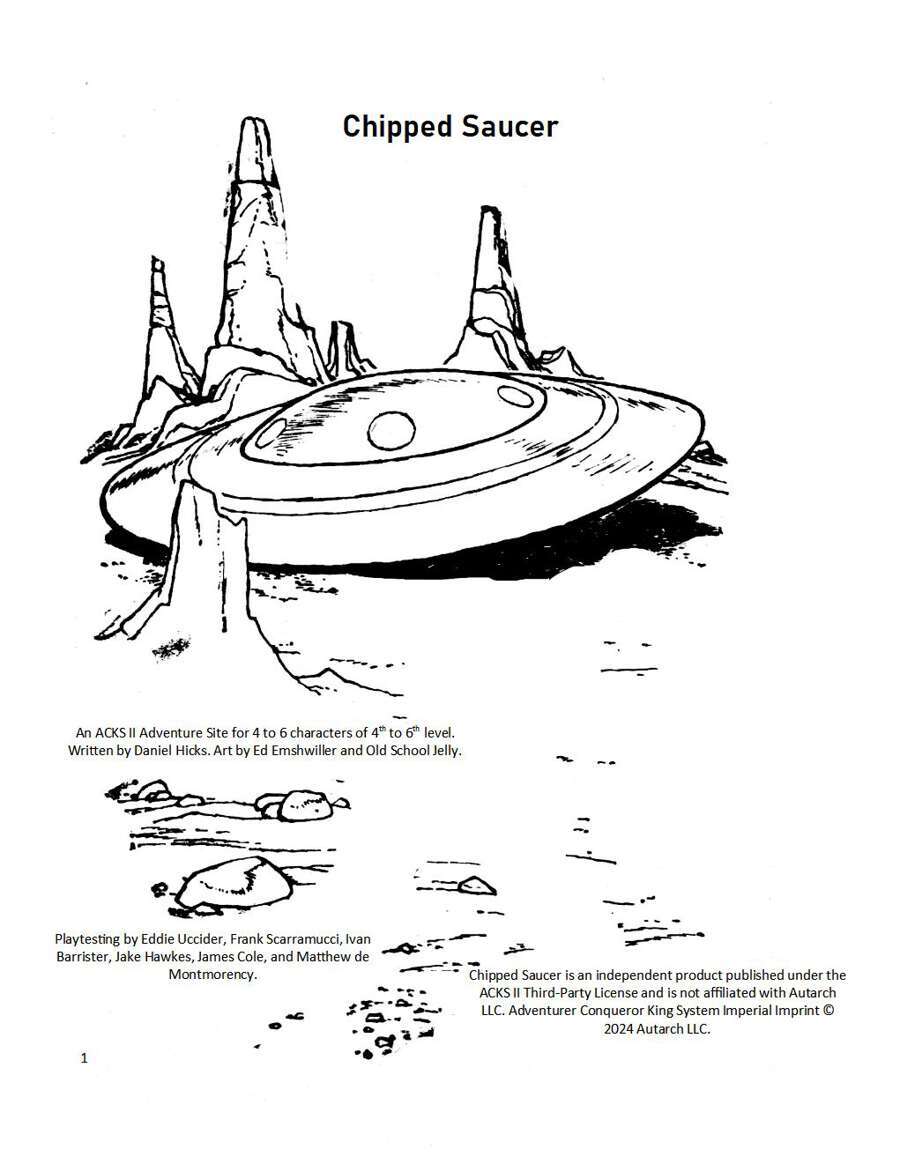
Self Published
ACKS
Levels 4-6
Warning! Barrier Peaks is my all time nostalgia favorite.
A spaceship was transferring dangerous exotic lifeforms for sale at another point. A defective containment unit released one avid Hund, which quickly killed those present and set about freeing its kin. The acid hounds killed or fatally wounded every passenger and member of the ship’s crew in short order. Unfortunately, this occurred while the pilot was making manual course corrections in the outskirts of this solar system and with the autopilot disabled the ship drifted off course for weeks. More recently, she ship has crash-landed, and
presents a hazard if approached.
This five page adventure uses about two pages to present about thirteen rooms in a crashed flying saucer. Basic descriptions, simple map, not much beyond the most basic of encounter structures. And, of course, too small for its theme. But, hey, it’s got more rooms than pages, so there’s that!
A classic flying saucer has crash landed, so imagine a circle layout, about a dozen rooms along the edge and one or to interior, with a circle hallway in between. It crashed because some Acid Hounds got loose. You’ll find all seven of those 3 HD dudes in the first room you encounter after entering through the hole in the side, the cargo hold. At some point you’ll also face a nanite cloud in one of the rooms. This is the extent of your actual challenges. Otherwise you find the door bracelets and collect the blasters and auto-heal patches. IE: the usual. There are more than a few missed opportunities here, like “The ship’s main reactor (‘captive-star’), centrally
located, has burned out, and cannot be restarted without the aid of a similar vessel.” You can self-destruct the ship from here, and you can loot some platinum wiring. But, no word on what looting the captive-star is/does. Sad. No green slime in the shower. No malfunctioning auto-doc. There’s just nothing involved at all going on in this. I mean, even combat, after that first room, except for the nanite swarm. You gotta have some shit to fuck around with in an adventure. Grave tubes. The jungle level. Wait, I’m describing Barrier Peaks….
These small page count adventures have a real problem with matching their theming to their size. The Lost City of Infintium! Two pages. The Endless Maze of Nilhelm. Four pages. If you’re going to theme your adventure to something that really needs more pages and has endless possibilities then you really need to make it more than the five pages, for example, that this one is.
Descriptions here are sparse. “Shower’ A small area for changing clothes sits outside the two shower stalls. Two dials are in each shower: one to turn it one and off, one for water temperature (a range from freezing to brisk).” There are also some general notes in the beginning about lighting and doors, but no real evocative descriptions are present, even for the Acid Hounds.”Acid hounds have pale green skin and a tripartite jaw.” Ok. Drooling acid? Foaming at the mouth? Mangy fur? Allof the descriptions are very businesslike with little to inspire here.
The map, here, is not great. It’s black on white. The room numbers are in a light blue that doesn’t stand out real great. But also there are other notations on the map. B, P, b, c, 3C, C. These are quite dense, nothing which kind of bracelet gets you through a door, a sub-ro number and the location of bodies. Yes, you can figure it out. No, it is not the most cognitively easy thing you’ll ever look at. If you can light blue the font then the door codes could be in a different color, and if you can put symbols on the map then you can put body outlines on the map, all of which is easier to look at tell what is going on at a glance.
There’s not really much here of interest, if anything.
This is Pay What You Want at DriveThru with a suggested price of $2.
https://www.drivethrurpg.com/en/product/558966/chipped-saucer?1892600
Categories: Tabletop Gaming Blogs
Pages
