
Your wildly multifarious home!
Tabletop Gaming Feeds
OSR NPC's - Old Shatterhand For The Victorious Rpg & The Red Room's Belle Epoque Rpg
Created by famed German author Karl May in the late 19th century, Old Shatterhand (the alter-ego of Karl, a German surveyor turned wild-west legend) is one of the most famous European pulp heroes of all time. Known for his superhuman punching power—capable of knocking out a man or a horse with a single blow to the temple (hence his name)—he is a polymath, master marksman, tracker, and a Needleshttp://www.blogger.com/profile/11243274667834930867noreply@blogger.com0
Categories: Tabletop Gaming Blogs
Wednesday Comics: DC, November 1985 (week 1)
My mission: to read DC Comics' output from January 1980 (cover date) to the end of Crisis. This week, I'm looking at the comics that were on stands in the week of August 1, 1985.
Crisis on Infinite Earths #8: After his fight with Supergirl, The Anti-Monitor makes it back to his base and adopts a new look before deciding to head for Qward where his "plan B" is being constructed: an anti-matter cannon. Psycho-Pirate and Flash have no choice but to accompany him.
Meanwhile in the 20th Century, some heroes are gathered in the old JLA satellite with T.O. Morrow to try to repair Red Tornado. Atom is investigating inside Red when he sees something activating. The heroes scramble to safety as the android explodes. Blue Devil is knock through a portal to the Vega System, and Firehawk is forced to make herself a new costume.
In the 30th Century, the Legionnaires monitor the 5 remaining Earths. Brainiac 5 frantically looks for a means to save them, while refusing to mentally acknowledge Supergirl's death.
On Qward, the Flash breaks free and takes Psycho-Pirate captive. He threatens to kil him and forces the villain to manipulate the Thunderers into attacking the Anti-Monitor. With that distraction, the Flash sabotages the energy core of the cannon. Running faster than he has every run before, he turns the energy back on itself. The cost is his own physical integrity, as he painfiully begins to disintegrate. He mentally says goodbye to his friends and family (mentioning Fiona who was forgotten in his comic by the end!) and feels himself slip back in time as he dies. He tries to warn Batman and the Joker, before he is gone leaving only his ring and costume. Unlikely Supergirl, none of the other heroes are aware of his passing or his sacrifice.
I feel like Crisis is improving in this second half. The first six issues seem mostly putting the pieces in place and establishing the stakes. There is still more than a little "just go with it" with Wolfman's plotting, but it's an engaging read.
Blue Devil Annual #1: This is called Blue Devil Summer Fun in the monthly checklists published in the issues. I feel like this issue was the real highwater mark for Blue Devil. My brother and I read it and re-read it as kids. I'm happy to say, I feel like the work done here by Mishkin/Cohn and Cullins/Martin holds up. Thanks to Wayne bringing back a crystal ball-like egg from Ile Du Diable and stashing it in Dan's workshop, Blue Devil is drawn into a battle with Felix Faust which has already entangled several occult and weird guest stars: the Creeper, Man-Bat, Madame Xanadu, Phantom Stranger, Etrigan, and ultimately Black Orchid. The heroes fail to stop all the imps that hatch from the egg from reaching a birthing pit, despite Dan chasing them with a butterfly net, and Etrigan gobbling up everyone he can find. The imp is transformed into a duplicate of Nebiros made of sand. The heroes manage to pull him apart, but the battle is only over when Phantom Stranger sucker punches Faust.
The issue is Blue Devil at its best: an action-comedy romp. One of my favorite bits is Xanadu and the Stranger at various points each telling conflicting versions of the origin of Black Orchid. Xanadu's tale is a pastiche of Daredevil's origin, while the Stranger's is a pastiche of Spider-Man's. Mishkin/Cohn also have a lot of fun with Etrigan's rhyming commentary.
It's a shame the series wasn't consistently this good, though its humorous approach was probably not what the majority of comic readers wanted in 1985.
DC Comics Presents #87: Maggin and Swan/Williamson introduce the last Superboy of the pre-Crisis universe, the Superboy of Earth-Prime. Superman is mourning the loss of Supergirl, presenting an opportunity for the Superman Revenge Squad. They send him to an alternate Earth. Shortly after his arrival, the last son of Krypton of that Earth begins to manifest his Kryptonian powers. Superman introduces himself and the starts coaching the boy on his powers. They work together to repel an alien invasion. After that, they work to return Superman to Earth-1 via the alien's technology, but as soon as Superman's through, he's again ambushed by the Revenge Squad.
The backup story tells the origin of Superboy Prime. In this universe, Clark Kent and Superman are well-known from comics and media, but there is still a real Krypton and Jor-El, and this one has developed a teleportation device. Due events, only the infant Kal-El is sent to Earth where he is adopted by Jerry and Naomi Kent. They name the baby Clark, after Naomi's maiden name, realizing they have named him for a comic book character. On this Earth, Clark Kent grows up with super-powers.
Fury of Firestorm #41: Kayanan's back on art, and we get a Crisis crossover. Like a lot of these, it brings Firestorm up to where we see him in Crisis #1. Ronnie and Stein have move to Pittsburgh and Vandermeer College. Doreen and Cliff Carmichael are here, too, so Ronnie has similar social dynamics to before. Harbinger arrives to recruit Firestorm, but her job is complicated by Psycho-Pirate who she brought with her. His emotional manipulation of Stein causes Firestorm to fight at first.
Hex #3: Fleisher and Texiera/Garzoin don't give Hex a minute to catch his breath. He flees Borsten's minions through the desert, them gets set upon by punks looking to rob him when he stops in a town to wonder at the populace all hallucinating from some drug. He's rescued by a guy in an aircraft that offers him a job as his muscle, but then he turns out that guy is the dealer pushing the drug by aerosolizing it in an area and getting people addicted, before starting to charge. Hex objects to all this, the two fight, and the pusher falls from the aircraft.
Meanwhile, Borsten's under pressure by corporate types to deliver the Wild West gunfight he promised, as they're tired of watching kidnapped World War I soldiers fight it out. He yells at his minions to get him Hex so he can save face. The pressure must be getting to the old guy, as he again has to rushed to the rejuvenation tanks.
Justice League of America #244: Conway and Staton/Machlan deliver a different perspective on the last few pages of last Infinity, Inc.issue. The JLA members that escaped the assault last issue regroup in the satellite then go to Earth-Two to enlist the JSA for help. Meanwhile, the Infinitors begin to suspect Heywood and Mekanique mislead them just in time for the JSA/JLA team to arrive. Mekanique gets away, but Steel and Commander Steel get a one-on-one combat, which Steel wins.
Outsiders #1: I bought this back in '85. I seemed special with the metallic ink on the cover. Barr and Aparo present a direct sale only book in the style of New Teen Titans and Legion of Super-Heroes. Like those comics, there's a time jump between this issue and the concurrently published Batman and the Outsiders. The Outsiders are in L.A., they have a new member, Looker, and they are no longer partnered with Batman. They make a reference to "bad blood," but that's as much as we get.
The team is undercover, guarding the controversial opening of a nuclear power plant. They are unprepared for a group that acts and talks like a mid-century TV family that breaks into the core and seems to absorb radiation, the Nuclear Family. The Family turns out to be androids. The Outsiders let them go with a disguised Looker in the place of Mom to trace them to their base. She gives herself away, though, when she gasps in horror at their radiation-scared creator's plan to cause a nuclear explosion in Los Angeles.
Vigilante #23: Cool Smith/Maygar cover. Kupperberg and Smith/Mitchell pick up the story as Judge Chase is heading into the courtroom. In flashback, we find out Marcia noped out of his craziness. With that and the faux Vigilante still out there, Chase is a wreck. His first case doesn't help because it's exactly the sort of thing he and so many other 80s vigilantes are always going on about: a drug smuggler gets off on a "technicality." The Killer Vigilante gets the smug lawyer that got him off, though, and unfortunately a young woman he is partying with. Meanwhile, the Electrocutioner reappears, doing his own killer vigilante thing. Marcia goes to a therapist to seek advice for how to help Adrian, spilling his identity, though attempting to conceal his name.

Crisis on Infinite Earths #8: After his fight with Supergirl, The Anti-Monitor makes it back to his base and adopts a new look before deciding to head for Qward where his "plan B" is being constructed: an anti-matter cannon. Psycho-Pirate and Flash have no choice but to accompany him.
Meanwhile in the 20th Century, some heroes are gathered in the old JLA satellite with T.O. Morrow to try to repair Red Tornado. Atom is investigating inside Red when he sees something activating. The heroes scramble to safety as the android explodes. Blue Devil is knock through a portal to the Vega System, and Firehawk is forced to make herself a new costume.
In the 30th Century, the Legionnaires monitor the 5 remaining Earths. Brainiac 5 frantically looks for a means to save them, while refusing to mentally acknowledge Supergirl's death.
On Qward, the Flash breaks free and takes Psycho-Pirate captive. He threatens to kil him and forces the villain to manipulate the Thunderers into attacking the Anti-Monitor. With that distraction, the Flash sabotages the energy core of the cannon. Running faster than he has every run before, he turns the energy back on itself. The cost is his own physical integrity, as he painfiully begins to disintegrate. He mentally says goodbye to his friends and family (mentioning Fiona who was forgotten in his comic by the end!) and feels himself slip back in time as he dies. He tries to warn Batman and the Joker, before he is gone leaving only his ring and costume. Unlikely Supergirl, none of the other heroes are aware of his passing or his sacrifice.
I feel like Crisis is improving in this second half. The first six issues seem mostly putting the pieces in place and establishing the stakes. There is still more than a little "just go with it" with Wolfman's plotting, but it's an engaging read.

Blue Devil Annual #1: This is called Blue Devil Summer Fun in the monthly checklists published in the issues. I feel like this issue was the real highwater mark for Blue Devil. My brother and I read it and re-read it as kids. I'm happy to say, I feel like the work done here by Mishkin/Cohn and Cullins/Martin holds up. Thanks to Wayne bringing back a crystal ball-like egg from Ile Du Diable and stashing it in Dan's workshop, Blue Devil is drawn into a battle with Felix Faust which has already entangled several occult and weird guest stars: the Creeper, Man-Bat, Madame Xanadu, Phantom Stranger, Etrigan, and ultimately Black Orchid. The heroes fail to stop all the imps that hatch from the egg from reaching a birthing pit, despite Dan chasing them with a butterfly net, and Etrigan gobbling up everyone he can find. The imp is transformed into a duplicate of Nebiros made of sand. The heroes manage to pull him apart, but the battle is only over when Phantom Stranger sucker punches Faust.
The issue is Blue Devil at its best: an action-comedy romp. One of my favorite bits is Xanadu and the Stranger at various points each telling conflicting versions of the origin of Black Orchid. Xanadu's tale is a pastiche of Daredevil's origin, while the Stranger's is a pastiche of Spider-Man's. Mishkin/Cohn also have a lot of fun with Etrigan's rhyming commentary.
It's a shame the series wasn't consistently this good, though its humorous approach was probably not what the majority of comic readers wanted in 1985.

DC Comics Presents #87: Maggin and Swan/Williamson introduce the last Superboy of the pre-Crisis universe, the Superboy of Earth-Prime. Superman is mourning the loss of Supergirl, presenting an opportunity for the Superman Revenge Squad. They send him to an alternate Earth. Shortly after his arrival, the last son of Krypton of that Earth begins to manifest his Kryptonian powers. Superman introduces himself and the starts coaching the boy on his powers. They work together to repel an alien invasion. After that, they work to return Superman to Earth-1 via the alien's technology, but as soon as Superman's through, he's again ambushed by the Revenge Squad.
The backup story tells the origin of Superboy Prime. In this universe, Clark Kent and Superman are well-known from comics and media, but there is still a real Krypton and Jor-El, and this one has developed a teleportation device. Due events, only the infant Kal-El is sent to Earth where he is adopted by Jerry and Naomi Kent. They name the baby Clark, after Naomi's maiden name, realizing they have named him for a comic book character. On this Earth, Clark Kent grows up with super-powers.

Fury of Firestorm #41: Kayanan's back on art, and we get a Crisis crossover. Like a lot of these, it brings Firestorm up to where we see him in Crisis #1. Ronnie and Stein have move to Pittsburgh and Vandermeer College. Doreen and Cliff Carmichael are here, too, so Ronnie has similar social dynamics to before. Harbinger arrives to recruit Firestorm, but her job is complicated by Psycho-Pirate who she brought with her. His emotional manipulation of Stein causes Firestorm to fight at first.

Hex #3: Fleisher and Texiera/Garzoin don't give Hex a minute to catch his breath. He flees Borsten's minions through the desert, them gets set upon by punks looking to rob him when he stops in a town to wonder at the populace all hallucinating from some drug. He's rescued by a guy in an aircraft that offers him a job as his muscle, but then he turns out that guy is the dealer pushing the drug by aerosolizing it in an area and getting people addicted, before starting to charge. Hex objects to all this, the two fight, and the pusher falls from the aircraft.
Meanwhile, Borsten's under pressure by corporate types to deliver the Wild West gunfight he promised, as they're tired of watching kidnapped World War I soldiers fight it out. He yells at his minions to get him Hex so he can save face. The pressure must be getting to the old guy, as he again has to rushed to the rejuvenation tanks.

Justice League of America #244: Conway and Staton/Machlan deliver a different perspective on the last few pages of last Infinity, Inc.issue. The JLA members that escaped the assault last issue regroup in the satellite then go to Earth-Two to enlist the JSA for help. Meanwhile, the Infinitors begin to suspect Heywood and Mekanique mislead them just in time for the JSA/JLA team to arrive. Mekanique gets away, but Steel and Commander Steel get a one-on-one combat, which Steel wins.

Outsiders #1: I bought this back in '85. I seemed special with the metallic ink on the cover. Barr and Aparo present a direct sale only book in the style of New Teen Titans and Legion of Super-Heroes. Like those comics, there's a time jump between this issue and the concurrently published Batman and the Outsiders. The Outsiders are in L.A., they have a new member, Looker, and they are no longer partnered with Batman. They make a reference to "bad blood," but that's as much as we get.
The team is undercover, guarding the controversial opening of a nuclear power plant. They are unprepared for a group that acts and talks like a mid-century TV family that breaks into the core and seems to absorb radiation, the Nuclear Family. The Family turns out to be androids. The Outsiders let them go with a disguised Looker in the place of Mom to trace them to their base. She gives herself away, though, when she gasps in horror at their radiation-scared creator's plan to cause a nuclear explosion in Los Angeles.

Vigilante #23: Cool Smith/Maygar cover. Kupperberg and Smith/Mitchell pick up the story as Judge Chase is heading into the courtroom. In flashback, we find out Marcia noped out of his craziness. With that and the faux Vigilante still out there, Chase is a wreck. His first case doesn't help because it's exactly the sort of thing he and so many other 80s vigilantes are always going on about: a drug smuggler gets off on a "technicality." The Killer Vigilante gets the smug lawyer that got him off, though, and unfortunately a young woman he is partying with. Meanwhile, the Electrocutioner reappears, doing his own killer vigilante thing. Marcia goes to a therapist to seek advice for how to help Adrian, spilling his identity, though attempting to conceal his name.
Categories: Comic Book Blogs, Tabletop Gaming Blogs
The Master of Puppets
By Gordy Higgens
Self Published
OSE
Levels 4-6
Self Published
OSE
Levels 4-6
The ‘Toymaker’ has gone missing – and nobility across the realm are scrambling to get their hands on his highly sought-after dolls. Hauntingly beautiful, and scarily well made.
His workshop is hidden, deep within the ‘Whispering Woods’. A dark and desolate forest, that locals warn all who dare enter, never return… that is, all except the Toymaker. To find his workshop, you must navigate the pitch black wood, haunted by imprisoned demons, zealous lumberjack wardens, cursed werewolves, possessed dolls, an entitled elf prince and a gaggle of other monstrous horrors. The balance of power in the woods is shifting – will the evils that lay trapped here be released unto the world?
This 52 page adventure presents about thirteen hexes and a couple of dungeons with about thirty rooms total in a dark forest kind of fairytale vibe. Sinister plots abound while the party tries to navigate a lot of competing goals in an adventure built to run.
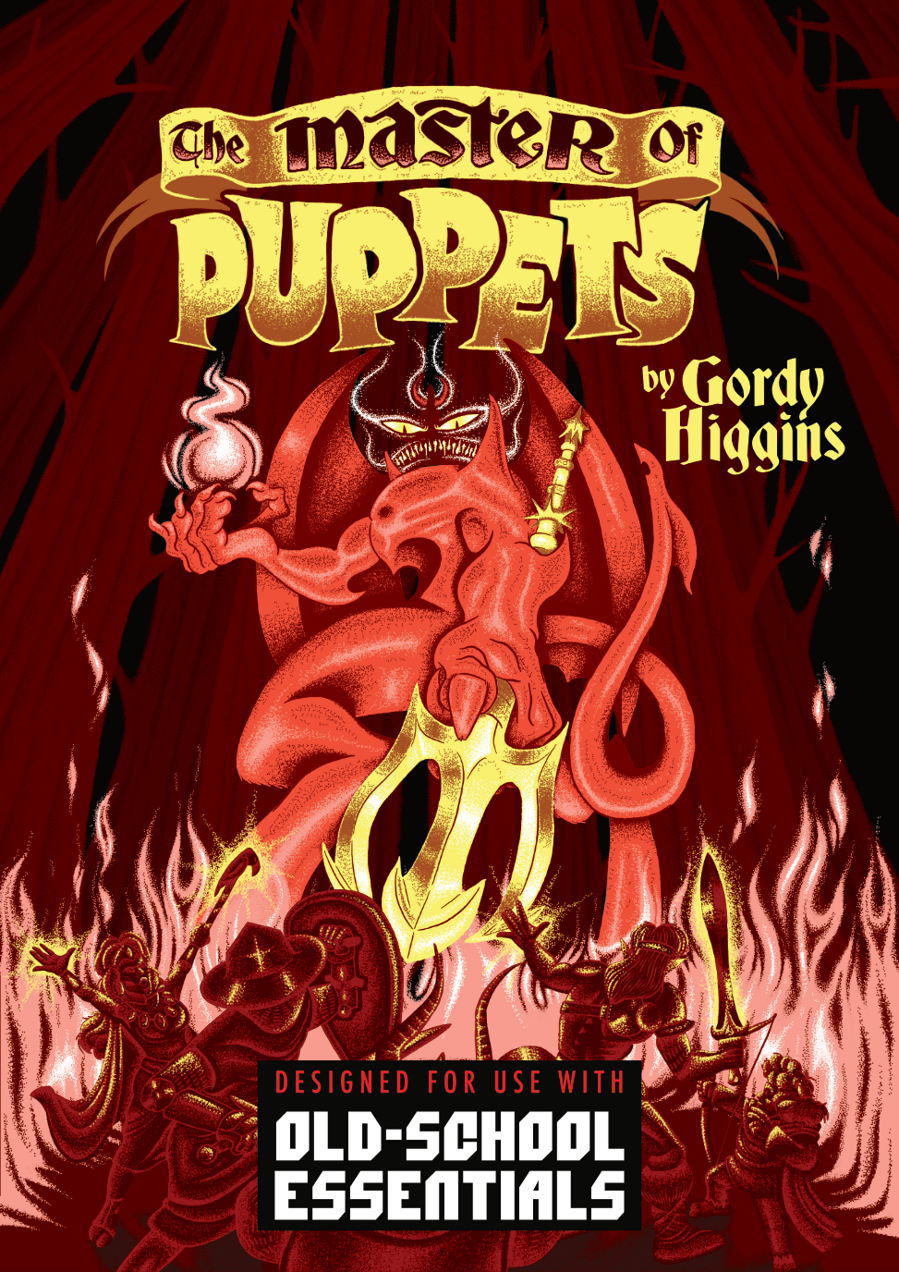
Ok, so, as I’m describing what’s going on I’m going to have to ask you put aside certain feelings you have. Like, when I say “toymaster” or “puppets.” I know we’ve all been indoctrinated to expect certain things from the use of those themes. I promise this one isn’t like those others. Also, I suspect that the cover art might be a bit offputting. The designer is also the artist, so, hey, sorry man! I think the interior art is fine but the cover, along with the title “master of puppets” both sort of lean in to some tonal and historical implications that we are ALL bad people for having but which are true nonetheless.
Let’s think of a dark forest fairy tale vibe, maybe with a touch of farce in it, similar to Gone Fishin. And there’s a lot going on in this place. The Whispering Woods are a kind of dark forest/mirkwood stand in. All ancient and old and dark and foreboding with rumors of ancient battles and demons. And that the woods will whisper to you. There are woodcutters in the forest, who were once a kind of border guard keeping an eye on the woods but over time are perhaps a little financially focused. Especially since their funding was cut. Funding? Yes, the elves used to fund them. Let’s think a more Fey-like elf than a Tolkein-elf. ANyway, the border guards get their funding cut and now the mission has degenerated. Why does it need border guards it’s a literal demon forest, the trees are demons. Some old elf king defeated an invading demon army long ago and turned them all to trees. His magic axe, along with his bloody handprint, is embedded in a tree stump in the middle of the woods. Also, the trees can’t be cut down. Let’s think a super strong ironwood. In to this comes the Toymaker, who lives in the woods and makes wooden dolls. Expensive wooden dolls. That everyone just loves to get for their rich ass trust fund kids, like some fairy tale stanley cup. Yeah, he figured out a way to cut down the trees and makes dolls from them and lets the border force sell the remaining wood. Also the dolls whisper things, an attempt by the toymaker to embed his little chukies in to the nobility in order to influence them and gain power because, yeah, the demon from the tree is now in the doll, kind of, bound by the doll clothes. A couple of the dolls get loose and the toymaker goes looking for them, only to get killed by some werewolves in the forest. Werewolves that are turning the border guards and whose curse starts from a different fey-elf that was kicked out of elflandia, is 143 in line for the throne, and now wants to take over the wood and thinks that a perfect way to start that is kicking everyone out starting with the border guards. I think I just wrote a page on that shit? And theres more people/groups running around in there. A slightly different framing of the toymaker would have hit better, but it all kind of makes sense in an evil consequences kind of way and is not as “pretext” as the length of description might otherwise imply. These are just things following from others naturally, if pushed just a little.
The hooks are the usual lame hired/dream shit, but the first one reads “A local Count wants the doll he ordered for his daughter’s birthday, but the Toymaker failed to make his delivery last week.” This one, I think, could have been pushed more and be the center of the adventure, much the way Gone Fishin was. A little expansion, a little more farce. And it’s gonna fit in well with people you meet in the forest, cavalier mercenaries who are sent by THEIR patrons to get toys for THEIR kids. A little push here in the writing, the absurdity, a tinge of evil, future chukie foreshadowing, insane offers, this would have lent a nice opening vibe that would frame the rest of the adventure instead of having just some genero stuff.
There are a decent number of NPC’s in this. They are well organized with wants, needs, knows, offers to the party, along with short little descriptions like “Wild red hair. Always shouts, unable to speak at a reasonable volume” or “A nude, 2’ tall, crudely made wooden puppet. Exclaims ‘oh boy!’ frequently.” Perfect little nudges for the DM. You can talk to a lot of people and things, including a termite queen who can be particularly useful in a forest full of evil wooden chuckies. Not everyone is friendly, and a lot of the situations are tense and almost all can lead to some combat, but the talky talky option is there for a smartie partie. Think of the cavalier mercenaries, as an example of talking and fighting.
Magic items are decent. “Royal Ceremonial Sword – +2 Elven Glass Blade, with gold leaf details. Used in knighting ceremonies. On a critical hit (19-20) it shatters, doing maximum damage. Repairs itself in 1d6 turns” and “Thief’s Lantern – Emits an area of light only visible to the wielder, and others that touch them.” These are nice little examples. Interesting effects to be sure. Useful, fun, unusual. They FEEL magical, especially the lantern.
The entries start with a little overview that could be a read-aloud (In fucking italics! Don’t do that!) with certain words underlined and bolded (I’d do one or the other, not both) and those bolded/underlined words are then followed up with in their own sections with more details. A Sentence or two for each keeps them each to scan and run. Descriptions are not winning awards but are still pretty good. “A large open-cut marble quarry. Filling with water from a spring on the northern cliff face. A dull glow emanates from the loudly bubbling depths. Red handprints cover a nearby marble boulder. “ I don’t like “large”, but, not a bad little description and it hints at many things to follow up an examination on.
There is A LOT to get in to trouble with in this, mostly from the party fucking around. Not in a Museum Tour kind of way but just the party doing normal shit. The locations can be fantastic, like a buried titanic statue you enter through a mouth, filled with stac/tags inside. Some of the wanderers seem rough, like 2d6 werewolves, but, hey, it’s OSR. You’re going to be doing a lot of freeing people, questioning them, and so on to get information you need to find the workshop, itself a twenty room dungeon. All without getting screwed over by the captives and/or people you meet along the way. Can you, having discovered termites, put together that this is an excellent resource to take advantage of in a wood themed adventure? If so, the designer was ready for you. Or, you can just stab them. How shall you navigate the mercenary knights? “Contract knights, mounted on warhorses. Equipped with expensive weapons and armour. Annoyed they couldn’t just pay someone beneath them to fulfill their quest “ Overemployment has always been a thing man.
This is $10.50 at DriveThru. The preview is four pages, showing rooms keys. Great preview.
https://www.drivethrurpg.com/en/product/569545/the-master-of-puppets?1892600
Categories: Tabletop Gaming Blogs
OSR Commentary With X13 Crown Of Ancient Glory by Stephen Bourne For Old School Campaigns
X13: Crown of Ancient Glory (1987), written by Stephen Bourne for TSR’s Classic Dungeons & Dragons (BECMI) line, stands out as one of the most structurally expansive modules of the Expert series. Billed as a transitional Expert/Companion adventure for level 7–10 characters, it moves away from simple dungeon crawling into a sweeping, multi-act political drama. When examining Crown Needleshttp://www.blogger.com/profile/11243274667834930867noreply@blogger.com0
Categories: Tabletop Gaming Blogs
Dead Wizards Design Log 03
Almost all my game designs include some form of "meta currency". Luck points. I got the idea originally from the TSR AD&D adventure module CB1: Conan Unchained. In that module, David "Zeb" Cook gives us a cool luck mechanic invented for the adventure to help mitigate the disparate outcomes of a typical AD&D game vs. what you see on the big screen (the module cover is literally a photo of Arnold in the Conan movie). In other words, Conan does amazing feats that are difficult to simulate if you're just playing the game straight.
Cook's idea was simple. Each PC has a set number of Luck Points that only the DM knows. You as a player have no idea who many points you have. Here's a screenshot of the text.

I actually adore this. I've tried to use it a couple of times in one-shots with mixed results. Players need to embrace the idea and you gotta remind them to use it or they just keep playing normally.
Anyway, for Dead Wizards, there is Sand. Sand is the meta currency. Players know how much they have and they can spend it to auto-succeed in tasks or to take over narrative control of the game for a very short time (kinda like The Pool).
The auto-succeed is called a Sand Storm. The idea is the Judge rolls a secret d6 to see how many actions you can get away with. You start describing your actions. You stop when you feel like it, but once you exceed the number of actions rolled by the Judge... you're run out of luck. If you exceed it, your excess action not only fails but it fails in a terrible way. So it's a gamble.
Categories: Tabletop Gaming Blogs
OSR NPC's - Rocambole For The Victorious Rpg & The Red Room's Belle Epoque Rpg
Created by Pierre Alexis Ponson du Terrail in 1857, Rocambole is one of the most pivotal figures in French pulp fiction. He holds a unique place in literary history: starting as a ruthless, mercenary villain, his immense popularity led his creator to resurrect and reform him into the ultimate proto-superhero—a brooding, brilliant master of disguise who uses the tactics of the underworld to Needleshttp://www.blogger.com/profile/11243274667834930867noreply@blogger.com0
Categories: Tabletop Gaming Blogs
A d100 Abomination and Undead Sword & Sorcery Random Encounter Table for Castles & Crusades rpg
Here is a complete d100 Random Encounter Table designed specifically for Castles & Crusades (Siege Engine system). It blends classic undead, horrifying flesh-warped abominations, and atmospheric, non-combat encounters to keep your players on edge. This blog post picks right up from A d100 Kull era Atlantian Artifacts table for Castles & Crusades rpg Campaign Set in Kull's Needleshttp://www.blogger.com/profile/11243274667834930867noreply@blogger.com0
Categories: Tabletop Gaming Blogs
OSR NPC's - Fantômas For The Victorious Rpg & The Red Room's Belle Epoque Rpg
Created in 1911 by French writers Marcel Allain and Pierre Souvestre, Fantômas is the ultimate arch-fiend of the pre-World War I era. Cold, calculating, and completely sociopathic, he is a master of disguise, high-society intrigue, and elaborate, theatrical murder. Unlike classic gentleman thieves (like Arsène Lupin), Fantômas has no code of honor: he slaughters innocents, betrays partners,Needleshttp://www.blogger.com/profile/11243274667834930867noreply@blogger.com0
Categories: Tabletop Gaming Blogs
OSR NPC's - The Royal Family of Crime For The Victorious Rpg & The Red Room's Belle Epoque Rpg
In Troll Lord Games’ Victorious, a superhero RPG set in the Gothic twilight of the late 19th/early 20th century, the Royal Family of Crime transitions from their 1944 comic roots into a perfect gang of "SuperMankind" outlaws terrorizing the gaslit streets of London or New York.Because Victorious uses a modified version of the SIEGE Needleshttp://www.blogger.com/profile/11243274667834930867noreply@blogger.com0
Categories: Tabletop Gaming Blogs
The Hidden Citadel
By ND Hobbies, Ulises Martinez, Mauricio Rosel
ND Hobbies
1e
Levels 7-9
ND Hobbies
1e
Levels 7-9
In the majestic dwarven capital of Runekaatara, the miners’ guild has made an unprecedented discovery. What are these dwarven miners hiding from the city authorities, and why are they desperately seeking the help of a group of adventurers who have just arrived in the capital? In The Hidden Citadel, adventurers will embark on a classic dungeon-crawling subterranean adventure to discover the secrets that an ancient citadel holds, the dangers that protect these secrets, and the reason why the citadel fell into disgrace in the first place
This 32 page adventure is a simple hack on a simple simple map with underpowered monsters and a weird tonal imbalance. Grist for the gristmill.
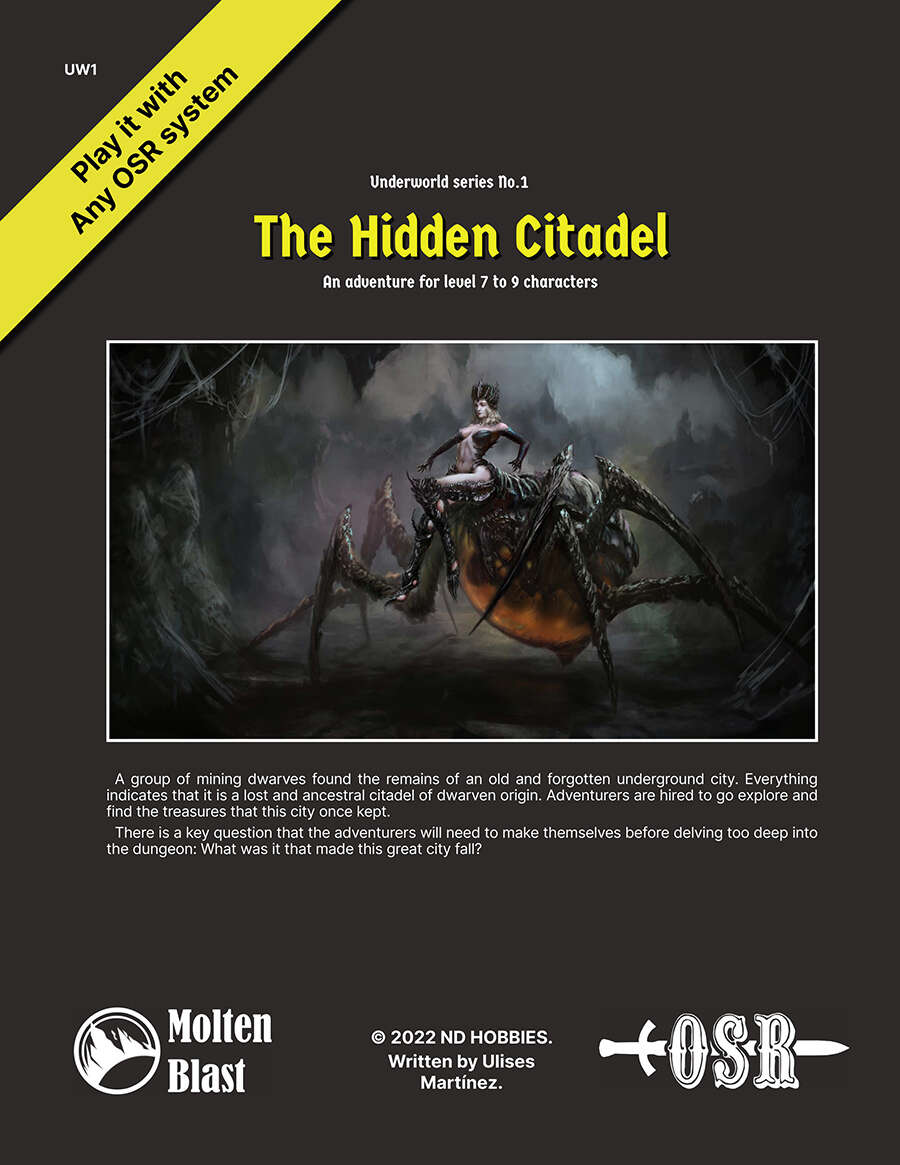
The cover blurb here says “A group of mining dwarves found the remains of an old and forgotten underground city. Everything indicates that it is a lost and ancestral citadel of dwarven origin.” So, of course the heads of the dwarf mining guild, in the dwarf capitol city, looking for the dwarf ancestral citadel of dwarven origin, hires non-dwarves to go find it. Also, the dwarf ancestral capitol and origin is like six levels, each with, I don’t know, about six rooms? Anyway, we’re gonna forget about all of that and look at the rest of the adventure.
So you end up in dwarflandia and in the marketplace you overhear shit like “The governor doesn’t have to find out” “They say the pay is crazy” “It’s the discovery of the century, whoever goes there will be remembered forever” “What if Is there something down there?” and most importantly “They are in the Anvil tavern. Shall we venture?” This is from people in the market, all members of the miners guild, who beat the characters away from them. But, also, direct them to the Miners Guild inn if they need a place to stay. I do like the overheard snippets of conversation; it smacks of the in-voice rumor tables that I love that I think add a lot of color and framing for a DM to play off of. Arriving at the inn a dwarf, who turns out to be the guildmaster in disguise, drops a bag of gold in front of the party while passing through the room. If you return it to him then you’re honest and he wants you to go on the adventure. If you steal it then it shows daring and he wants you to go on the adventure. If you ignore it then a thief picks it up and runs over the parties table to get out, no doubt prompting the party to intervene, which shows the parties [something] and the guildmaster wants you to go on the adventure. Tell me again, is the illusion of choice a good thing or a bad thing in an adventure? I guess it’s just the hook. Hey, also, they only want 10% of the loot you find in the ancient dwarven capitol origin. For realisies. Anyway, we’re gonna forget about all of that and look at the rest of the adventure.
I’ve mentioned that the map levels are rather small. Five rooms on a level, six rooms on a level. One has like thirteen rooms, an anomaly. They are done in a faux-art style so you’ve got cracks in the stonework and so on. The end result is that it’s hard to make out doorways and other features that you need to run the adventure. What’s a portcullis? What’s a door? What’s an open doorway? Good luck to you. Level entry/exits are not the clearest, from the maps, but there is an “overview” map in the back that has all of the levels on it and has some lines showing stairs from one location going to entry on another floor, so, that helps. But, also, putting it on the single page maps would have been better. The text says things like “ Room 2 is locked behind a closed portcullis and only accessible through Room 1.” Uh … no? Yes? Technically? The adventure seems to do this a lot. In another place we’re told “To continue delving into the dungeon, the adventurers will have to open the titanium gates that block the way to the Great Stairs.” Uh. I’m level nine? So, I guess the meaning of the text is that ONE of the room two entries has a portcullis in front of it and the other entrance is just open, the one from room one. It’s a strange way of writing it though. I’m sure there are EASL issues here, which I generally give a wide allowance for, but I think in this case it’s something else. It’s something like a lack of acknowledgement that you can go through the portcullis? Or the gates to the stairs to level two? There are no additional details, like bend bars/lift gates, or spells or anything. Which I guess you don’t need, it’s just a weird phrasing. Over and over again. Anyway, we’re gonna forget about all of that and look at the rest of the adventure.
Looking at the enemies we’ve got a two hit die ooze. And a one hit die giant rat. ONE one hit die rat and ONE two hit die ooze. Eventually you get to fight like FIVE two hit die creatures. There’s a 4 hit die ghost. What’s the turning rules again? TWO three hit die orbs? There’s a gold golem. I guess he’s seven hit die. The boss is a twelver. I understand that we normally look at dungeon encounters that are tough, and give the “it’s OSR, run away” answer, but I’m not sure what we do in the opposite direction? There is the usual “doors slam shut’ stuff. Anyway, we’re gonna forget about all of that and look at the rest of the adventure.
Writing is dull. The usual padding. “This room has several armored corpses, which in the past were dwarven guards.” THIS ROOM HAS is all padding. And then we run in to the usual historical survey of what the room was. It’s dull, long, multi paragraph with little in the way of formatting to help scan and run the adventure. Interactivity is generally stabbing something or a trap or “pull the two levels on the level to unlock the door to the next level.” I mentioned a gold golem earlier. Here is the entirety of that room: “This room is filled with gold and valuables, as if the noble dwarves had put their riches here to protect them in desperation. If someone takes a coin, several of them take on a humanoid form and will turn into a gold golem that protects this treasure.. Upon death, the golem becomes 355 gold coins.” That’s it. Nothing more. What do you think filled with gold and valuables means? 355 gold coins? Does it seem weird to mention the 355? Everything is like this. Missing information. Dull writing. Lengthy writing that leads to nothing. Anyway, we’re gonna forget about all of that and look at the rest of the adventure.
And then the tone changes, in one place. “This room is full of bags and suitcases, all arranged in a pile. Inside the suitcases there are souvenirs, family portraits, letters, and books. Everything is mundane, but each object represents someone who died in this place.” Uh …. The next room has a bunch of people in it, skeletons, bodies. Children sitting on mothers laps. People huddled. With the marks of slit wrists where they all killed themselves. Jesus man! So, yeah, there’s an emotional impact there. The antechamber, with the luggage, clearly is culturally overloaded. A mass suicide scene would not have as much impact as a mass suicide scene with some hints beforehand to really foreshadow and bring home the horror. “And we looted it?!” It’s the Lareth principal, done right. But, also, Jesus man! Here I was just killing rats and oozes and stabbing shit and pulling levers and you dump this on the players? But, whatever, it was good design even if tonally it is out of place.
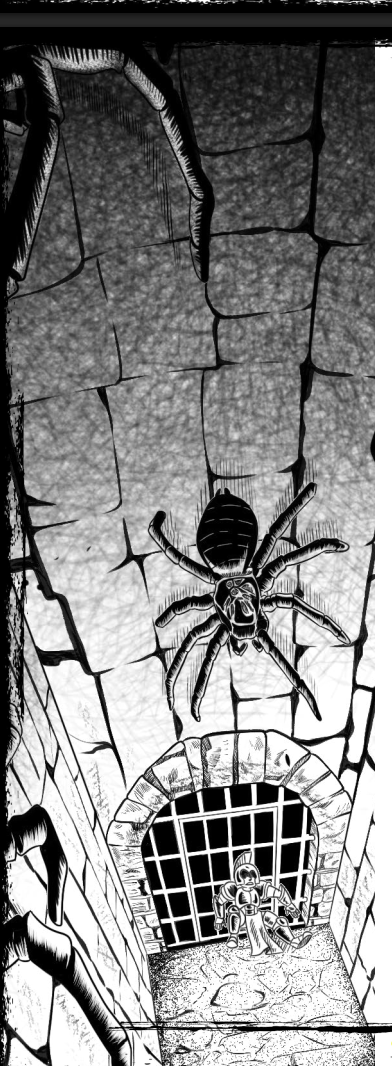
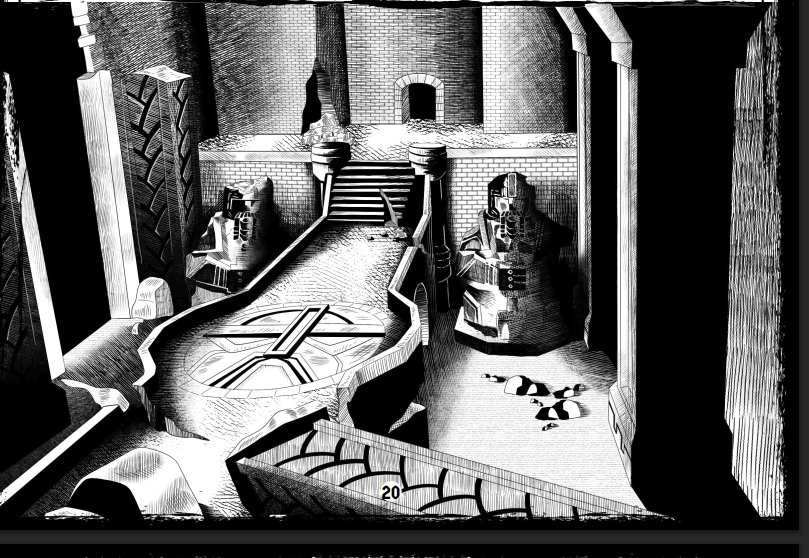
There are also a few decent art pieces in this. Good art, in an adventure,helps the DM run the adventure. It helps clarify a room, or sets the mood for them, helping them riff on it. It’s evocative. David Arcila and Diana Rex are credited. I don’t know which one it is but I like them for the purpose of inspiring the adventure. A nice barrier peaks vibe to it, that pulls you in. It’s not all the art, maybe four pieces or so, but those are good.
So, just kind of generic adventure for the most part. Nothing very stand out in the writing or the room interactivity, with a notable exception. I’m not overly upset by it, but it’s just another of the large number of marginally poor adventures that flood the market.
This is $5 at DriveThru. There’s no preview, but you do get to see some page layout on the product marketing page. It needs a real preview, that shows real rooms, so potential buyers can get a read on if they want to purchase it or not.
https://www.drivethrurpg.com/en/product/482182/hidden-citadel?1892600
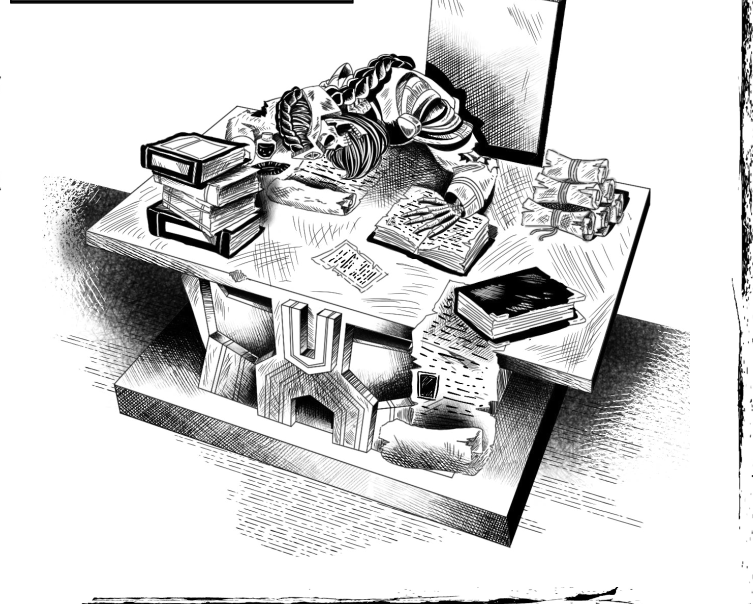
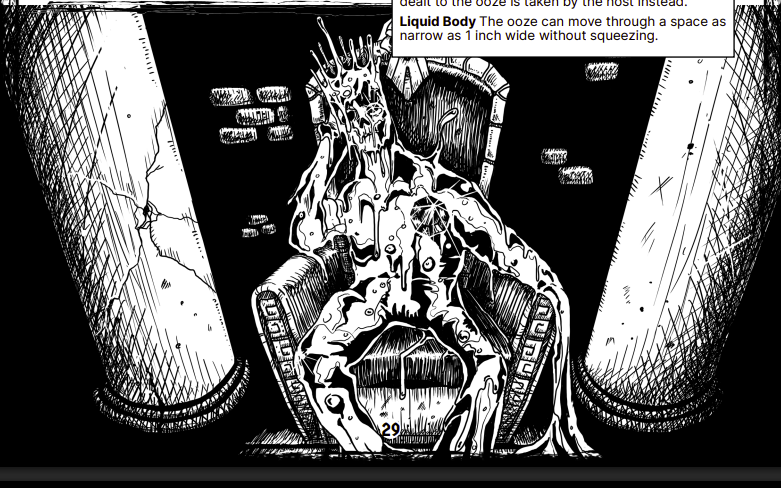
Categories: Tabletop Gaming Blogs
Elves and Insects

I've suggested (way back in 2012) slapping some antenna on elves and giving them some organic-looking armor--in other words, reskinning them as the 80s Sectaurs action figures. I think the relationship between the faerie and insects makes elves ripe for this twist. I liked the idea so much, I made the elf stand-in species the Ieldra in my Gnydrion science fantasy setting have more insect like with brood queens and instars.
Back to regular old elves, though, I think replacing the Tolkien-inspired nations/tribes (or "subraces" in older D&D) of elves with insect-themed groupings has a lot to recommend it. For one, that group of bad elves, the drow, already have that sort of relationship with spiders (yes, I know they are arachnids, not insects), so there would be a certain symmetry in it.
What particular insect type would depend on specifically how you envisioned them. Organized, social wood elves might be patterned after wasps or bees, but maybe they are solitary warrior badasses like Crow from Hawk the Slayer with more affinity for mantises?
I think the aloof gray elves would have the bushy antenna and pale complexions like some sort of moth, along with an ethereal strangeness. High elves might be bee-like (and matriarchal) or nimble warriors like dragonflies or damselflies.
I know that Adrian Tchaikovsky's Shadow of the Apt series has insect-themed races, so their might be some inspiration there, but I haven't read them to say. I know you could do a lot worse than checking out Bug Wars by Aaron and Asrar.
Categories: Comic Book Blogs, Tabletop Gaming Blogs
[BLOG] News on the March! Episode XVI.
This post continues the series of brief play reports I have been posting on Discord. This does not cover every single session (sometimes, recon and setup is what happens), but it covers our ongoing games.

20/04/2026 THISIUM
News from the doomed city of Thisium! After the raid on Castrum Rapax, the adventurers met their army up in the valley, and devised a daring, if stupid plan to march down to the gates and demand the orcs’ surrender while their previous blow was still hurting, and sending in a strike team to cause trouble from inside if the move failed. As they approached the castle, they heard the sounds of horns signalling messages, and saw a group of orcs ride towards the southern mines on swift mounts. There were many orcs on the parapets now, the whole fortress on full alert. As their main force with the legionaries of the Imperator, the cavalry and ragtag light footmen of Sir Egmont Mouseburg, and the crack team from Ramondo Montefeltro’s fighting school gathered below the parapets, a team slipped down the ravine to the back entrance. Finding it deserted, they entered quietly, and met four trolls, who were placed here to stand guard. This was a tough fight where Flea the bowman fell, but fire and magic weapons (including a sword +1/+3 vs. regenerating creatures) proved useful, and Varanthus the Legionary and two men recruited from former prisoners proved their mettle. Going up the stairs, they found that their trap had burned out the orcs’ oil reserves – but also that the gatehouse was well defended by several of them at the ready, with even more within earshot. Narvi came up with an odd plan: take the statue with the bucket on its head from the cellars, carry it upstairs, and remove its bucket before the orcs, hoping for it to animate like the jester in the dungeons. Meanwhile...
...before the gates, the army stood ready. Maglor and Don Arduino Spezzaferro stepped forth under the white flag of truce, and called on the orcs to surrender and give up the fortress, as they have killed their leader. An orc, apparently of rank, laughed at this pitiful scheme, and pointed out that two orc lords lived still, including Trogfult, directing the defences from the parapets. Maglor raised the scroll of the most terrible doom, promising to use it if the orcs did not agree to settle their differences in single combat. Trogfult wavered, thought, but the repute of the four dooms were such, and the previous raid damaging enough that he did not risk a fifth and – barely – failed his morale check. Spezzaferro was chosen as the company’s champion, while on the other side, out came a nasty, large troll named Gront. Terms were negotiated: if the orcs’ champion won, the humans would leave the mountains, and Trogfult promised they would meet yet on the field of battle at Thisium. If Spezzafero did, the orcs would forfeit the castle and abandon their campaign against the doomed city. To sweeten the deal, Maglor suggested they redirect their assembled army against the island-republic of Arak Brannia. The two sides agreed. Trogfult called, „Let the WAR begin!” while Ramondo Montefeltro slipped a small black object to Spezzaferro, won on an adventure to the alien world of distant Fomalhaut. Gront the troll came forward, and Spezzaferro swept it with the fiery beam of the device. In the melee, the troll was ferocious, and wore down the fighting-man with its cunning attacks. Spezzaferro feigned to retreat, and blasted the troll’s head clear off with a precisely aimed shot. A great clamour rose among the ranks, and the duel was won! While evil, Trogfult followed a god whose ethics were not dissimilar to the Empire’s, and held to his word.
He agreed that the orcs would demobilise in the Thisium area, and give up Castrum Rapax to the united human forces, departing with their accumulated treasure. Troghalt, the third orc lord overseeing the mines, would join the campaign against Arak Brannia. Impressed by their bravery, Trogfult called on the men to join the orcish cause as worthy auxiliaries, and share in the rewards of the campaign – to which they, for now, gave a friendly but noncommittal answer. Among themselves, they discussed that the Imperator, Sir Egmont, and Ramondo would occupy the mountain areas, and make sure there was no further mischief against the truce on either side while the orcs passed through the countryside and lifted the siege of Thisium. The company would head back to town to prepare for tackling the final doom. Ramondo gifted the laser to Spezzaferro, although no more than three charges were left in it – but this was a worthy reward to the man who turned back an army! So passed the Doom from the Mountains. At this time, the city had 13 days left...
(Expected mass battle or a terrible massacre, got something entirely different. Damn, D&D is great for this stuff!)
Mapping the Passages
26/04/2026
FOMALHAUT

News from Fomalhaut! Four adventurers (Vornak Wolf-Slayer, a Fighter-Thief and an of-world mutant calling himself a „half-orc”; Yorick the Magic-User; Harald the Northman Fighter; and Hiva Sati, a Cleric of demon-slaying Karttekeza) and ten followers sought treasure and adventure in the ruins of Vermath, a ruined city destroyed for its inhabitants’ blasphemies. News of strange pilgrims heading to the place, and raids by horsemen calling themselves the Riders of Doom had spread to the city-state of Glourm, and it was clear some old evil was stirring among the desolate walls. The adventurers hired a river barge and Bargemaster Mulk, who transported them up the Xemartes. They passed burned and plundered villages over the journey, finding evidence of attacks from both the land and water, but no living survivors. One night, locusts swarmed over them, but they were stopped by a wind wall spell. Finally nearing the ruins, they parted from the boatmen, agreeing to meet a few days hence, and proceeded on foot through open plains. Vermath’s ruins were mostly fallen walls, but they spotted a central pyramid, a ruined aqueduct, some intact buildings on the southern side, and, to the north, a watchtower with sentries. As they came closer, a swarm of pterodactyls attacked. Yorick blasted them with a fireball, killing many and driving away the rest, but alerting the city’s inhabitants to their presence. Yet luck was on their side: just close by, among the massive walls of an abandoned bathhouse, they discovered a recently removed stone disk revealing a hole opening to a great subterranean cistern, and a rope ladder leading down. The cistern was dry, and recent supplies were on the bottom – they would have company underground! After descending, they found a higher ledge on the cistern’s W side, leading to passages. Vornak hung back, listening to a group of riders who came to investigate. They spoke of their leader, Almorik Tharg, and of seeking the intruders.
They went westwards, and pursued a stray torchlight through the passages, then down some stairs to a lower level, hoping to catch a few „tongues”, but lost the trail. The passages were ancient and dry, although they came upon a large columned hall with a hot pool, apparently being used as a bathhouse by the new inhabitants. To the west, a chamber led to a balustrade overlooking a vast, dark cavern stretching below them. Descending a bit with ropes, they learned they were on parapets above a great portico structure, with a frieze on the pediment depicting chariots sacking cities below the sign of a comet. Exploring more of their current level, they came before a monstrous stone idol sitting in a massive throne, which called on them to come closer and learn their fate – he was a servant of the mighty Priest-King Pnakosek! Alas, Harald unwisely let it slip they were not of the faith, and at that, the enraged statue attacked. In the fracas, Hiva Sati’s follower Vashid (Fighter 3) was struck down and killed as they withdrew. They investigated passages to the S, finding stairs up and hearing a distant howl of pain from some direction. Vornak snuck upstairs, discovering a guarded prison; then returned to his companions. They went W, finding another guarded room complex – the city’s mysterious pilgrims were apparently well established here. For now, they withdrew. To the S, they found crypts leading to side-tombs guarding the disciples of Pnakosek, and an impenetrable force-wall between two sphinxes of black quartz. This, too, they avoided for the time being. Eastwards, a small room held a pedestal with an immovable, glowing crystal ball and frescoes of magi levitating similar orbs. Following a mysterious inscription, Harald placed abundant treasure on the pedestal, which sunk into the floor with the loot, fireworks erupted from the crystal (which remained immobile in the air), but nothing more happened. Was it a scam or an unsolved puzzle? They could not tell.
Eastwards, the passages led to a decaying hall of once-splendid mosaics crumbling from damp walls. Large crystals glittered on the opposite wall, and Vornak was almost buried under an avalanche of loose stone as he tried to pry them out. They also found a hidden chamber holding chests of rotting scrolls carrying disease – but deciphering the lettering on a scroll on a wall mosaic gave Yorick +1 WIS! Following the tunnels further, they found a chamber with a dark, bottomless pit. A powerful but badly tortured barbarian was tied to a T-shaped cross on the surrounding ledge. Freeing and healing the near-death figure, Aderbaal, they learned that he was also a treasure-seeker, ambushed in the ruins and brought here to be tormented by Velasca, a woman as beautiful as she was cruel! Swearing revenge, Aderbaal joined the company, outfitted with Vashid’s equipment. From here, they returned near the stairs they entered this level from, and went north. In a plundered crypt, they found a secret door in a sarcophagus, leading to natural caverns. In a grotto, Vornak was ambushed by carrion crawlers, but was saved by his companions. The grotto held a dais overgrown with fungi; scraping them off, they could pry off the beaten golden plating underneath – decorated with barbarous ornaments depicting evil rites. In a hidden cavity, they also found an unknown wand. Venturing deeper into the caverns, they discovered a chamber with a deep pit descending into a lower level. Northwards, they found more caverns dotted with a dozen varieties of fungi, but were attacked by a strange mist-creature. Once again, the *wind wall* spell proved useful to hold it at bay while they escaped. They searched some more of the cave system, and collected valuable crystals from inside a giant geode, but it was time to end the foray: thus, they returned to the surface, beholding dusk falling over the ruins. They left Vermath to make camp in the wasteland, plotting a new expedition...
Alcazar
29/04/2026–01/05/2026
OSR CAMP 2026

News from OSR Camp 2026, in the Land of Bears! I played in three games, although there were many more, from White Box Cyclopedia to Don’t Give Up the Ship (a pitched naval battle lasting late into the night), and much drink and oven-made meat.
Four expeditions were conducted under the streets of shadowy Glourm, seeking entrance to the tomb of Alcazar, whose sarcophagus can be seen through a grille-covered pit in a quiet plaza. Gaining entrance through a cistern, the adventurers descended downwards until they found a chamber of strange one-eyed gargoyles. Opening a secret door, they fought a massive spider with skeletal limbs and a hypnotic gaze, which proved incredibly dangerous, but a magic shield was found. Bandits, following them from the surface, came to take their hard-won loot, but killing some drove them off. Retreating and resting, the group returned with a bunch of followers. Dodsword the Northman was soon taken over by his Chaotic magic sword after a quarrel, and spent the expedition as a bloodthirsty maniac. Continuing from the spider chamber, they entered an old bath, defeating a frog-crocodile hybrid. A secret door in the back led to caverns with stairs leading down to a purple mausoleum belonging to the Haruspex-Women. Opening the stone portals sealed with lead and wax, the mummified, goat-legged women awoke, but Xena the sexy Amazon Thief used the unholy symbol of Derceto given to her by the mansonesque Imperial Magic-User, Calaban, and commanded them to surrender their gold-headed maces and gemstones. Closing the mausoleum, they found a secret door in the further reaches of the cavern, stairs leading up to a chamber with an ancient brass pyramidion. Stepping into the surrounding circle of light, Dua the sexy cultist chick and Kryton the servant were struck down by magic missiles. The company retreated to the surface to rest and recover.
Deeper Below the City...
The third
expedition was led by Xena the sexy Amazon Thief, as the others were
resting. With newly gathered companions, they investigated the upper passages.
Behind a new door, they found an underground storeroom, where a blind old slave
Velothen was preparing opium-laced spice mixtures for the Spheroid Fish,
an upscale restaurant. They gave him some food and took the pricy spices and
drugs. They now went downwards, beyond the mausoleum cavern. A side-passage led
to a chamber with architextural displays made by Diogoras the Architect.
The strange, modernist eccentric told them a few things of the dungeons, and
also spoke of the ancient past, which was the future, and how, in the future,
this past would be brought back as Men returned to the stars once more, He also
offered a reward for the trade secrets of his dead rival, Palbras, buried
somewhere in the area. Departing, they went deeper still, climbing down into a
cavern with a well. Diving down, they stole a pearl from a giant clam, but were
attacked by a random group of 4 cockatrices. Miraculously, at least 5 saves vs.
stone were made, and the monsters defeated. One was taken and sold at the night
market. As they were running low, they made their way back to the surface, and
splurged at the Spheroid Fish before their next adventure. The fourth
expedition was a large and powerful group assembled from the people of the
first three, plus new hires. Returning to the well chamber, they went W,
entering a multi-level burial vault through a broken wall. Drawn by their loud
speech, the spectre of the undead King Yadamnes appeared, and once they
angered him, drained Barnabas the Fighting-Man of two levels before they
fled. Choosing another way from the well, they emerged on the parapets of an
underground palace, whose halls led back to King Yadamnes, a direction they
chose not to investigate again. To the east, they went up stairs through plundered
burial chambers, and finally saw firelight.

Where Are We?Four muscular pinheads were roasting a goat below spiral stairs, and drinking wine. They ambushed and slew them. Following the stairs up, they entered a hall of giant columns, bisected by dark water. A skiff was on the other side, which they cleverly pulled towards them, and crossed in multiple groups, ultimately avoiding a ghoul lurking underwater. Stairs went further up. Through a trapdoor, they emerged in a small auditorium with an extinguished fire-cage, a wooden screen, and poles surmounted with silhouettes of various objects. In the adjacent room, they found cells with crazed prisoners raving about the „shadows on the wall” and seeing „the shapes and the Ideals”. They freed them, but they did not understand the concept of freedom, remaining in the comfort of their dark prison. The way up was an impeccably built spiral staircase, going past an entrance to the tomb of Palbras the Architect. Snooping around a bit higher, they saw this was a way up to the cellar of a nearby tavern, and even found a wine cellar. Alcazar’s tomb must have been nearby. They decided to see if the way was through the architect’s tomb. Opening the front door triggered a crossbow trap, which killed Hauler the porter. A trick stairway turned into a slide, depositing them between four columns, which turned into column monsters, and killed Theseus and Leon Ydas the hoplites. They looted the tomb, or what seemed like it, retrieving a wealth in false gemstones and gilded lead. Yet Alcazar’s tomb was also elusive, despite its direction being pinpointed with locate object. They dug through a collapse and turned a gang of ghouls with the symbol of Fedafuce, God of Commerce (“Begone, in the name of Profit!”) They climbed a vertical shaft, entering a chamber of columns with several small, many-eyed frog-gargoyles. The things animated, and were barely kept back with a web while they escaped through a secret door to a set of spiral stairs.

The stairs led up to a tenement building, and down to a secret door, and then... the storeroom where poor Velothen Was still grinding spice mixtures. Girding their loins, they returned to the gargoyle chamber, attacking them with fire and weapons, and eventually driving them fleeing with a blood-curdling battle cry. They descended the shaft, and followed a passage they thought unfamiliar, opening a wooden door... finding themselves once again in Velothen’s storeroom. The passages were hopelessly confused. Wounded, low on Hp and out of spells, they returned to the exit in the cistern. While Alcazar was long dead in his sepulchre, so near yet so far, it was as if they could hear him laughing in the distance.
(The last session, a late-night game stretching way beyond midnight, was a rather surreal experience. Everyone was dead tired at the last day of the con, and the players confused directions, hallucinated details that weren’t there, resulting in a properly weird fantasy conclusion. Maybe it was the opium-laced spice. While Alcazar was very close indeed, and they triangulated his tomb-chamber really well, his treasures remained undiscovered.)

03/05/2026 FOMALHAUT
News from Fomalhaut! A new expedition descended beneath Diomira to crack open the secrets of the mysterious underground tower. They approached the massive, echoing chamber, the metal cylinder in the centre rising from unfathomable depths. They crossed a metal bridge to the southern double gates, then, using the mirror pattern, entered. They stepped into a hall of black marble, a translucent dark stele on its opposite side holding complex patterns suspended within. Ion examined them carefully, failing to notice the weird, fuliginous creature creeping above him, then dropping on him like a supple rug, and paralysing him with its cilia. The shadow-thing’s resonant moan stunned some others, but it was eventually defeated. Moving to the NE, they found another similar hall by the eastern exit. Impossibly white marble statues of distinguished men and women stood here, holding instruments of various types. The central one, a heroically proportioned bearded man, was identified as SOLON, the legendary founder figure of Fomalhaut, who took men to the stars in lost millennia. One statue was missing entirely from its place, identified as DORAXES.
They moved on, marvelling at a dark chamber with moving star systems on its domed ceiling, then found a different columned hall with geometric patterns swirling on its ceiling, and abstract geometric forms being displayed in large cubes which seemed like amber-coloured display cases. One was the hiding place of a starfish-like entity they found and defeated with ease, after which it was slowly sucked into itself, disappearing into nilspace. A side-chamber here hid devices of an unknown purpose, which they avoided. To the NE, a door led to a humid garden, its benches and tables overgrown with vegetation. Water cascaded into a small pool with yellow flowers – and Lilith identified them at once as a yellow musk creeper! Indeed, 8 zombies had to be fought, and the garden burned with flaming oil.
The zombified citizens of Diomira had some jewellery, but the price was found down the pool – a diamond-edged dagger of incredible keenness! Although there were two spiral stairs down they have discovered, they meticulously investigated the last room, filled with dusty display cases holding odd artefacts – disks of unknown material, avant-garde statuettes, papyri, a badly dissolved skeleton, and some alien-looking vases that somehow made their skin crawl. Here, the diamond dagger proved invaluable in freeing the valuable pieces and stowing them in the portable hole. Nevertheless, their activities attracted six mechanical men, metallic guardians attacking without fear and mercy. Kleombrotos had his helmet split, but eventually, the guardians were defeated.
They descended to the next level, into a marble hall shrouded in unnatural darkness. Abstract, translucent statues stood by the walls, but they spotted the two shadow-creatures lurking among them, and killed them with relative ease, followed by two more mechanical men arriving in. One of the statues in the hall had glowing nodules within it, and seeing that it was made of dark glass, it was cut up with the diamond dagger, retrieving valuable gemstones. A side-room held a muscular, faceless statue bearing a metal box on its shoulder. Kallimedon climbed up, discovering it had a hinged lid, and contained silver coinage. Further experimentation revealed it rendered whatever was placed in as weightless – despite its size (5’ edges), a valuable container. With these finds, they retreated... to find 5 mechanical men barring their way in the garden. This fight was a brutal combat of attrition, where Kleombrotos lost another helmet, multiple characters were close to death, and all their resources got depleted. Barely surviving, they dragged themselves out of the tower, and left the tunnels while they could – returning exhausted to their hideout in Diomira’s back street...
Last Call at the Isle of Horrors

11/05/2026 THISIUM
News from the coastal city of Thisium! The Amazon Prime, the swift-sailed magical ship stolen from the amazons, sailed out of Thisium, heading towards the eastern edge of the surrounding archipelago, and the Isle of Horrors. Here was a magical flask craved by the wizard Pantomorphus, who might help them with the Doom from the Seas. Approaching the volcano-topped island which had claimed so many of them, they climbed a sequence of antique stairs to the plateau beneath the volcanic cone. This time, there were signs of seismic activity, fumes above the cone, and ominous rumbles. They avoided the odd altar for now, and climbed a treacherous path to the top. Alas, the quakes increased, and they were caught in a rockslide. Varanthus the legionary (Fighting-Man 1) was lost along with his magical spear, and so were Giovanni the halberdier, Cosimo the rider, and Belvedere the war dog. The survivors proceeded, seeing lava in the crater, and a broken obelisk erected in the name of Teuthranes, a name entirely unfamiliar. Finding nothing more, they descended back to the altar. The split stone had no flask on it, but Maglor, figuring it might be in the crack, used phantasmal hand to rummage around. As the hand touched the stone, a great spirit of smoke and fire appeared, offering a bargain: capture the life of a mighty wizard in his enchanted flask within the week, and receive a boon and the location of a great treasure – but be turned to stone if it was not done within time! This offer aligned well with the company’s plans, and the bargain was struck.
They sailed through deep blue seas to the Isle of the Black Dogs, and rested on the ship. The following day, a smaller delegation was sent to the tower of Pantomorphus to work a trick. Pantomorphus emerged on his balcony with a retinue of his disciples and berserker bodyguards, and Maglor showed him the flask, inquiring of the Sea Doom in exchange for the enchanted item. Pantomorphus gleefully explained that there was no saving Thisium: on the appointed day, gasses from the dormant volcano of the Isle of the Black Dogs would flood the archipelago and coastlands with their maddening poison, and all not on higher ground would perish. (Indeed, wise Pantomorphus built his tower for this very purpose.) He theorised that a sufficiently powerful storm could blow the gas towards the open seas, but the weather was too calm this season, and only powers such as the distant elemental lords could produce something of this sort – but alas, not in time! Disregarding the adventurers excitedly talking among themselves, the wizard gloated of the hated city’s doom which had spurned and exiled him. Maglor offered up the flask, and with the phantasmal hand, floated it to the wizard’s balcony, carefully unstoppering it. With a shriek, Pantomorphus was sucked inside, and Maglor yanked back the restoppered flask, throwing it into the grip of Eriberto Barrella. They escaped under a barrage of spells, arrows, and maledictions, but, having a running start, shook off their pursuers.

Boarding the Amazon Prime, they sailed to the nearby isle with a firm plan. Here rose the villa of the musician Falumfano, another Thisian exile. Above the balustrades and terraces rose the trumpets, turrets and drums of his mighty musical machine. Falumfano received them gladly, offering wine and appetisers, and inquiring of the northern campaign. He was less hostile to Thisium than Pantomorphus, and was presented with a plan: his musical machine, which could sink ships, could generate a windstorm strong enough to blow off the volcanic poison on the appointed day. To appeal to his self-interest, the adventurers also noted that his villa was not on high ground, and he would die like the citizens of Thisium. After more incentives, Falumfano gave his assent, and hinted that once this was all done, the Lyceum might be refounded somewhere outside the city.
Biding adieu to the disgraced genius, already working on retuning his colossal machine, they sailed to the Isle of Horrors. The tremors were stronger, and the cone belched clouds of sparks and dark smoke. They hurried up to the plateau, and presented the flask to the spirit of the altar. The dark entity took the flask containing the hapless magic-user, and made good on the deal, raising one ability score of all present adventurers to 18. In glowing patterns of light, he also drew a treasure map, identifying a site in the Cyclopean Hills, right in the middle of a circle formed by ancient roads, and marked by a lone cedar. The company departed quickly, and sailed away through the coast, just as the volcano erupted, and the Isle of Horrors was destroyed in the fiery inferno.
Their ship laid anchor at the Wailwind, on the coast of the Bay of Pearls. News of large-scale orcish troop movements circulated among the patrons, while excited rumours interpreted the volcanic eruption as a sign of Thisium’s impending doom, not knowing that the last such doom had just been averted. The following day, the company bought horses, and headed into the Cyclopean Hills. They stopped at Villa Cardone, informing Ottilia Cardone of the good news about the orcish war and the Doom from the Sea – indeed, her hard-won manor could now grow and flourish with new tenants and skilled armsmen. They rode on, borrowing excavation tools, and eventually found the lone cedar among the hills. The tree was ancient, a thousand years or more old. Digging revealed a vault, then a buried secret room, filled with abundant treasure – 40,000 in both gold and silver! The saddlebags of the pack animals were filled to capacity, and they rode back to Villa Cardone in triumph, earning the hurrahs of the assembled armsmen.
There was not much else to be done. On Day 90, the originally projected date of Thisium’s destruction, they returned to a city gripped in the fears of the impending doom. When the Isle of Horrors was destroyed, there had been an earthquake, destroying the proud towers and cupolas of the noble palaces, and many other buildings also: but the city lived, and would live! News of the dooms’ passing spread like wildfire, to general cheer and celebration. A week of parades, plays, music and partying ensued, until Day 97, when the fate of the city would be decided. The scheme with Falumfano’s machine worked, and as the massive, long-dormant volcano on the Isle of the Black Dogs exhaled its poisonous clouds, they were blown away in a safe northern direction. Those who were close heard a rich symphony, composed by Falumfano, driving the clouds.
The assembled adventurers were hailed as the saviours of Thisium and heroes worthy of the highest honours. Wreaths of flowers were hung around their necks, and crowns of laurels, in the tradition of the old Empire, were placed on their heads. ..... They were floating among clouds, no longer in the midst of the adoring Thisians. Two splendidly armoured, familiar figures stood before them: Sir Drago, whom they had met in the Forest of Verrilli, and Kadorto, whom they had encountered on the Isle of Daphne di Leonti. They congratulated the adventurers also for their worthy deeds, on behalf of their own masters, distant but ever-watching. There was only a small problem... Indeed, the gods had decided thatwhile they were once heroes, they were now potential troublemakers, and very powerful ones at that. Therefore, it was time to say farewell, and never see each other again.
Once again, they were somewhere else. They stood upon a desolate seacoast, not unlike the one where they have gone through so many adventures, with white rocks, hardy scrubs, and wine-dark waves. Yet something was off. The sun, shining above, was larger and perhaps of a different, more ominous hue. There was something in the minor details that was subtly different. The adventurers looked around their new environment, considering their next move...
THUS ENDED THE FOUR DOOMS of THISIUM
Beyond Thisium
The City-Machine


10/06/2026 FOMALHAUT
News from Fomalhaut! Returning to their occupied apartment wounded and tired, the company laid down to rest, but they were soon interrupted. The clamour of the crowd outside in the side-street grew and grew. A woman screamed something about the Anti-Prophet’s agents. Peering outside, careful not to be seen, Kallimedon saw surging multitudes looking for them with murder in their eyes. They quickly packed up and fled up to the rooftops to make their escape. The now familiar crossbow bolts came from behind them and the opposing building’s crumbling balustrades, the city’s brainwashed assassins closing in for the kill. Half of these were slain and two left paralysed as they escaped north, descending into an abandoned backyard as the crowds streamed inside the house to kill whoever they could, and burn the building. But the way was also blocked northwards, with a large, hysterical mob assembling before one of Diomira’s omnipresent black mirrors. They hid in a different building while these people moved south to participate in the arson, then, sneaking slowly through multiple buildings to avoid detection, they shook off the heat and went north to hide out in the Eternal Gardens. The place was mostly deserted in the evening, even the few picknickers heading home. They slept rough in one of the pavilions, narrowly escaping detection by a group of prowling Underdwellers sallying out to the city to capture live prey. “The enemy of my enemy”, someone remarked.
Before next sunrise, somewhat rested and healed, they descended into the tunnels to find the Uttermost Masters in the underground tower. The structure stood where it did, in the middle of the bottomless pit. The city’s assassins were there too, attacking from ambush with their crossbows. Aenara barely survived with the help of her shield before the cloaked men were swept away by a fireball that filled the echoing, cavernous hall with its detonation. But at last, they were in. Having explored the first level before, they went deeper, finding themselves in a hall with its walls hung with large dark mirrors. Kleombrotos stepped forward, through a barely perceptible red light beam, making two metal hemispheres descend from the ceiling, blasting them with laser fire before they were disabled. Bocephus studied the mirrors, and was almost overcome by intense feelings of despair and sadness, if not for his mind-shielding amulet. Another one transmitted feelings of joy and togetherness. Were these the mirrors to manipulate those in the city outside? They found minute controls in the mirrors’ rims, but could not make sense of their mode of operation.
A nearby room held tanks radiating terrible cold, and a side-room a golden disk engraved with strange patterns, a glass capsule holding green filaments they took for some form of projectile, and a liquid-filled machine. Another one was more interesting. It was unnaturally dark, barely illuminated by their light sources, except strange red lights in the ceiling. Metal trays on tables held glass sheets with depictions of skeletons and ghostly entities. To the south, a high-ceilinged, octagonal room way yet stranger. Above, in the light of a rotating spiral of light, dead bodies spun slowly in their strangely cut clothes and glittering jewellery, fine-featured and healthy-looking. Lilith tried to pull one closer with rope and hook, but was pulled upwards herself, and felt herself quickly fading before getting pulled back. Noticing a small dome on the ceiling, they started blasting at it, destroying two bodies with their valuables before hitting and destroying it. The bodies fell to the ground at once, and a secret door slid open. Four mechanical men came out, one with a laser sword in its hands that cut through metal as it did flesh. Defeating the guardians with relative ease, they gathered several valuables, the sword included.
Claiming this bounty, they investigated one more room on this level, but quickly retreated from a storeroom with corroded tanks overgrown with fungi that seemed to try and reach into their mind. They descended yet deeper into the tower, finding themselves in a sequence of passages. More mechanical men were defeated, and a room of strange mirrors with a purple glow avoided. However, the other way led to a hall decked with plates of iridescent metal, and lined with rows of crystalline display cases holding curious oddities. At the end, a stele blinked with several tiny lights. Diomira’s agents were here, attacking as the company split up, but this time, fate was on the intruders’ side, and the seven men were killed with ease. Examining the stele, they saw a myriad pinpoints of light in the vague form of a spiralling wheel within its smoke-crystal mass. Powerful twin gates lay closed to the east. The items in the display cases ranged from strange fossils to alien and unsettling glassware to a primitive bowl of beaten gold, an ominously glinting metal eye, a mechanical hand with a ring on it, a fine-looking belt, and more. A knockspell opened them along with the gates, and the treasures were collected. Aenara, who had lost her hand in a much earlier adventure, tried the mechanical hand, and found it the equivalent of a strong magical weapon.
A heavy door to the west opened into a lead-lined room with a pedestal holding an enormous gemstone, and glowing slimes crawling towards them – this was closed very, very quickly. The gates to the east opened into a chamber even more fantastic. Polished dark walls held massive black mirrors, blinking with an endless succession of glyphs and numerals. Hexagonal crystal columns rose from the centre, flashing with pulsing light. And there were bodies – human remains, charred and broken, still holding weapons and wearing bearded masks. They had found the Uttermost Masters they were seeking after all.
Ion stepped inside invisibly to investigate, and noticed three open secret doors, no longer hiding the massive, motionless war machines waiting behind them. „YOUR PREDECESSORS ARE DEAD. ARE YOU AFRAID?” The calm, even voice came from everywhere at once. The City-Machine was speaking to them directly. Surprised, Ion nevertheless spoke quickly by noting that they were seeking the dead men, who were also the enemies of the city, and inquired what had been known of them. The voice responded: they came to seize control of the Polis, which could not be allowed; furthermore, a different group was destroyed in a different section of the undercity, near a Uranomatafora gateway. Ion continued by suggesting that they were bringing news of disorder up in the city. The answer was calm as before: Diomira was in an optimal state for a population of 132,300 with respect to balancing comfort and internal tensions. When queried about potential mirror overexposure, the City-Machine suggested that there was a strong preference from the Polis average for comfort and easy living. Concerning long-term risks, it noted that downwards population trends due to environmental breakdown would reach a level of „ZERO – ZERO” in 621 years by current projections. The company withdrew a little to deliberate. Was the machine irrevocably hostile? Could it be readjusted? Would it keep sending assassins? Could it be destroyed, and with what consequences? They returned before its presence, making a case that they posed no threat to its mission, and requesting to retrieve the Uttermost Masters’ remains, and investigate the signs of their common enemies. To this, the City-Machine assented, imposing a grace period of 48 hours to depart Diomira as long as they caused no public disorder. The bodies they removed from the chamber held a mysterious letter in a scroll case – a clue, if faint. They left the tower, and climbed back to the surface to behold a new morning above the great city.

17/05/2026 FOMALHAUT
News from Fomalhaut! Using the 48-hour grace period offered by Diomira’s ARKHOCENTRON system, the company descended to the underground to find the other team of the Uttermost Masters, wiped out in a reconnaissance mission. They proceeded beyond the underground tower, and found themselves in a large, empty chamber with a bottomless abyss on one side, and a bearded statue pointing towards it on the other, an inscription reading “THE OVERSEERS SEE BELOW”. That’s when two inky monstrosities dropped down from the ceiling, stunning half the company with their weird sonic moaning, and paralysing Aenara and Meurios Andromakhos with their cilia. The monsters were defeated, but the two companions took time to snap out of it.
In the mean time, they tried the strange anti-gravity belt they found during the previous adventure, descending into the dark pit to explore what might be hidden there. A good 160’ below, they found two large metal spheres hovering midair, with inset doors that would not open. Bocephus descended, and cast his knockspell to throw them open. The first sphere was hollow, containing seats arranged in a circular manner, ancient skeletons in decayed garments, and a few odd items. Investigating the other sphere, he was glad he was not standing near its door when the spell went off: the interior was filled with yellow mould! Leaving it well alone, Pausanias was called on to descend by rope, as he was at least cursorily familiar with ancient technologies as a man of Mung. He surmised that the spheres were vehicles of some sort, and found controls too. Among the skeletons, he found a backpack which projected oddly shifting, chaotic images when worn, as well as a metal canister stamped with a simplified human face. He operated the controls, and after some experimentation, lifted the sphere and landed it next to the statue. Now that the paralysis had worn off too, they could move on.
In the passages to the south, they saw a group of floating amoeba-like creatures, but could pass them by without a confrontation. The way led into a chamber of ancient machinery crackling with lightning bolts, still working and humming under Diomira. Sticking to the walls, they moved south, ending up in a massive hall. Wide, collapsed stairs led up from an antechamber, while to the west was a great circular pit ringed by a ledge and massive columns. A broken bridge led to an opposing platform, where stood a large metal frame in the shape of an inverted trapezoid – the gateway they were seeking!
Proceeding along the ledge, they found the corpses of the Uttermost Masters as well, lying as decaying corpses. But the place was not unguarded. From the abyss rose fist-sized eyes, many-many of them, moving in a massive swarm! A fireball from Bocephus swept away two thirds, but the eyes also started blasting, firing off magic missiles, hypnotic rays, and life-draining rays as well. One by one, they were whittled down, but the fight was a difficult one. Finally, they could examine the bodies, finding two swords that looked nice (Ion drew one, and found it both Chaotic and cursed), three potions, a stoppered jug that looked fancy, and some sort of weirdly notched metal bit. There was nothing more to find, and they didn’t want to test the gateway for now. Returning the way towards the exit, they explored some more: they found a domed room with a pool rich with algae and plant life, and another chamber with a pit. Here, corpses slumbered in crystal-topped sarcophagi, wearing golden „Σ” amulets. From a gas tank above descended a swirling pink mist, trying to engulf them. They ran, but were outpaced, so it came to a battle wherein a lucky laser shot by Ion shattered the solid core hidden in the vaporous thing. Collecting the amulets, they returned to the surface to consider their future course of action...
The Temple Massacre
23/05/2026
FOMALHAUT

News from Fomalhaut! Glory and death in the wastes of the Batrakasz, in the accursed city of Vermath, destroyed for its ancient blasphemies! After their previous expedition, the company camped along the river, and saw dark dreams in the night, of distant stars speaking to them in unintelligible tongues. Aderbaal the barbarian, whom they rescued last time from the underpassages, screamed, and only Rolo the Northman could calm him. Moreover, Harald the Northman started showing signs of the slimy doom disease, acquired while searching through junk.
The next morning, they met new travellers heading to the ruins: Diogenes, a Thief; and Bloody Tusk, the renowned barbarian, followed by his Amazon companion, Iphigenia. Joining forces, they returned to the ruins. Alert to the possibility the Servants of the Seal may be watching the entrance they descended through last time, they investigated other sections of the city. To the north, they spotted caveman slaves driven by grim, whip-wielding nomad riders to dig in the desolation. They descended into a ruin howling with winds, defeating a pack of desert ghouls and claiming a magic bow. Near the city’s ruined agora, they found intact but magically sealed buildings (although one showing frequent traffic). Eventually, they discovered a ruined little pyramid at the end of the processional from the city’s oddly built black pyramid. Here, in wreckage and rubble, they found a stone-choked entrance they could excavate to uncover a deep natural cleft. They used a rope ladder and ropes to descend 70’, being swarmed by moaning spirits who, however, could do them no harm. They found the source of these soon enough on the bottom: a great bone-pit, filled with countless skeletons. Here they found an expensive amulet depicting the Seal – a hand superimposed with a crescent moon and a star. Eastwards, stairs ascended to a secret door. They threw it open, and that was a big mistake to do so carelessly.
The door opened into a great columned hall lit by flaming braziers. Several cultists, armed men, lieutenants and magi, the Servants of the Seal, worshipped at the foot of a great green marble hand grasping a large golden crescent; the grossly fat high priest Kushamesh, preaching from a pulpit behind a line of four evil priests. Kushamesh commanded the Servants to slay the unbelievers, and hurled a lightning bolt through the door opening, zigzagging to catch everyone coming in. Thus died Wolfgang and Rolo, Northman warriors, and Yorick (Imperial Magic-User 5), who was just about to cast his fireball. In the following massacre, an evil priest killed Titan the war dog, and the lieutenants killed Valdin and Guzman, Yorick’s elite bodyguards. Kushamesh escaped through a secret door, wounded and poisoned from missile fire, and the bulk of worshippers fled as Diogenes held up the freshly found Seal amulet, proclaiming himself the true holder of the faith!
Harald (Northman Fighter 5), who had lost consciousness in the battle, was for now carried back to the bone-pit, to be pulled up after dealing with Kushamesh. But in their haste, his companions forgot about the evil spirits, which swarmed the stalwart hero after he was left alone in the dark, and smothered him. Proceeding beyond the secret door, they found Kushamesh’s quarters and treasures, and a laboratory where lived Trog, his simple-minded caveman servant, who obeyed the Seal amulet at once. Kushamesh had been here, drinking his healing potions (some miscibility issues there!) and making his escape. They pursued him north through a secret passage, then through wider halls leading to a columned chamber lit by a bonfire. Servants of the Seal lay here in waiting, and were killed, but the trail was lost with multiple ways out, and stairs down. They bode Trog to come with them to carry the high priest’s gold, and contrived to lift it to the surface through the cleft with lots of rope.
Retreating through the ruins, they were beset by a great swarm of pterodactyls near Vermath’s ruined library, too many to fight off at once in their wounded state. Vornak Wolf-Slayer (half-orc Fighter-Thief) fled into the library interior, coming face to face with the stone golem guarding it, which crumpled him like a rag doll. The other relinquished their treasure and fled, their escape covered by the heroic Aderbaal (Fighter 10), the barbarian they had rescued half-dead from Vermath’s dark pits, who perished in this fight along with poor Trog the caveman. Hours later, they crept back, sneaking from ruin to ruin to recover the chest of treasures, and did so successfully.
They returned to the great river Xemartes, and waited for Bargemaster Mulk’s craft to pick them up and return to the city of Glourm. Here, they squandered a lot of their loot, but also purchased magic items, a treasure map promising an enchanted sword once held by Prince Philosir, and recruited new companions: Yusuf, a nomad Fighter, and Purple Rien, a Magic-User. Returning to Vermath by barge, they decided on a quick nighttime raid to the city. Descending through the cleft into the bone-pit, they listened at the secret door, and heard voices. Now well prepared, they slew them by surprise. Purple Rien used a reduce spell to shrink the golden crescent in the green hand-idol’s grasp to manageable size, which was transported up and hidden at their camp. Next dawn, they set out again, this time descending through the open bathhouse entrance. This was done carelessly. While descending, evilly laughing nomads appeared above them, cutting the rope ladders, and sending them on the floor of the great cistern. They were trapped unless they found a different exit, or – as Purple Rien remarked – they made good care to keep him alive so he could levitate up with a rope.
They continued exploring rooms to the south, at one point hearing distant conversation. In a storeroom, they discovered a small idol on a pedestal. Reaching for it, the idol disappeared, a portcullis fell to block the exit, and an invisible gong sounded with a deep boom. Heroically, Yusuf lifted the gate, and they could prepare for the onslaught of the fanatical Servants of the Seal, whom they put to the sword. To the west, the passages led to a long, torchlit corridor lined with cell doors, at the end of which four evil-looking nomads were playing dice in the company of a brutish jailer. A lightning bolt killed two nomads, as well as Orastes, an NPC thief waiting for rescue. The jailer, while tough, was killed, and the prisoners freed. They were local wretches for the most part, captured for sacrifice by the Riders of Doom. Among them was Eioneus, a fat merchant suffering from terrible stomach cramps (“He must have swallowed his valuables”, Yusuf suggested, in which he was not mistaken – he later gifted them a respectably-sized gemstone); Gleies, a thief shaken by what he has seen in this city; and Thaumastus, a blacksmith from Pentastadion who promised them a future reward. West of the jail, they found that the passages connected to the temple they had despoiled – now dark and empty. In the bone-pit, Purple Rien levitated up with ropes, allowing the adventurers with the rescued prisoners to make their escape. Thus they returned again to Glourm with the golden crescent and other treasures, to plan for further adventures that would once again bring them to Vermath the accursed, where death stalked in labyrinthine passages, and dark wills dreamed far below the wrecked surface!
(This play report was composed to the tunes of Basil Poledouris.)
Categories: Tabletop Gaming Blogs
An Interview with Ramfis Marquez, Clinician, Martial Artist, Author, and Cosplayer
Today’s interview was a little different. I had the pleasure of interviewing a good friend, Ramfis. He may not be a TTRPG player, but he is gaming-adjacent, and his background in psychology, martial arts, and more brings a unique perspective to our hobby.
Also, as part of my 40 Years a Gamer retrospective, he is directly involved. I met Ramfis, as he mentions in his reply to the first answer, when he worked in Comics at Plaza Las Americas. He sold me many comics and games while working there. I wanted to get Rifts when it came out, and they let me know that they did not have it, but I could get it at Role Playing Emporium, where I met Samuel “Sammy” Maldonado and got to know a larger game community in Puerto Rico.
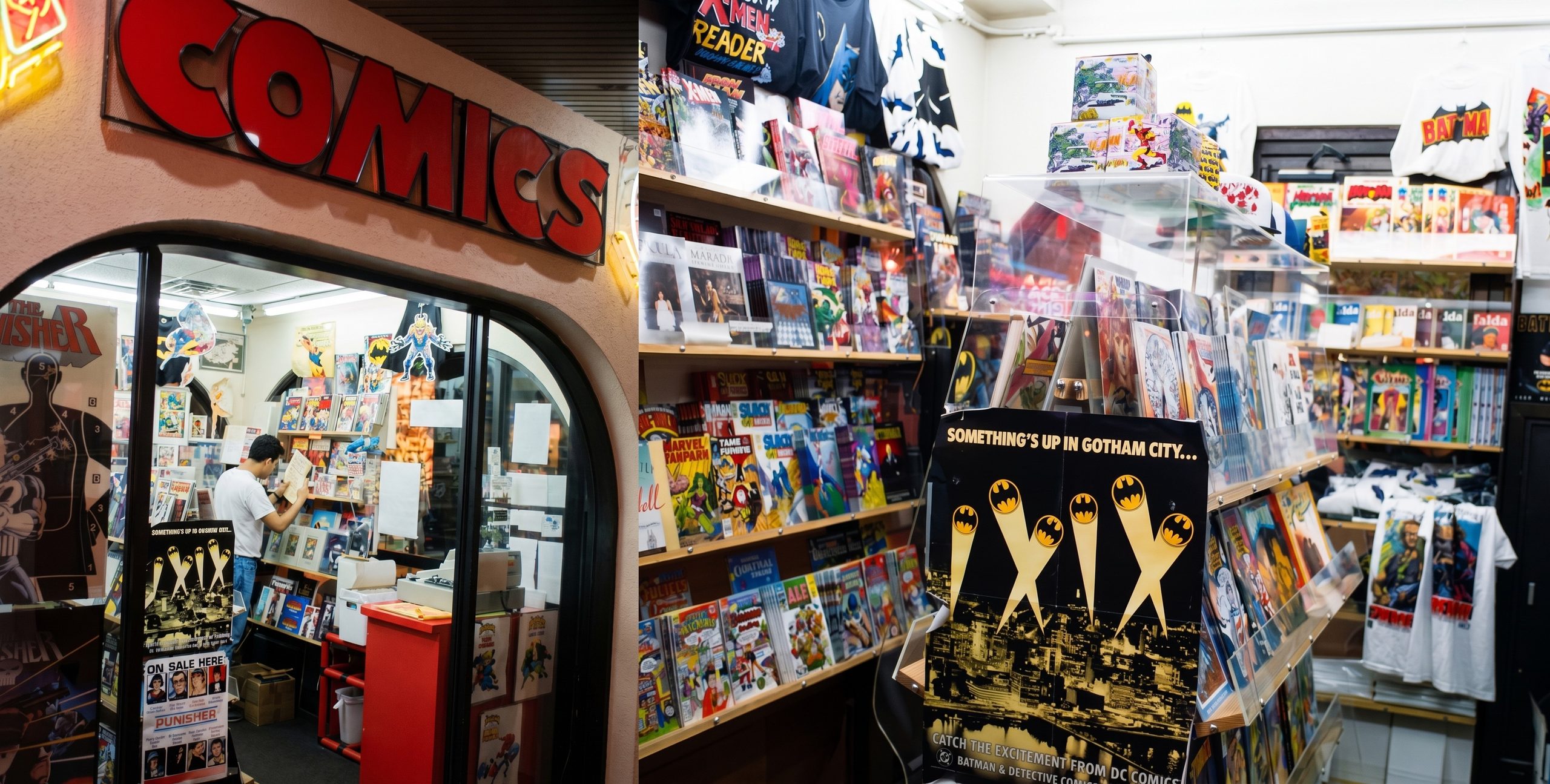
Comics, the store, was an integral part of my gaming journey, and Ramfis was right there. We are contemporaries, and beyond being acquaintances at a local comic store, we became fast friends. We would hang out in our early 20s and remain in touch after he left the island.
When Hurricane Maria happened, Ramfis was an important support, personally and in his efforts to help and create awareness of the disaster on the island.
Ramfis has been a friend for over thirty years, and it is always a pleasure to talk to him. I am happy to share this interview so you can all get to know him better as well.
Introduce yourself! Who are you, and what do you do in the world of cosplay and Renaissance Fairs?
My name is Dr. Ramfis L. Marquez. Professionally, I am a psychotherapist, educator, and martial arts instructor. Still, outside of my clinical work, I have spent more than four decades immersed in martial arts, historical combat studies, historical reenactment, and living history. My primary martial art is Sin Moo Hapkido, in which I currently hold an 8th Dan rank, as well as a 3rd Dan rank in traditional Korean swordsmanship. Over the years, I have also trained in Tae Kwon Do, Aikido, Judo, traditional Jujitsu, and a variety of Japanese and European fencing arts.

Martial arts have given me not only technical skills but also a deep appreciation for history, philosophy, and storytelling. I have also been a lifelong nerd, science-fiction fan, and historical fantasy enthusiast. Long before cosplay became mainstream, I was fascinated by knights, samurai, mythology, fantasy literature, Star Wars, military history, and the worlds that emerge when imagination and history intersect. People of our generation would remember me as one of the attendants at Comics in Plaza Las Américas.

In the world of cosplay and Renaissance Fairs, I am primarily known for portraying medieval Templar knights, crusaders, and historical warriors. At comic conventions, however, I enjoy mixing things up with Mandalorian and Jedi-inspired portrayals. I love combining historically inspired armor, martial arts principles, theatrical storytelling, and combat choreography to bring these characters to life. One of my favorite aspects of the hobby is creating and performing choreographed combat demonstrations that blend historical techniques, safety, and entertainment. For me, it is about preserving history while making it accessible, educational, and exciting for modern audiences.
Beyond cosplay and martial arts, I am also an author. Writing has become another creative outlet through which I explore history, mythology, and human nature. For more than a decade, I have been developing Hanzo, an alternate-history fantasy series set in a world where the Tokugawa Shogunate never truly fell and evolved into a technologically advanced imperial power. The story blends espionage, military action, political intrigue, historical revisionism, and martial arts adventure.
Over the past two years, I have also been developing a historical medieval fantasy series titled Friday of Ash and Steel. The story follows a secret order of warrior-monks navigating faith, war, politics, and supernatural mysteries during a dark medieval world inspired by the Crusades and European history. It explores themes of sacrifice, duty, brotherhood, and the tension between spiritual conviction and human ambition.
Most recently, I began work on a third project called Boat Unit Omega. Unlike my previous works, it is set in a contemporary military environment inspired by the anti-drug trafficking campaigns of the Caribbean and Latin America during the 1990s. While grounded in historical military operations, it incorporates elements of science fiction, horror, mystery, and the supernatural. Think of it as part military thriller, part naval special warfare story, and part cosmic mystery.
What draws me to all these pursuits—cosplay, martial arts, historical combat, and writing—is the opportunity to step into another world and invite others to join me there. Whether through armor, storytelling, combat demonstrations, or fiction, I enjoy helping people experience a sense of wonder, adventure, and connection to something larger than themselves.
How would you describe your art or creative endeavors when designing combat choreography, making props, or putting together your cosplays?
I see cosplay and combat choreography as forms of storytelling. Every piece of armor, weapon, costume, prop, and movement should communicate who a character is and what world they inhabit. The visual details matter because they help create immersion and emotional connection.
When I design combat sequences, I draw from decades of martial arts experience while adapting movements to fit historical themes and audience expectations. The challenge is creating something that appears authentic and dangerous while remaining completely safe for everyone involved. A successful combat demonstration should tell a story even if the audience never hears a single word.
When building armor or assembling costumes, I enjoy blending historical inspiration with practical functionality. I am not always striving for museum-level accuracy. Sometimes the goal is to capture the spirit, symbolism, and emotional impact of a historical figure while still creating something visually dramatic and memorable.
In many ways, my writing influences my cosplay, and my cosplay influences my writing. Whether I am creating a knight for a Renaissance Fair, a Templar character for a photo shoot, or a fictional warrior for one of my novels, I am ultimately asking the same question: “Who is this person, and what story are they trying to tell?” At its core, my creative process is immersion. I want people to feel as though they are witnessing a knight, crusader, samurai, warrior monk, or spacefaring hero step out of history—or out of a book—and into the real world, if only for a few moments.
With all this background in armor, history, and combat, do you participate, or have you ever participated in LARPing?
While I have not been deeply involved in formal LARP communities, many of the activities I enjoy share similarities with LARPing. Renaissance Fairs, historical reenactments, character portrayals, and combat demonstrations all involve stepping into another role and helping create an immersive experience.
I have tremendous respect for the creativity found within the LARP community. The combination of storytelling, costuming, world-building, improvisation, and performance is fascinating to me, and there is certainly a great deal of overlap with what I do.
From a clinical perspective, I also believe LARP offers meaningful mental health benefits. Research has increasingly suggested that role-playing activities can encourage creativity, social connection, emotional expression, problem-solving, confidence-building, and stress reduction. LARP provides participants with opportunities to explore different aspects of themselves in a safe and structured environment.
For many people, it can serve as a healthy outlet for imagination, self-expression, social interaction, and personal growth. It allows individuals to experiment with identity, practice interpersonal skills, and engage in collaborative storytelling while having fun. Perhaps most importantly, LARP creates communities. In a world where many people struggle with loneliness and social isolation, spaces that encourage meaningful human connection have tremendous value.
I know you don’t actively play TTRPGs, but from your perspective, what do you know about them?
What I find most interesting about tabletop role-playing games is their ability to combine storytelling, creativity, strategy, and social interaction. They allow people to create narratives collaboratively rather than consume them. From an outsider’s perspective, I see TTRPGs as a continuation of humanity’s oldest traditions: storytelling around a campfire, mythology, hero tales, and collective imagination.
As a clinician, I also see tremendous value in tabletop gaming communities. For individuals struggling with anxiety, depression, social isolation, or difficulties forming social connections, tabletop games can provide a welcoming environment where relationships develop naturally around shared interests and cooperative storytelling.
Over the years, I have had the opportunity to observe these communities firsthand and have consistently been impressed by how welcoming and inclusive they are. Neurodivergent individuals, socially anxious individuals, and people who may feel like outsiders often find acceptance and belonging within these groups. A wonderful example is my friends at Comic and Gaming in Bristow, Virginia. Time and time again, I have watched them welcome newcomers, curious observers, and first-time players with enthusiasm, patience, and kindness. Communities like that represent the very best aspects of the hobby.
From a mental health perspective, tabletop role-playing games can foster communication skills, teamwork, creativity, emotional regulation, problem-solving, perspective-taking, empathy, and social confidence. While they are certainly entertainment, I believe they can also be meaningful tools for personal growth and human connection.
Would you like to try playing TTRPG sometime? What theme or type of story would catch your attention?
Absolutely. Given my interests, I would naturally gravitate toward historical fantasy, military campaigns, crusader-era adventures, samurai stories, alternate histories, and darker fantasy settings inspired by real historical periods. In many ways, the stories I write would probably make excellent campaign settings.
A game inspired by Friday of Ash and Steel could focus on warrior-monks investigating supernatural threats while navigating medieval politics and religious conflict. A Hanzo campaign could explore espionage, martial arts intrigue, and geopolitical struggles in an alternate Japanese empire. A Boat Unit Omega campaign could blend military operations, special warfare, mystery, and cosmic horror.
I am particularly drawn to stories that explore leadership, honor, sacrifice, loyalty, and moral dilemmas. As both a martial artist and a mental health professional, I am fascinated by what happens inside a person’s mind when they are forced to make difficult choices under pressure.
What projects, combat events, or upcoming fairs are you currently working on?
At the moment, I continue developing historical combat demonstrations and refining several knight and crusader portrayals for future Renaissance Fair appearances and historical-themed events. I am also deeply immersed in my writing projects. Friday of Ash and Steel has been a passion project for over a decade and continues to evolve. Hanzo has occupied much of my creative attention over the last two years. More recently, Boat Unit Omega has become an exciting new endeavor that allows me to explore military history, science fiction, horror, and mystery through a very different lens.
In addition, I continue teaching martial arts through seminars and workshops, which often influence the way I approach choreography, movement, character development, and storytelling. Like many enthusiasts, I am always searching for new ways to bring together history, martial arts, mythology, performance, and imagination.
Where can people see your choreography, your cosplays, and learn more about what you do?
People can usually find my work through social media, Renaissance Fair appearances, martial arts seminars, conventions, and community events. Much of what I create is shared through photographs, videos, creative writing, and collaborations with fellow enthusiasts in the cosplay, martial arts, historical reenactment, and fantasy communities.
I regularly share armor builds, knight portrayals, combat demonstrations, martial arts content, historical discussions, and behind-the-scenes glimpses into my writing projects and creative process. For me, one of the greatest joys is connecting with others who share a passion for history, storytelling, craftsmanship, and imagination.
Any closing thoughts?
One of the things I love most about cosplay, Renaissance Fairs, tabletop gaming, LARP, martial arts, historical reenactment, and creative writing is that they bring people together. These hobbies allow us to celebrate history, craftsmanship, imagination, storytelling, and human creativity regardless of our backgrounds.
In many ways, these communities provide something that has become increasingly rare in modern life: a sense of belonging. They allow people to be creative, explore different aspects of themselves, and connect with others through shared passions. Whether someone is wearing handcrafted armor, rolling dice around a gaming table, participating in a LARP event, writing fantasy novels, practicing stage combat, or simply attending a fair as a spectator, they are contributing to a community built around imagination and human connection.
As both a martial artist and a clinician, I believe these communities offer something truly valuable. They remind us that play, storytelling, creativity, and fellowship are not merely forms of entertainment—they are deeply human experiences that help us build resilience, friendships, meaning, and purpose. At the end of the day, that sense of connection and wonder is what keeps me coming back.

Thank you, my friend, for your availability to answer the questions and for your insight.
Here are some of Ramfis’ social media links:
JungShinSinMooHapkido: https://www.instagram.com/jung_shin_sinmoohapkido
Hanzo: Blade of the Eternal Shogunate: https://www.facebook.com/people/Hanzo-Blade-of-the-Eternal-Shogunate/61577683421189/
Hap-Ki- 道 – The Science of Self Defense: https://www.facebook.com/groups/SoWonSulHapkido
I wish you continued success and enjoyment of all your endeavors.
Categories: Tabletop Gaming Blogs
Conquest heats up for summer fun!
Para Bellum Wargames, the developer and publisher of the fantasy Regimental Miniature Wargame “Conquest: The Last Argument of Kings” and updated Skirmish system “Conquest: First Blood” releases a raft of new items!
GenCon will be the debut of three items in booth 3031!
The new Yoroni Oni Monstrous Cavalry brings a new look to the tables. These are cavalry units, sized in a new way that dominates the play. The perfect fusion of honor, power and ruthless force, an Oni Kishin bears different ritual weapons: unleashing the brutal impact of them with their ceremonial Yari as Raiu, the Storm; or as Kiba, Fang Horsemen, bearing an Odachi, symbolizing their hunger for challenge and glory. Demon brutes on equally ferocious “horses” makes this a must have item for Yoroni players. Look for the Raiu and Kishin on July 30th at GenCon and your favorite FLGS.
Balancing the Yoroni brutality with beauty, we bring forth the Sorcerer Kings Marid Artisan Series. Two different models, the Apsara and Shaytan, are stunning models for painting or playing. These are the expansion into the Water forces, enigmatic and reclusive, they are, however, not immune to the powers and efforts of the Water Sorcerers in enlisting their aid. When they arrive onto the battlefield, they seldom do so alone, suddenly appearing with their entire court to deal a decisive blow, enhanced by their spellcasting ability. This is an Artisan Series, which for Conquest indicates a resin model that has had exquisite sculpting, making the most of the full artistry that the original concept art launched. Available July 30th at GenCon and at FLGS worldwide.
And our GenCon Con Exclusive for summer fun is “Traveling Gillbury”! Part of our Murderous Fish Gnome army, this maintains their irreverent looks and comes with a fun “MFG” scenario game for additional play value. Fans can also use any of these in any casual game as an alternate model just for fun! The Traveling Gillbury makes sure gamers are not alone anymore as they play in the dirty world of Ea and head for the end of the round! Available during GenCon only at Booth 3031, and our E-Shop for that week. And only for that week.
Videos and images are available here!
www.para-bellum.com www.facebook.com/ParaBellumWarGames
Categories: Tabletop Gaming Blogs
AudioRPG Announces Forgotten Chambers: Beyond the World’s Largest Dungeon
New Kickstarter expands the World’s Largest Dungeon with a 5E adventure, lay-flat battle map book, and professionally narrated audiobook.
World’s Largest RPGs and AudioRPG have announced Forgotten Chambers: Beyond the World’s Largest Dungeon, an upcoming Kickstarter campaign that continues the story of the World’s Largest Dungeon: 20th Anniversary Platinum Edition. Designed for 5E, the project sends adventurers beyond the walls of the dungeon to uncover isolated chambers containing extraplanar prisoners the celestials considered too dangerous to imprison alongside the rest.
Scattered across the world, these forgotten chambers hold exceptionally powerful captives, dangerous secrets, and legendary rewards. Forgotten Chambers expands the setting beyond the original megadungeon while introducing new adventures for Game Masters and players looking to continue exploring its world.
The campaign includes:
- A 48-page adventure book for 5E
- A 40-page lay-flat battle map book
- A professionally narrated audiobook produced by AudioRPG
- Hidden chambers scattered throughout the world, each containing an extraplanar prisoner considered too dangerous for the World’s Largest Dungeon
- The final opportunity to obtain campaign-limited World’s Largest Dungeon collector items at crowdfunding prices before the original books head to print
- A free Forgotten Chambers bookmark for everyone who signs up before launch and later pledges to the Kickstarter, with previous World’s Largest Dungeon backers receiving one as well
“No dungeon adventure is ever truly finished! Forgotten Chambers opens up whole new rooms for the World’s Largest Dungeon, where lurk the most terrible and diabolical traps and creatures, all with great new descriptions and maps to add to the WLD experience!” Tim Brown of World’s Largest RPGs and AudioRPG
About World’s Largest RPGsWorld’s Largest RPGs creates ambitious tabletop roleplaying game experiences that celebrate exploration, memorable adventures, and premium collector products. Following the success of the World’s Largest Dungeon: 20th Anniversary Platinum Edition, the company continues to expand its flagship setting with new adventures, accessories, and projects for the tabletop community.
About AudioRPGAudioRPG produces professionally narrated tabletop roleplaying game books that make it easier for Game Masters and players to learn adventures, settings, and rules while commuting, working, or away from the table. The studio partners with publishers to create accessible audio editions that complement traditional RPG books.
Categories: Tabletop Gaming Blogs
Building The Red Planet Empire - Mixing Warriors of the Red Planet (WotRP) with the Domain-level Architecture of ACKS II Rpg - A random royals and encounters for Mars table
In a planetary romance setting like Warriors of the Red Planet (WotRP) run under the ACKS II engine, meeting royalty isn't just a roleplay scene—it is a major campaign event. Martian monarchs (Jeddaks, Jeddaras, and their heirs) command massive armies, control vital atmospheric infrastructure, and hold the power to grant domain titles, issue bounties, or sentence adventurers to the gladiator pitsNeedleshttp://www.blogger.com/profile/11243274667834930867noreply@blogger.com0
Categories: Tabletop Gaming Blogs
Outcast Unseelie and the Ooze Between
By Jesse Winter
Slime Mind Studio
BECMI/Shadowdark
Levels 1-3
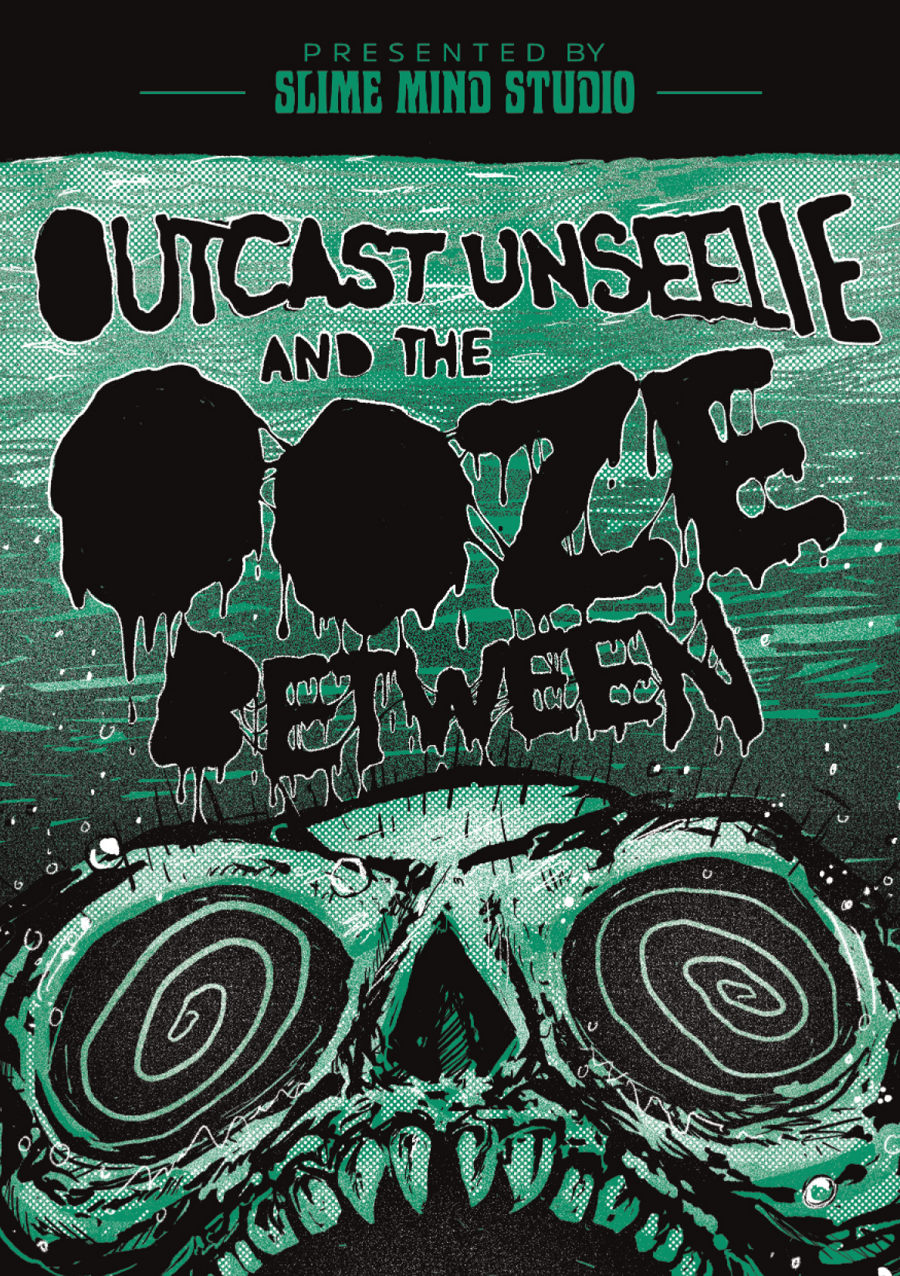
Slime Mind Studio
BECMI/Shadowdark
Levels 1-3
The mountain bled. Now powers from beyond slake their thirst. Bordering the long-abandoned Brackenhoorg mines, a lone gatehouse suffers both from the churn of a mysterious ooze and the encroaching domain of a fey lord. Test your mettle against a dungeon swamped by a potent arcane ooze and conniving fey vying for power. Will your players learn the secrets of the ooze—or need enough treasure to afford a priest?
This forty page adventures uses about 25 pages to describe about fifty rooms in a two level dungeon features slime, fey, and insects. And dwarves? It’s full of fantastic elements and does a good job with formatting even though I think the overall attempt at a “Timeline of events” doesn’t work very well. A good journeyman adventure.
I think this adventure is fascinating. First off, it’s an ok adventure. Which means I guess it’s great? In the sea of filth I usually see it’s not one of those. It’s doing almost everything right. I don’t think I’m excited to run it. And I think that sucks because it IS doing almost everything right and when you compare it to the absolute dreck that people publish it is light years beyond that shit. I mean, the designer deserves some admiration for that. If this was plopped down in front of me at a table and I was told to run it then I would and it would go great and I’d have a great time. I just don’t think I’d ever reach for this of my own free will. Maybe it’s something like marketing. I’m not saying it is marketing, but I’m drawing an analogy. Nothing made me excited by this. Except for the meta-discussion that it doesn’t suck. I’m super excited by that. Seriously. If every adventure in the world were as good as this one then I wouldn’t have the tenfootpole blog. Technically, it’s great. It just lacks a certain joie de vivre. That sucks. It’s like working for one of those shit ass companies in which being competent isn’t good enough. You have to suck off the boss verbally and engage in the kabuki of mouthpiecing the the mission, blah blah blah even though you’re really only there because hookers and blow cost money and you need money. That seems unfair?
The formatting here is nigh perfect. “Oh, Bryce cares too much about formatting!” No, dipshit, I do not. But I do seem to understand, which many of you do not, that formatting IS the great downfall of many adventures. My standards are quite low. Can I run the adventure? Ok, you get to squeak by. You can write the worlds best adventure and have shitty formatting and I’m still gonna call it the worlds the best adventure and grumble and recommend it. But, if you write a mediocre adventure and do a shit job at helping me run it then you can burn. The entries are clear and easy to scan. A little summary/read-aloud with some words blended that are then called out with more detail in the bulleted sections below. Just a few sentences each. It’s also using a ? ? layout, so ? of the page, the left “column” is used for the keys while the right ? “column” is used for notes and other called out detail, like monster stats and so on. I think the format here is perfect. Easy to scan. It’s clear. It’s easy to find things, and to follow up on information. No notes. Well, ok. You can have your preferences with formats. You can prefer a paragraph style over say an OSE style. Both a paragraph style and an OSE style can be implemented poorly. But, ultimately, many formats styles can be used, anything, really, as long as they succeed in their purpose and this one does. It could, perhaps, be terser in paragraph form. Less whitespace and all of that. But it’s not overly long the way it is and it’s dumping three or four rooms to a digest page in this format, while maintaining an easy to read font size. It’s fucking good. Formatting.
And the map is decent also. Dyson is credited. I’m not sure if these are his free maps or this was a commission. They look a little more involved than I’ve seen many of his free maps. A little more complex, a little more involved. Same level stairs, tunnels present, and they even run above and below other passages. A kind of rubble-vibe to them. Monsters are noted on the map, as well as entry/exit locations. (The level one map has six, I think, exist/entrances on it, out of 22 rooms total. That’s some decent map interconnectivity!) Monsters and traps are also noted on the map, and the lettering is generally clear with the keys, proper, being very clear. And the wandering table is ON the map also. This thing is close to being platonic! Maybe just tending a little bit to be busy, but, I’d take a look at the adventure just to see the maps in it and how they are done. Little minimaps are included on each page to orient you toward the room and exits.
Descriptions are pretty decent, above average for sure. Terse, but evocative enough. “An emerald waterfall, frozen in time, suspends loose rock and a charred body. Green, soot-stained metal encrusts the floor and walls.” or “Green liquid oozes from a cracked stone wall and marble bricks ju??ing from the ceiling. It pools around a toppled stone statue “ These aren’t bad. Like, not rock star but certainly pretty good as a short description goes. The bricks jut and the liquid oozes. Dislodging a brick “spews warm verdigrint.” Spew. And warm. Ewwww!
The rooms get noise and light pointers to rooms nearby, so you can hear things from the right or to the east or some such. Love it. Same with monsters reacting in certain situations. Attention is paid to the dungeon as a whole rather than a more room by room orientation. (Which, I suppose, is also mirrored in the entry/exits, both in quantity and in noting them on the map.) There’s also this thing the adventure does with blocking exits. Normally we’d see a door. But in this there is a frozen emerald waterfall, as noted in the quote above. It blocks an exit if you hack it loose or unfreeze it. In another place there’s this kind of giant mass of flowers in a corridor … which it turns out is blocking a kind of Y intersection, growing in all directions. These particular flowers regrow FAST when fed blood and there just happens to be a dead body in the intersection that it can suck blood from. An interesting problem, yes? (Also, I really liked the art piece that went along with this. A kind of grayscale/monochrome image of a ruined hallway with a mass of giant flower in it, with the petals done in a kind of muted red. It very much delivers the kind of striking impression that I think this encounter was going for.) There’s decent interactivity here.
Randomly, the page count is misleading, there is almost NO padding in this at all. Excess pages are NPC descriptions for the dungeon. These are little paragraphs with wants, fears and secrets called out and some keywords to help the DM quickly. “MYREROSE – SPITEFUL QUEEN. CALMLY SADISTIC. Master alchemist. Retains her fairy form by bathing in Blood Honey (made from perish lily pollen). The Gardener is her pawn: She gives him Blood Honey, lying that it will restore his True Name. Suspects Shiv, not Slaveral, created this mess. She rules from Bleedspire (V1) “
And those NPC’s are, I think, the downfall of the adventure, if it can be said to have one. Yeah, sure, the designer didn’t put the fucking level range in the marketing page or on the cover. Yeah, the hooks are fucking lameo hiring shit and the framing of the adventure could have had a little more thought. But, the NPC’s are the only thing here that I think doesn’t work well.
The idea is that we’ve got this old mine/complex that hit an ooze vein and was abandoned. And then some shit went down in Fey land a group/manor of them got cursed in to bug-like creatures (again, good art!) and somehow their manor is now level two of this place. There is supposed to be intrigue among the fey, hence the wants/needs/secrets and expanded NPC sections for them. There’s even a timeline of events. But I don’t think ANY of it works AT ALL. Some individual encounters work out ok, like a room with covered mirrors and a dude can/will reach through an uncovered one to pull someone in if they can. But the lager intrigue thing just doesn’t come together. And the timeline doesn’t really impact the dungeon environs or the party in such a way as to impact play/the party to care about. “Meck accidentally blows up Lalizar. The cultists disband. Slaveral and Meck fly away to find Meck’s mother “ Sure thing. I guess fewer things to stab then? I mean, whats the impact in intrigue and, ultimately, the party interaction?
There is also an overall … I don’t know, lack of … intent? Recall the dungeons exits and blocking exits and sounds/reactions, etc, all of which kind of give the dungeon a more wholistic feel. But, also, that wholistic feel is lacking in the way the dungeon rooms work together. The theming, of the fey anyway, doesn’t come through very well. The entire place, as a whole, isn’t left with an overall feeling. Yeah yeah, that a shit explanation. But, also, I wonder if thats not why I’m saying that the pace lacks a certain amount of joy and/or glee in it? My lack of enthusiasm for the place?
This is doing almost everything right. It’s a good adventure. I’m going to dump this in to two categories until I can decide what I actually think about it. I’m happy to run this. I’m just not sure I’d go out of my way to run this. I think it is absolutely worth checking out.
This is $9 at DriveThru. The preview is thirteen pages, the first thirteen. You get to see the map, the NPC’s, the timeline, and three rooms. That’s a decent enough preview.
https://www.drivethrurpg.com/en/product/566187/outcast-unseelie-and-the-ooze-between?1892600
Categories: Tabletop Gaming Blogs
D100 Random Slave and illicit cargoes table For the Clement Sector rpg & Outlaw: Crime in Clement Sector Campaign
Here is a customized D100 Random Table for Slaves and Illicit Cargoes tailored specifically for the Clement Sector setting. This blog post picks right up from A d100 Dark Artifact table for The Clement Sector role-playing game especially for The Unmerciful Frontier: The CCA Sourcebook Third EditionThis table blends the distinct flavor of Clement Sector—featuring Uplifts (Bears, Alphas,Needleshttp://www.blogger.com/profile/11243274667834930867noreply@blogger.com0
Categories: Tabletop Gaming Blogs
Integrating Adventurer Conqueror King System II (ACKS II) with the legendary, chaotic, and maximum-gonzo DNA of Dave Hargrave’s Arduin Grimoires - Converting Arduin's Welcome to Skull Tower (1978) To ACKS II
Converting Dave Hargrave’s The Arduin Grimoire Vol. II: Welcome to Skull Tower (1978) to Adventurer Conqueror King System II (ACKS II) involves bridging two very distinct Old-School Revival (OSR) philosophies.Arduin was chaotic, gonzo, high-lethal, and rule-breaking (introducing hit location tables, high-damage criticals, Needleshttp://www.blogger.com/profile/11243274667834930867noreply@blogger.com0
Categories: Tabletop Gaming Blogs
OSR Adventure Location - The Slave Market on the Tantus Nine Space Station for Wretched Space Rpg
Deep in the lawless outer fringes, Tantus Nine is a decaying, hollowed-out mining station where Galactic Federation authority is a joke and credits talk loudest. At the station’s rusted lower hub lies The Flesh Bourse—commonly known as the Slave Market of Tantus Nine.In the gritty, anti-heroic spirit of Wretched Space, this isn't a place for shining knights; it’s a meat market for corporateNeedleshttp://www.blogger.com/profile/11243274667834930867noreply@blogger.com0
Categories: Tabletop Gaming Blogs
Pages
