
Your wildly multifarious home!
Tabletop Gaming Feeds
D100 Servants of Set & Serpents Table Plus Treasures & Curios of Set Table For A Castles & Crusades Sword and Sorcery Campaign
The cult of Set thrives on secrecy, dark sorcery, ancient poisons, and serpentine monsters. Designed specifically for the SIEGE Engine (Castles & Crusades), these tables flesh out encounters, cultist factions, foul beasts, and ophidian relics for desert temples, tomb hexcrawls, or urban cult dens. This blog post picks up from D100 Servants of Set & Serpents Plus Treasures &Needleshttp://www.blogger.com/profile/11243274667834930867noreply@blogger.com0
Categories: Tabletop Gaming Blogs
OSR Review & Commentary - Subsector Sourcebook: Mazu By John Watts For The Clement Sector Rpg & Cepheus Engine Rpg
Subsector Sourcebook: Mazu is a setting expansion published by Independence Games for their sci-fi 2D6 / Cepheus Engine space opera universe (Earth Sector / Clement Sector).Overview & Setting ContextSubsector Placement: Subsector F of Earth Sector. It borders Gansu ("The Chinese Gate"), frontier subsectors along the Needleshttp://www.blogger.com/profile/11243274667834930867noreply@blogger.com0
Categories: Tabletop Gaming Blogs
Some Links on Naming

Thanks to Prismatic Wasteland's post, I was made aware of a blogwagon in the GLoGosphere about naming. I am not a GloGger, but that post got me thinking about the posts I have written about naming:
In 2021, I wrote a post giving my thoughts "On Fantasy Naming."
In 2023, I made some "Observations on Science Fiction Names."
In 2025, I advocated following Tolkien's practice and engaging in strategic translation.
In 2018, I presented this potentially handy Sword & Planet Name Generator.
In 2015, I discussed cultural naming practices in the Strange Stars universe.
Categories: Comic Book Blogs, Tabletop Gaming Blogs
OSR Classic Module Commentary - Adapting Gary Gygax’s D1-2 Descent into the Depths of the Earth into Adventurer Conqueror King System II (ACKS II) Rpg
Adapting Gary Gygax’s D1-2 Descent into the Depths of the Earth into Adventurer Conqueror King System II (ACKS II) transforms a high-level AD&D dungeon crawl into a logistical, domain-scale Underworld campaign. While AD&D assumes high-level heroes teleporting or slogging through grid squares, ACKS II gives you explicit mechanics for supply lines, Underworld exploration turns, domainNeedleshttp://www.blogger.com/profile/11243274667834930867noreply@blogger.com0
Categories: Tabletop Gaming Blogs
OSR Adventure Locations - d100 Random Sword & Sorcery Forgotten Dungeons, Temples, and Ruins Table, Treasure, and More for OSR games
d100 Forgotten Dungeons, Temples, and RuinsThe Sunken Crypt of the Weeping Monarch: Half-submerged in a murky swamp; the sarcophagus floats on oil that ignites if exposed to open flame.The Ossuary of St. Jude the Blind: Lined entirely with polished eye sockets; a spectral hymn causes temporary blindness to those without holy symbols.The Obsidian Zenith: A razor-sharp glass spire half-buried Needleshttp://www.blogger.com/profile/11243274667834930867noreply@blogger.com0
Categories: Tabletop Gaming Blogs
OSR Review & Commentary On Castles & Crusades Engineering Towns by Davis Chenault and published by Troll Lord Games
Written by Davis Chenault and published by Troll Lord Games, Engineering Towns is a 50-page world-building resource designed to construct medium-sized fantasy settlements. Functioning as a direct follow-up to Engineering Villages, the system gives Castle Keepers (CKs) modular tools, systemic mechanics, and random tables to generate organic, functional towns.
Categories: Tabletop Gaming Blogs
Development of the Majestic Fantasy RPG, Part 3
I find it useful to include a brief note on the assumptions behind why I design things the way I do. In the case of the Manual of the Three Adventuring Arts, I help the reader with information so they can weigh the benefits of the different options I write about for character creation and adjudication.
Rule AssumptionsThe following is a summary of the assumptions used by the rules of the Majestic Fantasy RPG. They are useful to know as you work your way through the various lists of available options, such as classes, backgrounds, skills, and spells.Combat ActionsIn combat, every character gets two actions during their six-second turn. Each character rolls a 1d6 initiative roll to determine the order in which they act. The character’s Dexterity bonus and other abilities may modify the initiative roll. Monsters may use half of their Hit Dice as an initiative modifier.The basic principle is that characters can take a half move as a regular action and make an attack as an attack action. A character can only take one attack action per round, whether it is melee, missile, or spell casting.
If the character chooses not to use an attack action, they may take another regular action instead. For example, they may take two half moves in succession to move their full modified movement during a combat round. See the Combat chapter for further details.SkillsWhen the odds of success are uncertain due to limited time, such as during a combat round, limited resources, or when the consequences of failure are significant, such as climbing a great height, make a skill roll. The basic chance of success is 15 or better on a 1d20 roll. Add a relevant attribute bonus to the skill bonus to modify the roll.
Two other basic principles of the Majestic Fantasy RPG are that any character can attempt any skill and that if a character has sufficient time and resources, they will succeed. When failure is a remote possibility, the player still rolls 1d20, but it only fails on a natural 1.ExperienceIn the Majestic Fantasy RPG, characters earn experience in one of two ways. The first is by defeating or overcoming opponents in combat or other forms of conflict. The second is by achieving the goals the players set out for themselves. Tougher opponents and more difficult goals award more experience.BackgroundsA character’s background consists of inherited traits and culture. Inherited traits determine physical and, in some cases, mental characteristics. A character’s culture reflects the social environment that shaped them and may modify their attributes or grant bonus skill points.RoleplayingGenerally, campaigns in the Majestic Fantasy RPG begin with the referee describing the circumstances in which the players find themselves as their characters. The players then, as their characters, describe or roleplay their responses. The referee decides what rolls, if any, are required and adjudicates the results. Following that, the referee either roleplays the non-player characters or describes how the circumstances change.
Repeat this process throughout the session and the campaign.
The Living World Sandbox chapters of the Tome of the Mundane, Strange, and Arcane provide specific techniques and advice for managing this process.SpellcastingThe Majestic Fantasy RPG centers the bulk of spellcasting on the traditional Vancian system of spell memorization. However, two major additions extend how magic works: Rituals and Focused Arts.RitualsIn the Majestic Fantasy RPG, a spellcaster can cast spells as 10-minute rituals without memorizing them, but must first inscribe them in a ritual book or spell book. Rituals also incur costs in their components. Each type of spellcaster has its own rules regarding rituals. Ritual Casting represents an older, less developed form of magic.Focused ArtSpells are more effective when cast by a cleric or magic-user with a focus in that art. The spell description provides the details at the end of each entry in the section labeled Focused Art.
These rules categorize spells into nine arts of magic. Nine of these arts are associated with one of the chromatic crystals used to seal the entrance to the Abyss. The tenth is the original ambient magic of the Majestic Fantasy Realms.VizViz is a magical substance that takes many forms, from a flask of pure spring water to a newly blooming flower or an iridescent rock. All these items share one trait in common: pure magic infuses them. Viz is typically harvested, refined, and measured in units for spellcasting. When casting spells or creating magic items, spellcasters can use units of Viz to assist the process. See the entry for Viz in the Treasure chapter for further details.
VimMagic permeates everything throughout the Majestic Fantasy Realms, including the souls of sentient beings and various creatures. Intertwined with a sentient being's soul or spirit is a form of Viz known as Vim. For most, the amount of Vim is not enough to manifest any magical effects. Some creatures or individuals can create magical effects by having more than the usual amount of Vim as a result of birth or training.
Rob’s Note: Unlike Viz, Vim has no explicit mechanics unless specified by a class or ability.
Previous Section: Part 2
Next Section: Part 4
Categories: Tabletop Gaming Blogs
RPG a Day 2026 – Day 33: After-Action Report
I meant to write this post yesterday, but then real life got in my way. A combination of illness, going to the physician to make sure everything was all right, and the fact that it was my 10th wedding anniversary. Needless to say, I was busy.
So, what do I have to say about this year’s #RPGaDay2026 that I didn’t say on the 31st?
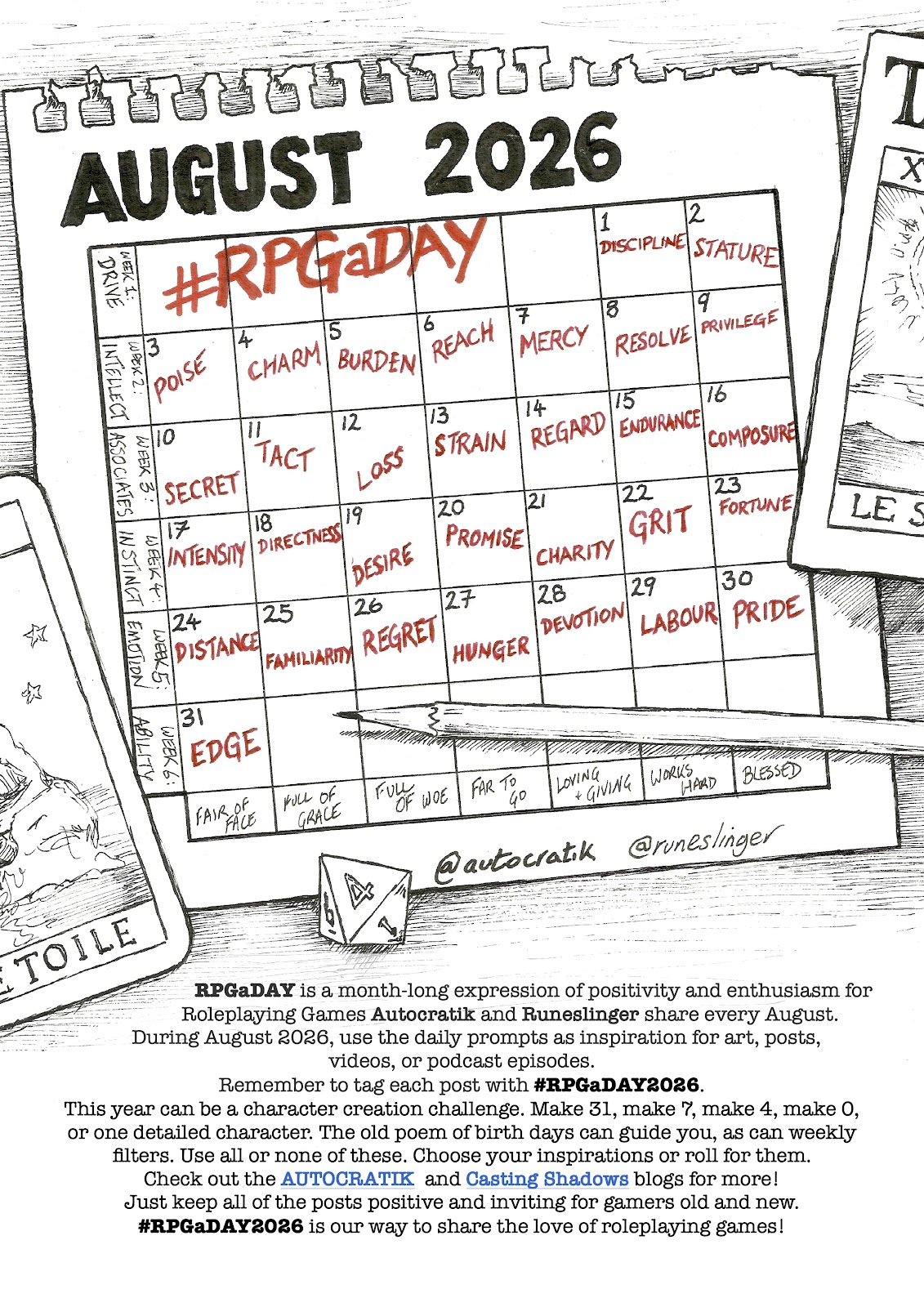
Let’s talk about my prep. For the first time, I was able to plan my posts and post them ahead of schedule. I finished my posts a full five days before the month ended! I am always thankful that the graphics and topics for the year are available well in advance. In the past I’ve tried to plan, even writing a few posts ahead of the month, but I always fail to keep up, often writing the night before or the day of the post, oftentimes playing catch-up.
I knew this was going to be a busy year, so I planned. I accepted Runeslinger’s challenge to create a new NPC each day of the month, so I mapped out my month, using all the details provided this year, plus I added my own random table of genres to know the type of NPC I was creating. I had a sheet with the schedule and topics planned out.
I used standard introductions and closings for the posts; while they might seem repetitive, they padded some of the writing I had to do so that I could focus on the NPC for each day. I decided not to use any additional images beyond the standard RPG a Day graphic and a small image with the topic name. I really aimed to simplify and make my life easier.
I would sit each night and try to write at least three NPCs, then proofread, prepare, and schedule those posts the following night. I hoped to be done with the month by mid-August, but life always throws you a curveball. Regardless, I kept the pace and finished ahead of time.

I also posted and shared daily entries across multiple platforms this year. The main post here on the blog was shared on two Facebook pages I’m managing (Sunglar’s Musings and Desde la Fosa), the RPG a Day Facebook group, the two main groups I’m an admin for in FB, Dungeons & Dragons Puerto Rico and Puerto Rico Role Players, as well as the Puerto Rico Role Players Discord channel. I also shared posts on my personal social media on Facebook, Instagram, Threads, and Bluesky. I automated much of this process but still had to click and check daily, usually in the mornings before taking my son to school.
I wrote the post in English, then translated it into Spanish and shared it in the same spaces in both languages.
Was all the work worth it? I’d say yes! I saw some traffic increase on my socials, and while the RPG a Day Facebook group was really quiet this year, Threads had good interaction, and Bluesky was the main place for conversations and sharing. I love reading other people’s posts. I wish I could read more, but on Bluesky, I followed old friends and made discoveries throughout the month.
What I wanted to do, and never got around to, was make some videos about RPG a Day for my TikTok account. I didn’t have the capacity, but I know that video content gets a lot more eyeballs than written content in the current social media landscape. Maybe for 2027.
What about the prompts and the modifiers this year? I love a challenge, and using all the elements to create a new NPC each day was sometimes a struggle. Regardless, it challenged me creatively, and I ended up with 31 new NPCs I can use in my games. Maybe more, but I’ll talk about that later.
I’ll say that the random genre table I created and talked about in my Day 0 post was maybe too limited. It covered major TTRPG genres, but I could have added a few categories. In the future, I would either add a few more, like modern or espionage games, or create three or four broad categories and list possible subgenres within them.
Compared to other years when I’ve created a continuing narrative, setting, or campaign vignettes, sticking strictly to NPCs felt a bit limiting. So many other participants write about other topics, reflections on the hobby, that the format selected caged me in a little bit, but it also gave me the structure to finish ahead of schedule.
TardisCaptain had great suggestions in his after-action post for future prompts; I like this genre table and the idea of, for example, adding random tables when creating NPCs to create variety and challenges for participants. While something so complex may be beyond the scope of the RPG a Day Graphic and prompts, I see myself creating additional tools to challenge myself and fuel my creativity in the future.
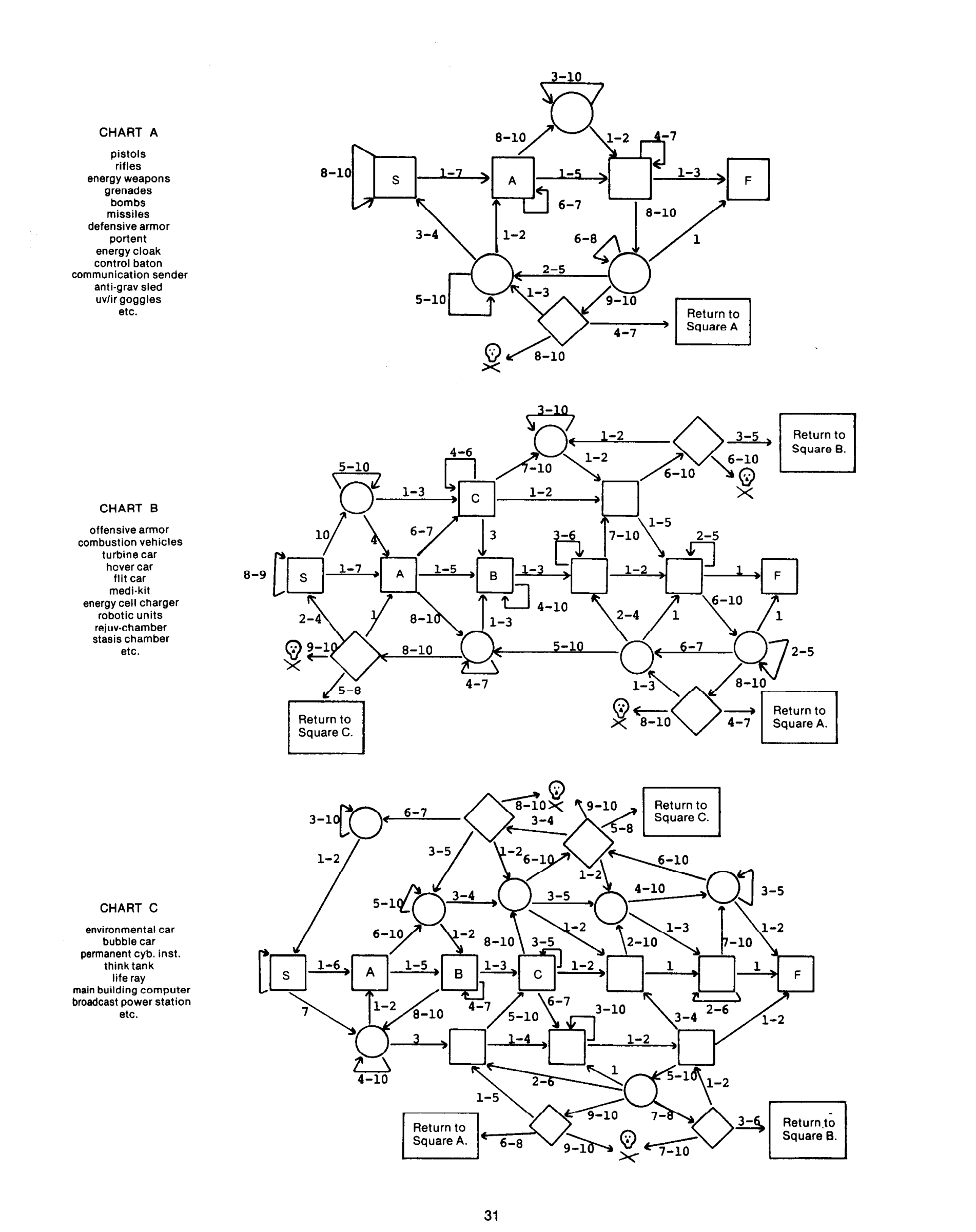
I’ve said it before, and I’d say it again: I’d love to see a graphic in the style of the old artifact exploration charts in Gamma World to roll and randomly determine where you’ll go next for a prompt.
So, who did I enjoy reading this year? Besides Autocratik and Runeslinger, I really enjoyed content from old friends like Timothy Brannan on The Other Side blog, Richard ‘Bat’ Brewster on Bluesky (you can check his post for this year collected on his Batjutsu blog), and Matthew Pook’s shorts on his YouTube channel. You should check out the aforementioned TardisCaptain, whose posts I really enjoyed, as well as Paul Baldowski and Craig Oxbrow, to name two of the many great participants whose work I enjoyed this month. The Bluesky RPG a Day feed was the best place to follow along this year.
What am I going to do next after RPG a Day? Short term, I’ve been taking it easy this week and decompressing after the daily posting schedule of August. But I’ll not stay idle for long.
I’m going to keep on posting! Here on the blog, I hope to continue this year’s retrospective of 40 Years a Gamer. I’ve also been sharing interviews with local creators with ties to the RPG community on Sundays. I’m looking for more creatives to interview, so if you are a Puerto Rican creative on the island or in the diaspora and want to share what you do, reach out. I also want to do more reviews and interviews; if you have a product or project you’d like me to review, don’t hesitate to reach out.
Over at Sunglars Musings, I make weekly posts about my TTRPG inspirations, including comics, video games, and soon some posts about books. I also try to make weekly TTRPG recommendations on Saturdays. I cross-post a lot of what I write here on the blog there.
Desde la Fosa was dormant for a long time, and I’m trying to restart it for Spanish-language content. I always dream of restarting some project or podcast with José, Apu, and AJ the Ronin, the original collaborators for Desde la Fosa. We’ll see!

I’m also writign a weekly comum for Tabletop Sentinel, Tabletop Inspiration: Celluloid Memories where I’m writing about the movies that inspired my as a gamer and the games I play. If thsi si something that might interest you, I ivite you to check it out.
Another project I have in mind is the crazy idea of compiling all the NPCs I created this month and publishing it as a digital supplement. It would take some cleanup and maybe creating a couple of extra NPCs to balance the genres. Would this be something you’d be interested in reading? I’d love to know.
I want to thank you all for sticking around and reading these posts for #RPGaDay2026. A big thanks to Michael (aka the Stargazer) for giving me this platform to engage with and share with such a wonderful community. Here’s looking forward to many RPG Days in the future!
Categories: Tabletop Gaming Blogs
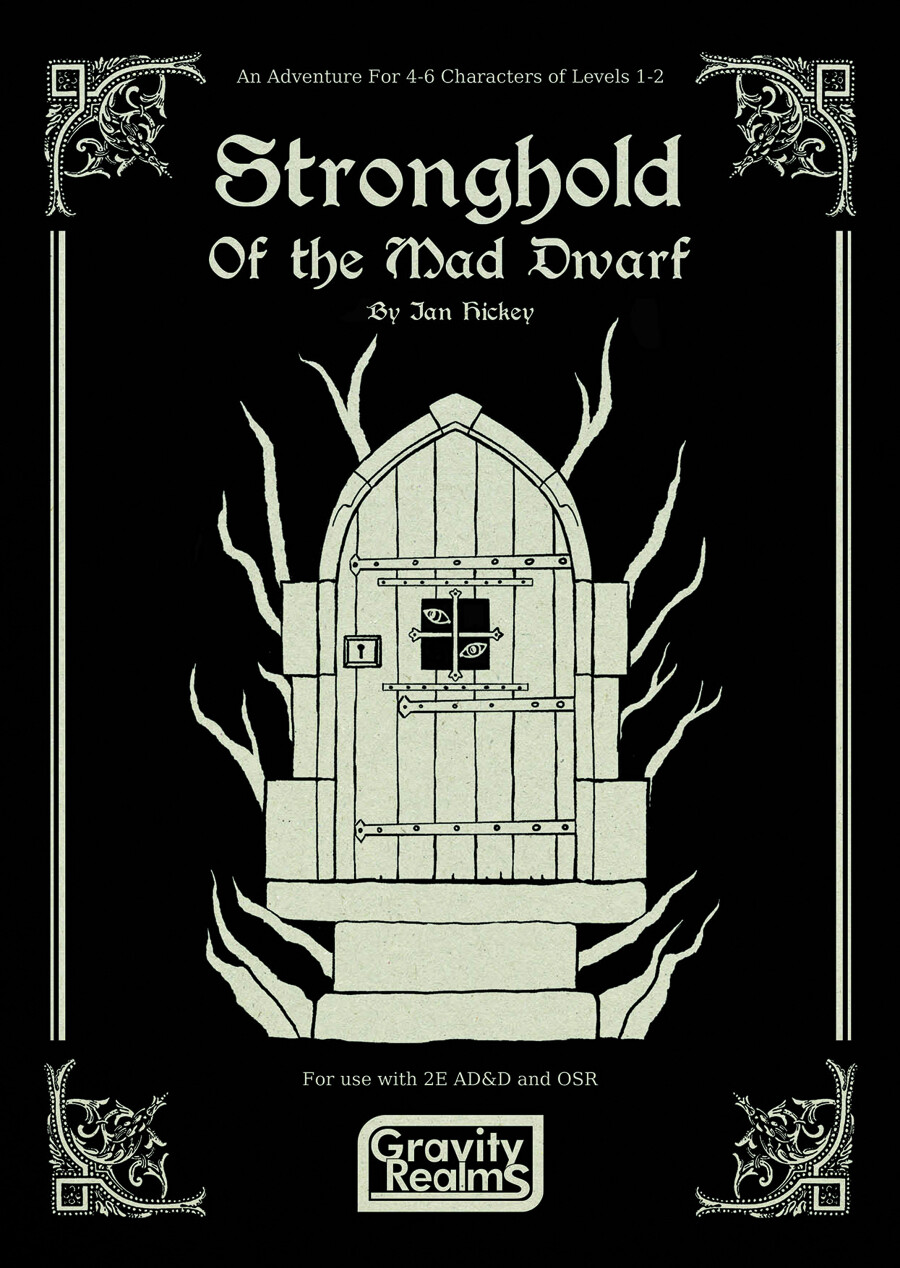
Stronghold of the Mad Dwarf
By Ian Hickey
Gravity Realms
2e
Levels 1-2
Gravity Realms
2e
Levels 1-2
Do you dare venture into the Stronghold of the Mad Dwarf? Its dark corridors and forgotten halls hold horrors beyond your mind’s comprehension. For centuries the Tome of Many Verses has been locked away, along with the horrors it has created.
This 44 page adventure uses 22 pages to describe four small dungeon levels and one larger one, the larger one having about 23 rooms. It is padded out and tries to theme areas, to no great advantage, but has several classic elements to it that help it rise above the typical dreck. Its heart is in the right place, even though it doesn’t succeed very well.
This one falls in to the “classic dungeon” category. There’s a small outside area, a small antechamber level, a larger “main” dungeon of 23 rooms, a couple of very small levels under that, and then a map in the classic megadungeon side-view noting other are levels yet to be detailed/left for the DM. The main theme here is an old dwarf complex, dug too far, and the main treasure being a book of demon summoning guarded by a kind of gibbering mouther made of dwarf parts. The vibe here is classic dungeon, with spiders, mad dwarves, and a few oddball creatures in a mix of “empty” dungeon rooms and some larger spaces with more interesting things going on. It’s also “kill based” XP, as it’s 2e Not gold=xp here, with coinage limited as a result. We’re going to ignore the hooks as well since they are just the usual “you’re hired” couple of lines and this is, in the end, a site based adventure in the classic dungeon style.
There’s a small outside area right in front of the doors, which you can think of a much smaller version of the Stonehell outside. A few ruins and a couple of monsters. You’ll get to a small antechamber level of a couple of rooms, and then down in to the core dungeon of 23 rooms. Under that is a small cavern level of a few rooms and the dwarf spider pens level.
The entry in to the core dungeon is the lift shaft. The platform having failed a long time ago, you’re faced with a pit, 180 feet deep, to navigate your way down. No solution is give, nor should there one be! The adventurers are left to tie those ropes together and go in through thepit, classic style. The dungeon does this sort of classic element stuff in a few places, with another standing out being a locked door with an open window grate in it. The key is in the keyhole on the other side. That’s it, nothing else suggested. Again, the adventurers are left to their own solution, as they should be. I love these sort of classic obstacles, without spoon feeding the DM on solutions. When the adventure is doing this is channeling those classic dungeons of old; twelve in one blow!
There are, at times, some decent room descriptions as well. “The roof to the common room has collapsed and is blocking the entrance. Inside chunks of broken furniture, tables and chairs are half buried in rubble.” Another environmental obstacle! Rubble, half buried furniture, all turning an otherwise empty room in to something a little more interesting. When the adventure is hitting on all cylinders it does a pretty decent job. That main room you descend in to from the pit has sixteen pillars and a 15 foot vaulted ceiling, with rubble under the pit from the platform and mechanism which has collapsed from above. And a floor covered in guano. Ought oh! 1-100 bats! Hope you’re not making a lot of noise! In another large cavern we’ve got the classic flowstone and mite/tite situation, along with a giant cave clam blending in surrounded by treasure it has coughed up. Does it make sense? No. But it sure recalls those classic D&D exploration of caverns illustrations.
Let us not get attached though. The padding is hard with this one. Not to an excessive degree, but it is present in nearly every passage. This room once served as. The main entryway is open for business. This used to be. These phrases do nothing for the adventure and clog up the DMs ability to scan the text to find the entries they actually need. “The locked door at which the adventurers stand is the old entrance to the stronghold before the new additions were added above.” That is a perfect example. It is irrelevant. It is trivia. It adds nothing.
It also gets weird about the creatures in places. In one room there is a small amount of read aloud that describes one of the mad dwarves attacking. Another room has a full on room description and no description of occupants, except it then stat blocks two of the ad dwarves. Elsewhere the adventure “might” encounter a giant rat nest in this room. The spider pens level simply notes, at the beginning, that there are 3-30 spiders on the level, with no further mention of them. This is maddening. There CAN be a place for creatures sometimes being present, or for a level having a total number of creatures on it, but this is not how you do that. Boxed text is not present everywhere, which is fine either way, but it can get long in places, causing the players to lose interest and pull out phones.
And then there are the mad dwarves. Not undead, just maddened. And when you’re close to them you need to make a save vs spalls or be paralyzed for 1d6 rounds. Ouch. Area attack. Multiple dwarves in an encounter. OSR. Run away. But, also, i feel like Fear and Paralysis are some HEFTY shit to be throwing at a party at level one. I remember several near TPKs from level four to six parties who fear’d away or got paralyzed. Those are some BAD. ASS. EFFECTS. I’m not sure about this in a level one, but we’ll give it the benefit of the doubt.
The adventure is a little slow. Some of the rooms are memorable, and there’s a decent number of things to poke and prod at, but it feels a little drab. The descriptions could be better, more consistent, and the environment feels quite static. But, other than the padding, it’s not really doing much wrong. I just don’t think that the classic elements, when they appear, are enough to carry it.
This is $13 at DriveThru. There is no preview. How are you gonna have your pudding if you don’t have a preview?! Put in a preview, show some rooms, let us get an idea of the content we are purchasing before we push the buy button.
https://www.drivethrurpg.com/en/product/572215/stronghold-of-the-mad-dwarf-ad-d-2e-version?1892600
Categories: Tabletop Gaming Blogs
Wednesday Comics: DC, December 1985 (week 1)
My mission: to read DC Comics' output from January 1980 (cover date) to the end of Crisis. This week, I'm looking at the comics that were on stands in the week of September 5, 1985.
Outsiders #2: Barr and Aparo continue the story from last issue. The Outsiders realize Looker is likely captured and use the Mom android to lure out the rest of the Nuclear Family. The confrontation doesn't go well for them, and the Nuclear Family heads flies off to cause a nuclear explosion in L.A., leaving the Outsiders unconscious. Luckily, our heroes run into the scientist studying fear who had previously helped Shanner but is now getting out of town to escape the nuclear threat. She lets them know what the Nuclear Family is up to. The Outsiders race to stop them. In a fight at the nuclear plant, it looks like the Outsiders will lose again until a desperate but clever attack by a combo of Geo-Force and Metamorpho shorts out the androids.
Infinity, Inc. Annual #1: This Crisis crossover has very little Crisis in it. We get a reference to the red skies, and Obsidian returns to the group, but (unlike everyone else summoned by Harbinger so far) he only has vague memories of what happened while he was gone. The Thomases and McFarlane/Harris spend most of the issue dealing with the villainess Thorn and revealing the mysterious backstory of Jade and Obsidian. This mostly consists of Alan Scott or Harlequin narrating (and retconning, I imagine) the events of past issues. To summarize what we learn: Thorn the other personality of Rose, and both were also Alyx, the supposedly deceased wife of Scott. Obsidian and Jade are indeed their children, whose existence Scott was unaware of. Harlequin is revealed to be his co-worker Molly Mayne who has had a crush on him since forever. Those Mayne and Scott get married at the end of the issue.
DC Comics Presents #88: An editorial comment at the start of this issue by Englehart and Giffen/Kesel says something like "this is how things are going to be here from now on," but I'm not sure what they mean by that. Anyway, the Crisis is more part of the setting for this issue than actually crossing over with the story in any significant way. Because of the Crisis, sensationalist newsman Jack Ryder, is giving airtime to the cranks and crackpots who claim the end of the world is nigh. Stodgy, old mainstream media moguls are worried this is freaking people out and so ask America's most trust newsman, Clark Kent, to have a talk with Ryder and get him to tone it down. Ryder says no. The stodgy old guys seem to have a point here, as Ryder's most recent guest, the Hermit, uses his media exposure to form a psychic link between an ancient demon and Ryder's viewers. Superman and the Creeper have to team-up to defeat the demon.
It's interesting that, even at this point, Engelhart suggests (at a Comics Code approved, kid's comic level) Ryder is sort of a conservative shock jock (he has him call Kent "left" as an insult). I would have thought that characterization came later.
Fury of Firestorm #42: Conway and Kayanan/Akin pick-up Firehawk's and Wonder Girl's quest from this month's COIE #9 except that (much like with the Red Tornado thing) the accounts don't quite match. Here, the two are looking for both Terry and Lorraine's father, who wasn't mentioned before. Also, Firehawk thanks Wonder Girl and the Titans for being there for her as she was freaking out over this whole Crisis thing, but we haven't seen or got mention of any such breakdown in COIE #8 or #9. All that aside, this issue mostly deals with expanding Firehawk's character and shows her working through some uncertainty about being a hero in a very patriotic way: by joining Wonder Girl to play havoc with the British forces that have Washington and his troops pinned down in Brooklyn. Thanks to the Crisis, to travel through the New York City area is the travel through time, so in addition to helping Washington they meet Tomahawk and Dan Hunter. In the end, our heroes still haven't found Terry or Senator Reilly, but Firehawk has found something out about herself.
Hex #4: Wagner fills in for Texeira this issue. Poor Jonah Hex just can't get a moment to stop and catch his breath in this future. He crashes his stolen flier, barely escaping a fall into a canyon, and then he's forced to trek across the wastes without supplies. He's saved from drinking out of a contaminated puddle by the timely re-appearance of Stiletta--the real one. She explains that the Conglomerate has a stranglehold on society (such as it is) by controlling the supply of "Soames," pills used to purify the tainted water supply. She also reveals that she's the daughter of Borsten, who is a time traveler from 2042 who found out a nuclear war was coming in 2045. He jumped into the future two years farther with a cache of technology so he could rule amid the ashes. So far, the criminal Conglomerate has been an impediment to his plans.
Hex and Stiletta have a narrow escape from oversized leech-like worms, but then the guys who supplied the drug dealer Hex killed find them. Meanwhile, Harris is being interrogated in a Vietnam simulation by Bortsen's men to get him to tell them where Hex is.
Justice League of America #245: Luke McDonnell comes onboard as penciler in this Crisis crossover that followed directly from COIE #9 last week. Thanks to Warp, Steel is sent into the far future of the year 1,000,000. There he's helped by a woman named Olanda as they are pursued by the robotic servitors of the mysterious Six. The woman takes Steel to her father who turns out to be the aged Lord of Time, who last fought the Justice League as a younger man in '81 in JLA #199. He also appears in the background of COIE #9-10. The Lord of Time reveals he took refuge in the far future and cloned children from his genetic material to form a family. Eventually, his six sons rebelled, jealous of his favoritism for his daughter, and stole his Chrono-Cube, brought killer robots from the past, and attacked. Only their slow decision-making due to their reliance on consensus among themselves as kept them from overwhelming their father and Olanda.
Steel helps Olanda and the old man get back the Chrono-Cube. The Lord of Time then uses it to go back and prevent his younger self from making the Six.
Vigilante #24: Cover by Dan Day this month. Kupperberg and Smith/Maygar have a middle-aged mother whose daughter is killed in Time Square threatening to go Death Wish after Judge Chase lets the men go free that she believes are responsible. Chase, feeling a kinship with the woman, ultimately takes a bullet to stop her. It's revealed that the two men aren't responsible after someone else confesses to the crime. Meanwhile, the Vigilante hunts the drug dealer whose lawyer he killed last issue, and the Electrocutioner is also still on a rampage. Also, Marcia's psychiatrist thinks he knows the identity of "the friend" she told him was the Vigilante.

Outsiders #2: Barr and Aparo continue the story from last issue. The Outsiders realize Looker is likely captured and use the Mom android to lure out the rest of the Nuclear Family. The confrontation doesn't go well for them, and the Nuclear Family heads flies off to cause a nuclear explosion in L.A., leaving the Outsiders unconscious. Luckily, our heroes run into the scientist studying fear who had previously helped Shanner but is now getting out of town to escape the nuclear threat. She lets them know what the Nuclear Family is up to. The Outsiders race to stop them. In a fight at the nuclear plant, it looks like the Outsiders will lose again until a desperate but clever attack by a combo of Geo-Force and Metamorpho shorts out the androids.

Infinity, Inc. Annual #1: This Crisis crossover has very little Crisis in it. We get a reference to the red skies, and Obsidian returns to the group, but (unlike everyone else summoned by Harbinger so far) he only has vague memories of what happened while he was gone. The Thomases and McFarlane/Harris spend most of the issue dealing with the villainess Thorn and revealing the mysterious backstory of Jade and Obsidian. This mostly consists of Alan Scott or Harlequin narrating (and retconning, I imagine) the events of past issues. To summarize what we learn: Thorn the other personality of Rose, and both were also Alyx, the supposedly deceased wife of Scott. Obsidian and Jade are indeed their children, whose existence Scott was unaware of. Harlequin is revealed to be his co-worker Molly Mayne who has had a crush on him since forever. Those Mayne and Scott get married at the end of the issue.

DC Comics Presents #88: An editorial comment at the start of this issue by Englehart and Giffen/Kesel says something like "this is how things are going to be here from now on," but I'm not sure what they mean by that. Anyway, the Crisis is more part of the setting for this issue than actually crossing over with the story in any significant way. Because of the Crisis, sensationalist newsman Jack Ryder, is giving airtime to the cranks and crackpots who claim the end of the world is nigh. Stodgy, old mainstream media moguls are worried this is freaking people out and so ask America's most trust newsman, Clark Kent, to have a talk with Ryder and get him to tone it down. Ryder says no. The stodgy old guys seem to have a point here, as Ryder's most recent guest, the Hermit, uses his media exposure to form a psychic link between an ancient demon and Ryder's viewers. Superman and the Creeper have to team-up to defeat the demon.
It's interesting that, even at this point, Engelhart suggests (at a Comics Code approved, kid's comic level) Ryder is sort of a conservative shock jock (he has him call Kent "left" as an insult). I would have thought that characterization came later.

Fury of Firestorm #42: Conway and Kayanan/Akin pick-up Firehawk's and Wonder Girl's quest from this month's COIE #9 except that (much like with the Red Tornado thing) the accounts don't quite match. Here, the two are looking for both Terry and Lorraine's father, who wasn't mentioned before. Also, Firehawk thanks Wonder Girl and the Titans for being there for her as she was freaking out over this whole Crisis thing, but we haven't seen or got mention of any such breakdown in COIE #8 or #9. All that aside, this issue mostly deals with expanding Firehawk's character and shows her working through some uncertainty about being a hero in a very patriotic way: by joining Wonder Girl to play havoc with the British forces that have Washington and his troops pinned down in Brooklyn. Thanks to the Crisis, to travel through the New York City area is the travel through time, so in addition to helping Washington they meet Tomahawk and Dan Hunter. In the end, our heroes still haven't found Terry or Senator Reilly, but Firehawk has found something out about herself.

Hex #4: Wagner fills in for Texeira this issue. Poor Jonah Hex just can't get a moment to stop and catch his breath in this future. He crashes his stolen flier, barely escaping a fall into a canyon, and then he's forced to trek across the wastes without supplies. He's saved from drinking out of a contaminated puddle by the timely re-appearance of Stiletta--the real one. She explains that the Conglomerate has a stranglehold on society (such as it is) by controlling the supply of "Soames," pills used to purify the tainted water supply. She also reveals that she's the daughter of Borsten, who is a time traveler from 2042 who found out a nuclear war was coming in 2045. He jumped into the future two years farther with a cache of technology so he could rule amid the ashes. So far, the criminal Conglomerate has been an impediment to his plans.
Hex and Stiletta have a narrow escape from oversized leech-like worms, but then the guys who supplied the drug dealer Hex killed find them. Meanwhile, Harris is being interrogated in a Vietnam simulation by Bortsen's men to get him to tell them where Hex is.

Justice League of America #245: Luke McDonnell comes onboard as penciler in this Crisis crossover that followed directly from COIE #9 last week. Thanks to Warp, Steel is sent into the far future of the year 1,000,000. There he's helped by a woman named Olanda as they are pursued by the robotic servitors of the mysterious Six. The woman takes Steel to her father who turns out to be the aged Lord of Time, who last fought the Justice League as a younger man in '81 in JLA #199. He also appears in the background of COIE #9-10. The Lord of Time reveals he took refuge in the far future and cloned children from his genetic material to form a family. Eventually, his six sons rebelled, jealous of his favoritism for his daughter, and stole his Chrono-Cube, brought killer robots from the past, and attacked. Only their slow decision-making due to their reliance on consensus among themselves as kept them from overwhelming their father and Olanda.
Steel helps Olanda and the old man get back the Chrono-Cube. The Lord of Time then uses it to go back and prevent his younger self from making the Six.

Vigilante #24: Cover by Dan Day this month. Kupperberg and Smith/Maygar have a middle-aged mother whose daughter is killed in Time Square threatening to go Death Wish after Judge Chase lets the men go free that she believes are responsible. Chase, feeling a kinship with the woman, ultimately takes a bullet to stop her. It's revealed that the two men aren't responsible after someone else confesses to the crime. Meanwhile, the Vigilante hunts the drug dealer whose lawyer he killed last issue, and the Electrocutioner is also still on a rampage. Also, Marcia's psychiatrist thinks he knows the identity of "the friend" she told him was the Vigilante.
Categories: Comic Book Blogs, Tabletop Gaming Blogs
Adapting North West of Earth By C.L. Moore - Orbital Decay (MicroRed version) From The Red Room & The New Flesh Rpg - a Random D100 Terran Imperial Technology & Cosmic Anomalies Table
In the grand traditions of C.L. Moore and Leigh Brackett, Earth is no peaceful beacon of enlightenment. Instead, the Terran Trade Authority (TTA) and Earth’s ruthless mining consortia act as aggressive, industrial imperialists—bringing heavy rayguns, armored crawlers, and corporate law to the ancient, dying worlds of the Solar System. Meanwhile, deep space hides alien anomalies and Needleshttp://www.blogger.com/profile/11243274667834930867noreply@blogger.com0
Categories: Tabletop Gaming Blogs
Development of the Majestic Fantasy RPG, Part 2
The Manual of the Three Adventuring ArtsForeword
Welcome to the Majestic Fantasy RPG. What is it, and what sets it apart? It is meant to do a few things. It supports my setting, the Majestic Fantasy Realms. It is built to run sandbox campaigns. And it is written to be useful for people running fantasy games regardless of edition, setting, or rule system.
The Majestic Fantasy Realms grew out of the fantasy campaigns I have been running for my friends for over four decades. I kept the same setting across successive campaigns, with different groups and even different systems. Over time, that produced a fair amount of original material. The Majestic Fantasy Realms is the setting portion of that work. The Majestic Fantasy RPG is the rules portion, adapted to classic Dungeons & Dragons.
What makes this a sandbox RPG? In a sandbox campaign, the players act as their characters and decide what matters. The direction of the campaign comes from the choices they make. The referee builds the setting and serves as a neutral arbiter. My book How to Make a Fantasy Sandbox explains how to build a setting. The Majestic Fantasy RPG focuses on how to describe that setting in game mechanics, how to adjudicate the players' choices, and how to keep the world in motion. What it does not do is tell you how the campaign ought to go or what choices the players ought to make.
I have always kept my campaigns grounded in the medieval fantasy of classic Dungeons & Dragons, no matter what system I was using at the time. Decades later, medieval fantasy and D&D tropes still sit at the heart of most fantasy roleplaying games.
Throughout the text you will see Rob's Notes. These are short comments explaining why I wrote certain sections the way I did. By laying out the thinking behind the rules, I hope the material remains useful even if you do not adopt the system as written.
Over the years, and after reading more about how Dungeons & Dragons developed, I came to believe that most campaigns are hybrids to some degree. By including Rob's Notes and structuring the Majestic Fantasy RPG as four books, I want this game to be useful even if you only use parts of it.
Thank you for reading. Let's step together through the door and see what kind of world you and your players will build.
IntroductionThe Majestic Fantasy RPG consists of four books: The Manual of the Three Adventuring Arts, The Doomsday Codex, The Legendarium of the Fantastic, and The Tome of the Mundane, Strange, and Arcane. The book you hold, The Manual of the Three Adventuring Arts, is the player's handbook of the Majestic Fantasy RPG.
Here you will find the rules that govern the Martial, Mundane, and Magical Arts as they apply to creating characters and adjudicating their actions. This includes the classes they may pursue, the workings of arcane and divine magic, the equipment available to them, the resolution of combat, and advice for players exploring the Majestic Fantasy Realms or any setting your referee creates.
Everything here assumes a medieval fantasy setting. Its historical foundation rests between the fall of Rome and the Age of Reformation and Exploration, when firearms and long ocean voyages began to appear. Onto that foundation are added the familiar elements of Dungeons & Dragons: Vancian magic, dragons, and the strange creatures found across its various editions.
With modest work, these rules can also support campaigns set in earlier periods or later ones up to the first industrial revolution.
Previous Section: Part 1
Next Section: Part 3
Categories: Tabletop Gaming Blogs
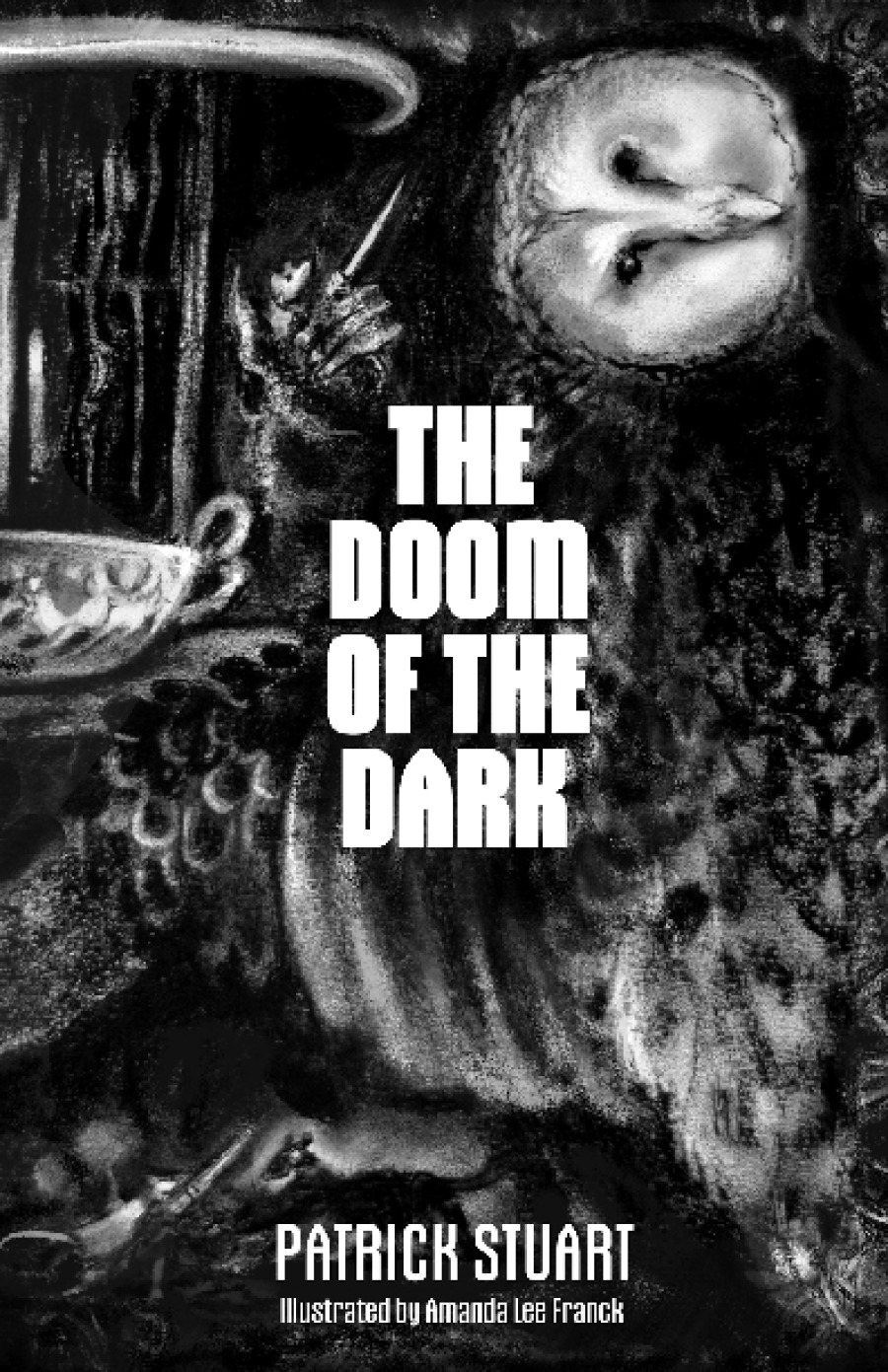
The Doom of the Dark
By Patrick Stuart
False Machine Publishing
Tunnels & Trolls
False Machine Publishing
Tunnels & Trolls
A mysterious Inn at the end of the world, an evil sorcerer, a talking shadow on the wall, a door down into the dark. The world must be saved and only this particular group of weirdoes (who happened to be staying overnight), can do it! They have until the Doom of the Dark is fulfilled! (Roughly six hours real-time, but you should be able to get it done in two). They also have a Turne-Spytte Dogge, his utility so far unknown.
This 35 page one-shot adventure details a twelve room fucked up dark fairy-tale save the world adventure in a … weird inn basement? T&T is light, and it matches for the adventure. Great ideas and everything that filthy casual crowd wants out of their D&D clone systems and games.
Man, I always forget about Tunnels and Trolls, even though some of my favorite of the original era adventures were written for it. T&T is great for the same reason B/X is great. They are simple and don’t get in the way of actually playing the game with all that min/max rules lawyer shit. It;s got that beer & pretzels vibe that makes it great for a game with filthy casuals. Con games. A one shot at the game store. All your stoner friends coming over for game night. I don’t know if you can do more with T&T, but just like classic CoC, it’s perfect for one-shots. And the actual content of this adventure, man, it’s like Pan’s Labyrinth mashed up with some of those “core” AI fantasy TikToks. Stuart knows how to bring a vibe.
It’s not a traditional adventure, he states up front. More of a storybook kind of thing. I might call it original old world fair tales, with arms falling down chimneys and shit. There are some cutesy LOOKING things, but everything here is ready to fuck you up in a weird way that is just so thematically appropriate to them/their setting.
You’re staying at an inn, in the attic or in the barn nearby. You wake up in the middle of the night. “Now you awaken to the distant sound of laughter, counting, and the
clattering of coins.” There is no light. NONE. Like, bottom of a cave no light. EXCEPT you can see some coming from the inn/downstairs. Your own light sources, WHATEVER they are, don’t shed any light at all. That’s not good. The main room of the inn has a lamp anging from the rafters, shedding the light you’ve seen, the innkeeper frozen in solid bronze, a pair of green eyes in an ash tray, the skin of a man draped over a chair whimpering, and a mangy dog licking the bloody hem of the skin. ““Ignore it.” Whispers a voice. This is the Shadow-Man.” The shadow man flits from shadow to shadow in the room, cast by the light. He tells you he’s the shadow of a wizard who came to the innThe sorcerer is trying to steal the 13,000 coins that the original True Night originally was bribed with to sleep forever. His shadow disagreed wit him so he cut it away with a silver knife. His eyes disagreed with him so he cut them out and replaced them with silver coins. His very flesh protested so it cut it away and there it hags now. Uh, yeah, so that’s why wizards rule. None of the rest of you fucks have that kind of dedication.
I don’t even know how to describe that. Storybook? Fable? I think it hits that Mythic Underworld thing; things are certainly different. Cutting away the shadow with a silver knife. Plucking out eyes. Silver coins. How many culturally significant things can you load on to something? This is the vibe you are getting with this adventure.
Yo, did you pick up that the shadow, skin, and eyes could be your allies, if you take them along? I mean, they must have really disliked him for him to cut off his skin, right? Anyway, you make your way in to the dungeon under the inn. All the while you can get the clatter of coins and an ominous countdown, from like 13,000. There’s a handy dandy chart that says something like “four hours of game time has elapsed, so the countdown is now about 4,600 is the players ask” and so on. Thusly, a real-time game limit. When it hits 0 the robbery is complete and, the True Night, finding the bargain broken, makes sure there is never light again. This is all handled wel, is easy to follow to add colour to the game.
The encounters here fanciful as well. We’ve got moon goblins out of some art deco nightmare, and their heads can be squeezed for juice which will shrink you. This there are a couple of ways to handle rooms, either full size of shrunk, which can last six hours or so, the length of this adventure. Adding to this are challenges easier is shrunk, or impacts that are different. The Mice Knights are running around and set against the Black Rats … who don’t necessarily need to be your enemy and could even be your ally. The environments, scenes and interactivity here is fanciful, and is of that perfect type of you being able to interact or just stab the fuck out people.
The descriptions here get a little long. It’s not a typical formatting, it’s communicating the vibe and feeling of the place through text meant for the DM. There are bullets in the right places, along with italic and such, but this is not the typical room/key layout. It can work but its more of a read-ahead and really understand what the room is trying to do sort of thing, that tries to remain sticky in your head. Some portions could be communicated directly to the pliers while others are more an overall kind of feeling of the place. Not literally, but that’s what the text is trying to communicate. Thee are places where the text falls down as well, I’m looking at you “large rectangular stone room”, but those are minimal and don’t really detract from the situation going on in the room.
This is a good one shot. It’s everything a casual one-shot, that we see so often for sale for minor OSR systems, are trying to do. Its got solid theming. The rooms hit, room after room and challenge after challenge. It’s not one dimensional and presents alternate paths for resolution. The non-traditional formatting (which those familiar with Stuart’s style should recognize) does mean that you’re going to have to do a little more prep work up front, but it certainly a memorable piece and reminds me of one of my favorite one-shots, In Media Res, for CoC in Unspeakable Oath.
This is $7 at DriveThru. The preview here is seven pages. It more of the intro and lead in to the adventure, and because of that it has a style that is not the same as the rooms, proper. I would not be scared off by it but would have liked to see a room as well, to get a better read on how the core content is presented.
https://www.drivethrurpg.com/en/product/578297/doom-of-the-dark?1892600
Categories: Tabletop Gaming Blogs
OSR Classic B Movie Monster - Jeepers Creepers monster, Vehicles, and Encounters
An ancient, winged demon that emerges every 23rd spring for a 23-day feeding spree, The Creeper translates cleanly into the Cepheus Engine as a deadly, supernatural Apex Predator.The CreeperAn immortal, flying horror that wears tattered human clothing (a wide-brimmed hat and trench coat) to pass for human at a distance. It Needleshttp://www.blogger.com/profile/11243274667834930867noreply@blogger.com0
Categories: Tabletop Gaming Blogs
Weird Revisited: Random Ultra-Warriors Generator
Looking back through some old files on Google Drive I found this generator I made back in 2015 for MOTU-esque characters. Could also be used for something more broadly post-apocalytpic, too.
The Random Ultra-Warriors Generator is just a first draft--I haven't updated it since I made it, so maybe also "final."
The Random Ultra-Warriors Generator is just a first draft--I haven't updated it since I made it, so maybe also "final."

Categories: Comic Book Blogs, Tabletop Gaming Blogs
RPG a Day 2026 – Day 31: Edge
Welcome to Day 31 of #RPGaDay2026. The last day of this year!
Time has really flown. August is always one of my favorite months because I get to participate in this. For the first time, I was able to plan my posts and write them ahead of time. I’m writing this post a full five days before it goes live. I consider that a personal achievement. I also got to post in various places, here on the blog, on my Facebook Pages, Sunglar’sMusings in English, and in Desde la Fosa in Spanish. I also shared them on Instagram (both my personal Insta, @Sunglar and @desde_la_fosa0317), Bluesky, and Threads. I wanted to do some TikTok posts, but I never got around to it. Maybe next year!
Of course, I took some shortcuts to help me get through the month. If you’ve been reading the posts here on the blog, you’ll notice that the intros and outros were the same; what changed was the daily NPC. If I had written a brand-new introduction and closure for each day, that would have been much harder and more time-consuming. I’ll write a post-mortem of this year’s process in a follow-up post, but I had a lot of fun.
Let’s go on with the business at hand. You probably know this bit by now: As I explained in my Day 0 post, I’ll be creating NPCs based on the day’s prompts and the week and day modifiers presented in the infographic below. Check out that post for further details.
Today’s combination: Edge (Prompt) + Ability (Weekly Modifier) + Fair of Face (Modifier) + Post-Apocalyptic (Genre)
Here is today’s PC.
Danom, aka Façade (Fantasy Name Generator used: Futuristic name generator, and Apocalypse/Mutant nickname generator)
In the wastelands of a devastated world, beauty, poise, and impeccable manners are a rare luxury, perhaps even an impossibility amid such want and scarcity. Yet one person has dedicated their life to preserving these traits amid the ugliness of a fallen world.
In their youth, Danom survived as a companion, diplomat, and translator for various warlords, often changing sides whenever it suited their benefit. It did not take long for others to recognize Danom’sxceptional abilities. Not only could they master the varying dialects of myriad settlements, but they also maintained exquisite social graces in a time of barbarity. Danom’s lib tongue, refined taste, and eye for beauty often provided the crucial edge in their master’s success. Over time, Danom became known as Façade and established a power base of their own.
Today, Façade is highly sought after as an advisor, helping local leaders build a sense of civilization and normalcy in this harsh environment. They also advise the powerful in the finer social arts, helping warlords beautify themselves and their holdings.
Façade now trains a following of like-minded individuals who understand taste and seek to bring a love of aesthetics and art back to the devastated world. Like Danom, these followers are renowned for their diplomatic skills and striking appearances, the fair-faced advisors to the warlords of the wastes.
Thanks for reading. Autocratik and Runeslinger shared this video looking back at the past month.
A Spanish version of this post is available at the Desde la Fosa Facebook page.
There’s an RPG a Day post for tomorrow! But I hope you stick around and come by the blog for the other content. Thanks for reading.
I’I’mlready looking forward to #RPGaDay2027.
Categories: Tabletop Gaming Blogs
Hack'D & Slash'D 2E
A quick health update - I had a few different treatments this week, and all is well. I keep on keeping on, and I actually start my five-week substitute teaching gig tomorrow, so that's something.
Regarding gaming - as is my wont, I was tinkering with a supplement for Hack'D & Slash'D and things got out of control. Therefore, I have officially begun work on the second edition of Hack'D & Slash'D. You can follow along with progress on the game in the link. It's my up-to-the-moment draft, so odds are decent that when you pop in I will be working on it.
Part of it is just MORE - more tags, more signature spells, and more monsters.
But a more important part is that it's more nuanced, and has a layer of fiddly bits. As a for instance, I have added a few combat options like disarming your opponent, knocking them down, or pushing them back, with a simple way to resolve these situations, and a tag that allows a character to be better at these sorts of combat options. I'm adding abilities for monk-like characters, and rules for dabblers who only progress in magic half as fast as true casters. My previous goal was to get 80% of what D+D can do into 10% of the space. Now I'm aiming for 95% of what D+D can do in 15% of the space.
I want there to be a simple enough game that if I just want to play a fighter with a big sword, I can make my character in five minutes and have very little to keep track of during play. If I want to play a hybrid caster/warrior with a variety of options, I can spend fifteen minutes to make sure I've got everything balanced out the way I want it.
As you might expect, I'll use this space to talk about the process as I go. The first step was to get a draft together that was the first edition along with all of the notes I've been gathering and the material I'd developed for the Companion. Now that I'm there, I can start cleaning up and fine tuning.
Categories: Comic Book Blogs, Tabletop Gaming Blogs
TSR's module A3, Assault on the Aerie of the Slave Lords
Dungeon Module A3
Assault on the Aerie of the Slave Lords
by Allen Hammack
Imagine you had to write an adventure for a tournament, whose express purpose was to overpower PCs without fail at the end, setting them up for the jailbreak premise of the final adventure. You might be forgiven for thinking that whatever the players did up to that wouldn't matter. So, go ahead and fill dungeon maps with fights, tricks, and traps, to kill time until the big plot twist.
That's the best explanation for the step-down in quality we see in A3 compared to its two predecessors. A1 and A2 delivered believable, unruly slaver posts whose failures were excesses of creativity. This module, from Allen Hammack, delivers the same kind of funhouse environment that this experienced tournament writer had already delivered in the previously published TSR module, Ghost Tower of Inverness. Very little work, compared to the previous modules, went into improving A3 into a better place for campaign play.
It's not that we've lost the trail of the slaver organization in A3. Far from it -- the players are assumed to have picked up one of the four different clues to the location of the final stronghold scattered around A2. (To a modern designer this seems like wise deployment of clue redundancy, but it's actually a byproduct of A2 being built from four tournament tracks that were originally run in parallel, so each track had to furnish the clue to advance to A3.) The clues lead to a mountain where the trail of the slavers ends and you find a trap floor that dumps you into the dungeon through a slide. Eventually you find the level boss and go through a secret door in his throne room to the town of Suderham, hidden in the mountain's volcanic crater, that is the slavers' HQ.
Leaving aside the homage to the multi-cave opening of the original tournament grindhouse, Tomb of Horrors, this path makes no sense. The players have picked up the directions that the slavers use to get to their lair. Why not follow the actual route that the caravans and cargoes take, rather than this route that, by the module's admission, is a difficult side tunnel that the Slave Lords only defended as an afterthought? The reworking of the A-series modules for 2nd edition D&D, Scourge of the Slave Lords (1986), plugged this plot hole; in it, the players are tipped off to the cave entrance by a renegade priest working to subvert the operation from within. As with the help players get from escaped slaves to enter the A1 and A2 complexes, the logic of the unruly stronghold is not optional. The party needs some kind of leg up against a competent defender.
The theme of A3's first dungeon, such as it is, raises the stakes in the humanoids game. Whereas A1 abounded in orcs, and A2 in hobgoblins, A3 turns to the next strongest type, gnolls. Along with their giant hyenas, the gnolls go along with the final boss, Yeenoghu! No, not the actual demon prince of gnolls, but an illusionist casting his image to rule over the credulous hyena-men. The rest, however, is less creatively deployed.
We enter the dungeon through a trap - the front of the party is dumped into a salt slide. This trap screws them seven different ways that make no sense. You see, the salt is left over from a long-dry underground river, and in combination with the magic fungi in the tunnel, it casts a slow spell on you, unless you avoid contact with it by using one of the two leather toboggans, and also you have a chance to lose an item, or break a potion. And it dumps you into a welcoming party of hostile gnolls.
The twists and turns of the conventional-looking dungeon maze take you past the gnolls' usual giant hyena pets, symmetrical areas where you encounter stalactite monsters (AD&D's ubiquitous piercers) and a stalagmite guy (a roper, or rather a variant -- a STOroper!), and a few more tricks like an electric arch that shocks you unless you coat yourself in liquid latex from a pool. Eventually you get to the illusionist, find the secret door, and are through to the mountain's volcanic crater wherein nestles the next stop on the ride -- the slavers' town of Suderham.
The module feels a need to hurry up at this point, so (in tournament play at least) the party automatically finds a group of silk-clad slave buyers, overpowers them, and disguises themselves in their fancy robes -- all in narration. Using this age-old adventure trick, they pass the super-tight security of Suderham and enter a town adventure.
Thus led by the nose through the gates, our heroes are left to find the secret entrance to the Slave Lords' lair on their own. Fortunately, in this less-than-unruly stronghold (garrisoned by 600-plus soldiers!) there dwell a few snitches and infiltrators who drop unnecessarily cryptic clues to the location of the secret entrance in an empty bordello chamber. Lots of space is dedicated to listing shops that are closed and one-sentence residences. While there are a few places the party can get into trouble, the town is admittedly just there to get you to the final dungeon with little fuss. The best thing about it is an NPC called Samovar, who absolutely must be played as a hefty Russian homebody.
Most of the art is by Willingham and Dee but you'll also see a few of Erol Otus' creepy freaksThere's not much theme to these latter catacombs, though each encounter is interesting in its own right, combining a by-the-book monster with inventiveness in its environment: hell hounds on a heated floor, a pit with a gelatinous cube in it, a minotaur with a crossbow who stalks the players through a maze, and so on. Finally, we arrive at the moment when -- in tournament play -- the party is trapped between two magic walls and knocked out with sleep gas. In campaign play, there's instead a rumble with the high-level Slave Lord NPCs. But even if the good guys win, we're told the situation is hopeless. No matter where they go from there, the party will end up in the prison scenario that starts A4.
A3 feels rushed, full of B-movie cliches, dungeon tricks that work "just because," and railroaded action. It's not an unruly stronghold so much as a staged one. The impulse to make a stronghold messy comes from the overpowered and uninteresting action that comes about once you realistically think about how the bad guys would defend their lair. Here, the overpowering is part of the point, but there's also a need to give some adventure. Hammack resorts to the standard D&D playbook, rather than any kind of naturalism, to do that. Even the one "new monster" isn't that new -- it's just a higher-statted book monster along the lines of the "margoyle," "greater basilisk," and other creative failures that would end up padding out the pages of the Monster Manual II. Apart from the town layout and the Slave Lord characters, there is very little here that I want to use for my own campaign, as my players make their way to the island where the slavers they've been chasing for three years of play make their base.
Categories: Tabletop Gaming Blogs
An Interview with Nikky: Gamer, Creative, Artist, and Dice Maker
I’ve said it before, and I’ll say it again: tabletop role-playing games (TTRPGs) have allowed me to meet amazing people, meet new friends, and I continue to be amazed by the talents and creativity in the local gaming community.
I met Nikki through the local gaming scene and online communities. I even have a pair of D20s she made from 2020. You can see a picture of them below.
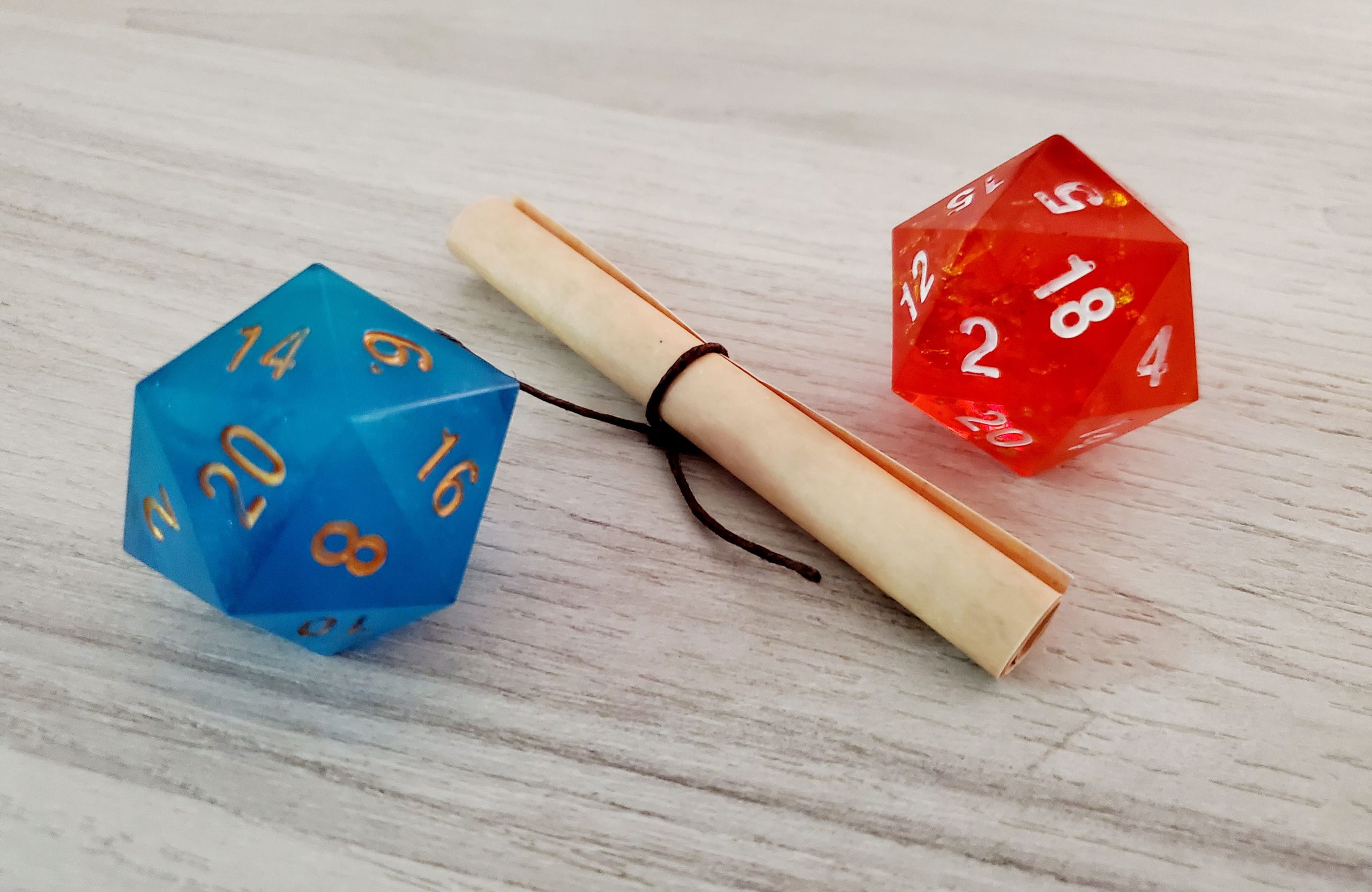
It is a delight to interview her and share her work with you. Check out her links and support a Boricua creator sharing her talents and creations with the world.
Introduce yourself! Who are you and what do you create?
Hello there! My name is Nicole (Nikki for short). I’m a resin dice maker and tinkerer at heart. Along with my wife, I also work with crochet, painting miniatures, terrains and models, and 3D printing (both FDM and Resin).

How would you describe your art or creative endeavor?
Chaotic. Honestly, being a person with ADHD makes everything a little harder because you want to do so much at the same time, but at some point, you gain the focus to work on what you’re most excited about. Usually, I start by gathering inspiration from the colors of my garden in the morning while I drink my bean juice (coffee). I also write down any goals or ideas for the day and start with what sparks more joy or gains more importance.

How did you discover TTRPGs?
My first TTRPG was D&D. I had heard about it first back in 2010 while living in Oregon. A friend of mine shared his miniature collection with me, and I was fascinated. Sometime in 2015-16, a friend and hobby shop owner in Hormigueros introduced us to Vampire: The Masquerade, but it was hard to join a session because of work.
Fast forward to 2017, while we were picking up the pieces from Hurricane Maria, my wife and I used to hang out at Capitán Granuja in Mayagüez. While there, my wife got interested in the D&D starter set, and we bought it. Since there was no electricity, we decided to read everything and make characters that same night. We wouldn’t play until a few weeks later, but that starting point was so much fun. We found it when we needed it most.
At the time, I was already working with resin and molds, and one of the owners (and good friend of ours) encouraged me to make custom dice for our characters.
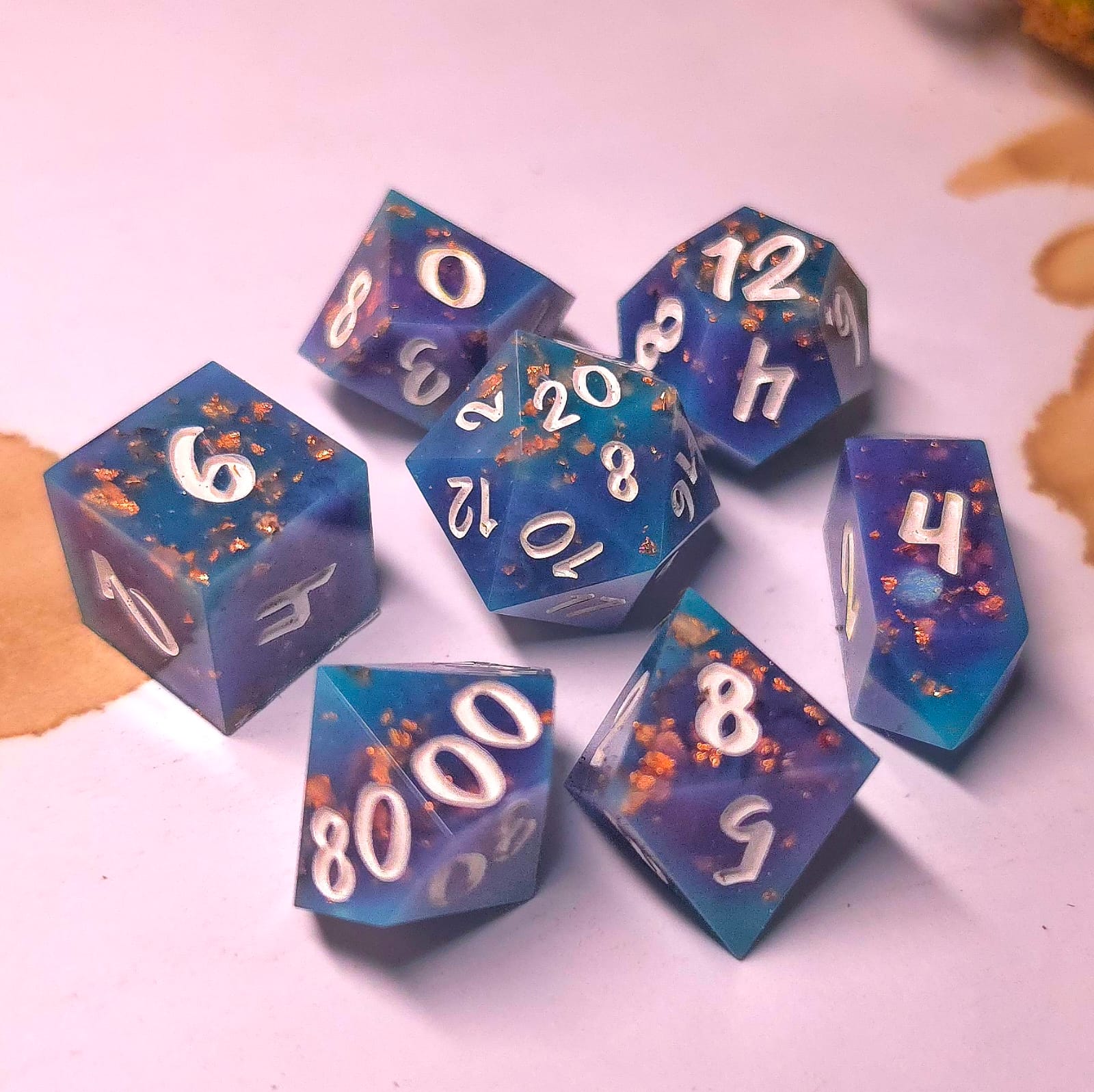
Do you actively play TTRPG? What are you playing?
Right now, our home group is on hiatus from a slightly different Lost Mine of Phandelver campaign my brother is DMing because of life schedules. The usual culprit. Hopefully we can go back to it soon.
What do you want to play next?
My wife has been talking nonstop about Shadowdark, Cairn, and Dungeon Crawl Classics. However, I’m more excited to play Shadowdark.
What projects are available, and what are you working on next?
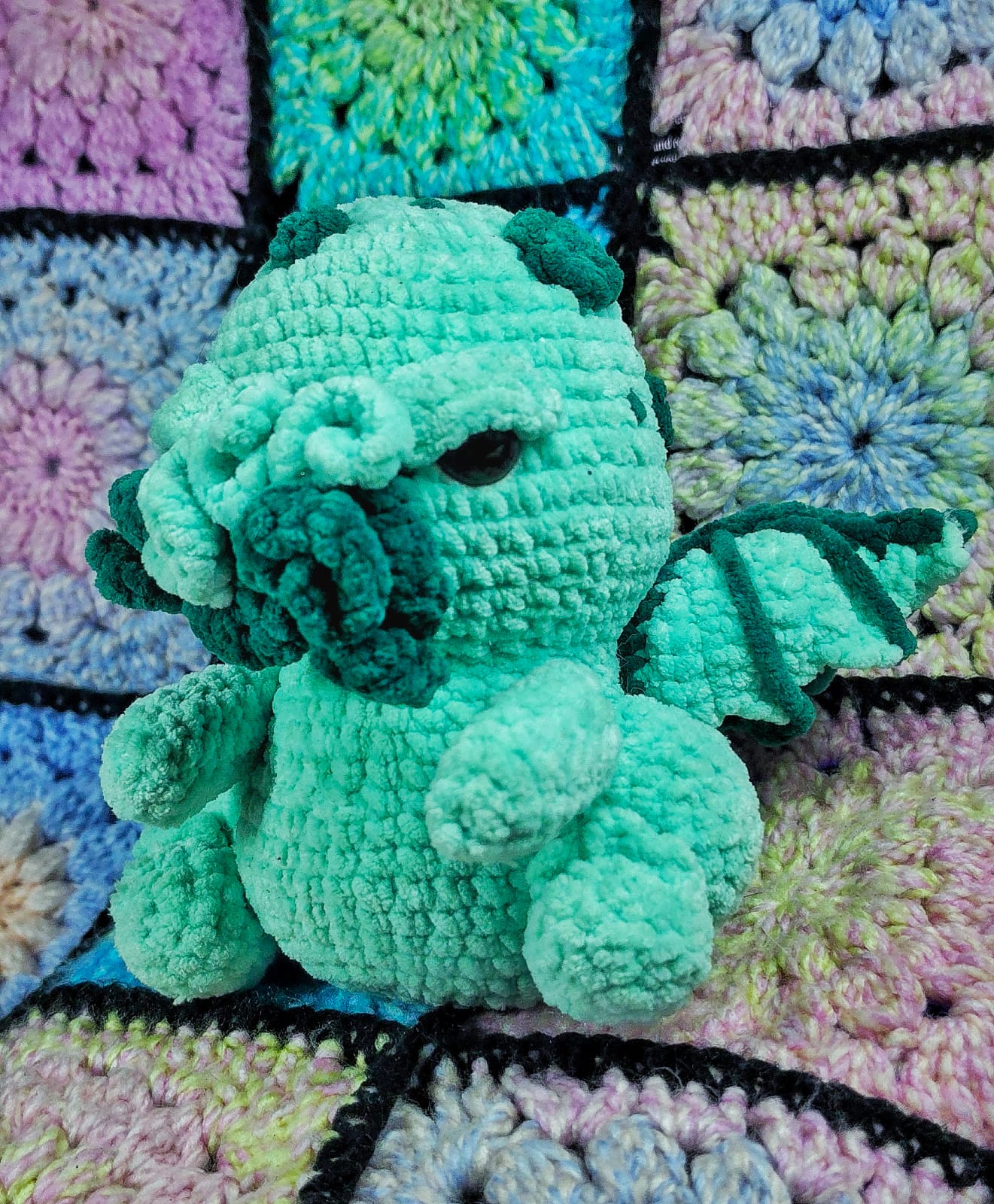
We have so many projects in the works at the moment, while trying not to get carried away haha. I’m currently working on crochet goodies to combine with dice. Also,
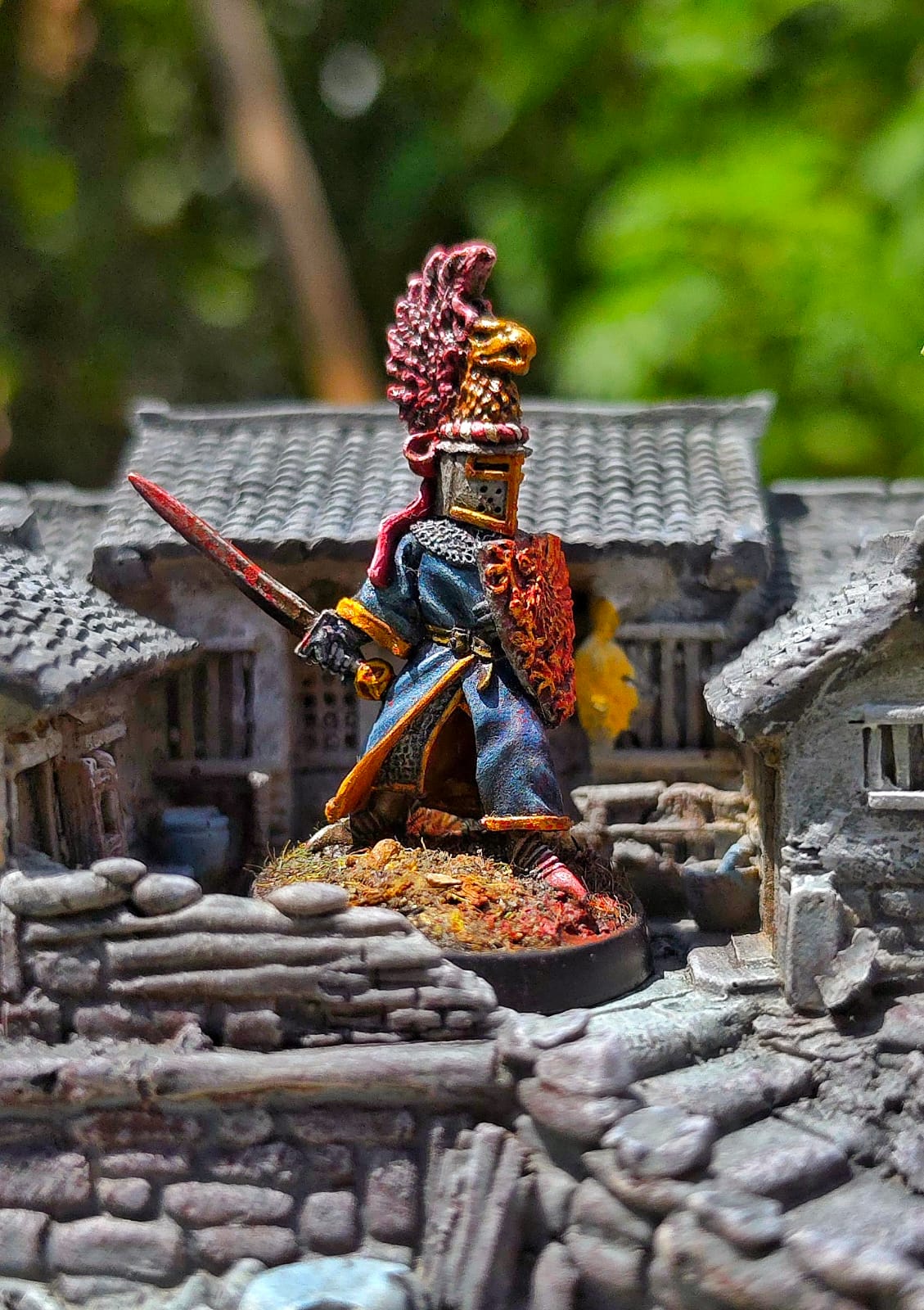
I’m helping my wife paint miniatures and display models.
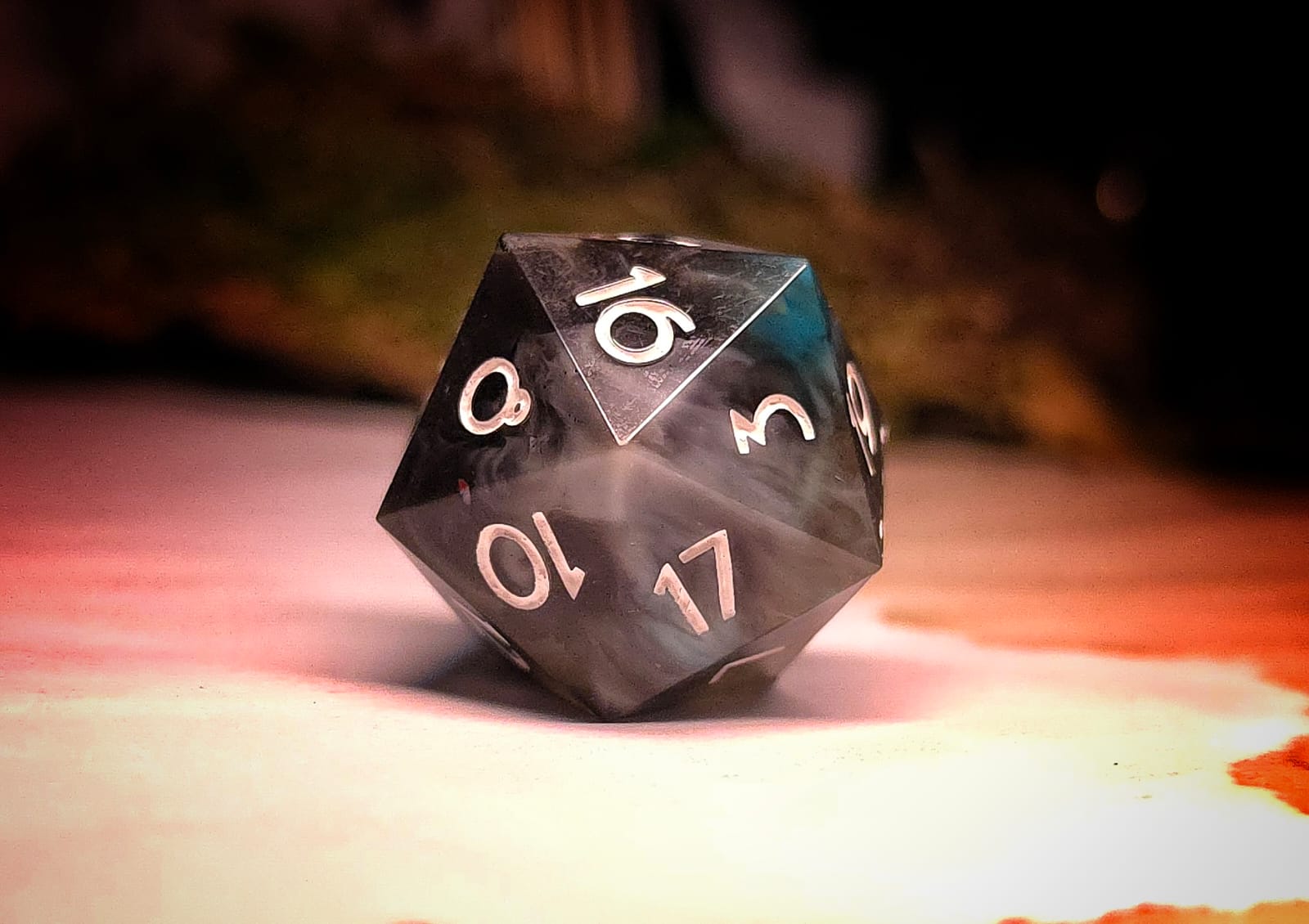
I’m working with some dice ideas I’ve been accumulating since I started making them again. I have some chunky D20s in the works, along with new dice shapes.
Getting into 3D modeling has been a long process, but it still excites me.

Where can people find your projects?
You can find all our finished products at www.theliquidforge.com. You can also follow us on all social media as: @TheLiquidForge, @TheWhimsyCauldron & @LiquidNebula for behind-the-scenes progress. We stream as well; you can always join and talk to us, or ask us anything in the chat.
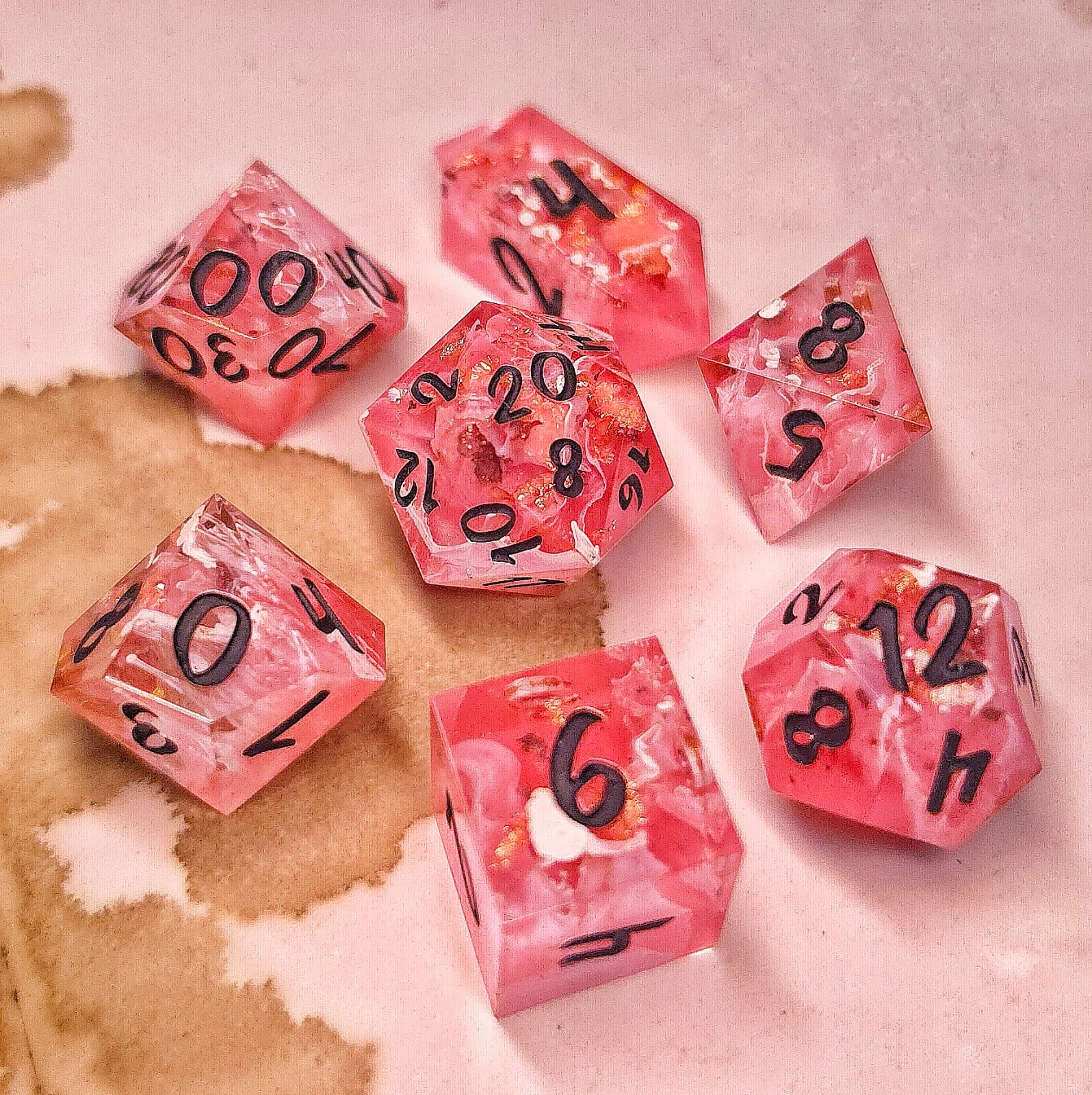
Any closing thoughts?
Never stop believing in yourself, and may your imagination always take you far!
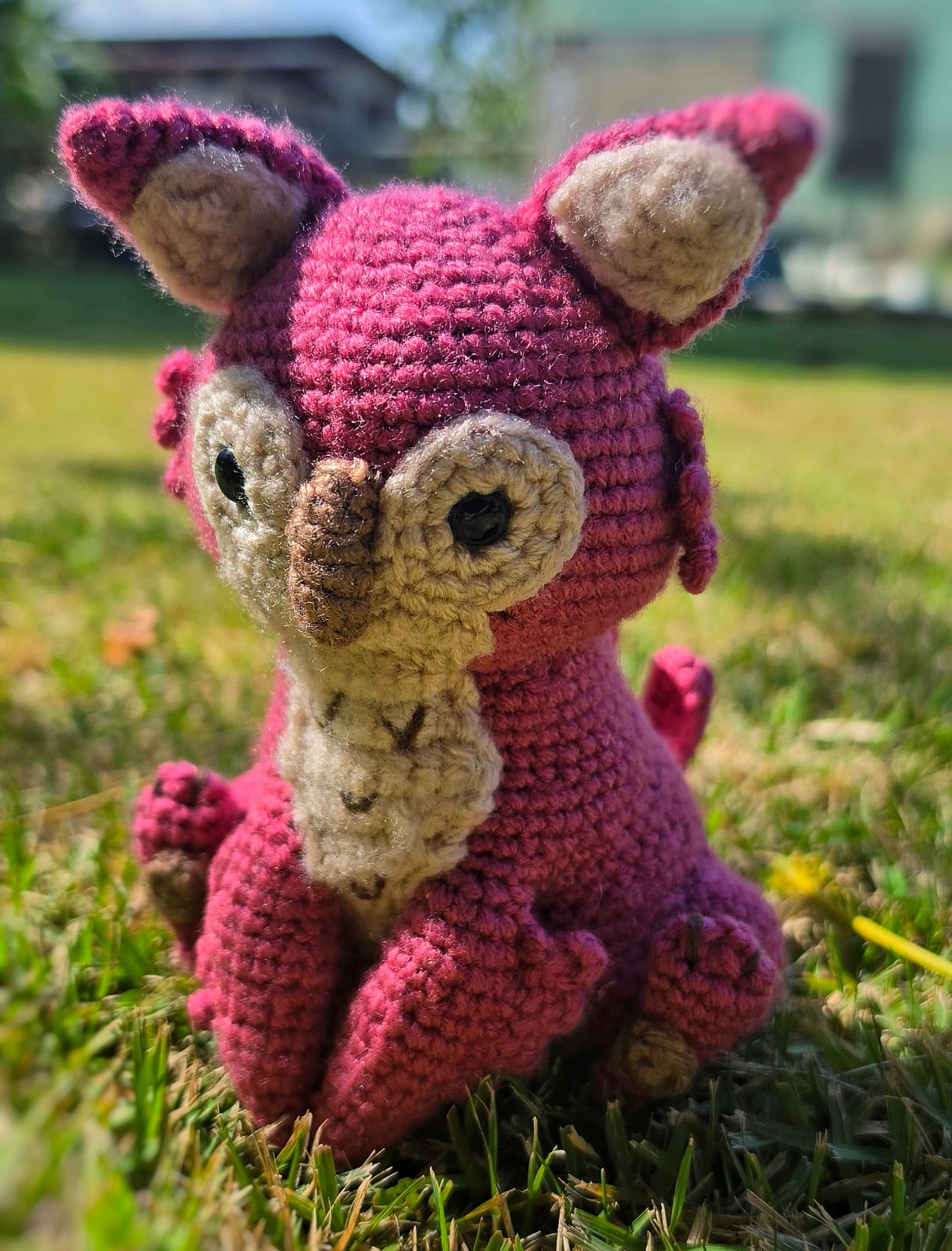
Thank you, Nikki! I know a few people who really embraced D&D after the Hurricane María disaster in Puerto Rico. TTRPGs can help us overcome difficulties and bring us closer together. In her next-to-last answer, I linked to the Instagram pages, but also check out the Linktree for all three so you can get all their links, follow Nikki and her wife Cely, get some dice, or check out any of their other projects.
The Liquid Forge: https://linktr.ee/theliquidforge
Liquid Nebula: https://linktr.ee/liquidnebula
The Whimsy Cauldron: https://linktr.ee/thewhimsycauldron
Oh, and Capitán Granuja was a great store with amazing proprietors. I was sad to see it close.
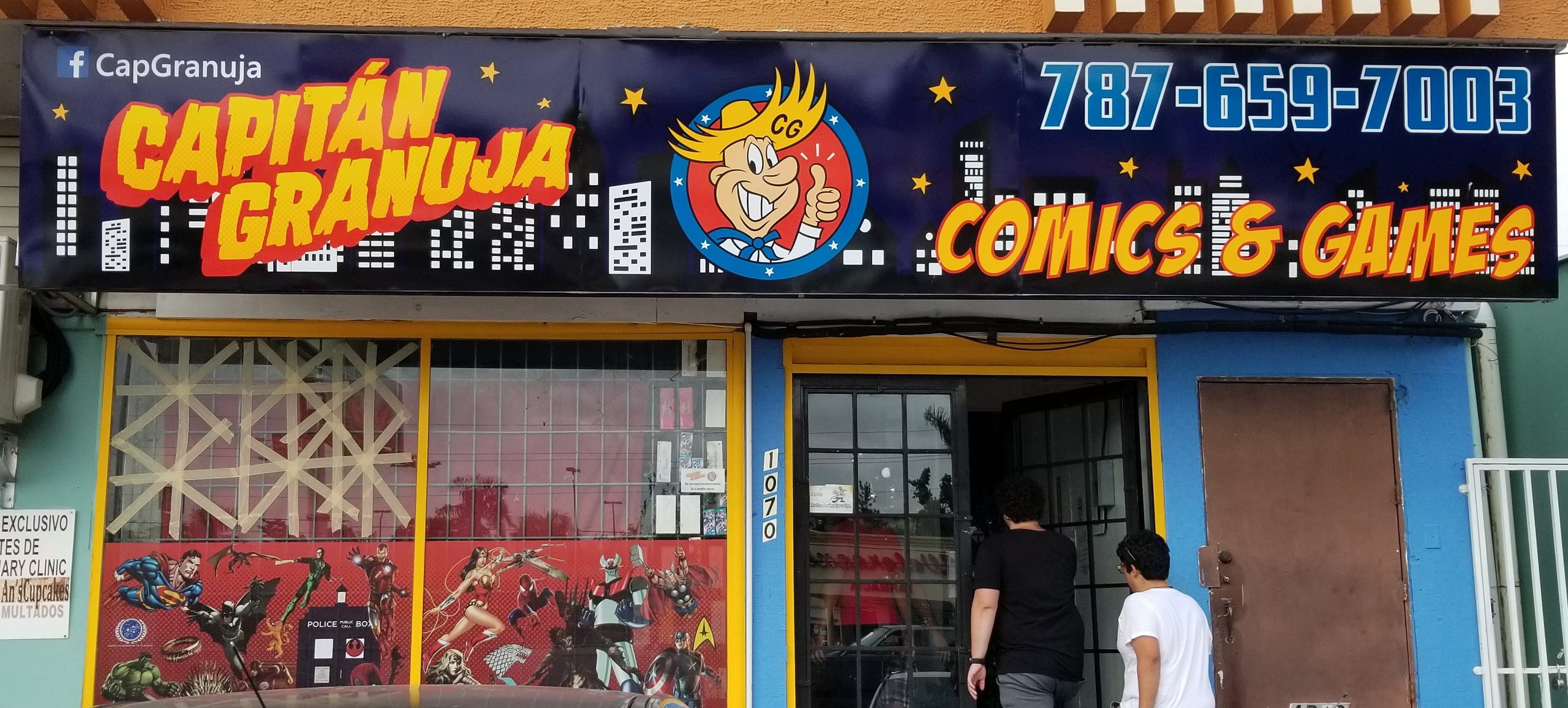
One last thing! I’m looking for more Boricua creatives whose work relates to TTRPGs, or who are gamers, to interview and share their work with a larger audience. If you are one, or know one, reach out to me here on the blog or through my socials.
Categories: Tabletop Gaming Blogs
Adapting North West of Earth By C.L. Moore - Orbital Decay (MicroRed version) From The Red Room & The New Flesh Rpg - d100 Random Monoliths, Henges, & Lairs Table
In the classic tradition of planetary romance, the desolate surfaces and mist-shrouded frontiers of the Solar System are dotted with mysterious alien monoliths, ancient stone henges that harness cosmic energies, and dangerous lairs harboring outlaws, cultists, and prehistoric beasts.Below is a d100 Random Monoliths, Henges, & Lairs Table for old-school pulp science-fantasy campaigns.01–Needleshttp://www.blogger.com/profile/11243274667834930867noreply@blogger.com0
Categories: Tabletop Gaming Blogs
Pages
